Key takeaways
- Cabbage whitefly (Aleyrodes proletella) attacks only brassicas, not tomatoes
- It overwinters on UK brassicas and survives frost to about -7C
- Glasshouse whitefly (Trialeurodes vaporariorum) is a different species killed by frost
- On outdoor brassicas the damage is mostly cosmetic sooty mould and honeydew
- Control with crop hygiene, a hard water jet and removing old leaves
- Encarsia formosa wasps suit glasshouse whitefly, not cabbage whitefly outdoors
Cabbage whitefly and glasshouse whitefly get muddled constantly, and the mix-up sends gardeners down the wrong control route. They are two different insects with different hosts, different frost behaviour and different fixes. Cabbage whitefly (Aleyrodes proletella) lives on brassicas outdoors all year. Glasshouse whitefly (Trialeurodes vaporariorum) is a tender greenhouse pest killed by the first hard frost.
After 8 winters watching both at Staffordshire, the picture is clear. They are different species. Cabbage whitefly outdoors is mostly cosmetic. The control differs because the biology differs.
Telling the two whiteflies apart
Both are tiny white moth-like insects about 2mm long, so people assume one pest. The host plant is the quickest tell.
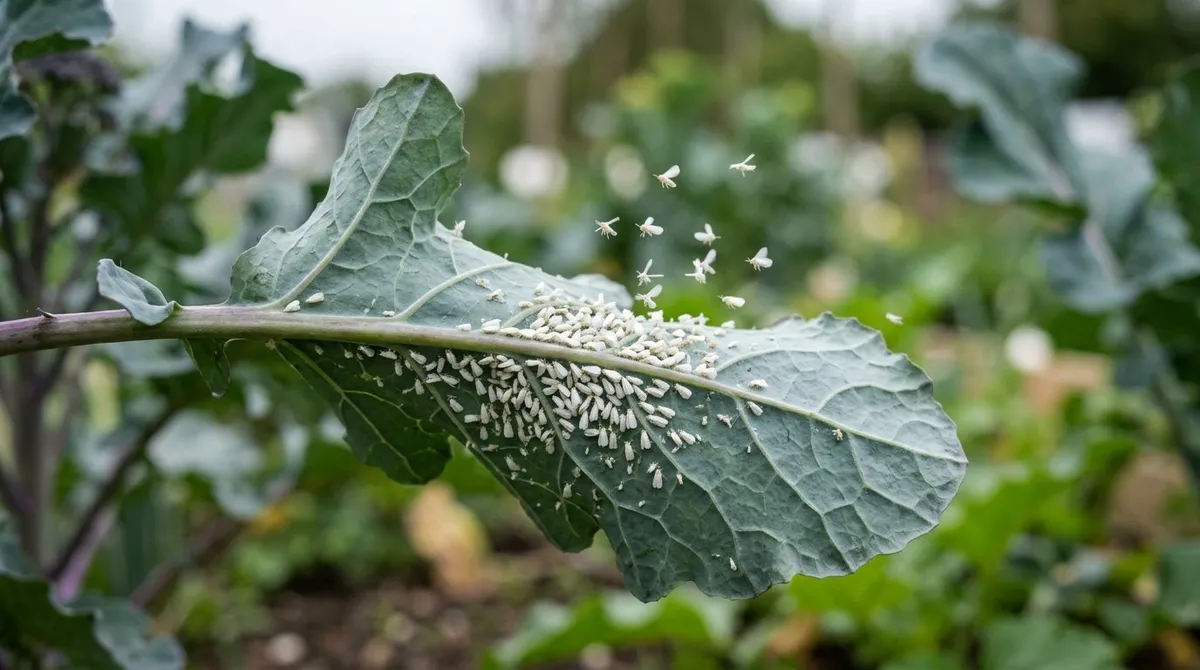
Cabbage whitefly is found only on brassicas. That means kale, Brussels sprouts, cabbage, purple sprouting broccoli, swede and ornamental brassicas. It will not touch your tomatoes. Glasshouse whitefly is the opposite. It swarms tomatoes, cucumbers, aubergines, fuchsias and dozens of tender plants, but it does not colonise hardy outdoor brassicas.
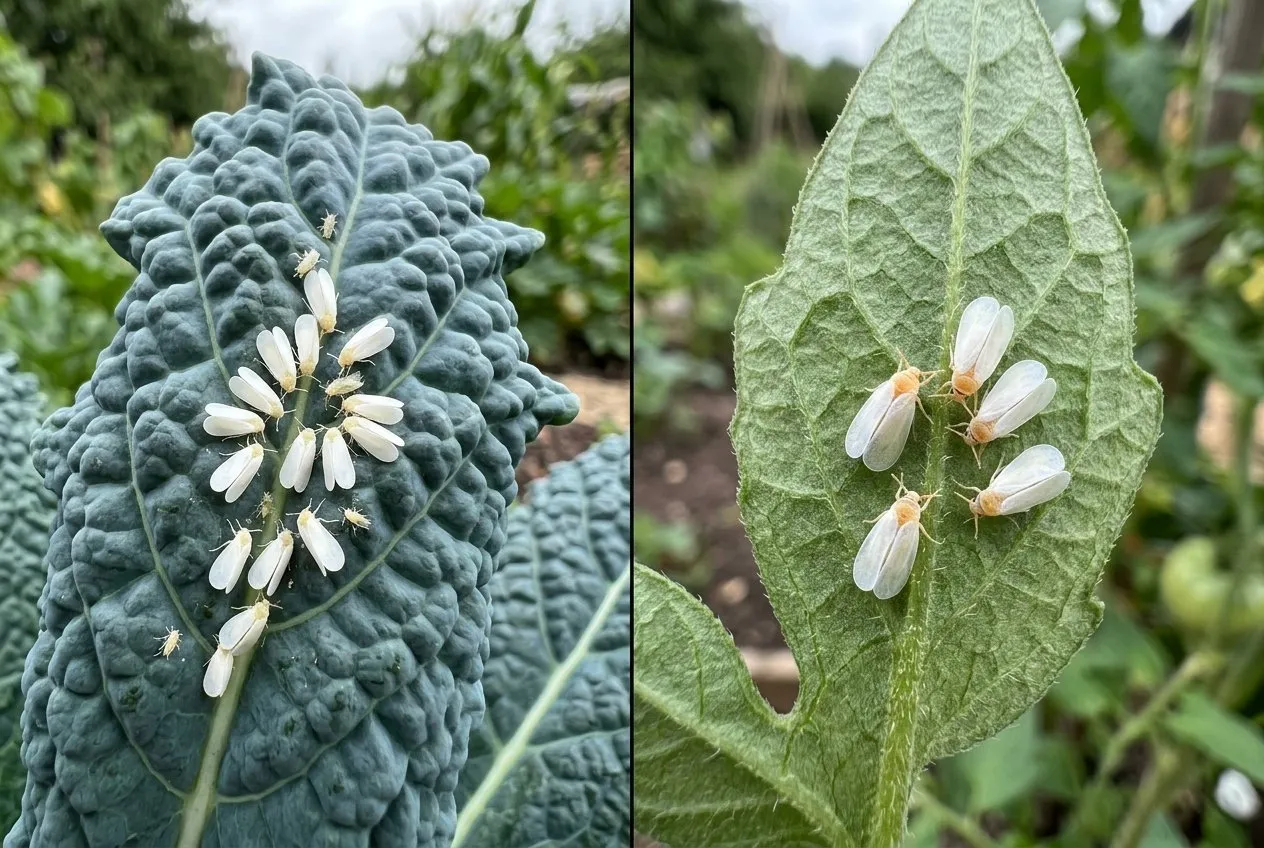 Cabbage whitefly on Staffordshire kale (left) versus glasshouse whitefly on a tomato leaf under glass (right). Same size, same white wings, different host and different winter survival. The host plant is the fastest field ID.
Why the difference changes your control
If you treat cabbage whitefly like its greenhouse cousin, you waste effort. The standard greenhouse fix is the parasitic wasp Encarsia formosa. It works beautifully on glasshouse whitefly in a warm greenhouse from May onwards. It does nothing useful on outdoor brassicas in a British winter because it needs heat and a continuous host supply.
Cabbage whitefly also overwinters as adults, not just eggs and scales, so there is no clean dormant gap to hit. You are always managing a live population. That pushes the control towards hygiene and physical removal rather than a single timed treatment.
| Trait | Cabbage whitefly (Aleyrodes proletella) | Glasshouse whitefly (Trialeurodes vaporariorum) |
|---|---|---|
| Main hosts | Brassicas only: kale, sprouts, cabbage, broccoli | Tomato, cucumber, aubergine, fuchsia, many tender plants |
| Where it overwinters | Outdoors on living brassica leaves | Heated or sheltered greenhouse only |
| Frost tolerance | Survives to about -7C | Killed by frost |
| Main damage | Cosmetic honeydew and sooty mould | Sap loss, virus spread, weakened plants |
| Best control | Crop hygiene plus hard water jet | Encarsia formosa wasp, sticky traps |
What cabbage whitefly actually does to brassicas
On a healthy crop, very little. This is the part gardeners find hard to believe when a white cloud erupts off the kale.
The adults and pale scale-like nymphs cluster on the undersides of lower leaves. They suck sap and excrete sticky honeydew. Black sooty mould then grows on the honeydew. The result looks grim: blackened, sticky lower leaves. But the growing point keeps going. Sprouts button up, kale throws new clean leaves from the top, and purple sprouting broccoli still spears in March.
The cabbage whitefly lifecycle in a UK garden
The annual cycle explains why hygiene beats spraying.
Autumn and winter: Adults shelter on the undersides of standing brassica leaves. They stay active on mild days and tolerate frost to about -7C.
Early spring: Surviving adults lay eggs in neat circles on leaf undersides as growth resumes.
Late spring and summer: Eggs hatch into flat, pale, scale-like nymphs that feed in place. Several overlapping generations build through the season.
The whole population is local. It does not fly in from a field each year. It lives on your brassicas continuously. Clear every old brassica plant in spring and you remove the breeding stock before it gets going.
This is why a tidy plot matters more than any product. A standing row of last year’s sprout stumps is a whitefly hotel. Clear it and you remove the breeding stock before it gets going.
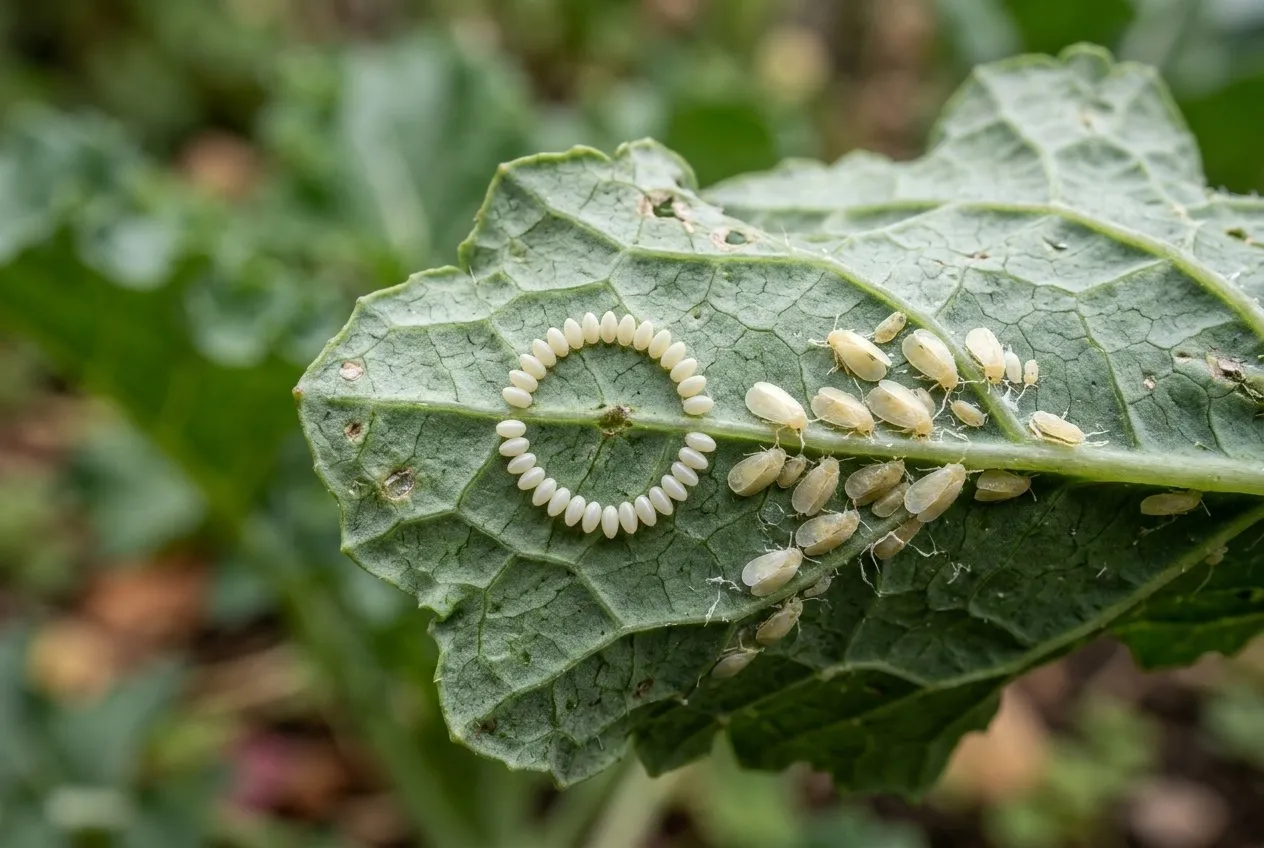 Egg circles and flat scale-like nymphs on the underside of a Staffordshire kale leaf in early spring. This is the breeding stage that builds locally on standing brassicas, which is why clearing old plants matters.
How to control cabbage whitefly outdoors
Skip the sprays. Contact insecticides struggle to reach the protected undersides, and the waxy adults shrug them off. Three physical steps do the real work.
- Strip the lower leaves. Every few weeks, pull off yellowing, mould-coated lower leaves and bin them, not the compost. This removes the densest colonies.
- Blast with water. On a dry, still morning, hit the leaf undersides with a hard hose jet. It knocks adults and loosens nymphs. Repeat weekly in summer.
- Clear the stumps. In spring, lift and bin every old brassica plant before adults wake and breed. This is the single most effective step.
Encourage predators too. Ladybirds, lacewings and parasitic wasps all take whitefly. A garden that supports them keeps numbers down for free. The Garden Organic pest advice pages back the same low-spray, hygiene-led approach for brassica pests.
Netting, barriers and other brassica pests
Fine mesh netting earns its keep on brassicas, but not mainly for whitefly. Whitefly are small enough to slip through standard butterfly netting, and they overwinter under it on the crop anyway.
Netting really pays off against bigger threats. It blocks cabbage white butterflies laying eggs, stops cabbage root fly, and deters pigeons. Layer your defences by the pest, because each one needs a different barrier.
One more brassica pest confuses people who blame everything on whitefly. Tiny shot-holes in young leaves are usually flea beetle, covered in our flea beetle protection guide, not whitefly at all.
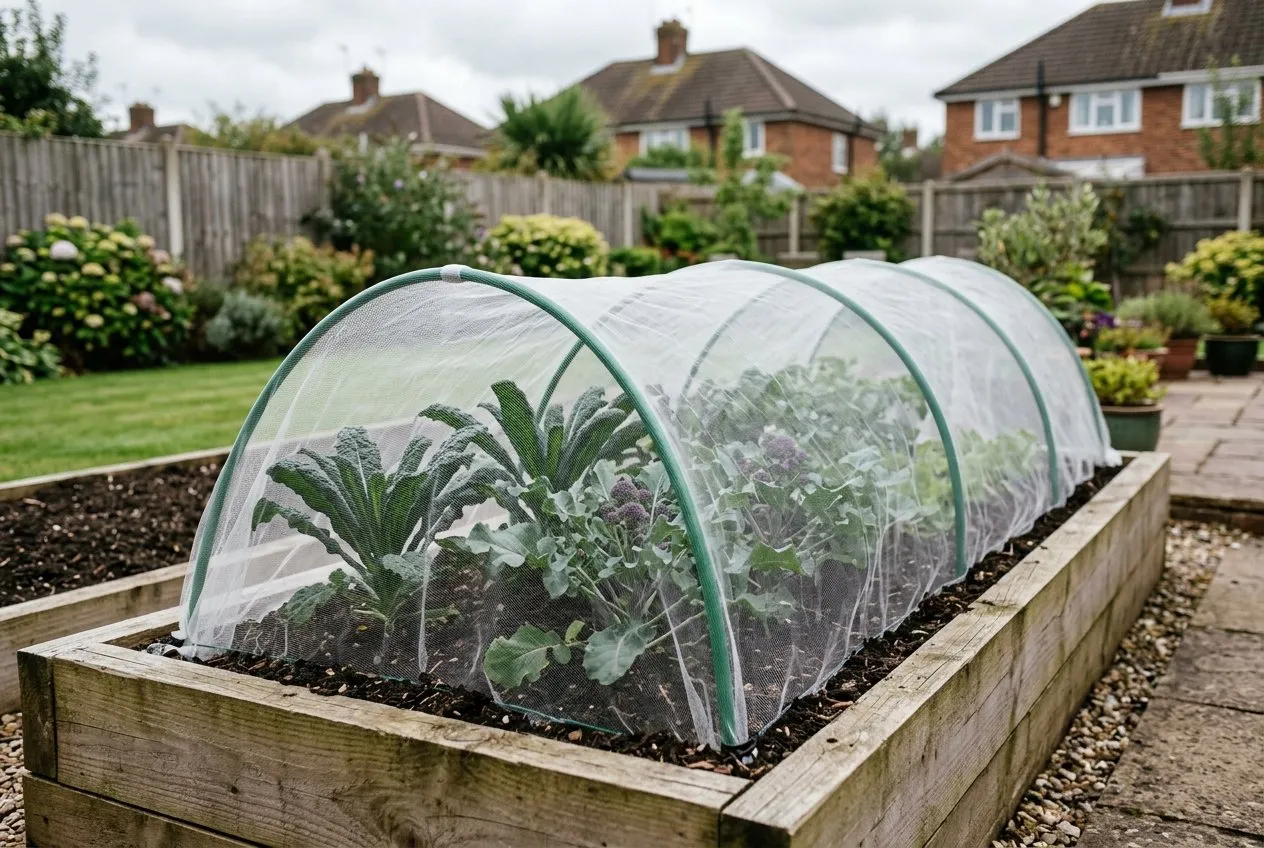 Mesh on hoops over a suburban brassica bed near Stafford. The netting blocks cabbage white butterflies and root fly more than whitefly, but a clean, well-spaced bed keeps every brassica pest manageable.
When whitefly really is the greenhouse species
If your tomatoes, cucumbers or fuchsias are the ones clouded in white, you have glasshouse whitefly, and the plan changes entirely.
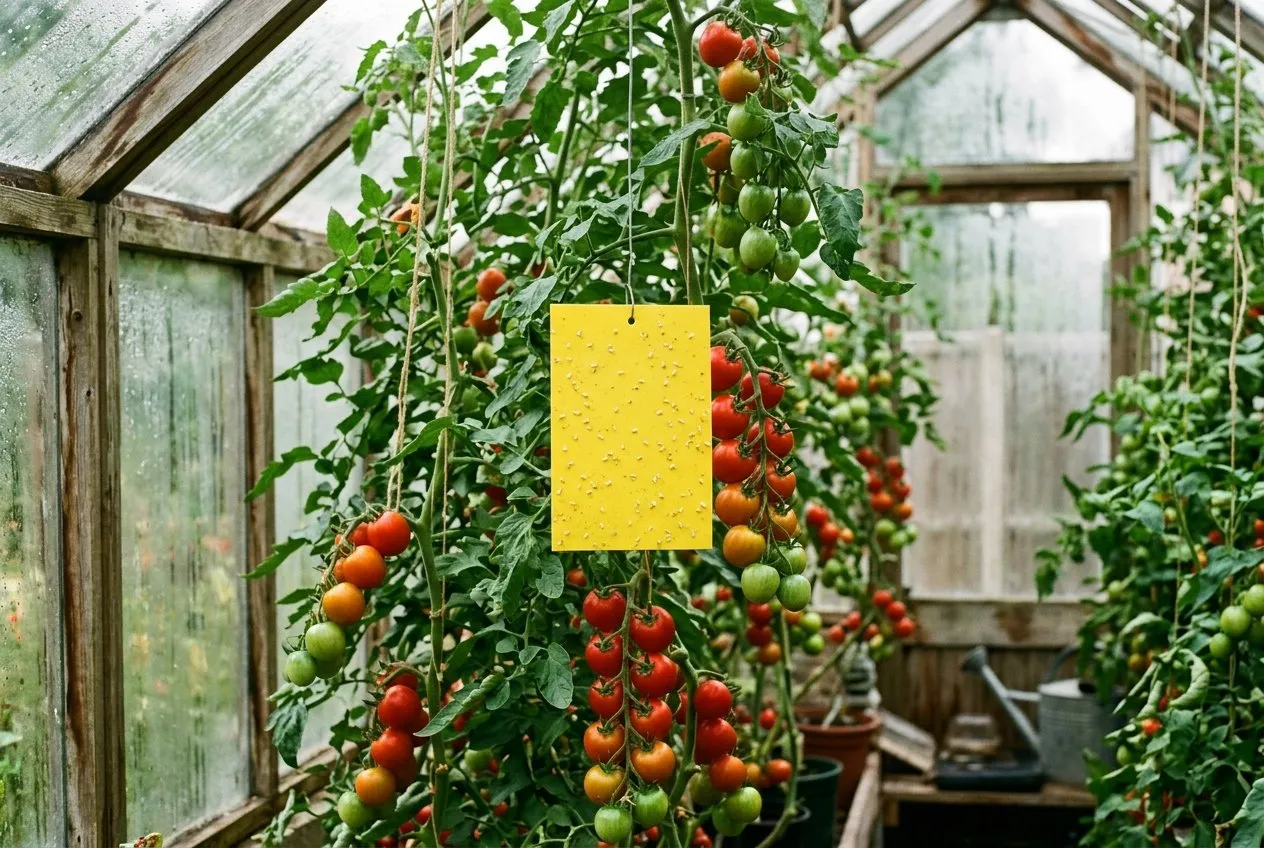
Under cover, the parasitic wasp Encarsia formosa is the standard biological control. Introduce it early, at the first sign, while temperatures are warm. Yellow sticky traps help you monitor numbers and catch adults. Frost does the rest at season end by wiping the population out. Our greenhouse whitefly identification and control guide walks through the wasp, the traps and the timing for tender crops under glass.
The key point is not to cross the wires. The wasp will not save your kale, and the water-jet routine will not clear a tomato house. Match the method to the species.
A frosted but productive brassica patch at Staffordshire in December. A light cabbage whitefly presence on the lower leaves, yet kale, sprouts and purple sprouting broccoli all cropping. Cosmetic, not catastrophic.
Frequently asked questions
Is cabbage whitefly the same as greenhouse whitefly?
No, they are two different species with different hosts. Cabbage whitefly (Aleyrodes proletella) feeds only on brassicas and survives UK frost. Glasshouse whitefly (Trialeurodes vaporariorum) attacks tomatoes, cucumbers and many tender plants and dies in frost. Telling them apart decides which control works.
Does cabbage whitefly ruin the crop?
Rarely. On healthy outdoor brassicas cabbage whitefly is mostly cosmetic. It coats lower leaves in sticky honeydew and black sooty mould, but the hearts and sprouts develop normally. Strip and bin the worst lower leaves before eating.
How do I get rid of cabbage whitefly outdoors?
Use crop hygiene and a hard water jet, not sprays. Remove yellowing lower leaves, blast colonies off with the hose on dry mornings, and clear all brassica stumps in spring. This breaks the overwintering cycle better than chemicals.
Will frost kill cabbage whitefly?
No, cabbage whitefly tolerates UK frost down to about -7C. Unlike glasshouse whitefly, it overwinters as adults sheltering on living brassica leaves. That is why it reappears each spring on kale, sprouts and purple sprouting broccoli without arriving from anywhere new.
Can I use Encarsia formosa on cabbage whitefly?
No, the Encarsia formosa wasp only controls glasshouse whitefly under cover. It needs warmth and does not establish on outdoor brassicas in a UK winter. For cabbage whitefly, rely on hygiene, water jets and encouraging garden predators like ladybirds and lacewings.
Now sort the rest of your brassica bed
Cabbage whitefly is one of several brassica problems worth telling apart. To stop the caterpillars that really do shred leaves, see the cabbage white butterfly control guide. For the soil pest that wilts whole plants, the cabbage root fly protection guide sets out collars and mesh. And to plan a healthier bed from the start, our companion planting guide shows how mixed planting keeps pest numbers down.
Our team produces practical UK gardening guidance from source research, contributor records and established horticultural practice. Editorial standards are overseen by Matt W.