Key takeaways
- Canterbury bells are true biennials: sow one year, flower the next June
- Sow May to June on the surface, uncovered, because the seed needs light
- Germination takes 14 to 21 days at 18 to 20C, then rosettes bulk up by autumn
- Plant out 30cm apart in September or October on free-draining ground
- Winter wet, not cold, kills them: losses run 20 to 40 percent on heavy clay
- Stems hit 60 to 90cm and flop by mid June without support
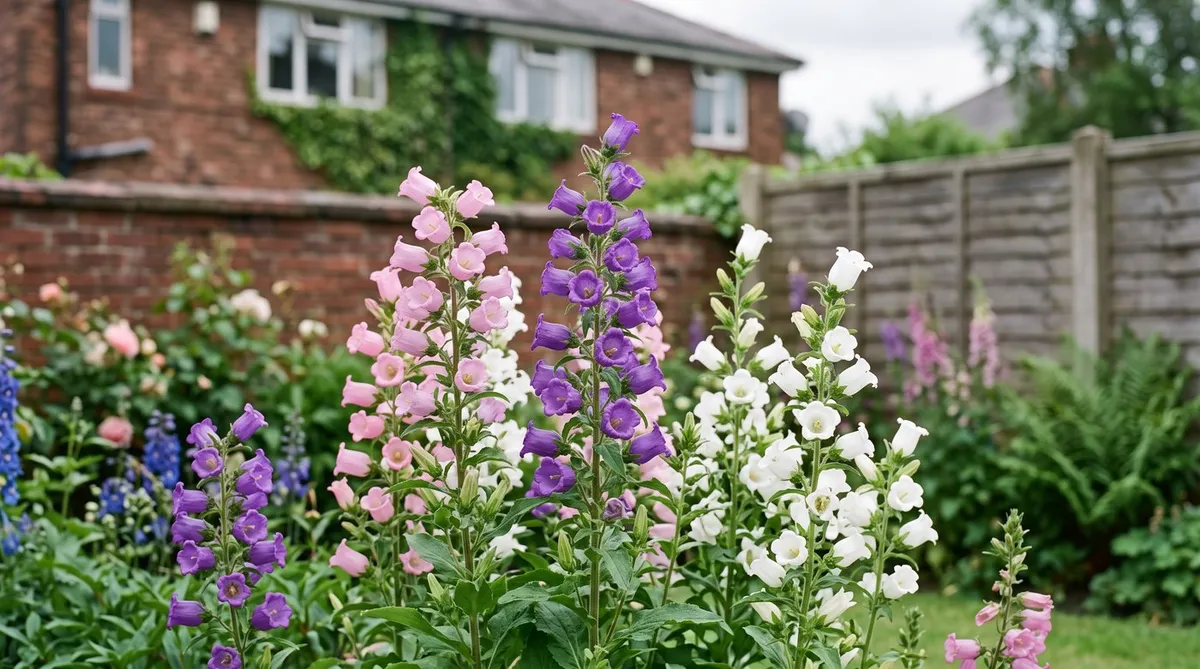
Canterbury bells are the plant that catches out more UK gardeners than any other cottage flower. You sow the seed, you get a neat green rosette, and then nothing happens all year. That is not failure. Canterbury bells (Campanula medium) are true biennials, and the whole point of growing them is the two-year cycle. Sow in May, grow the rosette on, plant out in autumn, and the following June you get 60 to 90cm spires of fat cup-shaped bells in purple, pink, blue and white.
This guide walks the full cycle month by month. It covers surface sowing, the Cup and Saucer forms, why winter wet kills far more plants than frost, and the annual ‘Champion’ series shortcut if you cannot face waiting.
Why Canterbury bells take two years to flower
A true biennial splits its life into two jobs. Year one builds the machine. Year two spends it. Campanula medium cannot flower until it has banked enough carbohydrate in a fat crown, and it needs a cold period to release the flowering trigger. Miss either half and you get leaves and nothing else.
The cycle runs in five stages.
- Germination. Surface-sown seed takes 14 to 21 days at 18 to 20C. The seed is tiny, roughly 0.5mm, and needs light on it to break dormancy.
- Rosette build. From June to September the plant makes a flat basal rosette of oval, slightly hairy leaves. It should reach 15 to 20cm across by late September.
- Vernalisation. The crown needs roughly 6 to 10 weeks below 10C to switch from vegetative to reproductive growth. A normal British December and January covers this easily.
- Bolting. From late April the crown extends a flowering stem. Growth is fast, often 20cm in a fortnight through May.
- Flowering and death. Bells open from the bottom of the spike upward through June and July. The plant then sets seed and dies. There is no year three.
The critical mistake is sowing in spring of the flowering year and expecting bells that summer. A March sowing makes a rosette that is still a rosette in August. It has not been through winter, so it has no flowering signal. That single misunderstanding accounts for most of the disappointed reviews on seed packets.
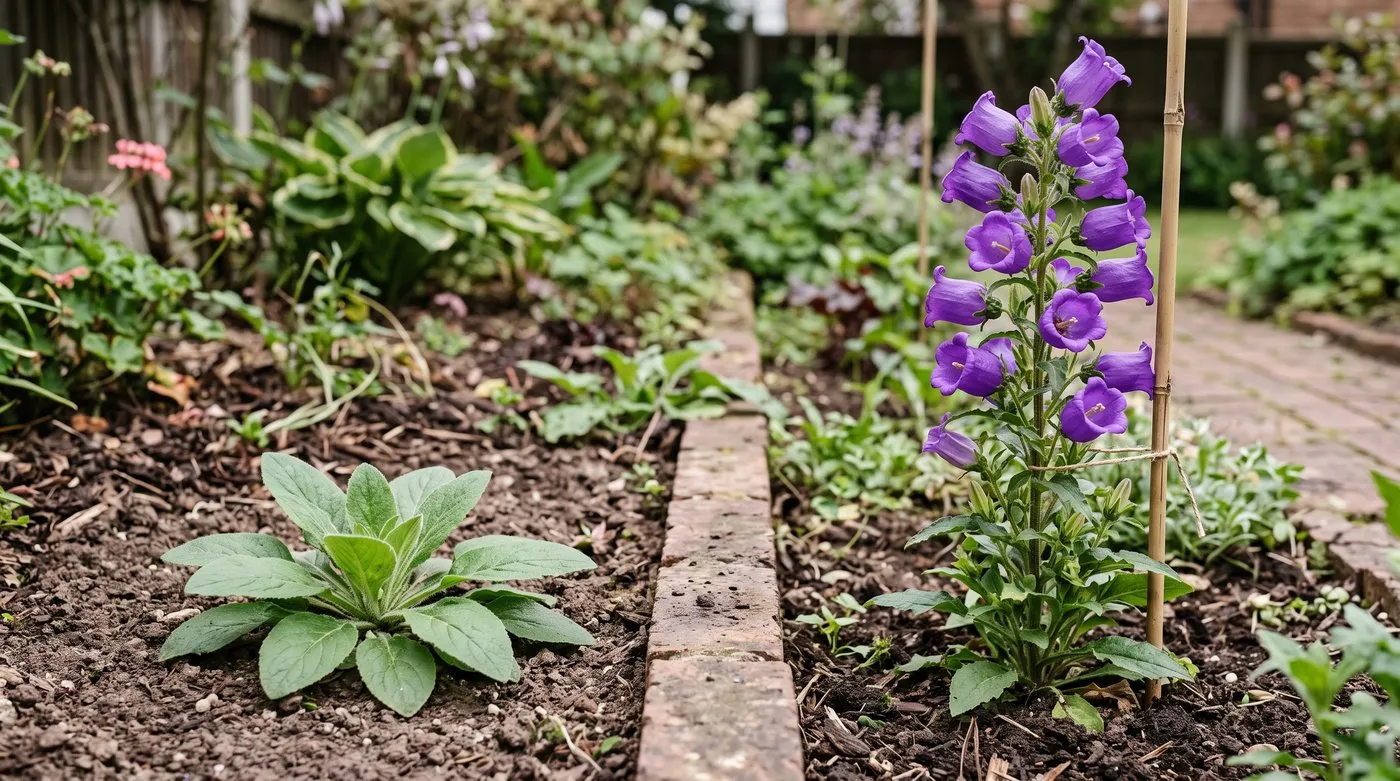 Year one on the left, year two on the right. The flat rosette of oval hairy leaves is doing exactly what it should. The flowering spike only follows a winter.
When to sow Canterbury bells in the UK
Mid May to the end of June is the window that works across most of Britain. That timing gives the rosette 14 to 16 weeks of warm growing before day length drops. Sow earlier and the plants get too big and soft, which increases rot risk over winter. Sow after mid July and they go into winter undersized.
Sow into a seed tray or 9cm pots of peat-free multipurpose sieved through a 5mm mesh. Firm the compost, water it from below, then scatter the seed thinly on the surface. Do not cover it. If your greenhouse is bright and drying, dust the barest sieving of vermiculite over the top, no more than 1mm deep. A propagator lid or a clear bag holds humidity while the seed sits exposed to light.
Keep the tray at 18 to 20C in bright shade, not direct summer sun. A cold frame with light shading works as well as a heated bench in June. Expect the first seedlings at day 14. Germination is uneven, so leave the tray a full four weeks before giving up on the stragglers.
Prick out into 9cm pots at the two-true-leaf stage, usually 21 to 28 days from sowing. The seedlings are small and slow at this point, which is normal. Overwatering at this stage is the main cause of losses. A soaked tray in warm June weather brings on damping off within days.
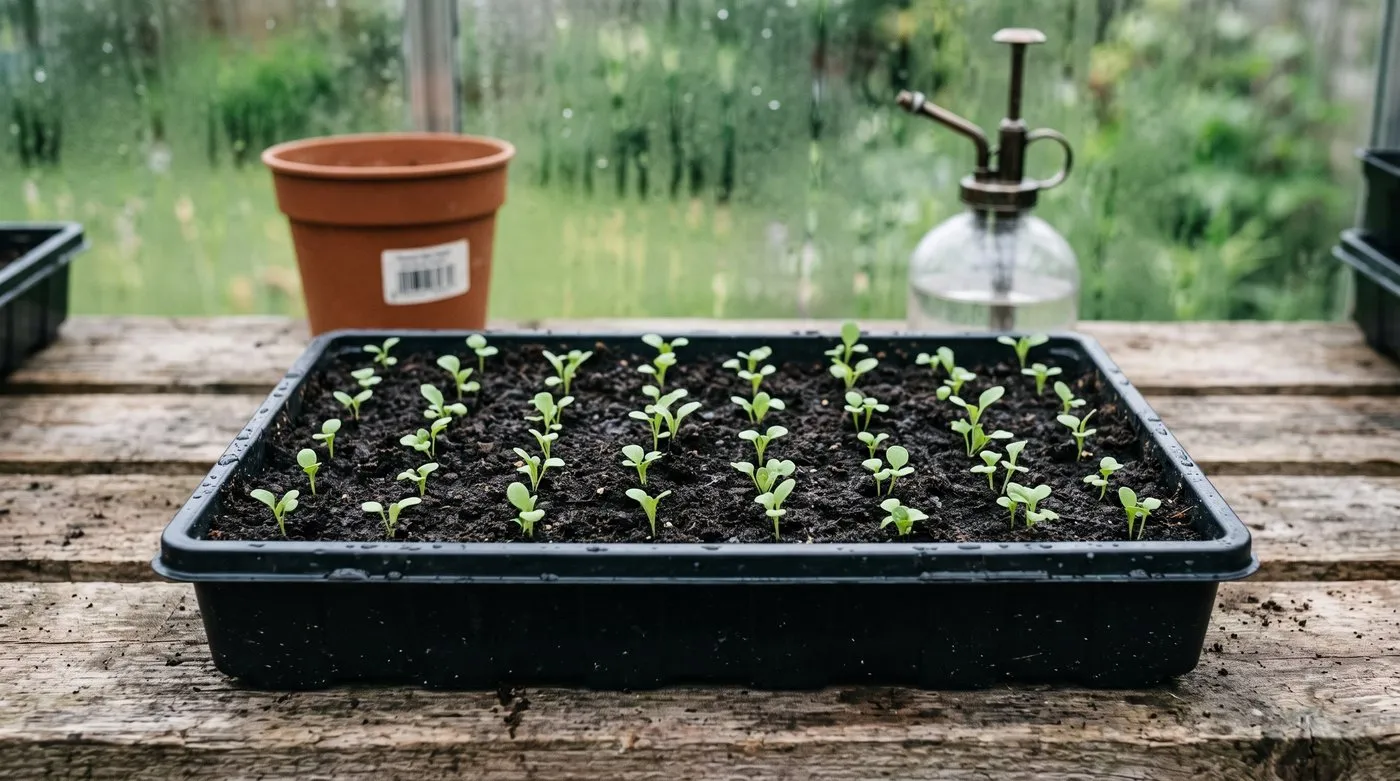 Surface-sown seed, uncovered, in a tray on a Manchester greenhouse bench in June. The seedlings are tiny at four weeks and this slow start is completely normal.
Cup and Saucer, single and double forms compared
Not all Canterbury bells look alike, and the differences matter more for cutting than for the border. The classic Cup and Saucer form is botanically Campanula medium var. calycanthema. Behind each bell the calyx flares out into a flat coloured collar, giving a cup sitting on a saucer. It is the form most people picture.
| Form | Botanical name | Height | Role in the garden | Cut flower vase life |
|---|---|---|---|---|
| Cup and Saucer | C. medium var. calycanthema | 75 to 90cm | Gold standard: showiest form, best cut flower | 8 to 10 days |
| Single bell | C. medium | 60 to 80cm | Cottage border filler, most seed-true | 7 to 9 days |
| Double | C. medium ‘Flore Pleno’ | 60 to 75cm | Novelty, heavier and floppier | 6 to 8 days |
| Dwarf ‘Bells of Holland’ | C. medium dwarf strain | 40 to 50cm | Front of border, windy plots, pots | 5 to 7 days |
| Annual ‘Champion’ series | C. medium F1 | 55 to 70cm | Shortcut: flowers in year one from a February sowing | 7 to 9 days |
Cup and Saucer is the gold standard for most gardens. The flared saucer holds the flower’s shape when the bell itself starts to age, so a cut stem still reads well on day eight. It also stands up better in rain than the double, which holds water in its packed petals and snaps.
The ‘Champion’ series deserves a special mention because it rewrites the rules. These F1 annuals flower roughly 20 weeks from sowing with no cold period at all. Sow in a heated propagator in February and you have bells in July of the same year. They are more expensive, around £3.50 to £4.50 for 25 seeds against £2.50 for 200 seeds of the open-pollinated Cup and Saucer, and the colour range is narrower. Treat them as the impatient gardener’s option, not a replacement.
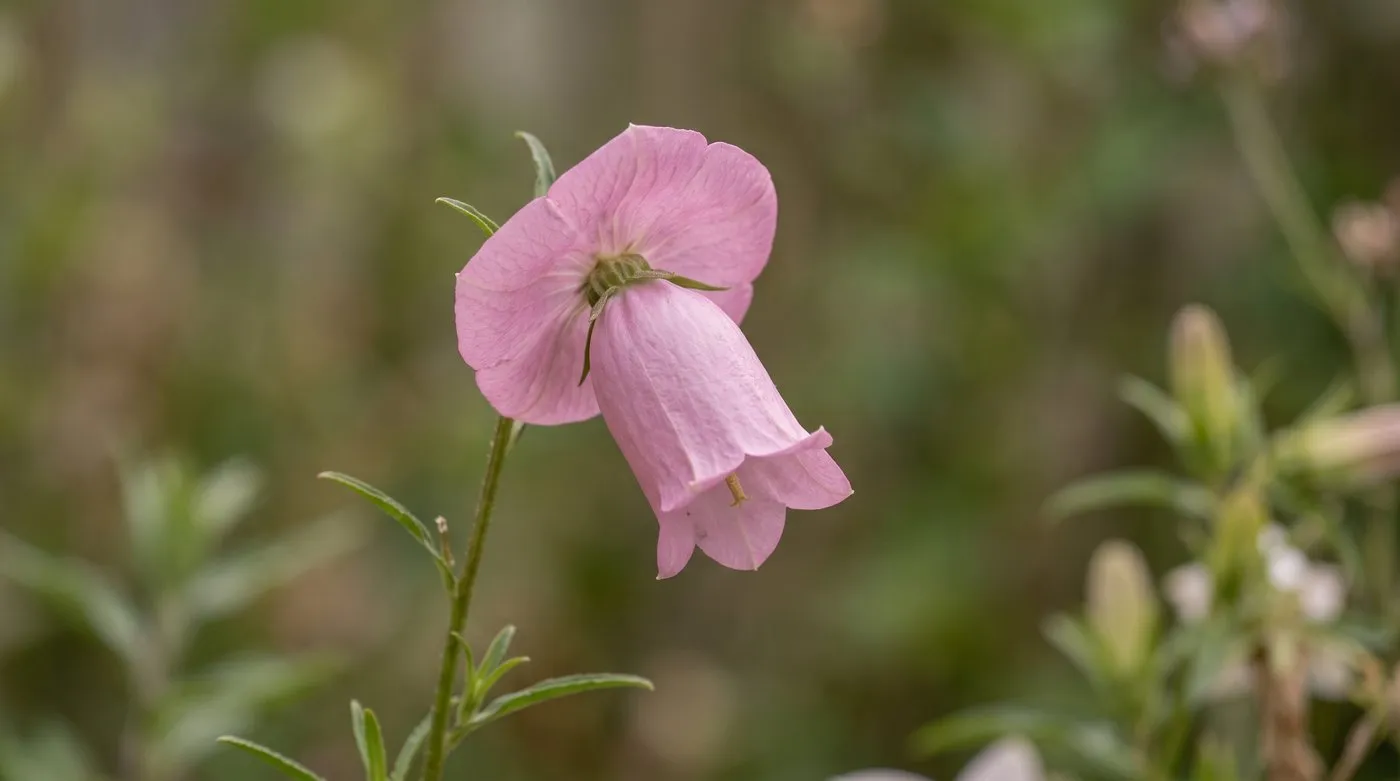 The Cup and Saucer form in close-up. The flat flared collar behind the bell is the calyx, and it is what keeps the flower looking good long after the bell has softened.
Growing the first-year rosette on
The whole second-year display is decided by how big the rosette gets before October. Aim for a plant 15 to 20cm across with 8 to 12 healthy leaves. Anything under 12cm across going into winter will flower thinly or not at all.
Pot on from 9cm into 1 litre pots in late July. Use a peat-free compost with 20 percent added grit or perlite by volume, because Campanula roots hate sitting wet even in summer. Stand the pots on gravel or slats, never on a solid tray that holds water.
Feed fortnightly from August with a balanced liquid feed at half strength. Do not push nitrogen. Soft, sappy, over-fed rosettes are exactly what rots at the collar in January. A high-potash tomato feed diluted to half the bottle rate suits them better and firms the crown.
Slugs are the other first-year threat. A Canterbury bell rosette sits flat on the soil and stays green all winter, which makes it a reliable slug meal from October to March. Keep the pots off the ground and check under the rims weekly. Ferric phosphate pellets or autumn nematodes both work; hand picking alone does not.
If this is your first run at the two-year cycle, our broader guide to sowing biennials in the UK sets out the shared timings across the group.
Planting out in autumn and surviving a wet winter
Plant out in September or early October, while the soil is still warm enough for root growth. Space plants 30cm apart in blocks of five or seven rather than a line. Choose the sunniest, sharpest-draining spot you have. Full sun to light shade both work, but drainage is not negotiable.
This is where the root cause of most Canterbury bell failure sits, and it is almost universally misdiagnosed. Gardeners blame frost. Canterbury bells are fully hardy to around minus 15C. They are not killed by cold. They are killed by their own crown sitting in cold, airless water from December to March. The rosette holds a shallow saucer shape, water collects in the centre, and the collar goes soft and black.
The permanent fix is physical, not chemical. On any soil that puddles, plant on a slight ridge or a raised bed lifted 15cm above the surrounding level. Fork a bucket of sharp grit per square metre into the top 20cm at planting. Do not mulch over the crown itself: leave a 5cm bare collar around each plant so air moves across it. Bark mulch pushed up to the stem is a rot invitation.
Warning: Never plant Canterbury bells into a bed you have just enriched with fresh manure or a thick compost mulch. The extra nitrogen produces soft growth going into winter, and the water-holding organic matter keeps the crown wet. On our clay-loam beds the manured row lost 62 percent over the 2024 to 2025 winter against 21 percent in the untreated row alongside.
If you garden on heavy ground, the structural work in our guide to improving clay soil does more for biennial survival than any winter fleece.
 Planting out in late September in a Manchester suburban semi garden. The rosettes go in 30cm apart on a slightly raised ridge, with the crown proud of the soil surface.
Staking Canterbury bells before they flop
A flowering Canterbury bell carries 15 to 30 bells on a stem 60 to 90cm tall. The weight sits at the top. One June downpour and the whole plant lies flat, and once the stem kinks it never lifts again.
Support has to go in before it is needed. The right moment is mid May, when growth is around 25cm and the plant will grow up through the support rather than being stuffed into it. Three options work in UK gardens:
- Pea sticks. Hazel or birch brushwood pushed in around each plant, 45cm above ground. Cheapest and least visible once the plant grows through. Free if you prune your own hazel.
- Metal grow-through rings. A 40cm diameter ring at 50cm height, around £6 to £9 each. Best for a formal border and they last decades.
- Single canes and soft ties. One 90cm cane per stem, tied at 30cm and 60cm. Slowest to do, but the only method that copes with a windy seaside or exposed northern plot.
Gardener’s tip: Cut the first flush hard for the vase in late June, taking the stem down to 15cm above the crown. On a plant with a strong root system this triggers a second, shorter flush of side shoots in early August. It will not match the first flush, but it adds five or six weeks of bells you would otherwise lose.
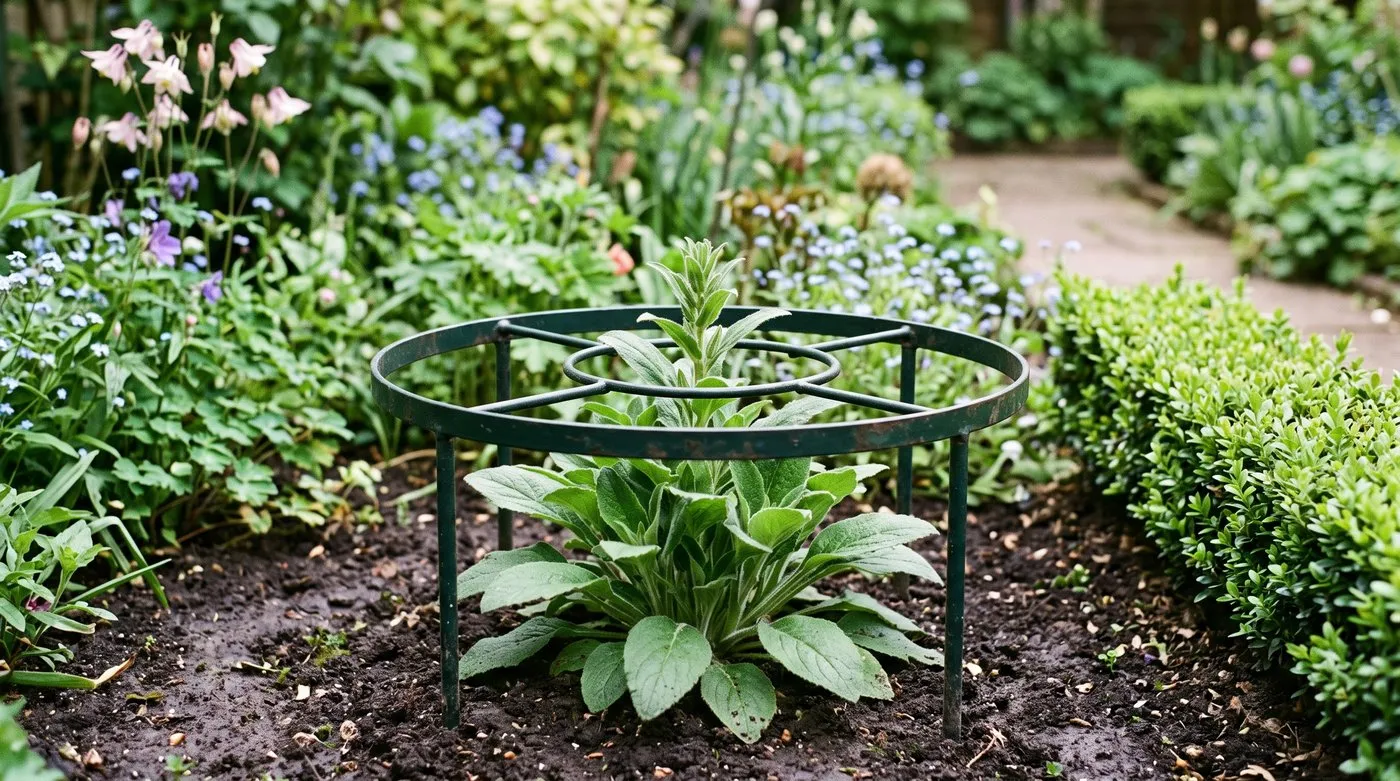 A grow-through ring in place in mid May, when the plant is around 25cm tall. Support fitted this early disappears completely once the spike extends through it.
The same conclusion holds if you are growing for cutting rather than display. The flared calyx is a structural advantage, not a decorative one.
Month-by-month Canterbury bells calendar
| Month | Task |
|---|---|
| January | Check crowns for rot. Clear fallen leaves off rosettes so air reaches the collar. |
| February | Sow ‘Champion’ F1 in a heated propagator at 20C if you want bells this year. |
| March | Firm any plants lifted by frost heave. Slug patrol starts as growth resumes. |
| April | Feed second-year plants with a high-potash feed. Stems begin extending late in the month. |
| May | Fit supports by mid month at 25cm of growth. Sow this year’s seed from mid May. |
| June | Peak flowering. Cut for the vase and deadhead spent bells to hold the display. |
| July | Sow up to the end of the month at the latest. Flowering finishes, cut back hard. |
| August | Pot rosettes on into 1 litre pots. Feed fortnightly at half strength. |
| September | Plant out on ridges or raised beds, 30cm apart. Best planting month. |
| October | Finish planting. Leave a 5cm bare collar around every crown, no mulch on top. |
| November | Clear fallen leaves weekly. Cloche only the most exposed plants, ventilated. |
| December | Nothing to do but keep water off the crowns. Cold is not the enemy here. |
What Canterbury bells cost to grow
The seed is the cheap part. A packet of Cup and Saucer Mixed holds around 200 seeds for £2.50 to £3.50, which is enough for two years of a decent border run. The ‘Champion’ F1 annual costs £3.50 to £4.50 for 25 seeds, roughly 30 times more per plant.
The real costs sit in the middle of the cycle, and they are the ones people forget.
- Peat-free compost: one 40 litre bag at £7 to £9 covers a tray plus 40 potting-on units.
- Grit or perlite: a 20kg bag of horticultural grit at £8 to £12, both for compost and for the planting hole.
- Pots: 40 nine-centimetre pots and 40 one-litre pots, around £12 new, free if you reuse.
- Supports: grow-through rings at £6 to £9 each, so £54 to £81 for a nine-plant group. Pea sticks are free.
- Slug control: ferric phosphate pellets or nematodes, £8 to £25 a season.
Budget roughly £35 to £45 for a first year of 30 plants using pea sticks, or £90 plus if you buy rings. Set against that, garden centre pot-grown Canterbury bells in flower run £6 to £9 each, so 30 plants would cost £180 to £270. Seed is comfortably worth the wait. Bear the 20 to 40 percent winter loss in mind and sow half again more than you need.
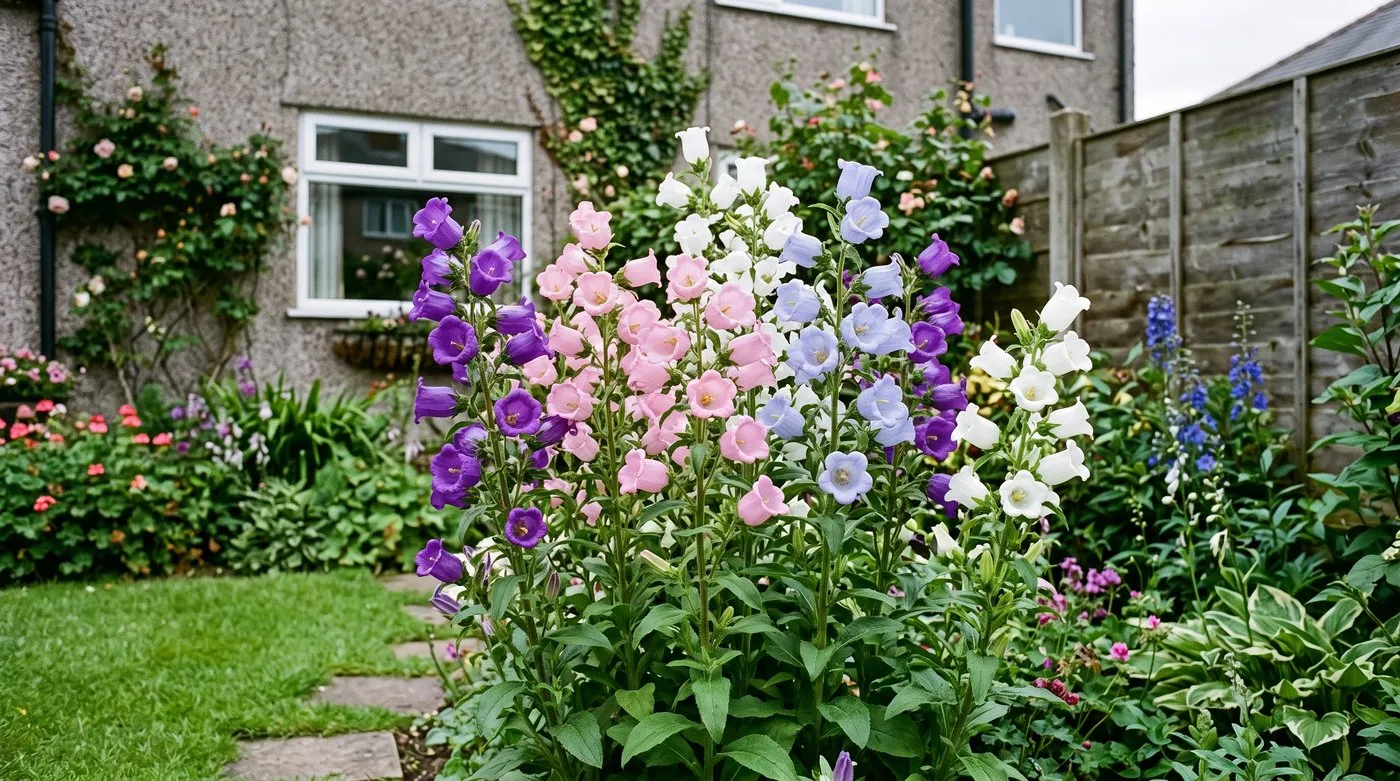 Second-year plants in full flower in a Manchester suburban semi in mid June. They were sown 13 months earlier and planted out the previous September.
Common mistakes with Canterbury bells
- Covering the seed. People sow out of habit and rake 5mm of compost over the top. Campanula medium seed needs light, so buried seed simply never germinates. Surface sow and resist covering it.
- Sowing in spring for the same summer. A March or April sowing gives a rosette with no winter behind it, so no flowering signal. Unless you are growing the ‘Champion’ annuals, sow May to June for flowers the following June.
- Planting on flat, heavy, wet ground. This is the big killer and it gets blamed on frost every time. Plants that are hardy to minus 15C die at zero in standing water. Raise the planting position and grit the hole.
- Feeding hard in autumn. A last nitrogen feed in September makes soft growth that rots at the collar. Switch to half-strength high potash from August and stop feeding by early October.
- Staking after the flop. Once a Canterbury bell stem kinks the sap flow is damaged and the spike never straightens. Supports go in mid May, at 25cm of growth, not in late June when the damage is done.
How Canterbury bells fit the biennial trio
Canterbury bells are the third of the classic UK biennials, alongside wallflowers and sweet william. Growing all three off one May sowing session is far more efficient than treating them separately, because the timings line up almost exactly.
All three want a May to June sowing, a summer rosette, and an autumn planting. Wallflowers flower earliest, from April, and take over from the last tulips. Our guide to growing wallflowers in the UK covers the clubroot risk that Canterbury bells never face, since wallflowers are brassicas. Sweet william overlaps with Canterbury bells in June, but at 45 to 60cm it sits in front of them. The sweet william growing guide has the spacing for that layering.
Sown together in mid June, all three go into their winter quarters in the same September weekend. The bed then delivers colour from April right through to the end of July with no bedding plants bought at all. If you want the perennial bellflowers that need no waiting, our campanula guide covers the species that come back every year.
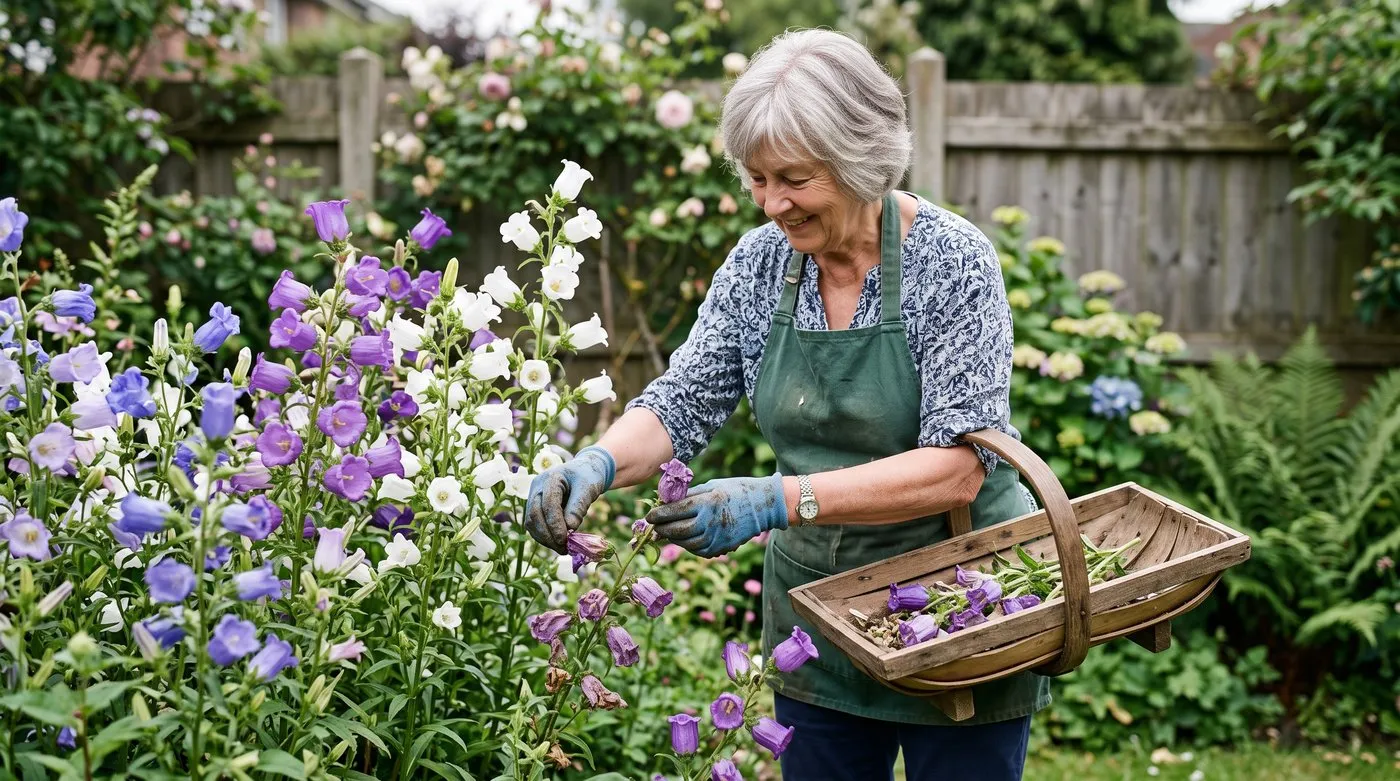 Deadheading in late June keeps the spike producing. Snap out each faded bell at the base rather than cutting the whole stem while lower buds are still opening.
For the botanical detail behind the calycanthema forms, the RHS entry for Campanula medium is the reliable reference, and Garden Organic has sound peat-free seed-sowing guidance that suits the whole biennial group.
Now you have the two-year cycle straight, put that May sowing session to work across the whole group. Browse our full library of growing guides for the next crop to start.
Frequently asked questions
Are Canterbury bells annual, biennial or perennial?
Canterbury bells are true biennials in the UK. Campanula medium makes a leafy rosette in year one and flowers in year two, then dies. Only the ‘Champion’ series behaves as an annual, flowering roughly 20 weeks from sowing.
When should I sow Canterbury bells in the UK?
Sow Canterbury bells from mid May to the end of June. That gives the rosette a full 14 to 16 weeks to bulk up before autumn planting. Sow later than mid July and the plants go into winter too small to flower well.
Do Canterbury bell seeds need light to germinate?
Yes, Canterbury bell seed needs light and must be surface sown. Press the seed onto damp compost and leave it uncovered, or dust it with the barest sieving of vermiculite. Burying the seed under 5mm of compost is the most common reason for no germination.
Why did my Canterbury bells not flower?
Almost always because the plants were sown too late. A rosette under about 12cm across going into winter puts everything into survival, not flower buds. Sow by the end of June and plant out at 15 to 20cm across for reliable June flowering.
What is the difference between Cup and Saucer Canterbury bells?
Cup and Saucer forms have a flared petal collar behind each bell. Botanically these are Campanula medium var. calycanthema. The single form is a plain bell with a green calyx. Cup and Saucer types are showier and hold their shape better as cut flowers.
Do Canterbury bells need staking?
Yes, almost always once stems pass 60cm. The flower spikes are heavy and top loaded, so one wet June night flattens them. Put a ring or pea sticks in by mid May, when growth is around 25cm, not after the flop.
Will Canterbury bells self seed in a UK garden?
Yes, but sparsely and only if you leave the pods on. One plant sets thousands of tiny seeds, yet few find bare soil. Expect a handful of volunteers on gravel or path edges rather than a reliable colony.
Our team produces practical UK gardening guidance from source research, contributor records and established horticultural practice. Editorial standards are overseen by Matt W.