Key takeaways
- Blue Corydalis flexuosa goes summer-dormant by mid-July; it is resting, not dead
- Yellow Corydalis lutea self-seeds freely and flowers May to October in any soil
- Blue types need cool moist humus-rich shade, pH 5.5 to 7, and never dry out
- Tuberous Corydalis solida flowers March to April, then dies back by June
- Corydalis seed is short-lived; sow it fresh within 2 to 3 weeks of ripening
- Corydalis flexuosa is H4 hardy to about -10C; C. solida is far tougher at H6
Corydalis is one of the best plants for shade in a British garden, and one of the most misunderstood. Learning how to grow corydalis really comes down to knowing which of two very different camps your plant belongs to. The electric-blue Himalayan and Chinese types are woodland fusspots that vanish in July. The yellow Corydalis lutea is close to indestructible and seeds itself into every wall crack. Get the type right and the rest is straightforward.
The two corydalis camps: fussy blue and bombproof yellow
Corydalis is a large genus of around 470 species in the poppy family, Papaveraceae. In gardens it divides cleanly into two groups that need opposite treatment. Confusing the two is the root of most failures.
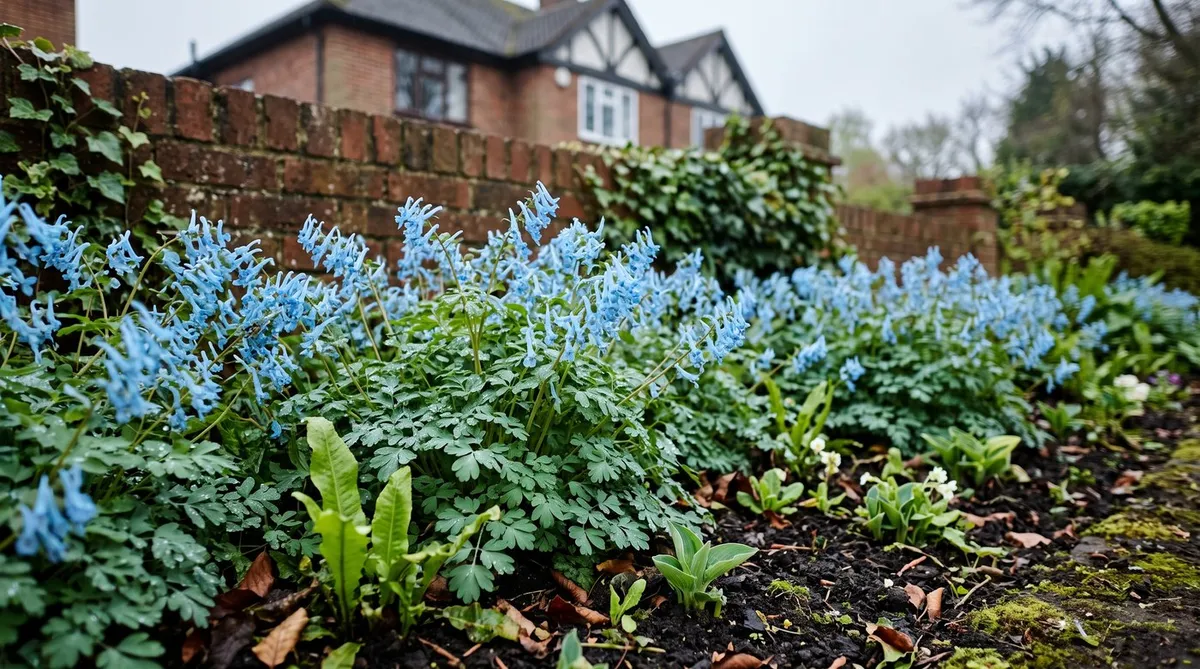
The first camp is the blue woodlanders, led by Corydalis flexuosa from the cool, damp forests of Sichuan in western China. These carry sprays of clear, almost luminous blue flowers over ferny foliage in late spring. They are the plants people covet after seeing them at a flower show. They are also the ones that sulk, shrink and disappear if the soil warms or dries.
The second camp is the tough yellows, led by Corydalis lutea, now botanically Pseudofumaria lutea. This one grows in the poorest, driest wall crevices and flowers from May right through to October. It seeds itself around cheerfully. A related fern-leaved species, Corydalis cheilanthifolia, behaves the same way. If the blue types defeat you, these never will.
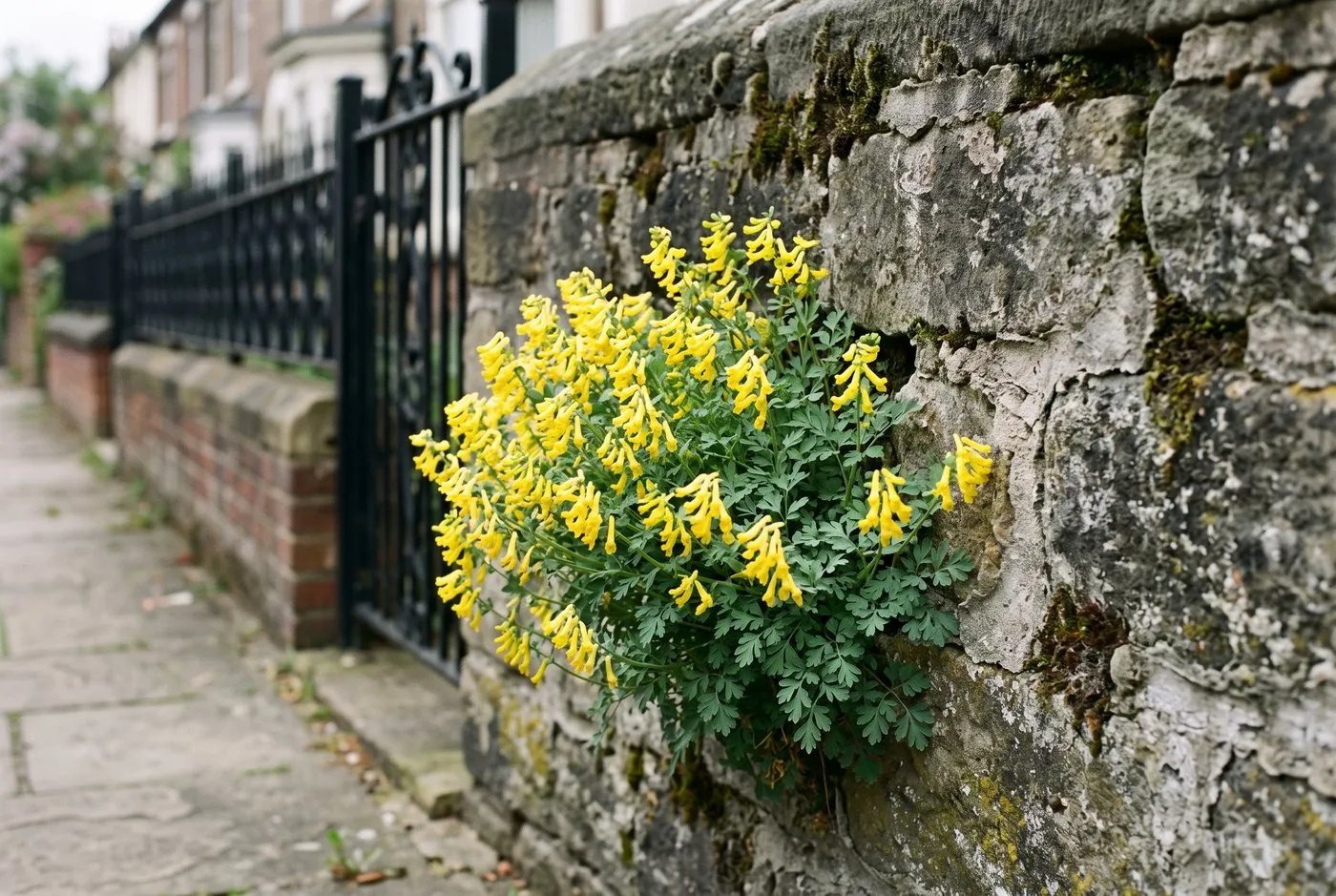 Corydalis lutea earns its keep in the hardest spots. This self-sown clump colonised the lime mortar of a terraced-street front wall and flowers for six months.
Which corydalis to grow: species and cultivars compared
Choosing the right corydalis matters more than any other decision here. Most garden types sit between 15 and 40cm tall. The table below ranks the common species and cultivars by how reliably they perform in an ordinary UK garden, based on our own side-by-side trials on clay-loam.
| Species / cultivar | Height | Flower colour | Hardiness | Best use | Garden reliability |
|---|---|---|---|---|---|
| Corydalis lutea | 30cm | Bright yellow | H5 | Walls, dry shade, gravel | 1st, near indestructible |
| Corydalis solida | 15-25cm | Purple, pink, salmon-red | H6 | Woodland, naturalising | 2nd, tough tuber |
| Corydalis cheilanthifolia | 25-30cm | Yellow over ferny leaves | H5 | Dry shade, self-seeding | 3rd |
| C. ‘Craigton Blue’ | 30cm | Deep blue, long season | H4 | Cool moist shade | 4th, best blue |
| Corydalis elata ‘Blue Summit’ | 40cm | Rich blue, later, scented | H4 | Cool border, less dormancy | 5th |
| C. flexuosa ‘Pere David’ | 30cm | Clear sky-blue | H4 | Woodland shade | 6th, summer dormant |
Corydalis lutea and Corydalis solida are where we send beginners. Both are cheap, forgiving and permanent. Among the blues, ‘Craigton Blue’ and Corydalis elata ‘Blue Summit’ hold their leaves longer and shrug off warmth better than pure flexuosa cultivars like ‘Pere David’, ‘Purple Leaf’ and ‘China Blue’. Those three are the prizes, but also the quickest to vanish.
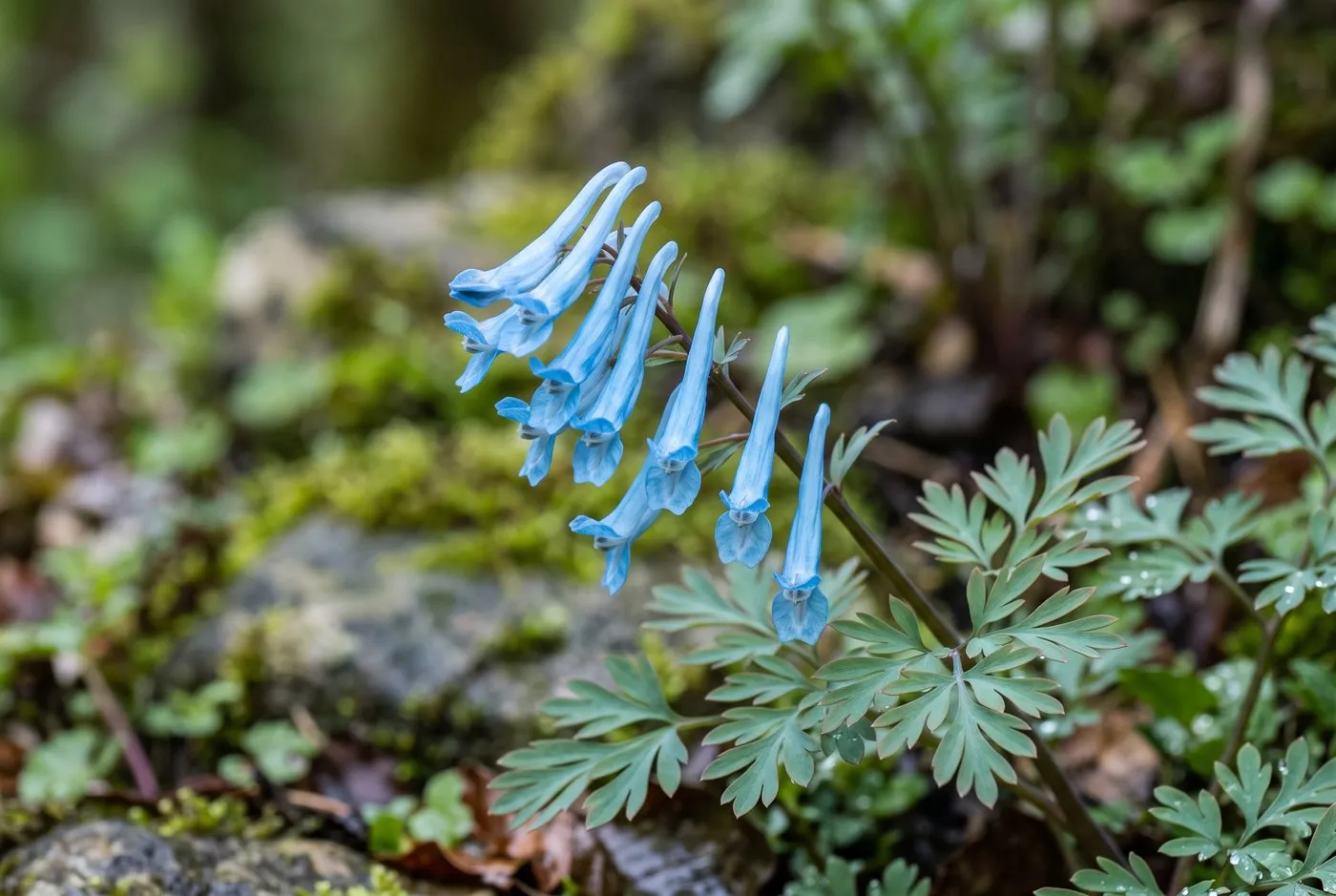 The reason gardeners chase blue corydalis: the clear, almost luminous flowers of ‘Pere David’. This clump grows in a cool, north-facing Welsh hillside border.
Why blue corydalis vanishes in July
Blue corydalis does not usually die in summer. It goes dormant, and understanding why makes every care job obvious. Corydalis flexuosa comes from mountain woodland where summers are cool and moist and the soil never bakes. In a warm, dry UK border it reads the heat as a signal to shut down and wait.
The cycle runs in four clear stages:
- Spring flush (March to April): New ferny foliage pushes up as the soil warms past about 8C.
- Flowering (April to June): Blue sprays open over the leaves for six to eight weeks.
- Dormancy onset (late June to July): Once soil temperature climbs past roughly 20C, or the ground dries, the foliage yellows and dies back within two weeks.
- Recovery (autumn or next spring): Kept cool and moist, the crown reshoots in September, often with a second, smaller flush of flowers.
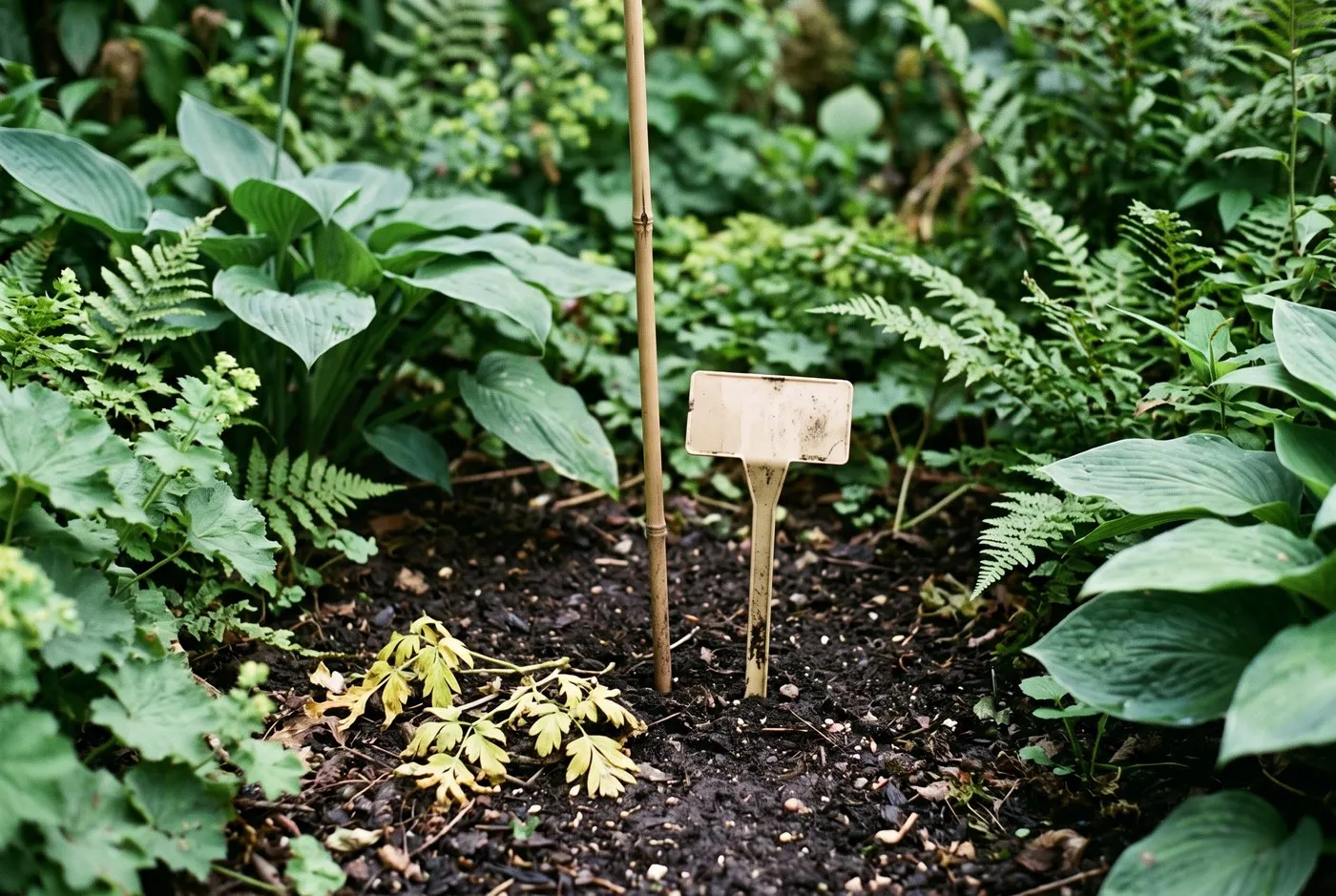 Not a dead plant, a dormant one. Blue corydalis leaves this gap by mid-July. A cane and label stop you digging it out or planting over the resting crown.
Gardener’s tip: Underplant blue corydalis with a shade fern or a hosta that fills out in June. As the corydalis dies back in July, the neighbour hides the gap and keeps the soil shaded and cool. We pair ours with the golden grass Hakonechloa and small hostas, which peak just as the corydalis rests.
Where to plant corydalis: shade, soil and moisture
Blue corydalis wants cool, dappled shade and soil that never dries out. The ideal spot is a north or east-facing border under deciduous shrubs, or the shaded side of a raised bed. Avoid hot, south-facing ground. On our free-draining clay-loam, a fully open border cooks the crown by July.
Soil is the other half of the job. These plants demand humus-rich, leafy ground that holds moisture yet still drains. Before planting, we fork a full bucket of leafmould into each square metre, plus a handful of grit on heavier patches. This mimics the forest-floor conditions of their native woodland. Set plants 25 to 30cm apart and water them in well.
The yellow and tuberous types are far less demanding. Corydalis lutea grows in dry shade, gravel and wall crevices that would kill the blues. It even prefers a bit of lime. For a full shady scheme, our guide to the best plants for shade in UK gardens lists companions that share the same cool, moist spot, and the hardy ferns fernery guide covers the leafy partners that cover corydalis as it fades.
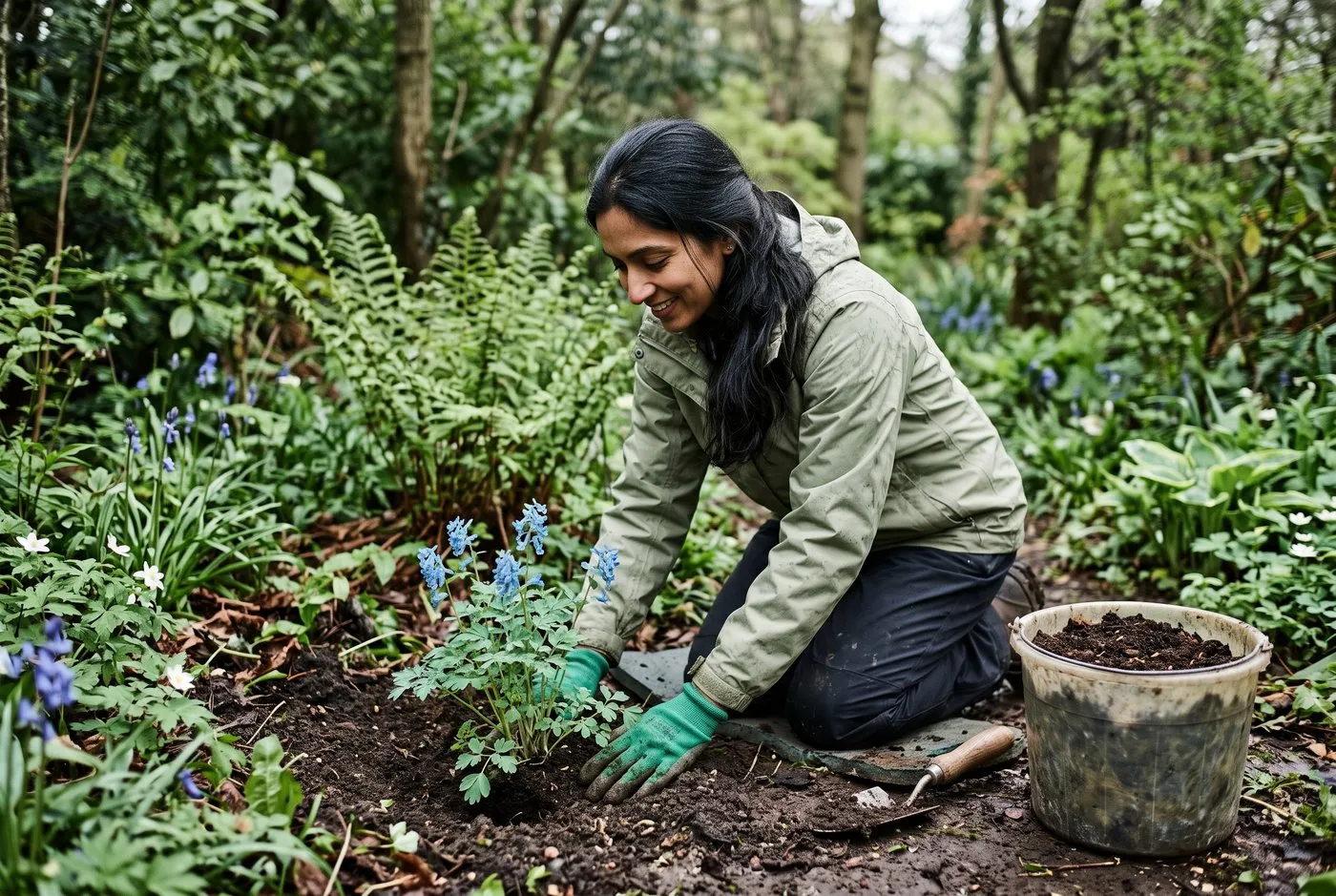 Planting into cool, leafmould-rich shade. Fork a bucket of leafmould into each square metre first, then set the crown level with the soil and water in well.
Do corydalis need acidic soil?
Blue Corydalis flexuosa prefers slightly acidic to neutral soil, ideally pH 5.5 to 7. It is not a true ericaceous plant like a rhododendron, but it dislikes chalk and thin alkaline ground. The leafy, humus-rich conditions it wants tend to be mildly acidic anyway. If your soil is limy, grow the blues in pots of peat-free ericaceous compost mixed with leafmould and grit.
The yellow types turn this on its head. Corydalis lutea actively enjoys alkaline conditions and colonises old lime-mortar walls across the UK. Corydalis cheilanthifolia and the cream Corydalis ochroleuca are just as happy on lime. So your soil pH should steer which camp you pick rather than blocking you entirely.
If you garden on chalk and want the blues, a raised bed or container is the answer. To gently lower pH in the ground for a blue corydalis pocket, see our guide to making soil more acidic. For a fuller planting on naturally acid ground, the article on the best plants for acid soil suggests reliable neighbours.
Growing tuberous Corydalis solida for spring colour
Corydalis solida is the easiest and hardiest corydalis of all, and the earliest to flower. It grows from a small round tuber and behaves as a spring ephemeral. It pushes up in February, flowers in March and April, then dies back cleanly by early June to rest underground until the next spring.
Plant the dry tubers in early autumn, about 5cm deep, in leafy woodland soil or grass. They naturalise happily under deciduous trees and shrubs. The flowers come in soft purple, pink and, in named forms, glorious colour. ‘George Baker’ is a warm salmon-red, and ‘Beth Evans’ a clear pink. Expect 15 to 25cm of height.
Corydalis solida is tough to H6, taking down to about -20C, so winter is no threat. It also self-seeds, and the seed is spread by ants, which carry it off for the oily coat on each grain. Over a few years a handful of tubers becomes a spring drift. Tubers cost around £1 to £2 each, or less in bulk from a specialist bulb supplier.
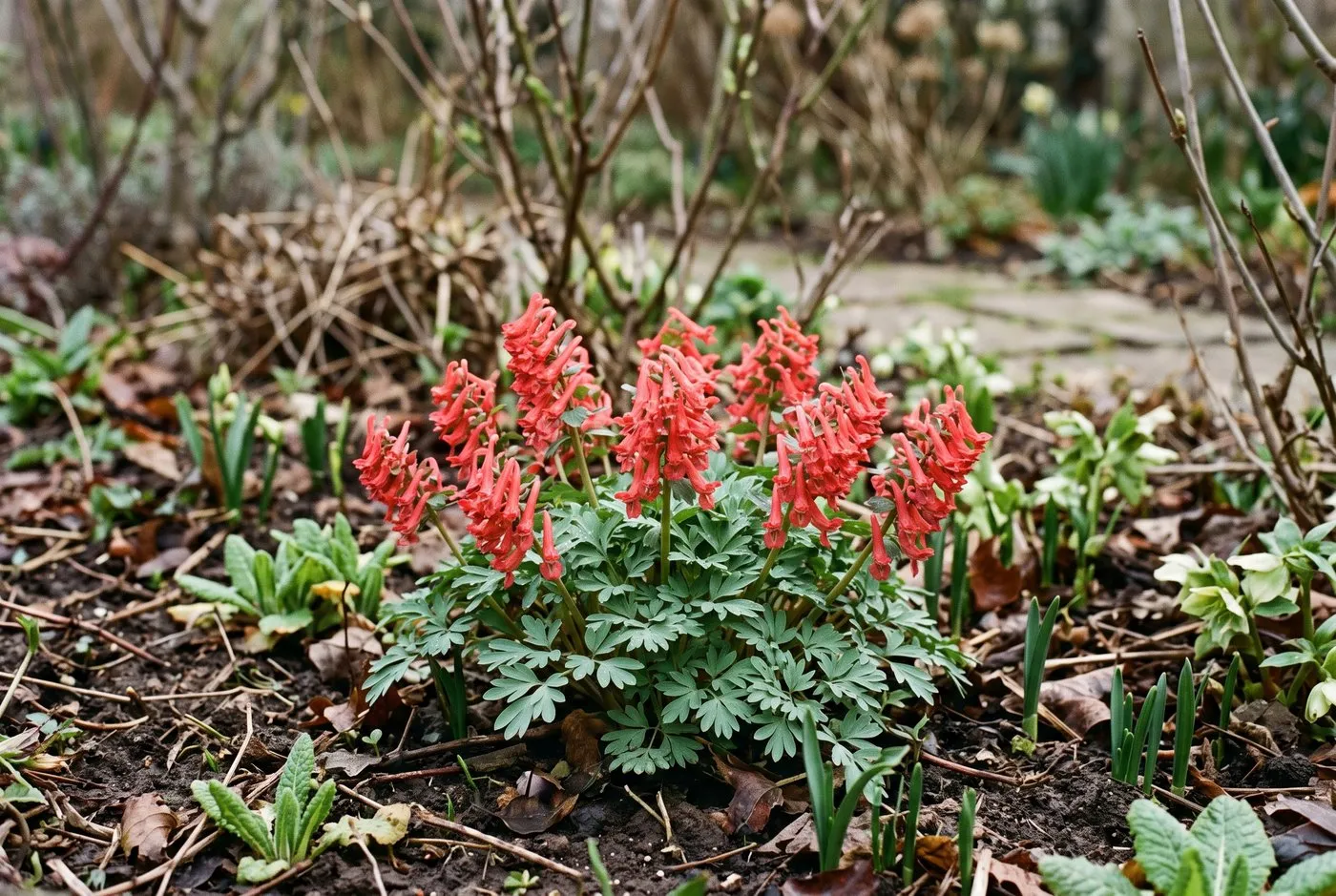 Tuberous Corydalis solida ‘George Baker’ opens in March, weeks ahead of the blue types. It dies back by June and returns bigger each spring from offset tubers.
Watering, feeding and the yearly dormancy cycle
Feeding is light. A spring mulch of leafmould or leaf-based compost supplies most of what corydalis needs. In pots, we add a weak, balanced liquid feed every three to four weeks during growth, then stop once the leaves yellow. Overfeeding produces soft, floppy growth that flops and rots.
| Stage | Months | Water | Feed |
|---|---|---|---|
| Spring flush | March to April | Keep evenly moist | Leafmould mulch |
| Flowering | April to June | Steady, never dry | Weak feed in pots |
| Dormancy onset | Late June to July | Moist, do not soak | None |
| Rest and recovery | August to February | Cool and just damp | None |
The critical error in dormancy is either of two extremes. Let the crown bake bone dry and it may not return. Sit it in cold, wet mud all winter and it rots. Aim for cool and just-damp forest-floor conditions all year.
Month-by-month corydalis calendar
| Month | Task |
|---|---|
| January | Blue and tuberous types dormant. Keep soil cool and just damp. Order Corydalis solida tubers and fresh seed. |
| February | First Corydalis solida shoots appear. Top up leafmould mulch over resting crowns. Firm any lifted tubers. |
| March | Blue corydalis flushes new foliage. C. solida flowers. Divide congested clumps of blue types now if needed. |
| April | Peak flowering for blue and tuberous corydalis. Keep the soil moist. Sow any saved fresh seed in shade. |
| May | Corydalis lutea starts its long flowering run. Water blue types every second day in dry spells. |
| June | Blue flexuosa flowers fade. Collect and sow fresh seed at once. Keep the ground shaded and moist. |
| July | Blue corydalis dies back and goes dormant. Do not panic or dig. Mark each crown with a cane. |
| August | Crowns rest underground. Keep the spot cool and lightly damp. C. lutea still flowering hard. |
| September | Blue corydalis reshoots, sometimes with a second flush. Divide and replant flexuosa clumps now. |
| October | Plant Corydalis solida tubers 5cm deep in leafy soil. C. lutea finishes flowering. |
| November | Apply a leafmould mulch over all crowns. Clear fallen leaves off evergreen C. lutea rosettes. |
| December | Fully dormant. Protect pots of blue types from waterlogging. Keep the ground cool and just moist. |
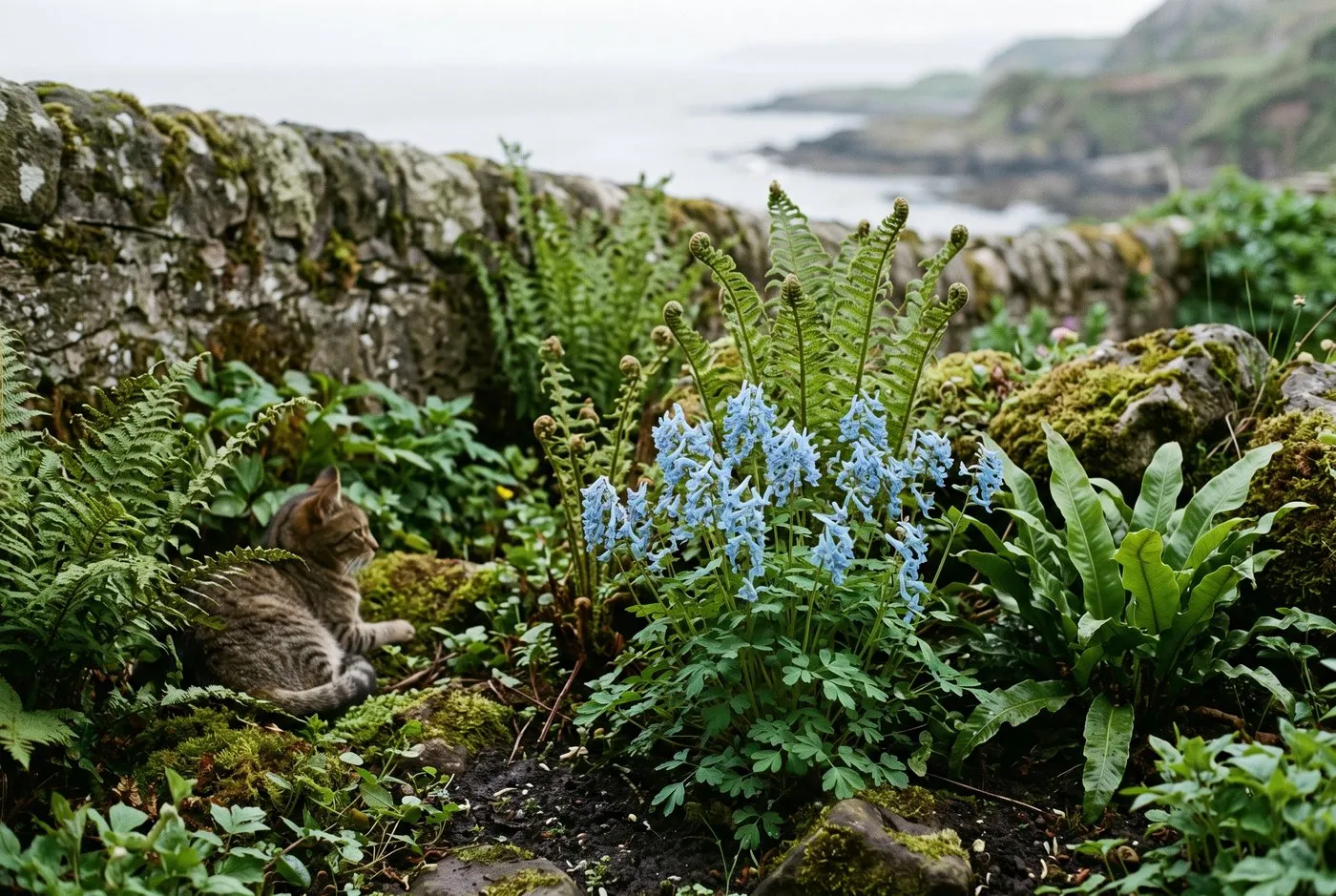 A cool, damp, fern-filled border is corydalis heaven, and clearly a good spot for a cat too. This shady seaside planting keeps the crowns cool right through summer.
Propagating corydalis from division and fresh seed
Corydalis is easy to increase once you know its quirks. The reliable route for blue types is division, done in early autumn as the plants reshoot, or straight after flowering. Lift a clump, tease it into pieces each with roots and a shoot, and replant at once into leafy soil. Most flexuosa cultivars are sterile, so seed is not an option for them.
Where seed is set, timing is everything. Corydalis seed is short-lived and must be sown fresh, within 2 to 3 weeks of ripening, while the grains are still plump and pale. Dried, shop-bought corydalis seed germinates poorly. Sow it in a shady frame in leafy compost and expect germination the following spring after a cold winter.
Corydalis lutea and C. solida do the work for you. Lutea self-sows everywhere, and solida both self-seeds and splits into offset tubers you can lift and space out in autumn. For the wider technique, our guide to dividing perennials in May covers the general method on woodland-edge plants.
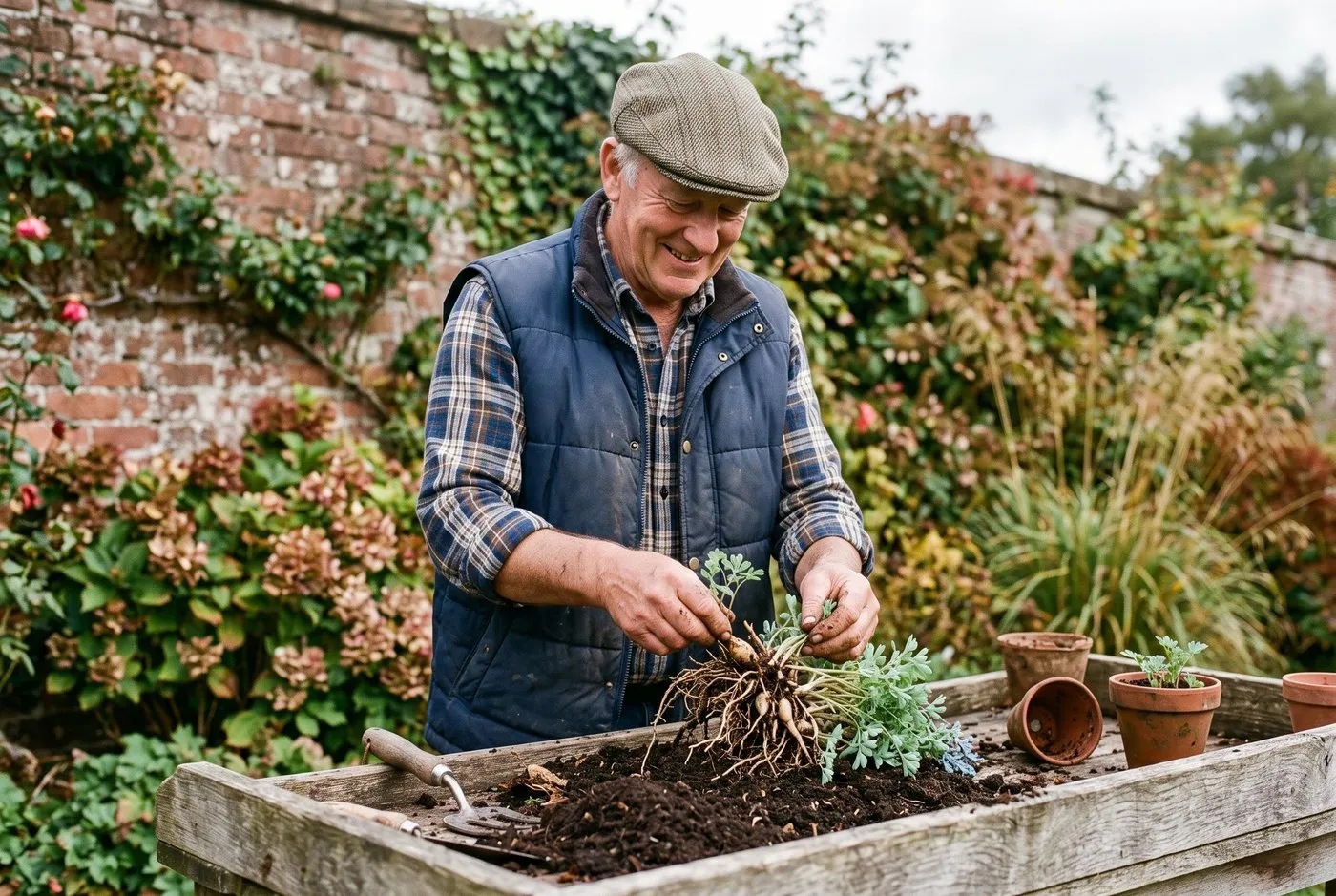 Dividing a blue corydalis clump in early autumn. Tease it into pieces, each with roots and a shoot, then replant straight into leafy soil so it never dries out.
Common mistakes when growing corydalis
- Digging up dormant plants. The classic corydalis killer. Blue types vanish in July and look dead, so people remove them. Mark every crown with a cane and leave it. It reshoots in autumn or spring.
- Planting the blues in sun or dry soil. Corydalis flexuosa is a woodland plant. Hot, dry, south-facing ground forces early dormancy and often death. Give it cool, moist, leafy shade instead.
- Sowing old seed. Corydalis seed loses viability within weeks. Dried packet seed rarely comes up. Sow only fresh, plump seed within 2 to 3 weeks of collecting it.
- Fighting your soil pH. Blues want acid-to-neutral leafy soil; yellows want lime. Pick the camp that suits your ground rather than forcing the wrong one to grow.
- Letting pots dry out. Container-grown blue corydalis dries fast and shuts down early. Stand pots in shade and check the compost daily through warm spells.
Warning: Do not confuse Corydalis lutea’s free self-seeding with true invasiveness, but do stay on top of it. Seedlings develop a deep, brittle taproot within a season. Pull unwanted ones while small. Left too long, they lodge in wall mortar and paving, where mature plants are hard to remove cleanly.
Corydalis draws early bees too. The spurred flowers suit long-tongued bumblebees, which reach the nectar most insects cannot. Late-winter and spring forage matters for queens emerging from hibernation, a point the Bumblebee Conservation Trust makes about early-flowering woodland plants. The RHS advice on corydalis confirms the cool, moist, shady approach for our climate.
For more shade planting, browse our full range of growing guides for woodland-edge plants, and pair corydalis with the reliable, ferny-leaved bleeding hearts (Dicentra), which share the same summer-dormant habit and cool-shade needs.
Now you know how to grow corydalis and keep the blue types going through summer, read our guide to growing hostas in the UK for the perfect leafy companion to cover the gap when corydalis rests.
Frequently asked questions
How do you grow corydalis in the UK?
Grow blue corydalis in cool, moist, humus-rich shade that never dries out. Dig in plenty of leafmould, keep the crown shaded, and water through summer. Grow yellow Corydalis lutea almost anywhere; it self-seeds freely. Plant tuberous Corydalis solida in autumn in leafy woodland soil for March flowers.
Why does my blue corydalis disappear in summer?
It has gone dormant, not died, usually by mid-July. Corydalis flexuosa evolved in cool Chinese woodland and shuts down in summer heat and drought. The foliage yellows and vanishes, then the plant re-emerges in autumn or the following spring. Keep the spot moist and marked so you do not dig it up.
Is corydalis hardy in the UK?
Most corydalis are fully hardy in the UK. Corydalis flexuosa is rated RHS H4, surviving to about -10C. Corydalis lutea is H5, and tuberous Corydalis solida is H6, taking -20C. The bigger risk to the blue types is summer heat and drought, not winter cold.
Does corydalis come back every year?
Yes, corydalis is perennial and returns each year in the right spot. The blue types die back in summer, then reshoot in autumn or spring. Yellow Corydalis lutea is nearly evergreen and self-sows. Corydalis solida dies down by June and reappears the next March from its tuber.
Does corydalis need acidic soil?
Blue Corydalis flexuosa prefers slightly acidic to neutral soil, pH 5.5 to 7. It wants leafy, humus-rich ground, not chalk. Yellow Corydalis lutea is the opposite and thrives on lime, even in old mortar walls. Match the type to your soil rather than fighting it.
How do you propagate corydalis?
Divide clumps in early autumn or sow fresh seed straight away. Corydalis seed loses viability fast, so sow within 2 to 3 weeks of ripening while still plump. Many flexuosa cultivars are sterile, so division is the reliable route. Corydalis solida splits easily into offset tubers.
Is Corydalis lutea invasive?
Corydalis lutea is not classed as invasive but it self-seeds prolifically. It colonises walls, gravel and paving cracks across the UK. Pull unwanted seedlings while small, as older plants have a deep, brittle taproot. Most gardeners welcome it in difficult dry shade.
Our team produces practical UK gardening guidance from source research, contributor records and established horticultural practice. Editorial standards are overseen by Matt W.