Key takeaways
- Dwarf French beans reach about 45cm tall and need no canes, unlike climbing types at 2m
- Sow only when soil reaches 12C, mid May outdoors or mid April under cover
- Space plants 15 to 23cm apart in rows 45cm apart, sowing 5cm deep
- Pods crop 55 to 65 days from sowing across a short three to four week window
- One plant yields 200 to 350g, so sow a fresh batch every two to three weeks
- Pick every two to three days to keep plants producing into early autumn
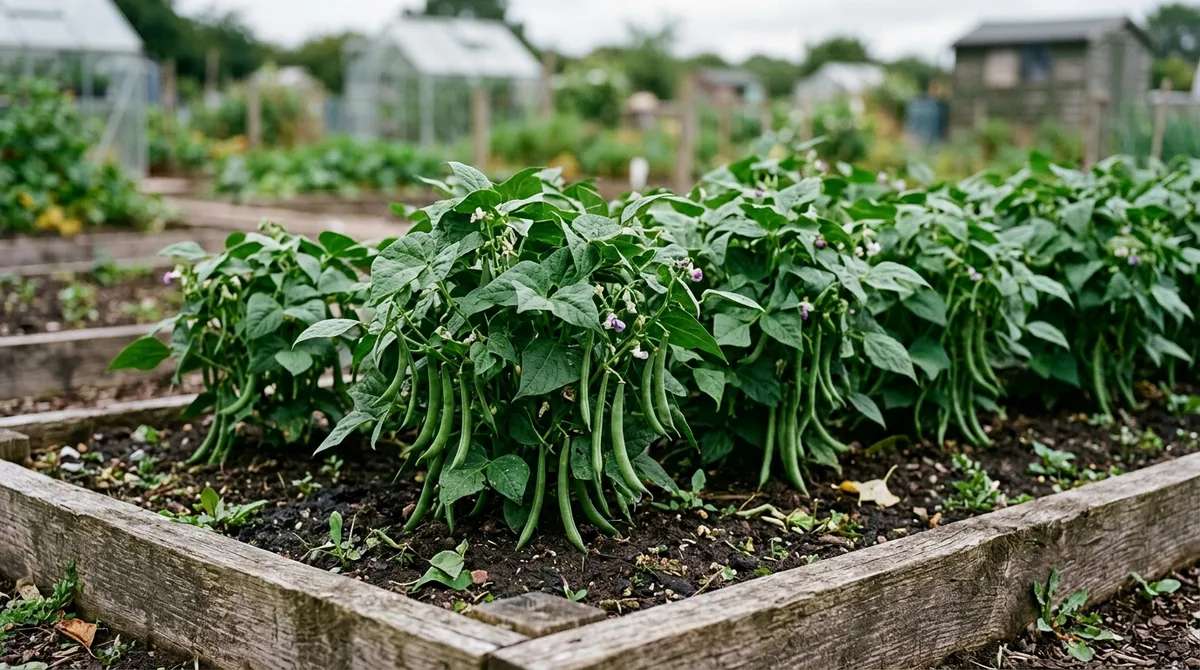
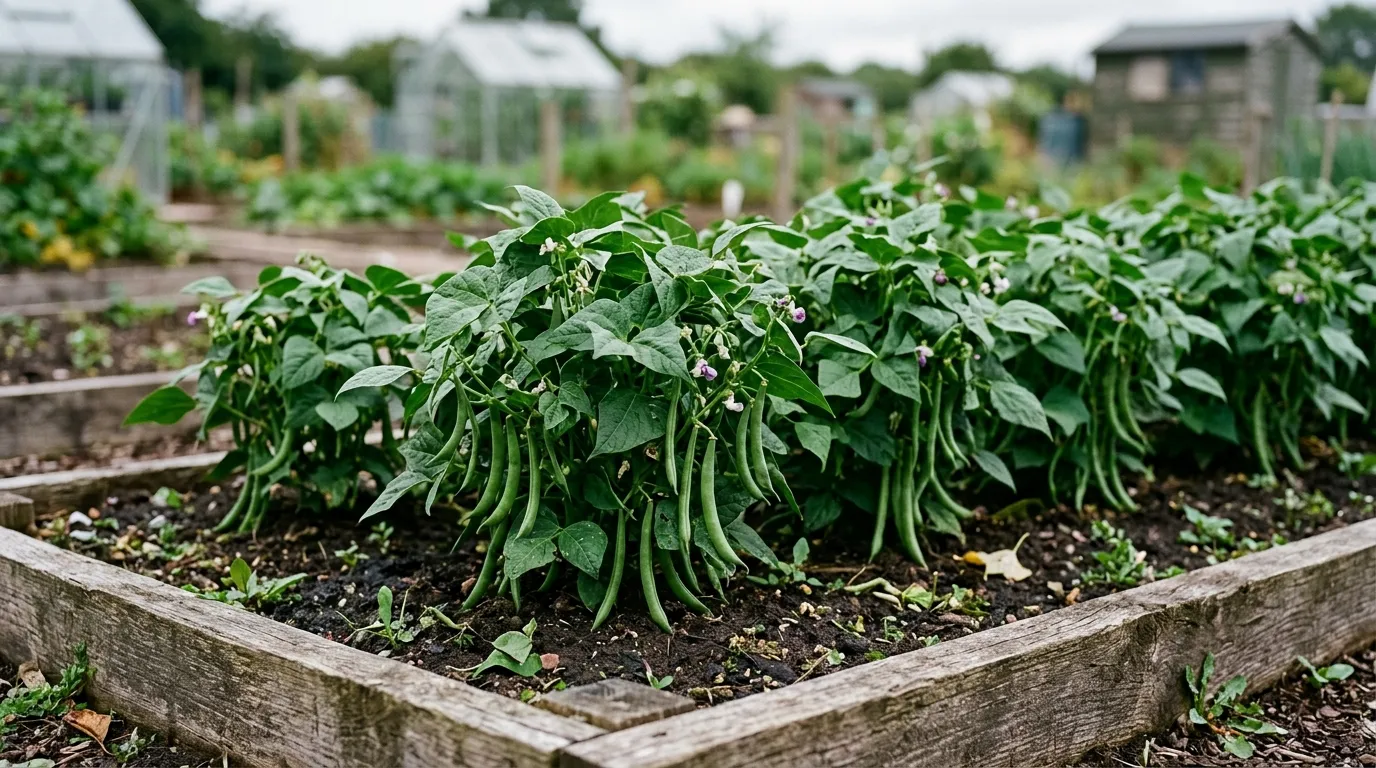 A productive row of dwarf French beans at the allotment. No canes, no tying in, just a low bush heavy with pods.
How dwarf French beans differ from climbing types
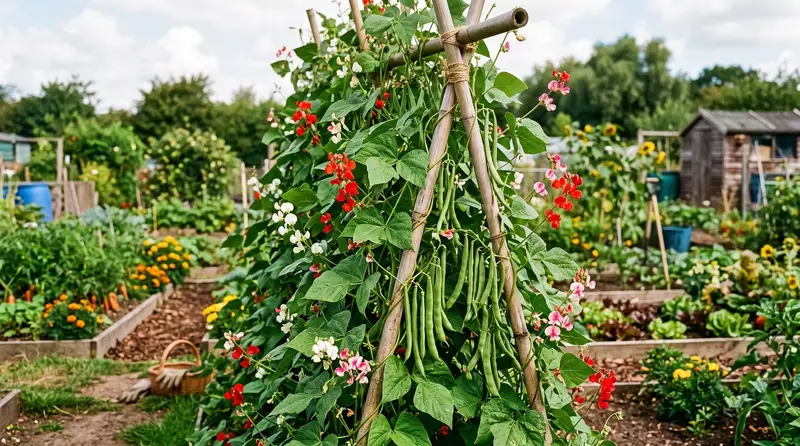
Dwarf French beans and climbing French beans are the same species, Phaseolus vulgaris. The difference is growth habit. Dwarf types are bush plants that stop at about 45cm. Climbing types are vines that reach 2m and must be grown up canes.
This is why the two beans suit different jobs. Grow dwarf beans for an early, concentrated crop and for any spot where canes would not fit. Grow climbers for a long steady supply from one sowing. Many allotments run both. For the tall vining type, our guide to growing French beans up canes covers wigwam construction and support spacing in full.
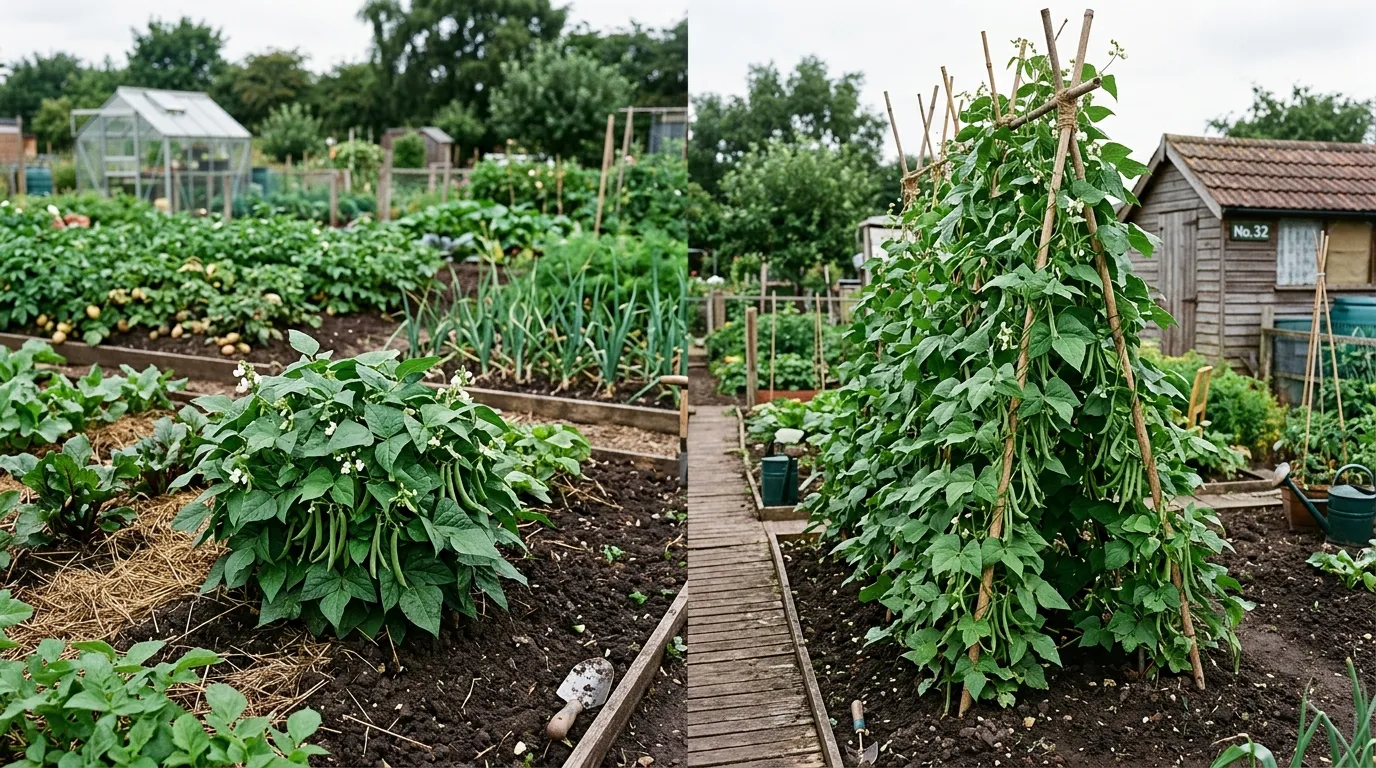 The height difference is stark. The dwarf bush on the left tops out at 40cm. The climber on the right is heading past 1.8m.
When and how to sow dwarf French beans
Soil temperature is the one rule that matters. French bean seed rots in cold wet ground. Wait until soil reaches 12C before sowing outdoors. In most of the UK that means mid May. In cold northern and upland gardens it means late May or early June. A £4 soil thermometer pushed 5cm into the bed settles the question.
For an earlier crop, sow under cover. From mid April, sow single seeds 5cm deep into 7cm pots of peat-free compost on a windowsill or in a frost-free greenhouse at 15 to 18C. They germinate in 7 to 10 days. Harden off over a week and plant out from late May once the last frost has passed.
Sow a few spare seeds at the row end. Transplant them into any gaps where germination failed. Slugs take seedlings fast, so a barrier of sharp grit or wool pellets around the row pays off in the first two weeks.
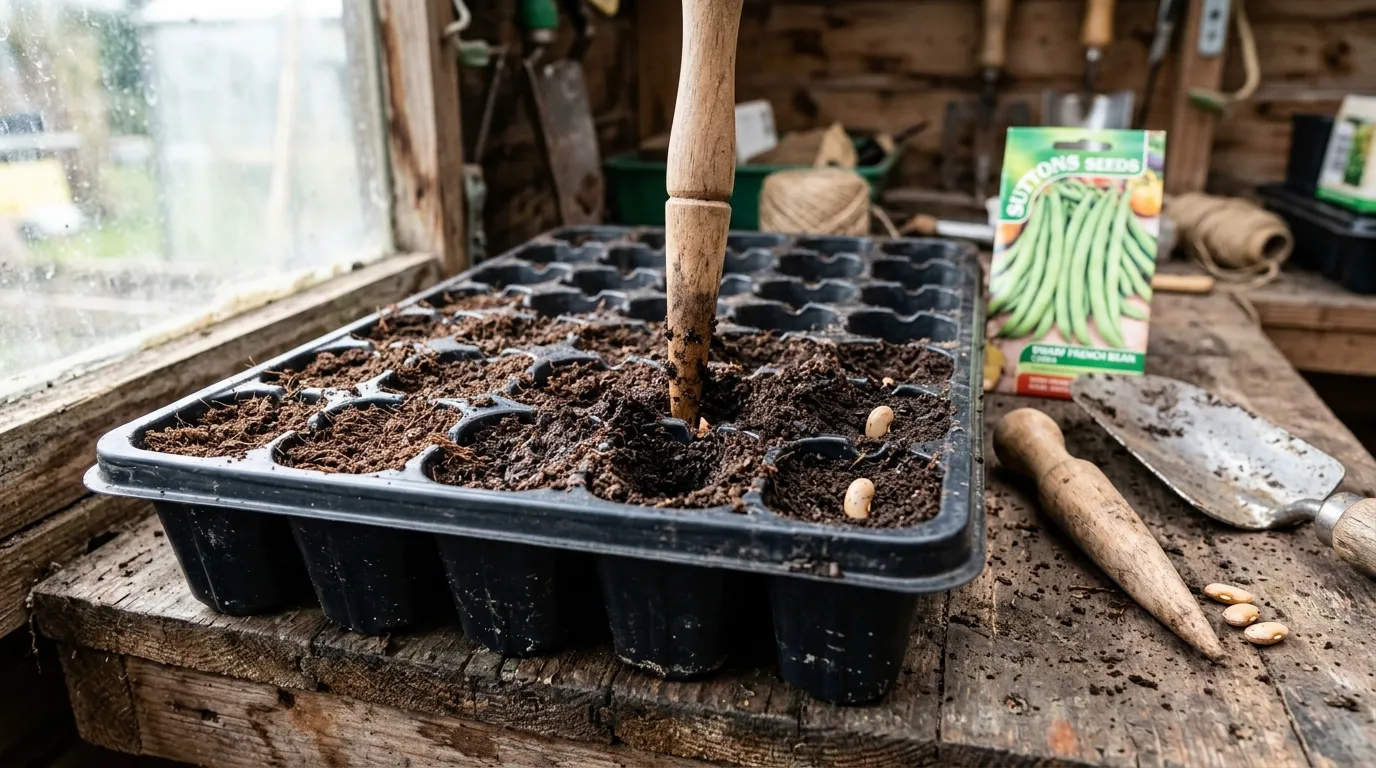 Module-sown beans under cover in mid April give a three-week head start on direct sowing.
Best dwarf French bean varieties for UK gardens
For drying rather than fresh eating, borlotti types belong in a different bed. Our guide to drying beans and peas and the borlotti bean growing guide cover the haricot and shelling varieties grown to maturity.
Gardener’s tip: Grow two varieties with different maturity dates, such as ‘Tendergreen’ at 55 days and ‘Stanley’ at 62 days. The week’s gap between them stretches your fresh-eating window without any extra effort.
Keeping beans on the plate with successional sowing
A single dwarf bean plant crops for only three to four weeks. Sow the whole bed in one go and you get a glut, then nothing. The fix is successional sowing: a fresh small batch every two to three weeks.
A practical schedule for a family bed:
- Batch one: sow mid May, picking from late July.
- Batch two: sow early June, picking from mid August.
- Batch three: sow late June, picking from early September.
- Batch four: sow first week of July, picking into October.
Each batch needs only a metre or two of row. The same principle applies across the vegetable plot, and our succession planting guide sets out the wider rotation of quick crops through one bed across a season.
Growing dwarf French beans in pots and containers
Dwarf French beans are one of the best beans for containers. The compact bush habit means no tall canes wobbling in a pot. A patio or balcony grower gets a real crop from a single large container.
Use a pot at least 20cm deep and 25cm wide. A 30cm diameter pot holds three to four plants comfortably. Fill with peat-free multipurpose compost and mix in a slow-release feed. Containers dry out fast in summer, so water daily in warm spells and never let the compost dry fully while flowers are setting. Dry roots at flowering cause the flowers to drop and the crop to fail.
Feed weekly with a high-potash tomato feed once the first flowers open. Pots have no soil reserve, so this feed drives pod set. Expect 150 to 250g per plant in a pot, slightly down on open ground but ample for fresh eating from a balcony. For more crops that thrive in pots, see our best vegetables for container growing.
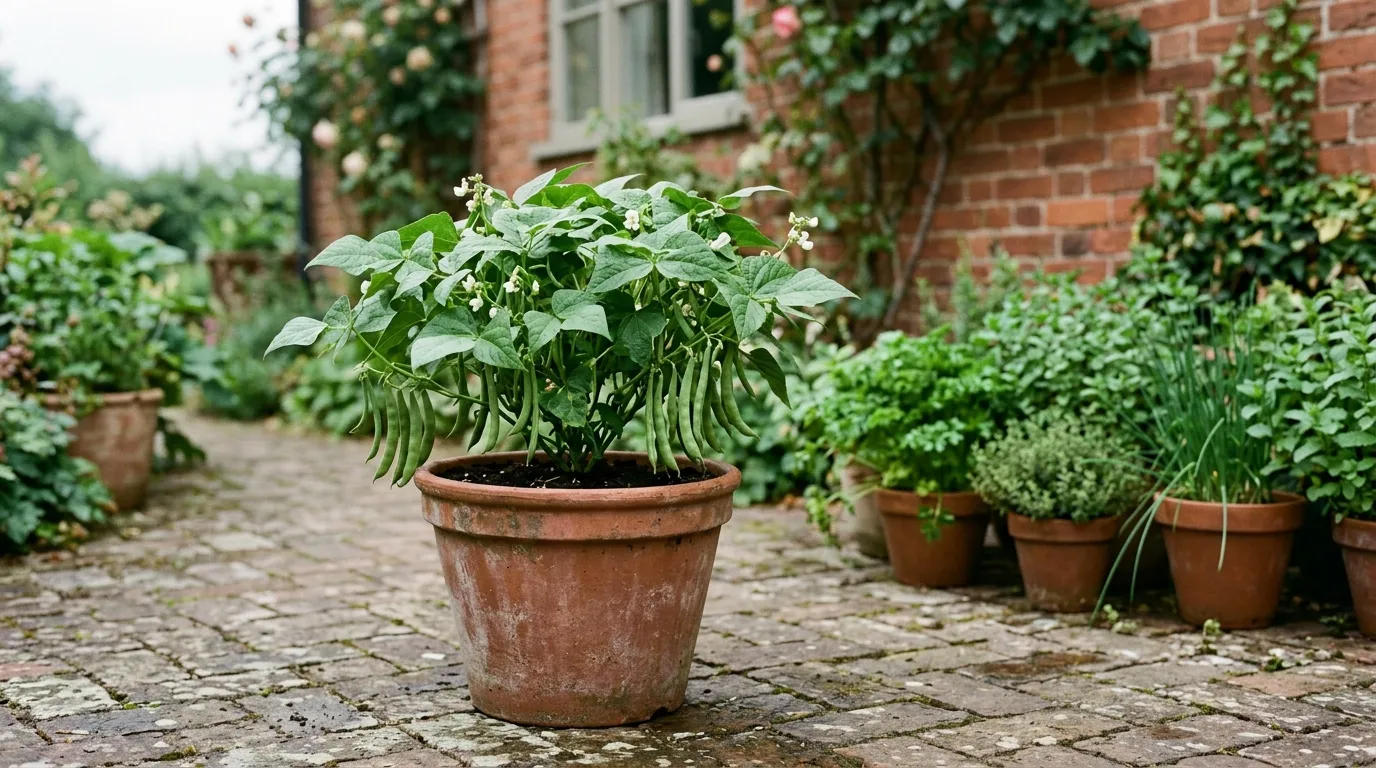 A single dwarf bean plant in a terracotta pot. No support, just regular water and a weekly potash feed.
The pests and diseases that hit dwarf beans
Three problems account for almost every dwarf bean failure in UK gardens: slugs, black bean aphid and halo blight. Knowing the root cause of each saves a crop.
Slugs at the seedling stage
Slugs take young bean seedlings overnight, especially in a wet May. The plants are most vulnerable in their first two weeks. A ring of sharp grit, crushed shell or wool pellets around each row works as a barrier. Nematode biological control (Phasmarhabditis) applied to damp soil cuts slug numbers for six weeks and is the most effective option in a wet season. Once plants pass 15cm they shrug off light grazing.
Black bean aphid on growing tips
Black bean aphid (Aphis fabae) clusters on the soft growing tips and flower stalks from June. A heavy colony stunts growth and reduces pod set. Pinch out and bin the worst-affected tips early. A jet of water knocks colonies off. Ladybirds and hoverfly larvae clear light infestations within a fortnight, so avoid spraying broad insecticides that kill those predators too.
Halo blight in wet summers
Halo blight is a bacterial disease showing as small dark spots ringed with a pale yellow halo on leaves. It spreads in cool wet weather and through splashing water. There is no cure once a plant has it. The root cause is usually infected seed or overcrowding that traps moisture. Buy certified seed, space plants at the full 15 to 23cm, water at the base not over the leaves, and never save seed from an infected plant. For wider bean disease identification, our bean rust treatment guide covers the orange pustule disease that hits beans later in the season.
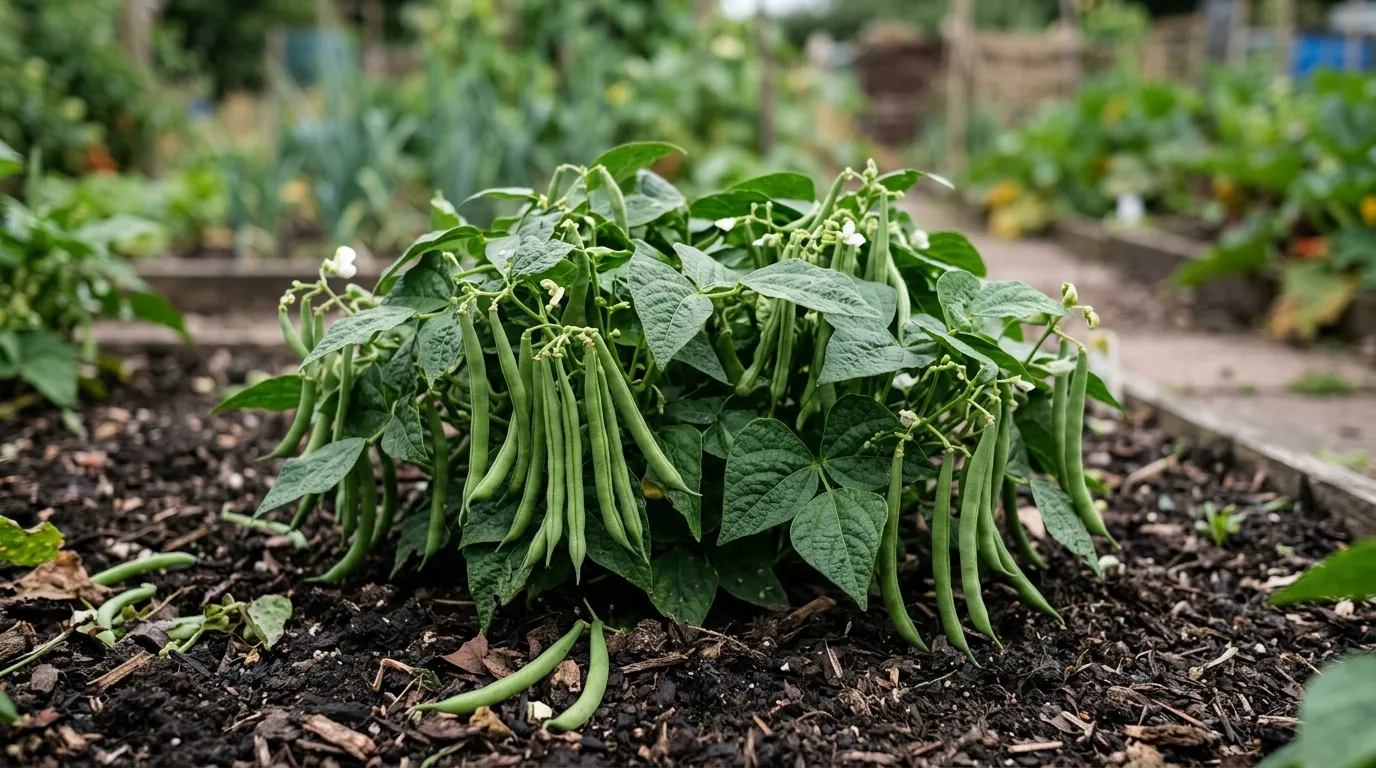 A healthy ‘Safari’ plant in full crop. Wide spacing and base watering kept halo blight away through a wet July.
When and how to harvest dwarf French beans
Pick early and pick often. Dwarf French beans are ready about 55 to 65 days from sowing, when pods reach 10 to 12cm and snap cleanly. A pod that bulges with visible bean seeds inside has gone too far and turns stringy.
Harvest every two to three days at the peak of the season. This is the single most important harvest rule. The plant sets pods to make seed. If you let pods mature, the plant reads its job as done and stops flowering. Keep picking young pods and it keeps producing for the full window. Leaving pods on the plant for a week can halve the total crop.
Pick in the cool of the morning when pods are crisp. Hold the stem with one hand and pull the pod with the other to avoid tearing the plant. A single healthy plant gives 200 to 350g over its cropping life in open ground. Expect the heaviest flush in the first ten days, then a lighter trickle.
Freezing a glut of dwarf French beans
French beans freeze well and keep for up to 12 months. The bush habit means crops arrive in a concentrated flush, so freezing is the natural way to handle a surplus.
Blanch before freezing to stop enzyme action that would otherwise turn the beans tough and dull. Top and tail the pods, cut into 3 to 4cm lengths, then blanch in boiling water for 3 minutes. Plunge straight into iced water for 3 minutes to stop the cooking. Drain well, open-freeze on a tray for an hour so they stay loose, then bag up. Skipping the blanch step is the usual reason home-frozen beans taste flat by Christmas.
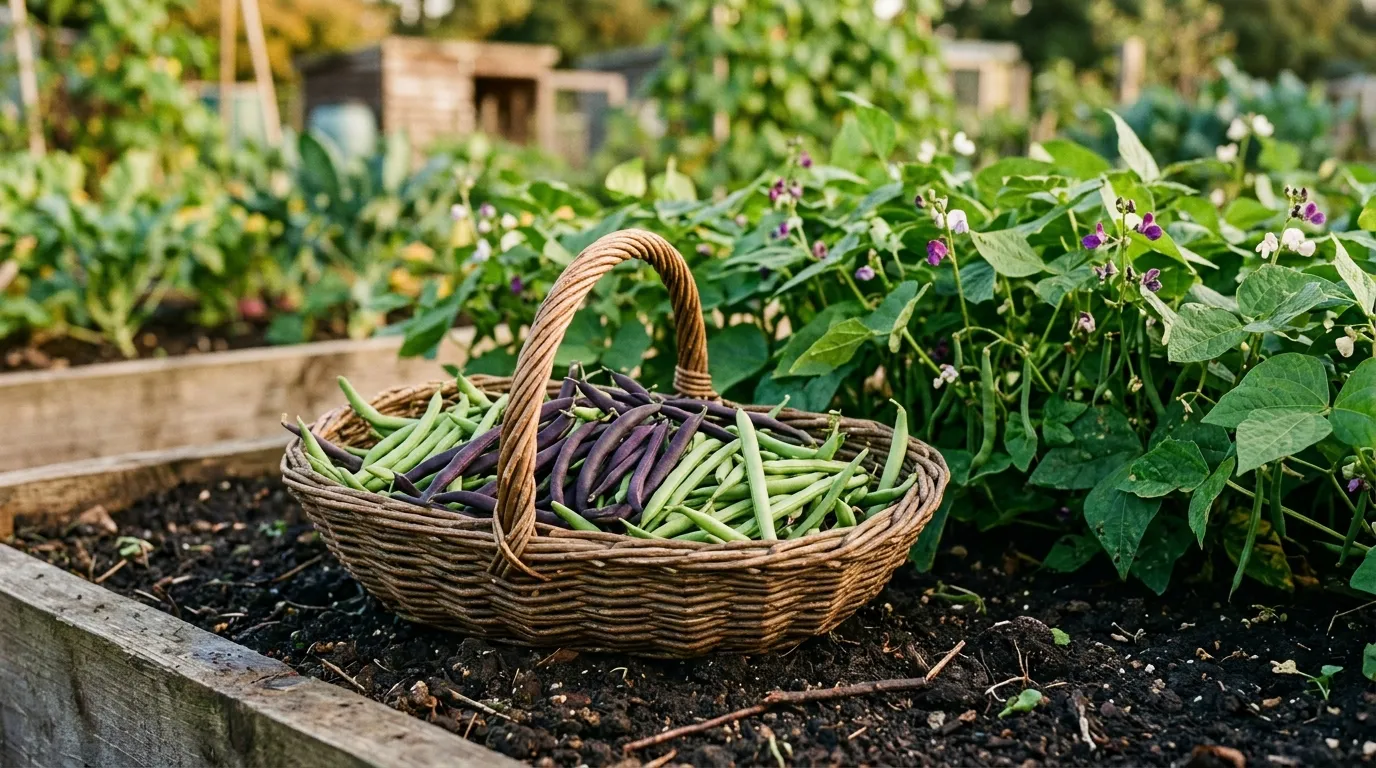 A morning pick of ‘Safari’ and ‘Purple Teepee’. The purple pods turn green on cooking but look superb raw in a salad.
Month-by-month dwarf French bean calendar
| Month | Task |
|---|---|
| March | Order seed. Warm cold beds with cloches or black plastic |
| April | Sow under cover from mid month in 7cm pots at 15 to 18C |
| May | Harden off indoor plants. Sow first direct batch from mid May once soil hits 12C |
| June | Sow second batch early month. Watch for black bean aphid on tips |
| July | Sow final batch first week. Begin picking earliest sowings late month |
| August | Pick every two to three days. Water deeply in dry spells |
| September | Continue picking. Sow nothing new now, too late to crop |
| October | Final harvest before first frost. Clear and compost spent plants |
| November | Dig in well-rotted manure for next year’s bean bed |
| December | Plan next season’s varieties and rotation slots |
Dwarf beans fit the legume slot in a crop rotation, fixing nitrogen for the leafy crops that follow. Our crop rotation planner shows where beans sit in a three or four year cycle to keep soil and pests in check.
Common mistakes with dwarf French beans
Sowing into cold soil. This is the number one killer. Seed sown below 12C sits and rots in wet ground rather than germinating. Wait for warmth, or start under cover and plant out. A late May sowing into warm soil overtakes an early May sowing into cold soil every time.
Not picking often enough. Leave pods to mature and the plant stops flowering. Picking every two to three days keeps the crop coming. A bean left to swell its seeds signals the plant to shut down production.
Sowing the whole crop at once. One big sowing gives a glut then a gap. The short three to four week cropping window of each plant means you must sow small batches every two to three weeks for a steady supply.
Spacing plants too close. Crammed plants trap damp air and invite halo blight in a wet summer. Hold to the full 15 to 23cm spacing for air flow, even though the bushes look small at planting.
Letting containers dry out at flowering. Pots that dry while flowers are setting drop their flowers and crop poorly. Water container beans daily in summer and feed weekly with high-potash feed once flowering starts.
Frequently asked questions
What is the difference between dwarf and climbing French beans?
Dwarf French beans grow as 45cm bushes with no canes. Climbing types reach 2m and need support. Both belong to the same species, Phaseolus vulgaris. Dwarf beans crop earlier but over a shorter three to four week window. Climbers crop later and supply over eight to ten weeks from one sowing.
Do dwarf French beans need staking or supports?
No, dwarf French beans need no canes or supports. The bush habit holds the plant at about 45cm. Heavy crops can flop in wind, so a few twiggy sticks pushed in around a row help keep pods off the soil. Most gardeners grow them with no support whatsoever.
When should I sow dwarf French beans in the UK?
Sow outdoors from mid May once soil reaches 12C. Start earlier under cover in pots from mid April for planting out in June. In cold northern gardens wait until late May or early June. Keep sowing fresh batches until the first week of July.
How many dwarf French bean plants do I need per person?
Allow 8 to 10 plants per person for fresh eating. That gives around 2 to 3kg per person across a season of successional sowing. For freezing a surplus, double it to 16 to 20 plants and split them across two or three sowing batches.
Can you grow dwarf French beans in pots?
Yes, dwarf French beans grow well in pots. Use a container at least 20cm deep and 25cm wide. Plant three to four seeds per 30cm pot. Their compact bush habit suits patios and balconies far better than tall climbing beans. Water daily and feed weekly once flowering.
The RHS bean growing advice gives further detail on regional sowing dates, and Garden Organic covers organic slug and aphid control in depth.
Next step
Now you can grow a steady crop of dwarf beans, read our guide to growing runner beans in the UK for the classic British cropping bean, or browse the full vegetable growing section for the rest of the kitchen garden.
Our team produces practical UK gardening guidance from source research, contributor records and established horticultural practice. Editorial standards are overseen by Matt W.