Key takeaways
- A south-facing conservatory can reach 45C in summer and near freezing in winter
- Citrus, bird of paradise and succulents cope best with the heat and glare
- Clivia and streptocarpus thrive on the cooler, shadier side
- Most conservatory plants need a winter minimum of 5 to 10C
- Shading and ventilation protect plants more than any single species choice
- Free-draining compost and careful watering prevent the usual root rot
For striking, bird-attracting flowers under glass, see our guide to growing kangaroo paw.
The room matters as much as the plant. Knowing how hot and how cold your conservatory really gets is the first step to filling it with plants that last.
Why conservatories are so hard for houseplants
The single biggest reason conservatory plants fail is the extreme temperature swing. Glass on all sides traps heat fast and loses it just as fast. Understanding this swing tells you which plants will cope.
Light is the second factor. South and west-facing rooms get fierce direct sun that suits Mediterranean and desert plants. North-facing rooms stay cooler and shadier, suiting a different group. Before choosing anything, note which way your conservatory faces and, ideally, log its summer high and winter low. Our guide to the best houseplants for beginners covers easier rooms for comparison.
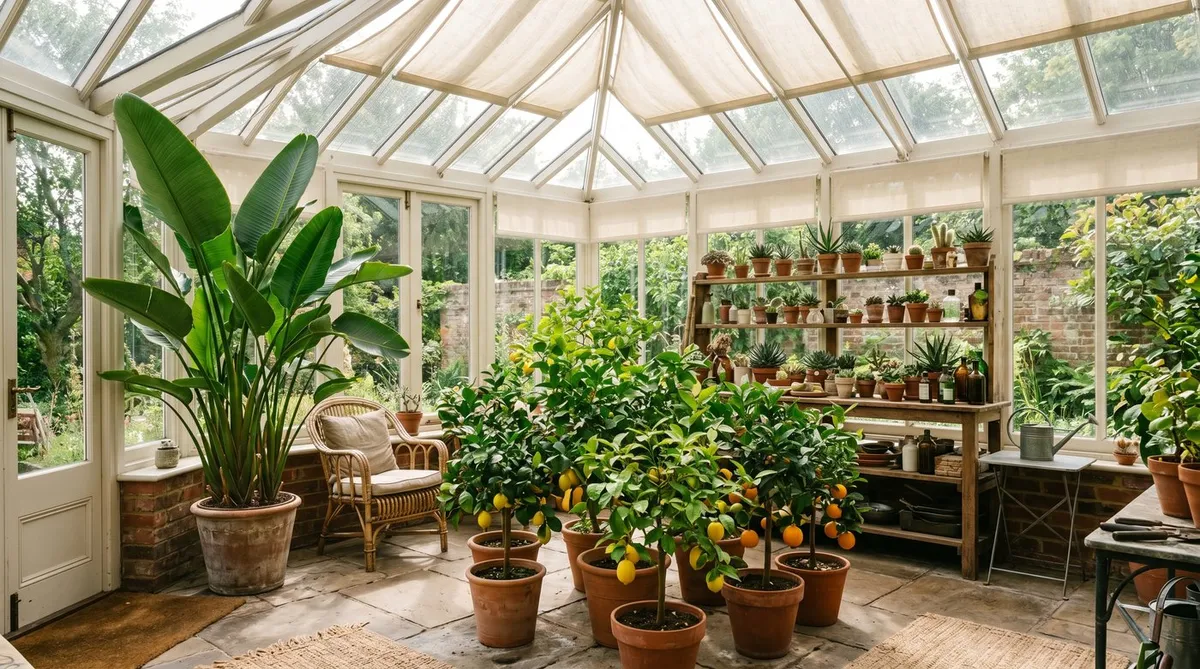
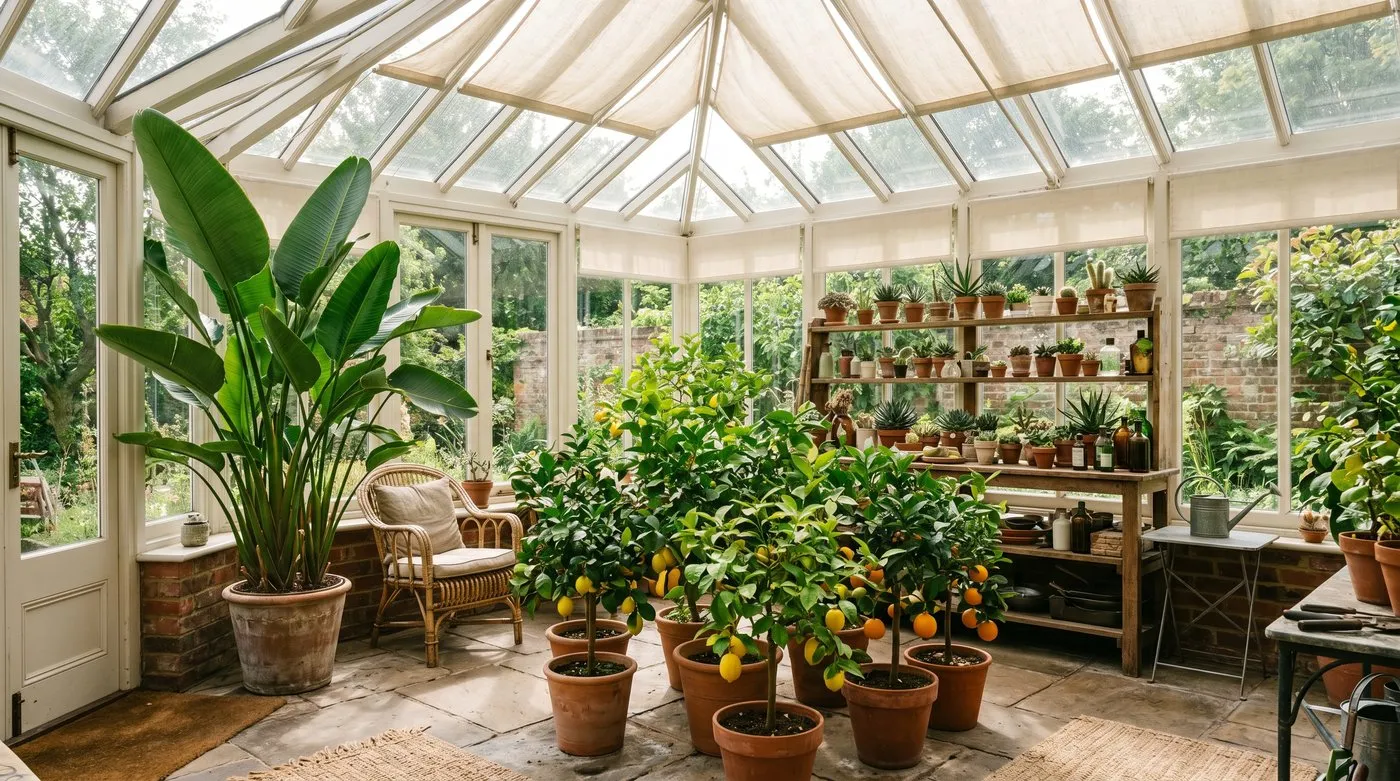 A worked conservatory. Citrus, Strelitzia and succulents cope with the heat, while blinds tame the worst afternoon sun.
The best plants for a hot, bright conservatory
Sun-loving plants thrive in a south or west-facing conservatory where others scorch. They evolved in hot, bright climates and shrug off the heat behind glass, provided you ventilate and water sensibly.
Citrus lead the group. A lemon, lime or calamondin orange wants bright light, free-draining citrus compost and a winter minimum of 5C. They flower with a sweet scent and fruit over a long season. Bird of paradise (Strelitzia reginae) makes a dramatic specimen, with paddle leaves and exotic orange flowers once mature, tolerating heat and bright light well.
Pelargoniums flower all summer in a hot conservatory and ask only for sun and sparing water. Bougainvillea climbs and flowers brilliantly in the heat, though it needs a winter rest. Abutilon and plumbago add more flower in the same bright, warm conditions. Our roundup of hardy exotic and tropical plants covers companions for an exotic scheme.
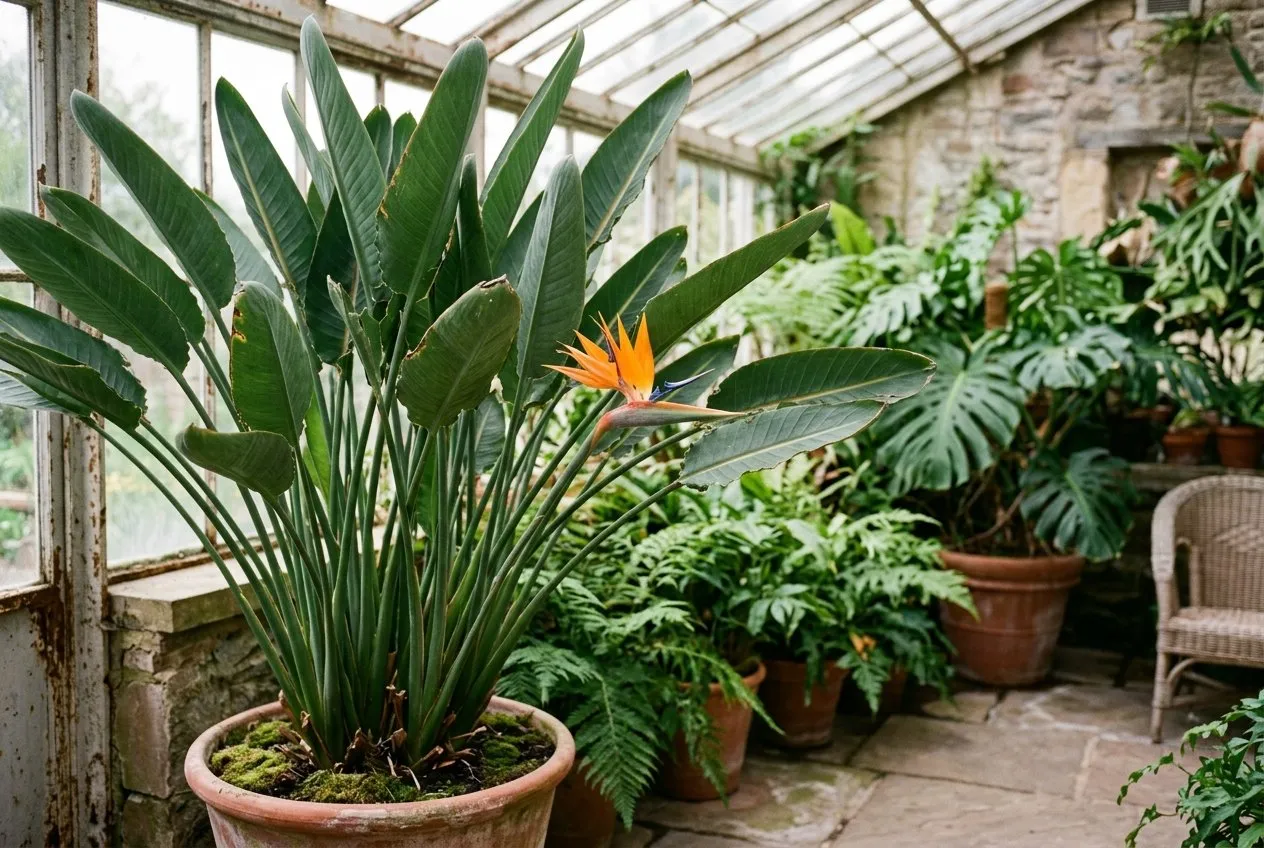 Bird of paradise makes a dramatic specimen and copes with bright heat. It flowers once the plant is several years old.
Gardener’s tip: Move citrus outdoors for the summer once nights stay above 10C. The extra airflow and natural light harden the growth, cut scale insect problems, and the plant comes back into the conservatory tougher for the winter.
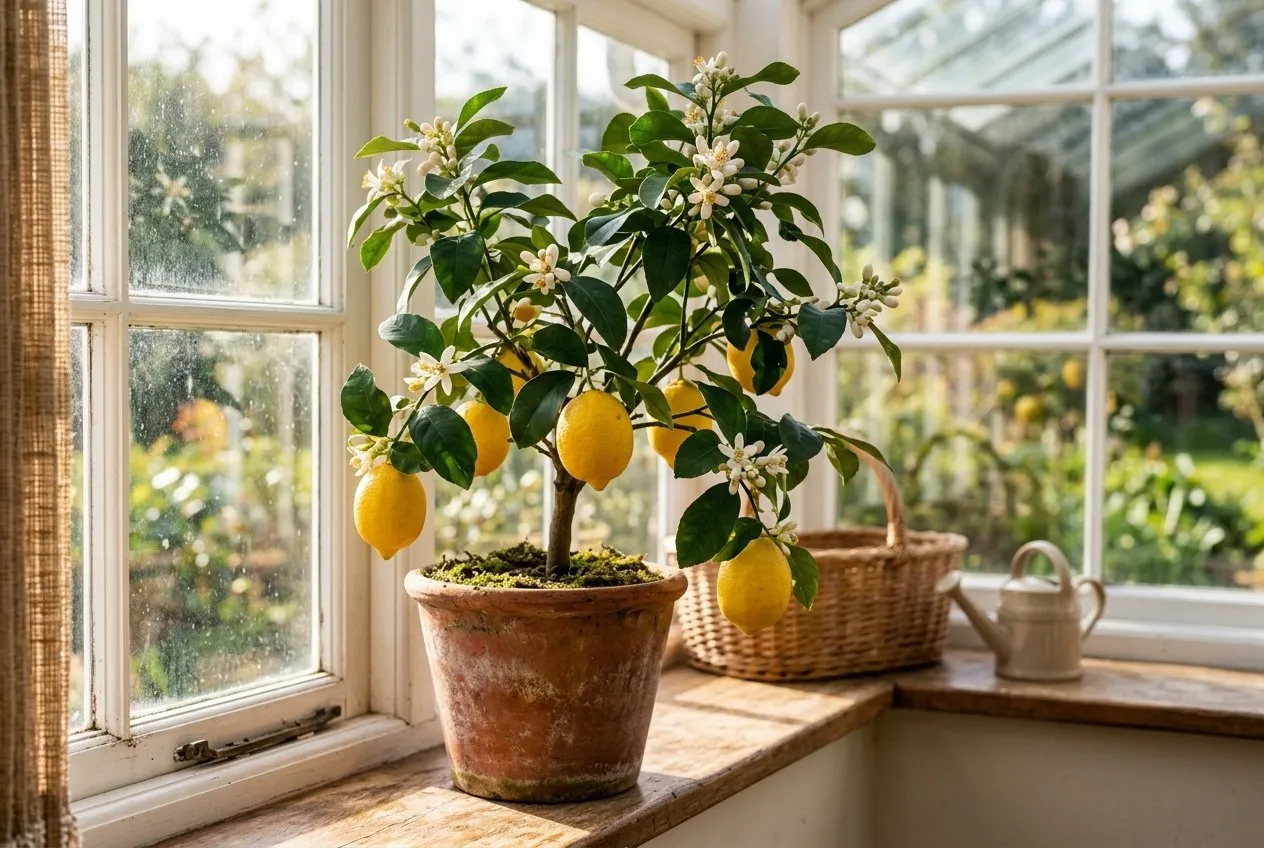 Citrus are among the best conservatory plants. Bright light, free-draining compost and a 5C winter minimum keep them happy.
Succulents and cacti for the driest, hottest spots
Succulents and cacti are the toughest conservatory plants of all. They store water in their leaves and stems, so they cope with the heat and the forgetful waterer better than anything else.
Agave, aloe and echeveria all thrive in the brightest, hottest spot. They want free-draining gritty compost and water only when the compost dries out fully. Sansevieria, the snake plant, tolerates heat, drought and neglect, making it the easiest of all. The ponytail palm (Beaucarnea) stores water in its swollen base and survives long gaps between watering.
The critical mistake with succulents is overwatering in winter. Cold, wet compost rots the roots fast. Keep them nearly dry from November to March, especially in an unheated conservatory where the compost stays cold. Many succulents tolerate a brief chill if their compost is dry, but the same cold in wet compost kills them. For more drought-tolerant indoor choices, see our air-purifying houseplants guide.
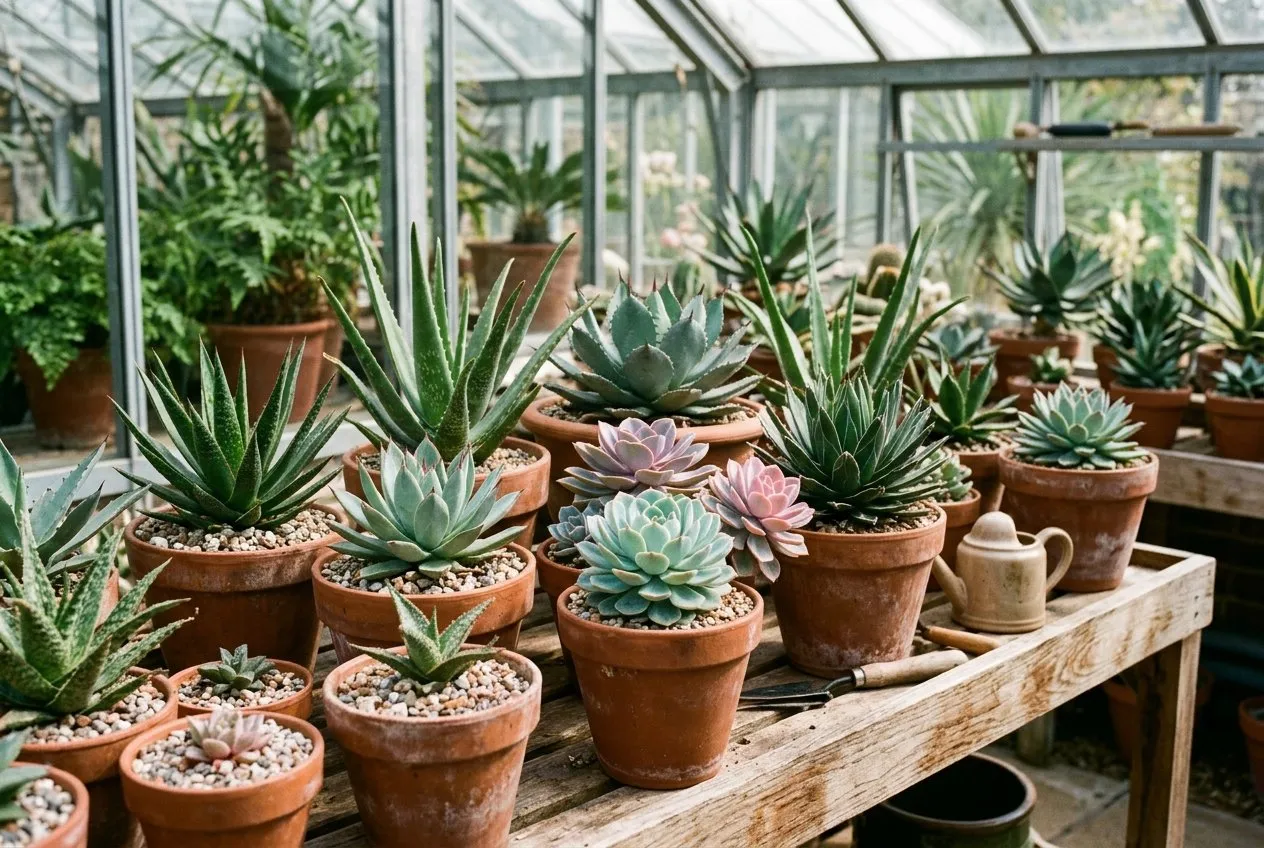 Succulents are the toughest conservatory plants. Gritty compost and near-dry winters prevent the usual root rot.
Flowering plants for colour behind glass
Flowering conservatory plants turn the room into a year-round display. Several reward the bright, warm conditions with months of bloom that outdoor plants cannot match in the UK climate.
Pelargoniums flower from spring to autumn in red, pink, white and salmon. Bougainvillea smothers itself in papery bracts through summer; our bougainvillea in a pot guide covers pruning and overwintering it. Hibiscus rosa-sinensis opens large tropical flowers in a warm, bright spot, each lasting a day or two. Mandevilla and passionflower climb and flower through the warm months. A coffee plant suits the same warm, bright-but-shaded spot and even fruits when mature.
For winter and spring colour, clivia sends up orange flower heads from a clump of strap leaves, and tolerates the cooler, shadier side of a conservatory. Streptocarpus flowers for months in indirect light, ideal for a north-facing room. Deadhead all of these to keep the flowers coming, and feed weekly through summer with a high-potash feed. Our guide to feeding houseplants covers the right balance.
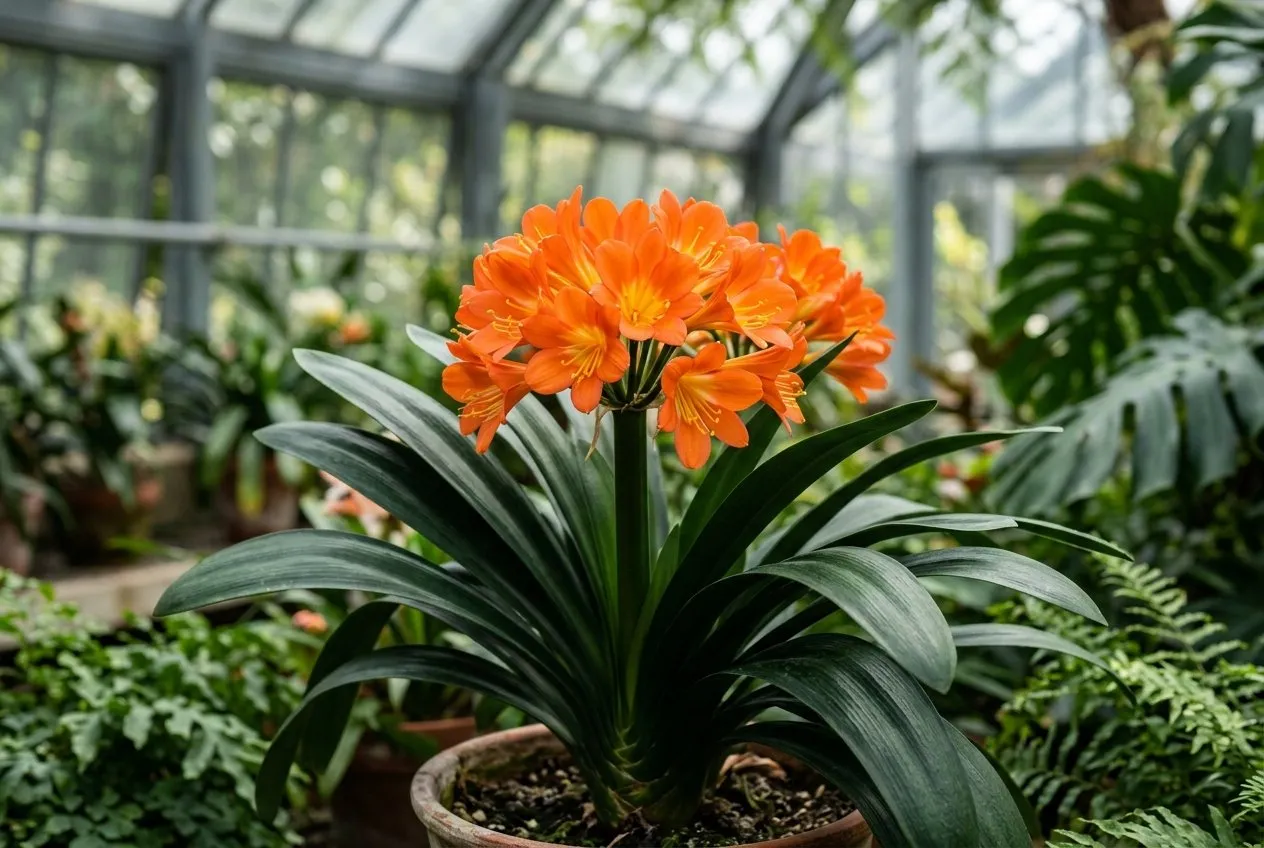 Clivia flowers on the cooler, shadier side where sun-lovers would scorch. A clump bulks up and flowers for years.
Conservatory plants compared by light, heat and winter minimum
This table groups the best conservatory plants by the conditions they need. Match each to your conservatory’s light and winter temperature before buying.
| Plant | Light needed | Heat tolerance | Winter minimum | Role |
|---|---|---|---|---|
| Sansevieria (snake plant) | Bright to part shade | Excellent | 10C | Toughest all-rounder |
| Citrus | Full bright sun | Very good | 5C | Scented flowers and fruit |
| Agave and aloe | Full bright sun | Excellent | 5C if dry | Architectural, drought-proof |
| Bird of paradise | Full bright sun | Very good | 10C | Dramatic specimen |
| Pelargonium | Full bright sun | Very good | 5C | Long summer flowering |
| Bougainvillea | Full bright sun | Excellent | 7C | Summer flower climber |
| Clivia | Bright indirect | Moderate | 7C | Shade-side winter flower |
| Streptocarpus | Bright indirect | Moderate | 10C | Long-flowering for cool rooms |
The gold standard for a lasting conservatory display is matching plant to position. Put succulents and citrus in the hottest, brightest spot, flowering climbers where they can reach the light, and clivia or streptocarpus on the cooler shaded side. Get the positions right and the plants need little fuss beyond watering and feeding.
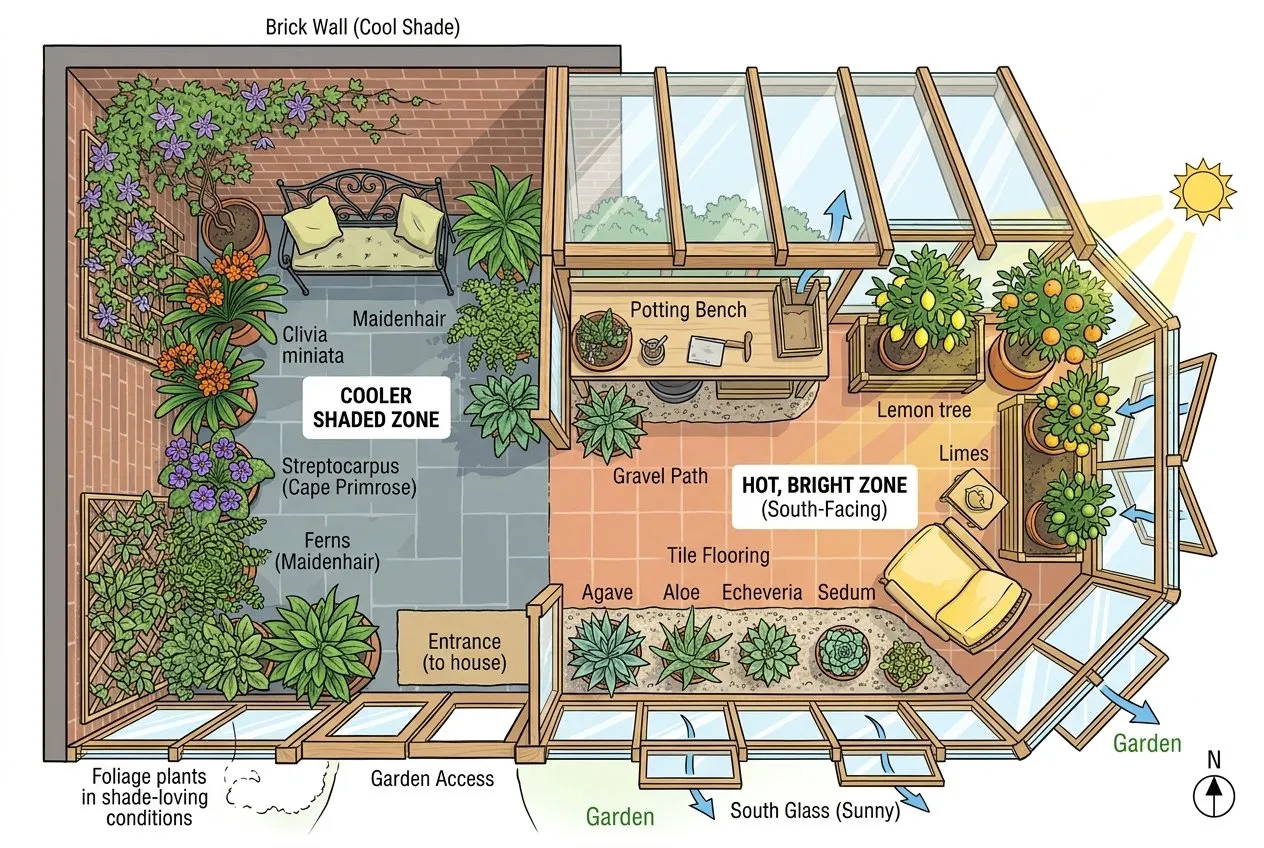 Match plant to position. Succulents and citrus in the hot bright zone, clivia and streptocarpus in the cooler shade.
A month-by-month plan for conservatory plants
Conservatory care follows the seasons closely because the room amplifies them. This calendar keeps plants healthy through the UK year.
| Month | Action |
|---|---|
| January | Keep succulents nearly dry, water citrus sparingly, watch for cold nights |
| February | Check for scale and mealybug, ventilate on mild sunny days |
| March | Start watering more as light returns, repot pot-bound plants |
| April | Begin weekly feeding, fit or check summer shading before the heat |
| May | Move citrus and tender plants outdoors once nights stay above 10C |
| June | Shade and ventilate daily, water flowering plants well in heat |
| July | Damp down floors to cool the air, never let pots dry to wilting |
| August | Keep feeding and deadheading, watch for red spider mite in the heat |
| September | Bring tender plants back indoors before cold nights return |
| October | Reduce watering and feeding as growth slows, clean the glass |
| November | Stop feeding, keep succulents dry, check winter minimum heating |
| December | Water only to prevent shrivelling, ventilate briefly on bright days |
The snake plant is slow, so buy a decent size rather than waiting years for a small one to fill out. It also tolerates lower light than most succulents, which makes it useful on the shadier side too. For sheer survival in a hostile room, nothing beats it.
Common mistakes when growing conservatory plants
Most conservatory plantings fail for the same few reasons. These are the errors that cost plants every year.
- No summer shading. Fierce sun behind glass scorches even sun-lovers. Fit blinds or shade paint before the first heatwave, not after the damage.
- Overwatering in winter. Cold, wet compost rots roots fast in an unheated room. Cut watering right back from November to March.
- Choosing tender tropicals. Calatheas, ferns and many leafy houseplants crisp in the heat and glare. Match plants to the real temperature range.
- No ventilation. A sealed conservatory cooks plants on hot days. Open vents and doors, and fit an automatic vent opener if you are out at work.
- Ignoring the winter minimum. A plant rated to 10C dies in a room that hits 2C. Check your conservatory’s coldest night before choosing what to grow.
How to control heat, light and pests behind glass
Managing the room matters more than any plant choice. Three problems trouble conservatory plants, and all are fixable with simple kit.
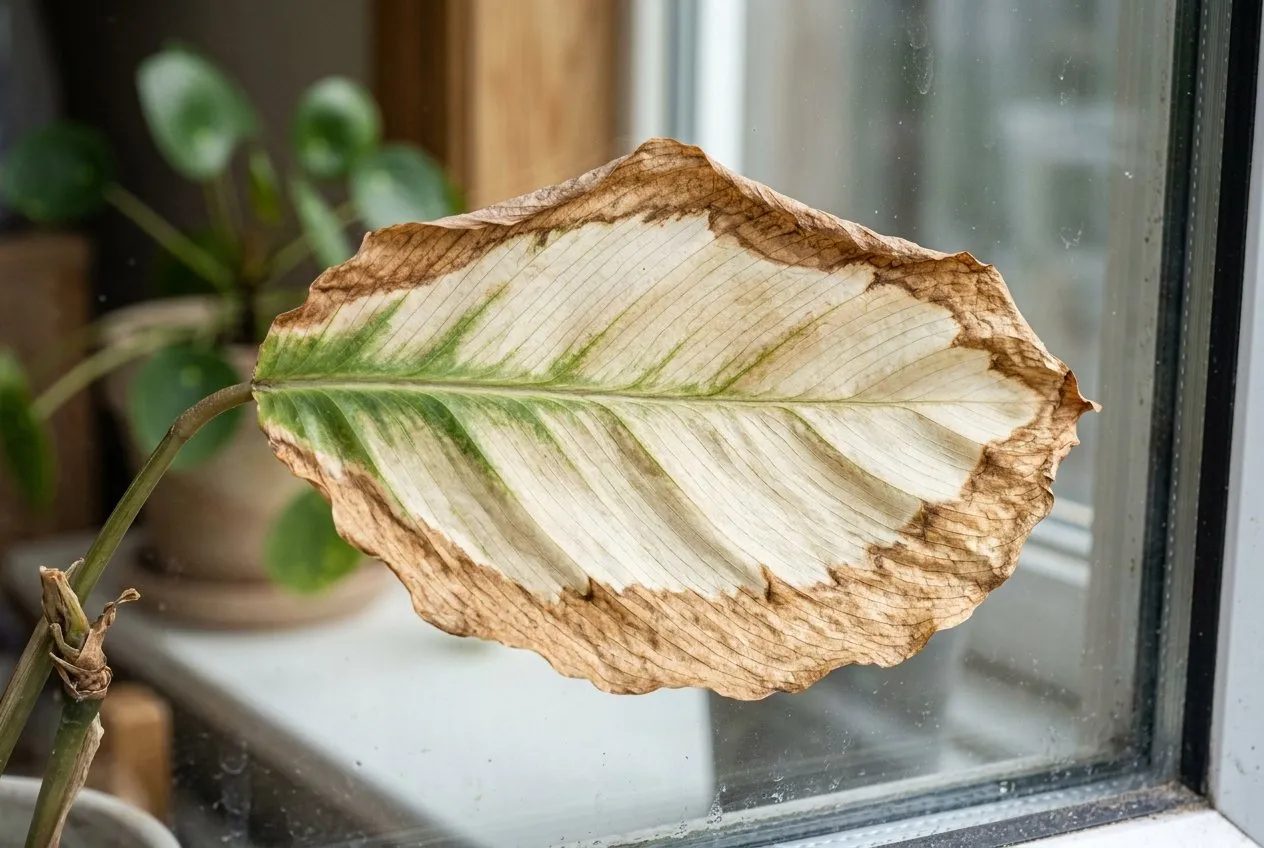 Sun scorch behind glass. Bleached patches and crisp brown edges mean the plant needs shade or a cooler position.
For pests, the warm dry air favours scale, mealybug and red spider mite. Inspect plants weekly, wipe leaves, and treat early. Good ventilation and the occasional summer spell outdoors keep most pests in check. Fungus gnats can appear in damp compost, covered in our guide to getting rid of houseplant flies. The Royal Horticultural Society’s advice on growing under glass backs the same focus on shading and airflow.
Frequently asked questions
What houseplants are best for a conservatory?
Citrus, bird of paradise, succulents and pelargoniums suit a bright conservatory. They tolerate strong light and heat that scorches delicate houseplants. For the shadier side, choose clivia or streptocarpus. Match the plant to how hot and bright your conservatory gets through the day.
Why do my conservatory plants keep dying?
Most die from summer scorch or winter cold, not neglect. A south-facing conservatory can swing from 45C to near freezing. Fit blinds and a vent to cut the summer peak. Choose plants rated for the temperature range your conservatory actually reaches.
What temperature can conservatory plants survive?
Most tolerate 5 to 30C comfortably, with extremes causing damage. Citrus want a winter minimum of 5C, succulents tolerate brief cold if dry. Above 40C, ventilate and shade or leaves scorch. Log your own conservatory temperatures before choosing plants.
Do conservatory plants need shade in summer?
Yes, most need shade from fierce afternoon sun in summer. Even sun-lovers like citrus scorch behind glass at 45C. Roller blinds or shade paint cut the worst heat. Without shading, leaves bleach, brown at the edges, and drop within days.
Can I grow citrus in a UK conservatory?
Yes, citrus are among the best conservatory plants. They want bright light, a winter minimum of 5C, and free-draining citrus compost. Move them outside for summer if you can. Feed with summer and winter citrus feeds and watch for scale insects.
What plants suit a north-facing conservatory?
Cooler, shadier conservatories suit clivia, streptocarpus and ferns. These want bright but indirect light and steady moisture. They avoid the scorch that troubles south-facing rooms. Avoid sun-loving succulents and citrus, which stretch and weaken in low light.
Now you know what survives behind glass, match the plants to your room and control the heat. For darker corners elsewhere in the house, read our guide to the best low-light houseplants, or browse the full plants section for more ideas.
Our team produces practical UK gardening guidance from source research, contributor records and established horticultural practice. Editorial standards are overseen by Matt W.