Key takeaways
- Turmeric needs 9 to 10 months warm, so start in February to March for a December harvest
- Pick plump supermarket pieces with visible buds and soak them 24 hours before potting
- Sprout at 22 to 28C in moist coir 5cm deep; shoots appear in 3 to 6 weeks
- A heated greenhouse or conservatory beats outdoors across most of the UK
- Expect 3 to 8 times the planted weight: a 50g piece yields 150 to 400g fresh
- Harvest at full die-back, not at the first yellow leaf, for the biggest crop
Turmeric is the easiest exotic spice to grow from your weekly shop. A plump rhizome from the world-foods aisle will sprout reliably, then grow into a metre-tall plant with broad banana-like leaves. The catch is patience and warmth. Turmeric (Curcuma longa) needs nine to ten months of steady heat, so you start in late winter and harvest the following December. Get the timing and temperature right and a single 50g piece returns 150 to 400g of fresh rhizome. This guide covers picking the right piece, sprouting it, potting on, summer care, and lifting a heavy crop. It is written from three seasons of weighed trials, not theory.
Picking a supermarket rhizome that will actually sprout
The piece you choose decides half the crop. Supermarket turmeric is sold for cooking, not planting, so quality varies between bags. Sort through and pick on three signals.
First, firmness. A good rhizome feels heavy and hard, like fresh ginger. Soft, light or wrinkled pieces have dried in storage and rarely grow. Second, visible buds. Look for small rounded points, often pinkish or pale yellow, sitting along the knuckles. These are the growth eyes that become shoots. A piece with three or four buds beats a smooth piece every time. Third, size. Aim for fingers of 40 to 60g with two or more branches. Larger mother pieces hold more energy and sprout faster.
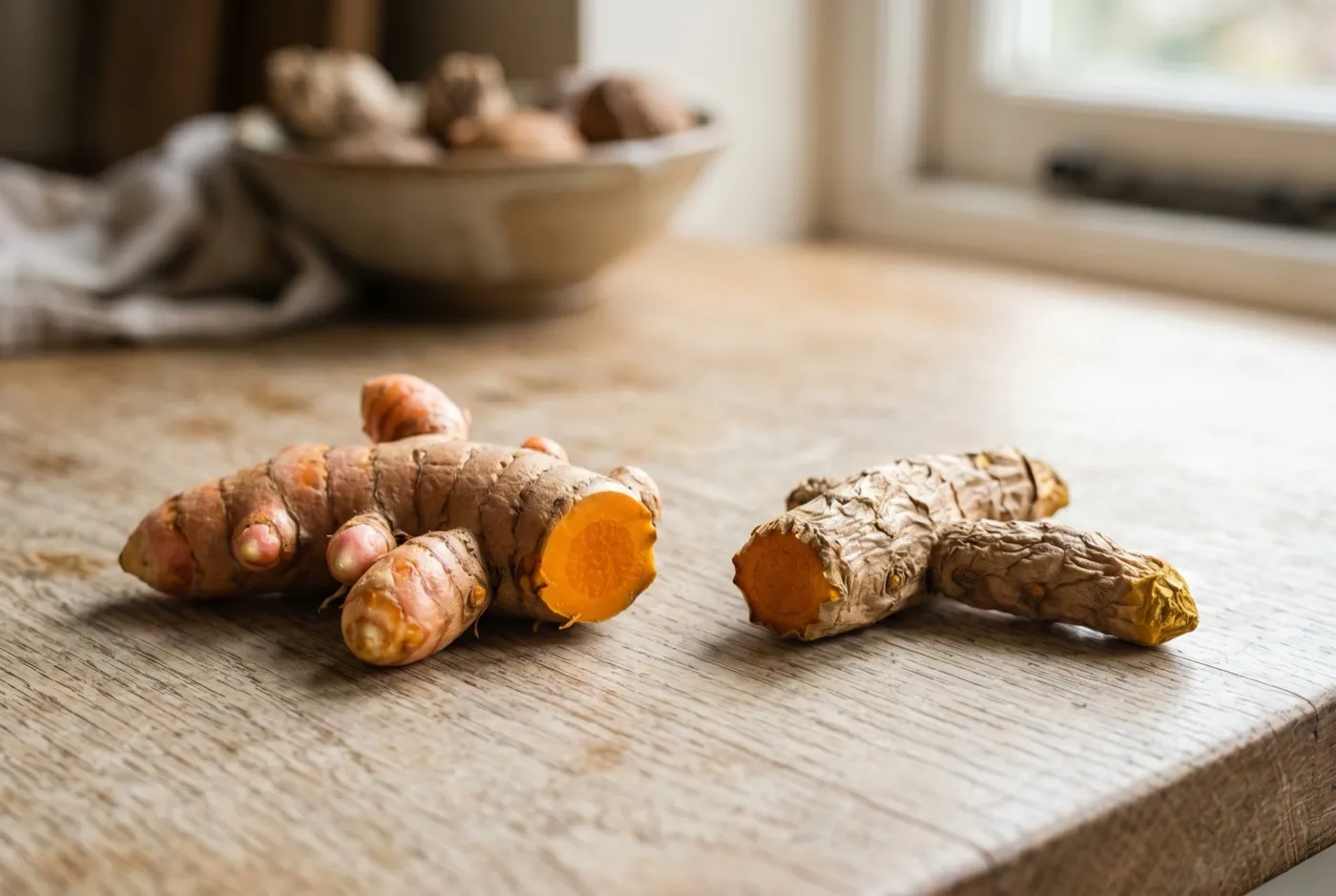 The piece on the left is firm with clear buds and will sprout. The shrivelled budless piece on the right rarely grows.
How to sprout turmeric indoors step by step
Sprouting is the make-or-break stage, and warmth does the work. Cold coir is the single biggest reason supermarket rhizomes fail. Follow these stages.
- Soak for 24 hours. Sit the rhizome in tepid water overnight. This rehydrates pieces dried during storage and wakes the buds. Shop turmeric is sometimes treated to slow sprouting, and a soak helps overcome that.
- Fill a 1 litre pot with moist coir. Coir holds warmth and drains better than peat-based compost, which cuts rot risk. Wet it so it feels damp, not dripping.
- Lay the rhizome horizontally, buds upward, 5cm deep. Horizontal planting lets several buds shoot at once. Cover with 5cm of coir.
- Hold it at 22 to 28C. A heated propagator is ideal. A warm airing cupboard works too. Below 20C, sprouting slows badly or stops.
- Keep the coir barely moist. Water lightly only when the surface dries. Overwatering now causes rot before roots form.
Shoots appear in three to six weeks. The critical mistake is watering on a schedule before the shoot shows. Wet cold coir suffocates the rhizome and it rots. Hold back until you see green.
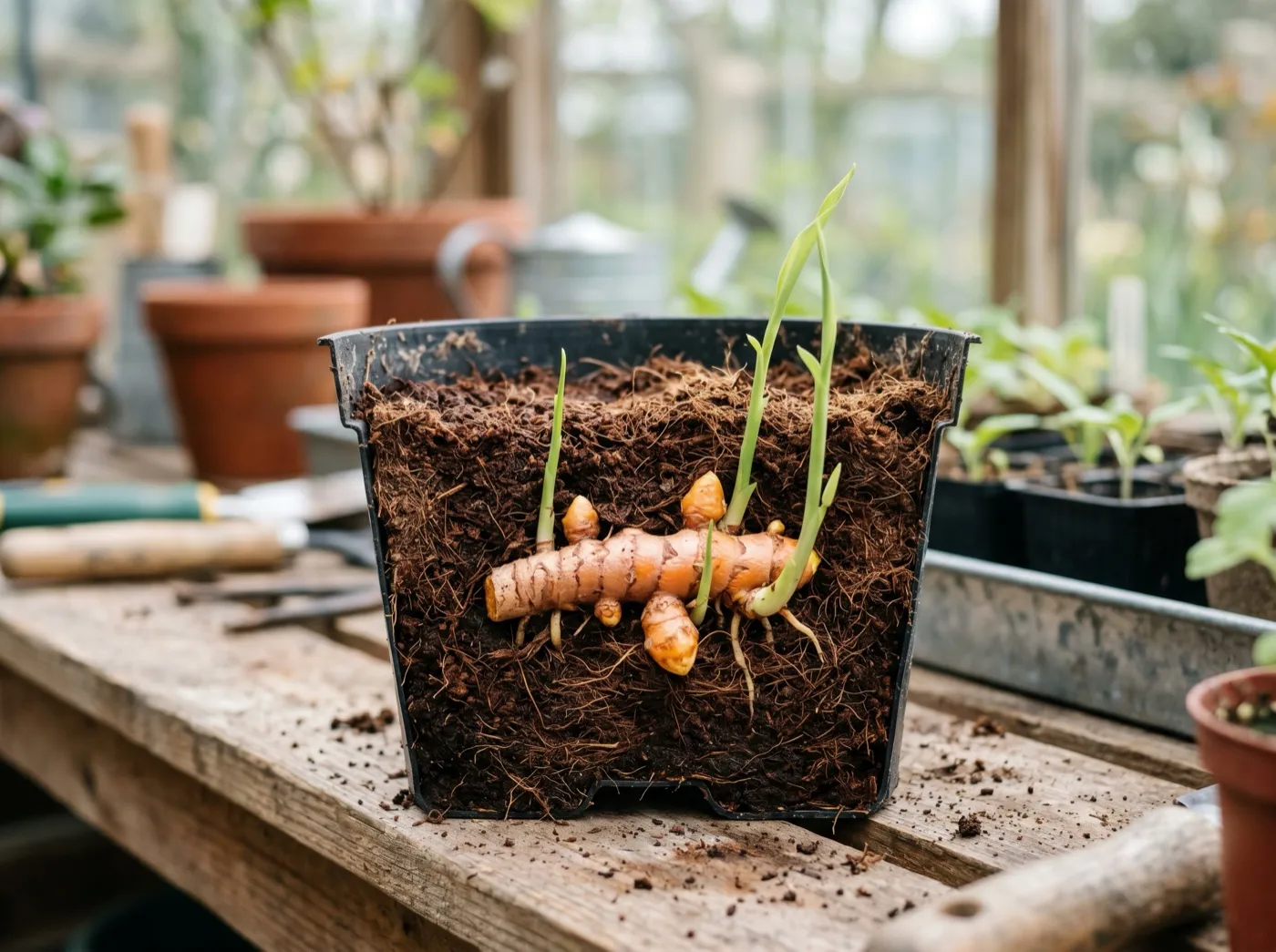 A sprouting rhizome laid horizontally in moist coir, 5cm deep, with buds pointing up and the first green shoots showing.
Potting on into a larger container
Once a shoot reaches 5cm, move the rhizome to its final pot. Turmeric makes a dense clump of roots and new rhizomes, so it needs room. Anything smaller than 10 litres limits the crop.
Choose a 10 litre or larger container at least 25cm deep. Use a free-draining mix: two parts multipurpose compost to one part coir or perlite. Plant the rhizome with shoots just below the surface, roughly 5cm deep. Firm gently and water in.
Keep the pot at 20 to 25C while the plant settles. A bright spot out of scorching midday sun suits it, because direct glass-magnified heat can scorch the young leaves. Leaves now grow steadily, reaching towards the metre mark by midsummer. One rhizome usually throws several shoots, each becoming a leafy stem. For other heat-loving pot crops that follow the same potting-on logic, see our chilli pepper growing guide and the warm-climate herb lemongrass.
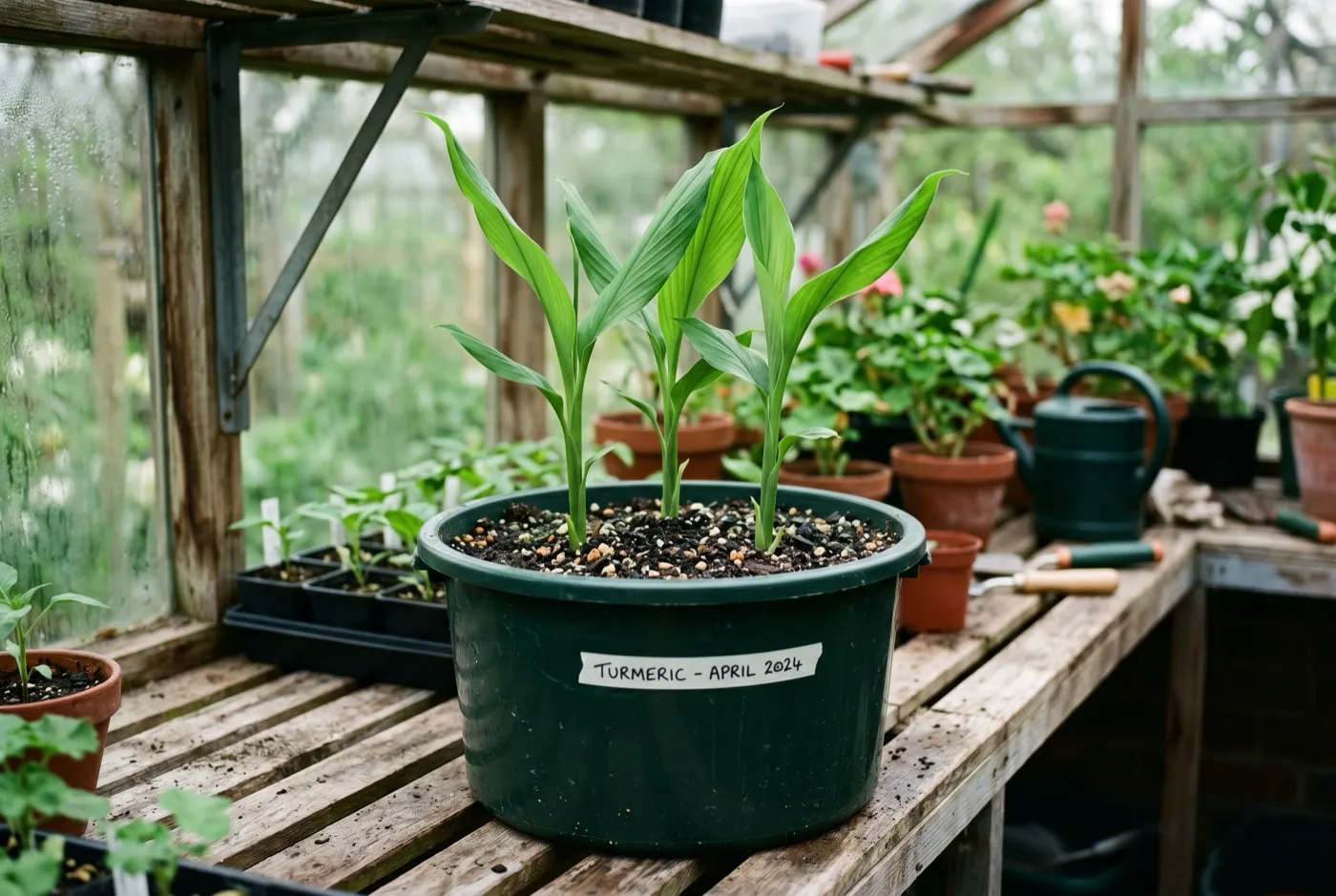 A young plant moved into a 10 litre pot of free-draining mix, where the clump has room to bulk up over summer.
Where to grow turmeric in the UK for the best yield
Location decides whether you get a handful or a hefty crop. Turmeric wants 20 to 30C summer warmth and high humidity, which most UK gardens cannot give outdoors. The table below ranks the realistic options by yield.
| Location | Achievable yield multiple | Why | Role |
|---|---|---|---|
| Heated greenhouse | 6 to 8x | Steady 25C plus, long warm season, humidity easy to hold | Gold standard |
| Conservatory | 4 to 6x | Warm, bright, frost-free, easy to monitor daily | Primary, home-friendly |
| Sunny windowsill | 2 to 4x | Warm enough but light and humidity limited | Supporting |
| Outdoors, sheltered | 1 to 2x | Only warm enough July to August in most of Britain | Last resort |
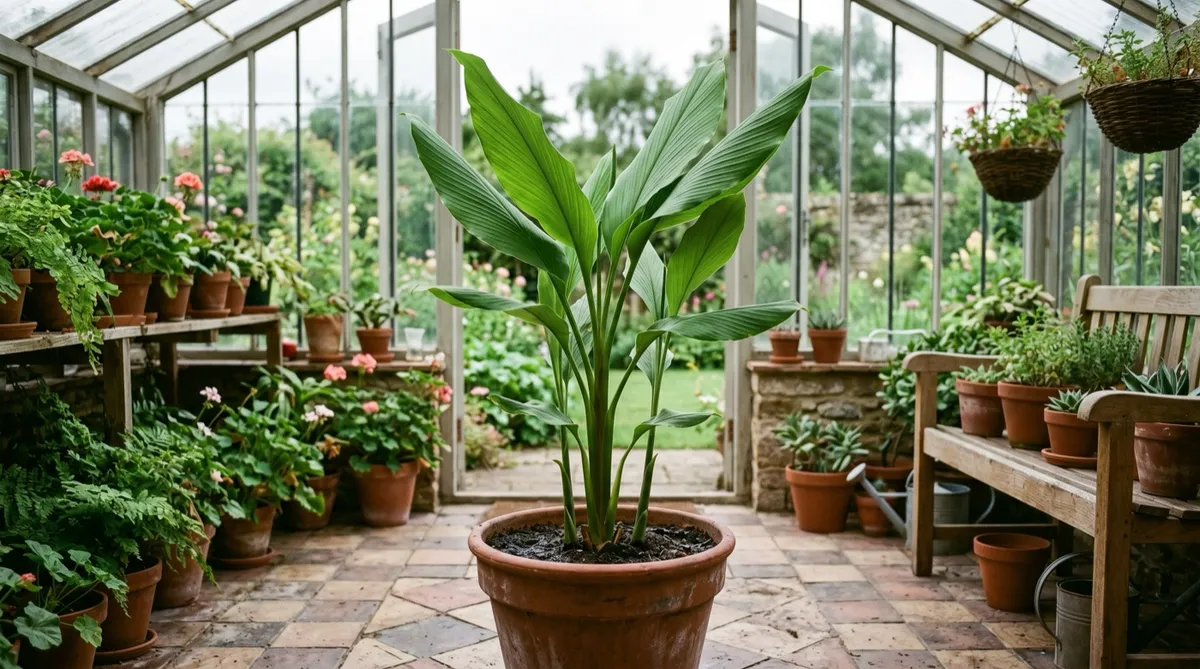
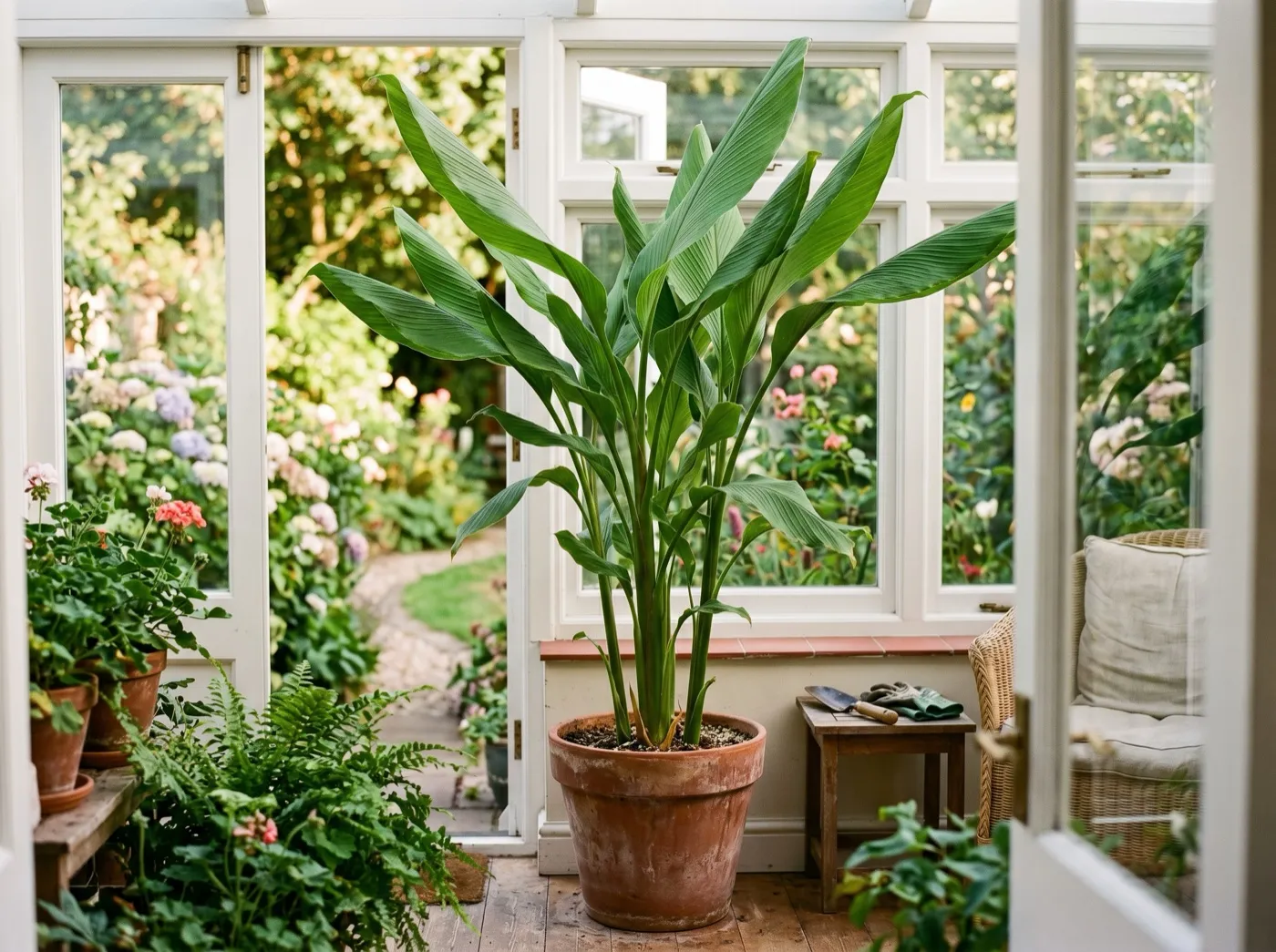 A mature plant in a conservatory, where steady warmth and bright light push the leaves towards a metre tall.
Watering, feeding and humidity through summer
Once the plant is leafy, it drinks and feeds hard. This is the bulk-up phase, and steady inputs build the rhizome. Skimp now and the harvest disappoints.
Water to keep the compost evenly moist through summer, never letting it dry to dust nor sit waterlogged. In a warm conservatory that often means watering every day or two in July. Turmeric loves high humidity, so mist the leaves on hot mornings or stand the pot on a damp gravel tray. Dry air browns the leaf edges and slows growth.
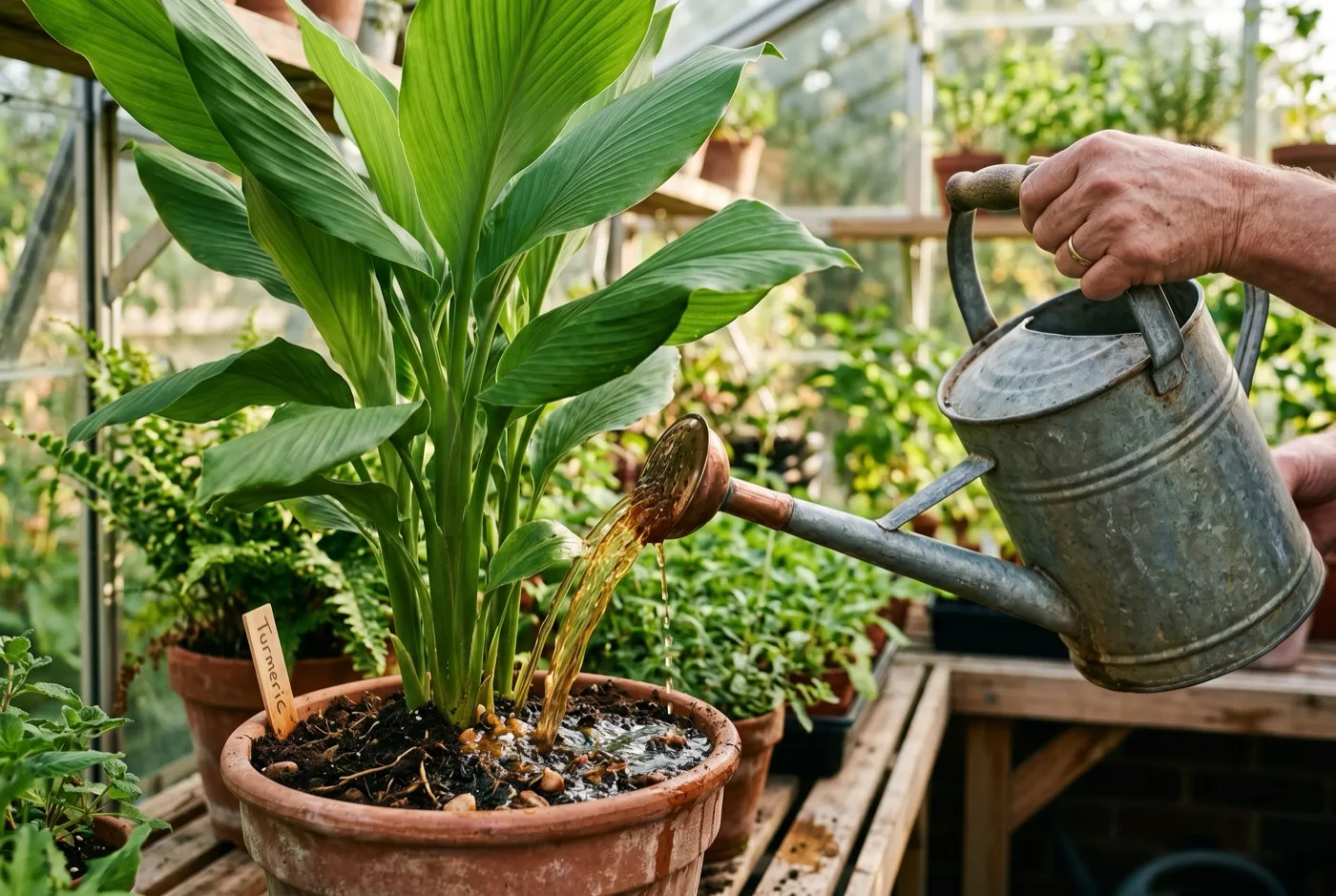 A fortnightly high-potash feed through summer builds the rhizome. The plant drinks heavily once its broad leaves are fully open.
How to harvest, cure and store your turmeric
Harvest at full die-back, and the final weeks earn their keep. As autumn cools, the leaves yellow and collapse. This is not failure. It signals the plant moving energy down into the rhizomes for storage, the bulk-up phase that adds the most weight.
Wait until every leaf has yellowed and flopped, usually November or December. Then stop watering for a week to firm the rhizomes. Tip the pot out, shake off the compost, and lift the clump. Expect three to eight times the planted weight: that 50g mother piece typically returns 150 to 400g of fresh, knobbly orange rhizome.
To store, brush off soil and keep unwashed pieces in the fridge for two to three weeks. For longer storage, freeze it grated in small portions, or peel and freeze whole fingers. Set aside your plumpest, best-budded pieces as seed rhizomes for next year. Store these separately at 12 to 15C in dry coir, where they keep dormant until you start the cycle again in February. Saving your strongest pieces makes year two noticeably stronger.
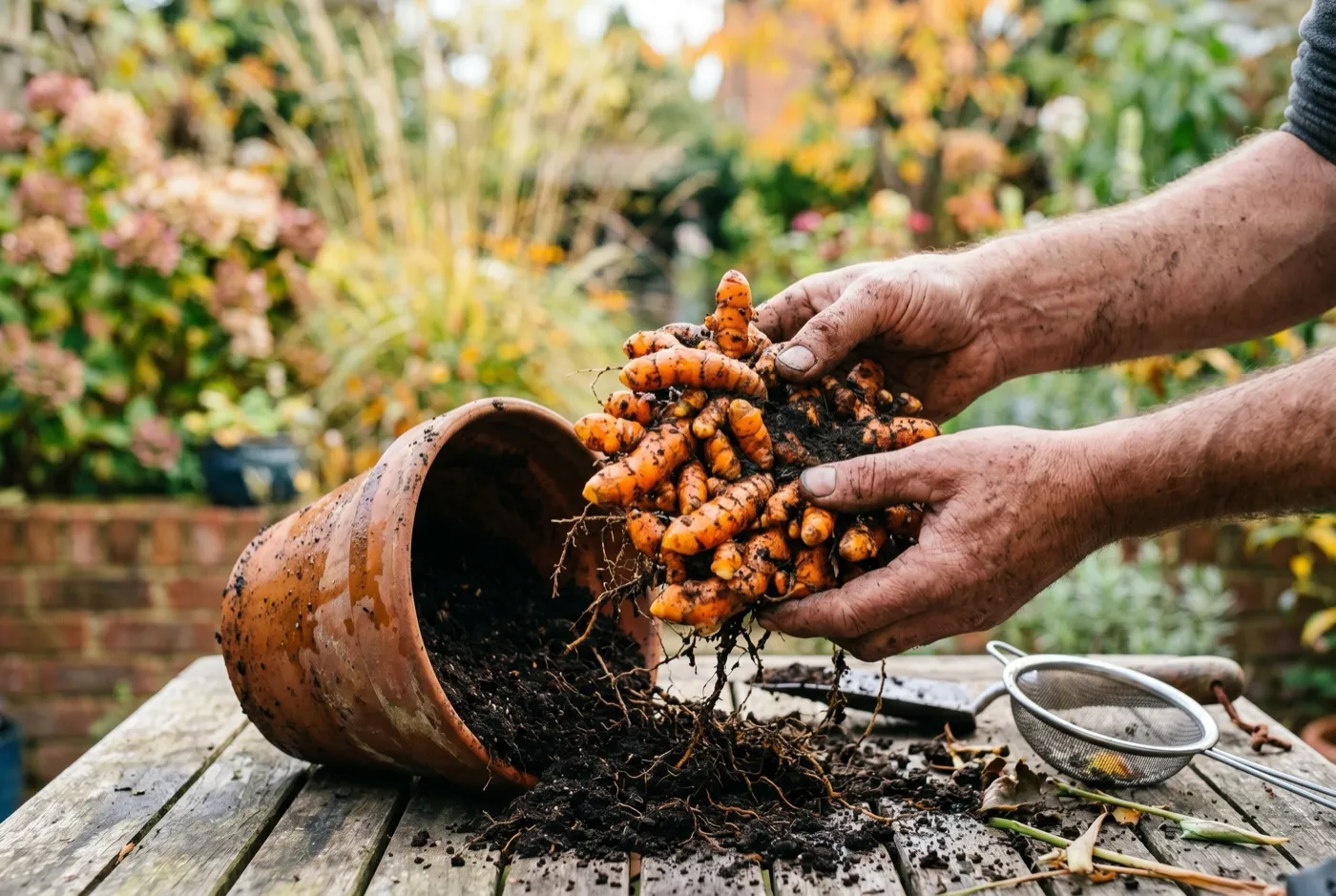 Harvest at full die-back. A tipped pot reveals the fresh orange rhizome clump, several times the weight of the piece planted.
Month-by-month turmeric calendar for the UK
This calendar runs the full warm-season cycle. It assumes a heated greenhouse or conservatory, which gives the reliable warmth turmeric needs.
| Month | Action |
|---|---|
| January | Check stored seed rhizomes at 12 to 15C, discard any soft pieces |
| February | Soak and start rhizomes in coir at 22 to 28C on a propagator |
| March | Continue sprouting, pot on any shoots reaching 5cm into 10 litre pots |
| April | Grow on at 20 to 25C, keep bright, water lightly as leaves expand |
| May | Increase watering as growth speeds, begin gentle humidity, no feed yet |
| June | Start fortnightly high-potash feed, water freely, mist on hot mornings |
| July | Peak growth, plants near 1m, feed and water hard, keep humidity high |
| August | Maintain feeding and watering, move sheltered outdoor pots back under cover |
| September | Growth slows, reduce feed, watch for first yellowing leaves |
| October | Cut watering back as leaves yellow, stop feeding |
| November | Stop watering at full die-back, lift early crops, cure rhizomes |
| December | Harvest remaining pots, store fresh in the fridge, save seed rhizomes |
An early start matters because turmeric grows on accumulated warmth, not calendar luck. A plant that reaches full leaf by June has three more months of bulk-up than one that sprouts in May. Treat the start date as the most important decision of the whole crop.
Saving seed rhizomes builds a stronger year two
The real win is not the first harvest, it is the second. Most growers eat the whole crop and buy fresh supermarket pieces again next spring. Saving your best rhizomes instead compounds the gains.
Common mistakes that ruin a turmeric crop
Most failed turmeric comes down to four avoidable errors. Each one cuts the harvest or kills the rhizome outright.
- Starting in May. A late start leaves too few warm weeks before autumn, so the rhizome never bulks up. Tiny harvests follow. Start in February or March instead.
- Cold windowsill nights below 15C. Turmeric stalls when nights turn cold, even if days are warm. Keep it in a heated space where night temperatures hold above 18C through spring.
- Overwatering before sprouting. Wet cold coir rots the rhizome before roots form. Keep the medium just moist until the first shoot shows, then water more freely.
- Harvesting at first yellowing. Lifting at the first yellow leaf throws away the bulk-up phase. Wait for full die-back in November or December, when the rhizomes are heaviest.
Frequently asked questions
Can you grow turmeric from supermarket rhizomes in the UK?
Yes, fresh supermarket turmeric sprouts reliably if pieces are plump. Choose firm rhizomes with visible buds from the world-foods aisle. Soak them 24 hours, lay them in warm moist coir, and they shoot in three to six weeks. Avoid shrivelled or budless pieces, which rarely grow.
How long does turmeric take to grow in the UK?
Turmeric needs nine to ten months from planting to harvest. Start indoors in February or March at 22 to 28C. The plant grows leaves through summer, then dies back in autumn. Harvest in November or December once the foliage has fully yellowed and collapsed.
When do you harvest turmeric grown in a pot?
Harvest at full die-back, usually November or December. Wait until every leaf yellows and the stems flop, not at the first yellow leaf. The final weeks are when rhizomes bulk up most. Tip the pot, lift the clump, and snap off what you need.
How much turmeric do you get from one rhizome?
Expect three to eight times the planted weight. A 50g mother piece returns 150 to 400g of fresh rhizome in a 10 litre pot. An early start and steady warmth push the yield towards the top of that range. A late or cold start cuts it sharply.
Can turmeric grow outdoors in Britain?
Only in a sheltered warm spot during July and August. Most of the UK is too cool for an outdoor crop. A greenhouse or conservatory gives far better results. Outdoor plants rarely reach the 20 to 30C summer warmth turmeric needs to bulk up properly.
Why has my turmeric rhizome rotted before sprouting?
Overwatering before shoots appear is the usual cause. The rhizome sits in cold wet coir and rots rather than rooting. Keep the medium just moist, never soggy, and hold it at 22 to 28C. Water lightly until the first shoot shows, then increase gradually.
Now you can take a supermarket rhizome all the way to a December harvest. For more tender crops that suit a warm spot indoors, read our guide to hardy exotic and tropical plants for the UK, or browse the full growing section for more home-grown spice and vegetable guides. If you fancy a longer project, growing vanilla takes three to five years to a first pod.
Our team produces practical UK gardening guidance from source research, contributor records and established horticultural practice. Editorial standards are overseen by Matt W.