Key takeaways
- Pot leeks are judged on cubic volume to the button, not on length alone
- Prize strains are propagated from pods and grass, not seed, to stay true
- Start plants under glass in winter for the September club shows
- Pot leeks are gross feeders: rich muck, heavy water, weekly feed
- Blanch the barrel with collars and earthing up for a clean white
- Bolting, rust, softness, and splitting are the main bench faults
Pot leeks are a world of their own in exhibition gardening, a north-east England tradition with its own clubs, its own classes, and its own way of propagating prize strains. Unlike the long blanch leeks shown elsewhere, a pot leek is short, thick, and barrel-shaped, and it is judged on cubic volume up to the button rather than on length. Growing a winner means starting with the right strain, reproducing it vegetatively from pods and grass, and then feeding it harder than almost any other vegetable on the plot. This guide covers the full tradition, from saving pods to staging a matched set.
It is as much craft as cultivation. The strains are handed down, the feeding is relentless, and the rivalry in a good leek club is fierce.
What a pot leek is and how it is judged
This is the leek of the north-east clubs, around Durham, Northumberland, and Tyneside, where leek shows have run for generations with cash and prize tables that draw serious competition. The other main show class is the blanch or intermediate leek, judged on length of clean blanch. For everyday kitchen leeks grown the ordinary way, our guide on how to grow leeks covers the basics; the pot leek below is a specialist pursuit.
| Class | Judged on | Shape | Tradition |
|---|---|---|---|
| Pot leek | Cubic volume to the button | Short, thick, barrel | North-east clubs |
| Blanch leek | Length of clean blanch | Long, slender shaft | National shows |
| Intermediate leek | Length and solidity | Medium | Mixed shows |
| Kitchen leek | Not judged | Variable | Everyday growing |
Propagating from pods and grass
The defining feature of pot leek growing is vegetative propagation. Prize strains do not come true from seed, so exhibitors reproduce them as exact copies using two natural structures the plant provides.
Pods are small bulbils that form in the flower head of a leek allowed to run up, in place of, or alongside, true seed. Grass is the cluster of tiny plantlets that develops at the base of a plant. Both are detached and grown on, and each becomes a genetic clone of its parent, carrying the same prize characteristics. Exhibitors take pods and grass from their best leeks in autumn, pot them up, and nurse them through winter under glass. This is how a winning strain is kept going and shared within a club for decades, long after seed would have scrambled its qualities. It is the same principle of cloning a prized plant that gardeners use for many propagated crops, which are also grown from a piece of the parent rather than seed.
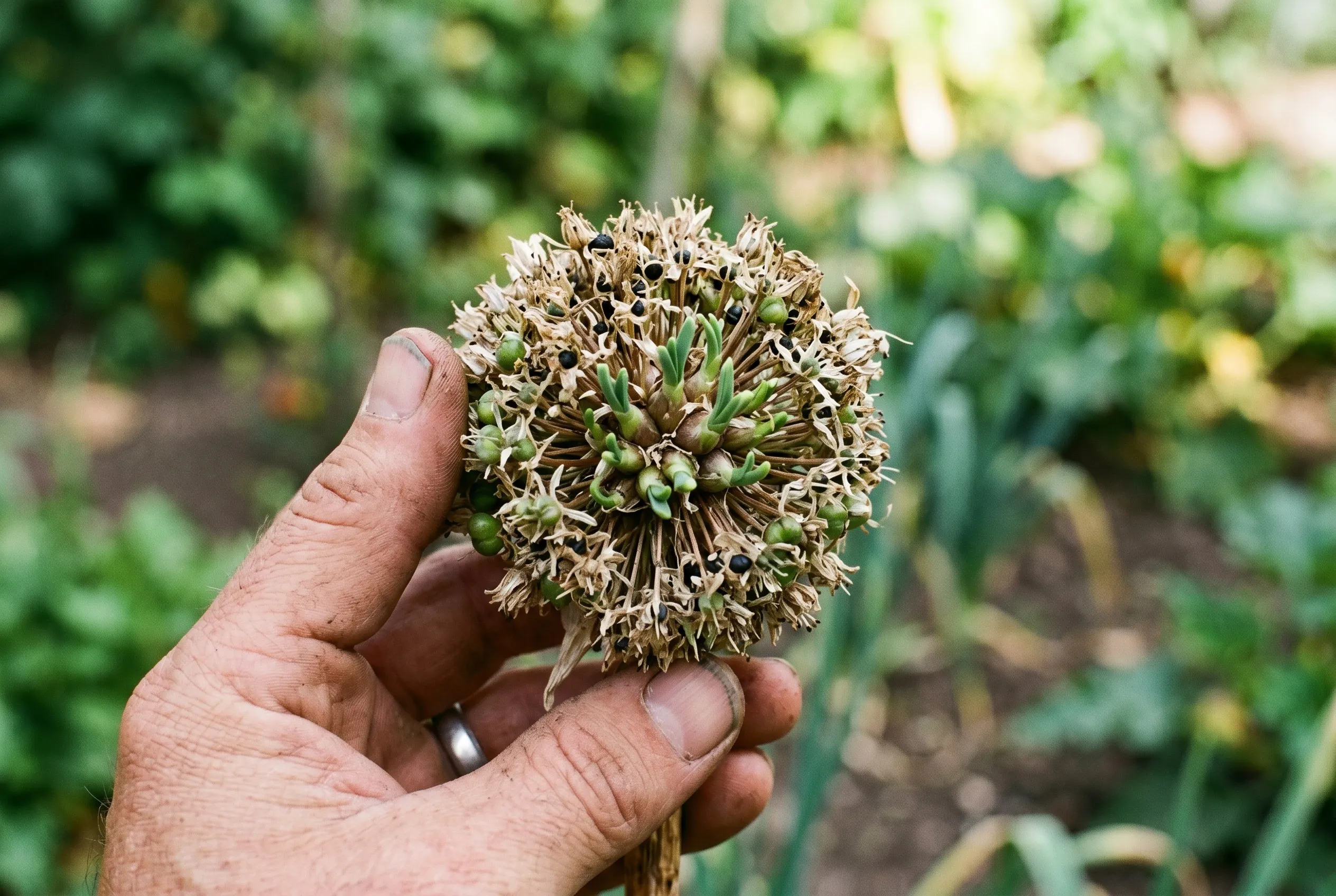 Pods are bulbils that form in the flower head. Detached and grown on, each becomes an exact copy of the prize parent.
Raising the young plants
Pot up pods and grass in autumn to early winter and grow them on under glass with gentle warmth and good light. The aim is steady, unchecked growth through the dark months, so the plants are strong and well-rooted by spring. Keep them frost-free, water carefully, and pot on into larger containers before the roots ever circle, since a check from being pot-bound can trigger bolting later.
By spring, the young leeks should be sturdy, pencil-thick plants ready to harden off. Harden them gradually over a fortnight before planting out, as a sudden cold spell on soft plants is the classic cause of bolting. A bolted leek throws a flower spike and is finished for the bench, so the whole winter routine is built around avoiding any setback that the plant reads as a season ending.
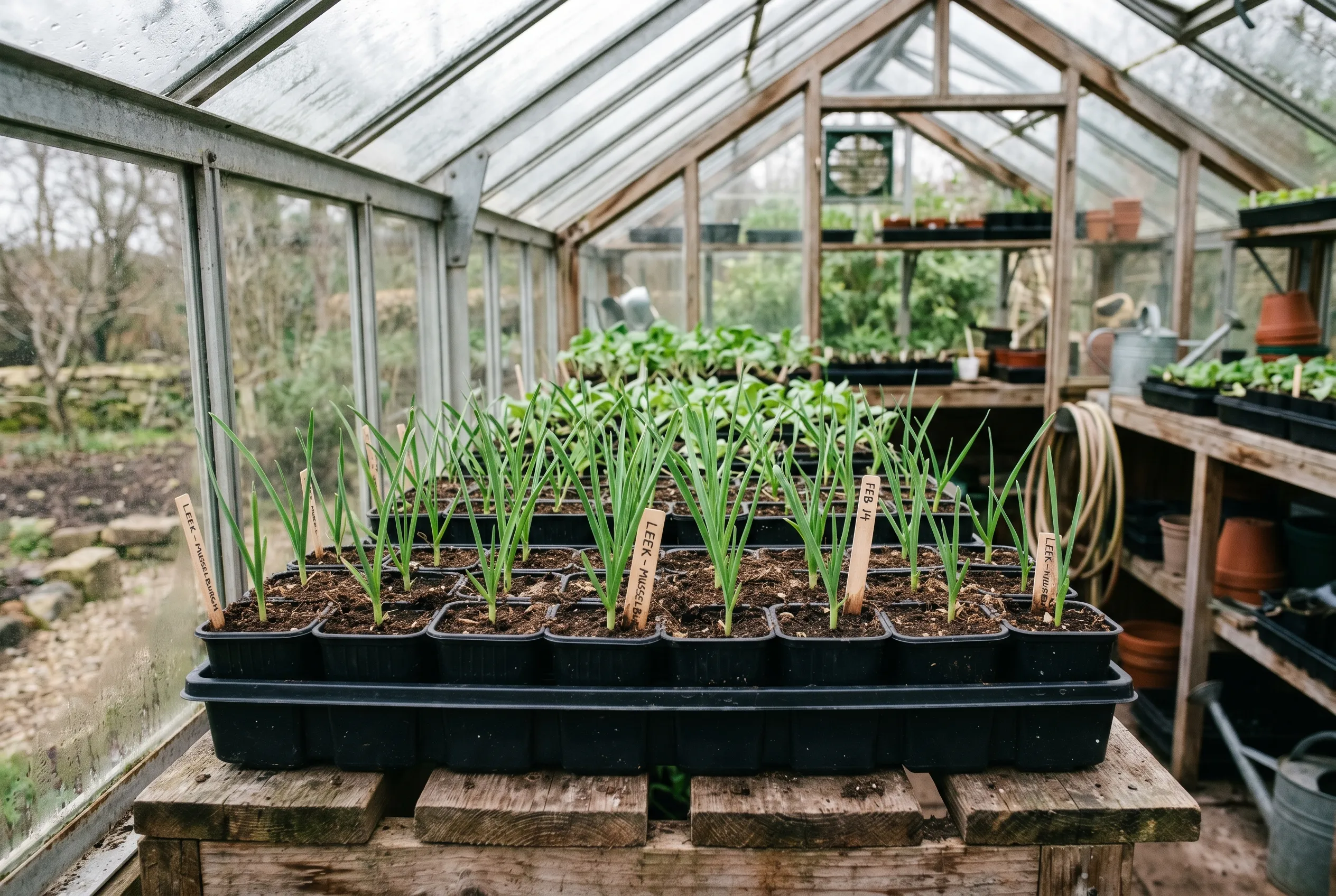 Pods and grass grown on under glass through winter. Steady, unchecked growth now builds the size that shows in autumn.
Feeding and growing the barrel
Pot leeks are gross feeders, and this is where shows are won. Prepare the bed in winter with a heavy dressing of well-rotted manure dug deep, then keep feeding hard through the season. Plant out in spring, spacing plants generously, around 30cm apart, so each barrel has room to bulk.
From June, feed weekly. Start with a high-nitrogen liquid to drive leafy growth, then switch to a more balanced feed as the barrel swells, easing off nitrogen near the show so the leek firms rather than going soft. Water heavily and never let the bed dry out, as a dry check stalls the barrel. Many growers add a comfrey or seaweed feed for trace elements; our comfrey liquid feed recipe makes a good high-potash supplement. The manure choice matters too, so see our comparison of animal manures for the richest options. Feed, water, and warmth together build the cubic volume the judges measure.
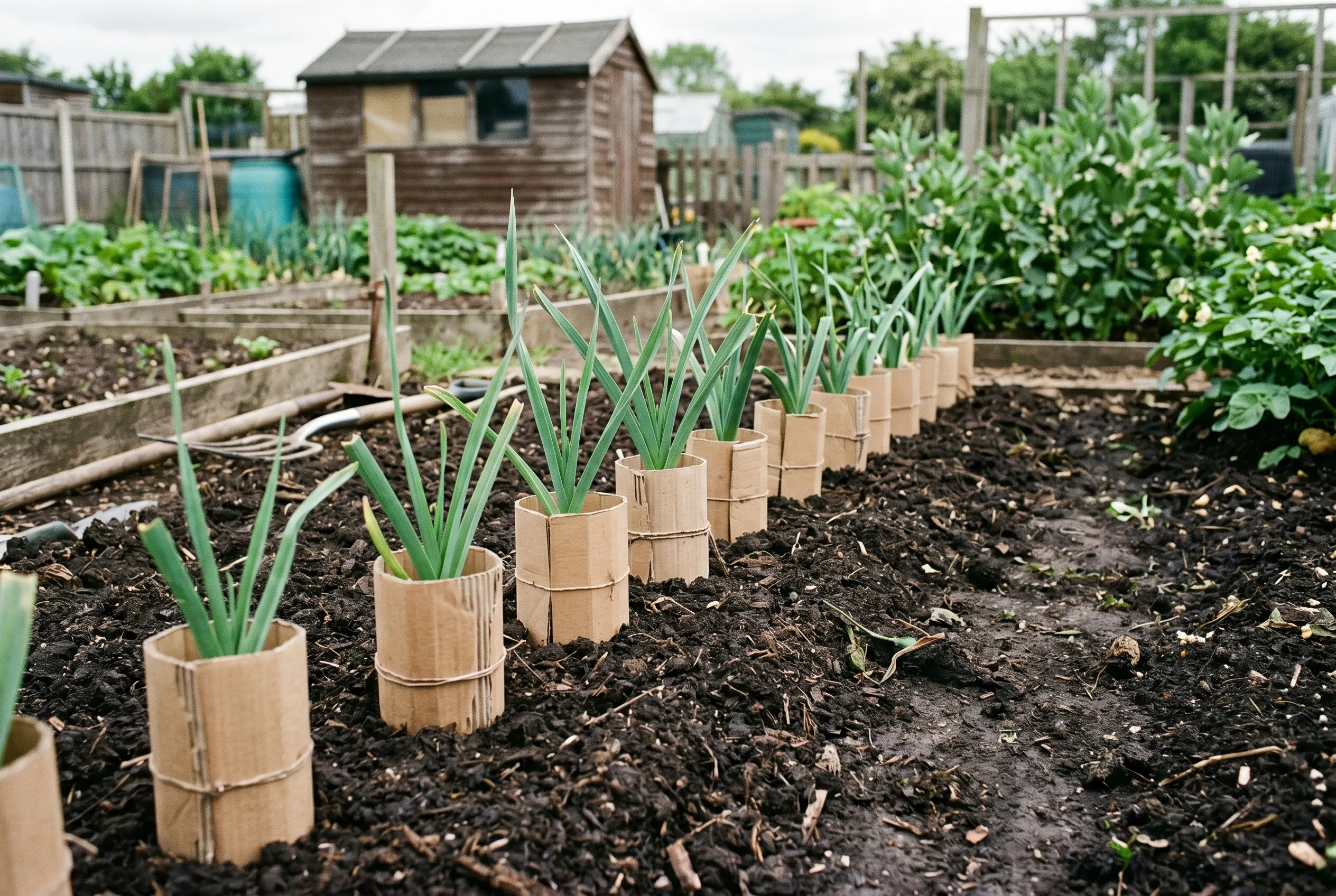 Pot leeks go into a richly manured bed with collars to blanch the barrel. They are among the hungriest crops on the plot.
Blanching, pests, and problems
Blanch the barrel by fitting collars of cardboard, pipe, or purpose-made tubes around the stem and earthing up gradually, excluding light to whiten the lower barrel. Keep soil out of the heart, as grit between the flags loses marks.
Watch for the allium problems that plague all leeks:
- Leek rust. Orange pustules on the leaves, worse in damp, crowded conditions. Space well and remove affected leaves.
- Allium leaf miner and leek moth. Larvae tunnel into the stems. Grow under insect mesh through the egg-laying periods.
- Bolting. Caused by a check, cold or pot-binding. Prevent with steady, unchecked growth.
- White tip. A fungal disease bleaching the leaf tips. Improve airflow and avoid wetting foliage late in the day.
Even, generous growing prevents most trouble, since a strong, fast-grown leek shrugs off problems that overwhelm a starved one.
Lifting, dressing, and staging
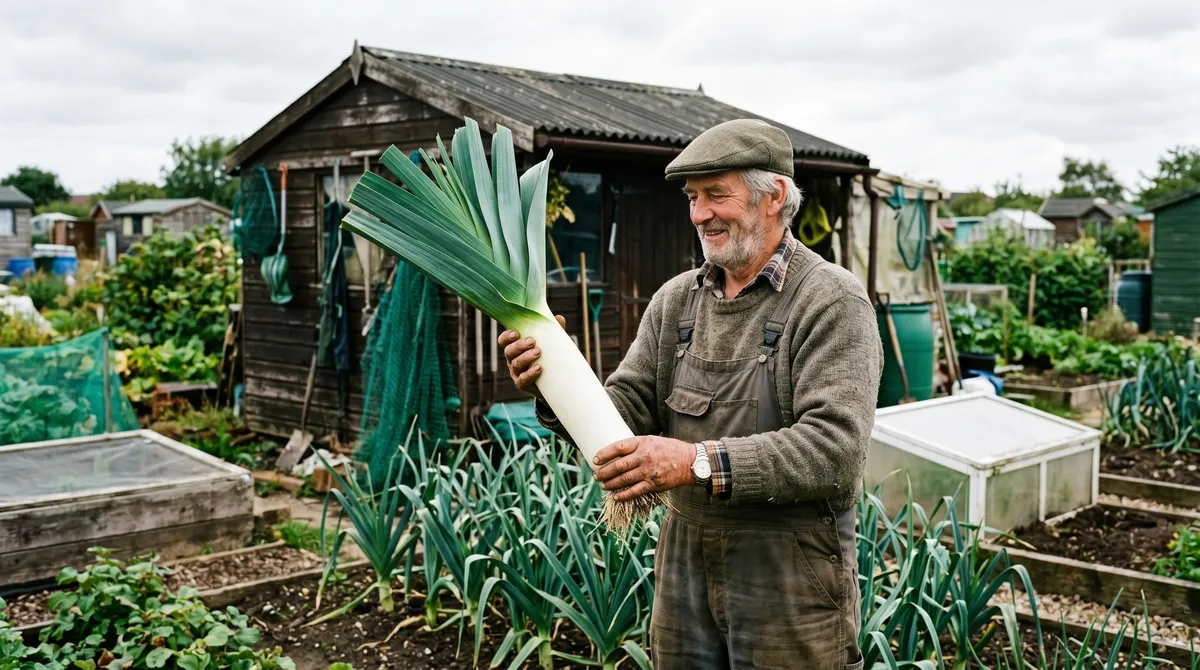
Lift pot leeks the day before the show, easing them out with a fork to keep the barrel and roots intact. Dress each leek carefully: peel away the outer skins to reveal a clean, unblemished white barrel, trim the roots to a neat tuft or disc as the schedule requires, and trim the flags to an even, tidy fan. Take your time, as over-stripping ruins a leek and under-cleaning shows dirt.
Stage a matched set, usually three, as uniform in size and shape as you can pick, barrels aligned and flags dressed the same way. Judges measure cubic volume to the button and reward solidity, a clean white blanch, and freedom from fault. Marks are lost for bolting, rust, softness, splitting, and any sign of the barrel running up. The same matched-set discipline rewards show onions and other allium classes. Present the leeks fresh, clean, and uniform, and let the sheer volume of a well-fed barrel speak.
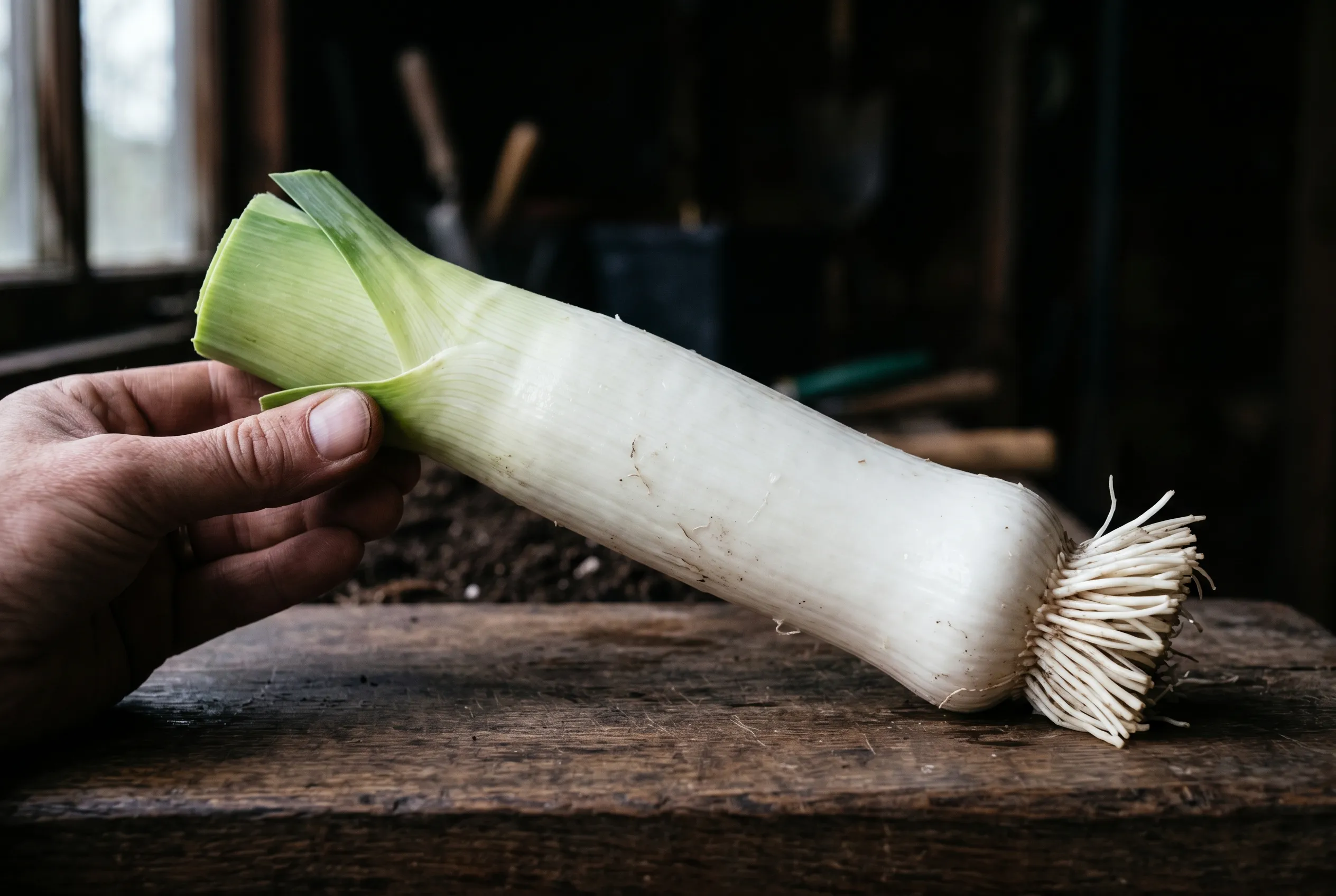 A dressed pot leek: outer skins peeled to a clean white barrel, roots and flags trimmed, ready for the measure.
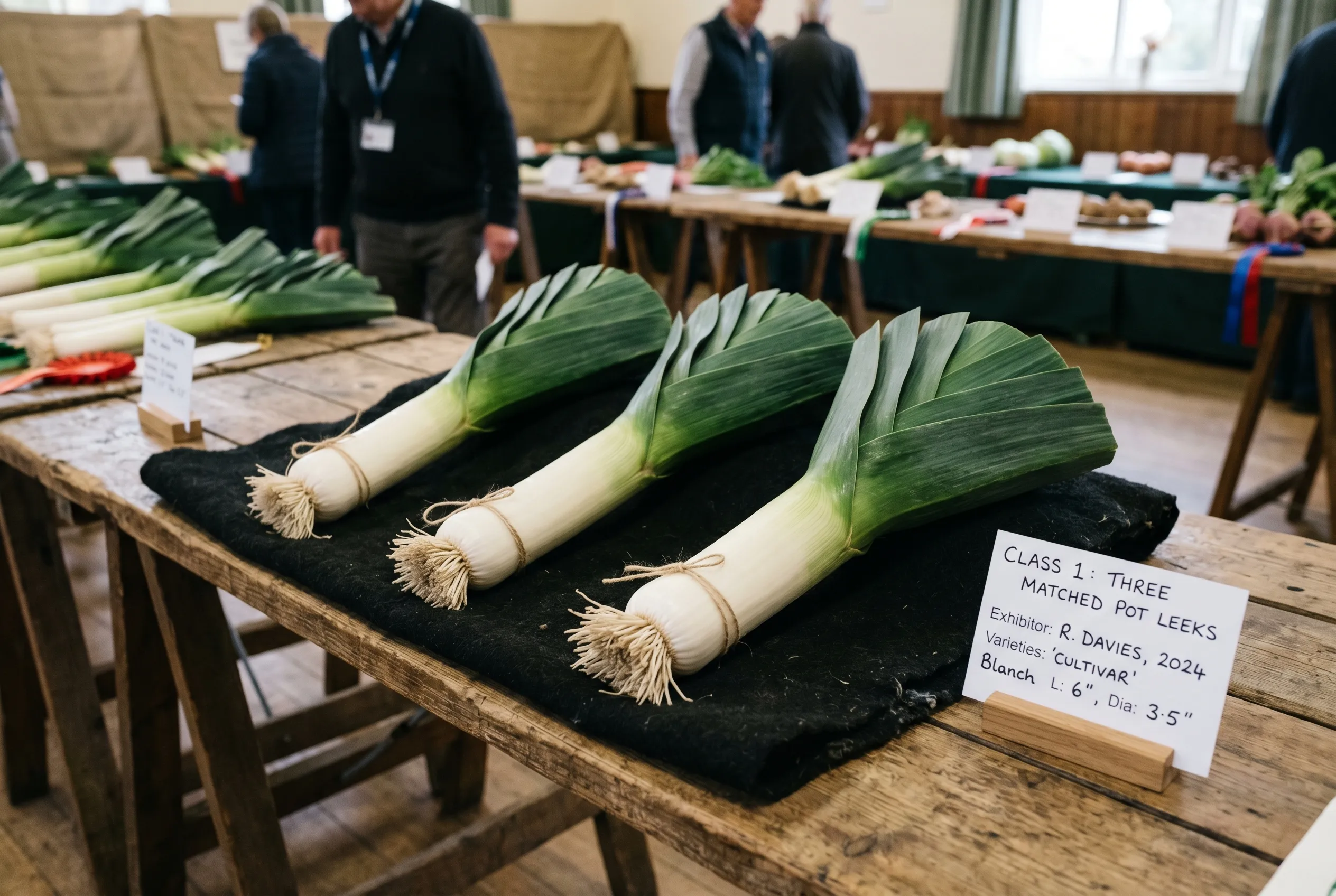 A matched set staged for the measure. Three uniform barrels of maximum cubic volume, cleanly dressed, take the points.
Pot leek season by season
The pot leek year runs almost without a break, which is part of why the crop demands such commitment.
| Period | Job |
|---|---|
| September to October | Save pods and grass from the best leeks |
| November to February | Grow young plants on under glass, pot on before roots circle |
| March to April | Harden off and plant into the richly manured bed |
| May to August | Feed weekly and heavily, water hard, collar and blanch |
| September | Lift, dress, and stage for the club shows |
The crop never really stops, since pods are saved the moment the previous show season ends. That continuity is how a strain is held true year after year.
Common pot leek mistakes
These errors cost the volume and cleanliness that win.
- Underfeeding. The commonest fault. A pot leek cannot be fed too hard in full growth. Feed weekly and richly.
- Letting plants get pot-bound. A check from cramped roots triggers bolting. Pot on before roots circle.
- A cold check at planting. Soft plants chilled at planting bolt. Harden off slowly and plant when mild.
- Soil in the heart. Grit between the flags loses marks. Collar the barrel and keep soil out of the centre.
- Over-stripping at dressing. Peeling too many skins exposes soft tissue. Clean to a sound white and stop.
Frequently asked questions
What is a pot leek?
A pot leek is a short, thick, barrel-shaped show leek from the north-east of England. It is judged on cubic volume up to the button, where the first flag leaf breaks, rather than on length. Pot leek clubs run their own classes and prize shows.
How are pot leeks propagated?
Prize pot leeks are propagated vegetatively from pods and grass, not from seed. Pods are small bulbils that form on the flower head; grass is tiny plantlets at the base. Both grow into exact copies of the parent, keeping winning strains true.
What are pods and grass on leeks?
Pods are bulbils that develop in the leek flower head instead of seed. Grass is the cluster of small plantlets that forms at the base of the plant. Exhibitors save both and grow them on under glass to reproduce a prize strain exactly.
How are pot leeks judged?
Pot leeks are judged on cubic volume, calculated from the girth and the length of blanch up to the button. A short, very thick, solid, well-blanched leek beats a long thin one. Bolting, rust, softness, and splitting all lose marks.
When do you start pot leeks for show?
Start pot leeks under glass in winter, from pods and grass taken the previous autumn. They need the long season to build size for the September shows. Plants go out into rich beds in spring once hardened off.
Why do pot leeks bolt or run to seed?
Pot leeks bolt after a check, often from cold or from being held back too long in small pots. A bolting leek throws a flower spike and is finished for show. Steady, unchecked growth and timely potting on prevent it.
Our team produces practical UK gardening guidance from source research, contributor records and established horticultural practice. Editorial standards are overseen by Matt W.