Key takeaways
- Sow exhibition celery in February at 15-18C, never let it get a cold check
- Plant into a 30cm trench filled with rotted manure in late May
- Collar the stems before earthing up to keep soil out of the heart
- Earth up in three stages; blanching takes six to eight weeks
- Water heavily and consistently, as drought causes pithy, stringy sticks
- Judges reward long solid blanch, a firm heart, and matched, blemish-free heads
Trench celery is one of the classic challenge crops of the show bench. Growing a matched set of long, solid, snow-white or rose-pink sticks demands a full season of attention, from a February sowing through trench preparation, collaring, and weeks of careful earthing up. It is harder than the self-blanching celery most people grow for the kitchen, but the reward is the heavy, well-flavoured, blemish-free heads that win classes. This guide takes exhibition trench celery from seed to staging, with the timings, the blanching method, and the faults that judges mark down.
Get the cultivation right and the staging is straightforward. Get a cold check or a dry spell at the wrong moment and no amount of bench presentation will save it.
Trench celery versus self-blanching celery
The first decision is the type, and for showing it is always trench celery. Self-blanching celery is grown on the flat in blocks, where the plants shade each other to partially whiten the stems. It is easier but produces shorter, softer sticks that lack the length and solidity judges want. Trench celery is grown in a single row in a deep, manure-filled trench and blanched by earthing up, which excludes light and forces long, crisp, fully blanched stems.
| Feature | Trench celery | Self-blanching celery |
|---|---|---|
| Grown in | Single row in a deep trench | Blocks on the flat |
| Blanching | Earthed up over six to eight weeks | Self-shaded, only partial |
| Stick length | 45-60cm of solid blanch | Shorter and softer |
| Hardiness | Hardier and later, pinks and reds | More tender, earlier |
| Best use | Showing and exhibition | Everyday kitchen use |
Exhibition varieties matter too. The big show types are bred for length of blanch and solid hearts: ‘Giant Pink’, ‘Mammoth Pink’, ‘Giant White’, ‘Giant Red’, ‘Ideal’, and the popular ‘Evening Star’. Pinks and reds are slightly hardier and hold longer than whites. A well-grown show stick carries 45-60cm of clean blanch above a solid heart, far beyond anything a self-blanching plant manages. For everyday kitchen celery, our guide on how to grow celery covers the easier self-blanching route.
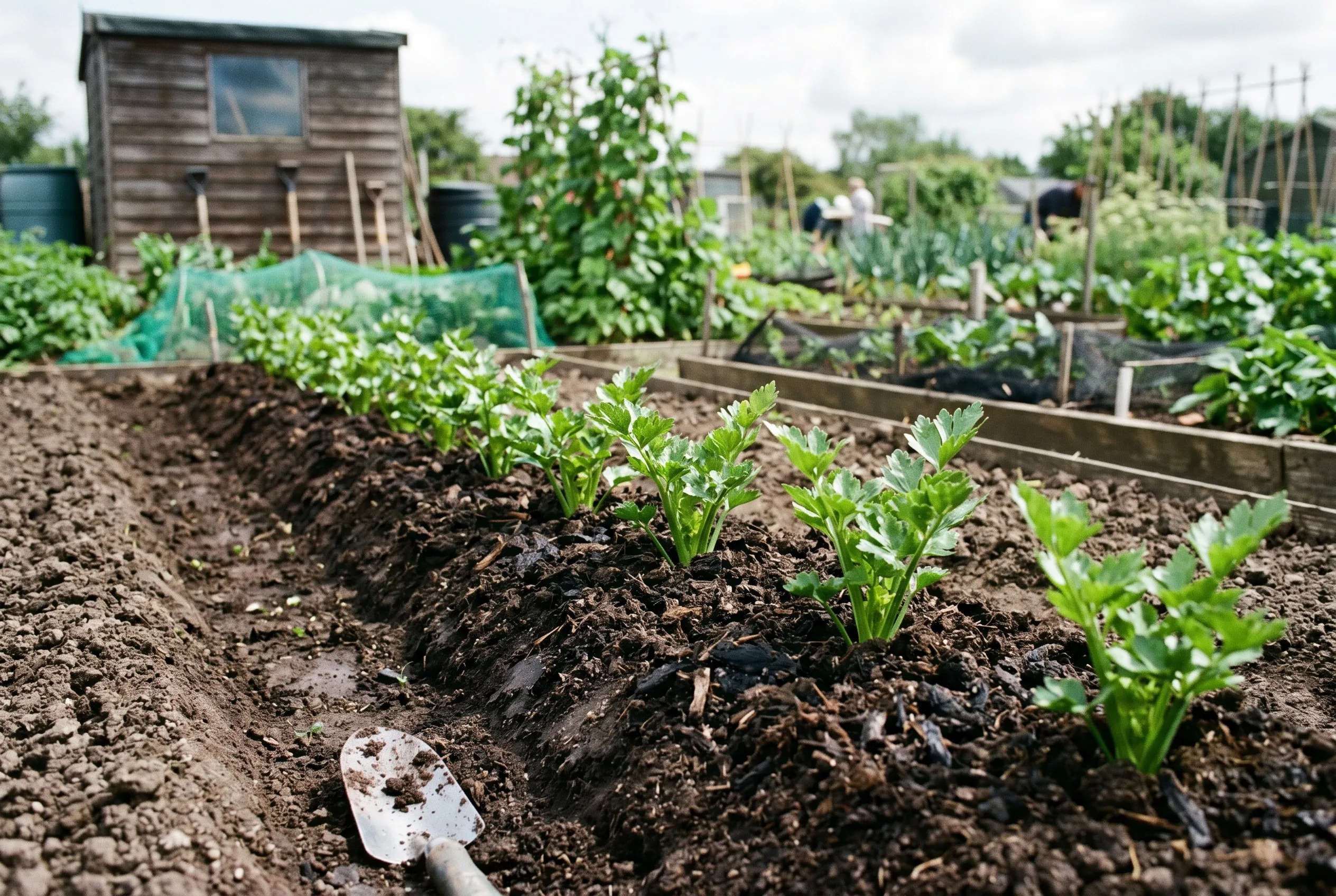 Trench celery goes into a single row in a deep, manure-filled trench. The trench both feeds the crop and makes earthing up easier.
Sowing and raising exhibition celery
Sow in February under glass at a steady 15-18C in a propagator. The long season suits the big varieties, which need every week of growth to reach show size. Celery seed is tiny and needs light to germinate, so sow on the surface of fine compost and do not cover it. Germination is slow and erratic, taking two to three weeks.
The one rule that overrides all others is never let celery suffer a cold check. If young plants are chilled below about 10C for any length of time, they read it as winter and bolt, running to seed in summer. A bolted plant is useless for showing. Prick out into individual pots, grow on warm, and harden off slowly and late. Do not be tempted out early by a warm spell in May, as a following cold snap is what ruins crops. Keep horticultural fleece to hand right through planting out.
Warning: A single cold night below 10C on a young, soft celery plant can trigger bolting weeks later. Hold plants back in a cold frame until nights are reliably mild, even if it means planting in early June.
Preparing the trench
Trench celery earns its name from the bed. In early spring, dig a trench 30cm deep and 40cm wide along the row. Fork a generous layer of well-rotted manure into the bottom and mix it with the lower soil, then return enough topsoil to leave the trench around 8-10cm below the surrounding ground. This reservoir holds water around the thirsty roots and gives you soil to draw up later for blanching.
Celery is a hungry, thirsty crop that evolved in marshland, so the manure and the dished trench both matter. Leave the trench to settle for a few weeks before planting. The spare soil dug out sits in a low ridge alongside, ready for earthing up. For the manure itself, our guides comparing animal manures and horse versus cow manure help you choose; well-rotted is essential, as fresh manure scorches roots and taints the stems.
Planting, watering, and feeding
Plant out in late May or early June, once nights are reliably above 10C, spacing plants 30cm apart in a single row down the trench. Firm them in and water well. From then on the crop needs constant moisture: celery that dries out turns pithy and stringy, the worst fault on the bench. Water deeply two or three times a week in dry spells, never letting the trench dry out.
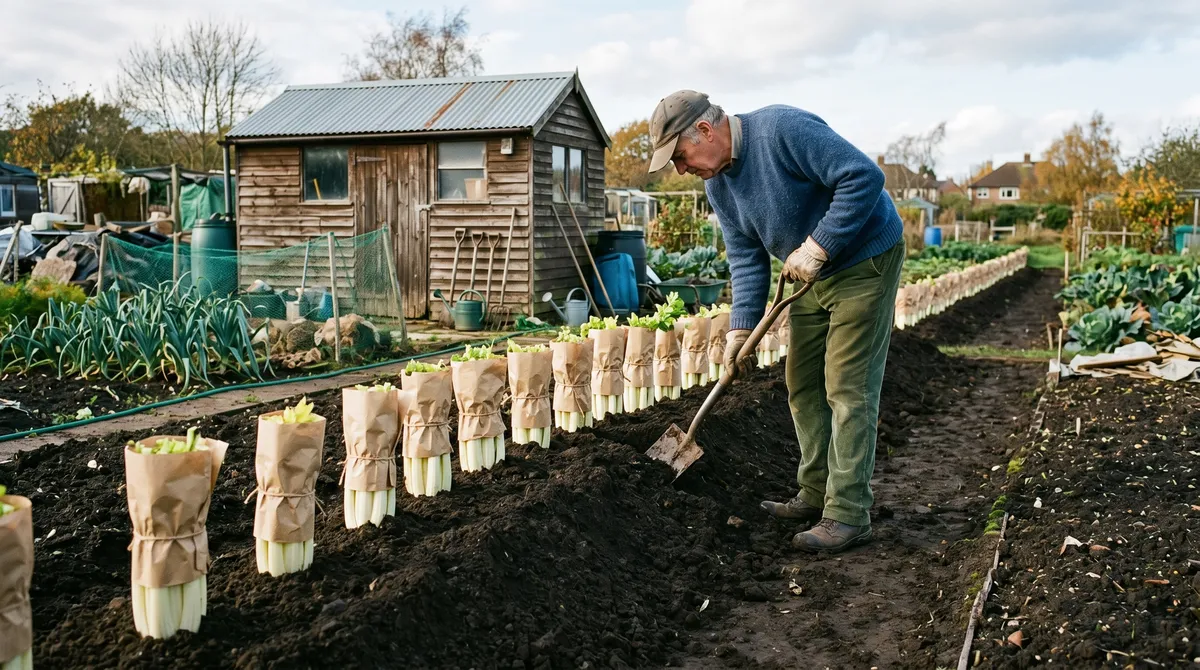
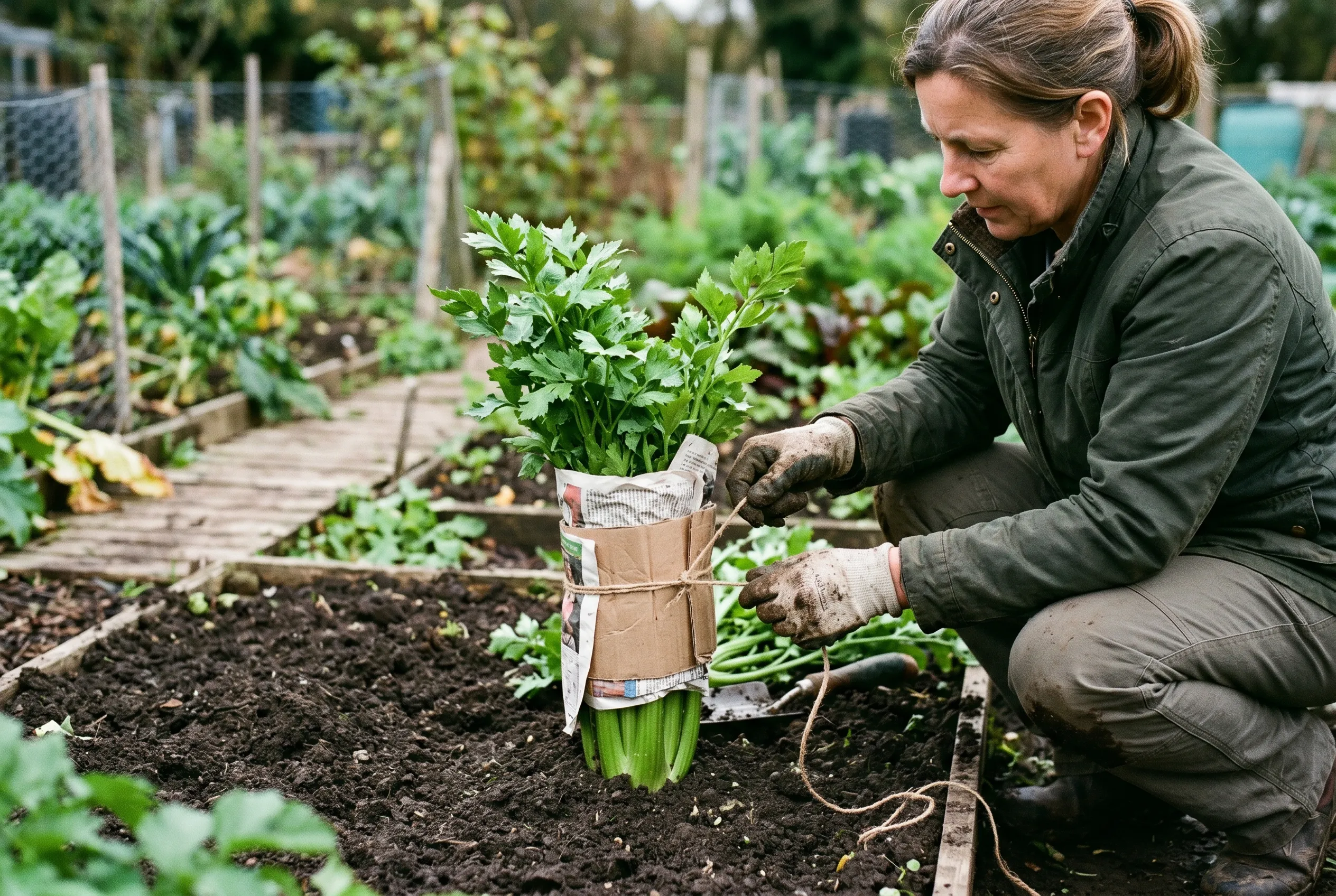 Collar the stems before earthing up. The collar keeps soil out of the heart, which would otherwise turn gritty and spoil the crop.
Collaring and earthing up to blanch
Blanching is what turns green celery into a show stick, and it starts about eight weeks before the show, usually from mid to late August. When plants reach about 30cm tall, on a dry day gather the stems upright and fit a collar around them, cardboard, thick paper, or a length of plastic pipe, tied to hold the leaf stalks together. The collar does two jobs: it keeps the heart tight and, just as importantly, stops soil falling into the centre, which would make the celery gritty and unsaleable.
Then earth up in stages. Draw dry soil from the ridge up around the collared stems, a third of the way at first, then more every couple of weeks until only the leafy tops show above a steep mound. Three earthings over six to eight weeks gives the longest blanch. Keep soil off the foliage and out of the heart at every stage. The buried, light-excluded stems whiten and crisp up into the long blanch the judges measure.
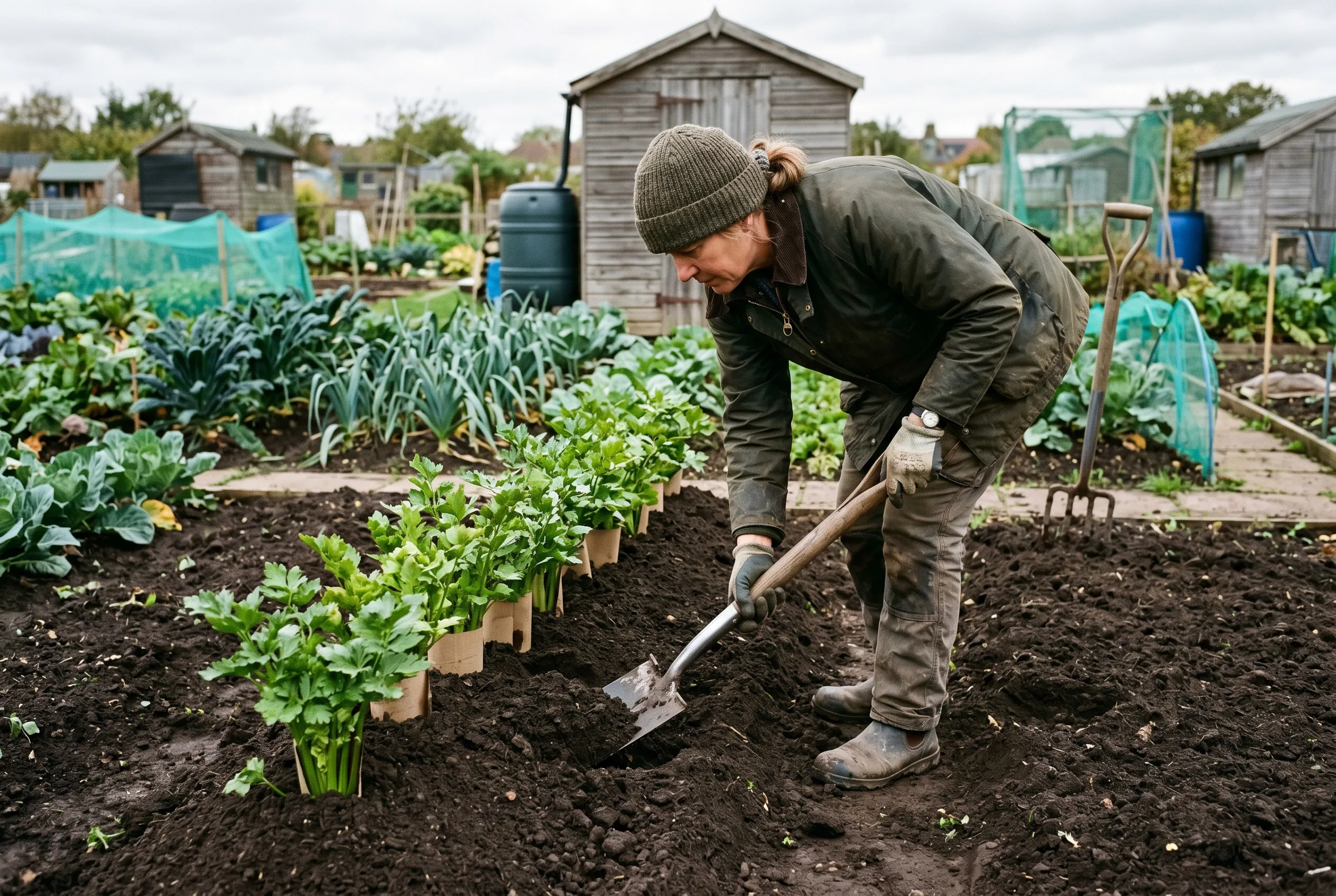 Earth up in three stages over six to eight weeks. Keep the soil off the foliage so only the leafy tops show above the mound.
Pests and problems to watch
Three problems cost more show celery than any others.
- Celery leaf miner (celery fly). The larvae tunnel inside the leaves, leaving brown blisters. Pick off affected leaves and grow under fleece early.
- Slugs. They graze the blanched stems hidden in the moist soil. Trap and clear them, as slug holes are an instant mark-down.
- Bolting. Caused by a cold check at the seedling stage, not by summer heat. Prevent it with gentle, late hardening off.
Add celery rust and boron-related cracking to the watch list, both worse in stressed crops. Even watering and clean, fleece-protected early growth prevent most trouble before it starts.
Lifting and staging for the show
Lift celery as late as possible before the show, ideally the day before, so it stays fresh and crisp. Dig down beside the mound and lever each plant out with as much root as you can, keeping the heart undamaged. Wash carefully under a gentle hose to remove every trace of soil, especially from inside the base, without bruising the blanched stems.
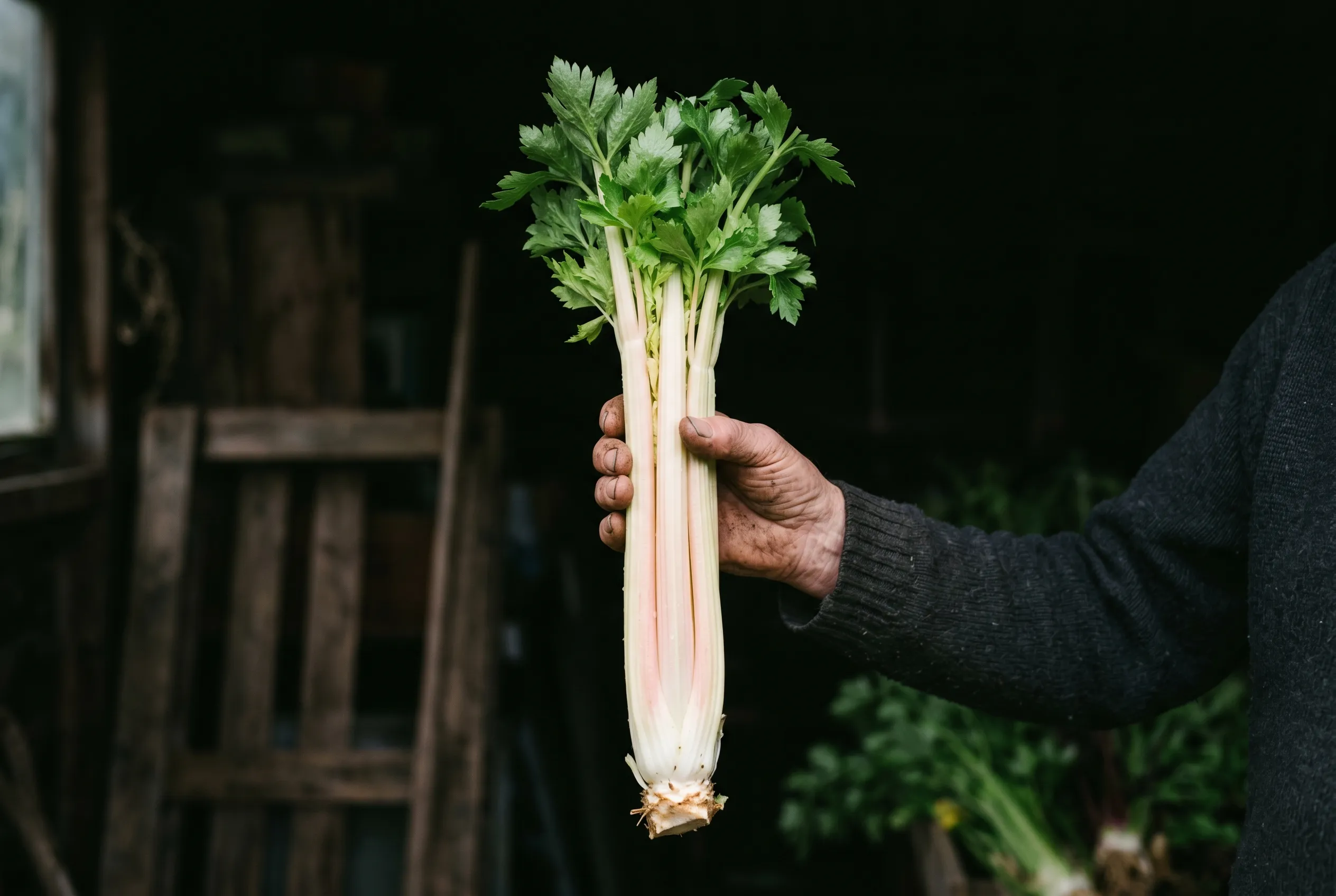 A lifted, washed show head: the long, solid blanch above a clean heart is exactly what the judges measure and reward.
Then dress each head: trim the roots to a short, neat tuft or a clean point as the schedule dictates, remove any damaged or green outer stalks, and trim the leafy tops to an even height. Choose a matched set, the required three or six heads as uniform in length, thickness, and colour as you can manage. Present them clean, undamaged, and the same way up. Judges reward long solid blanch, a firm heart, uniformity, and freedom from blemish; pith, splits, rust, and slug holes all lose marks. The same matched-set discipline applies whether you show celery, leeks, or parsnips.
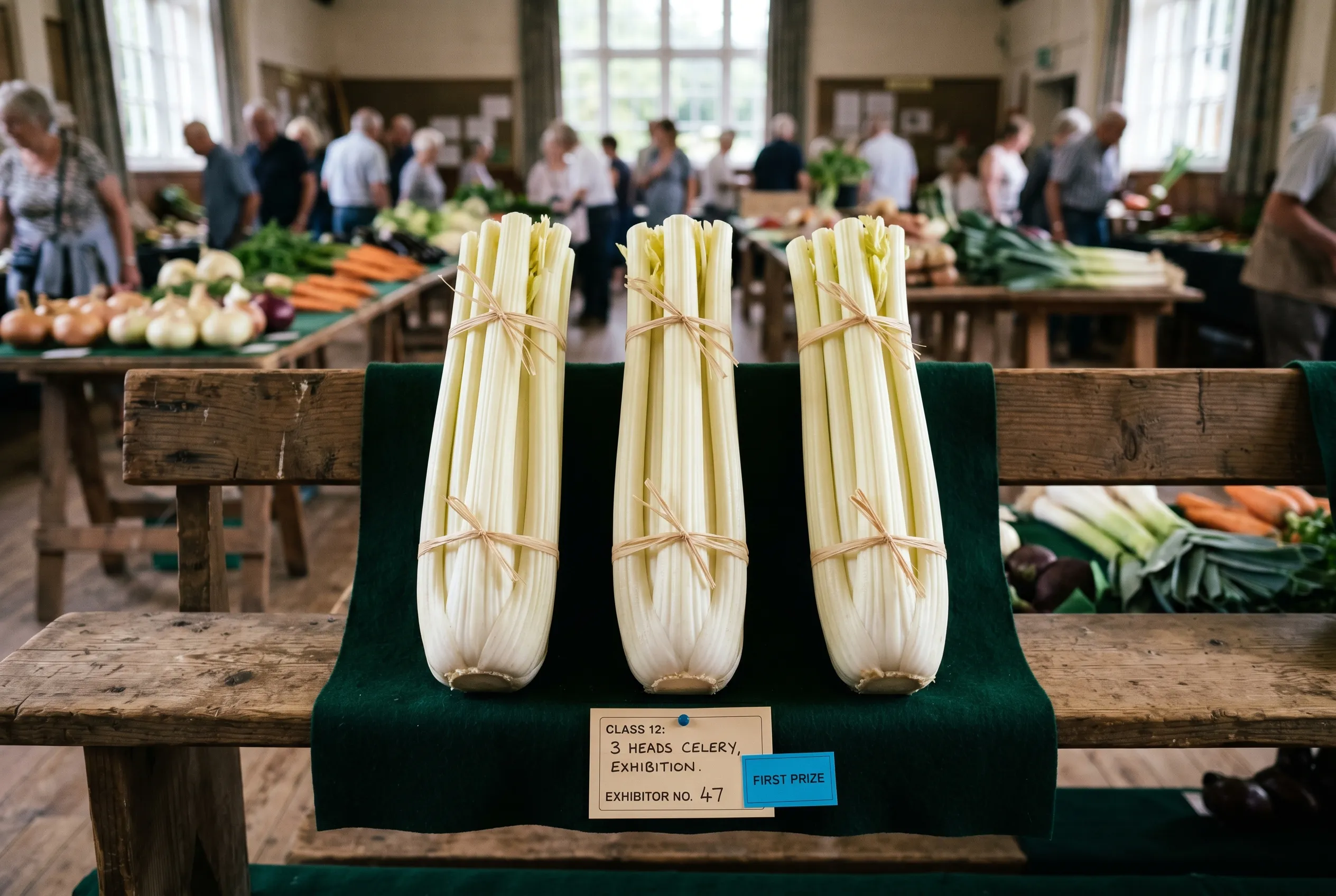 The finished article: a matched set of blanched heads, dressed and staged. Uniformity and clean blanch win the class.
For the wider plot, rotating celery after a well-manured crop and feeding the ground with garden compost keeps the trench in heart year on year. The Royal Horticultural Society’s celery growing advice covers the basic cultivation the show crop builds on.
Frequently asked questions
What is trench celery?
Trench celery is a traditional celery grown in a deep trench and blanched by earthing up. Unlike self-blanching celery, it must be collared and mounded with soil to whiten the stems. It produces the long, solid, well-flavoured sticks favoured for showing.
How do you blanch trench celery?
Wrap the stems in a collar of paper or pipe, then earth up soil around them in stages. Excluding light turns the stems white and crisp. Blanching takes six to eight weeks, so start about two months before you want to lift the celery.
When do you sow celery for showing?
Sow exhibition celery in February under glass at 15-18C. Early sowing gives the long season the big varieties need. Keep the seedlings warm and never let them suffer a cold check, which triggers bolting and ruins the plant for the bench.
Why does my celery bolt or run to seed?
Celery bolts after a cold check, when young plants are chilled below about 10C. The plant reads the cold as winter and runs to seed in summer. Harden off gently and plant out only once nights are reliably mild to prevent it.
What do judges look for in show celery?
Judges reward long, solid, well-blanched sticks with a firm heart and clean, matched heads. Marks are lost for pithiness, splitting, rust, slug damage, and uneven size. Present the required number, usually three or six, as a uniform, undamaged set.
Why are my celery stems cracked or split?
Cracked, brown-streaked stems usually signal boron deficiency, common on dry or limey soil. Keep the soil evenly moist and apply a trace of borax dissolved in water if it recurs. Erratic watering after drought also splits stems as growth surges.
Our team produces practical UK gardening guidance from source research, contributor records and established horticultural practice. Editorial standards are overseen by Matt W.