Key takeaways
- A bokashi bin ferments cooked and raw food waste in 2 weeks; the bran costs about £8 per kg
- 500g of tiger worms processes roughly 250g of kitchen scraps a day at 10-25C
- A council food caddy costs nothing and takes everything, but you get no compost back
- Bokashi pre-compost needs 2-4 more weeks in a soil factory before plants can use it
- Fruit flies and smells almost always trace to citrus, onion or overfeeding, not the system
- A wormery costs £40-£80 to set up; a pair of bokashi bins runs £25-£60
Spent mushroom substrate makes excellent compost, and our guide to growing oyster mushrooms shows how little space you need.
Can you compost without a garden in the UK?
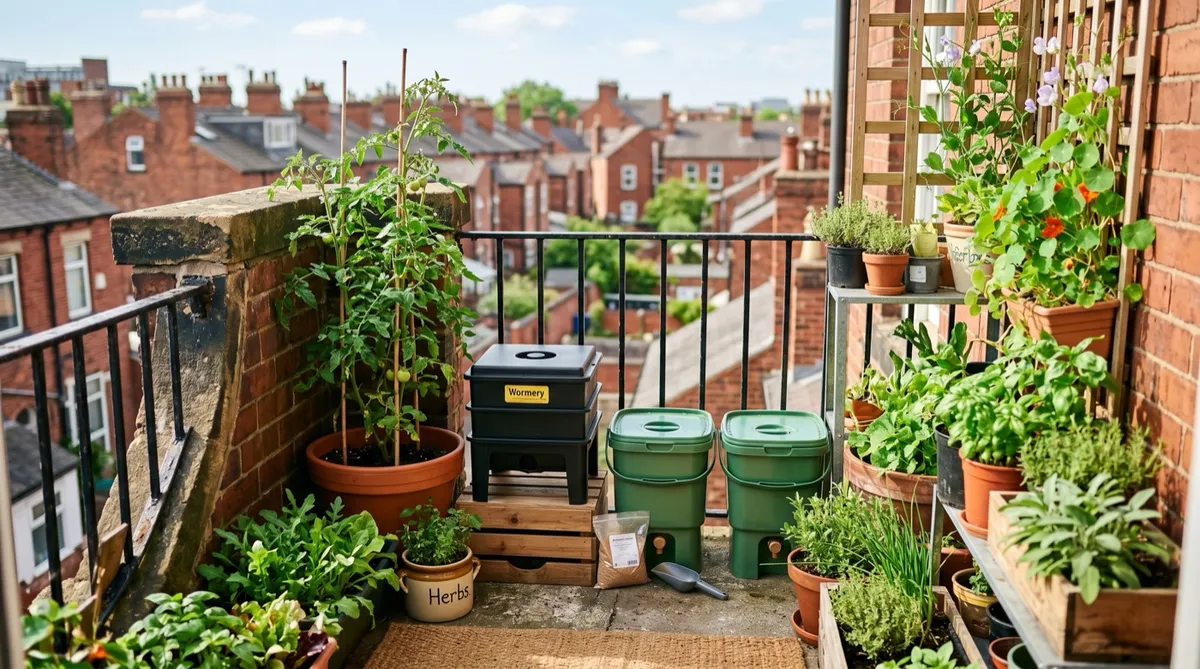
Yes, and space is rarely the real barrier. A standard 18L bokashi bucket needs a 30x30cm footprint, which fits under most sinks. A stacked-tray wormery stands about 75cm tall on a 50x50cm base, small enough for a balcony corner, a utility cupboard or a shared hallway where the landlord permits it. Neither needs soil, a tap or a power socket.
The third route asks even less of you. Most UK councils now collect food waste weekly in a 23L kerbside caddy, and the law required every English council to offer this by April 2026. Your scraps still get composted, just industrially at a central site. Look up your council’s food waste service on GOV.UK if a caddy has never appeared.
The catch is what you get back. The caddy returns nothing. Bokashi and a wormery return real growing material you can use across your pots, which matters once you start collecting balcony gardening ideas and need to feed them. Renters should note that every system here moves house with you.
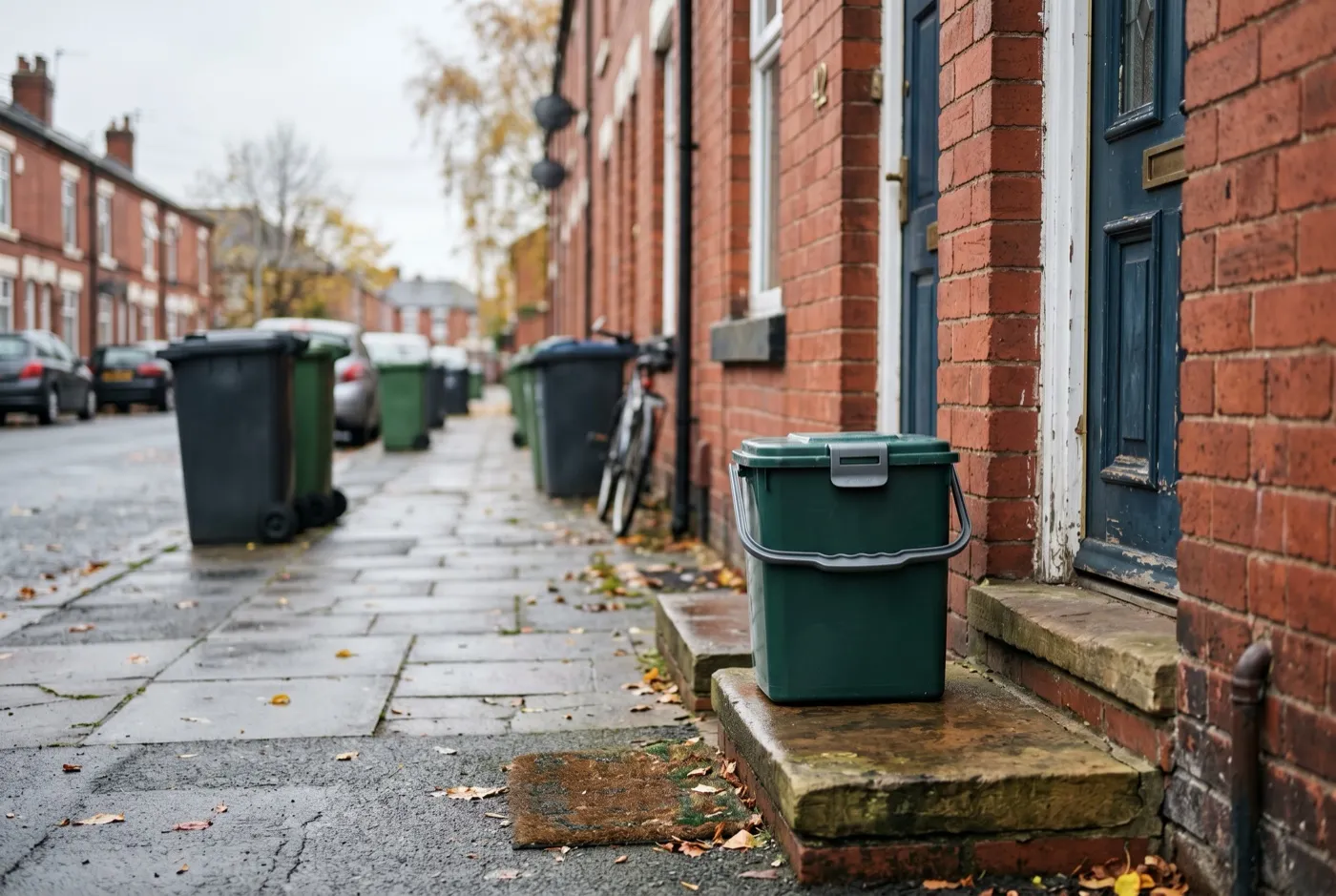 The council caddy: zero cost and zero effort, but none of the finished compost ever comes back to you.
What bokashi actually is: fermentation, not composting
Bokashi is not composting at all. It is anaerobic fermentation, the same family of process that makes sauerkraut and silage. You layer food waste into a sealed bucket, sprinkle each 3-4cm layer with a handful of bokashi bran, press it down and shut the lid. The bran carries lactic acid bacteria and yeasts that pickle the waste rather than rot it.
This is why bokashi takes things no other home system can. Cooked food, meat, fish, cheese, bread and small bones all ferment safely because the acidic, airless bucket locks out the bacteria that cause stink and attract flies. The contents drop to a pH of around 3.5-4.5, which is pickle territory.
The numbers are simple. Bran costs about £8 per 1kg bag, and a two-person household gets through roughly 1kg every 8 weeks. A bucket takes 3-4 weeks to fill, then sits sealed for a 2-week ferment while a second bucket starts filling. Drain the leachate from the tap every 2-3 days. Our full bokashi composting guide covers the bucket-by-bucket routine in detail.
 Feeding the bokashi bin takes seconds: scraps in, a handful of bran over the top, press down and seal.
How a wormery works on a balcony or in a cupboard
A wormery uses composting worms to eat your scraps and excrete worm casts, the most concentrated soil conditioner a flat-dweller can produce. The right species is the tiger worm, Eisenia fetida, sold by weight from fishing and wormery suppliers. Garden earthworms (Lumbricus terrestris) burrow deep and die in a bin, so never collect them from a park.
A starter colony of 500g, roughly 1,000 worms, processes about 250g of scraps a day once settled. Tiger worms eat around half their own body weight daily and the colony doubles in about 3 months when fed well. Their working range is 10-25C. Below 10C feeding slows to a crawl, below 5C worms start dying, and above 30C a sealed bin cooks them. On a UK balcony that means summer shade and winter insulation.
Stacked-tray models cost £40-£80 and let finished casts collect in lower trays while worms migrate up to fresh food. Our step-by-step guide on how to start a wormery covers bedding, the first feed and the six-week settling period.
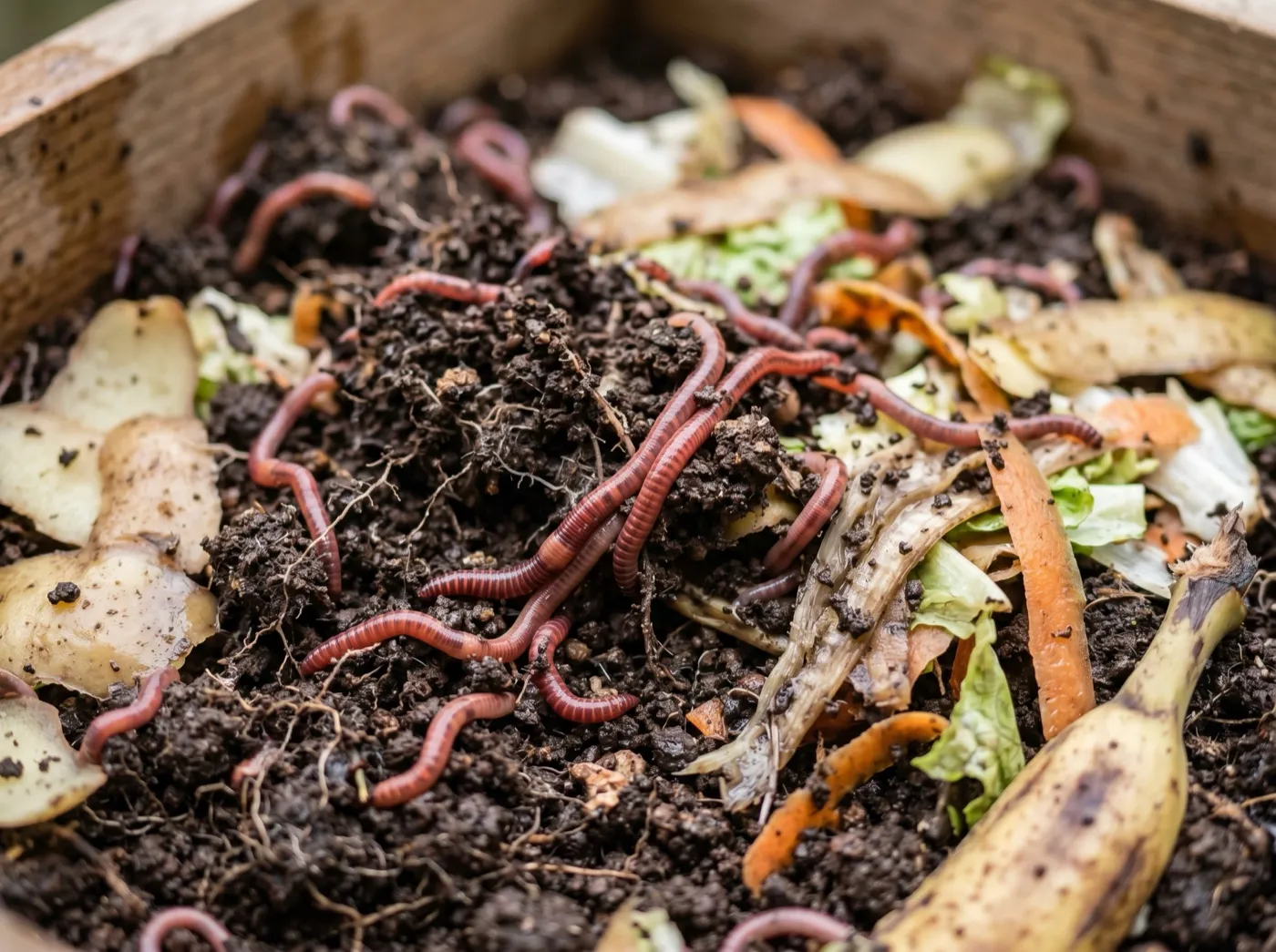 Tiger worms, Eisenia fetida, have distinct stripes. A 500g colony eats around 250g of kitchen waste a day.
Bokashi vs wormery vs caddy vs compost share
Bokashi is the gold standard for a flat. It is the only home system that takes cooked food, meat and dairy, it processed nearly three times the weekly weight of our wormery, and its 4-6 week cycle is the fastest route from scrap to soil. The wormery wins on output quality but not on volume.
The science: three routes from scraps to soil
Each system runs a different biological process, and the day counts explain the differences in the table above.
Route 1: Bokashi fermentation (anaerobic)
- Days 1-14, fermentation. Lactic acid bacteria from the bran acidify the sealed bucket to pH 3.5-4.5. Nothing breaks down yet; it pickles. Drain leachate every 2-3 days.
- Days 15-42, the soil factory. Buried in soil or a tub of old compost, the acidic pre-compost is colonised by soil microbes and breaks down fully in 2-4 weeks at 15-20C, slower in winter.
Route 2: Vermicomposting (worm-driven, mesophilic)
- Days 1-42, establishment. The colony settles into new bedding and feeding ramps up to the full 250g a day.
- Weeks 6-12, cast production. Worms and microbes convert scraps into dark casts. First usable tray in 8-12 weeks.
Route 3: Industrial aerobic composting (your caddy’s destination)
- Weeks 1-4. In-vessel composting holds material at 60-70C, hot enough to kill pathogens and weed seeds.
- Weeks 5-12. Maturation stacks finish the product for farms and parks.
The critical mistake sits in route 1: tipping fresh bokashi pre-compost straight into a plant pot. At pH 3.5-4.5 it burns roots on contact. It must spend its 2-4 weeks in the soil factory first, and even then keep it 10cm clear of stems.
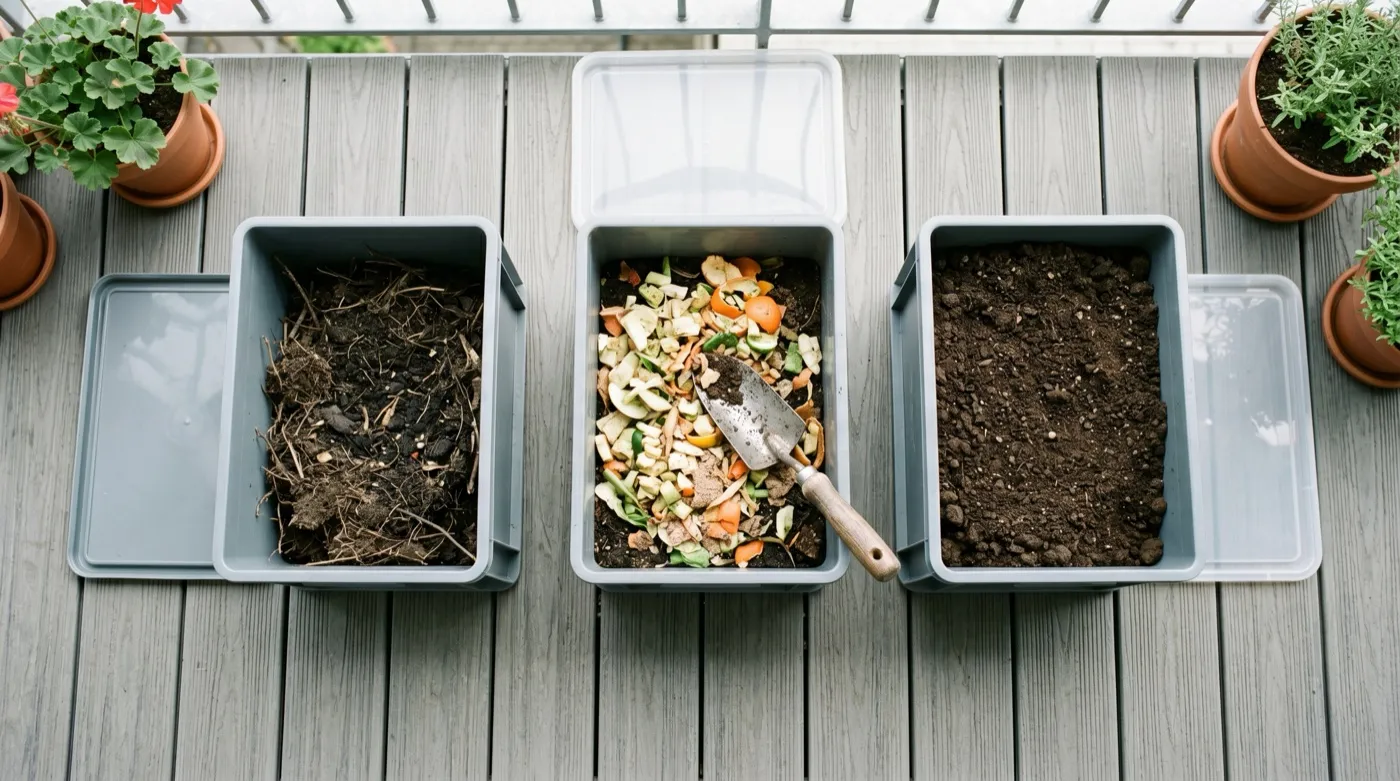 The soil factory in three steps: spent compost, fermented bokashi layered through it, and crumbly usable material 2-4 weeks later.
Why wormeries smell and where fruit flies come from
A stinking bin is never bad luck. It has a traceable root cause, and fixing that beats any quick cure.
Smell in a wormery means the balance is wrong. The bin needs roughly equal volumes of wet food scraps (greens) and dry carbon (browns) such as shredded cardboard or egg boxes. Pile in food alone and the bedding turns sour, airless sludge that suffocates worms. Citrus and onion are the second culprit. Both acidify bedding and worms refuse them, so the waste sits and rots. Keep them under 10% of any feed, or send them to bokashi, which handles both happily.
Fruit flies are a lifecycle problem. Adults lay eggs on exposed peel, and at 20C a new generation emerges every 8-10 days, which is why a small bloom becomes a cloud within a fortnight. Permanent prevention takes three habits: bury every feed below the surface, keep a 5cm blanket of damp shredded cardboard on top, and freeze scraps for 24 hours before feeding to kill eggs that arrive on fruit skin. If they have already spread from the bin to your fruit bowl, our guide to getting rid of fruit flies organically covers traps and prevention that will not harm the worms.
A failed bokashi ferment announces itself differently: a putrid smell instead of pickle, and blue-green mould instead of harmless white. The cause is almost always too little bran, air gaps from poor pressing, or leachate left undrained. Bin the batch via the caddy and restart with a heavier hand on the bran.
What to do with the output when you have no beds
The classic objection to flat composting is having nowhere to put the results. In practice the output is small, concentrated and easy to use up.
Houseplants take the liquid. Drained wormery liquid, diluted 1:10 until it looks like weak tea, works as a fortnightly feed. It slots straight into the routine from our guide to feeding houseplants. Bokashi leachate is stronger and more acidic, so dilute it 1:100 and use it within 24 hours.
Soil factory output fills containers. Each finished tub gives you 30L of revived material, ideal for the salad boxes and herb pots in our guide to growing vegetables on a windowsill. Whatever you cannot use, donate. Community gardens, allotment holders and compost-share hosts almost never turn down finished material or pre-compost.
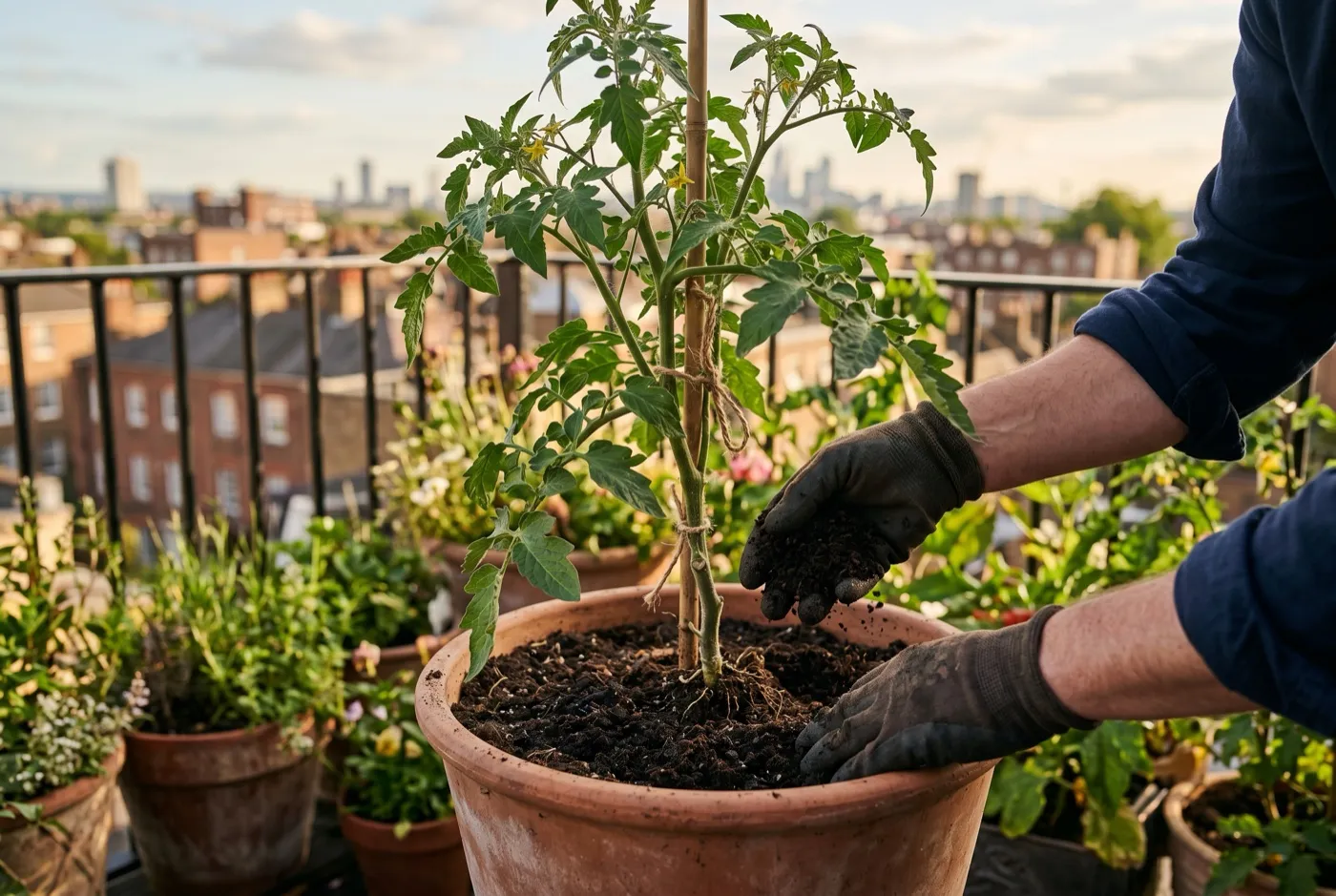 A 1-2cm top-dressing of worm casts every 6-8 weeks feeds container crops through the whole season.
A 12-month flat composting calendar
Bokashi runs at the same pace all year because it lives indoors. The wormery follows the temperature, so the calendar mostly manages the worms.
| Month | Task |
|---|---|
| January | Halve wormery feeds, keep bubble wrap on, check bedding is damp not wet |
| February | Drain leachate weekly, start a fresh bokashi bucket, order bran before spring |
| March | Increase worm feeds as temperatures pass 10C, empty winter soil factory tubs |
| April | Harvest the first finished worm tray, mix casts 1:4 into spring potting |
| May | Full feeding resumes, move the wormery out of direct sun before warm spells |
| June | Freeze fruit scraps 24 hours before feeding, watch for early fruit flies |
| July | Peak risk of overheating: keep the bin shaded and below 25C, water bedding lightly |
| August | Refresh the 5cm cardboard blanket, split the colony if trays are crowded |
| September | Start a new soil factory tub with summer bokashi output |
| October | Reduce worm feeds as nights cool, harvest remaining casts for winter storage |
| November | Insulate the wormery, move it against the warmest wall or into a cupboard |
| December | Feed worms weekly at most, keep bokashi and the caddy carrying the load |
Common mistakes that derail flat composting
- Putting fresh bokashi pre-compost in pots. At pH 3.5-4.5 it scorches roots. Give it 2-4 weeks in a soil factory first, every time.
- Buying one bokashi bucket instead of two. A single bin cannot ferment sealed for 2 weeks while you keep adding scraps. The pair is the system.
- Feeding a wormery citrus and onion. Worms refuse both, bedding acidifies and rot sets in. Cap them at 10% of feeds or route them to bokashi.
- Ignoring temperature swings on a balcony. Below 5C worms die and above 30C a bin cooks. Shade in July, insulate from November, and check with a £3 stick-on thermometer.
- Skipping the leachate tap. Undrained liquid drowns a bokashi ferment and sours a wormery sump. Drain both every 2-3 days and dilute the liquid as feed.
Frequently asked questions
Can you compost in a flat without a garden?
Yes, with a bokashi bin, a wormery or a council food caddy. Bokashi ferments all food waste in a sealed 18L bucket on a 30x30cm footprint. A wormery fits a balcony or utility cupboard and makes the best plant feed. The caddy is the zero-effort backup that takes whatever the other two cannot.
Does a bokashi bin smell?
No, a healthy bokashi bin smells of pickles or cider vinegar. The bucket stays sealed between feeds, so nothing escapes into the kitchen. A putrid smell means the ferment has failed, usually from too little bran or undrained leachate. Empty a failed bin into the food caddy and restart with more bran.
How many worms do I need to start a wormery?
Start with 500g of tiger worms, around 1,000 worms. That colony processes roughly 250g of scraps a day at 10-25C, and it doubles in about 3 months when conditions are right. Buy Eisenia fetida from a fishing or wormery supplier. Garden earthworms will not survive in a bin.
What do I do with bokashi pre-compost if I have no garden?
Bury it in a soil factory: a lidded tub of old compost. Layer the fermented waste through 30L of spent or cheap compost and wait 2-4 weeks. The result is usable potting material for balcony containers and houseplants. You can also donate it to a community garden or compost-share host.
Why does my wormery have fruit flies?
Exposed food and citrus overload cause nearly all wormery fruit flies. Adults lay eggs on uncovered peel, and a new generation hatches every 8-10 days at 20C. Bury each feed under the surface and keep a 5cm blanket of damp shredded cardboard on top. Freezing scraps for 24 hours before feeding kills any eggs they carry.
Can worms survive winter on a UK balcony?
Once your system is running, the habits transfer. If you later get outdoor space, our guide to making compost the cold, fast and hot ways scales the same principles up to a full heap, or browse the full how-to section for more practical projects.
Our team produces practical UK gardening guidance from source research, contributor records and established horticultural practice. Editorial standards are overseen by Matt W.