Key takeaways
- A plastic Dalek bin holds 220 to 330 litres and often costs under 20 pounds through a council subsidised scheme
- You need at least 1 cubic metre of material for a heap to reach 40 to 60C and break down fast
- A two or three bay wooden system finishes compost in 8 to 16 weeks instead of 9 to 12 months
- Tumblers and HotBin style hot composters give finished compost in 4 to 12 weeks and lock rats out
- Wormeries and Bokashi bins suit flats and courtyards where a full sized bin will not fit
- Site any bin on bare soil, level, in part shade, with easy access for a barrow
Compost bin ideas are easy to find, but choosing the right compost bin type for your own garden is harder. The bin you pick decides how fast you get usable compost, how much space you give up, and whether rats turn up. A 330 litre plastic Dalek, a 1 cubic metre wooden bay, a sealed tumbler and a HotBin all make compost. They do it at very different speeds and suit very different gardens.
Which compost bin type is right for your garden
The right compost bin depends on three things: your space, how fast you want compost, and how much waste you produce. A flat with a balcony needs a wormery or a Bokashi bin. A standard suburban garden suits a plastic Dalek or a single wooden bay. A large garden or allotment justifies a two or three bay timber system that heats and finishes fast.
The table below ranks the main bin types by how well they suit a typical UK garden, balancing cost, speed and capacity. Speed assumes a balanced green and brown mix and reasonable management. A Dalek left unturned will sit at the slow end. A hot composter fed correctly hits the fast end.
| Bin type | Capacity | Speed to finished compost | Best for | Cost | Role |
|---|---|---|---|---|---|
| Wooden double or triple bay | 1 to 3 cubic metres | 8 to 16 weeks | Medium to large gardens, allotments | 0 to 150 pounds | Primary, high volume, heats well |
| Hot composter (HotBin, Green Johanna) | 100 to 330 litres | 4 to 12 weeks, year round | All sizes wanting speed and kitchen waste | 120 to 200 pounds | Fast, sealed, rodent-proof |
| Tumbler | 140 to 300 litres | 4 to 8 weeks per batch | Small gardens, batch composting | 60 to 130 pounds | Fast, clean, no rodents |
| Plastic Dalek cone | 220 to 330 litres | 9 to 12 months | Small to medium gardens, low effort | Under 20 to 45 pounds | Steady, cheap, tidy |
| Single wooden bay | 1 cubic metre | 6 to 9 months | Medium gardens, garden waste | 30 to 80 pounds | Steady, can heat if filled fast |
| DIY pallet bin | 1 cubic metre plus | 4 to 9 months | Budget builders, allotments | Free to 20 pounds | Cheap volume, build to suit |
| Wormery | 30 to 100 litres | 3 to 6 months | Flats, courtyards, kitchen waste | 50 to 120 pounds | Small space, rich worm castings |
| Bokashi bin | 16 to 20 litres | 2 weeks ferment, then bury | Kitchen pre-treatment, all homes | 30 to 60 pounds | Pre-treats cooked food and meat |
| Beehive or aesthetic bin | 200 to 400 litres | 6 to 12 months | Front gardens, on-show plots | 80 to 180 pounds | Looks good, modest speed |
Plastic Dalek cone bins and cheap council schemes
The plastic Dalek is the bin most UK gardeners start with, because it is cheap, tidy and widely subsidised. These conical bins hold 220 to 330 litres. They have an open base that sits on soil, a lid on top, and a small hatch at the bottom to shovel out finished compost. Many local councils sell them through getcomposting.com, often for under 20 pounds against a normal retail price of 35 to 45 pounds.
The Dalek’s weakness is volume. A 330 litre cone holds about a third of a cubic metre. That is well under the 1 cubic metre mass a heap needs to hold heat, so a Dalek rarely climbs above 25 to 30C. It composts cold and slow. Expect 9 to 12 months for usable material, and often only the bottom third is properly crumbly when you open the hatch.
Daleks suit small to medium gardens, low effort, and a steady trickle of kitchen and garden waste. To get the best from one, chop material small, mix greens and browns, and lift the whole bin off once a year to fork the contents back in. For faster output, run two Daleks and fill one while the other finishes.
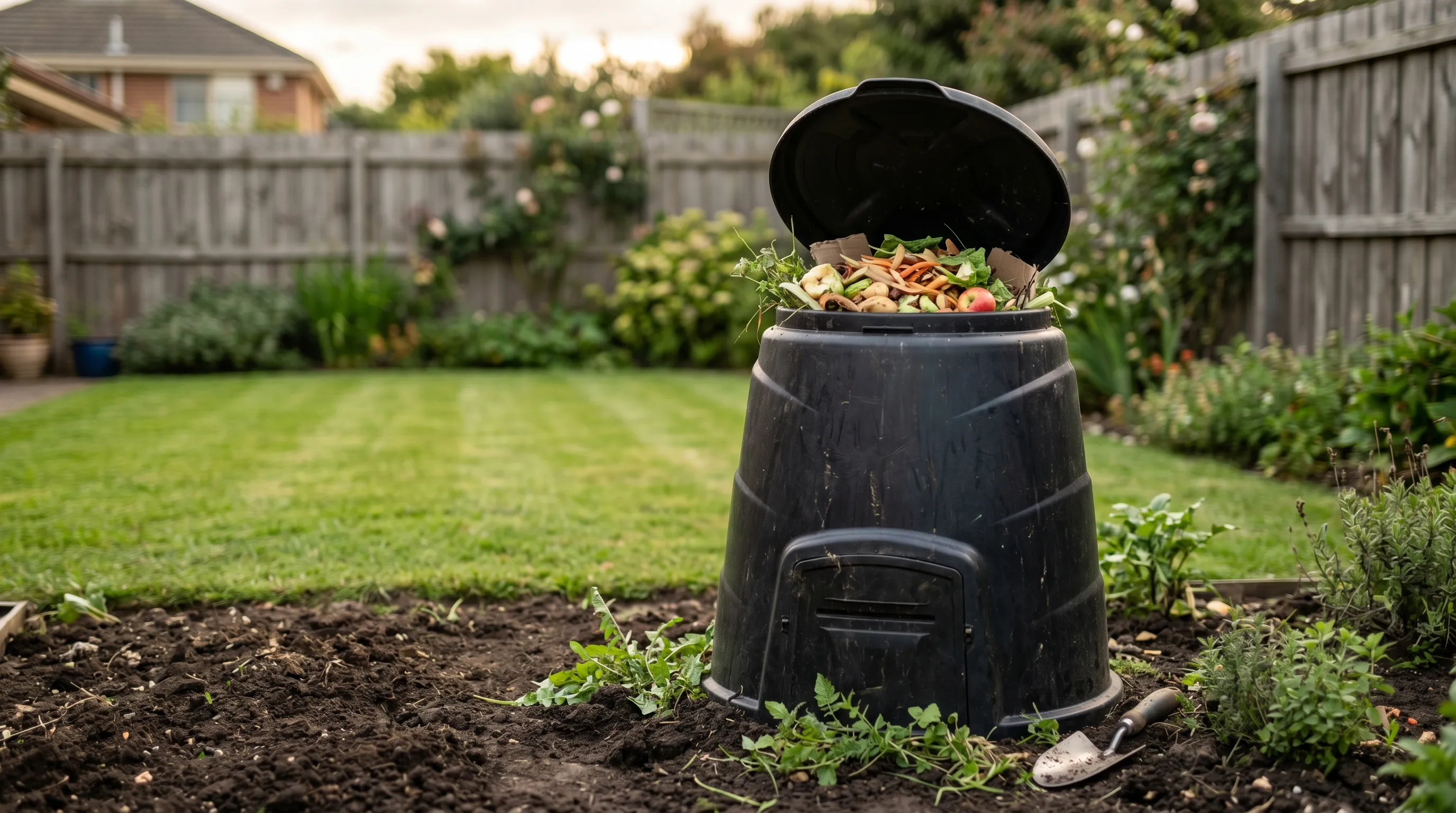 A Dalek sits straight on soil so worms can move up into it. Cheap and neat, but it composts cold and slow.
Wooden bays and the New Zealand box system
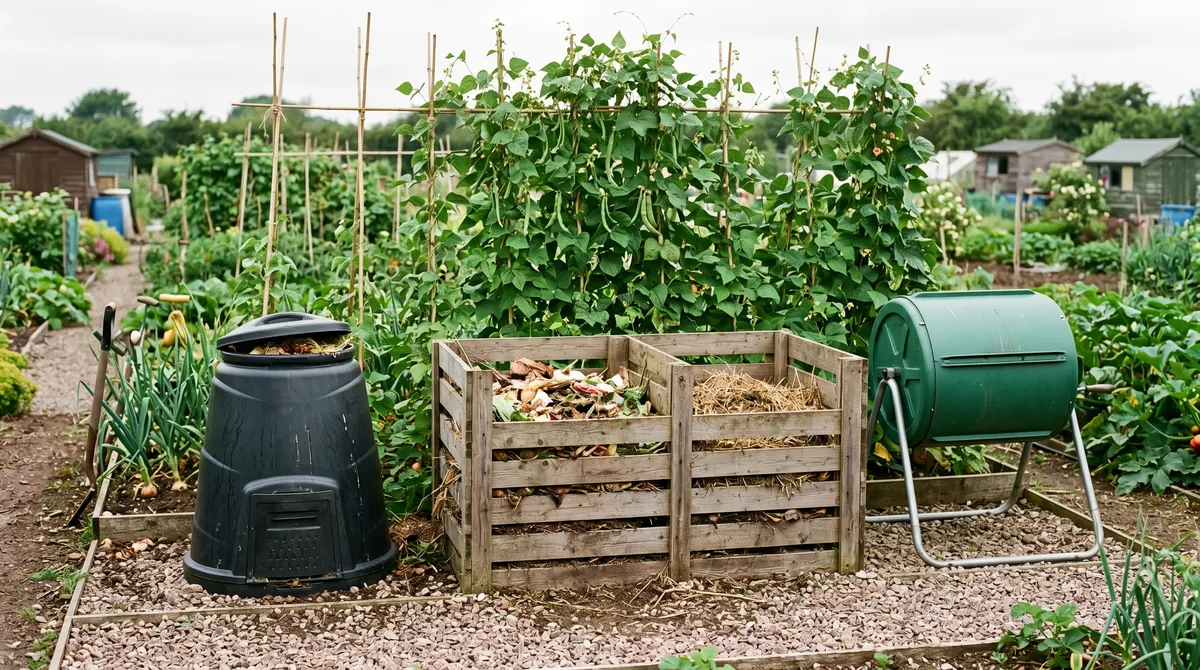
Wooden bay systems are the gold standard for gardeners who produce real volume, because they hold the mass needed to heat. A bay is an open fronted timber box, usually around 1m by 1m by 1m, built from slatted boards or pallets with a removable front so you can fork the contents out. The classic New Zealand box is a double or triple version, with two or three bays in a row.
The point of more than one bay is rotation. You fill bay one, then when it is hot and has started to settle you turn it into bay two. Turning aerates the heap and reignites the heating, while bay one starts filling again. A double bay finishes compost in 8 to 16 weeks. A triple bay adds a maturing bay, so you always have one filling, one cooking and one finished.
Single bays work too, and a single 1 cubic metre bay filled in one go can reach 40 to 50C. The slatted sides let air in, which a solid plastic bin cannot match. Build them from gravel boards, scaffold boards or featheredge, and they last 8 to 15 years. For the underlying method of building and turning a hot heap, see our cold, fast and hot composting guide.
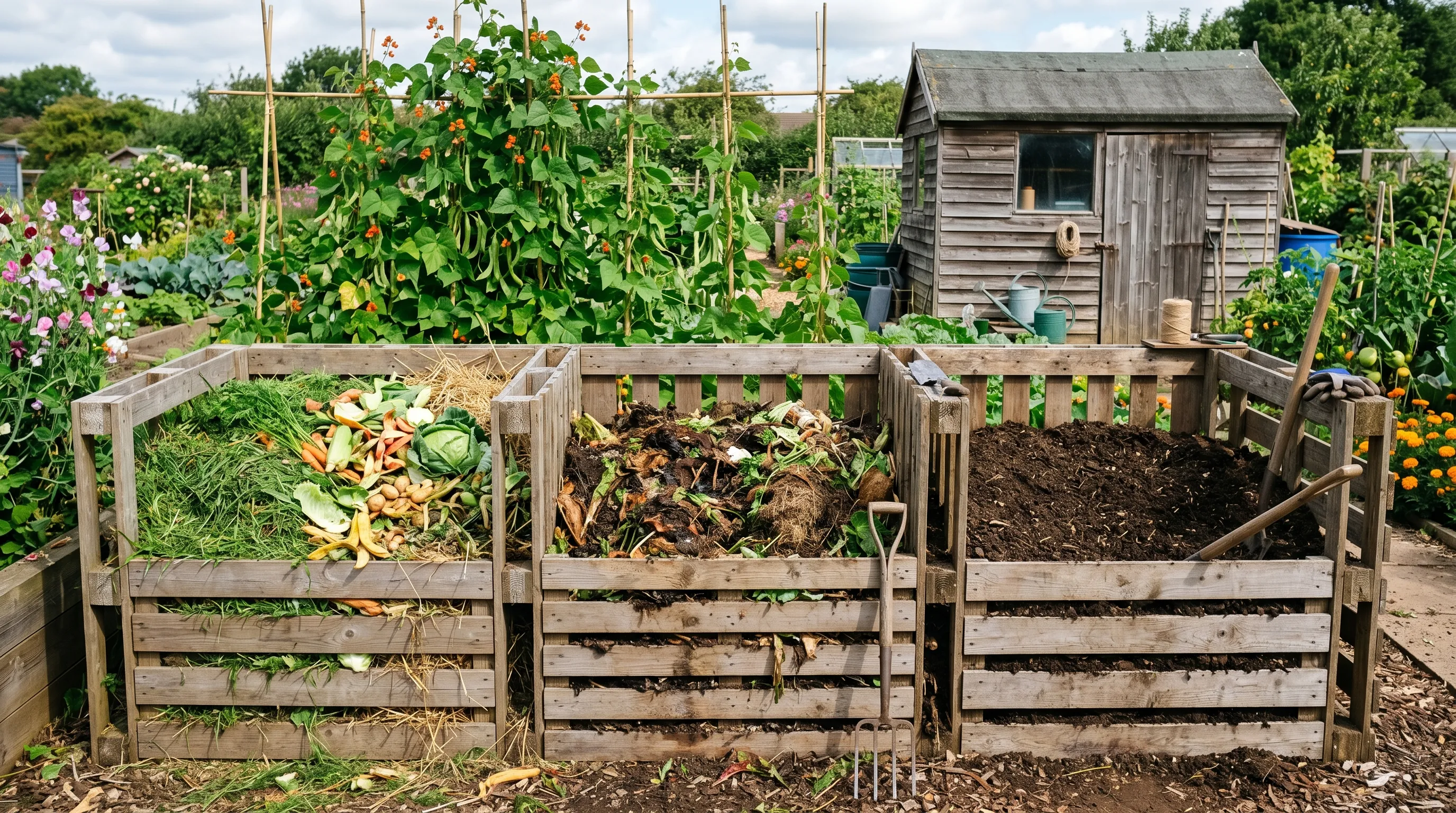 A three bay New Zealand box: one bay filling, one cooking, one finished. Turning left to right keeps a steady supply.
Tumblers and hot composters for fast, clean compost
Tumblers and hot composters trade capacity for speed and cleanliness, and both lock rats out. A tumbler is a sealed drum on a frame that you spin every few days. The constant aeration drives fast aerobic breakdown, so a well managed batch finishes in 4 to 8 weeks. Capacity is small, usually 140 to 300 litres, and dual-chamber models let one side finish while you fill the other. Because the drum sits off the ground and seals shut, rodents cannot get in.
Hot composters are insulated bins built to stay warm year round. A HotBin or Green Johanna holds the heat the microbes generate, so the core sits at 40 to 60C even in winter. This lets them take cooked food, small bones and dairy that an open bin cannot, because the heat and the sealed body deter pests. Finished compost appears in 4 to 12 weeks, and the bin keeps working through January when a Dalek has gone stone cold.
Both options cost more upfront, 60 to 200 pounds, but they earn it on speed and on letting you compost kitchen waste safely. They suit small gardens, courtyards and anyone who wants compost in weeks rather than seasons.
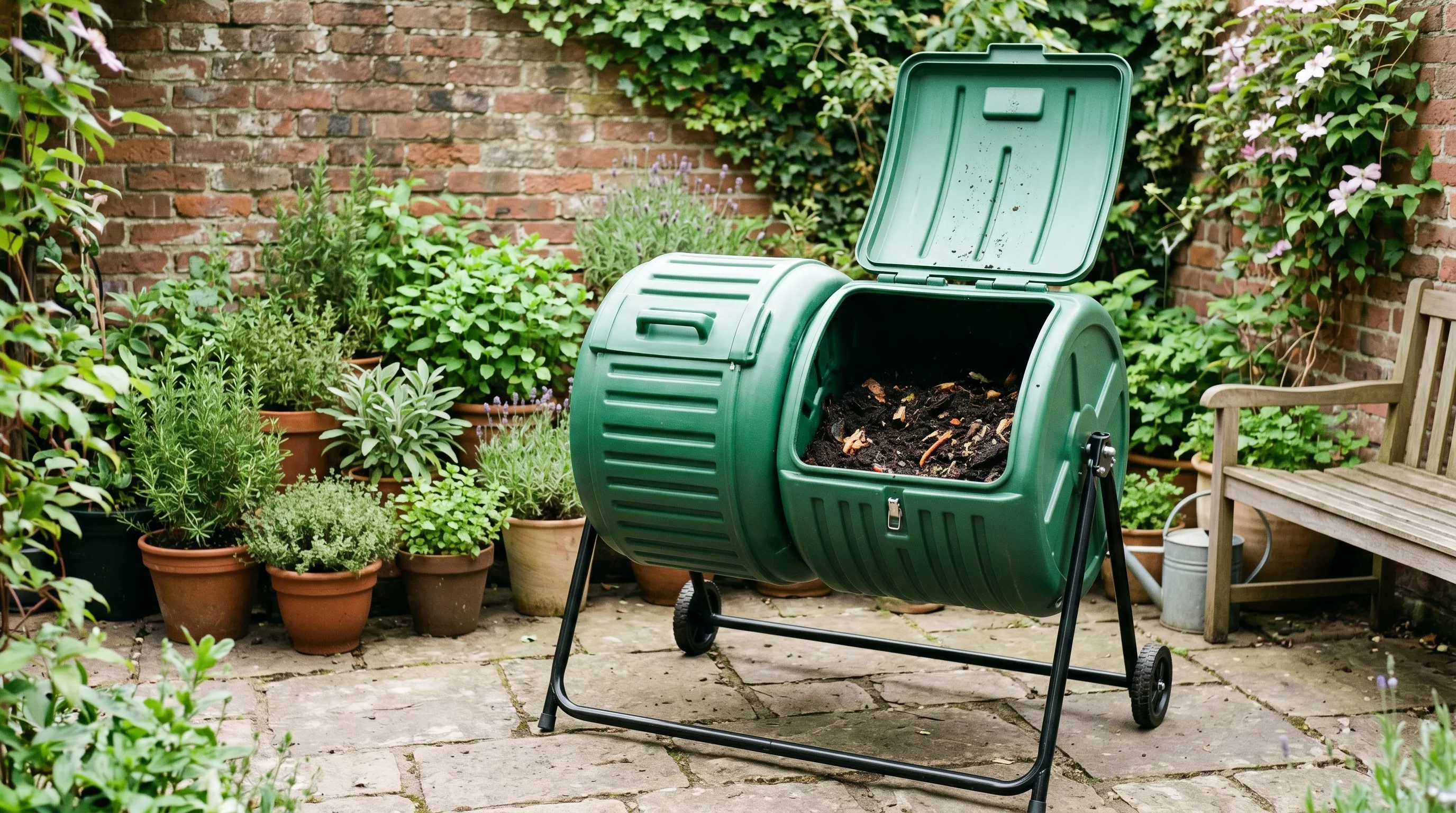 A dual-chamber tumbler fits a paved courtyard, seals rats out, and finishes a batch in about 4 to 8 weeks.
Wormeries and Bokashi for flats and small spaces
Wormeries cost 50 to 120 pounds and run indoors or out, as long as they stay between 10 and 25C. Worms slow below 10C and suffer above 30C, so a shaded spot or a shed corner suits them. Feed in small amounts, avoid citrus, onion and meat, and keep the bedding moist. Garden Organic has detailed guidance on setting up and feeding a wormery for UK conditions.
A Bokashi bin is different. It ferments kitchen waste, including cooked food, meat and dairy, in a sealed 16 to 20 litre bucket using bran inoculated with microbes. After about two weeks the pickled waste is ready to bury in a bed or add to an outdoor bin, where it breaks down fast. Bokashi is a pre-treatment, not a finished compost, so it pairs well with any outdoor bin. Our Bokashi composting guide covers the full method.
How to site and size a compost bin so it works
Where you put a bin matters as much as which bin you buy. Four siting rules apply to almost every type.
Site any open bin on bare, level soil, not a hard surface. Soil contact lets worms, beetles and microbes move up into the heap, and lets excess water drain away. A bin on concrete or paving composts slower and can turn into a cold, wet sludge with nowhere for the liquid to go. Tumblers and HotBins are the exception, as they are sealed units that work fine on a patio.
Choose part shade. Deep shade keeps a heap too cold; full sun on a black plastic bin can dry it out so the microbes stall. A spot that gets morning sun and afternoon shade holds an even, workable moisture level. Leave room for access, so you can wheel a barrow alongside and swing a fork. A bin jammed into a corner you cannot reach never gets turned.
On size, the single number that matters is 1 cubic metre. Below that, a heap cannot hold the heat its microbes produce, so it stays cold and slow. At or above it, a balanced heap reaches 40 to 60C and breaks down in weeks. This is why one big bin or bay beats two small ones for speed. If you only have room for a Dalek, accept slow cold composting and run two in rotation.
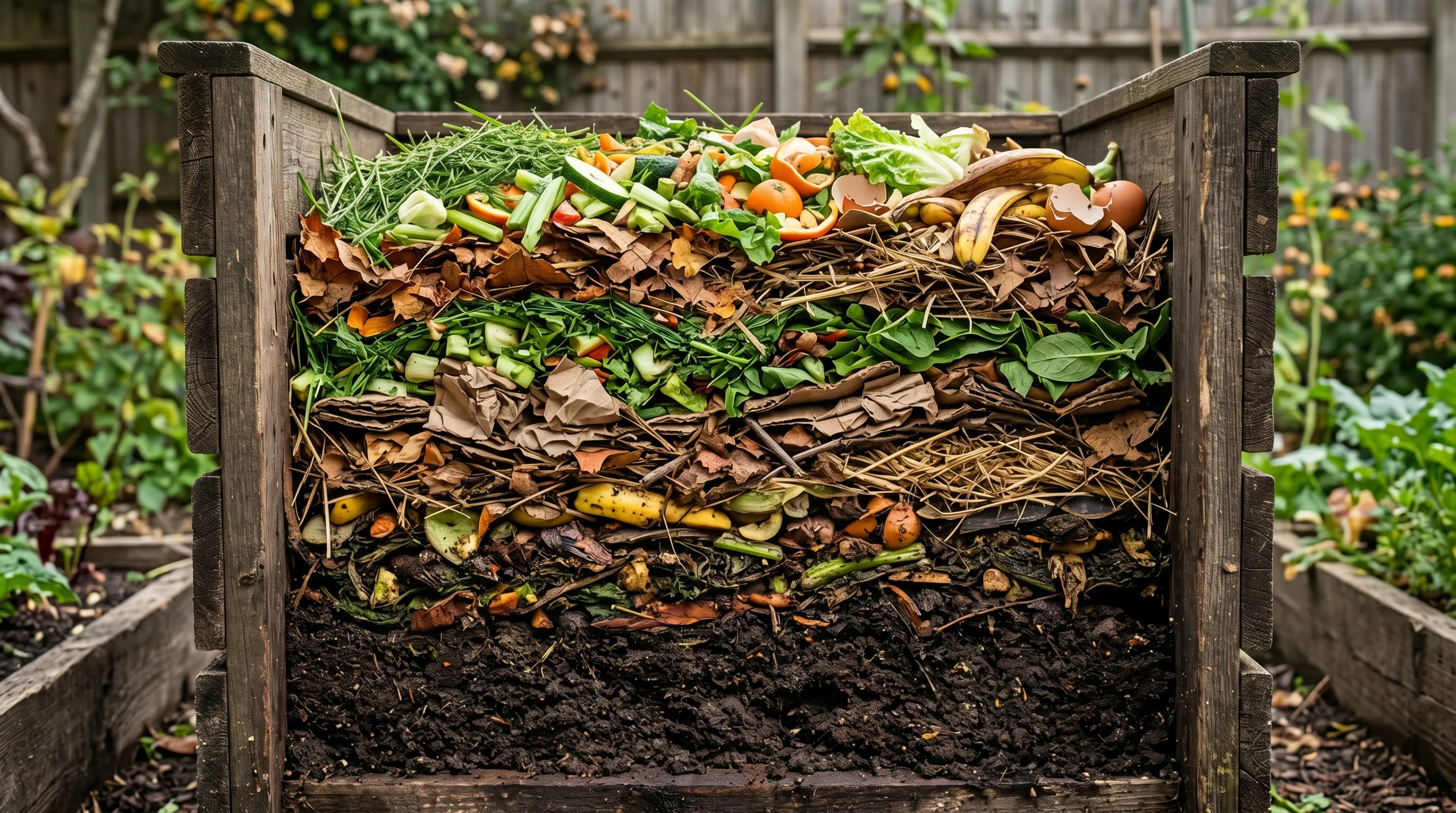 Layering greens and browns as you fill keeps air in the heap and speeds breakdown, whatever bin you use.
One bin or a two and three bin rotation
A single bin is fine for low volume, but a two or three bin rotation is what turns slow composting fast. The problem with one bin is that you keep adding fresh material on top of part-rotted material below. The heap never finishes, because you keep restarting it. You end up digging crumbly compost out from under a layer of last week’s peelings.
A two bin system fixes this. Fill bin one until it is full, then stop. Leave it to finish while you fill bin two. By the time bin two is full, bin one is ready to empty. A three bin system adds a maturing stage: one filling, one turned and cooking, one finished and curing. This is the setup most allotment holders settle on, because it gives a constant supply without ever mixing fresh and finished material.
You can mix types to get the same effect cheaply. Run a Dalek for kitchen scraps and a wooden bay for garden waste, and empty the Dalek into the bay when you turn it. The principle is the same: separate what you are adding to from what you are finishing. For what to do with the finished result, see our guide to reusing spent compost.
Rodent-proofing, lids and aeration
Rats are the most common compost worry, and the fix is mostly about what you feed the bin and how you build the base. Rats come for food, warmth and shelter. Keep meat, fish, dairy and cooked food out of any open bin and you remove the main attraction. Keeping the heap moist, not bone dry, makes it a poor nesting site, as rats want a dry warm bed.
For an open bin or bay, sit it on a sheet of fine galvanised wire mesh (6mm hardware cloth) laid on the soil. Worms and water pass through, rats cannot dig up. Turn the heap every week or two during the warm months. Disturbance alone deters nesting, and you will spot any activity early. A close fitting lid keeps rain off, stops the surface drying, and removes the sheltered cavity rats like under a loose cover.
Aeration is the other half of a healthy bin. A heap starved of air goes anaerobic, turns slimy and smells of rotten eggs. Slatted wooden sides breathe naturally. For a solid plastic bin, push a stout cane or an aerator tool down through the heap in a few places, or turn the contents every few weeks. A sealed hot composter or tumbler is rodent-proof by design, which is the simplest fix of all.
Warning: Never add meat, fish, dairy, cooked food or pet faeces to an open Dalek or bay. They attract rats and foxes and can breed harmful bacteria. Use a sealed Bokashi bin or hot composter for cooked and animal waste, and keep open bins to raw fruit, vegetables, garden waste and cardboard.
How to build a pallet compost bin
A free standing pallet bin gives you 1 cubic metre of volume for almost nothing. You need four heat-treated pallets (marked HT, not MB), wire or brackets, and an hour. Avoid pallets stamped MB, as these are treated with methyl bromide.
Gardener’s tip: Source matching pallets from a builder’s merchant or garden centre that will give them away. Four pallets of the same size make a true cube, which packs more material and heats more evenly than a mismatched box.
The build is simple and gives you a sturdy bin that lasts five years or more.
- Stand the back pallet upright on bare, level soil and check it with a spirit level.
- Bring the two side pallets in at right angles to the back, forming a U shape.
- Wire the corners together at top and bottom with galvanised wire or fix L-brackets and screws.
- Fit the front pallet but wire only one side, so it swings open like a gate for forking out compost. Or leave the front off and use removable boards.
- Line the inside with cardboard or old compost bags if you want to hold heat and moisture, leaving gaps for air.
- Lay wire mesh under the base first if rats are a known problem in your area.
For a double bay, build two cubes side by side sharing a middle pallet. This gives you the rotation that turns slow composting fast.
Composting through the UK seasons
A compost bin works year round, but the pace changes with the temperature. The table below shows what to expect month by month in a typical UK garden.
| Month | Heap activity | What to do |
|---|---|---|
| January | Cold, slow, near dormant | Keep adding, insulate the bin, expect little breakdown |
| February | Still cold | Cover the heap, add browns to soak winter wet |
| March | Warming, microbes waking | Turn the heap to reignite heating |
| April | Active, heating restarts | Balance fresh grass with cardboard and prunings |
| May | Strong activity | Turn into the next bay, water if dry |
| June | Peak heat, fast breakdown | Fill bays fast, monitor moisture |
| July | Very active, can dry out | Water a dry heap, keep the lid on |
| August | Fast, watch for flies | Bury food scraps, turn weekly |
| September | Cooling but productive | Empty finished bays before autumn fill |
| October | Slowing, leaf glut | Stockpile leaves as browns for the year |
| November | Cold, slow | Add browns, cover, stop expecting heat |
| December | Near dormant | Keep feeding, plan next year’s bays |
Hot composters and insulated bins break this pattern. A HotBin keeps working at 40 to 60C through January, while a Dalek goes cold. If you want winter compost, an insulated sealed bin is the only open option that delivers it.
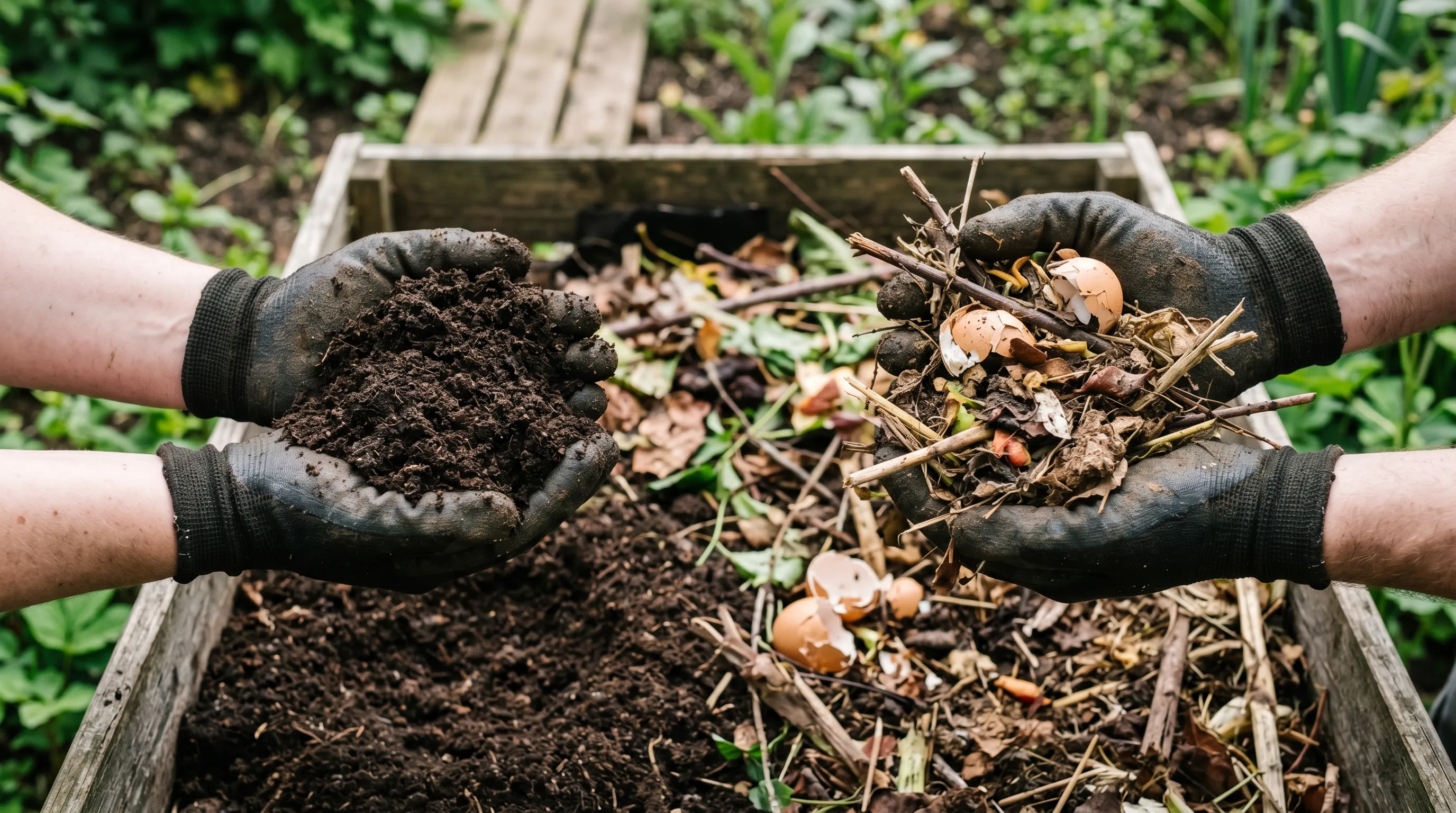 Finished compost on the left is dark, crumbly and sweet smelling. Unfinished material on the right needs more time or a turn.
Common compost bin mistakes
Most failed bins trace back to four avoidable errors. Get these right and almost any bin type works.
Building the bin too small to heat. A 330 litre Dalek or a half-filled bay never reaches the mass to climb above 30C. It composts cold and slow, and weed seeds survive. Aim for 1 cubic metre of material, filled reasonably fast, if you want heat. If you can only fit a small bin, accept that it will be slow and run two in rotation.
Running only one bin. A single bin means you keep adding fresh waste on top of nearly finished compost, so nothing ever finishes cleanly. A second bin or bay lets one batch complete while you fill the other. This single change does more for speed than any expensive bin.
Loading all greens and no browns. A bin of grass clippings, peelings and soft green waste alone turns into a wet, smelly, slimy mass. The carbon-rich browns (cardboard, dry leaves, straw, woody prunings) balance the nitrogen-rich greens and keep air in the heap. Aim for roughly equal volumes of each.
Siting on a hard surface. A bin on concrete or paving cannot drain and cannot recruit worms from the soil. It waterlogs and stalls. Site open bins on bare soil. Only sealed units like tumblers and HotBins belong on a patio.
A compost bin is a long term piece of garden kit, so match it to your space and your patience. A flat or courtyard suits a wormery or tumbler. A standard garden suits a Dalek or single bay. A productive garden or allotment earns a two or three bay system that heats and finishes in weeks. Whatever you choose, site it on soil, keep the greens and browns balanced, and run a second bin if you want speed.
Composting also feeds your garden’s wildlife, so if you want to design your heap to do double duty, read our composting for wildlife guide next. For the full range of techniques, browse all our how-to gardening guides.
Frequently asked questions
What is the best type of compost bin for a UK garden?
A wooden double bay suits most medium gardens. It holds the volume needed to heat and lets you turn one bay into the next. For small plots a plastic Dalek works well. For speed and rodent control, a tumbler or hot composter is the better buy.
How big does a compost bin need to be to get hot?
A heap needs at least 1 cubic metre to heat properly. Below that mass, the core loses warmth faster than the microbes can make it. A 1m by 1m by 1m bay can reach 40 to 60C within days when filled in one go with a balanced green and brown mix.
Are plastic Dalek compost bins any good?
Dalek bins are cheap and tidy but slow. They rarely reach the volume to heat, so compost takes 9 to 12 months. They suit small gardens and a steady trickle of waste. Many councils sell them subsidised for under 20 pounds through getcomposting.com.
Do compost tumblers work better than bins?
Tumblers compost faster and keep rats out. Frequent turning aerates the batch, so finished compost can appear in 4 to 8 weeks. The trade off is small capacity, usually 140 to 300 litres, and you must stop adding while a batch finishes curing.
Our team produces practical UK gardening guidance from source research, contributor records and established horticultural practice. Editorial standards are overseen by Matt W.