Key takeaways
- A compound fertiliser contains two or more of N, P, and K; straights contain one
- Blend sulphate of ammonia (N), superphosphate (P), and sulphate of potash (K)
- Divide the target percentage by each straight's analysis to get the parts
- A 7-7-7 Growmore replica is about 33:39:14 of those three by weight
- Mixing your own is cheaper in bulk and lets you tailor any NPK ratio
- Store the dry blend airtight and never mix fertilisers with lime
A bag of branded compound fertiliser is convenient, but you are paying a premium for a fixed ratio you cannot change. Mix your own from straight fertilisers and you control the exact balance of nutrients, tailor it to each crop, and cut the cost per unit of nutrient, often by half in bulk. It is simpler than it sounds: a kitchen scale, three straights, and a little arithmetic are all you need to replicate Growmore or build a custom feed. This guide explains what compound fertilisers are, the straights that make them, the maths to hit any NPK ratio, and worked recipes you can mix this weekend.
The principle rests on understanding NPK, the three numbers on every fertiliser pack that tell you the percentage of each major nutrient.
Compound fertilisers versus straights
A compound fertiliser contains two or more of the three main nutrients, nitrogen (N), phosphorus (P), and potassium (K), blended into one product. Growmore, the wartime British standard, is the best known, a balanced 7-7-7. Branded tomato feeds, rose feeds, and general fertilisers are all compounds with set ratios.
A straight fertiliser supplies only one nutrient at high concentration. The three workhorses are:
- Sulphate of ammonia (21% N): a fast nitrogen source for leafy growth.
- Superphosphate (around 18% P2O5): phosphate for roots and establishment.
- Sulphate of potash (around 50% K2O): potassium for flowers and fruit.
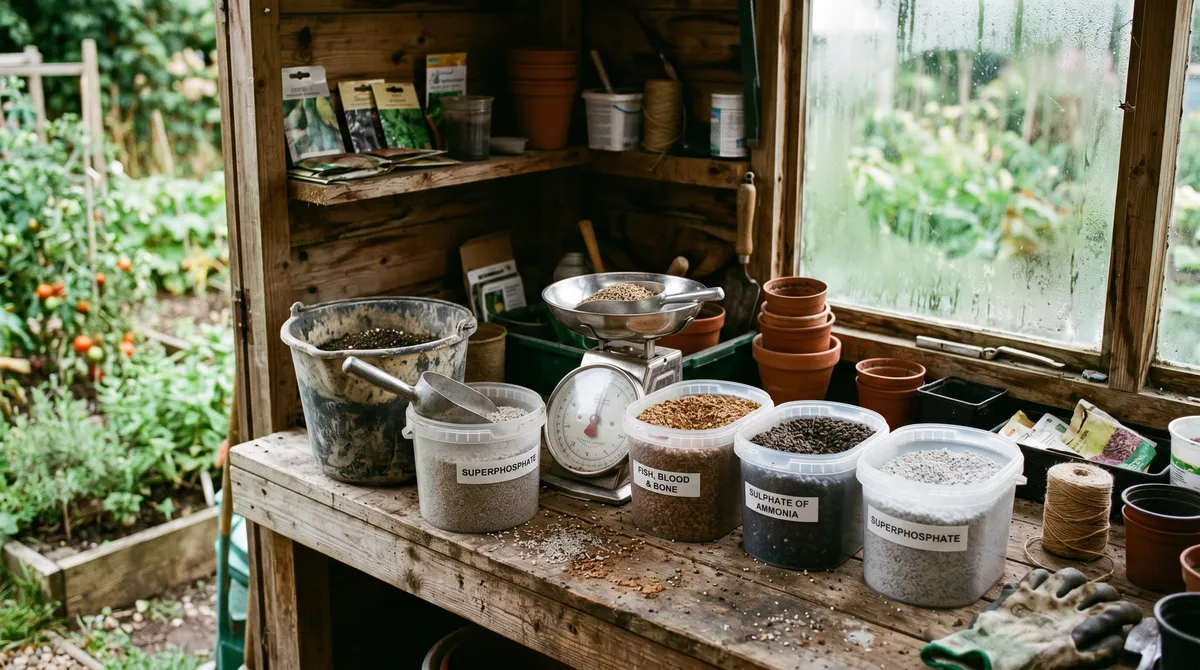
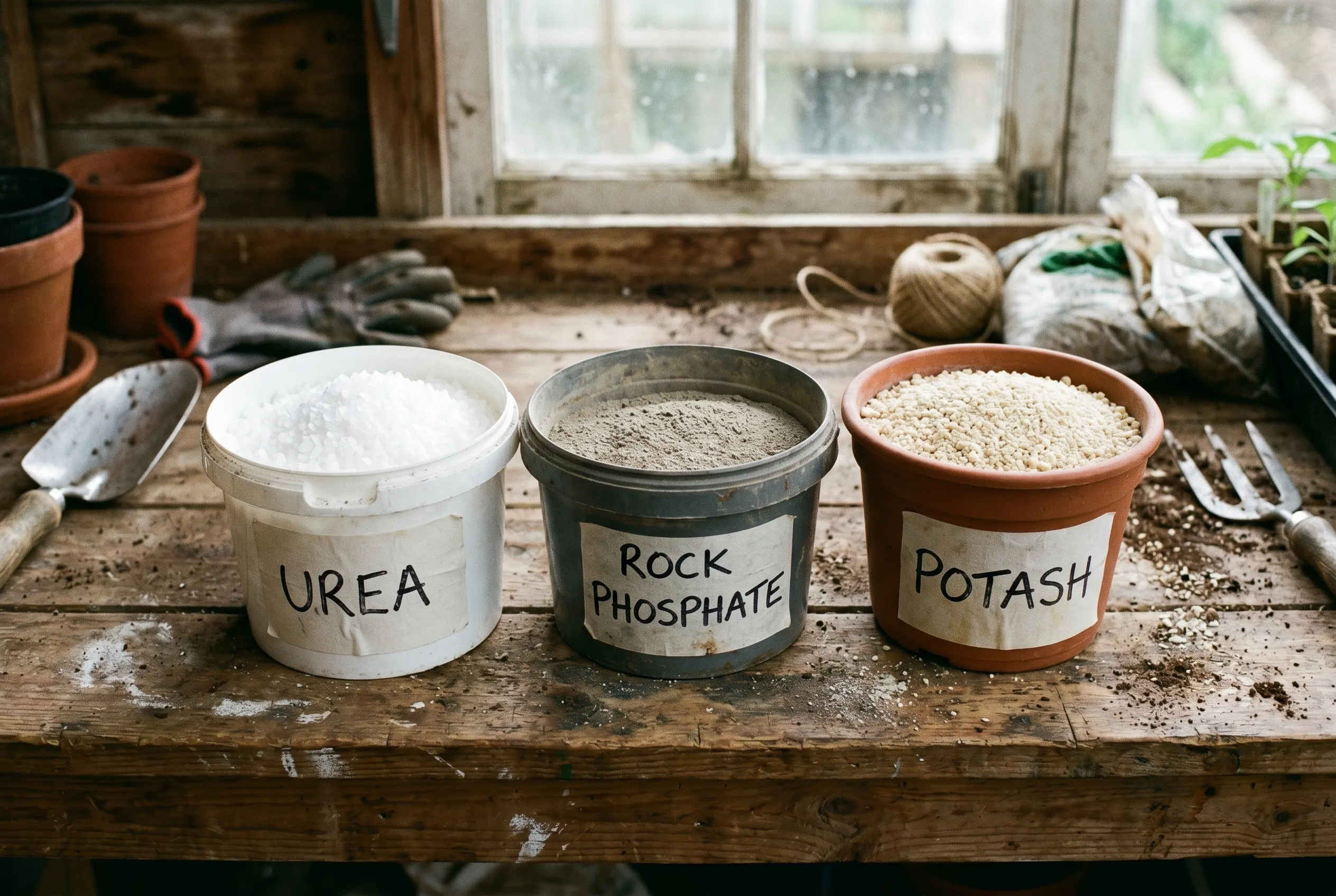 The three straights that make most compounds: sulphate of ammonia for nitrogen, superphosphate for phosphate, sulphate of potash for potassium.
The maths: how to hit any NPK ratio
Blending is simple arithmetic. To work out how much of each straight to use, divide the percentage of nutrient you want by the percentage in the straight. The answer is the parts by weight of that straight.
Say you want a balanced 7-7-7. Take each nutrient in turn:
- Nitrogen: you want 7% N from a straight that is 21% N. 7 divided by 0.21 = 33 parts sulphate of ammonia.
- Phosphate: you want 7% P2O5 from a straight that is 18%. 7 divided by 0.18 = 39 parts superphosphate.
- Potash: you want 7% K2O from a straight that is 50%. 7 divided by 0.50 = 14 parts sulphate of potash.
Add those up: 33 + 39 + 14 = 86 parts of active material. To round the batch to 100 parts and dilute it to an exact 7-7-7, add about 14 parts of dry sand as a filler. Scale the parts to grams or kilograms as you like: 33g, 39g, 14g, and 14g sand makes 100g of 7-7-7. The same method hits any ratio you want, just change the target percentages.
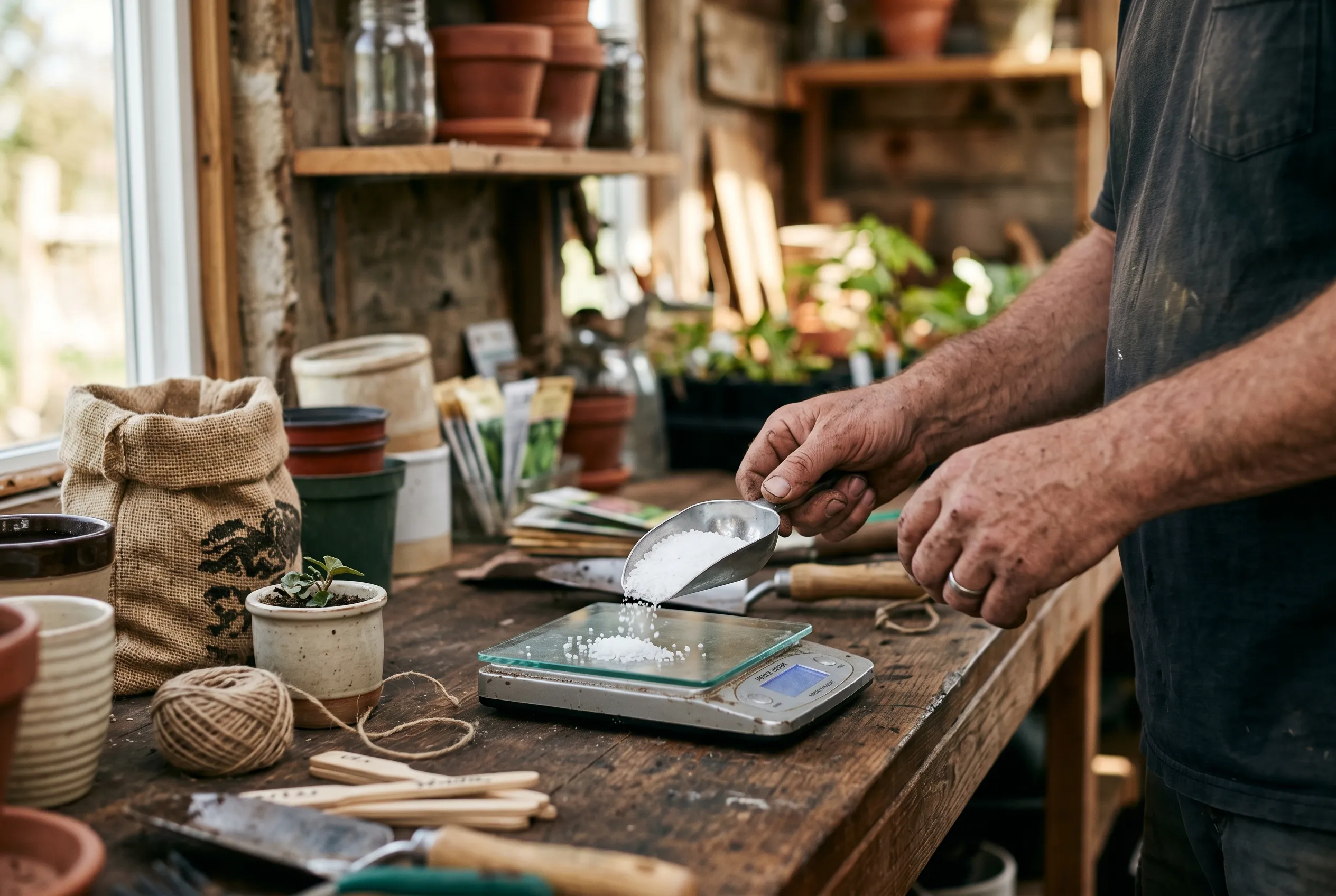 Blending is arithmetic and a scale: divide the nutrient you want by the straight’s analysis to get the parts by weight.
Worked recipes for common feeds
Here are three blends by weight to mix at home, scaled to parts you can multiply up. Each makes a balanced or targeted compound.
| Blend | Sulphate of ammonia | Superphosphate | Sulphate of potash | Filler | Approx NPK |
|---|---|---|---|---|---|
| Growmore replica (balanced) | 33 | 39 | 14 | 14 | 7-7-7 |
| High-potash (fruit and flowers) | 20 | 28 | 32 | 20 | 4-5-16 |
| High-nitrogen (leafy crops, spring lawn) | 60 | 17 | 8 | 15 | 13-3-4 |
| Root and establishment | 24 | 56 | 12 | 8 | 5-10-6 |
Multiply every figure by the same number to scale up: times 100 turns the Growmore row into a 10kg batch (3.3kg, 3.9kg, 1.4kg, 1.4kg sand). Use the balanced blend as a general base dressing, the high-potash for tomatoes and fruit, and the high-nitrogen for leafy greens and an early lawn feed, as our guide on feeding the lawn explains. You can swap in organic straights too: dried blood or hoof and horn for nitrogen, bonemeal for phosphate, and wood ash for potash, though their analyses are lower and more variable.
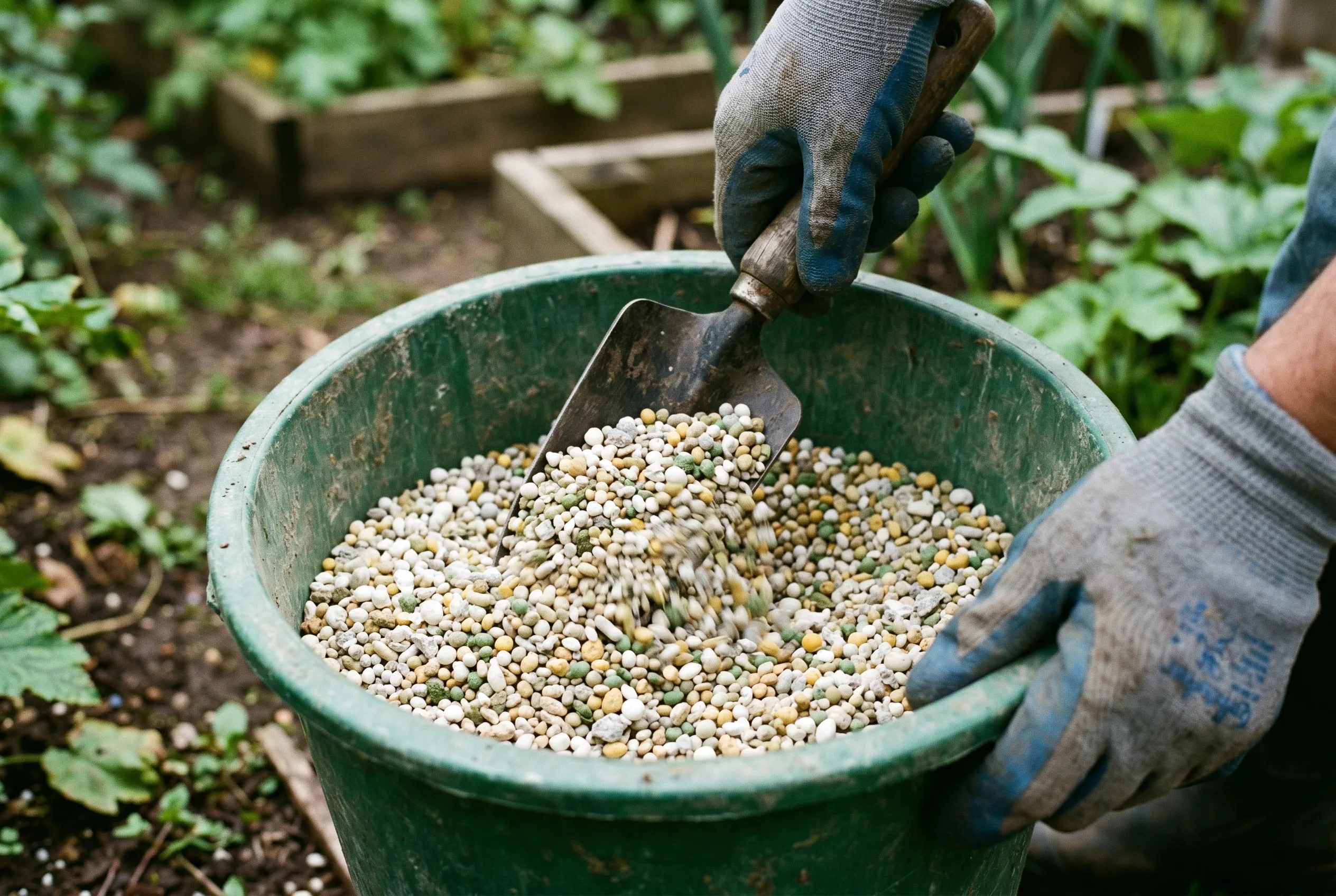 Weigh each straight, then mix thoroughly so the nutrients are evenly distributed through the whole batch.
How to mix and store the blend
Mixing is straightforward but worth doing properly so the nutrients are evenly spread. Work in a dry, well-ventilated place, ideally outdoors or in an open shed, and wear gloves and a dust mask, as the powders are an irritant.
- Weigh each straight accurately into a tub using the recipe by weight.
- Add the filler if the recipe uses sand, which carries the nutrients and aids even spreading.
- Mix thoroughly in a bucket or on a board, turning the heap repeatedly until the colour is uniform.
- Break up any lumps so the blend spreads evenly when applied.
- Store airtight and dry in a labelled tub with the blend, ratio, and date written on.
Store the finished blend somewhere cool and dry, as fertiliser salts draw in moisture and set rock hard if left open. Mix only what you will use within a season or two. Label every tub clearly, since the straights and blends look alike and a mix-up wastes a crop. The dry blend keeps well for a year or more if airtight.
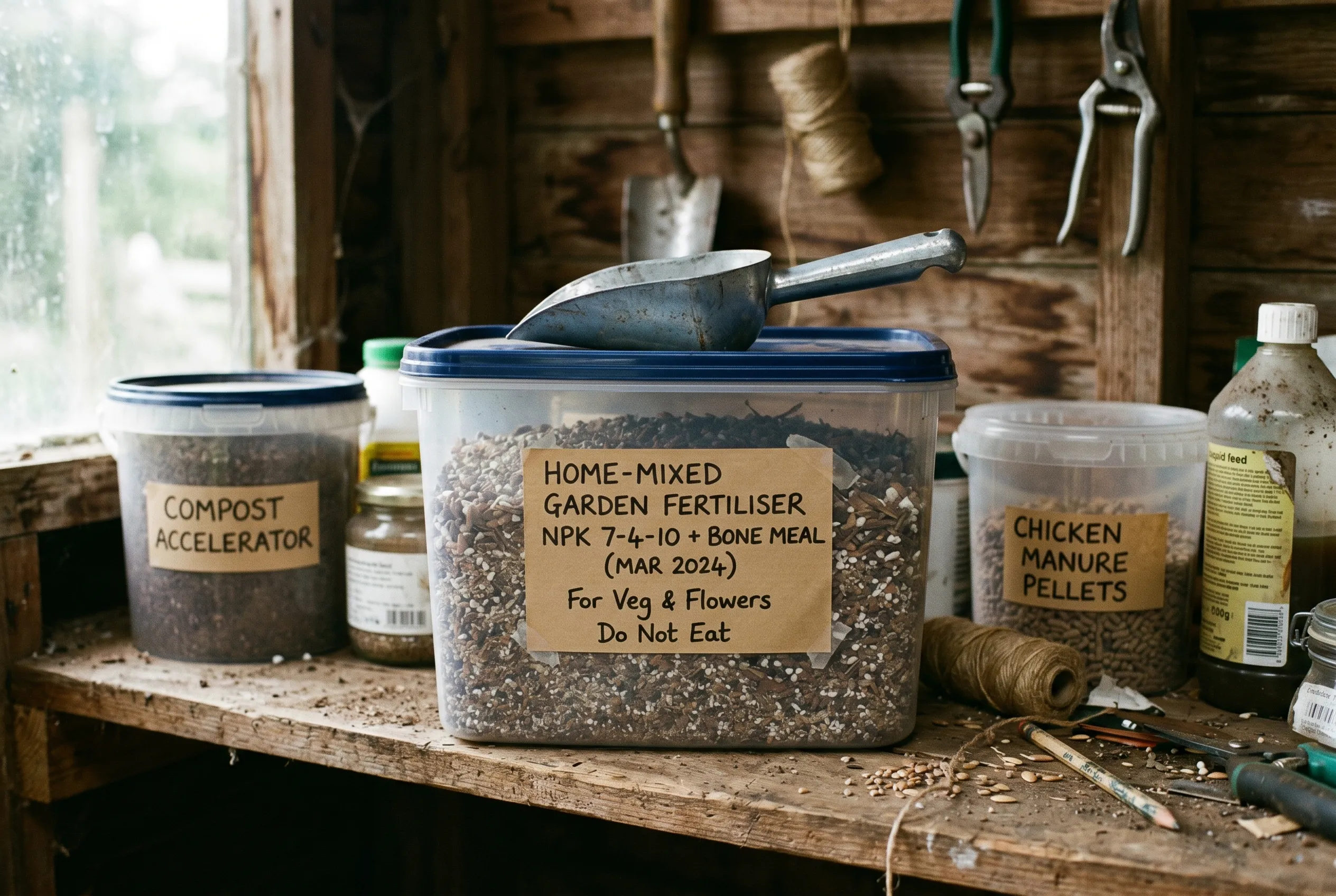 Store the dry blend airtight and labelled with its ratio and date. Fertiliser salts set hard if they draw in damp.
Safety and what never to mix
A few combinations react badly and must be avoided.
- Never mix any fertiliser with lime. Lime reacts with sulphate of ammonia and other nitrogen salts to release ammonia gas, wasting the nitrogen, and it locks up phosphate. Apply lime separately, months apart.
- Do not store damp. Moist blends set solid and some can heat. Keep everything bone dry.
- Mix small batches of fast blends. Some combinations slowly absorb moisture and cake, so mix what you will use rather than a giant long-term store.
- Keep away from children, pets, and food. Label clearly and store high or locked.
- Wear gloves and a mask. The dust irritates skin, eyes, and lungs.
Used sensibly, the straights are no more hazardous than any garden chemical, but treating them with respect avoids both wasted nutrients and irritation.
Applying your home-made compound
Apply a balanced compound as a base dressing before sowing or planting, raked into the top few centimetres of soil, then as a top dressing around growing crops through the season. A typical rate for a balanced 7-7-7 is around 70g per square metre, roughly two handfuls, but always scale to the crop and avoid heaping it against stems.
Water it in after applying, so the nutrients dissolve and reach the roots, and never apply to dry soil in hot sun, which risks scorch. For hungry crops, repeat a lighter top dressing every few weeks in the growing season. Combine the home-made compound with organic matter and manure for the best of both: the compound supplies precise, available nutrients while the organic matter builds the soil. A liquid comfrey feed makes a good high-potash supplement alongside.
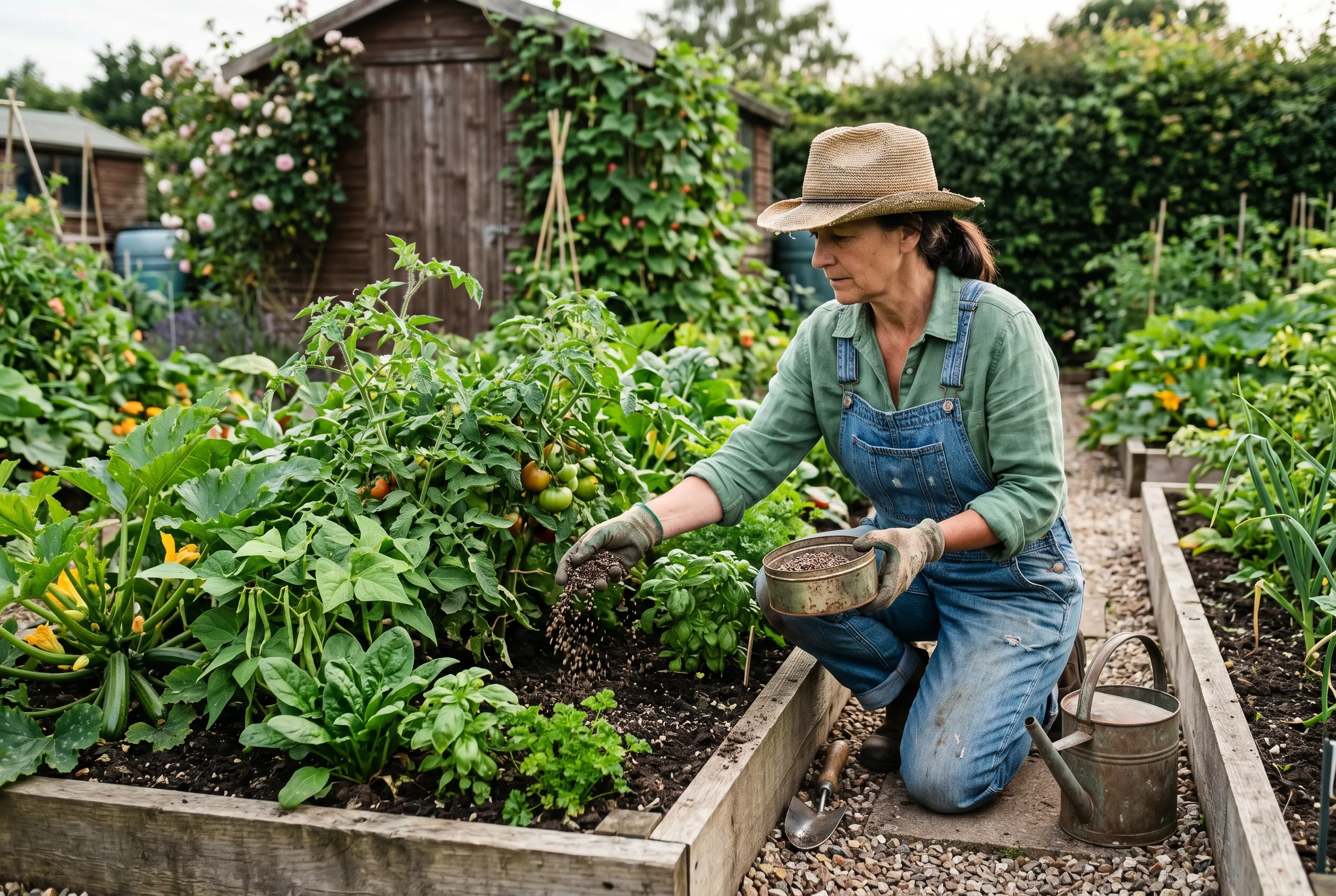 Apply the balanced blend as a base dressing and top dressing, around 70g per square metre, and water it in.
Common mixing mistakes to avoid
These errors waste money or nutrients.
- Guessing the ratios. Eyeballing parts gives a useless blend. Weigh by the maths.
- Mixing in lime. Releases ammonia and wastes nitrogen. Keep lime entirely separate.
- Storing damp or open. The blend sets hard and degrades. Keep airtight and dry.
- Forgetting to label. Straights and blends look identical. Label ratio and date on every tub.
- Over-applying. A home blend is as strong as any branded one. Follow sensible rates and water in.
Should you mix your own, or buy ready-made?
Home-blending is not worth it for everyone. It pays off when you garden on a decent scale, feed a vegetable plot, fruit, and lawns, and have dry storage for the sacks. The saving comes from bulk, so a few pots on a patio will never use enough to justify it.
It is well worth it if you want custom ratios a boxed product cannot give, such as a very high-potash blend for a glut of tomatoes, or if you simply want to understand and control what goes on your soil. For a small garden, a single bag of ready-made balanced compound and a bottle of tomato feed is cheaper overall and far less faff. Be honest about your scale before buying three 25kg sacks. The maths only works if you use them.
Frequently asked questions
What is a compound fertiliser?
A compound fertiliser contains two or more of the main nutrients nitrogen, phosphorus, and potassium in one product. Growmore at 7-7-7 is the classic example. Straight fertilisers, by contrast, supply only one nutrient, such as sulphate of ammonia for nitrogen.
How do you make your own compound fertiliser?
Blend straight fertilisers in measured proportions. Mix sulphate of ammonia for nitrogen, superphosphate for phosphate, and sulphate of potash for potassium. Weigh each by the maths for your target ratio, combine thoroughly, and store the dry blend in an airtight tub.
How do you calculate a fertiliser blend?
Divide the percentage of nutrient you want by the percentage in each straight. For 7% nitrogen from a 21% straight, you need 7 divided by 0.21, about 33 parts by weight. Repeat for phosphate and potash, then add filler to make 100 parts.
What can I use to make a Growmore replica?
Combine about 33 parts sulphate of ammonia, 39 parts superphosphate, and 14 parts sulphate of potash by weight, with around 14 parts sand as filler to make 100. This gives a balanced blend close to Growmore’s 7-7-7 ratio at lower cost.
Is it cheaper to mix your own fertiliser?
Yes, buying straights in bulk and blending is usually cheaper per unit of nutrient than branded compound fertiliser, especially in larger quantities. It also lets you tailor the ratio to each crop, which a single boxed product cannot do.
Can you mix any fertilisers together?
No, some combinations react. Never mix fertilisers with lime, which releases nitrogen as ammonia gas and wastes it. Sulphate of ammonia and superphosphate blend safely, but mix only what you will use soon, as some blends absorb moisture and set hard.
Now you can blend any ratio you need, build the soil alongside with home-made compost, and browse all our how-to gardening guides for the next job.
Our team produces practical UK gardening guidance from source research, contributor records and established horticultural practice. Editorial standards are overseen by Matt W.