Key takeaways
- Established lawns rarely need watering in the UK; rainfall covers most of the year
- When you do water, soak deeply once a week: roughly 10-15 litres per square metre
- Little-and-often watering grows shallow roots and weak, thirsty grass
- Water at 6am or after 8pm so less than 10% evaporates before it soaks in
- New lawns and grass seed need watering daily, sometimes twice, for 4-6 weeks
- In drought a brown dormant lawn is not dead; it greens up within 2-3 weeks of rain
Most people water their lawn far too often. They drag the sprinkler out every warm evening and feel they have done their bit. In truth a healthy UK lawn asks for very little. Our climate gives grass around 800-1,200mm of rain a year, spread across most months. For most of the year you can leave the tap off entirely. The trick is knowing the few weeks when a soak genuinely helps, and how to do it so the water reaches the roots rather than burning off in the sun. Get the timing and depth right and you save hundreds of litres.
Do established lawns really need watering?
Most established UK lawns never need watering. That is the honest answer, and it surprises people. British rainfall is reliable enough that mature grass, with roots 10-15cm deep, can ride out all but the longest dry spells.
The grasses in a typical UK lawn are mostly ryegrass and fescues. These are tough, deep-rooting plants. They evolved for a temperate climate with regular rain and cool nights. Left alone, an established lawn pulls moisture from deep in the soil long after the surface looks dry.
There is a cost to over-watering beyond your water bill. Frequent shallow watering trains the roots to stay near the surface. Those shallow roots dry out within a day or two of any dry weather, so the grass becomes dependent on you. Stop for a week and it suffers far worse than a lawn that was never coddled.
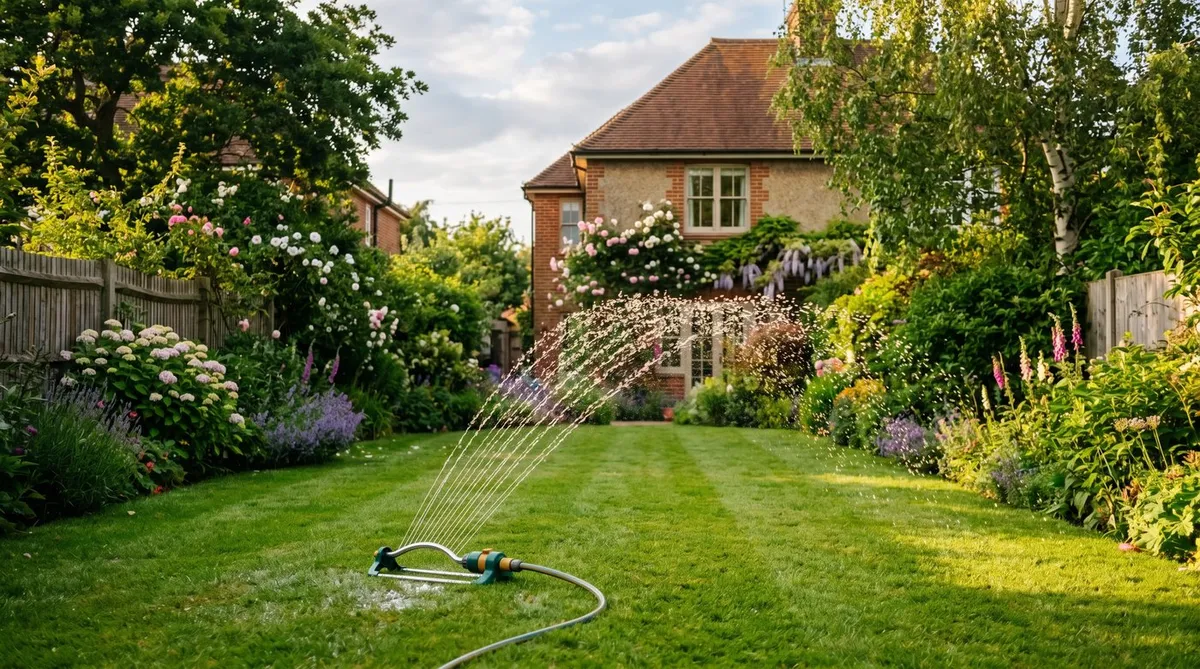
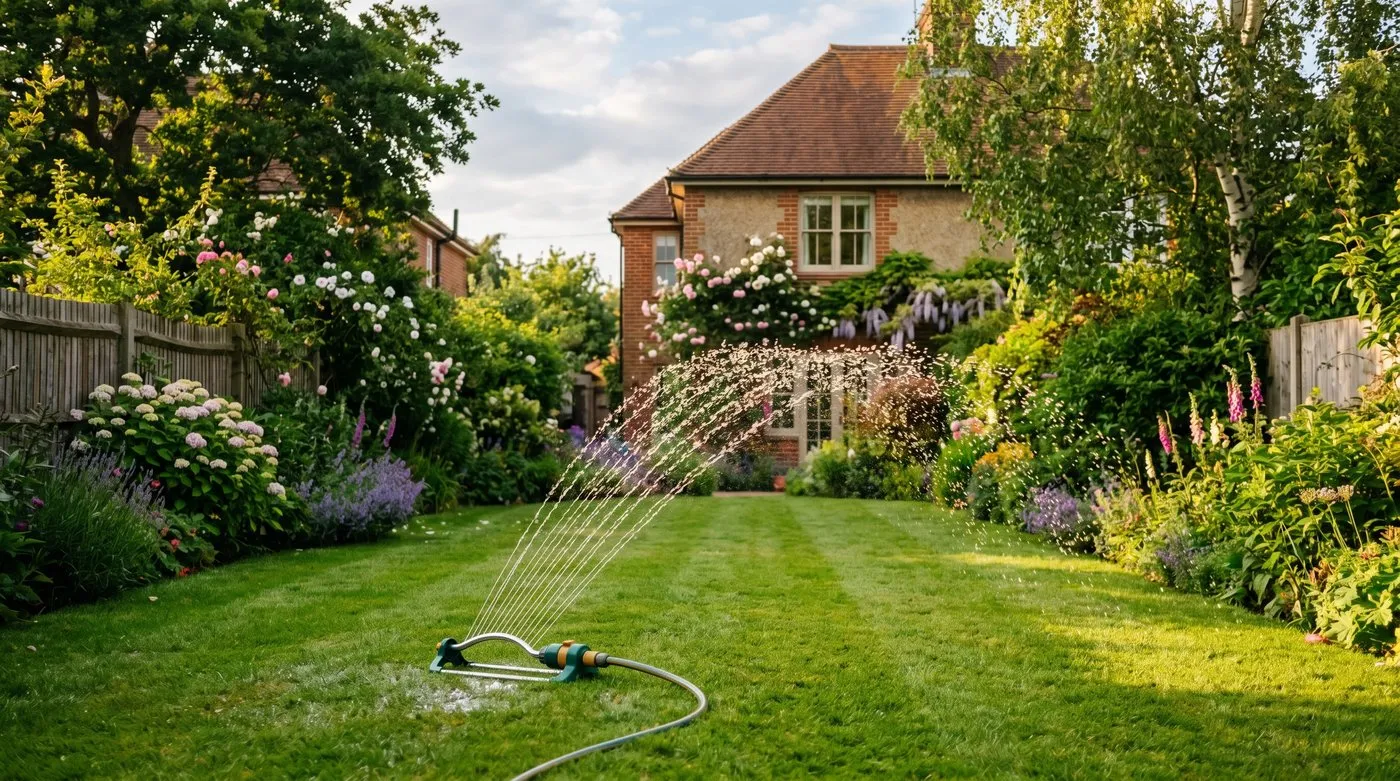 An oscillating sprinkler on a Kent suburban lawn during the July 2022 heatwave. Even here, one deep weekly soak would have done more good than this every-other-day routine.
So who does need to water? New lawns, fresh grass seed, and lawns on very free-draining sand during a genuine drought. Everyone else can usually leave it. If you are unsure, the screwdriver test further down this guide settles it in ten seconds.
How often and how much should you water?
When watering is genuinely needed, the rule is simple: water deeply and infrequently. One good soak a week beats seven small sprinkles. Aim for around 10-15 litres per square metre per soak. That puts moisture 10-15cm into the soil, right where the roots want it.
Deep watering encourages roots to grow downward chasing the moisture. Little-and-often does the opposite. It wets only the top 2-3cm, so roots stay shallow and the grass needs constant topping up. The first habit builds a drought-proof lawn. The second builds a needy one.
Soil type changes the numbers. Clay holds water and drains slowly, so you water less often but the water sinks in slowly. Sand drains fast and dries out within a day or two, so it needs water more often but each soak runs through quickly. Loam sits comfortably in the middle.
Those figures assume an actual dry spell with no useful rain. In a normal British summer most rows read “skip it”. The Royal Horticultural Society’s lawn maintenance guidance agrees: established lawns tolerate drought and recover, so watering is rarely essential.
Match your watering to your mowing. A lawn cut too short loses moisture faster and scorches sooner. Knowing when to mow and raising the blade height in summer reduces how much water the lawn ever needs.
When is the best time of day to water?
Water early in the morning, ideally before 8am. The soil is cool, the air is still, and evaporation losses are low. Almost all the water soaks in. Water at midday and you can lose 30-50% to evaporation before it ever reaches the roots.
Morning is the clear winner. The grass dries through the day, which reduces the risk of fungal disease. The roots get a full reservoir to draw on during the hottest hours. If a 6am start is not realistic, set a timer on the tap.
Evening, after 8pm, is the second-best option. The sun is low and evaporation drops. The downside is that grass stays damp overnight. In warm, humid weather that can encourage red thread and other fungal problems. If you must water in the evening, do it earlier, around 8-9pm, so the surface dries before midnight.
The worst time is the middle of a hot day. Water lands on hot soil and sun-baked blades, much of it flashes off as vapour, and droplets sitting on the grass can act like tiny lenses in strong sun. You spend water and get little benefit. During heatwaves this matters even more, so read up on hot-weather watering for the whole garden, not just the lawn.
| Watering time | Evaporation loss | Disease risk | Verdict |
|---|---|---|---|
| Before 8am | Under 10% | Low | Best |
| Midday (11am-3pm) | 30-50% | Low | Avoid |
| Early evening (6-8pm) | 15-25% | Moderate | Acceptable |
| After 8pm | Under 10% | Higher | Second best |
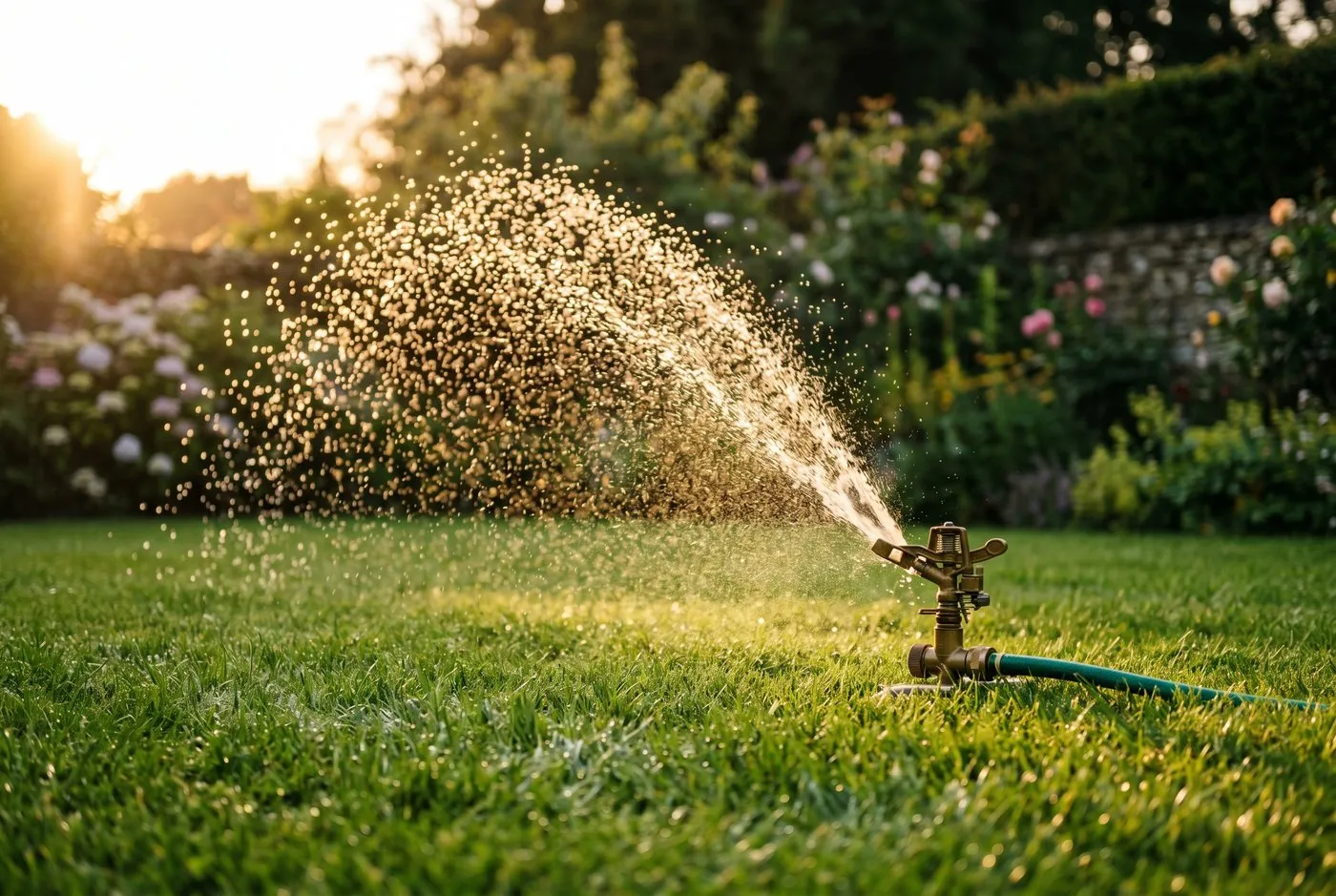 Evening watering in a Surrey back garden. Run it before 9pm so the grass dries off before midnight and fungal disease stays away.
How do you test whether your lawn needs water?
The two best tests cost nothing. The screwdriver test checks how dry the soil is. The tin test measures how much your sprinkler actually puts down. Between them they replace all guesswork.
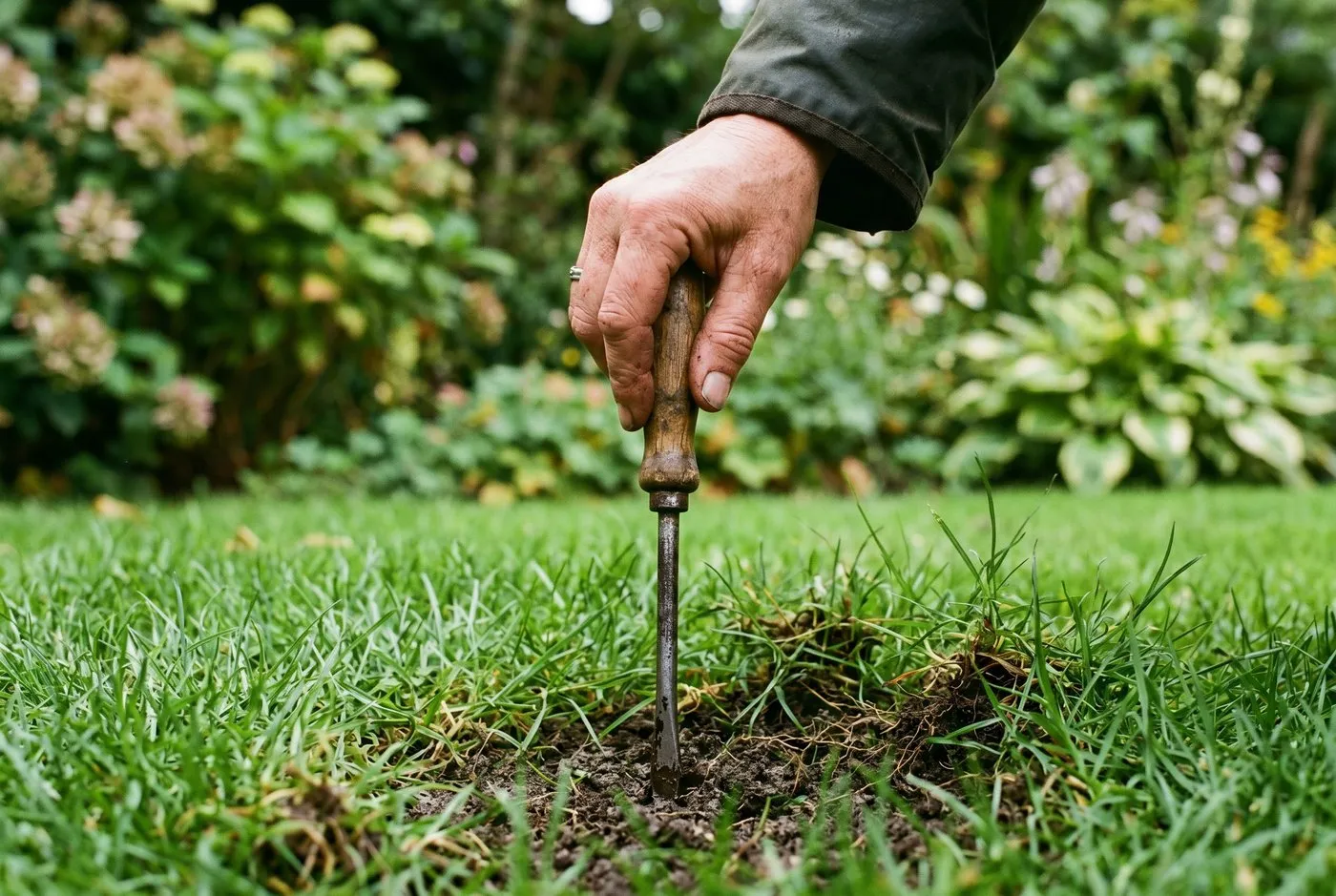 The screwdriver test on a Welsh valley garden lawn. If the blade pushes in easily to 15cm, leave the hose in the shed.
There is also the footprint test. Walk across the lawn and look back. If the grass springs straight back up, it has enough water. If your footprints stay pressed flat, the blades have lost their turgor and water is short. A grey-blue or dull tinge to the colour is another early warning, showing before the lawn turns brown.
How should you water a new lawn or fresh grass seed?
New lawns and grass seed are the one big exception to everything above. They need watering little and often, sometimes twice a day, for the first 4-6 weeks. The young roots are shallow and the surface must never dry out.
Fresh grass seed germinates in the top few millimetres of soil. If that layer dries even once during germination, the seedlings die. So for seed, the normal “deep and infrequent” rule is reversed. Keep the surface consistently damp with light, frequent watering until the grass is established.
For newly laid turf, water it within 30 minutes of laying, then keep it moist for the first month. New turf has been cut from its roots and laid on bare soil. Until those roots knit into the ground below, it cannot pull up its own moisture. Lift a corner after a week: if the soil beneath is dry, you are under-watering.
Here is a rough schedule for establishing new grass in a UK summer:
| Stage | Frequency | Amount | Notes |
|---|---|---|---|
| Days 1-7 (seed or turf) | 2x daily | Light, surface damp | Never let the top dry out |
| Weeks 2-3 | 1x daily | 5-8 L/m2 | Reduce as roots form |
| Weeks 4-6 | Every 2-3 days | 8-10 L/m2 | Encourage deeper roots |
| Established | Rarely | 10-15 L/m2 | Switch to deep weekly soaks |
Once the new lawn is established, wean it off. Stretch the gaps between watering so the roots reach down. Within a couple of months you treat it like any other lawn and largely leave it alone. Spring and early autumn are the easiest times to establish grass, because the soil is warm but rain is more reliable than in high summer.
Should you let a lawn go brown in a drought?
In a real drought, the best advice is to let your lawn go brown and dormant. A brown lawn is not dead. UK grasses are built to shut down in dry weather and wait for rain. They green up again within 2-3 weeks once steady rain returns.
Dormancy is a survival mechanism. The grass stops growing, the blades go straw-coloured, and the plant lives on its crowns and roots at soil level. It can sit like this for weeks, even a couple of months, and bounce back. Fighting that with the hose is expensive and usually pointless.
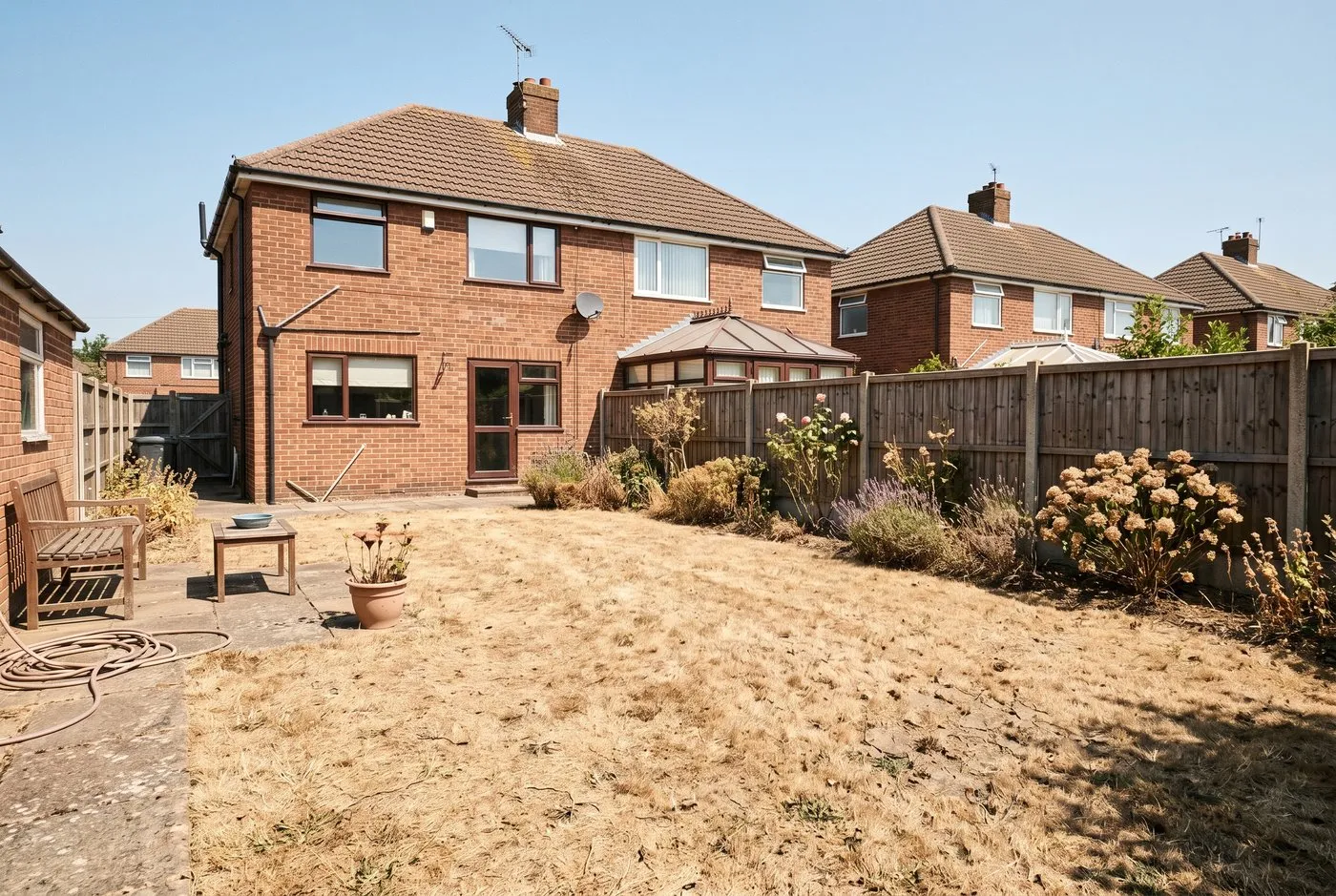 A drought-dormant lawn in a Scottish garden. The brown grass looks finished but is simply asleep. It greens up within weeks of the rain returning.
There is one rule with a dormant lawn: leave it alone. Do not walk on it heavily, do not mow it, and do not feed it. Dormant grass is brittle and traffic can damage the crowns that need to survive. Stay off it and it recovers far better. When the rain comes back and growth restarts, that is the moment to think about how to feed your lawn and help it bounce back strongly.
The exception, again, is new grass. Seedlings and turf laid within the last few months have not built the deep crowns and roots that let mature grass survive dormancy. Those you must keep watering, or you will lose them. Everything else can go brown with confidence. If your lawn is recovering after a prolonged dry spell, our guide to lawn drought recovery walks through the steps that bring it back fastest.
What about hosepipe bans and using grey water?
During a hosepipe ban you almost certainly cannot use a hose or sprinkler on the lawn. Bans, formally Temporary Use Bans, are issued by water companies in dry summers and they cover watering lawns with a hose. Breaking one can mean a fine of up to £1,000.
Grey water is the used water from baths, showers, and washing-up bowls. It is fine for established lawns in moderation. Avoid water with strong detergents, bleach, or dishwasher salts, which can harm the soil over time. Use it within 24 hours before bacteria build up, and spread it around rather than dumping it in one spot.
Rainwater is better still, and free of any restrictions even during a ban. A water butt on a downpipe fills surprisingly fast: 1mm of rain on a 5m by 4m roof yields around 20 litres. Set up rainwater harvesting and you bank water through the wet months to use on pots and new turf when the dry weather and the ban arrive.
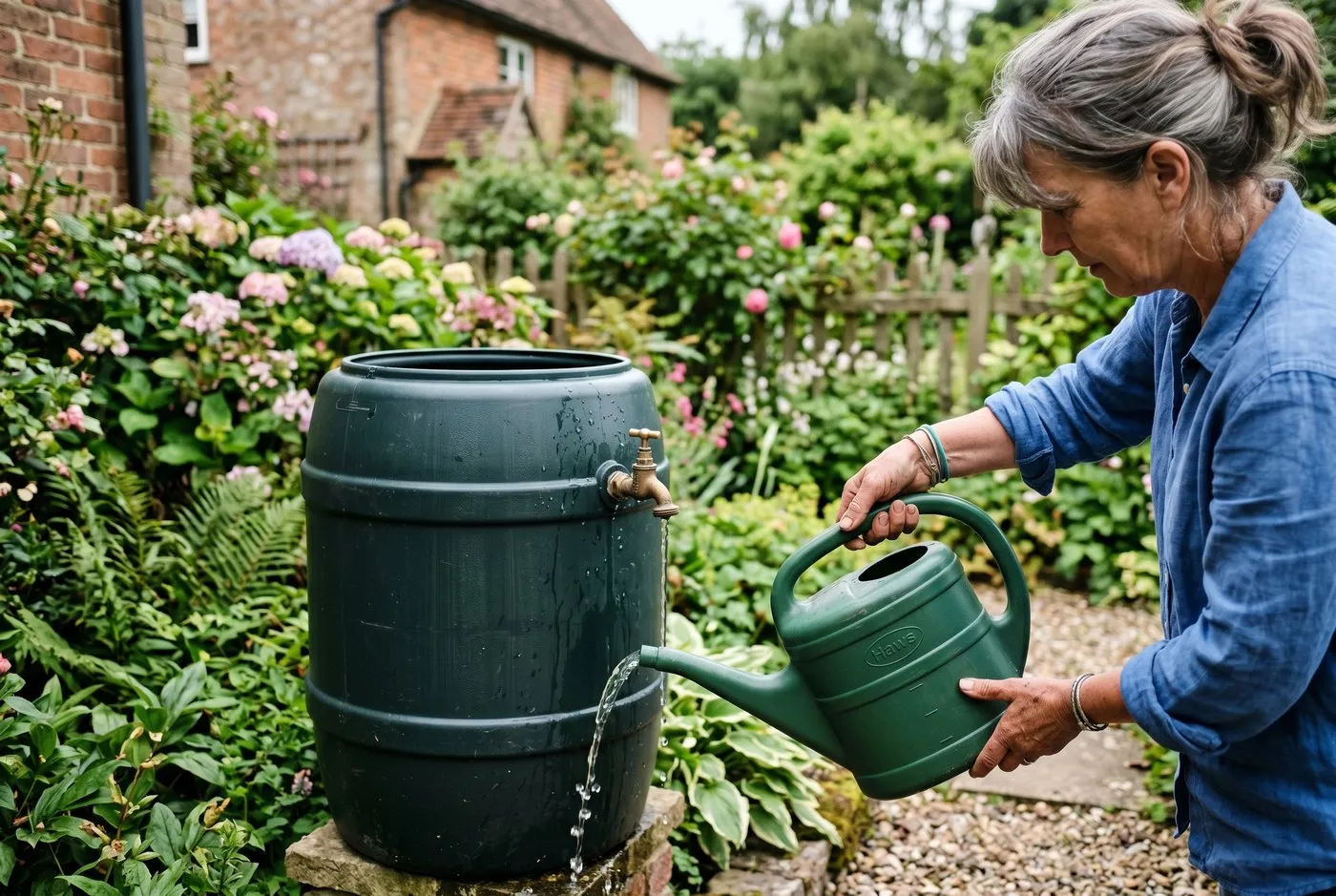 Filling a can from a water butt in a Manchester terrace garden. Stored rainwater stays legal to use even during a hosepipe ban.
A few sensible priorities during a ban: water new turf and seed first, then any new trees and shrubs, then pots and containers. The established lawn comes dead last. It is the toughest thing in the garden and the one that recovers on its own.
What are the signs of over-watering and under-watering?
Over-watering and under-watering can look oddly similar at first, but a few signs tell them apart. Both leave grass off-colour and struggling, yet the causes and fixes are opposite.
Under-watered grass shows clear symptoms. The colour fades to grey-blue then straw-brown. Footprints stay flattened instead of springing back. The soil is hard, and a screwdriver will not push in. Growth slows or stops. These are signs of a thirsty but recoverable lawn, and in a drought they simply mean it is going dormant.
Over-watered grass tells a different story. The lawn feels spongy or squelchy underfoot. Moss and algae spread, because they love constant damp. Fungal diseases like red thread and fusarium appear as patches. Shallow rooting makes the grass weak, and weeds such as annual meadow grass move in. You may also see water pooling and the soil smelling sour.
| Sign | Under-watered | Over-watered |
|---|---|---|
| Colour | Grey-blue then brown | Yellowing, dark damp patches |
| Feel underfoot | Hard, crisp | Spongy, squelchy |
| Footprints | Stay flattened | Normal |
| Moss/algae | Reduced | Spreading |
| Fungal disease | Rare | Common (red thread, fusarium) |
| Soil | Dry, hard | Waterlogged, sour smell |
The fix for under-watering is one deep soak, not a daily sprinkle. The fix for over-watering is to stop watering, improve drainage if needed, and let the soil dry. On clay especially, easing off is usually the answer, because clay holds water long after the surface looks dry.
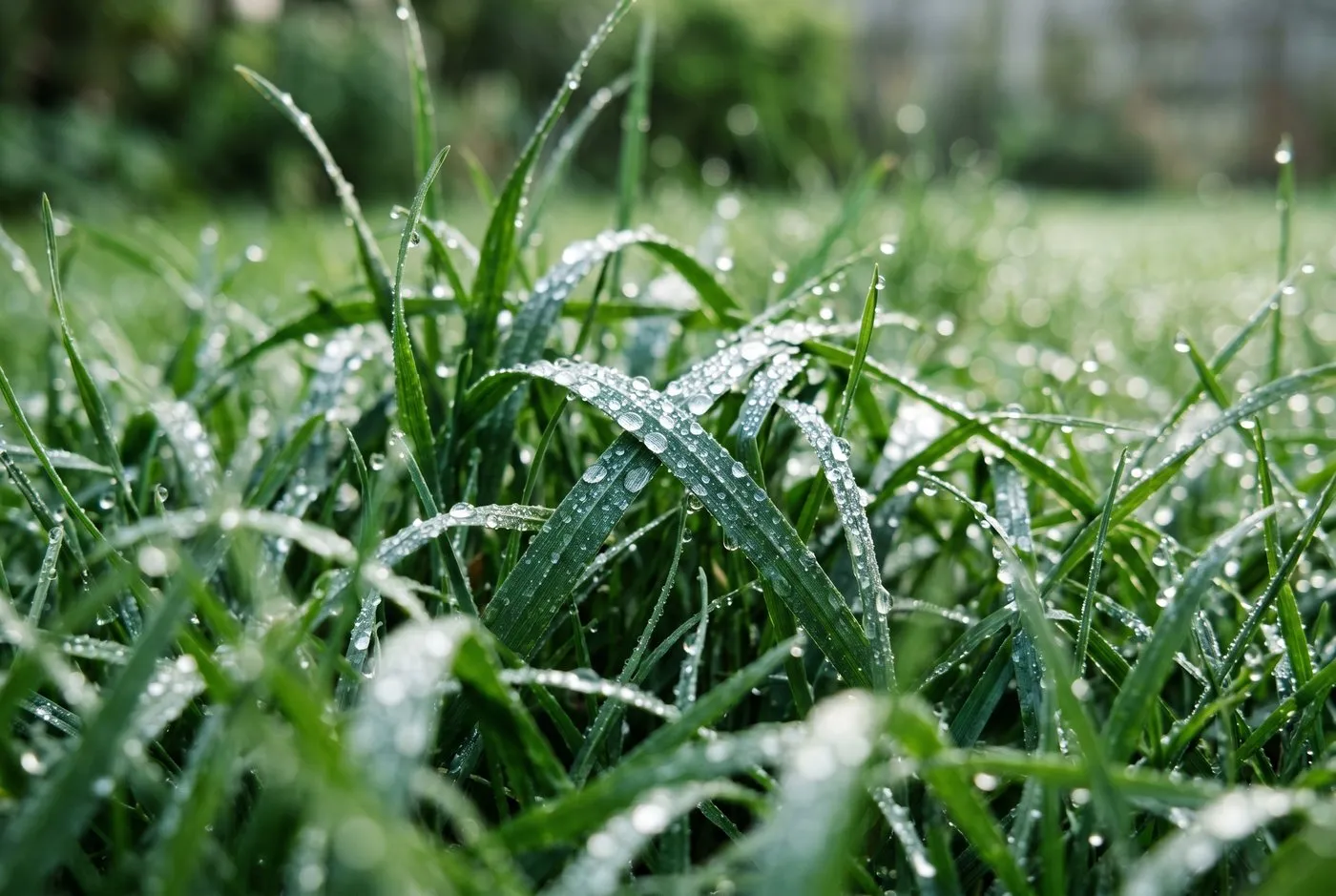 Healthy, dense turf in a Cornish coastal garden. This lawn is watered deeply and rarely, which is exactly why the grass is thick and the roots run deep.
The overall lesson is that less is usually more. Most lawn watering problems in the UK come from doing too much, not too little. Water deeply, water rarely, test before you reach for the hose, and let nature handle the rest.
Next step
Start by doing nothing for a week. Push a screwdriver into your lawn every few days and watch whether it slides in or stops short. Most weeks of the British summer it will slide straight in, and you will save the water. When a real dry spell comes, give one deep 10-15 litre soak before 8am, then leave it alone. If a heatwave or a hosepipe ban arrives, let the grass go dormant with confidence. It will be green again within weeks of the next decent rain.
Our team produces practical UK gardening guidance from source research, contributor records and established horticultural practice. Editorial standards are overseen by Matt W.