Key takeaways
- Water before 7am to cut evaporation by 40-60% versus midday watering
- Soak deep with 10-15L per established perennial twice weekly, not daily sprinkling
- Mulch with 50-75mm of bark, straw, or compost to retain 70% more soil moisture
- Prioritise containers (water daily), newly planted stock, and crops; let lawns brown
- Hosepipe ban exemptions allow watering cans, drip systems, and grey water in most areas
- Olla pots and soaker hoses use 70% less water than overhead sprinklers
When to Water During a UK Heatwave
Timing is the single biggest variable you control. Watering at the wrong time can lose 60% of your effort to evaporation before water reaches a root.
The Met Office defines a UK heatwave as three consecutive days above the regional threshold (28C across most of southern England, 25C in Scotland). When an amber heat-health warning is issued, evaporation rates double compared to a normal June day. A red warning, like July 2022, can push surface evaporation losses past 8mm in a single day from bare soil.
Best window: 4am-7am. Soil temperature is at its daily minimum. Wind speeds tend to be low. Stomata in plant leaves are open and ready to take up water. Evaporation losses are typically 10-15% across the morning compared to 50-60% at midday.
Second-best: after 8pm. Acceptable for borders and edibles. Avoid wetting foliage in the evening though, as overnight wet leaves invite tomato blight, rose black spot, and powdery mildew.
Worst: 10am-6pm. Up to 60% of applied water evaporates without reaching roots. Water splash on hot leaves can also scorch foliage on hostas, hydrangeas, and Japanese maples.
How Much Water Each Plant Type Actually Needs
Most UK gardeners under-water in length and over-water in frequency. A daily 1L per plant runs off and evaporates. A twice-weekly 10L per plant soaks deep enough to encourage roots downward into cooler subsoil. The same deep-and-infrequent principle governs how often to water a lawn.
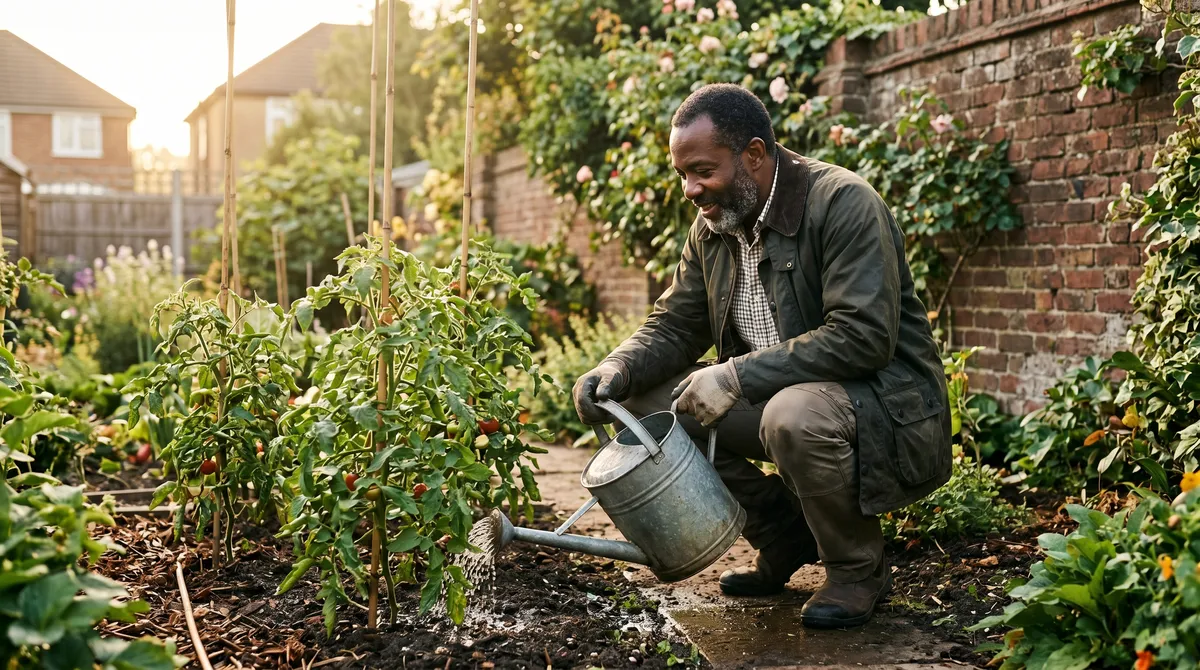
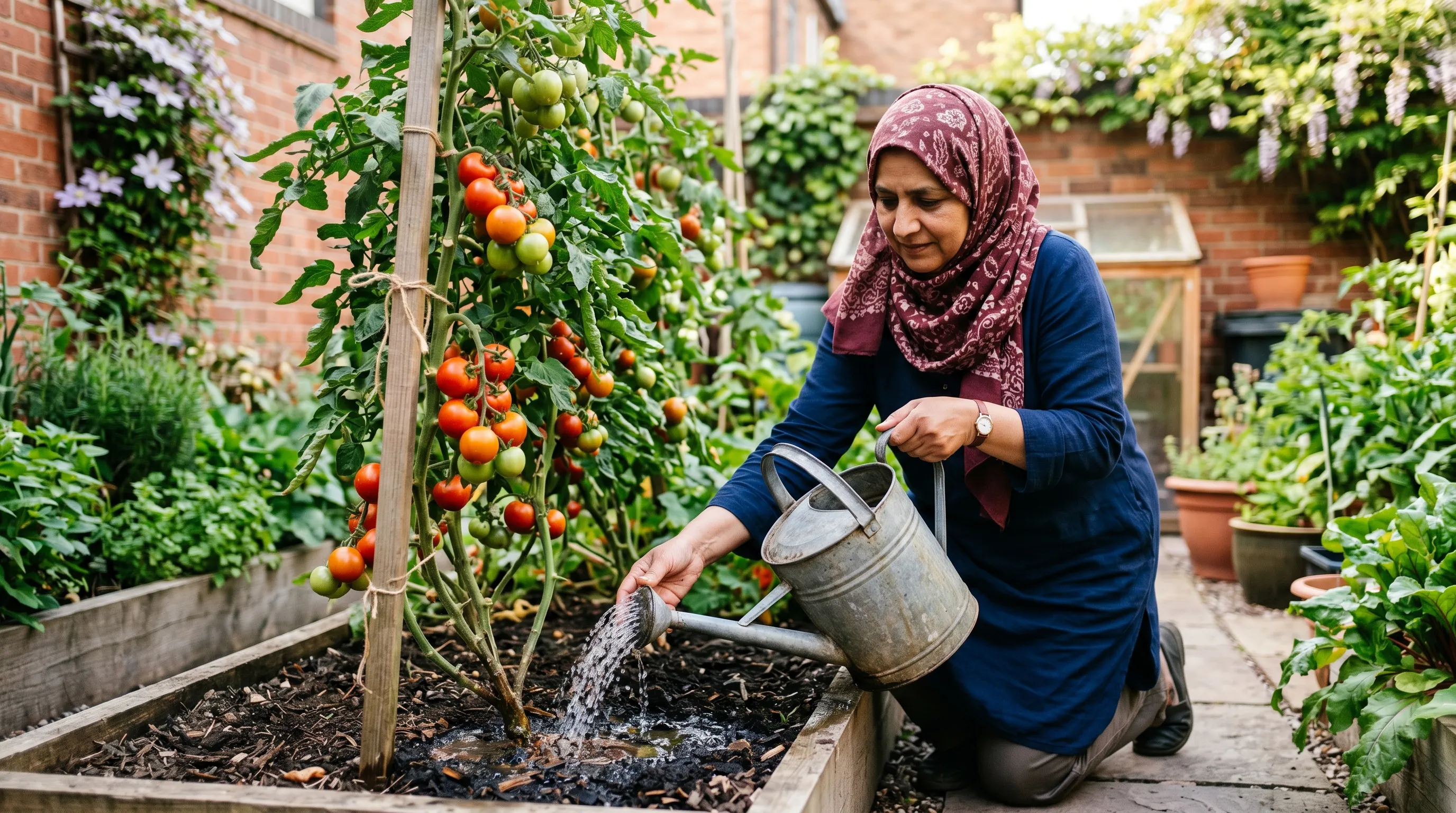 Water at the base of plants, not on the foliage. Wet leaves in hot weather invite blight and mildew on tomatoes, courgettes, and roses.
| Plant type | Heatwave water need | Frequency | Notes |
|---|---|---|---|
| Newly planted shrubs (under 6 months) | 5-10L per plant | Every 2 days | Continue for full first season |
| Established perennials | 10-15L per plant | Twice a week | Soak deep, do not sprinkle |
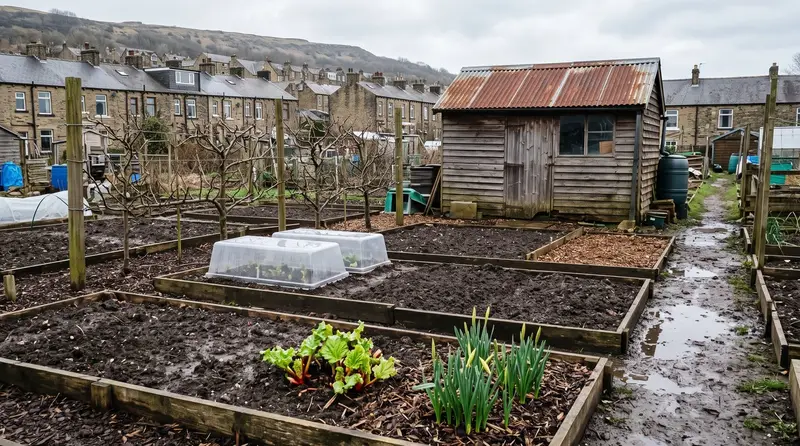
| Vegetable beds | 25L per m² | Every 2-3 days | Use soaker hose or watering can |
| Tomatoes (in ground) | 5L per plant | Daily during fruiting | Mulch heavily, water at base |
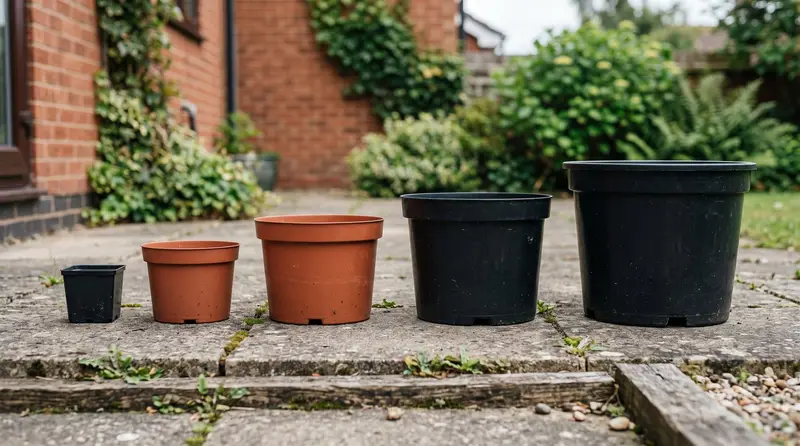
| Containers (small, under 10L) | 1-2L | Twice daily | Move to shade if possible |
| Containers (large, 30-50L) | 3-5L | Daily | Group together to slow evaporation |
| Hanging baskets | 1-2L | Twice daily | Take down to soak in bucket weekly |
| Mature trees | None | Never | Roots reach down 2-5m, find water |
| Established lawns | None | Never | Allow to go dormant, will recover |
| Newly seeded lawn | 4L per m² | Daily | Critical, will die otherwise |
Established perennials with deep root systems (echinacea, achillea, sedum, salvias) tolerate a 10-day heatwave without supplementary water in most years. Newly planted stock, in contrast, has roots restricted to the original pot ball and dies within a week of a real heat event if unsupported.
Mulch: The Single Biggest Water-Saving Move
Mulching is the highest-leverage thing you can do before a heatwave forecast. A 50-75mm layer of bark chip, straw, compost, or well-rotted leaf mould reduces soil-water loss by up to 70%. It also keeps root-zone soil temperatures 10-15C cooler than bare earth.
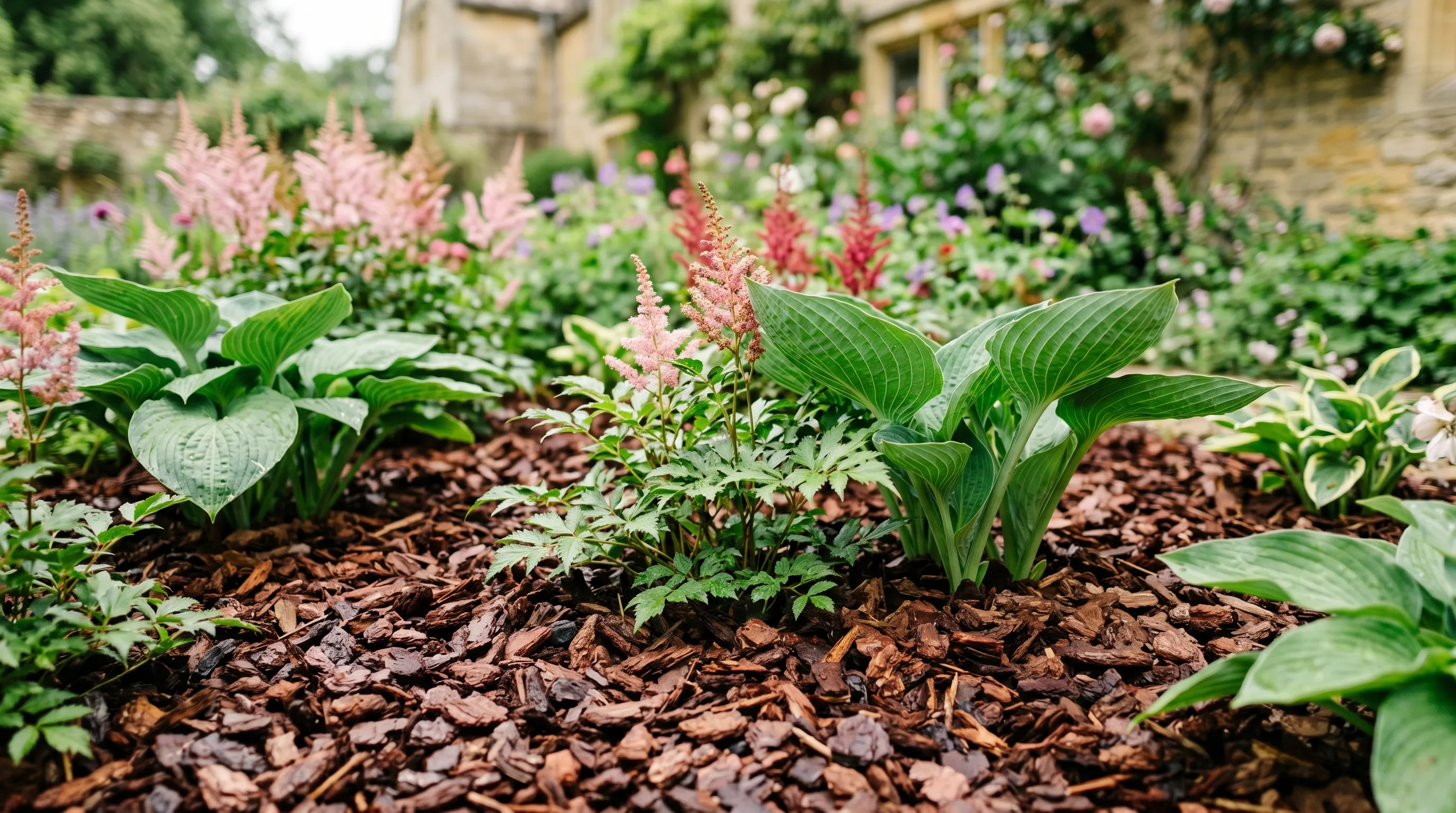 A 75mm layer of bark chip over moist soil cuts evaporation by up to 70% and keeps root zones 10-15C cooler than bare ground.
For full guidance on materials and depth, see our mulching guide and woodchip mulch guide. The principles for heatwave mulching are:
- Apply mulch when the soil is already moist (after rain or after deep watering). Mulching dry soil keeps it dry.
- Use 50-75mm depth for bark chip and straw, 25-50mm for compost.
- Keep the mulch clear of stems and trunks by 25-50mm to prevent collar rot.
- Refresh annually as bark and straw break down at 20-30mm per year.
Straw is the best mulch for vegetable beds during a heatwave. Bark chip suits ornamental borders. Composted green waste works for both. Avoid fresh wood chip from softwoods, which can rob nitrogen from surface roots as it breaks down.
Soaker Hoses, Drip Lines, and Olla Pots
Hand-watering a half-acre garden during a heatwave takes hours per day. Passive irrigation systems do the same job in minutes once installed and use 50-70% less water.
Soaker Hoses
A soaker hose is a porous rubber pipe that seeps water along its full length at low pressure. Lay it along the base of a vegetable bed or border, cover with mulch, and connect to a tap with a timer. Twenty minutes at low pressure delivers around 15-25L per linear metre.
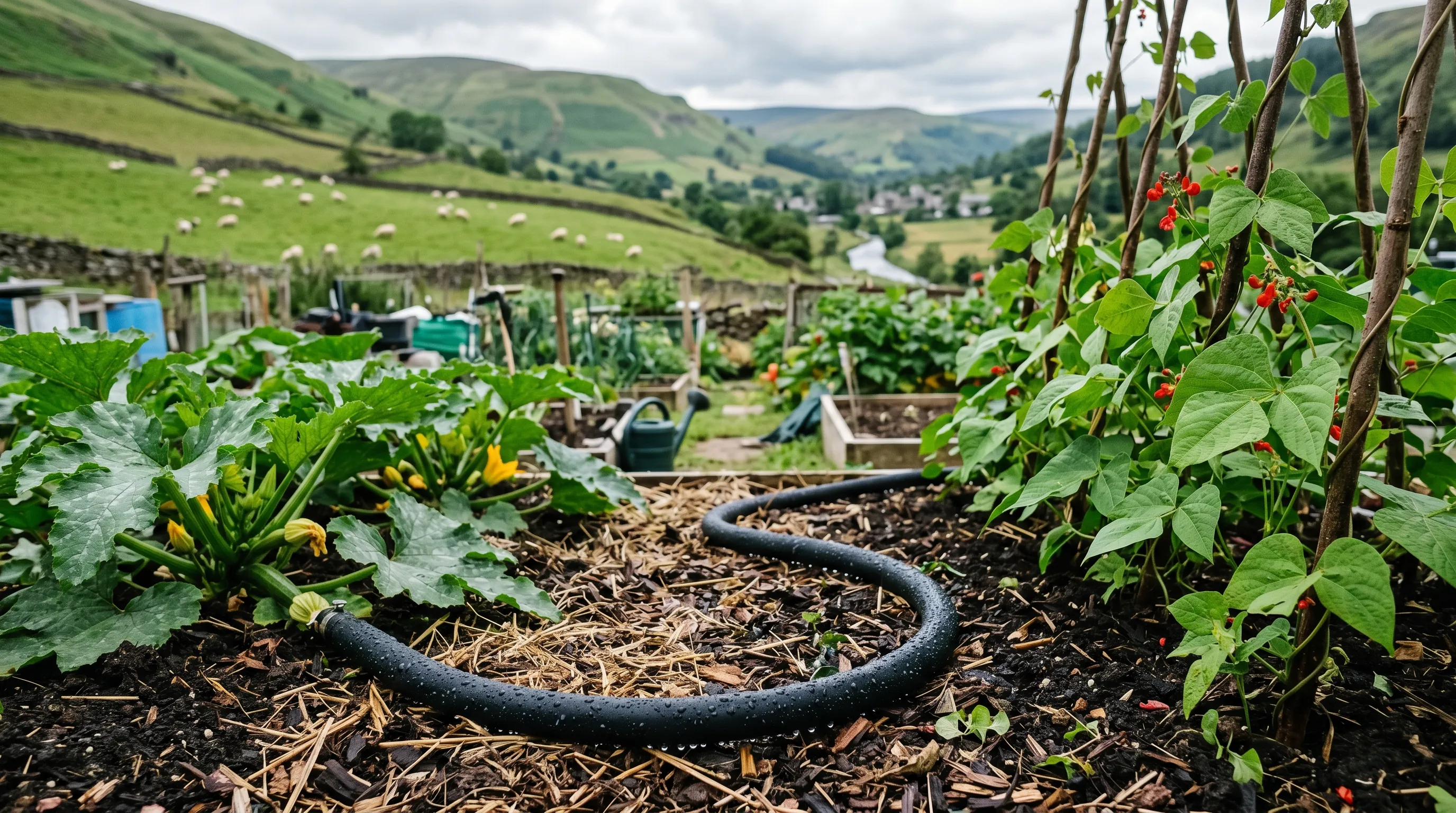 A soaker hose covered with mulch delivers water directly to the root zone with negligible evaporation. Cost £15-£40 for a 15m kit.
Soaker hoses cost £15-£40 for a 15m kit at most garden centres. They typically last 4-6 seasons. Most water companies allow them during a hosepipe ban because they are sub-pressure and unconnected to a sprinkler.
Drip Irrigation
Drip systems use small emitters at each plant or container. They deliver 1-4L per hour per emitter with near-zero evaporation. A basic 25-plant kit from Hozelock or Gardena costs £50-£90. Pair with a battery timer (£20-£30) and the system runs unattended on holiday.
Olla Pots
Olla pots (pronounced oy-ya) are unglazed terracotta pots buried in the soil with only the neck exposed. You fill the neck, and water seeps out through the porous clay walls at a rate matched to soil dryness. A 4L olla serves around 1m² of vegetable bed for a week between fills.
An olla pot delivers water directly to the root zone over 5-7 days. UK suppliers include Sage Olla and Pots4U at £20-£40 per pot.
Ollas are the gold standard for low-water vegetable growing. They cost £20-£40 each from UK suppliers (Sage Olla and Pots4U both stock English-made versions). One olla per square metre of veg bed is the rule of thumb. They are reusable for 10+ years if you bring them in over winter to avoid frost cracking.
Grey Water, Rainwater, and Hosepipe Ban Rules
A typical UK household generates 50-200L of grey water daily from baths, showers, basins, and washing-up. Almost all of it is safe for ornamental beds.
Safe sources: Washing-up water (lightly soiled), bath and shower water, basin water, washing machine rinse cycle. Avoid water from nappies, food-soiled dishes with strong detergents, or anything with bleach.
Where to use it: Ornamental beds, shrubs, fruit bushes (not the fruit itself), lawns, hedges. Avoid edibles eaten raw (salad, herbs).
Storage: Use grey water within 24 hours. It develops anaerobic bacteria past that point and starts to smell.
For collection, see our rainwater harvesting guide. A single 200L water butt fills in two normal rain events. Three connected butts (600L total) can carry a small UK garden through a 10-day heatwave entirely without mains use.
Hosepipe Ban Rules (Section 76)
Water companies can issue a Temporary Use Ban under Section 76 of the Water Industry Act 1991. This stops domestic hosepipe use, sprinklers, pressure washers, and ornamental fountains. Watering cans, drip systems on a timer, and unconnected soaker hoses are typically still allowed. Penalties for breach are up to £1,000.
Disabled customers and registered food growers can apply for exemptions through their water company. Severn Trent, Thames Water, and Yorkshire Water all publish exemption application forms online. Always check your local supplier before the ban is announced, not after.
Which Plants to Water First
You cannot save every plant during a 10-day red-warning heatwave. Triage is essential.
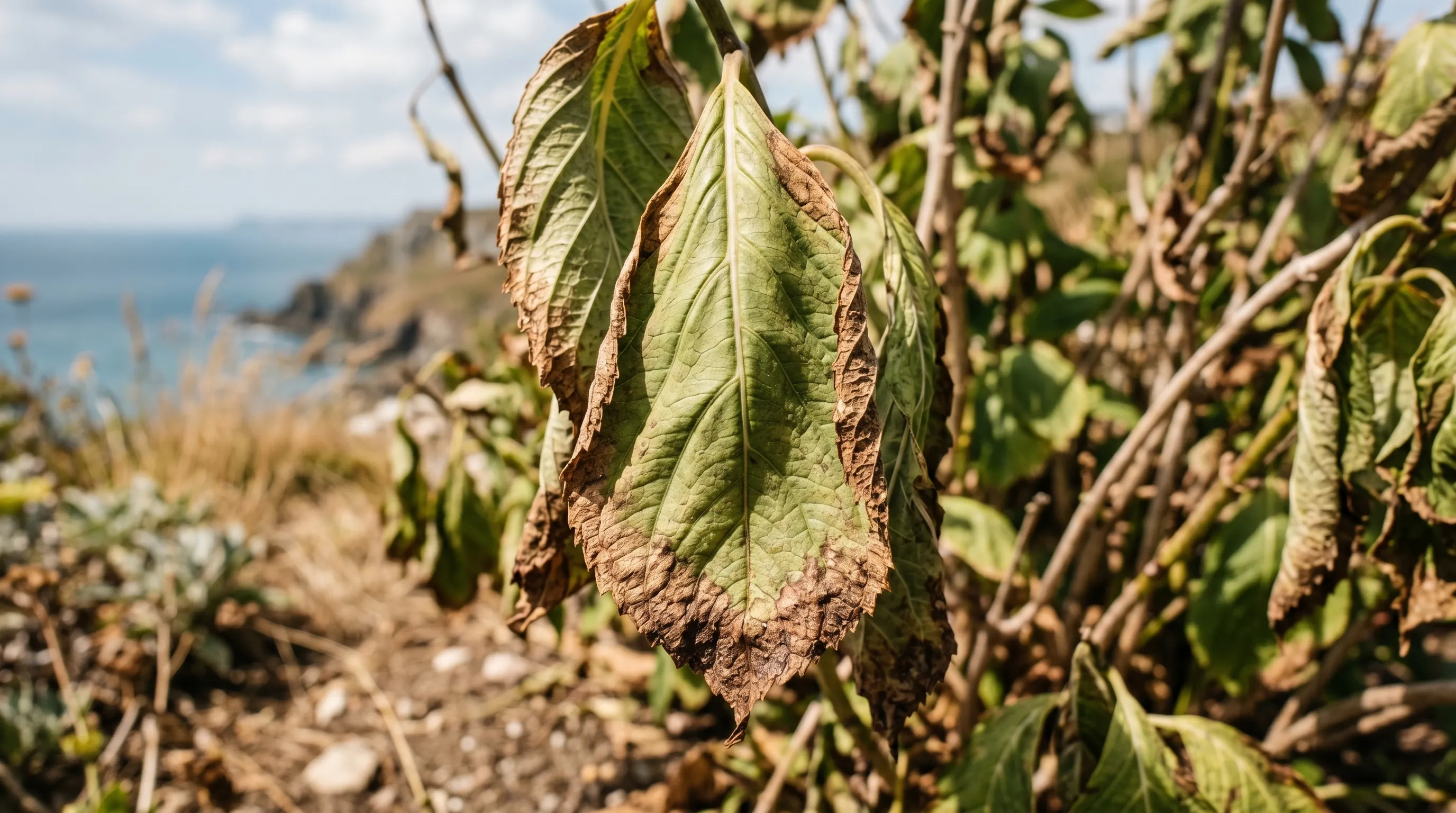 Wilting and brown leaf edges signal urgent dehydration. Hydrangeas, hostas, and Japanese maples show stress first.
Top priority (water daily):
- Newly planted stock under 6 months old
- Containers and hanging baskets (especially small pots under 10L)
- Edible crops in active growth: tomatoes, courgettes, salad, herbs
- Recently sown seed beds and seedlings
- Soft fruit during fruit-set: blueberries, raspberries, currants
Mid priority (water twice weekly):
- Newly planted shrubs in their first full season
- Roses, especially climbers in second year
- Cut-flower beds (dahlias, cosmos)
- Established veg in maintenance growth
Low priority (water once weekly or not at all):
- Established perennial borders
- Mature shrubs over 3 years
- Hedges over 2 years old
- Mature trees of any age
Do not water at all:
- Established lawns (let them brown, they recover)
- Mature trees (deep roots find their own water)
- Native wildflower meadows (adapted to drought)
- Established lavender, rosemary, thyme, sedum, sempervivum
This triage matters because of how UK gardens are usually planted: a third of the water can go to a tenth of the plants if you do not prioritise.
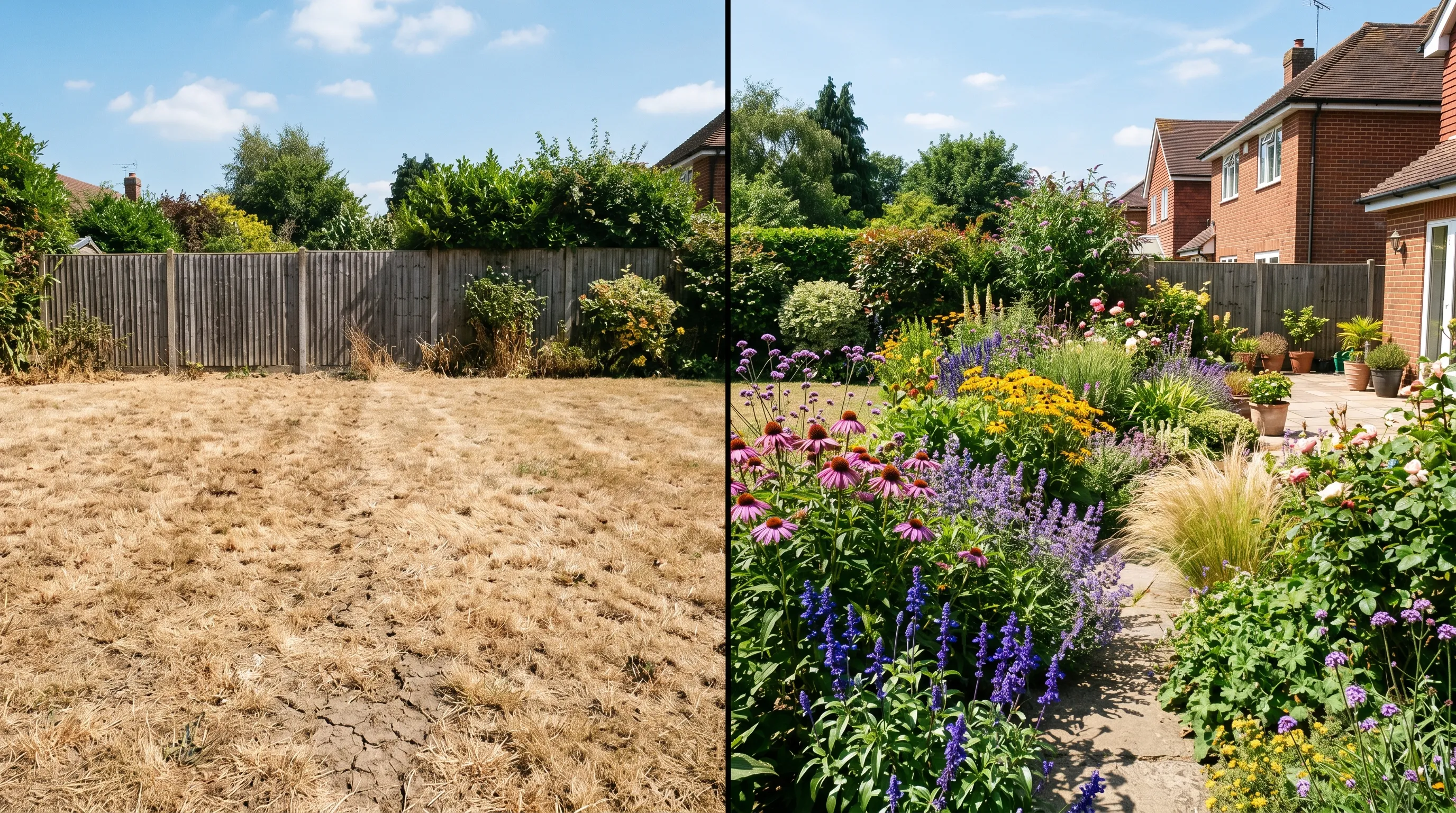 Established lawns recover from drought within 2-3 weeks of meaningful rainfall. Borders with deep-rooted perennials may need less water than the lawn would.
Watering Calendar for Hot UK Summers
This table assumes a typical southern English summer with one heatwave event of 5-10 days and an average July rainfall of 50mm. Northern and Scottish gardens push every action 1-2 weeks later.
| Month | Watering action |
|---|---|
| April | Mulch all borders to 50-75mm before soil dries out |
| May | Soak newly planted stock weekly. Establish water butts |
| June | Check soil moisture at 100mm depth. Start soaker hose on veg |
| July | Heatwave likely. Water before 7am. Prioritise pots and edibles |
| August | Peak demand month. Top-up mulch where thinning. Refill ollas |
| September | Reduce watering as nights cool. Stop watering established stock |
| October | Final container watering before frost. Empty soaker hoses |
| November | Drain hoses and timers. Store ollas indoors against frost |
| December | Check water butts not overflowing or damaged by frost |
| January-March | Maintenance month. Plan mulch top-up for spring |
Common Mistakes in Heatwave Watering
Five errors cause most heatwave plant losses. None are about lack of effort.
Watering little and often. A daily 500ml on a perennial wets the top 25mm of soil and trains roots to stay shallow. The first 30C day kills the plant. Soak deep, water less often is the rule for everything except small containers.
Watering at midday. Up to 60% evaporates before reaching roots. Hot water hitting cool leaves can also cause scorch on hostas and hydrangeas. Move watering to pre-dawn or after 8pm.
Overhead sprinklers on borders. Sprinklers wet foliage, which invites disease, and lose 30-50% of water to evaporation in flight. Soaker hoses, watering cans at base, and drip systems deliver to roots without splash.
Watering the lawn. Established lawns survive 6-week droughts without intervention. Diverting that water to borders, containers, and edibles is always the right call. Brown grass is dormant, not dead.
Forgetting containers daily. Pots under 10L can dehydrate to bone-dry within 24 hours at 32C+. They need at least twice-daily checks in a heatwave. Better still, group them in shade and use a drip system on a timer.
Warning: Never empty paddling pools onto the garden if you have small children. Chlorine and stabilisers concentrate as the water evaporates and can damage soil microbes. Use a paddling pool for plants only after a full 48 hours of standing to let chlorine dissipate.
Drought-Stress Diagnostics
Knowing what dehydration looks like saves plants you might otherwise write off.
Early-stage wilting (recoverable): Leaves droop in late afternoon but recover overnight. Action: water deep within 24 hours.
Mid-stage wilting (recoverable with prompt action): Leaves droop at any time of day and stay drooped. Some yellowing on lower leaves. Action: soak with 15-20L, mulch, shade-cloth if extreme.
Late-stage wilting (often unrecoverable): Brown crispy leaf edges. Stems wilting, not just leaves. Soil dry to 100mm depth. Action: cut back hard by 50%, soak heavily, hope for cool nights. Recovery success rate around 40%.
Heat stress (separate from drought): Pale, bleached patches on south-facing leaves with soil still moist below. Action: shade cloth at 30-50% transmission, mist foliage in evening only.
For dehydrated plants, the rule is not more water but deeper water. A 20L soak followed by 50mm of mulch saves more plants than four daily 5L watering cans.
For long-term water resilience, pair this with rainwater harvesting (see our water-conservation guide and rainwater harvesting guide). Three 200L butts plumbed together provide enough storage for most southern UK gardens through a 10-day red warning without using a drop of mains water. The Centre for Ecology and Hydrology’s UK Drought Portal tracks soil moisture deficit across the UK if you want to plan watering against regional conditions.
A Heatwave Is a Test of Preparation, Not Effort
Most plant losses during a UK heatwave are decided in April, not July. Mulch laid in spring, water butts plumbed in May, and soaker hoses installed in June do the work when the temperature hits 35C and you are out of energy. The gardens that lose the most are the ones that try to react. The gardens that lose nothing prepared the system months earlier.
Now you know how to water in a heatwave, the next step is to build the system that does it for you. Read our guide on holiday watering solutions for plants UK for the timer, drip, and self-watering setups that keep your garden alive when you are away during peak summer heat.
Our team produces practical UK gardening guidance from source research, contributor records and established horticultural practice. Editorial standards are overseen by Matt W.