Key takeaways
- Emasculate the seed parent at bud-burst, removing all 8 anthers before they shed pollen.
- Pollinate between 8am and 10am when the stigma is shiny and sticky and receptive.
- The berry takes 6 to 10 weeks to ripen from a deep purple to soft and full.
- Surface-sow seed at 18-20C; germination runs from 14 days to 4 months.
- Cross hardy x hardy parents to keep frost hardiness in the offspring.
Understanding the fuchsia flower before you start
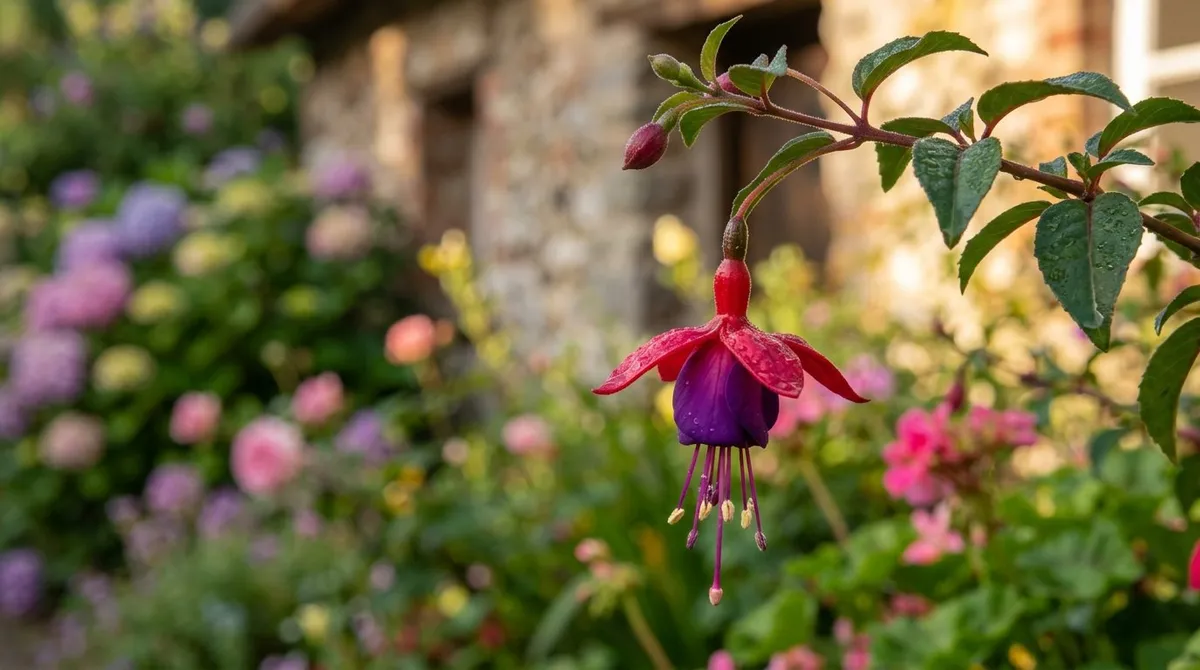
A fuchsia flower carries both male and female parts, which is exactly why hybridising works. Look closely at an open bloom and you can name every part you need to handle. The outer flared tube of coloured sepals sits above the inner skirt of corolla petals. From the centre hang eight stamens, each tipped with a pollen-loaded anther. Running past them is a single long style ending in a four-lobed stigma, the female surface that receives pollen.
The geometry matters. Because the anthers and stigma sit close together, fuchsias self-pollinate freely. That is the first problem a breeder must solve. To make a deliberate cross, you must stop the seed parent fertilising itself and feed it pollen from a chosen second plant instead. Everything in the method below exists to control that single event. Get the anatomy clear in your head first, because you will be working inside a flower barely 30mm across with shaky early-morning hands.
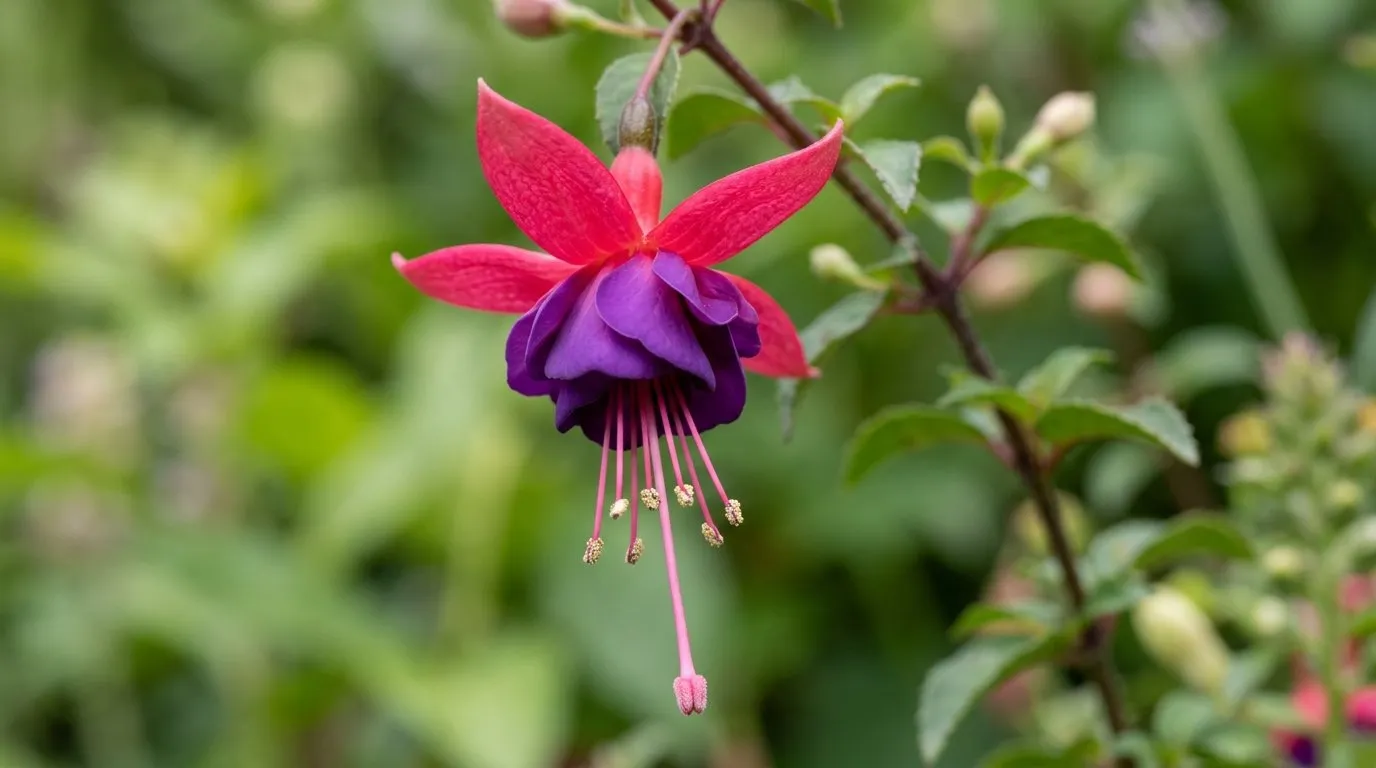 The open bloom shows the eight stamens and the single long style you will be working with.
Choosing the right parent plants
How to emasculate the seed parent
Emasculate the seed parent at bud-burst, before its own anthers shed pollen, or the flower will fertilise itself. This is the single most important step. Choose a fresh bud near the top of the plant that is just splitting open but not yet fully expanded. At this stage the anthers are still closed and the stigma is not yet receptive.
Ease the bud open gently with fine tweezers or the tip of small scissors. Work slowly. The style and stigma sit right in the middle and one careless pinch ruins the whole attempt. Remove all eight stamens, lifting each filament out with its anther attached. Take every one. A single missed anther can self-pollinate the flower and give you seed from the wrong father.
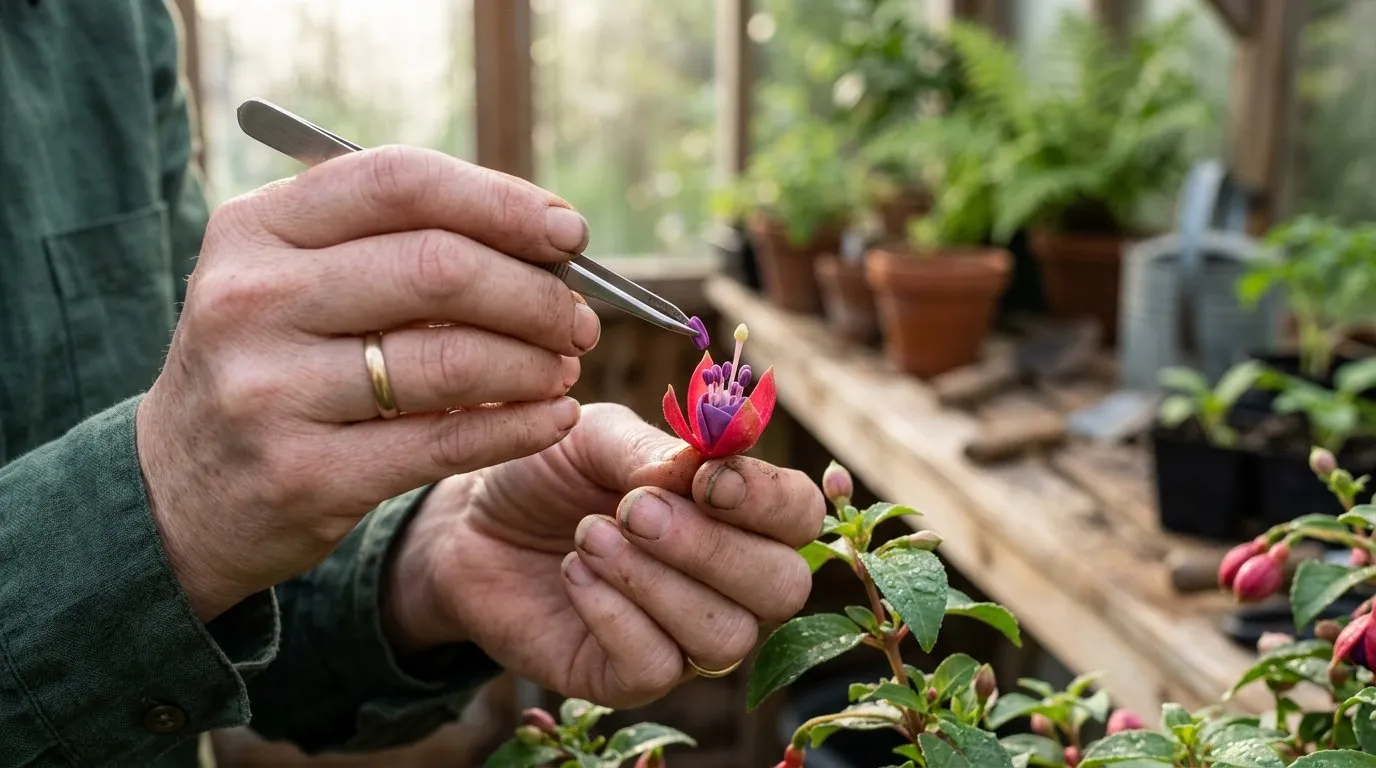 Removing all eight anthers at bud-burst stops the seed parent fertilising itself.
Collecting and transferring the pollen
Collect ripe pollen from your chosen pollen parent only when its anthers are dry and dusty. Fuchsia pollen often clings to fine sticky threads called viscine, so it does not always look like loose powder. A fully open flower a day or two old usually has the freshest pollen. Pick a bloom, or simply detach a couple of anthers, and check that pollen transfers to your fingertip.
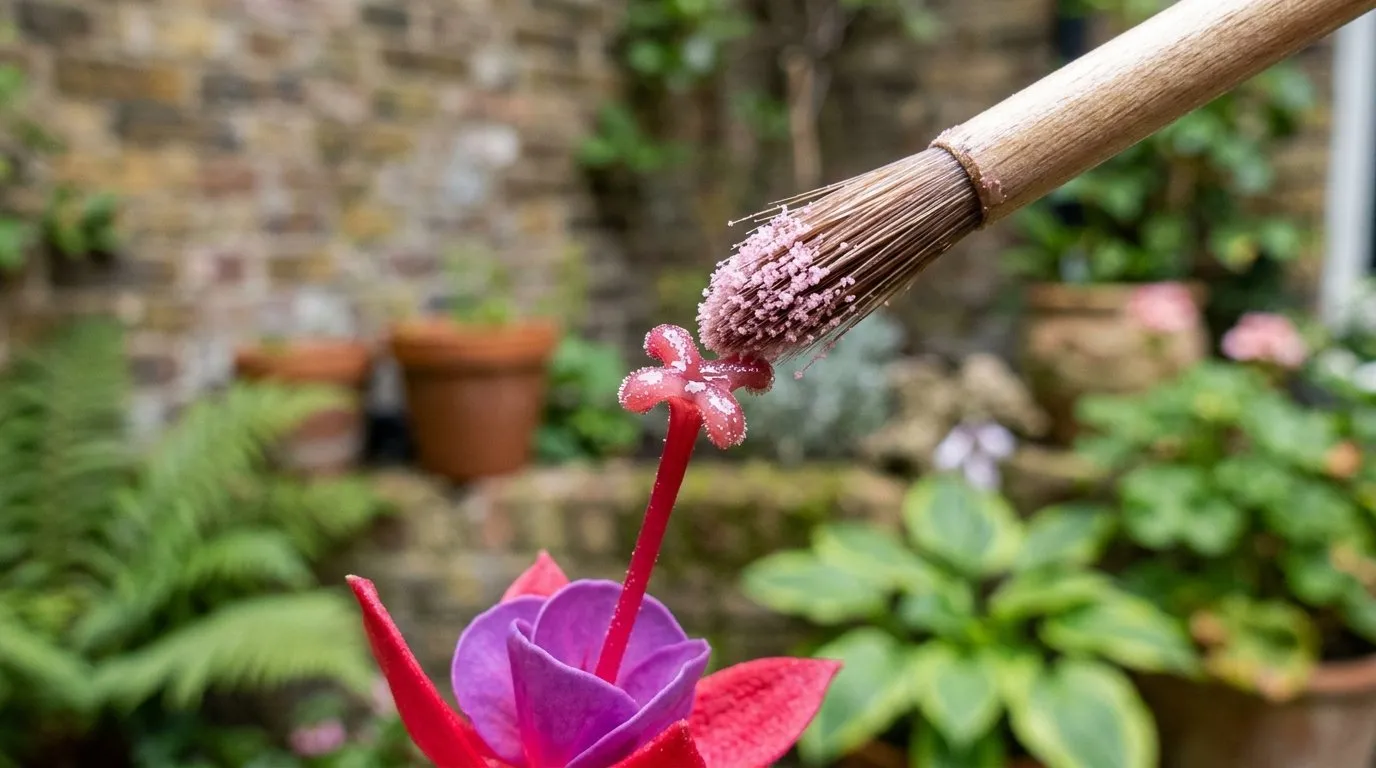 Brush the ripe pollen onto the stigma only once it turns shiny and sticky.
Bagging, labelling and recording the cross
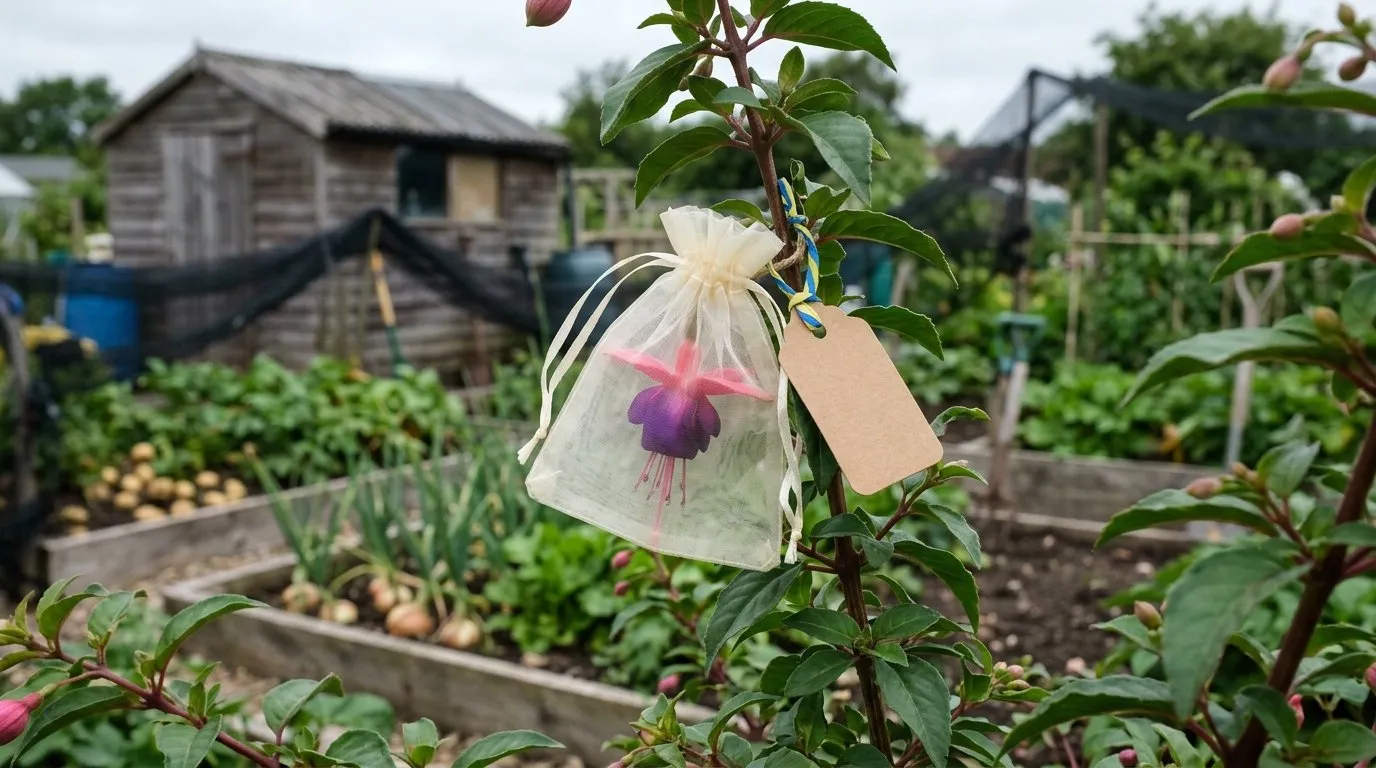 The bag keeps bees off the stigma while the cross sets; the label records the parentage.
Waiting for the berry to ripen
After a successful cross the small green ovary swells over several days into a berry. This is encouraging but not proof of seed. The berry takes six to ten weeks to ripen, colouring from green through red to a deep purple, almost black. It softens and feels full when ready. Late-summer crosses ripen more slowly as the weather cools, and a cross made after early September may not finish in time outdoors.
Harvesting and cleaning the seed
Open the ripe berry and look for small, hard, brown seeds, because empty or pale seeds mean the cross failed. Squash the berry gently onto a piece of kitchen paper and tease the seeds out of the pulp with a cocktail stick. A good berry from a hardy cross holds anywhere from a handful to over 40 seeds. Many berries hold none, despite swelling, which is normal.
Rinse the seed lightly to remove the sticky pulp, then spread it on dry kitchen paper to dry for a day. Fungus loves leftover pulp, so clean it well. The same care applies whether you are breeding fuchsias or saving seed from any garden plant. If you are not sowing at once, store the dry seed in a labelled paper envelope somewhere cool and dark. Viability drops over a year, so fresh seed germinates best.
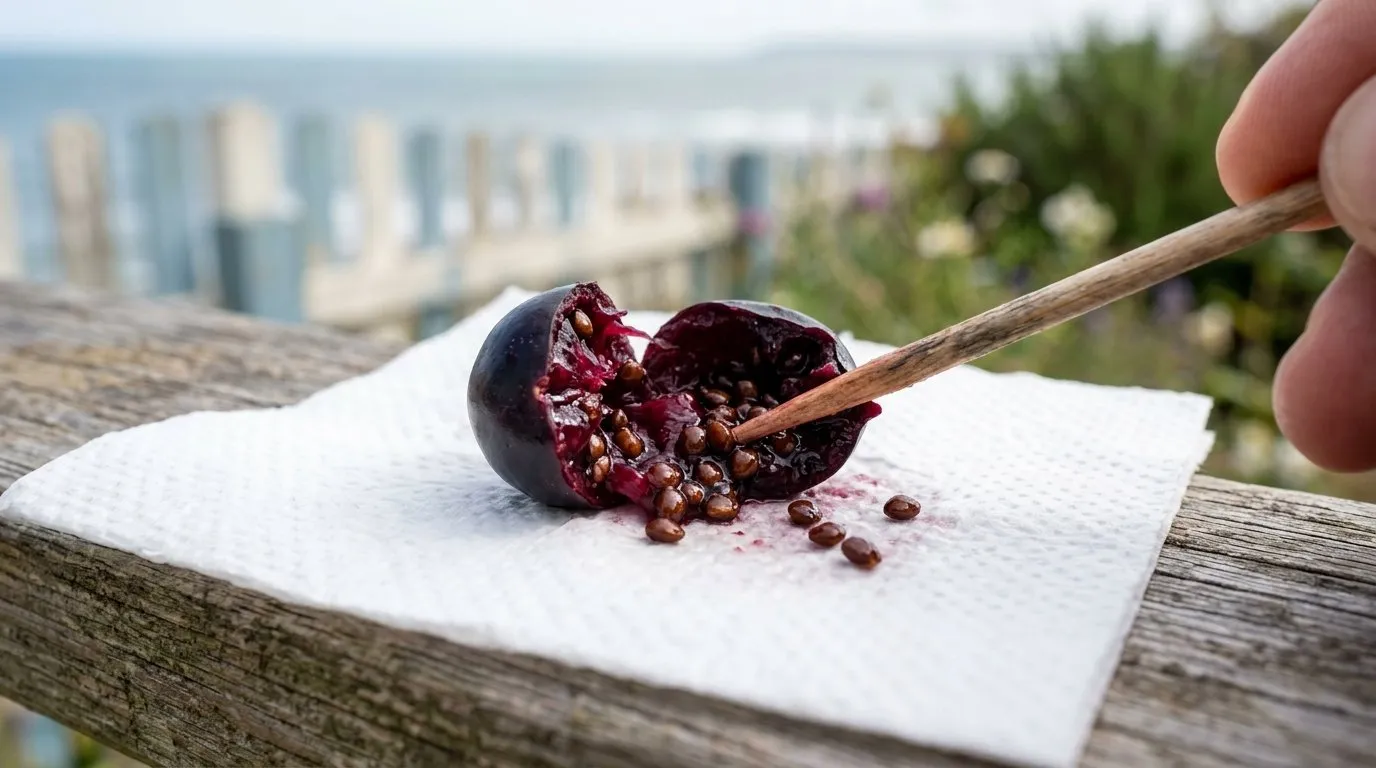 A ripe berry opened to show the hard brown seeds; pale seeds mean the cross failed.
| Stage | Timing | Temperature | What you are watching for |
|---|---|---|---|
| Emasculation | Bud-burst, 8-10am | Outdoor | Closed anthers, immature stigma |
| Pollination | 1-2 days after | Outdoor | Shiny, sticky stigma |
| Berry ripening | 6-10 weeks | Outdoor | Deep purple, soft, full berry |
| Seed cleaning | At harvest | Room | Hard brown seeds, not pale |
| Sowing | March-April | 18-20C | Firmed moist surface, light |
| Germination | 14-120 days | 18-20C | First green cotyledons |
Sowing and germinating the seed
Surface-sow fuchsia seed at a steady 18-20C and never cover it, because the seed needs light to germinate. Fill a clean tray with fine moist seed compost, firm it level, and scatter the seed thinly across the top. Press it gently into contact with the compost. Cover the tray with a propagator lid or clear bag to hold humidity, and vent it for ten minutes a day from day five to stop mould.
Pricking out and growing on the seedlings
Prick out each seedling as soon as it shows its first true leaves, handling it only by a leaf. The seedlings are tiny and the early roots are fragile. Move them into modules or small pots of free-draining compost. Grow them on cool and bright, pinching the growing tips to build bushy plants, just as you would pinch out bedding fuchsias.
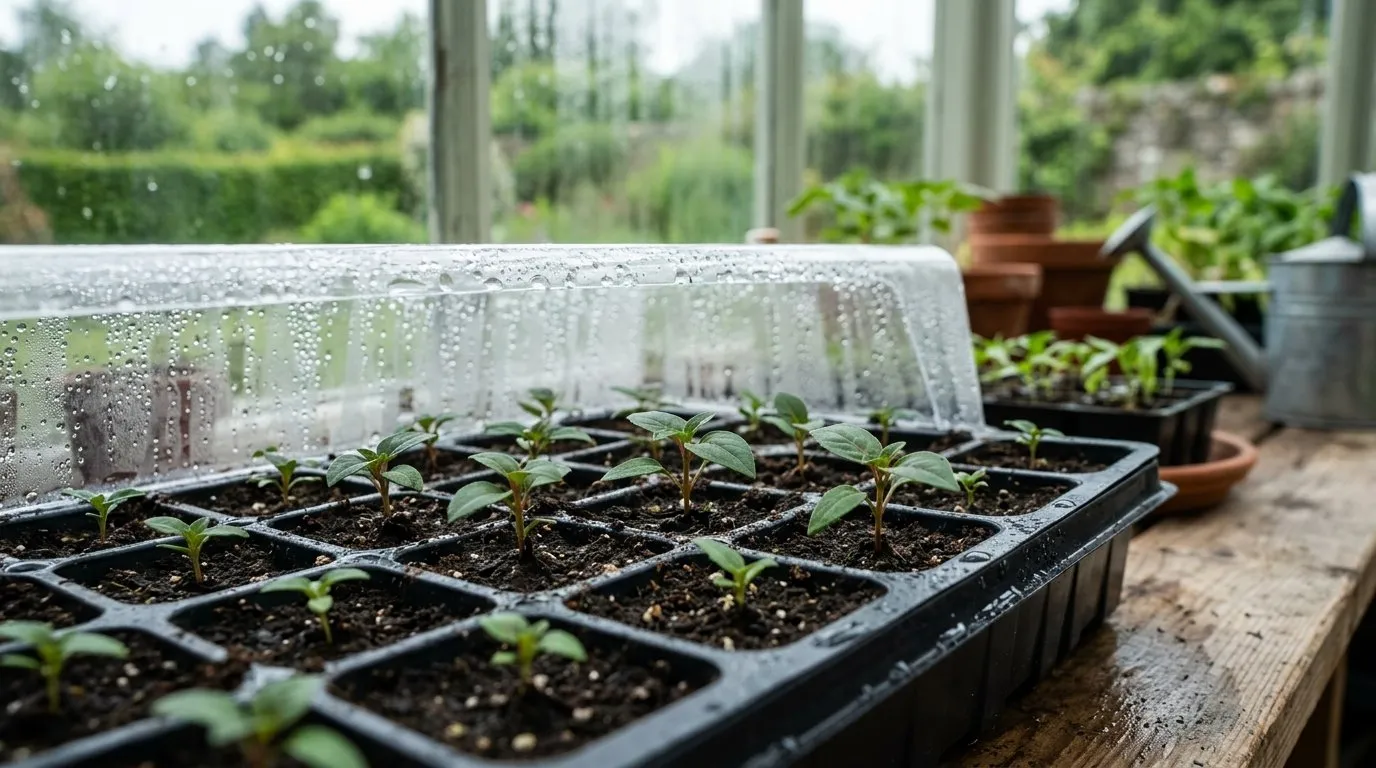 Prick out at the first true leaves and grow the seedlings on cool and bright.
The selection process: numbered stages
Selecting a worthwhile new fuchsia is slow, deliberate work spread over years. As with any project in our how-to guides, method beats luck. Follow these stages in order.
Naming and registering with the British Fuchsia Society
Register a finished new fuchsia through the British Fuchsia Society once it has proved stable and distinct. The plant must be clearly different from existing varieties, grow true from cuttings, and be worth a name. Trial it for at least three years and show it at fuchsia society meetings to get honest opinions before you commit. A name, once registered, is permanent.
 The one in 200: a selected seedling proving itself in a border before naming.
Common mistakes when hybridising fuchsias
- Leaving anthers on the seed parent. A single missed anther self-pollinates the flower, so the seed has the wrong father. It happens because the bud is fiddly and people rush. Remove all eight every time and check twice before pollinating.
- Pollinating a dry stigma. Pollen will not stick to an unreceptive stigma, so the cross fails silently. It happens when people pollinate the same hour they emasculate. Wait one to two days until the stigma turns shiny and sticky.
- Discarding seedlings too soon. First flowers mislead, so good plants get binned. It happens because growers expect instant results. Grow every seedling at least a full year before any cull.
- Failing to label. An unrecorded cross is worthless even if it works. It happens when one bag of seed looks like another. Label and twist-tie every flower at the moment you pollinate it.
Warning: Fuchsia berries are not worth eating during this work, and stray seedlings can carry over fungal problems. Always clean trays, tools and brushes in surgical spirit between crosses. Cross-contamination of pollen is the quiet ruin of many breeding records.
Frequently asked questions
Can you cross any two fuchsias together?
Almost any two fuchsias will cross, but compatibility and hardiness vary widely. Most garden cultivars belong to closely related groups and will set seed when crossed. Cross a hardy parent with a tender one and you usually lose frost tolerance. Some species crosses fail entirely or give sterile seed.
Why should I cross two hardy fuchsias rather than a hardy and a tender one?
How long does a fuchsia berry take to ripen after pollination?
A fuchsia berry takes six to ten weeks to ripen after a successful cross. The small green ovary swells, then colours to deep purple or near black. It feels soft and full when ready. Pick it before it drops or birds take it. Cooler late-summer weather slows ripening.
At what temperature do fuchsia seeds germinate?
Fuchsia seeds germinate best at a steady 18-20C. Surface-sow them on firmed moist compost and do not cover them, as light aids germination. Germination is erratic, running from 14 days to four months. Keep the tray humid under a propagator lid and vent it briefly each day.
How long until a fuchsia seedling flowers?
Many fuchsia seedlings flower in their first year if sown early. A March sowing often flowers by late summer. Slower seedlings wait until the second season. The first flower rarely shows the plant’s full quality, so never judge or discard a seedling on its opening blooms.
How do I know if my cross worked?
You know the cross worked when the ovary swells and a berry forms over several days. A swollen pod is encouraging but not proof. Open a ripe berry and look for small, hard, brown seeds. Empty or pale seeds mean pollination failed. Always label every attempt so you can track results.
How do I register a new fuchsia I have bred?
Register a new fuchsia through the British Fuchsia Society after trialling it for years. The plant must be stable, distinct, and worth naming. Grow and test it for at least three years, take cuttings to confirm it comes true, and show it for opinions before submitting it for registration.
Can I save fuchsia seed and sow it next year?
Yes, fuchsia seed stores well if cleaned and dried properly. Separate the seed from the berry pulp, dry it on kitchen paper, and store it cool and dark in a labelled envelope. Viability falls over time, so sow within a year for the best germination. Fresh seed generally performs best.
Now you have the full method, from emasculation to selection, read our guide on how to grow fuchsias for the cultivation and overwintering detail your new seedlings will need.
Our team produces practical UK gardening guidance from source research, contributor records and established horticultural practice. Editorial standards are overseen by Matt W.