Key takeaways
- Pinch out the growing tip once plants reach 10-15cm tall with 3-4 leaf pairs
- Pinch just above a pair of leaves to trigger two new side shoots
- Fuchsias for baskets: pinch every two pairs of leaves until early June
- Each pinch roughly doubles the flowering stems but delays flowers by 2-3 weeks
- Stop pinching about six weeks before you want the plant in full bloom
- Do not pinch single-stem plants like stocks, or most busy lizzies
Pinching out is the difference between a thin, leggy plant with a few flowers and a dense, bushy one smothered in bloom. The technique takes seconds: you remove the soft growing tip so the plant branches instead of racing upward. Done two or three times on a young fuchsia or bedding plant, it can double or triple the number of flowering stems. This guide explains the plant science behind why it works, exactly when and where to pinch, and the short list of plants you should leave alone.
The same principle works on fuchsias, petunias, cosmos, sweet peas, and dozens of other summer plants. Learn it once and every container, basket, and border in the garden benefits.
What pinching out actually does
Pinching out works by breaking apical dominance. The growing tip of every shoot produces a plant hormone called auxin, which travels down the stem and suppresses the side buds sitting in each leaf joint. While the tip is intact, the plant pours its energy into upward growth and the side buds stay dormant. This is why an unpinched plant grows tall, thin, and sparse.
When you remove the tip, the auxin supply stops. Within days the two side buds below the cut wake up and grow into new shoots. One stem becomes two. Pinch those two and you have four. Each of those shoots can carry flowers, so the flowering capacity of the plant climbs fast. The cost is time: the plant must grow those new shoots before it can bloom, which sets flowering back two to three weeks per pinch. That trade is almost always worth taking for a fuller, longer display.
When to pinch out fuchsias and bedding plants
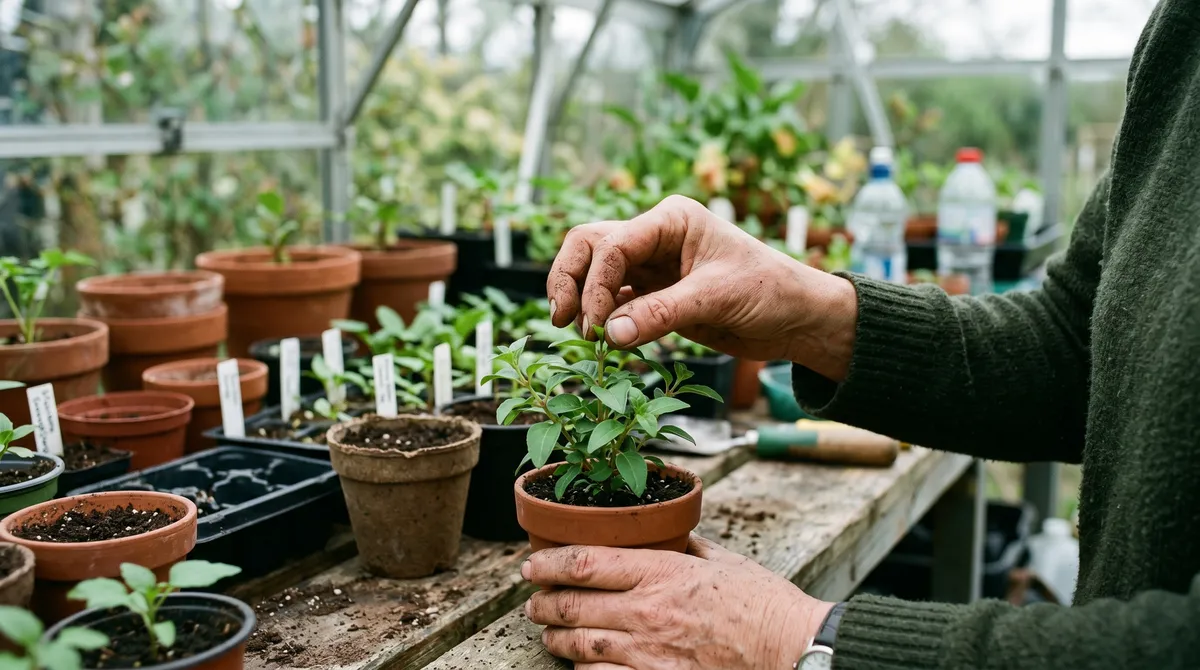
Pinch for the first time once a plant reaches 10-15cm tall and has three or four pairs of leaves. That is usually April to May for greenhouse and windowsill-raised plants. The plant needs enough leaves below the tip to power the new side shoots, so do not pinch a seedling with only one or two leaf pairs.
Time the last pinch carefully. Because each pinch delays flowering by two to three weeks, stop pinching about six weeks before you want the plant in full bloom. For summer bedding aimed at a July display, that means finishing all pinching by late May or very early June. Pinch on a dry day when the tissue snaps cleanly, and avoid pinching plants that are stressed, dry, or sitting in cold conditions, as they recover slowly.
Gardener’s tip: Pinch in the morning so the small wound dries through the day. A clean pinch above a leaf joint heals within hours and the plant rarely notices the check.
How to pinch out, step by step
The action is simple but the position matters. Always pinch just above a pair of leaves, never halfway up a bare stem.
- Find the growing tip. Look for the soft, pale cluster of new leaves at the very top of each shoot.
- Locate the node below it. Run down to the first healthy pair of leaves under the tip. The hidden side buds sit in these leaf joints.
- Pinch above the node. Using finger and thumb, nip out the tip and the short length of stem above that leaf pair. Leave the leaves in place.
- Use scissors for tough stems. On woody or thick stems, snip with clean, sharp scissors rather than tearing.
- Repeat across the plant. Pinch every leading shoot, not just the central one, for an even, dome-shaped plant.
- Pinch the side shoots later. Once the new shoots have two or three leaf pairs of their own, pinch them too if you want maximum bushiness.
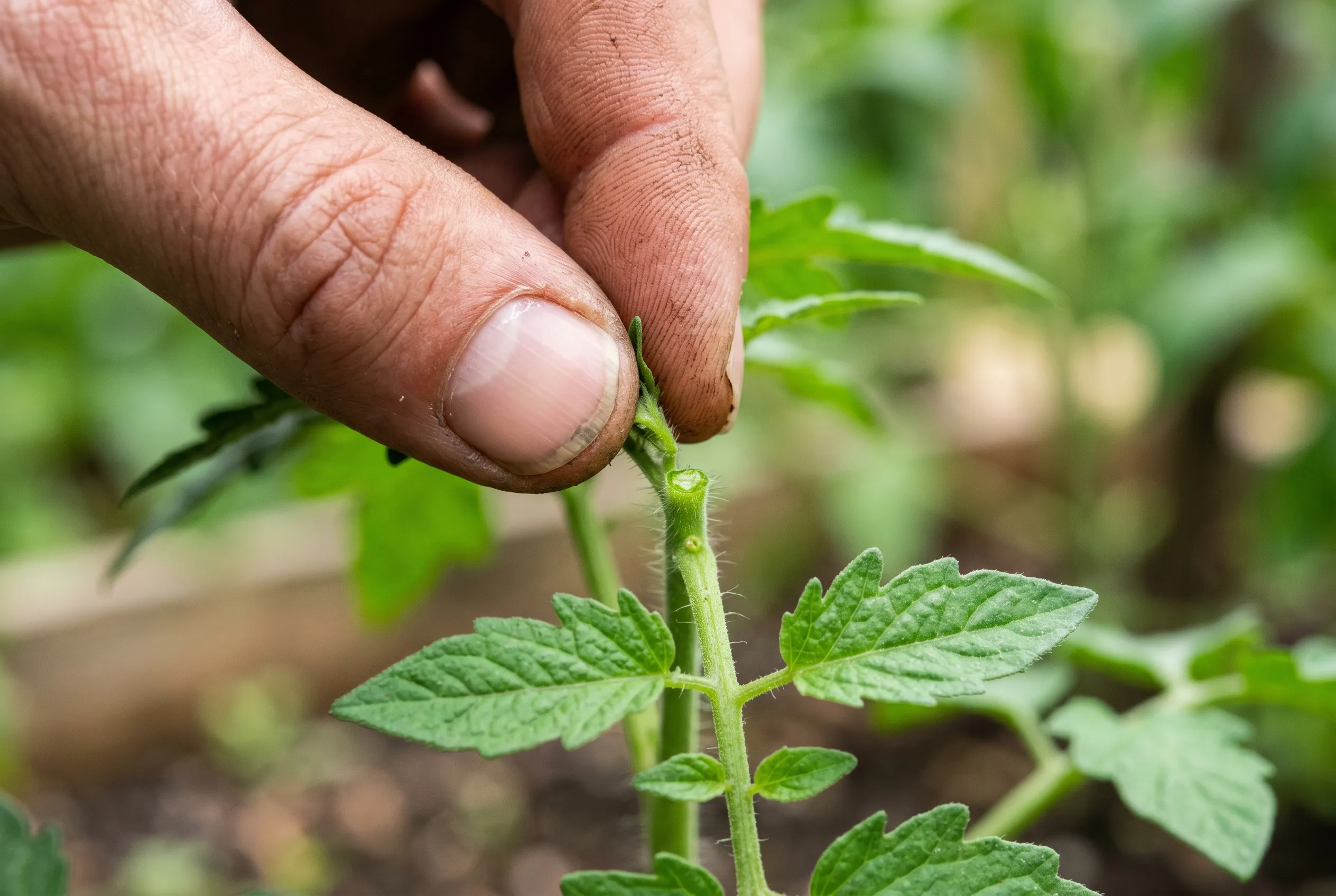 Pinch just above a pair of leaves. The two dormant buds in that leaf joint become the plant’s new shoots.
Which plants to pinch and which to leave alone
Most bushy, multi-stemmed bedding plants respond well, but a few are better left untouched. Pinching a single-stem or naturally branching plant only wastes growth.
| Plant | Pinch? | Timing | Notes |
|---|---|---|---|
| Fuchsia | Yes, repeatedly | Every 2 leaf pairs to early June | Best results of all; builds dense baskets |
| Petunia and surfinia | Yes | At 10-15cm, again 3 weeks later | Stops leggy single stems |
| Cosmos | Yes | At 20-30cm | Doubles flowering stems |
| Antirrhinum (snapdragon) | Yes | At 8-10cm | More flower spikes |
| Coleus and sweet pea | Yes | At 4 leaf pairs | Bushier, more stems |
| Busy lizzie (impatiens) | No | n/a | Branches naturally, no need |
| Begonia (most) | No | n/a | Self-branching |
| Stocks and single sunflowers | No | n/a | Flower on one main stem |
| Delphinium and lupin | No | n/a | Spike flowers, pinching loses the spike |
The rule of thumb is simple: if a plant grows tall on a single dominant stem and you want more flowers, pinch it. If it already branches low down or flowers on one tall spike, leave it. Our guide to the best annual bedding plants flags which types respond best.
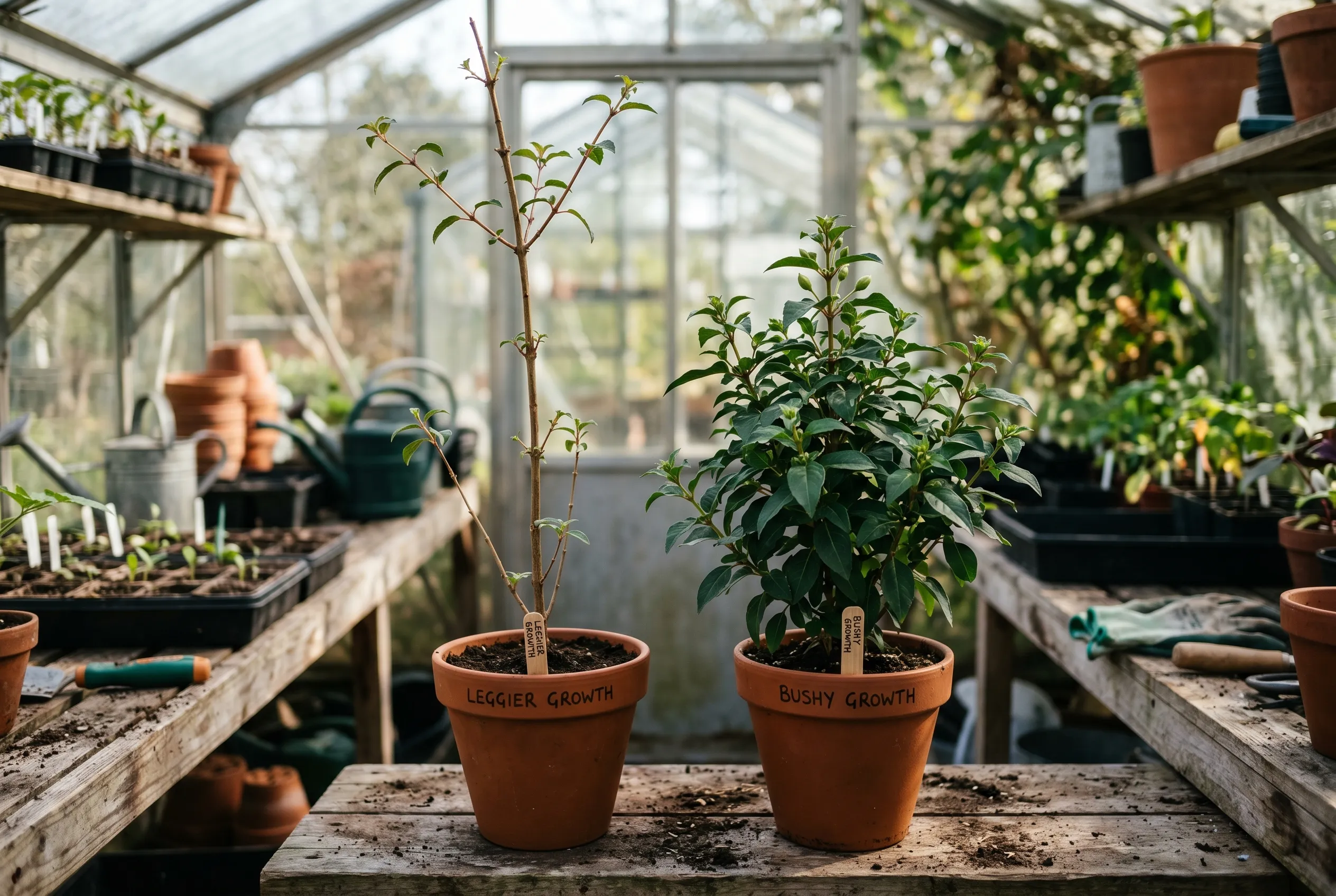 The same variety, weeks apart: the unpinched plant on the left is leggy and sparse, the pinched plant on the right is dense and full.
Pinching fuchsias for hanging baskets
Fuchsias give the clearest reward of any plant. For a trailing basket fuchsia, pinch every shoot after it makes two pairs of leaves, then pinch the resulting shoots again, and so on until early June. Three rounds of pinching turns a single rooted cutting into eight or more flowering stems, which is what creates the cascading, fully clothed basket rather than a few long bare trails.
Upright bush fuchsias need fewer pinches, usually two, to build a balanced framework. After the final pinch, let the plant grow on and start feeding with a high-potash tomato feed weekly to fuel flowering. Plants raised this way, then hardened off properly, carry far more bloom; see our guide on hardening off bedding and half-hardy plants before they go outside. For growing the plants on, our fuchsia growing guide covers feeding and overwintering. Keen growers can go further and try raising fuchsias from a hand cross to breed their own varieties.
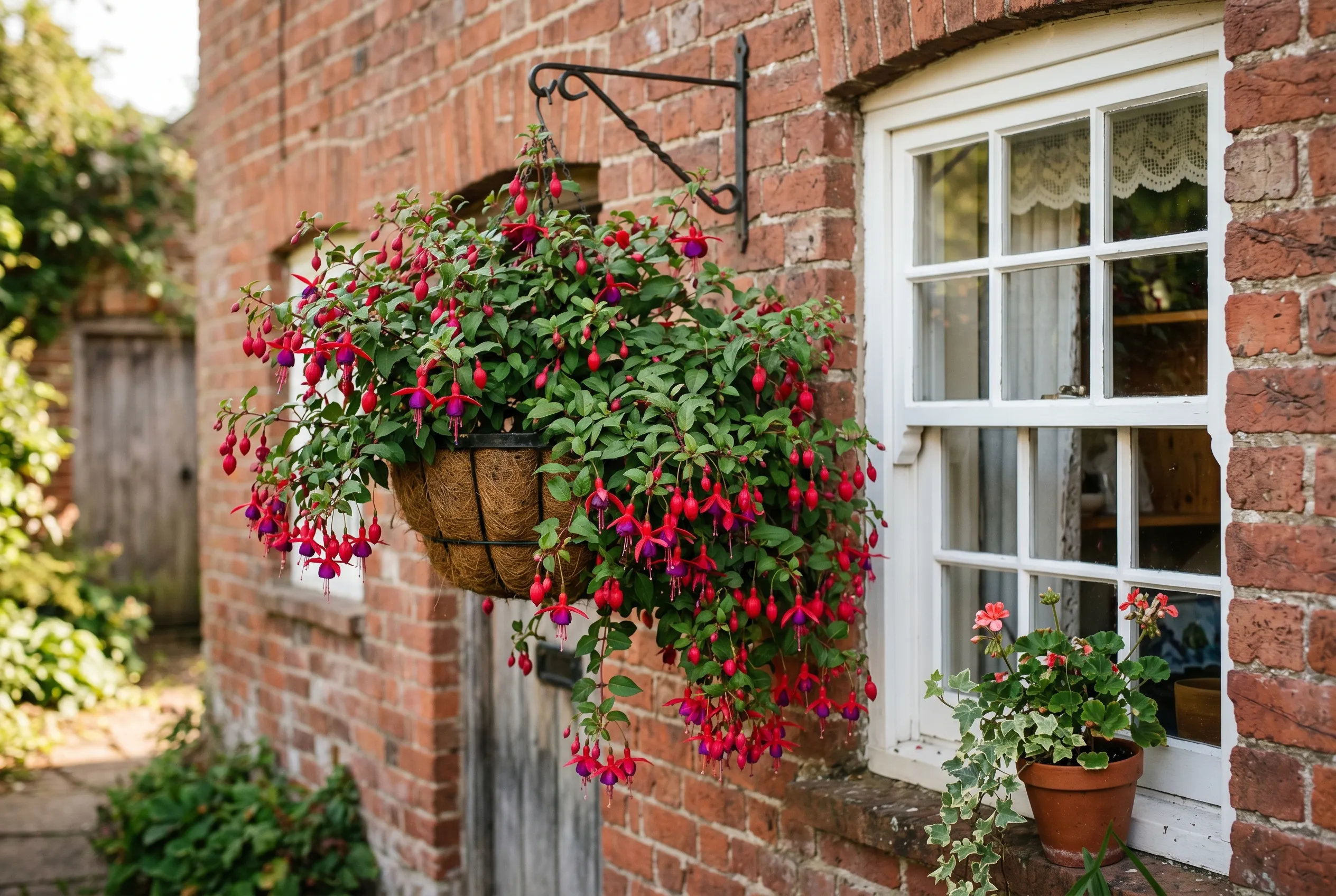 The payoff from repeated pinching: a basket fuchsia clothed in flowering shoots from top to bottom rather than a few bare trails.
How pinching differs from the Chelsea Chop
Pinching out is often confused with the Chelsea Chop, but they are different jobs done at different times. Pinching removes only the soft growing tip of a young plant, early in its life, to build a branching framework before it flowers. The Chelsea Chop cuts established hardy perennials back by a third to a half in late May, to delay and extend their flowering season. Both rely on the same apical-dominance principle, yet one shapes a seedling and the other reshapes a mature clump.
Use pinching on annuals and young plants raised under cover: fuchsias, petunias, cosmos, and the like. Use the harder cut on border perennials such as sedum, phlox, and asters. Our guide to the Chelsea Chop for perennials covers the timing and which plants suit it. The same light touch works on container plants too; a quick pinch keeps patio petunias compact and flowering rather than trailing thin and bare.
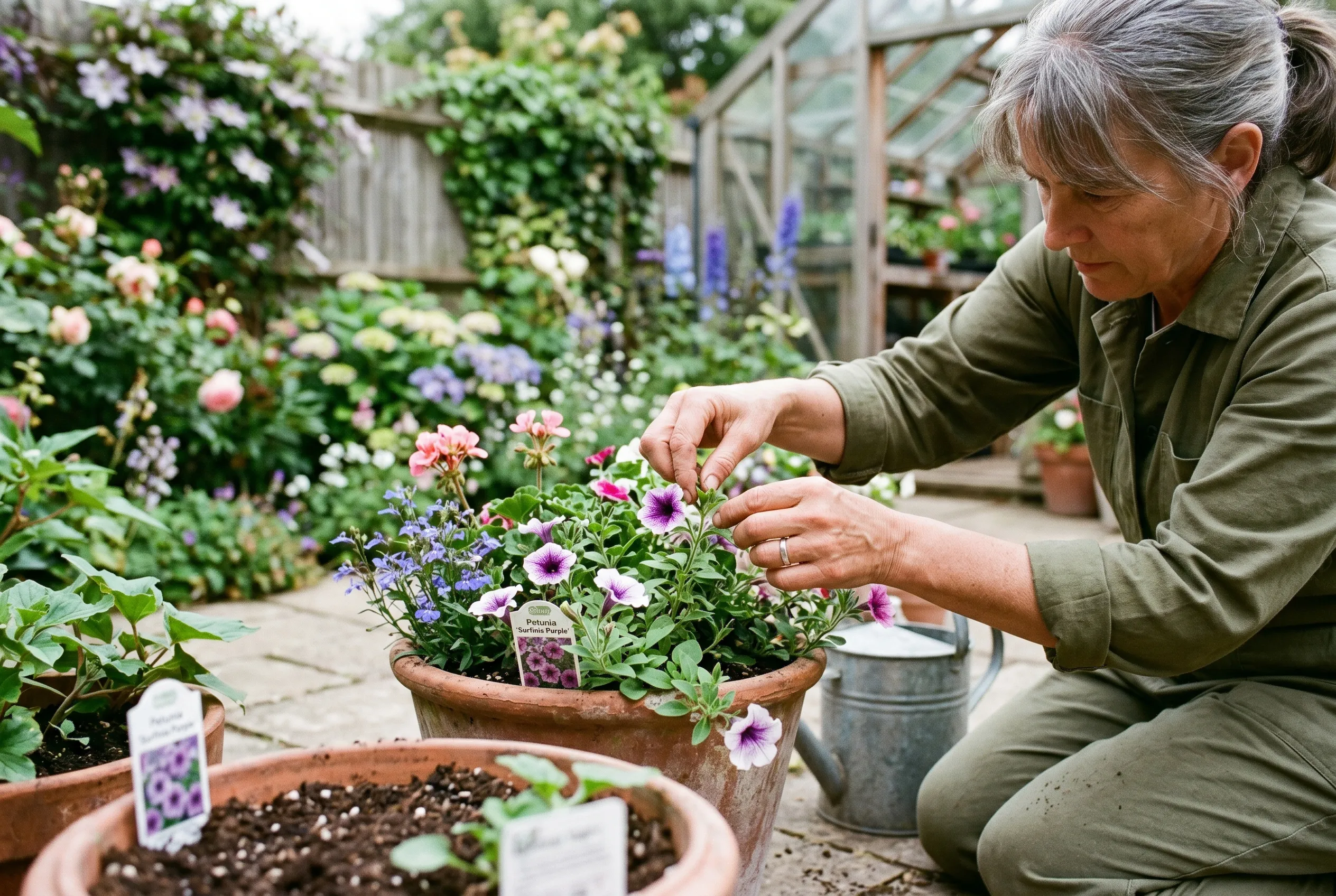 A single pinch on a young patio petunia keeps it compact and covered in flower instead of stretching into bare stems.
Common pinching mistakes to avoid
A few errors undo the benefit or set plants back.
- Pinching too late. Pinching in late June for a July display means the plant is still growing shoots when it should be flowering. Finish six weeks before bloom.
- Pinching too low. Removing the tip below the lowest leaves leaves no growing buds. Always pinch just above a healthy leaf pair.
- Pinching only the central shoot. This leaves the plant lopsided. Pinch every leading tip for an even dome.
- Pinching stressed plants. A dry or cold-checked plant recovers slowly. Water and warm it first, then pinch.
- Pinching plants that flower on one spike. Stocks, delphiniums, and single sunflowers lose their main flower if pinched. Leave them be.
Pair the feed with regular deadheading of spent flowers and the display runs from June to the first frosts. The Royal Horticultural Society’s advice on stopping and pinching confirms the same approach for fuchsias.
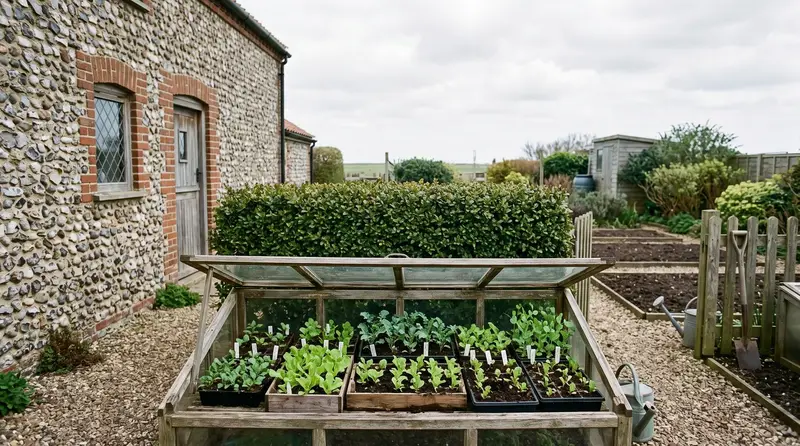
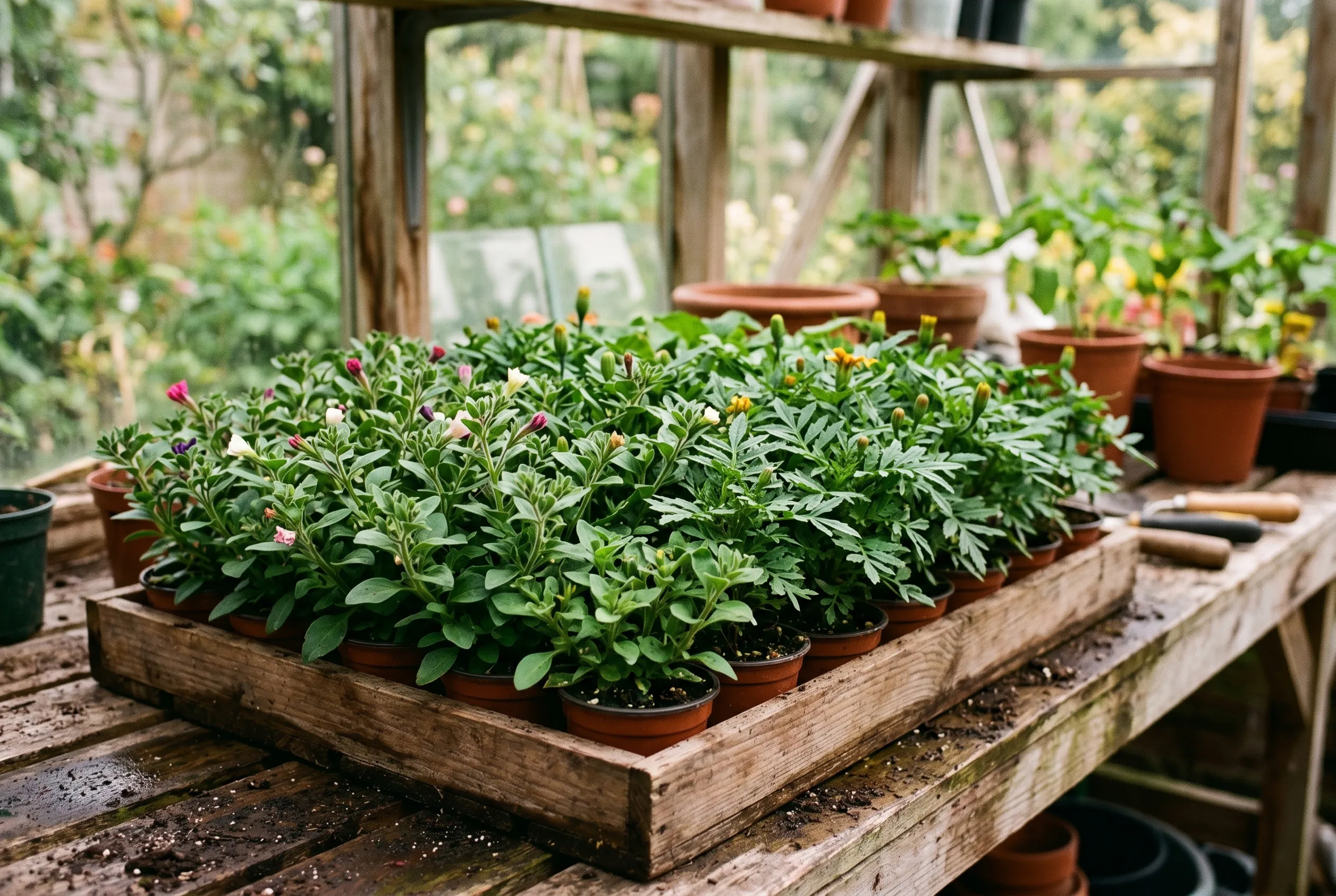 A tray of well-pinched bedding plants: compact, multi-stemmed, and ready to flower heavily once planted out.
Frequently asked questions
How do you pinch out fuchsias?
Nip off the growing tip just above a pair of leaves. Use finger and thumb to remove the soft top of each shoot once the plant has three or four pairs of leaves. This forces two side shoots from the leaf joint below, making the plant bushier and more floriferous.
When should I pinch out bedding plants?
Pinch bedding plants when they reach 10-15cm with three or four leaf pairs, usually April to May. Pinch again two to three weeks later if you want extra bushiness. Stop pinching about six weeks before you want full flowering, as each pinch delays blooms.
Does pinching out delay flowering?
Yes, each pinch delays flowering by two to three weeks. The plant must grow new side shoots before it can flower. The trade-off is worth it: a pinched plant carries far more flowering stems, so the display is bigger and lasts longer once it starts.
Which plants should you not pinch out?
Do not pinch single-stem plants such as stocks, most sunflowers, and spike flowers like delphiniums. Busy lizzies and most begonias also need no pinching. These either flower on one stem or branch naturally, so pinching wastes growth and delays the display.
How often should I pinch fuchsias for hanging baskets?
Pinch basket fuchsias every two pairs of leaves until early June. This builds a dense, trailing framework before flowering starts. Each shoot you pinch splits into two, so three rounds of pinching can turn one stem into eight flowering shoots.
Can you pinch out leggy bedding plants?
Yes, pinching leggy plants makes them bushier. Cut or pinch the long stem back to just above a healthy pair of leaves. New side shoots form below the cut. This works on petunias, fuchsias, and coleus that have stretched in low light on a windowsill.
Now your plants are pinched and bushy, plan the rest of the season with what to plant in June, and browse all our how-to gardening guides for the next job in the greenhouse.
Our team produces practical UK gardening guidance from source research, contributor records and established horticultural practice. Editorial standards are overseen by Matt W.