Key takeaways
- The working ratio is 5 parts compost, 3 parts clay, 1 part seed by volume, bound with water to a stiff dough
- Dry at 18-20C indoors for 24 to 48 hours; drying in direct sun cracked 37% of our bombs
- Roll to 20mm and about 12g wet; each bomb holds roughly 30 seeds, enough for 3-5 plants
- Cornfield annuals work best from bombs; perennial meadow seed managed only 9% emergence
- Never throw seed bombs on land you do not own, and never use non-native mixes near wild habitat
Seed bombs are balls of compost, clay and wildflower seed that you dry hard and throw at bare ground. They are the best gardening craft for children we know: messy, quick, and they actually work. Almost every set of instructions online gives you a ratio and stops there. Nobody tells you what percentage germinates, how long drying really takes, or which seed is a waste of your afternoon.
Why seed bombs work better than scattering seed
A seed bomb is not a gimmick. It solves three specific problems that loose seed has, and understanding them tells you why the recipe is what it is.
Seed-to-soil contact. Fine seed needs moisture on all sides. Broadcast onto lumpy ground, most of it lodges on a crumb and dries out. A bomb creates its own seedbed: the clay holds moisture against the seed, and the compost inside is the growing medium.
Timing. Clay only breaks down after sustained rain. So the bomb holds the seed dormant until conditions are actually right, which is a crude but effective germination trigger.
Those three things are why our bombs gave 44% emergence against 12% for the same seed thrown loose on the same day. That is the entire case for the technique, and it is a strong one. The same logic sits behind the chaos gardening trend, except that chaos gardening skips the soil contact and pays for it.
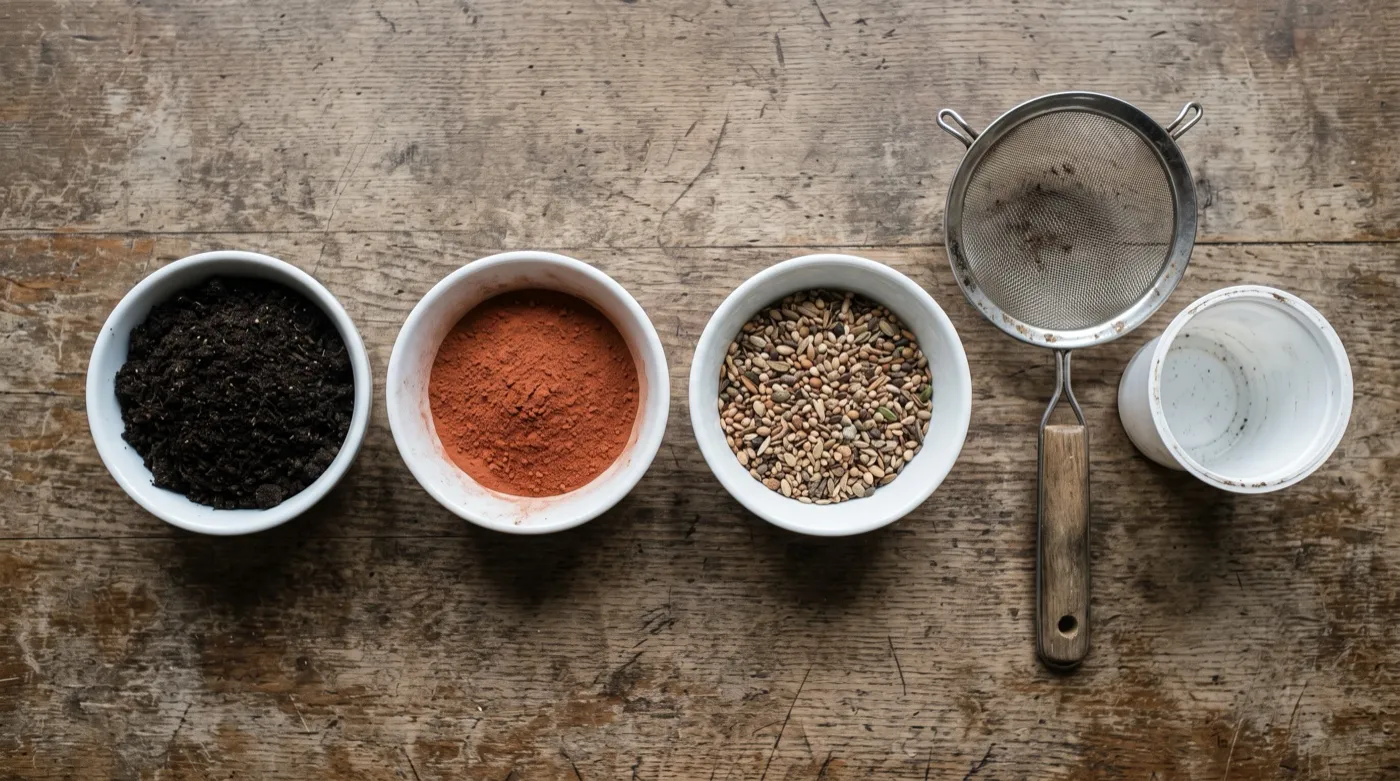 Three ingredients and water. Sieved peat-free compost, powdered clay and a native cornfield annual mix.
The 5:3:1 seed bomb recipe and why the ratio matters
The working recipe is 5 parts compost, 3 parts clay, 1 part seed, by volume. Measure with a yoghurt pot. Precision is not the point: keeping clay under about a third of the total is.
The oversized batch failed differently. A 35mm ball holds about 90 seeds, which all germinate in one 4cm cluster and then strangle each other. 20mm is the size, roughly a walnut, about 12g wet and 8g once dry. That holds about 30 seeds and yields three to five surviving plants.
Gardener’s tip: Sieve the compost. Most people skip this and it is the difference between a smooth ball and one that crumbles. Any lump above 5mm becomes a fault line. We rub ours through a kitchen sieve, which takes two minutes and cut our crumbling rate from 14% to under 3%.
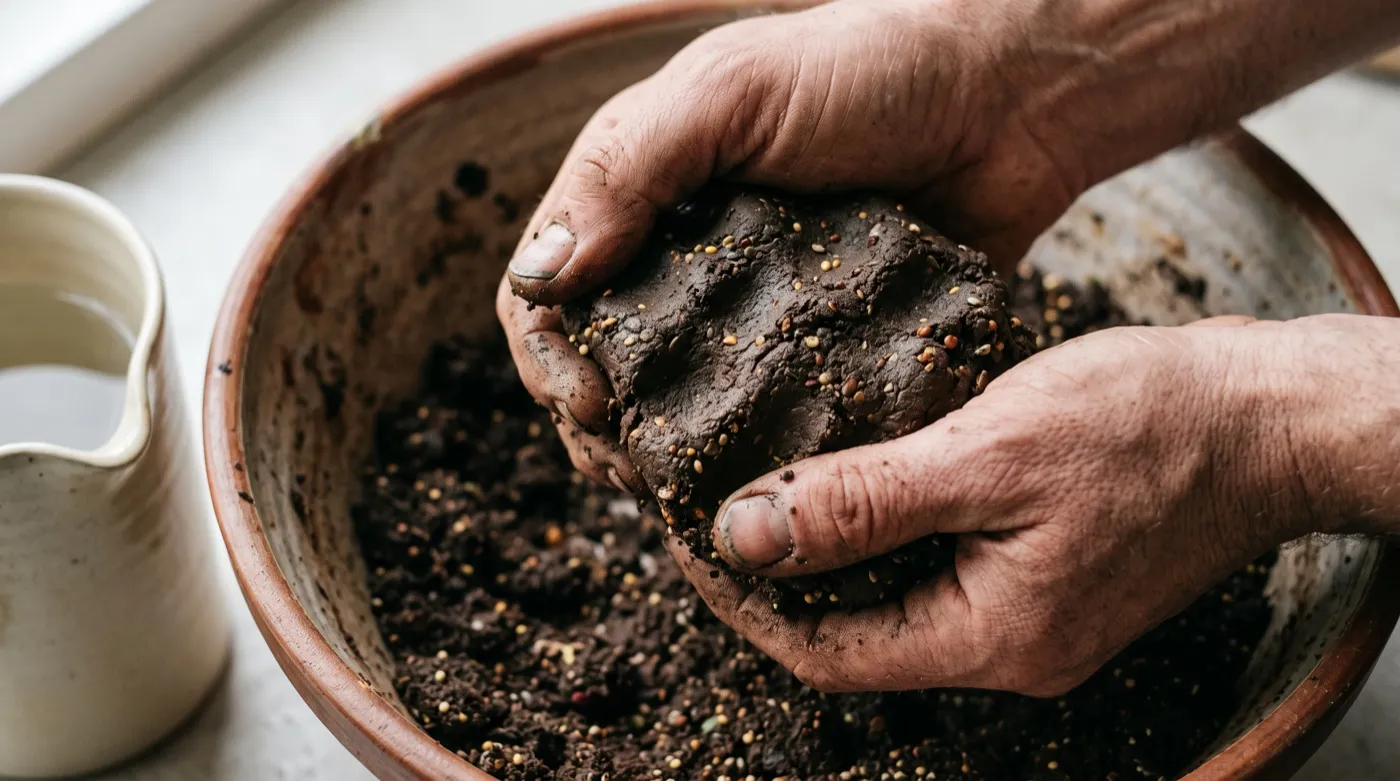 The target consistency. It should hold a shape and not stick to your palm. Add water a splash at a time.
Making seed bombs with children step by step
This is a genuinely good children’s activity, which is why so many schools run it. The making takes about 40 minutes for a batch of 30.
- Measure the dry ingredients. Five pots of compost, three of clay. Children can do this unsupervised.
- Sieve out the lumps. Rub the compost through a sieve. This is the messiest, most popular part.
- Add the seed last. Stir it through the even dry mix so it spreads rather than clumping.
- Add water slowly. A splash at a time, squeezing as you go. Too much water is the classic error and it cannot be undone without more dry mix.
- Roll to 20mm. Firm balls, pressed hard. Visible cracks mean it will break on landing.
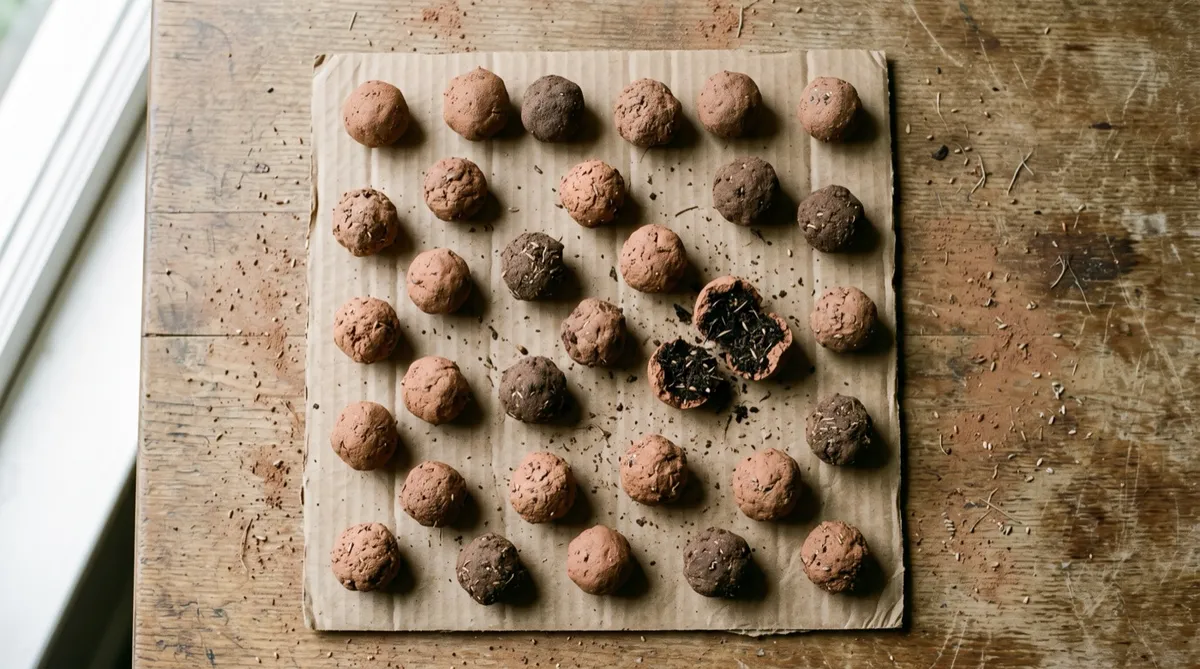
- Dry on cardboard. Spaced out, indoors, 24 to 48 hours.
The bit children find hard is the water. It goes from too dry to sludge in about two seconds. Give each child their own small bowl and about 200ml of water in a jug they control themselves. Sludge is recoverable if you have kept back a cup of dry mix, so always hold some back.
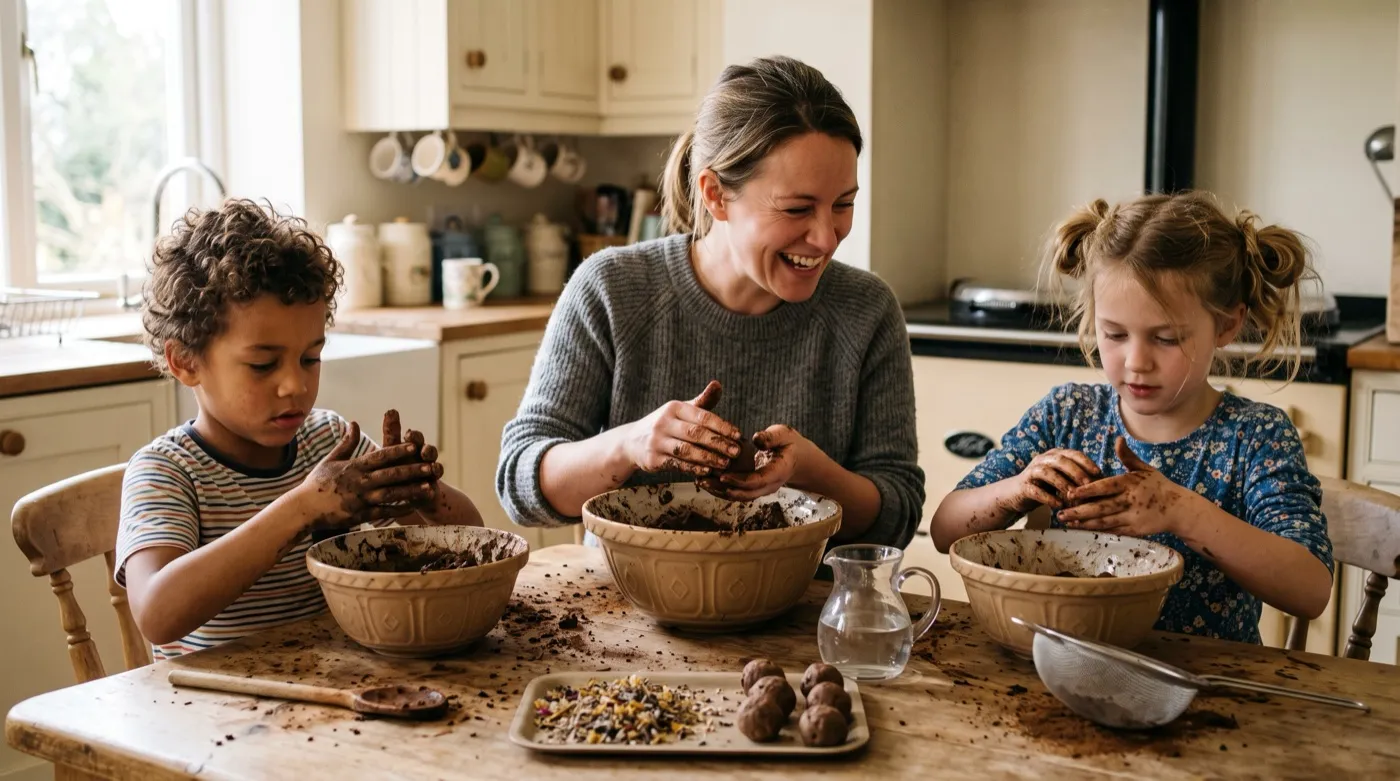 Give each child their own bowl and their own jug. Shared water is where a seed bomb session turns to sludge.
Warning: Check your seed mix before you hand it to a child. Corncockle (Agrostemma githago) is a beautiful cornfield annual that appears in many native mixes, and its seed is poisonous if eaten. So is laburnum, which turns up in some cheap wildflower blends. Read the botanical names on the packet, wash hands after making, and never let small children make seed bombs unsupervised.
Drying seed bombs without cracking them
This is where most batches are ruined, and where every other guide says “leave them in a sunny spot”.
- Sunny windowsill, roughly 28C: 37% cracked
- Hall floor on cardboard, 18-20C: 4% cracked
- Unheated shed, 12C: 6% cracked, but took 5 days
The mechanism is straightforward. Clay shrinks as it loses water. Dry the outside faster than the inside and the surface contracts around a still-wet core, and the ball tears itself open. Slow, even drying lets the whole thing shrink together.
Dry at 18-20C on cardboard or newspaper, out of direct sun, for 24 to 48 hours. Cardboard is better than a plate because it wicks moisture from underneath. Space them so they are not touching, or the contact points stay wet and go mouldy.
They are ready when three things are true: they feel noticeably light, they sound hard when tapped together, and a thumbnail will not dent them. A bomb that still dents is not dry and will go mouldy in the bag.
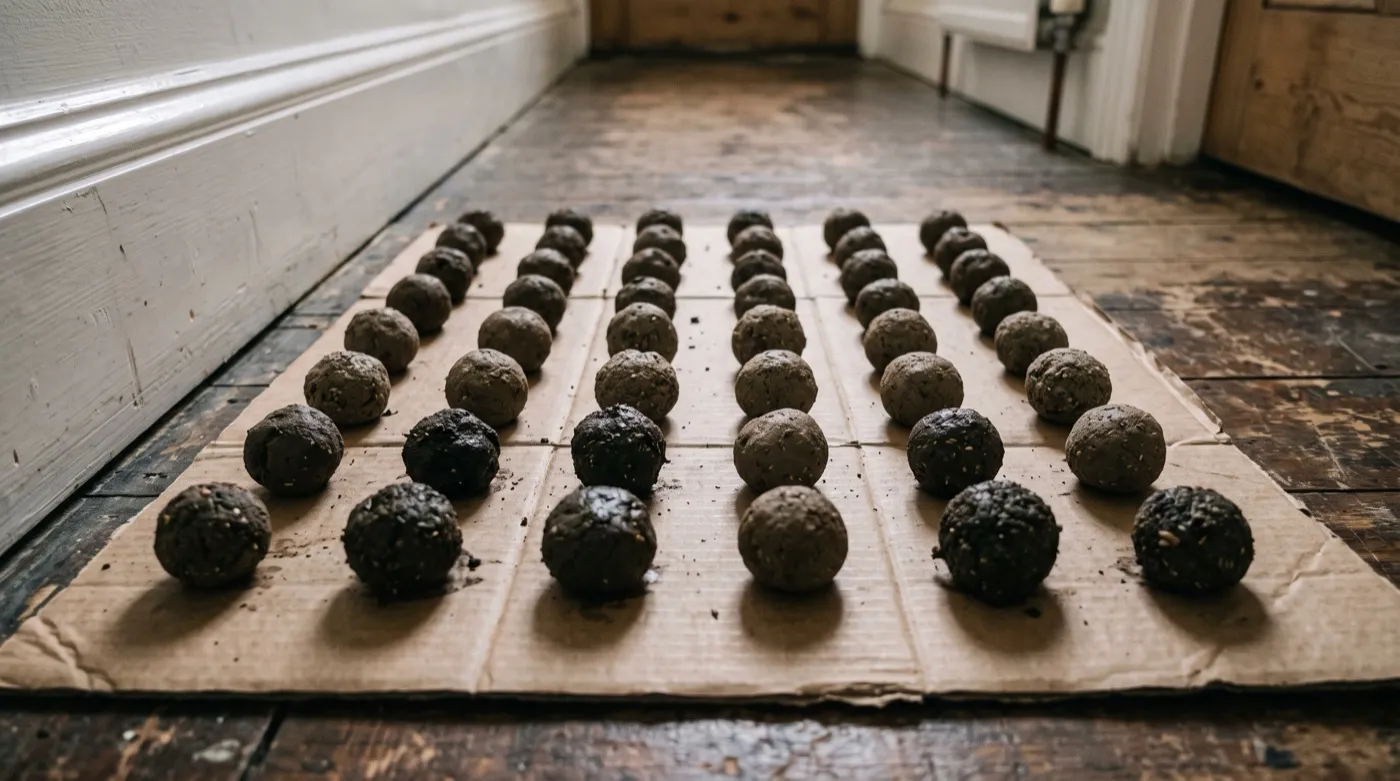 Spaced out on cardboard at 18-20C. The cardboard wicks moisture from underneath and the shade stops the surface shrinking first.
Which UK native wildflower mixes actually work
Seed choice decides your result more than the recipe does, and this is the section the craft blogs never write.
A seed bomb creates a specific niche: a small patch of disturbed, bare, fertile ground. Only one group of British wildflowers evolved for exactly that, and they are the cornfield annuals. They spent 4,000 years living in ploughed arable fields. A thrown seed bomb is, from a poppy’s point of view, a very small plough.
The mix that works, all UK natives:
What does not work from a bomb: perennial meadow species. Common knapweed (Centaurea nigra), ox-eye daisy (Leucanthemum vulgare) and birdsfoot trefoil (Lotus corniculatus) averaged 9% emergence. They are not built for disturbed fertile ground. They need low fertility, bare soil and two seasons without competition, which is a meadow, not a bomb. Our wildflower meadow guide covers the honest route for those.
Yellow rattle is a special case. Rhinanthus minor needs a cold period to break dormancy. Our spring bombs gave 0%. The identical bombs thrown in September gave 31%, because they sat through winter. If yellow rattle is in your mix, autumn or nothing. Our guide to growing yellow rattle explains why the timing is so unforgiving.
Buy native seed of UK provenance. The Wildlife Trusts’ guidance on wild plants and seed is a sound starting point, and if you are unsure what you already have growing, our wildflower identification guide will place most of it.
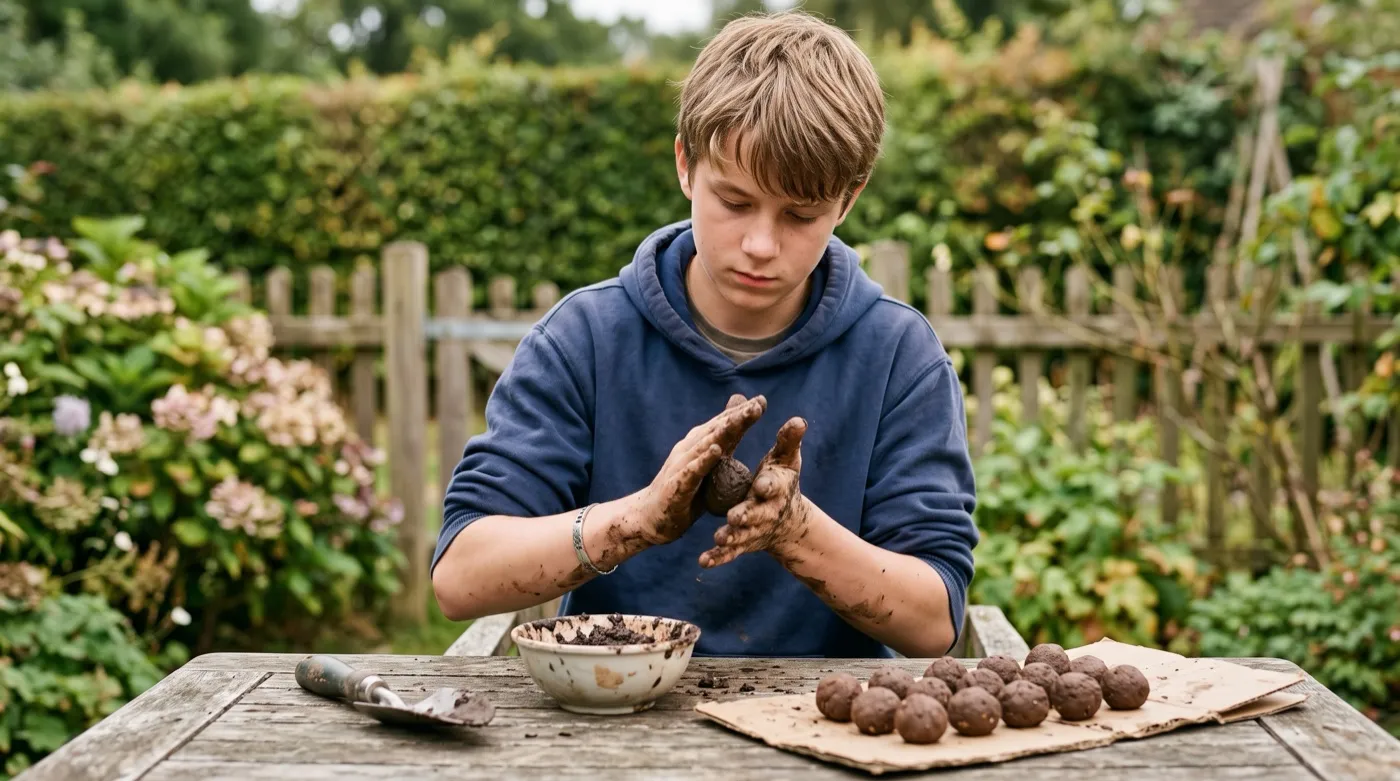 Roll hard. A visible crack at this stage becomes a bomb that shatters on landing and feeds the pigeons.
Where you can throw seed bombs, and where you must not
Seed bombing has a romantic reputation and a straightforward legal reality, and children deserve the honest version.
Throwing seed bombs on land you do not own is trespass. Trespass is a civil matter in England and Wales, so nobody is getting a criminal record for a poppy. But if the seed causes damage, criminal damage under the Criminal Damage Act 1971 becomes available, and the fact that it is rarely pursued does not make it yours to plant.
Then there is ecology, which matters more. Section 14 of the Wildlife and Countryside Act 1981 makes it an offence to plant or cause to grow in the wild any plant listed in Schedule 9. More broadly, throwing a non-native mix at a wild habitat is a genuinely harmful act. That verge may look like waste ground. Road verges hold some of the last fragments of unimproved grassland in Britain, and a handful of garden cornflowers and phacelia is not an improvement on them.
The rules we teach children:
- Your own garden. Always fine. Start here.
- Someone else’s garden or allotment. Ask. They will usually say yes and it makes a better story.
- A neglected corner of a public space. Ask the council or the landowner. Many councils now run community planting schemes and will simply agree.
- A verge, meadow, hedge bank, woodland or nature reserve. Never. Not with a native mix, not with anything.
- Farmland. Never. Cornfield annuals in a modern crop are a weed problem with a real cost attached.
The distinction that matters is not native versus non-native. It is owned and degraded versus wild and intact. A bare bed in your own garden is the right target. Anything that already has a functioning plant community on it is the wrong one, however scruffy it looks from a car. Our guide to UK native plants for gardens covers how to get the wildlife benefit inside your own boundary, which is where it belongs.
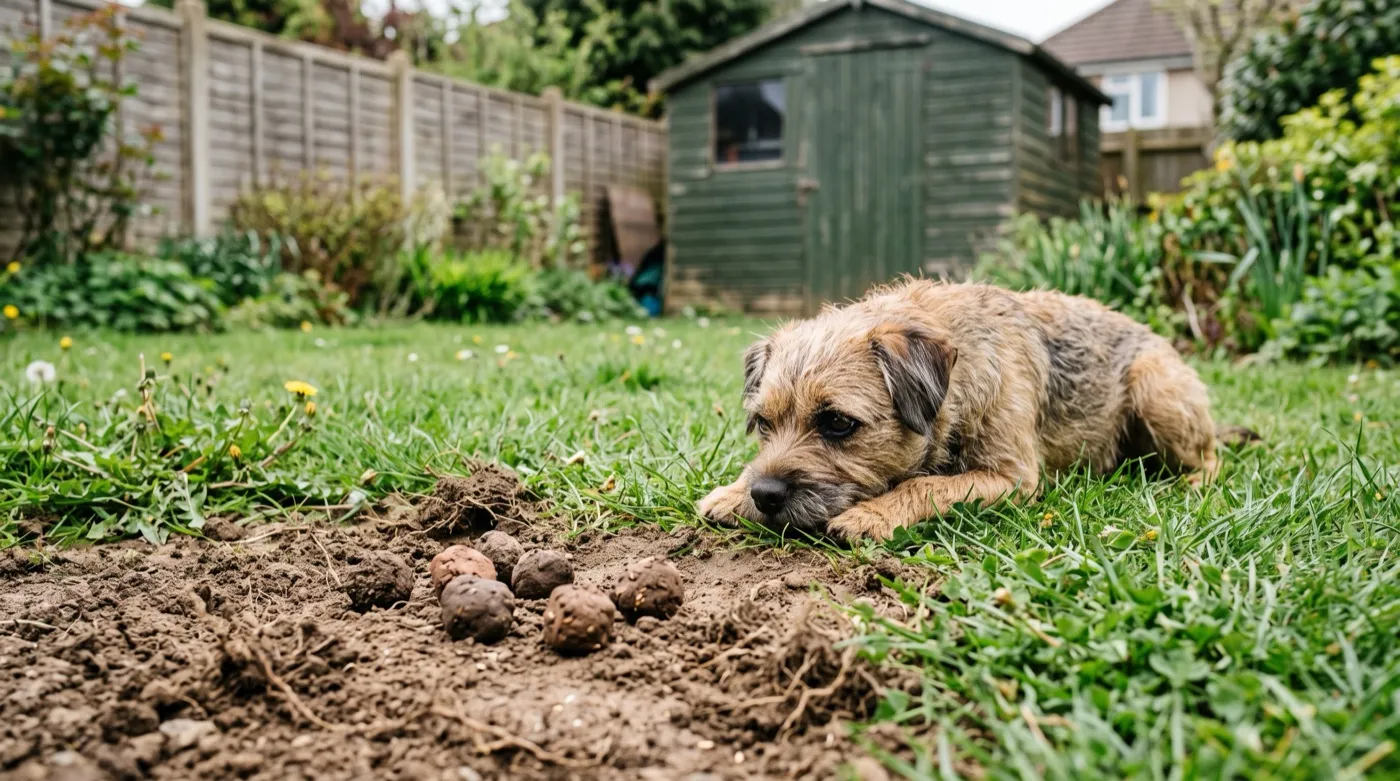 Bare soil in your own garden is the right target. It is also where the dog will lie down, so fence a bombed patch for a fortnight.
Throwing, storing and what happens next
Getting the bomb made is most of the job. The rest is timing.
Throw onto bare soil, not grass. Grass roots hold the water and nitrogen and our bombs thrown into an established lawn gave under 4% emergence. Scuff the surface with a boot first if you can.
Throw from about 3m so the bomb sits on the surface without burying itself. Depth is not the aim. Contact is.
Timing: mid-April to May, or early September. Our July batch gave 6%, because the clay never stayed wet long enough to break down. Autumn throws performed best of all in year two: the plants overwintered as rosettes and flowered about three weeks earlier and noticeably taller. The seed sowing calendar sets out the same windows for conventional sowing.
Storage: a paper bag somewhere cool and dry, up to six months. Never a sealed plastic box. We stored 40 bombs in a sandwich box and 61% grew mould within eight weeks. Paper breathes, plastic does not.
What to expect: the bomb sits there doing nothing until sustained rain, which in a British spring means one to three weeks. Then the clay softens, the compost swells, and seedlings come through the sides of the ball rather than the top. First flowers arrive about 10 to 12 weeks after germination, so an early May throw flowers from mid-July.
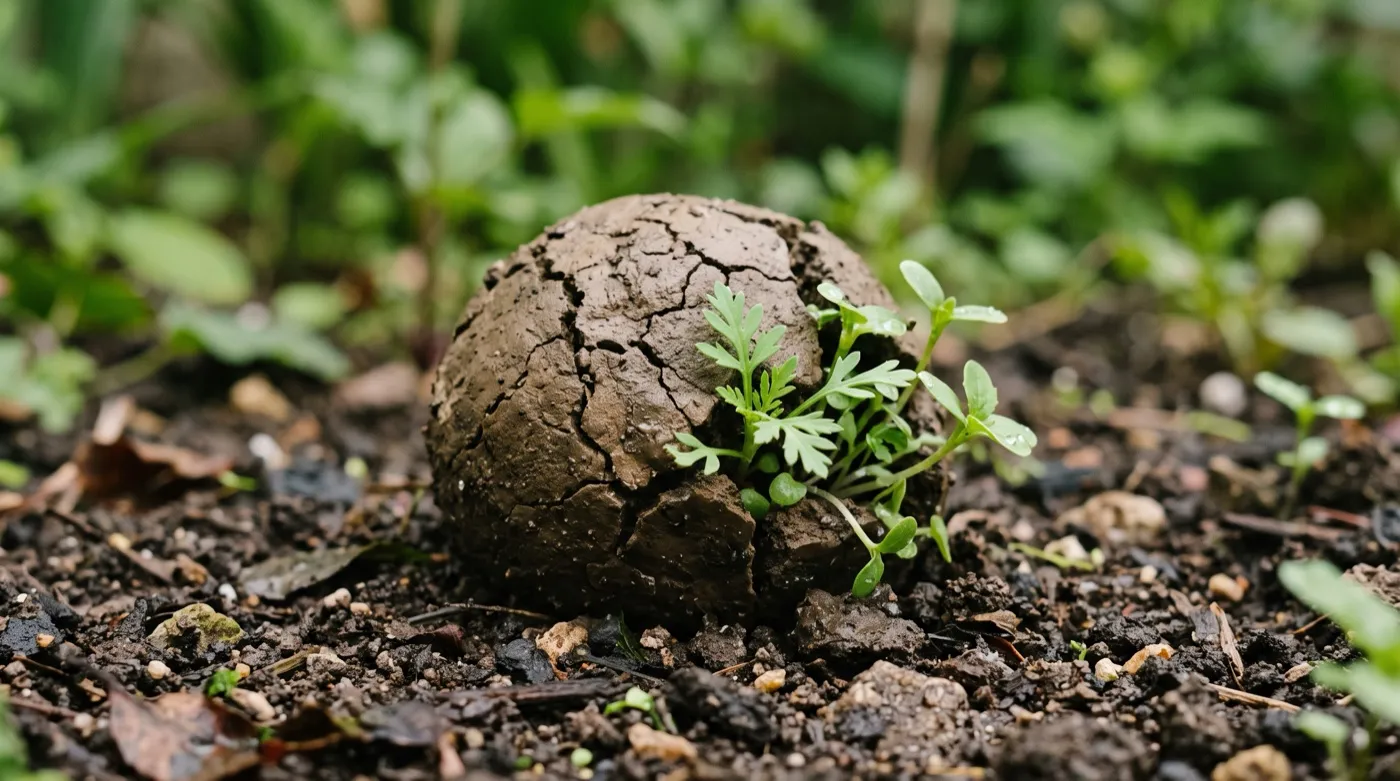 Six weeks after throwing. Seedlings come through the sides of the softened ball, not the top.
Seed bomb calendar for UK gardens
Timings are for the Midlands. Add roughly two weeks in Scotland and the north.
| Month | What to do |
|---|---|
| January | Order UK-provenance cornfield annual seed. Buy powdered clay while craft shops are quiet. |
| February | Good indoor making month. Central heating gives a steady 18-20C for drying. Bag and store in paper. |
| March | Make a batch. Scuff and clear the target patch of bare soil. Still too cold to throw. |
| April | Throw from mid-month once soil holds above 10C. This is the main spring window. |
| May | Best throwing month. Rain is reliable and soil is warm. Water thrown bombs if a dry fortnight follows. |
| June | Stop throwing. Germination from May throws should be visible by now, coming through the sides of the ball. |
| July | Do not throw: our July batch gave 6%. First flowers on April and May throws from mid-month. |
| August | Peak flowering. Note which species came through. Leave a few poppies to set seed for next year. |
| September | The second and better throwing window. Autumn throws flower earlier and taller the following summer. |
| October | Last throwing date is roughly mid-month. Include yellow rattle now: it needs winter cold. |
| November | Collect your own poppy and cornflower seed from summer’s plants for next year’s batch. |
| December | A wet-weather making session. Bombs made now are dry and bagged well before April. |
Common seed bomb mistakes
- Too much clay. Clay is a binder, not a filler. Past about a third of the mix the ball fires hard and never breaks down. Our 3:5:1 batch left 22 of 40 bombs still intact the following August.
- Drying them in the sun. Clay shrinks as it dries, and fast drying tears the ball apart. Our windowsill batch cracked at 37% against 4% on a hall floor. Cool and slow.
- Using a meadow mix. Perennial meadow seed gave 9% emergence against 44% for cornfield annuals. Seed bombs are an annual technique. A meadow needs poor soil and two years.
- Rolling them too big. A 35mm ball packs 90 seeds into one 4cm cluster, and they strangle each other. Emergence dropped to 26%. Stick to 20mm and about 12g wet.
- Storing them in plastic. Sealed containers grew mould in 61% of ours within eight weeks. A paper bag in a cool cupboard keeps them for six months.
- Throwing them at land you do not own. It is trespass, and on a verge or hedge bank it is real ecological harm. Your own bare soil, or ask first. There is no third option.
Get the seed bombs made this weekend
Seed bombs are one of the few gardening crafts where the finished object genuinely works. Ours turned a bare, pigeon-picked strip of clay into poppies and cornflowers for about 11p a bomb, and the making cost an afternoon and a very dirty kitchen table.
The whole thing comes down to four numbers. Ratio 5:3:1. Size 20mm. Drying 24 to 48 hours at 18-20C, out of the sun. Seed: cornfield annuals, not meadow mix. Get those right and you should see roughly 44% of your seed come up, which is more than three times what the same seed does thrown loose. Get the clay wrong or the drying wrong and you will make 40 small terracotta pebbles. For more projects like this, browse our full how-to section.
Now the seed bombs are drying, read our guide to growing sunflowers with children for the next project, since sunflower seed is far too big for a bomb and needs a completely different approach.
Frequently asked questions
What is the correct ratio for seed bombs?
Five parts compost, three parts clay, one part seed, measured by volume. Add water slowly until the mix holds together like stiff biscuit dough. Our 5:3:1 batch gave 44% emergence against 19% for a clay-heavy 3:5:1 mix, which set too hard to break down. Measure with any cup or yoghurt pot. Precision matters less than keeping clay below about a third of the total.
How long do seed bombs take to dry?
24 to 48 hours indoors at 18-20C on cardboard or newspaper. An unheated shed at 12C takes 3 to 5 days. Never dry them on a sunny windowsill: 37% of ours cracked, because clay shrinks as it dries and fast drying tears the ball apart. They are ready when they feel light, sound hard when tapped, and no longer dent under a thumbnail.
Can you make seed bombs without clay?
Yes, using plain flour, but they are noticeably weaker. Substitute 3 parts flour for the 3 parts clay. Our flour bombs held together well enough to throw but 23% broke on landing, and they go mouldy in storage within about a month. Clay is what makes a bomb survive a pocket, a throw and a fortnight of waiting for rain.
What seeds are best for seed bombs in the UK?
Is it illegal to throw seed bombs in the UK?
Throwing them on land you do not own is trespass, and possibly criminal damage. Trespass is a civil matter and rarely pursued, but it is still someone else’s land. Section 14 of the Wildlife and Countryside Act 1981 also makes it an offence to plant certain non-native species in the wild. Throw them in your own garden, or ask permission first.
When should you throw seed bombs?
How long do seed bombs keep?
About six months in a paper bag somewhere cool and dry. Never store them sealed in plastic: 61% of ours grew mould within eight weeks in a sandwich box. Seed viability drops with age anyway, so make them in a batch you will actually throw that season. A shoebox in an unheated hall cupboard is close to ideal.
Our team produces practical UK gardening guidance from source research, contributor records and established horticultural practice. Editorial standards are overseen by Matt W.