Key takeaways
- Sow French beans, courgettes, beetroot and salad leaves outdoors once soil holds above 12C
- Deadhead roses, sweet peas and bedding twice a week to extend flowering by 4 to 6 weeks
- Water containers daily and borders deeply once a week, around 10 litres per square metre
- Feed tomatoes weekly with high-potash feed once the first truss has set
- Net strawberries before they colour, as blackbirds strip an unprotected row in two days
- Pinch out tomato sideshoots weekly and check for aphids and slugs after warm, wet nights
June is the month the garden finally rewards the spring graft. Borders fill out, the first roses open, and the vegetable plot starts to crop in earnest. The longest day falls on the 21st, so plants have light to spare and growth is at its fastest of the whole year. That speed cuts both ways. Miss a week of watering or deadheading and the garden looks tired in days.
This checklist runs through every job worth doing in June, ordered by what matters most. Water and feeding come first because June can swing from a wet fortnight to a heatwave with little warning. After that come deadheading, the kitchen garden, pests, lawns and containers. Work through it task by task and the garden will keep performing right into August.
What should top the June to-do list?
Watering, deadheading and feeding are the three jobs that decide how good your garden looks in July. Everything else is useful, but these three are the difference between a border that flowers for six weeks and one that fades in two. June growth is fast, so small lapses show quickly.
The table below sets out the month at a glance. It covers the main areas of the garden and the single most important action in each through June. Use it as a quick weekly check rather than a one-off list.
| Garden area | June priority | How often | Watch out for |
|---|---|---|---|
| Borders | Deep watering and deadheading | Water weekly, deadhead twice a week | Drought stress, seedheads forming |
| Containers | Watering and liquid feed | Water daily, feed every 7-10 days | Pots drying out by midday |
| Vegetable plot | Sowing and pinching out | Sow in gaps, pinch tomatoes weekly | Bolting in heat, slug damage |
| Soft fruit | Netting and watering | Net before colouring, water weekly | Birds, drying out at fruiting |
| Lawn | Mowing | Weekly, raise blades in drought | Scalping in dry spells |
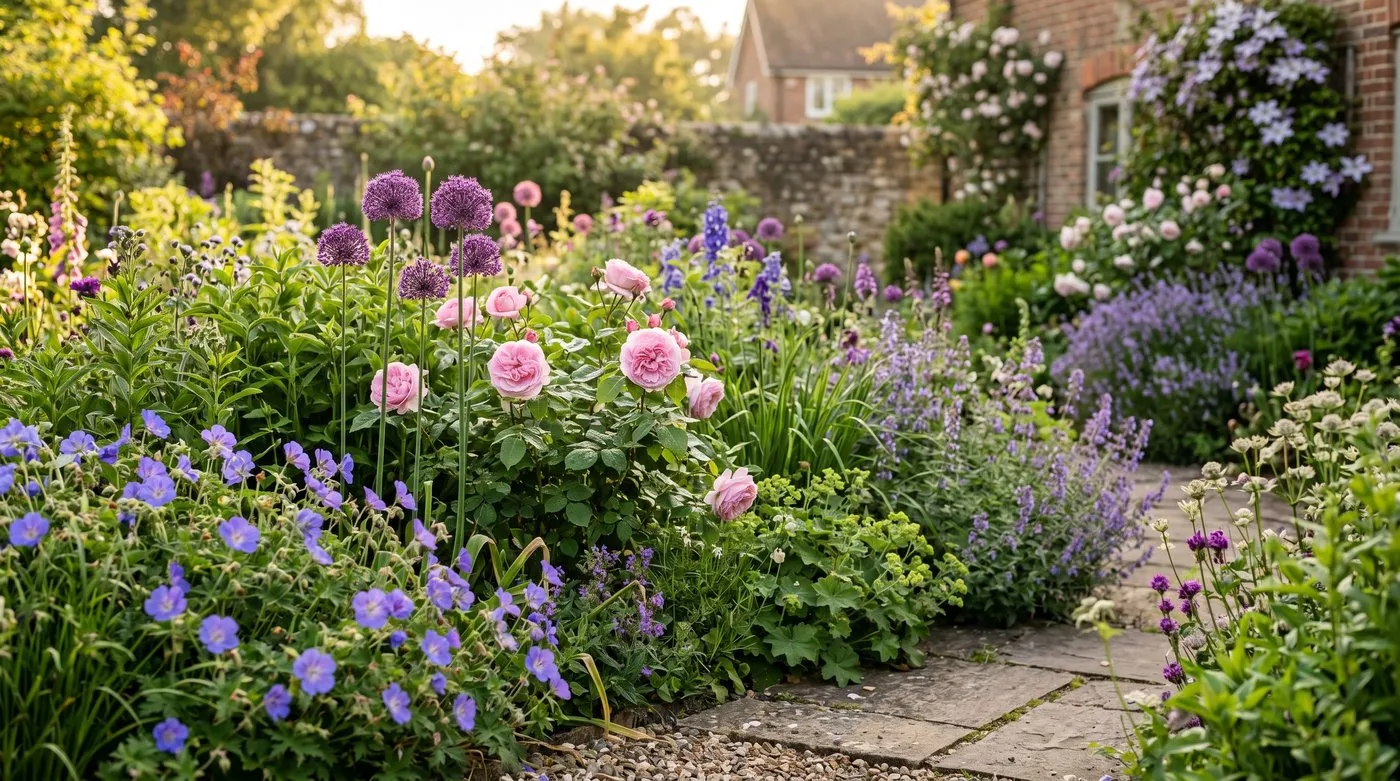 A suburban plot near Leeds in mid-June. Borders are at their fullest and the lawn still holds colour before the July dry spell.
Before you start, walk the whole garden once with a notebook. Five minutes spotting which pots are dry, which roses need deadheading and where slugs have been overnight saves a lot of doubling back. For a fuller picture of the season ahead, our guide to summer gardening jobs sets June in the context of the months either side.
What can you sow and plant in June?
Sow French and runner beans, courgettes, beetroot, carrots, chard and salad leaves straight into the ground now. Tender crops raised under cover, like tomatoes, cucumbers and squash, can be planted out once nights stay above 10C. For ornamentals, sow biennials such as foxgloves and wallflowers for next year, and plant out dahlias and summer bedding for late colour. Our full guide to what to plant in June lists every crop and flower worth starting this month.
| Sow or plant in June | Method | Time to crop or flower | Note |
|---|---|---|---|
| French beans | Direct, 5cm deep | 8-10 weeks to pick | Sow a second batch for autumn |
| Courgettes | Direct or plant out | 7-8 weeks | One plant feeds a family |
| Beetroot | Direct, thin to 10cm | 9-12 weeks | Sow little and often |
| Salad leaves | Direct, shallow rows | 4-6 weeks | Sow every 2 weeks |
| Carrots | Direct, fine seed | 12-16 weeks | Cover against carrot fly |
| Dahlias | Plant out tubers | Flowers from July | Stake tall types now |
Gardener’s tip: Sow salad leaves in a fresh short row every fortnight from now until late July. A single sowing bolts in a week of hot weather, but a rolling supply gives you pickable leaves right through summer with no gluts.
Keep a few module trays going on the windowsill or in a cold frame too. Spare plants fill the gaps left when early crops finish, and they are far cheaper than buying replacements from a garden centre in August.
Keeping flowers coming through summer
Go round roses, sweet peas, cosmos, cornflowers, pansies and most bedding twice a week. Snip just above the first healthy leaf below the dead flower. Sweet peas in particular must be picked or deadheaded every few days, or they set pods and stop flowering within a fortnight. Our step-by-step guide on how to deadhead flowers covers the cut point for each plant type.
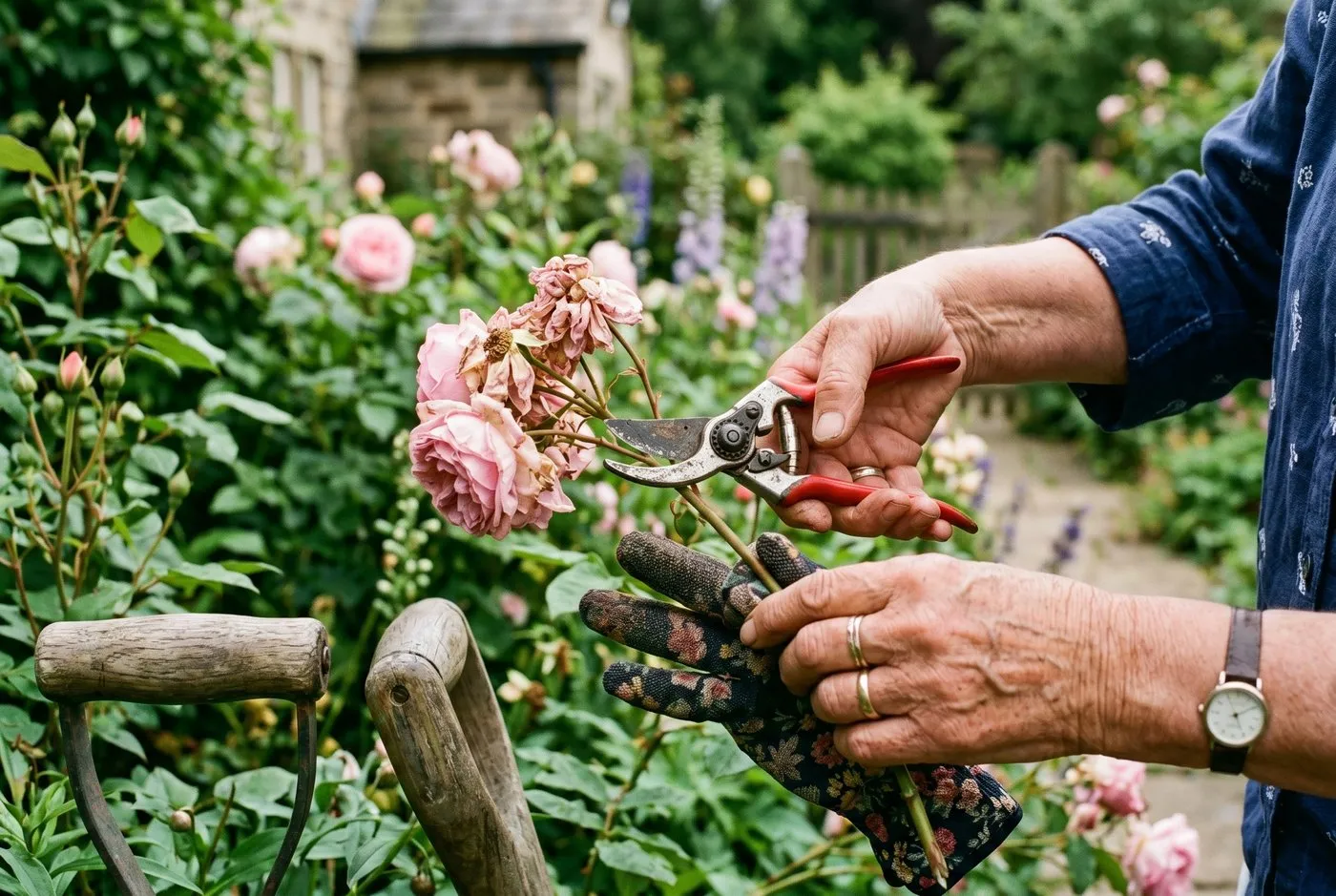 Deadheading a repeat-flowering rose in a valley garden near Brecon. Cutting back to the first five-leaflet leaf encourages a strong second flush.
Early-flowering shrubs need attention now too. Once philadelphus, weigela and early deutzia have finished, cut back the flowered stems to keep them shapely and flowering well next year. Our list of shrubs to prune in summer sets out exactly which ones to tackle in June and which to leave until later.
Chelsea-chop survivors like sedum and helenium can have any leggy stems pinched back early in the month for sturdier, later flowers. It is not too late if you missed late May.
How much water does the June garden need?
Containers need daily watering in June, while borders want a deep soak once a week. A light daily sprinkle on borders does more harm than good. It wets only the top centimetre and draws roots upwards where they dry out fastest. A weekly soak of around 10 litres per square metre pushes roots down and builds drought resistance.
When a heatwave hits, the rules change. Prioritise pots, new plantings and anything fruiting, and let an established lawn go brown if you must. Our guide to hot-weather watering covers how to keep plants alive through a drought without wasting water. A 100-litre water butt, refilled by an overnight rain shower, covers most of a small garden’s needs for several days.
Gardener’s tip: Sink a 15cm plant pot into the soil beside thirsty plants like courgettes and runner beans. Fill the pot when you water and it delivers the water straight to the roots, 30cm down, instead of running off the dry surface.
Feeding matters as much as water now. Feed hanging baskets and patio pots every 7 to 10 days with a balanced liquid feed. The compost in a basket holds only a few weeks of nutrients, so without feeding the display collapses by July.
Pests to stay ahead of in early summer
Slugs and aphids are the two pests that do most damage in a UK June. Both build up fast after the warm, wet nights that early summer brings. A single mild damp week can see a slug population double, and aphid colonies can treble in days on soft new growth.
Slugs go for hostas, dahlias, young beans and any soft seedling. Check after dark with a torch, or lay a plank and clear the slugs sheltering under it each morning. Wool pellets, copper tape and nematodes all help around vulnerable plants. Dahlias are a particular target as they push up, so our guide on how to protect dahlias from slugs is worth reading before the new shoots get stripped.
 A border garden in the Scottish Borders with dahlias ringed by wool pellets. The damp climate here makes slug control a weekly June job.
Aphids cluster on rose buds, broad bean tips and new shoots. Squash small colonies by hand or blast them off with a jet of water. A healthy garden usually balances out once ladybirds, lacewings and hoverflies move in, so reach for sprays only as a last resort. Pinch out the soft tips of broad beans once in flower to remove the part blackfly love most. The RHS keeps a useful month-by-month rundown in its June gardening advice, worth a look alongside this checklist.
Keep an eye out for lily beetle, vine weevil in pots, and the first signs of box blight in damp spells. Spotting trouble early in June saves a much bigger job in July.
Jobs in the kitchen garden
Tomatoes and strawberries need the most attention on the June vegetable plot. Both are racing into growth now, and a few small weekly jobs make the difference between a heavy crop and a disappointing one. Tomatoes in particular reward consistency.
On cordon tomatoes, pinch out the sideshoots every week. The sideshoot is the small stem that grows in the joint between the main stem and a leaf. Remove it while under 5cm so the plant puts energy into fruit, not extra foliage. Our guide on how to pinch out tomato sideshoots shows exactly which shoot to take. Start feeding weekly with a high-potash tomato feed once the first truss has set fruit.
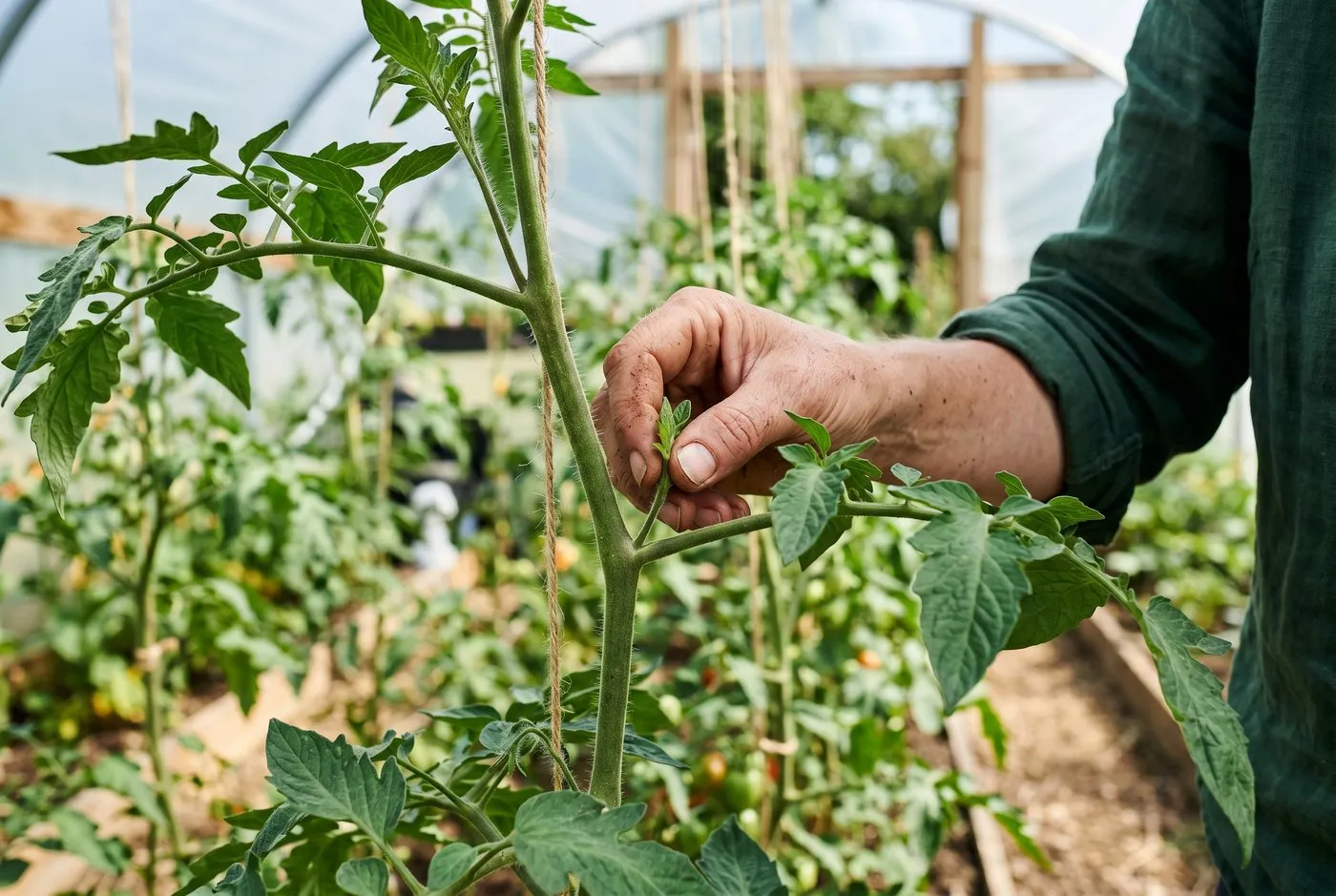 Cordon tomatoes in a small London terrace garden. Pinching out sideshoots weekly keeps each plant to a single productive stem.
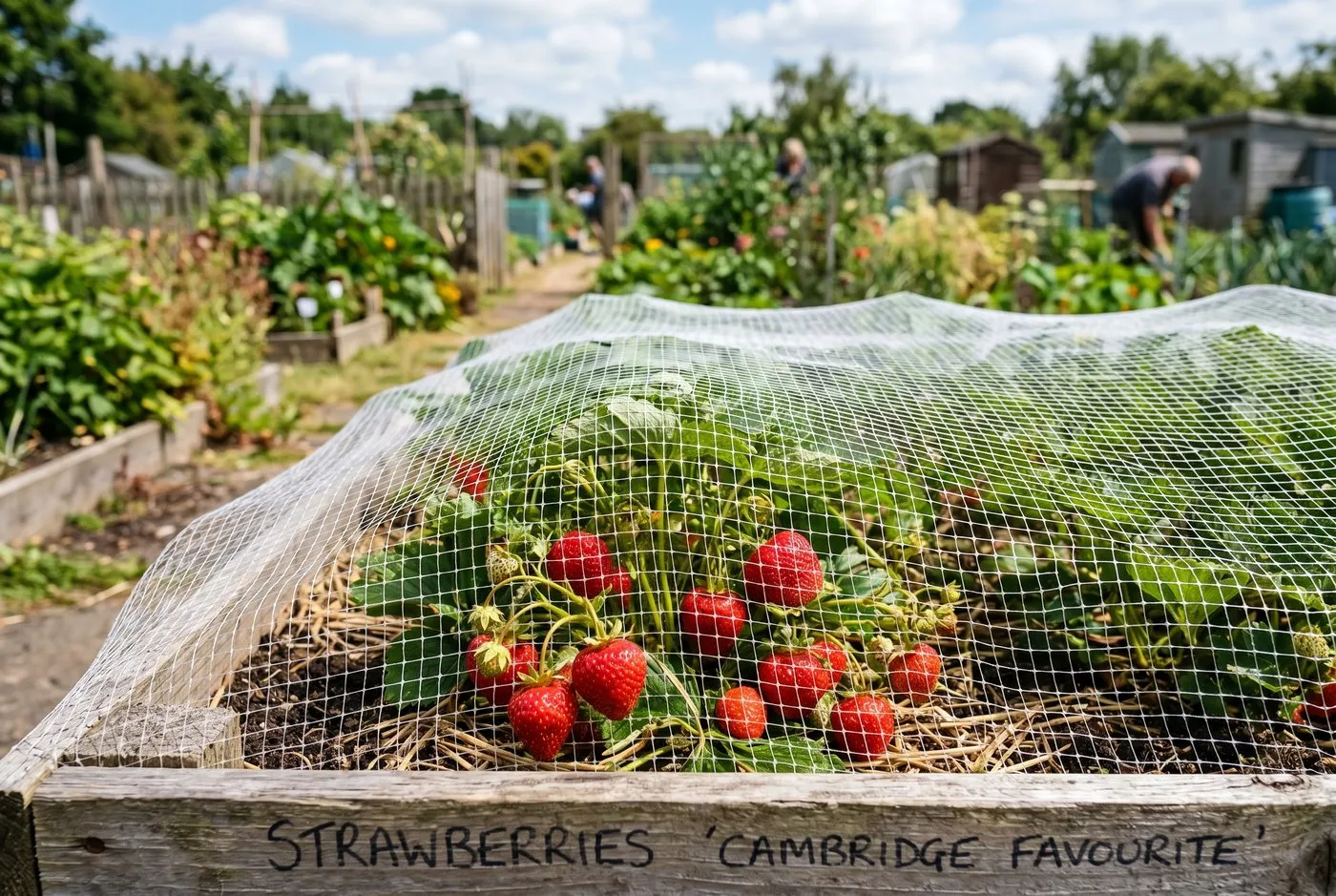
Strawberries start to ripen from mid-June in the south. Net the bed before the fruit colours, because blackbirds and pigeons strip an unprotected row in a day or two. Tuck straw or mats under the trusses to keep fruit clean and off the wet soil. Our full guide to growing strawberries covers feeding, runners and protecting the crop.
| Kitchen garden job | When in June | Why it matters |
|---|---|---|
| Pinch tomato sideshoots | Weekly | Channels energy into fruit |
| Feed tomatoes | Weekly once truss sets | High potash drives fruiting |
| Net strawberries | Before fruit colours | Birds strip a row in 2 days |
| Earth up potatoes | Early June | Stops tubers greening |
| Pick and freeze peas | As they fill | Sweetest straight off the plant |
| Sow successional salad | Every 2 weeks | Avoids gluts and gaps |
Keep harvesting too. Picking peas, broad beans and early salad regularly tells the plant to keep producing. Leave pods to mature and the plant slows right down. Lettuce and rocket need cutting young before the heat sends them to seed.
Lawns and containers in early summer
June lawns grow fast and need mowing at least weekly. Grass is at peak growth now, so a weekly cut keeps it dense and even. In a dry spell, raise the blades to 3cm or higher. Longer grass shades its own roots, holds moisture better, and stays green far longer than a closely shaved lawn.
Leave the clippings on during dry weather as a light mulch, or collect them when growth is lush. Feed the lawn with a summer high-nitrogen feed early in the month if it looks tired, but only when rain is forecast or you can water it in. A dry feed on dry grass scorches it.
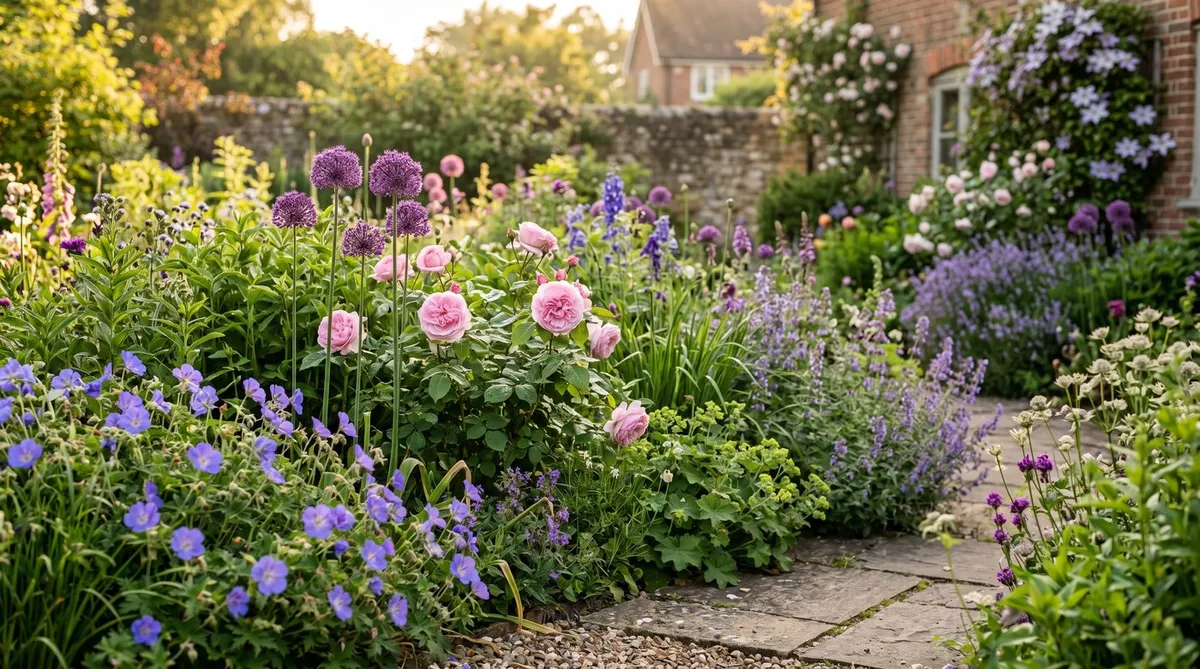
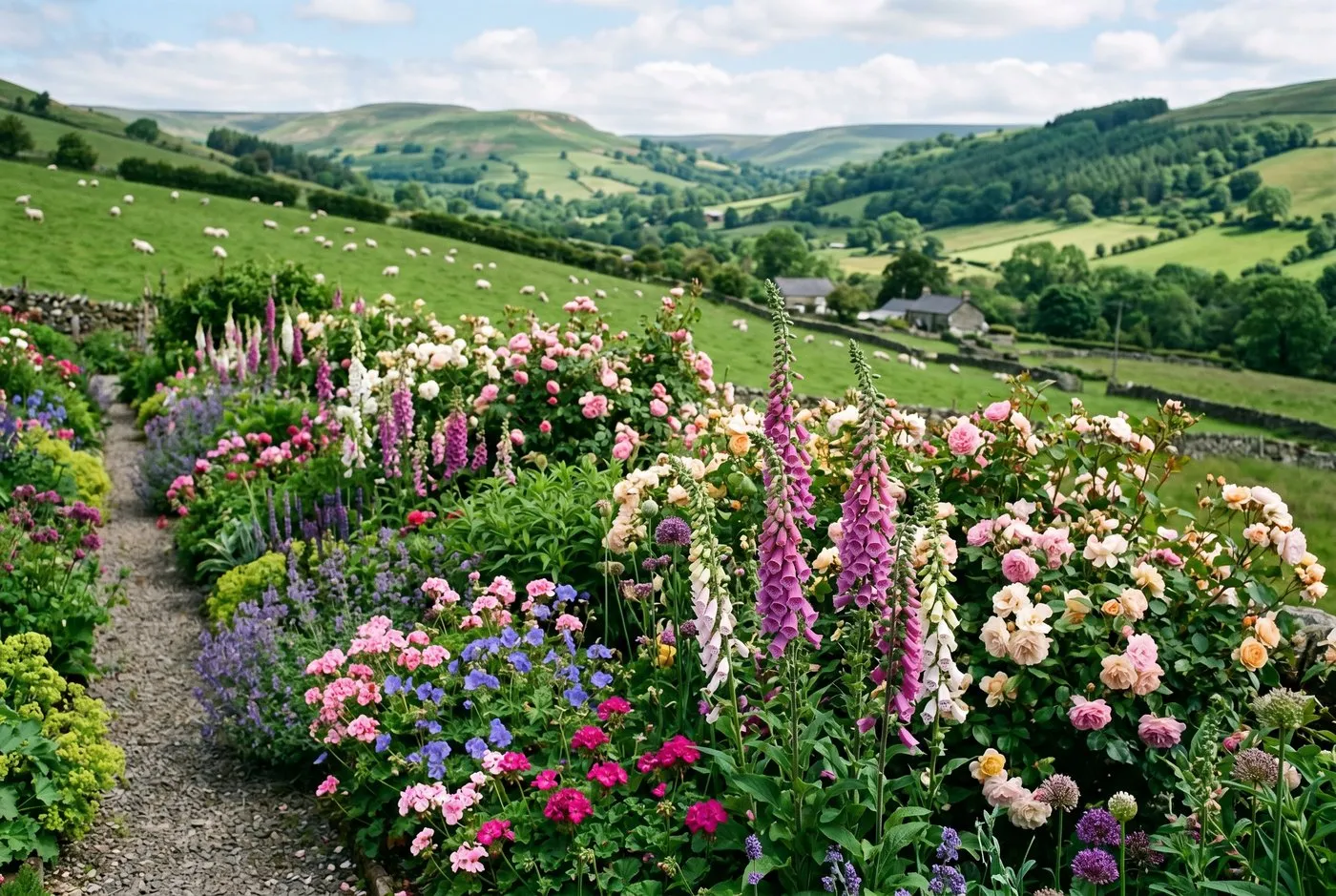 A coastal border near Falmouth at the June peak. Mixed perennials and roses give weeks of colour when deadheaded and watered well.
Containers and hanging baskets are the highest-maintenance part of the June garden. They dry out fast, run out of food quickly, and need both daily water and a feed every week or so. If a basket dries out completely, stand it in a bucket of water for half an hour to rewet the compost properly. Our guide to planting and caring for hanging baskets covers the whole routine through summer.
 Watering a summer basket at a seaside cottage on the Norfolk coast. Baskets in wind and sun can need watering twice on a hot day.
Keep deadheading the baskets and patio pots as you water. A five-minute snip each evening keeps petunias, bacopa and trailing lobelia flowering solidly from June through to the first frosts.
Next step
June flows straight into the busiest stretch of the gardening year, so keep the momentum going. Read our full guide to the summer jobs ahead for every task through July and August, and plan your watering and feeding before the school holidays and the hottest weather arrive.
Our team produces practical UK gardening guidance from source research, contributor records and established horticultural practice. Editorial standards are overseen by Matt W.