Key takeaways
- Clippings are 80-85% water and rot down within 7-14 days in UK summer conditions
- Grasscycling returns up to 25% of a lawn's annual nitrogen need, cutting feed by roughly half
- Thatch is dead roots and stems below the surface, not grass clippings on top of it
- Leave clippings only when grass is dry and you remove under 1cm per cut
- Collect clippings when grass is over 8cm, wet, full of weed seed, or showing disease
Leaving grass clippings on the lawn, a practice called grasscycling, is one of the most useful and most misunderstood lawn habits in the UK. The myth that clippings cause thatch keeps millions of gardeners bagging up free fertiliser every weekend. The truth is the opposite. Clippings are 80-85% water, they rot down within two weeks, and they return up to 25% of the nitrogen your lawn needs across a year. Done correctly, grasscycling cuts your feeding in half and builds healthier soil. Done at the wrong time, it smothers the grass. This guide explains the science, the decision rules, and the results from four seasons of side-by-side testing on heavy clay.
For a sound technical overview of lawn care principles, the RHS guide to lawn maintenance is a reliable reference. This article goes further into the decision of when to leave clippings and when to collect them, with measured data you will not find on a generic gardening page.
Why grass clippings do not cause thatch
The clippings-cause-thatch myth has survived for decades, and it is wrong. Thatch is a layer of dead and living organic matter that sits between the green grass and the soil surface. It is built mostly from dead roots, stems, crowns and the tough creeping runners called stolons and rhizomes. These parts are high in lignin, a woody compound that resists rotting.
Grass clippings contain almost no lignin. They are soft leaf blades, 80-85% water, and they decompose far faster than the woody material that forms thatch. A clipping that lands on the lawn loses most of its water within 48 hours and shrinks to a fraction of its size. Soil bacteria and earthworms finish the job within a fortnight.
Thatch becomes a problem when it passes about 1cm deep. Above that depth it blocks water and air from reaching the roots. The real causes of excess thatch are over-feeding with high-nitrogen fertiliser, compacted soil that kills the worms that would eat it, and a lack of aeration. None of these is the clippings. If your lawn has a thatch problem, learn how to scarify and aerate the lawn rather than blaming the grass you cut.
The science of clipping decomposition
Understanding the timeline helps you judge when leaving clippings is safe. Decomposition runs through clear stages, each tied to moisture and temperature.
In the first stage, days 1 to 2, the fresh clipping loses its water. At 80-85% water content, a blade collapses to a thin brown thread within 48 hours of being cut. This is why a lawn that looks covered in clippings on Saturday looks clean by Tuesday.
In the second stage, days 3 to 7, soil microbes colonise the wilted material. Warm UK summer soil at 15-20C drives fast bacterial activity. The clippings begin releasing their nitrogen back into the surface layer.
In the third stage, days 7 to 14, earthworms drag the softened fragments down into the soil. By two weeks in summer the clippings have largely vanished. In cool spring or autumn weather, with soil below 10C, the same process stretches to three or four weeks. The critical mistake people make is leaving thick wet clumps that cannot dry. A clump never reaches stage one properly, so it rots without oxygen and smothers the grass below.
| Stage | Timing (summer) | What happens | Limiting factor |
|---|---|---|---|
| Water loss | Day 1-2 | Blade wilts, loses 80-85% mass as water | Dry, mild weather |
| Microbial breakdown | Day 3-7 | Bacteria release nitrogen at the surface | Soil 15-20C |
| Worm incorporation | Day 7-14 | Earthworms pull fragments into soil | Active worm population |
| Full breakdown | Day 14+ | Clippings gone, nitrogen available | Slows below 10C |
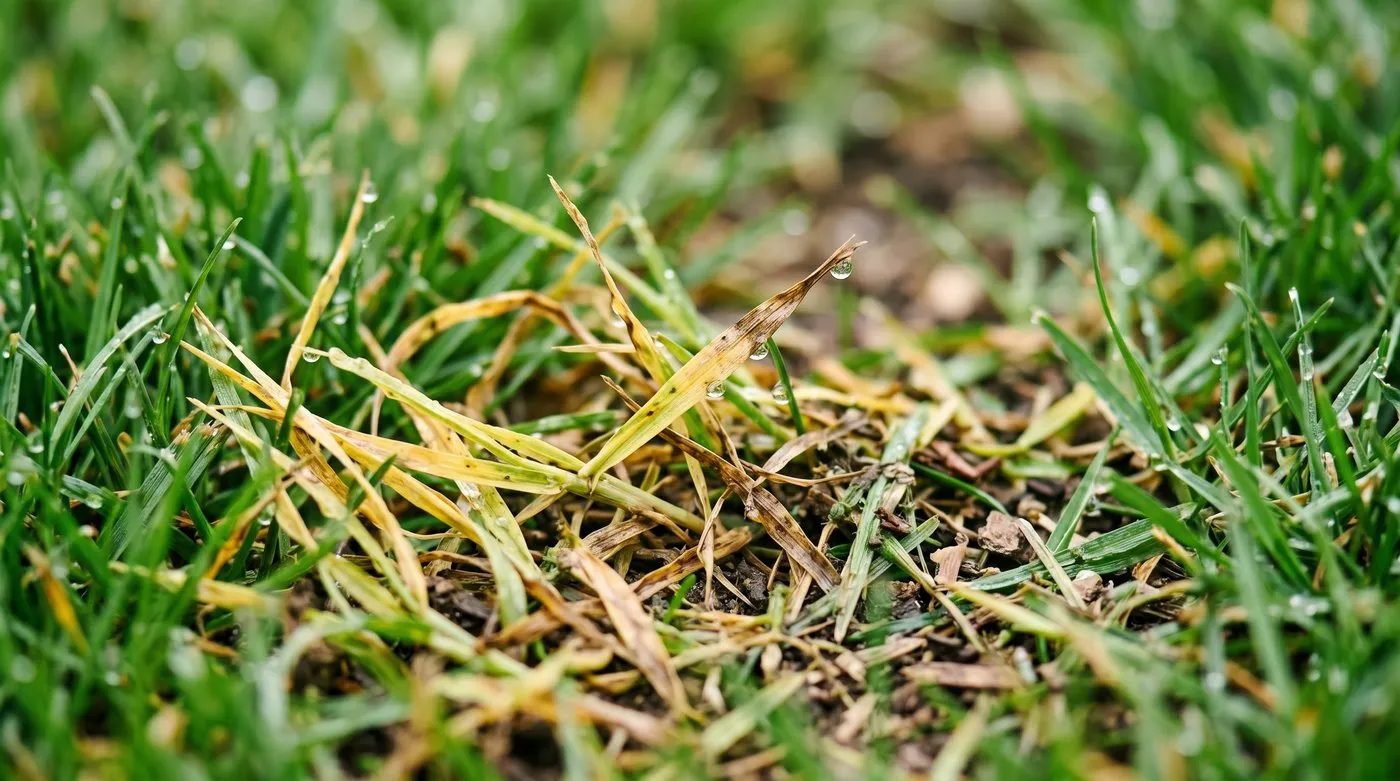 Fine clippings lose most of their water within 48 hours and break down within two weeks in UK summer conditions.
How much nitrogen do clippings actually return
Grass clippings are a genuine source of free fertiliser, and the numbers are worth knowing. Fresh clippings contain roughly 3-4% nitrogen by dry weight, alongside potassium and phosphorus. Returned to the lawn, they supply up to 25% of the nitrogen a typical UK lawn needs across a growing season.
Clippings also return potassium, which strengthens grass against drought and disease, and small amounts of phosphorus for root growth. The nutrients cycle in a closed loop. The grass takes them from the soil, you cut the grass, and the clippings return them. Bagging clippings breaks that loop and forces you to replace the loss from a bag. To understand the wider feeding picture, read our guide on how to feed a lawn.
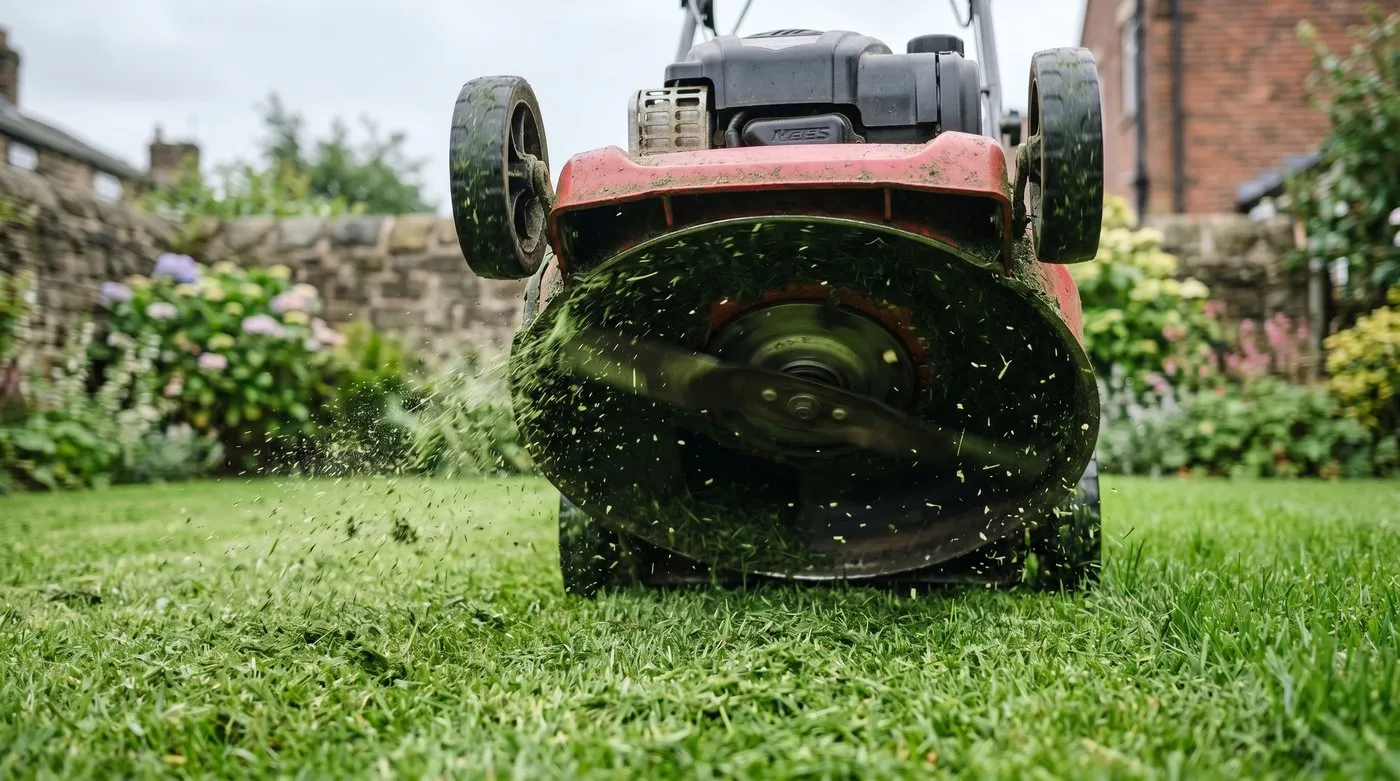 A mulching deck recuts clippings into fine pieces that fall deep into the sward where they rot quickly.
How mulching mowers work
A mulching mower is built to keep clippings on the lawn rather than bag them. The difference is in the deck. A standard rotary mower throws cut grass straight out to the side or back into a collection box. A mulching mower has a sealed or baffled deck and a specially shaped blade that holds the grass under the deck and cuts it several more times before it falls.
Those repeated cuts matter. A clipping chopped into 5mm fragments has far more surface area than a 4cm blade. It dries faster, falls deeper into the sward, and rots quicker. The fine pieces drop right down to the soil surface where worms can reach them, instead of sitting on top of the green canopy.
Many modern rotary mowers come with a mulching plug, a panel that blocks the discharge chute and converts the mower to mulching mode. Petrol, electric and battery mowers all offer mulching versions. A dedicated mulching mower is not essential. You can grasscycle with any rotary mower by removing the box, provided you cut little and often so the clippings stay short. A robot mower is the purest grasscycler of all, since it cuts a tiny amount daily and never collects.
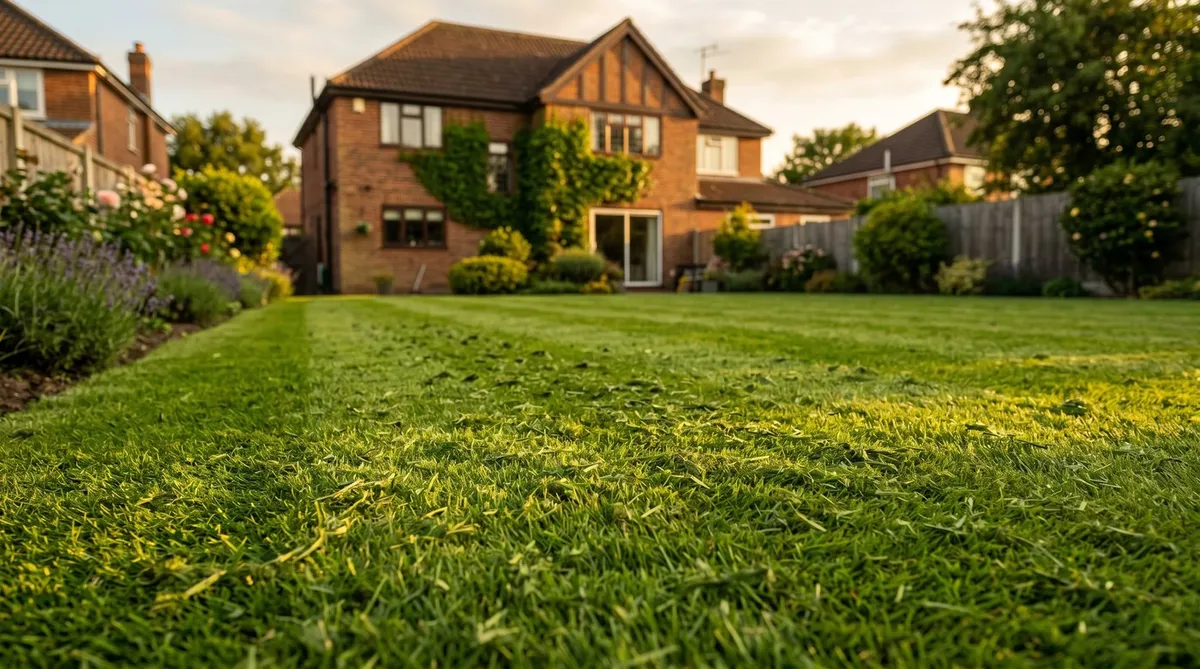
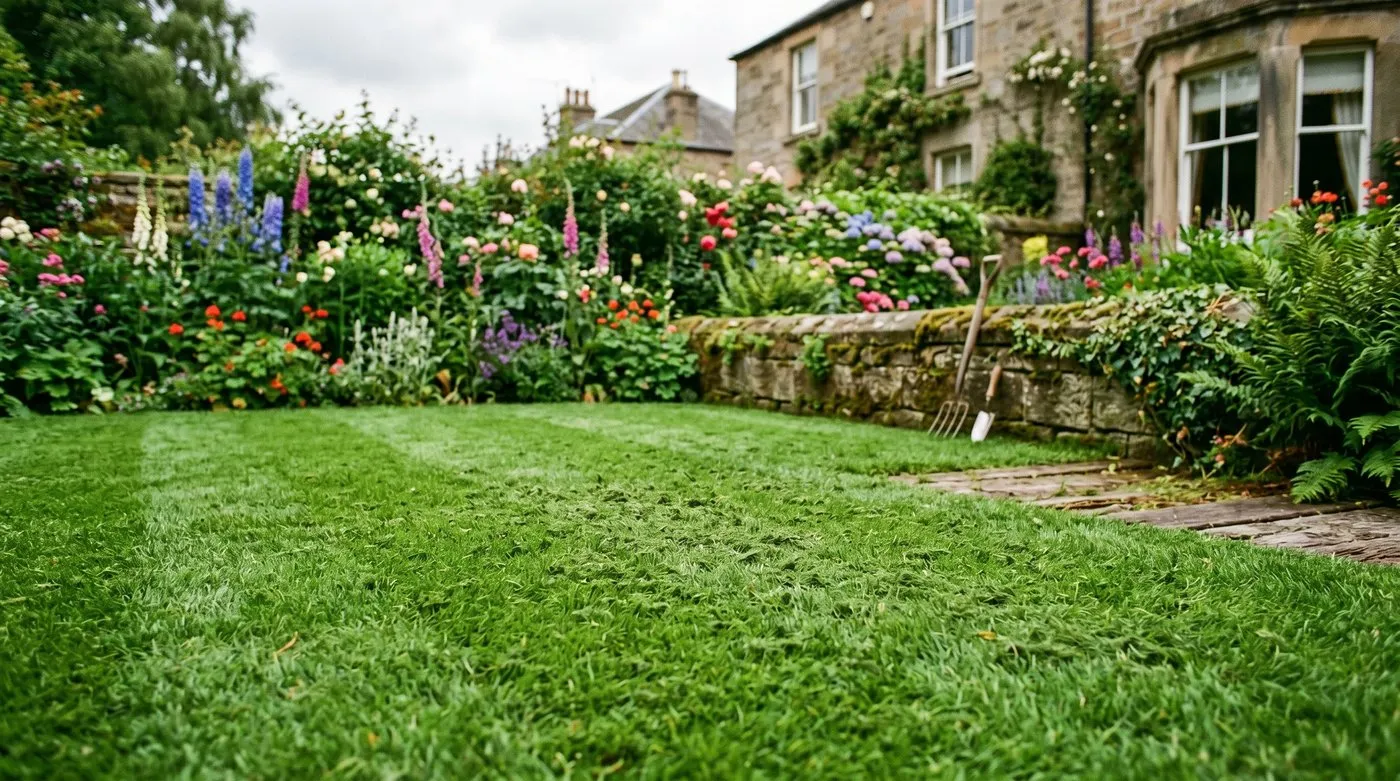 A thick, dark green lawn maintained by grasscycling. Frequent light cuts keep clippings short enough to leave.
When to leave clippings and when to collect
The decision is not all or nothing. It depends on four things: how dry the grass is, how long it is, whether weeds are in seed, and whether disease is present. Get these right and grasscycling is always the better choice. Get them wrong and clippings do harm.
The golden rule is to cut little and often. If you remove no more than 1cm of growth per cut, the clippings are short enough to fall through the sward and disappear. Cut a long, overgrown lawn and you produce long clippings that lie on top in clumps. That is the situation to collect.
| Condition | Leave clippings? | Why | What to do instead |
|---|---|---|---|
| Dry grass, short cut (under 1cm off) | Yes, always | Clippings fall in and rot fast | Grasscycle freely |
| Wet grass after rain | No | Clumps smother the turf | Wait to dry or collect |
| Long grass (over 8cm) | No | Long clippings lie on top | Collect, then cut shorter next time |
| Weeds in seed | No | Spreads seed across lawn | Box off until weeds controlled |
| Lawn disease present | No | Spreads fungal spores | Collect and bin, do not compost |
| First cut after winter | Collect | Long, often damp growth | Box the first cut of spring |
For the right cutting frequency through the year, see our guide on when to mow the lawn. Cutting at the correct height and interval is what makes grasscycling work.
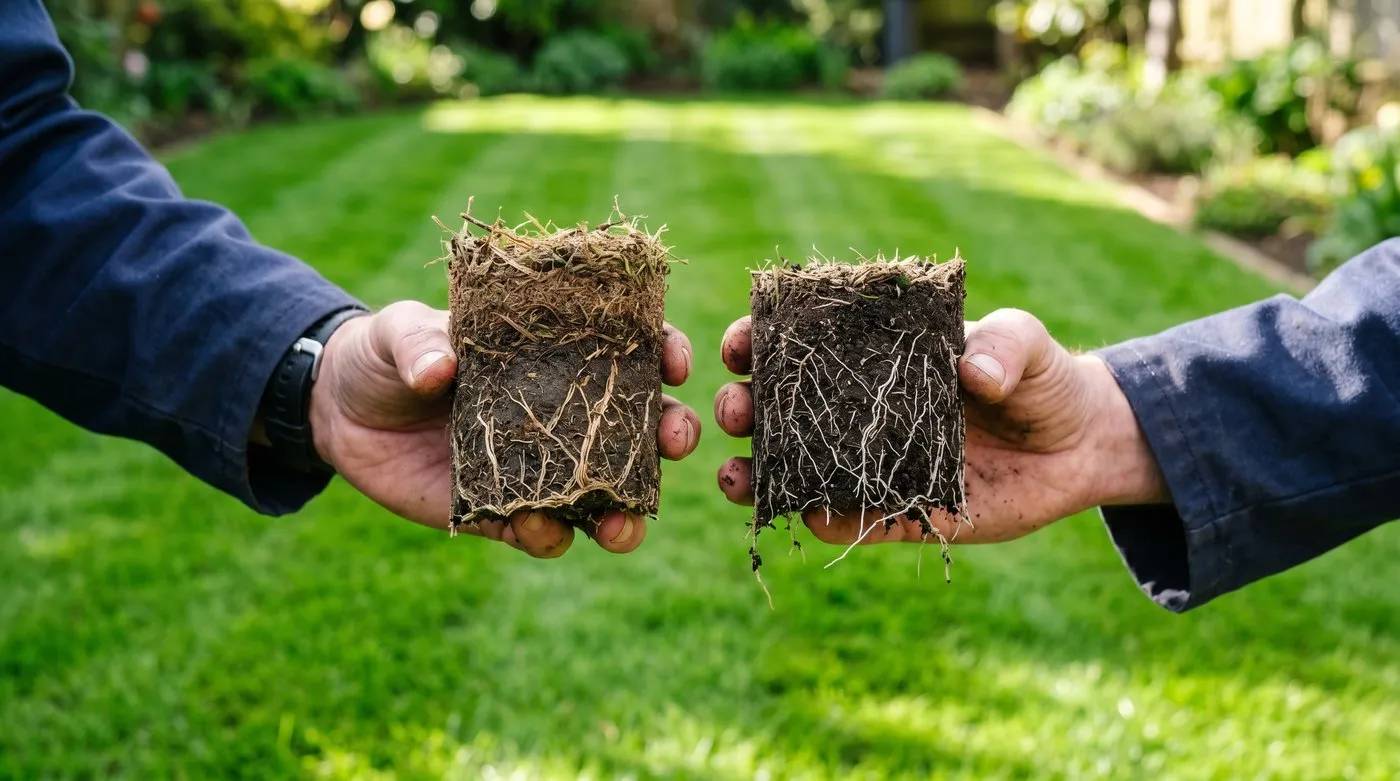 A core sample shows the truth: thatch is the brown spongy layer of dead roots and stems below the green, not clippings on the surface.
The results were clear. The grasscycled strip held a darker green and needed only two feeds a year to maintain it. The boxed strip faded between feeds and needed four feeds a year to match, a 50% reduction in feeding from grasscycling. On thatch, the supposed danger, the grasscycled strip finished the four years at 4mm of thatch against 5mm on the boxed strip. Leaving the clippings did not build thatch. If anything the extra worm activity it fed kept thatch slightly lower.
| Measure | Grasscycled strip | Boxed-off strip |
|---|---|---|
| Feeds needed per year | 2 | 4 |
| Thatch depth after 4 years | 4mm | 5mm |
| Colour score (1-10) | 8 | 6 |
| Watering response in drought | Faster recovery | Slower recovery |
Grasscycling through the UK gardening year
Timing matters because grass growth and weather change month by month. This calendar shows when to grasscycle and when to collect across a typical UK season.
| Month | Approach | Notes |
|---|---|---|
| January | Mow rarely, collect | Only on dry mild days, growth minimal |
| February | Mow rarely, collect | First tidy-up cut, often damp |
| March | Collect first cut | Growth long and often damp after winter |
| April | Grasscycle when dry | Growth speeds up, cut weekly little and often |
| May | Grasscycle | Peak growth, mow twice a week if needed |
| June | Grasscycle | Clippings rot fastest in warm soil |
| July | Grasscycle, raise blade in drought | Leave clippings as a moisture mulch in dry spells |
| August | Grasscycle | Watch for dry patches, do not scalp |
| September | Grasscycle | Last strong growth flush of the year |
| October | Collect if leaf fall heavy | Wet grass and leaves clump together |
| November | Collect final cut | Growth slows, ground often wet |
| December | Mow rarely, collect | Only on dry mild days, never grasscycle wet |
In a dry July, leaving clippings doubles as a light mulch that slows evaporation and shades the soil surface. This is one reason grasscycled lawns recover faster from drought. For the wider picture of summer mowing, read whether you should cut grass in hot weather, and slot grasscycling into your full lawn care calendar.
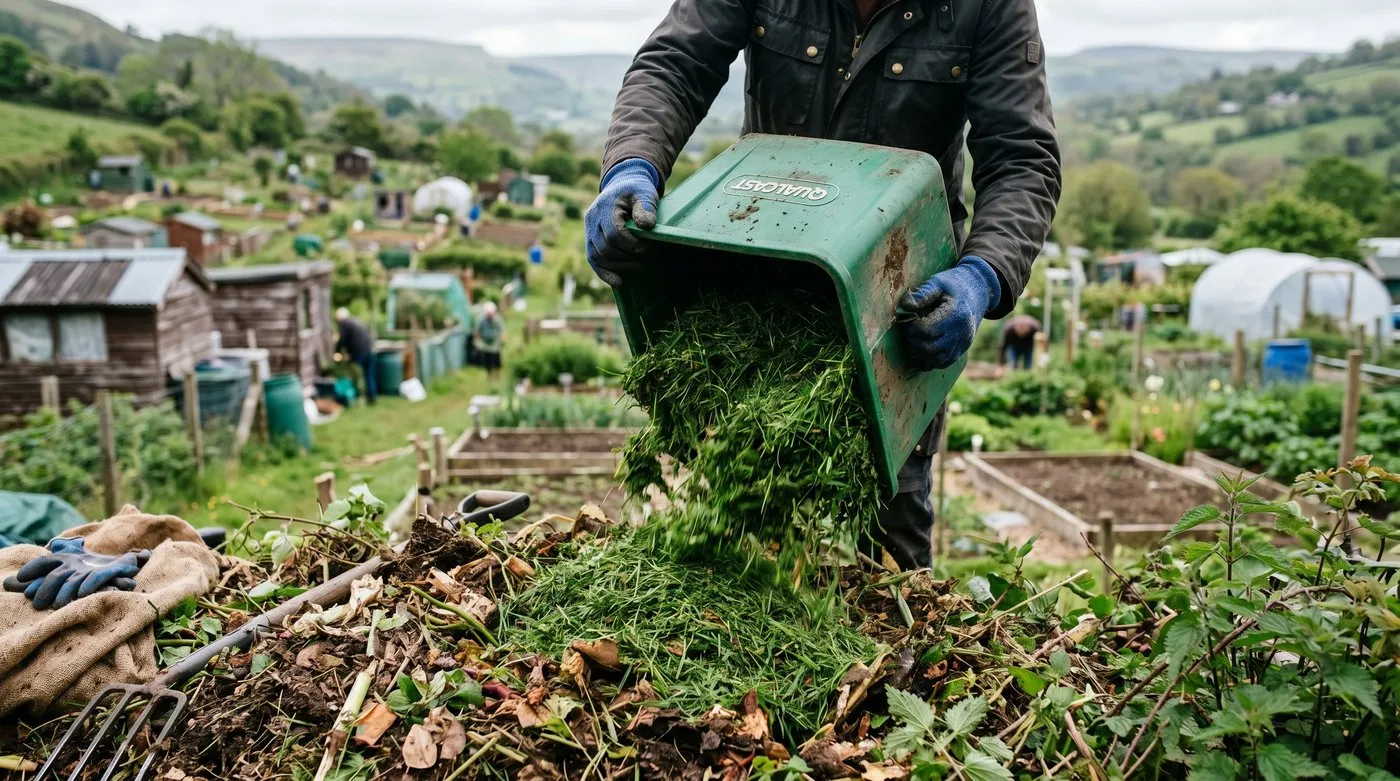 When you do collect, fresh clippings are a fast nitrogen source for the compost heap. Mix with brown material so they do not turn slimy.
Common mistakes when leaving clippings
Most grasscycling failures come down to four avoidable errors. Each one turns a free benefit into a problem.
Mowing wet grass and leaving the clippings. This is the single biggest mistake. Wet clippings stick together in heavy clumps that block light and air. The grass beneath yellows within days and can die. Always wait for the grass to dry, or fit the box if you must cut while it is damp.
Letting the lawn grow too long between cuts. Cut 4cm off an overgrown lawn and you produce long clippings that lie on the surface in rows. They will not fall into the sward. Cut little and often, removing under 1cm each time, so the clippings are short.
Grasscycling a weedy lawn in seed. If dandelions, plantains or annual meadow grass have set seed, mulching scatters that seed across the whole lawn. Box off until the weeds are controlled, then return to grasscycling.
Returning diseased clippings. Lawns with red thread, fusarium or other fungal disease should be boxed and the clippings binned, not composted or left. Leaving infected clippings spreads spores across healthy turf.
Warning: Never leave thick clumps of wet clippings on the lawn. A clump that cannot dry rots without oxygen and smothers the grass beneath it. Rake any visible clumps out and spread them thin, or remove them to the compost heap.
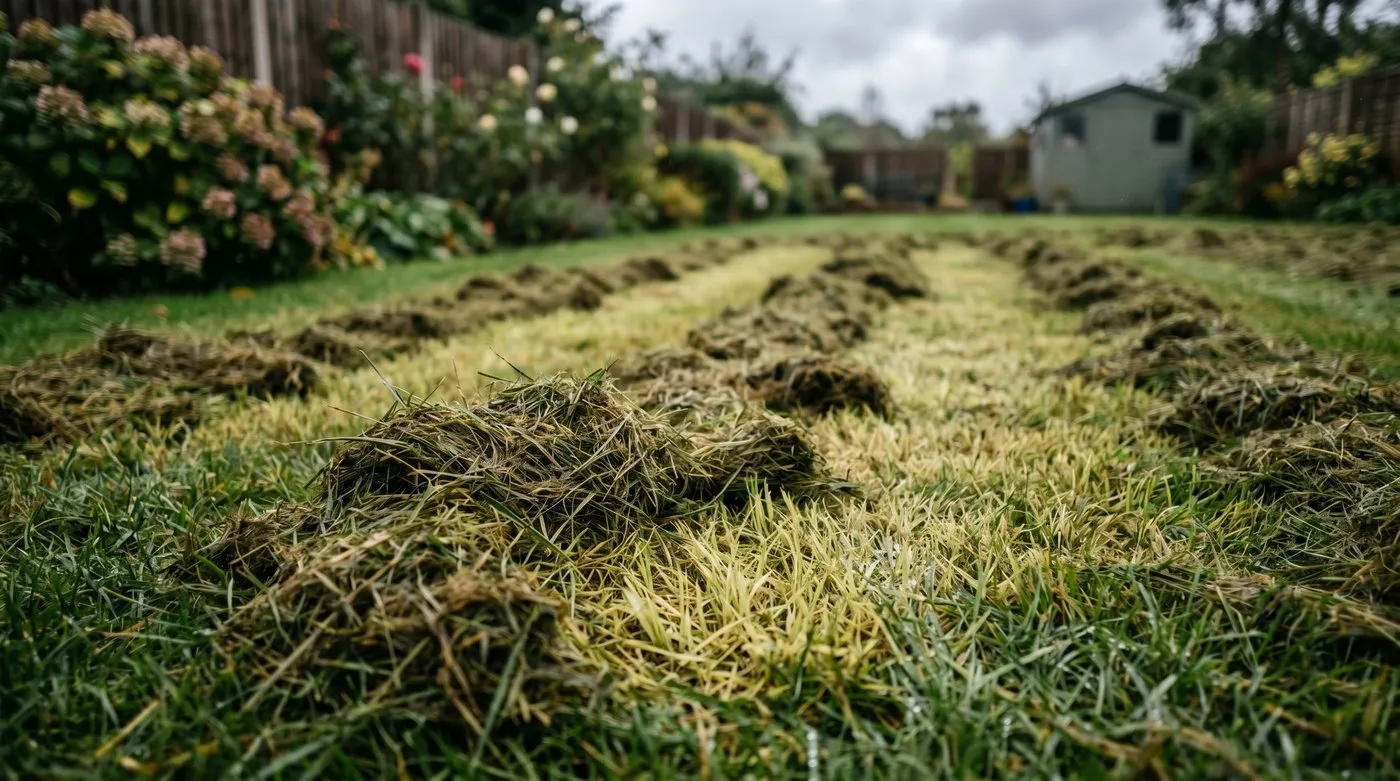 What to avoid: wet, long clippings left in clumps block light and air and kill the grass below within days.
What to do with clippings when you must collect
There will always be weeks when collecting is right: wet spells, the first cut of spring, weedy or diseased turf. The clippings are still valuable.
Fresh grass clippings are a high-nitrogen green material for composting. The mistake is adding them in a thick layer, where they turn into a slimy, smelly mat starved of oxygen. Mix clippings with brown carbon material such as cardboard, dead leaves or shredded prunings at roughly equal volumes. This balances the carbon-to-nitrogen ratio and keeps the heap aerated. Our guide to making compost, cold, fast and hot explains the ratios in detail.
Clippings also work as a mulch around vegetables and shrubs. Spread them no more than 2-3cm thick and let them dry first. Combined with cardboard they make a quick weed-suppressing sheet mulch, as covered in our guide to using cardboard and grass clippings as mulch. Whatever you do, never send clippings to landfill when they can feed the soil instead.
Gardener’s tip: Keep a small pile of cardboard or dry leaves next to the compost bin. Every time you empty the grass box, throw in a matching amount of brown material and turn it. You will get crumbly compost in months instead of a slimy mess.
Grasscycling and lawn moss
A healthy grasscycled lawn resists moss better than a starved one, but grasscycling alone will not cure a moss problem. Moss thrives where grass is weak: in shade, on compacted soil, in waterlogged ground, and where the grass is scalped too short. Returning clippings feeds the grass and helps it compete, but it does not fix drainage or shade.
If moss has already taken hold, deal with the cause first. Improve drainage, raise the mowing height, and reduce shade where you can. Then treat the moss directly and rake it out. Our guide on how to get rid of moss in the lawn covers the full method. Once the grass is vigorous again, grasscycling helps keep it that way by maintaining a steady supply of nitrogen.
Frequently asked questions about leaving grass clippings on lawns
Do grass clippings cause thatch on a lawn?
No, grass clippings do not cause thatch. Thatch is a layer of dead roots, stems and runners that builds up below the surface. Clippings are mostly water and rot down within two weeks, returning nitrogen to the soil. Excess thatch comes from over-feeding, heavy roller use and poor aeration, not from leaving clippings.
How much fertiliser do grass clippings save?
How long do grass clippings take to break down?
Fine clippings break down within 7-14 days in UK summer conditions. They are 80-85% water, so they wilt and shrink fast once dropped. In cool or wet weather decomposition slows to three weeks. Soil bacteria and worms pull the rotting material down within a month.
When should you collect grass clippings instead of leaving them?
Collect clippings when grass is wet, over 8cm long, in seed, or diseased. Wet long clippings clump and smother the turf below. Clippings carrying weed seed or fungal disease spread the problem across the lawn. In those cases box them off and compost or bin them.
Will leaving clippings on the lawn spread weeds?
Only if the clippings carry mature weed seed heads. Clippings from regular mowing before weeds set seed carry no viable seed. Mow weedy areas with the box on until the weeds are controlled. Once the lawn is clean you can return to grasscycling safely.
Can you leave clippings on a wet lawn?
No, never leave clippings on a wet lawn. Wet clippings stick together in heavy clumps that block light and air. Within a few days the grass beneath yellows and dies. Wait until the grass dries, or collect the clippings and compost them instead.
Do you need a mulching mower to leave clippings?
No, but a mulching mower does the job far better. A mulching deck recuts clippings into fine pieces that fall deep into the sward. A standard rotary mower with the box removed drops coarser clippings that sit on top. Cut little and often either way.
Does grasscycling work on a clay lawn?
Our team produces practical UK gardening guidance from source research, contributor records and established horticultural practice. Editorial standards are overseen by Matt W.