Key takeaways
- Raise the cutting height to 5-6cm in hot, dry weather to shade roots
- Mow in early morning or evening, never in the midday heat
- Cut less often: every 10-14 days instead of weekly in a heatwave
- Never scalp the lawn or remove more than one-third of the blade at once
- Do not mow a lawn that has gone brown and dormant, leave it to recover
- Leave clippings on the surface as a mulch to lock in moisture
In a heatwave the lawn becomes the most stressed part of the garden, and how you mow decides whether it stays green or burns out. The short answer is that you can cut grass in hot weather, but you change the way you do it. Raise the blade, cut less often, mow when it is cool, and leave the clippings where they fall. Get those four things right and a lawn sails through a UK summer. Get them wrong and you scalp the turf into bare, straw-coloured patches that take months to recover.
This guide explains the science of heat stress in turf, the exact cutting heights to use, and the one situation where you should not mow at all.
Can you mow the lawn in a heatwave
Yes, you can mow a healthy, green lawn during hot weather, provided you raise the cutting height and avoid the midday heat. The danger is not mowing itself but cutting too short. Every time you mow you wound thousands of grass blades, and the plant spends energy and moisture sealing those cuts. In cool, damp weather that costs the lawn nothing. In a heatwave, with the soil already dry, hard cutting tips the balance from stressed to dying.
The decision rests on the condition of the grass. A lawn that is still green and growing can be mowed safely on a high setting. A lawn that has turned straw-brown and crisp underfoot has gone dormant to protect itself, and mowing it strips away the shade and moisture it is relying on to survive. Walk the lawn first. If footprints spring back, it is fine to mow. If the grass stays flattened and the colour has gone, leave the mower in the shed.
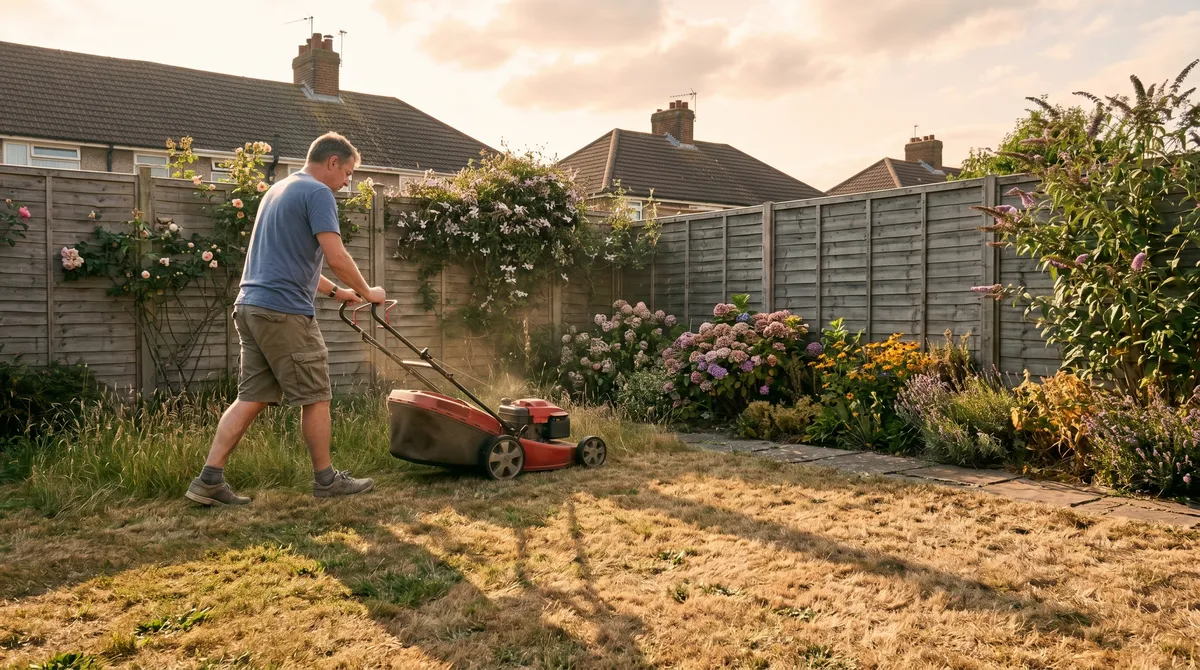
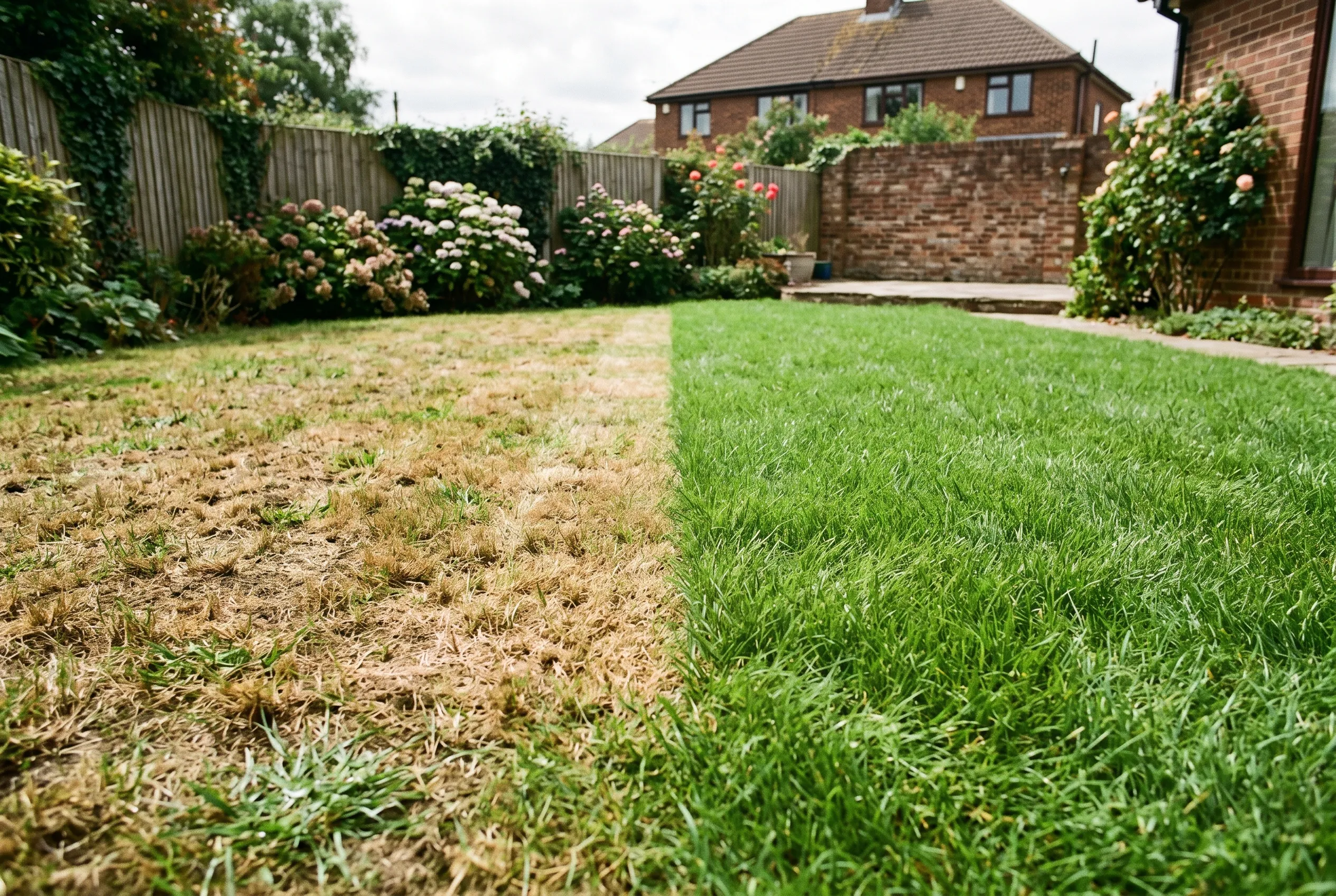 The cost of cutting too short: the scalped strip has browned and thinned, while the higher-cut grass beside it stays green.
How heat stress affects grass
Grass cools itself the way every plant does, by transpiration, drawing water up from the roots and releasing it through the leaf. In a heatwave the soil dries out, transpiration outpaces water uptake, and the plant shuts down to conserve moisture. This is why lawns go brown in July: it is not death but dormancy, a survival response. Most UK lawn grasses, chiefly perennial ryegrass and fescues, can sit dormant for four to six weeks and green up again after rain.
The crown, the growing point at the base of each plant, is what must survive. Tall grass blades shade the crown and the soil, keeping root-zone temperatures lower and slowing evaporation. Soil under 6cm grass can run several degrees cooler than soil under scalped 2cm turf. Cutting short removes that shade exactly when the plant needs it most. The longer leaf also feeds deeper roots, and deep roots reach moisture that shallow-rooted, close-mown turf cannot. This is the core reason every drought-lawn rule points the same way: mow higher, mow less.
Warning: Never mow a lawn that has already turned brown and gone dormant. The remaining brown thatch and crowns are shading the living growing points. Strip that away in a drought and you can kill patches outright rather than letting them recover after rain.
What height to cut grass in hot weather
Raise the mower to 5-6cm for the whole hot, dry spell. That is noticeably higher than the 2.5-4cm used for general mowing in spring and autumn, and our guide on how low you should mow a lawn explains why those baseline heights suit each grass type the rest of the year. Set the deck to its highest or second-highest notch and leave it there until temperatures drop and rain returns.
Follow the one-third rule without exception: never remove more than a third of the leaf length in a single cut. If the grass has grown to 8cm, cut to 5-6cm, not down to 3cm. Taking too much at once shocks the plant and exposes the soil. Because growth slows in heat, you will not need to mow as often anyway, which makes the one-third rule easy to keep.
| Season / condition | Cutting height | Frequency |
|---|---|---|
| Spring growth | 2.5-3cm | Weekly |
| Early summer, mild | 3-4cm | Weekly |
| Hot, dry spell (25C+) | 5-6cm | Every 10-14 days |
| Dormant, straw-brown lawn | Do not mow | Wait for rain |
| Autumn recovery | 3-4cm | Every 10-14 days |
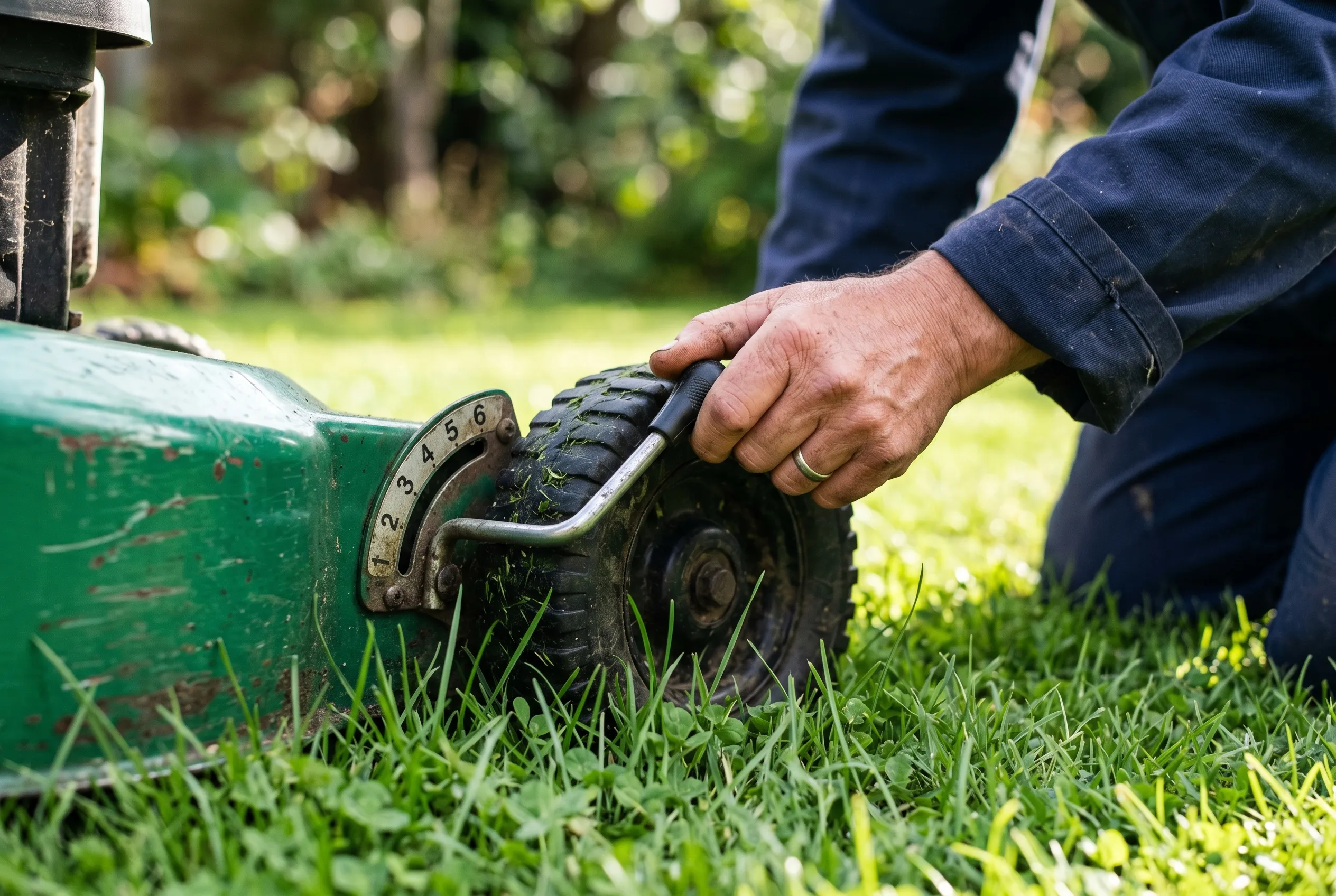 Set the deck to its top notch for the whole heatwave. A 5-6cm cut shades the soil and protects the crowns.
When to mow in hot weather
Time the mow for the cool ends of the day: early morning once the dew has dried, or the evening as the heat eases. Midday mowing in full sun stresses both the grass and you. Evening is often best because the freshly cut lawn then has the cool night to seal its wounds before the next day’s heat, and any watering you do afterwards soaks in rather than evaporating.
Mow on dry grass only. Wet blades tear instead of slicing cleanly, clog the deck, and spread fungal disease across the lawn. If you are unsure whether the grass is too wet, our guide on whether you can mow a wet lawn covers the risks. Keep the mower blade sharp through summer, since a blunt blade bruises and shreds the leaf tips, and bruised tips brown far faster in heat than a clean cut.
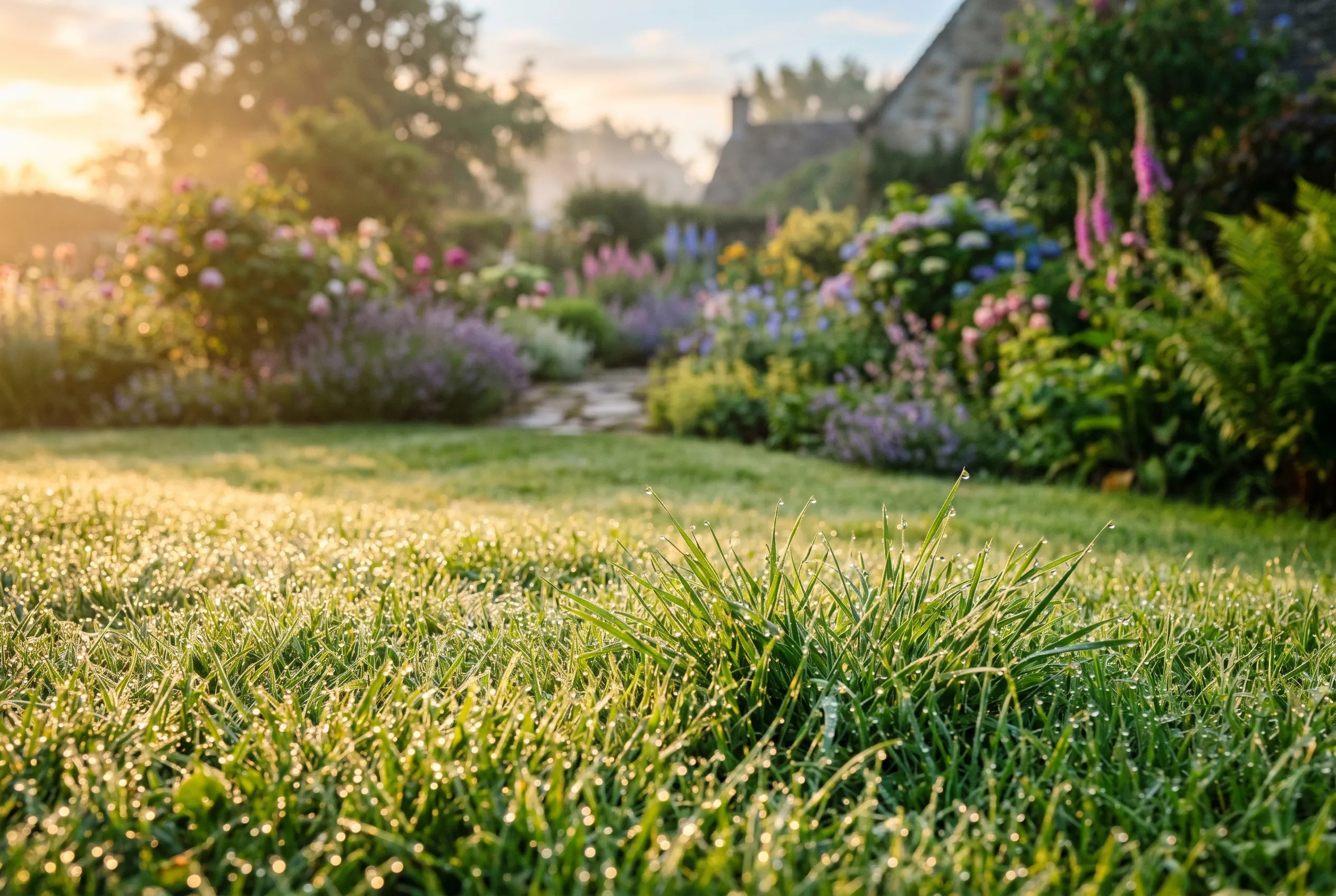 Early morning once the dew has dried, or the cool of the evening, is the right window to mow in summer.
Hot-weather mowing methods ranked
Not every tactic protects a summer lawn equally. Here is how the main hot-weather mowing choices compare.
| Method | What it does | Drought protection | Effort | Role |
|---|---|---|---|---|
| Raise cutting height to 5-6cm | Shades soil and crowns | Excellent | None | Primary, do this first |
| Reduce mowing frequency | Fewer wounds, longer leaf | Excellent | Saves time | Primary |
| Leave clippings (mulch mow) | Surface mulch holds moisture | High | None | Primary |
| Mow at dawn or dusk | Lets cuts seal in the cool | Moderate | None | Supporting |
| Water deeply after mowing | Replaces lost moisture | High | Moderate | Supporting |
| Scalp short to mow less often | Removes shade, exposes soil | Harmful | None | Never do this |
The first three cost nothing and do the most. Leaving the clippings is the most overlooked: short clippings break down within days and form a thin mulch that shades the soil and returns moisture and nitrogen. They do not cause thatch when the lawn is mown regularly. Only bag them if they are long and clumping enough to smother the grass beneath.
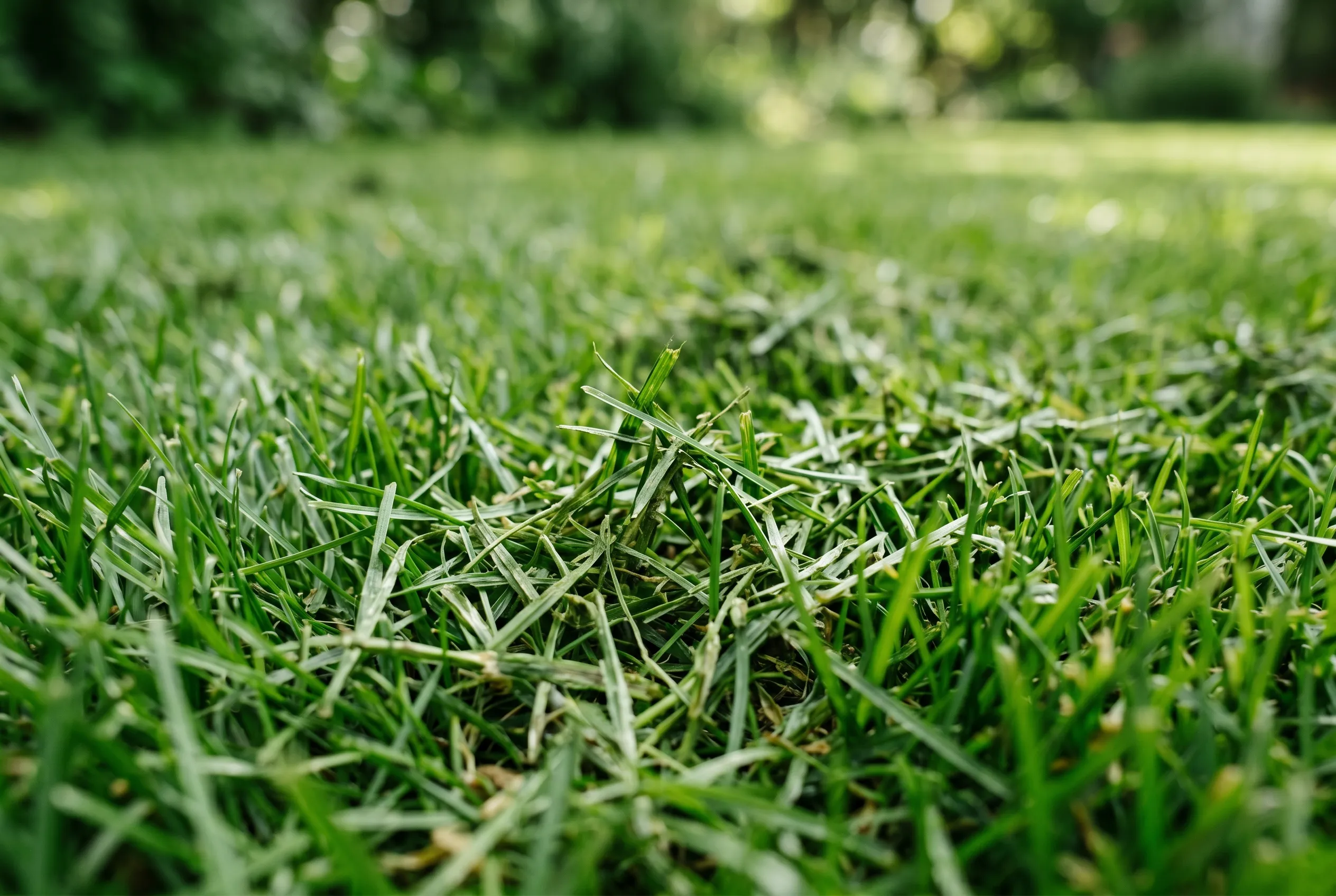 Short clippings left on the surface act as a mulch, shading the soil and feeding the lawn as they break down.
Common hot-weather mowing mistakes
Most summer lawn damage comes from a handful of repeated errors.
- Scalping to save time. Cutting extra short to delay the next mow removes the shading leaf and bakes the crowns. The lawn browns within days.
- Mowing a dormant lawn. A straw-brown lawn is alive but resting. Mowing it strips its last protection. Wait for rain and growth to return first.
- Cutting in the midday heat. Both grass and gardener suffer. The freshly cut lawn loses moisture fastest in full afternoon sun.
- Bagging every clipping. Removing clippings throws away free mulch and nutrients. Leave short clippings down in dry spells.
- Watering little and often. A daily sprinkle wets only the surface and encourages shallow roots. Water deeply and less often, as our guide on how often to water a lawn explains.
If buying a new mower is not on the cards, simply removing the collection box and mowing high achieves much of the same effect on most rotary machines.
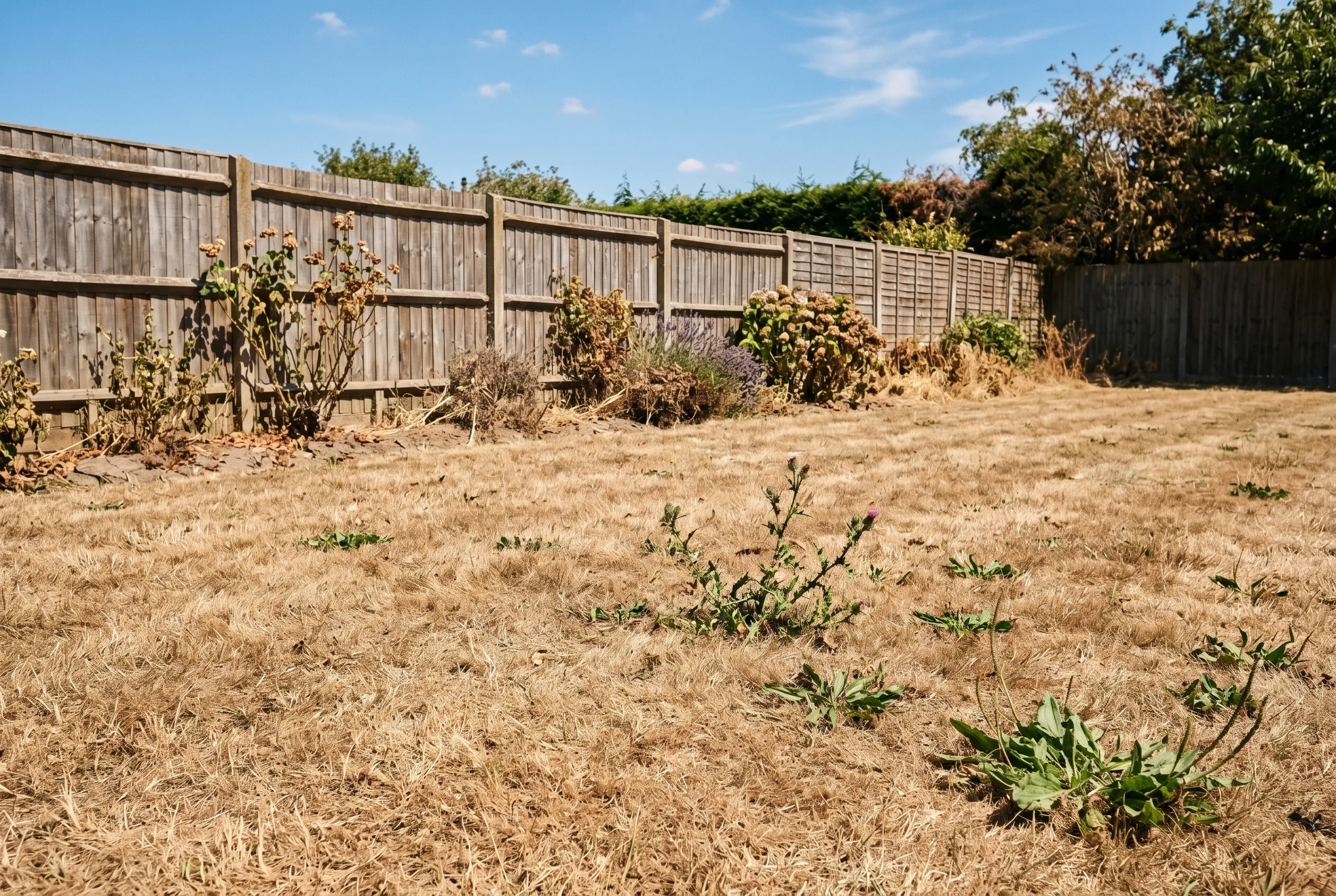 A dormant, straw-brown lawn is resting, not dead. Stop mowing and let it green up naturally once the rain returns.
Helping a heat-stressed lawn recover
When a lawn does brown off, resist the urge to fix it mid-heatwave. Dormancy is reversible for healthy turf, and most UK lawns green up within two to three weeks of decent rain. Do not feed a stressed, dry lawn, as high-nitrogen feed forces soft growth the roots cannot support and can scorch the turf. Hold off on weed-and-feed until autumn.
Once cooler, wetter weather arrives, mow back down gradually to 3-4cm over two or three cuts, never in one go. Then address any thin or bare patches with overseeding. Our guides on lawn drought recovery and the full lawn care calendar set out the autumn repair sequence. The Royal Horticultural Society’s lawn care advice confirms that raising the cut and tolerating summer dormancy is the right approach for British lawns.
Frequently asked questions
Should you cut grass in hot weather?
Yes, but raise the mower and cut less often. Set the height to 5-6cm, mow in the cool of early morning or evening, and never scalp the lawn. Longer grass shades the soil and keeps roots cooler. Never mow a lawn that has turned brown and dormant.
How short should I cut grass in summer?
Keep grass at 5-6cm in hot, dry summers. This is longer than the 2.5-4cm height used in spring and autumn. Taller blades shade the soil, slow evaporation, and let roots grow deeper, which helps the lawn survive drought without browning.
Is it bad to mow a lawn in a heatwave?
Mowing a healthy green lawn in a heatwave is fine if you raise the height and cut at dusk. Mowing is only harmful when you scalp the grass or cut a lawn that has already gone brown and dormant, as that removes its remaining moisture and shade.
Should I water the lawn before or after mowing in hot weather?
Water after mowing, not before. Mowing wet grass tears rather than cuts and spreads disease. Mow on dry grass in the evening, then water deeply afterwards so the lawn takes up moisture overnight when evaporation is lowest.
Why does my lawn turn brown after mowing in summer?
Browning after mowing usually means the lawn was scalped. Cutting too short removes the shading blade and exposes the crowns and soil to heat. The grass dries out and the tips brown. Raise the cutting height and the colour returns within a week or two.
Should I leave grass clippings on the lawn in hot weather?
Yes, leave short clippings on the surface in dry weather. They break down fast and act as a mulch, shading the soil and returning moisture and nutrients. Only collect clippings if they are long and clumping, which can smother the grass beneath.
Our team produces practical UK gardening guidance from source research, contributor records and established horticultural practice. Editorial standards are overseen by Matt W.