Key takeaways
- Boron deficiency: hollow beetroot, forked carrots, papery brassicas
- Manganese deficiency: yellowing between veins on alkaline soils
- Zinc deficiency: stunted seedlings, white leaf caps, small fruit
- Copper deficiency: dieback of new shoots, wilted root tips
- Apply trace elements via foliar spray for fastest results (7-21 days)
- UK alkaline soils above pH 7.0 lock up iron, manganese and zinc
Boron, manganese, zinc and copper are nutrients UK gardeners typically only learn about when something goes wrong. Hollow beetroot. Pale apple leaves. Stunted seedlings. Each symptom traces to one of these four trace elements running short. This guide covers how to recognise the deficiency, where to find each nutrient, and the application rates that work without doing harm.
Why Trace Elements Matter Despite Being Tiny
A typical garden crop removes the following trace elements per 100kg of dry matter harvested:
| Nutrient | Removal per 100kg harvest | Plant role |
|---|---|---|
| Boron (B) | 8-15g | Cell wall building, calcium transport, flowering |
| Manganese (Mn) | 30-100g | Photosynthesis, enzyme activation |
| Zinc (Zn) | 15-50g | Hormone synthesis, protein structure |
| Copper (Cu) | 5-20g | Root tip growth, lignin synthesis |
| Iron (Fe) | 50-200g | Chlorophyll synthesis (separate guide) |
| Molybdenum (Mo) | 0.1-1g | Nitrogen fixation in legumes |
These are tiny quantities versus NPK demands of 5-50 kg per crop. But without them, plants fail. Manganese-deficient apples produce 30-40% fewer fruit. Boron-deficient beetroot develops 30-60% hollow hearts. Zinc-deficient seedlings stall at the 2-leaf stage. Trace element problems look like disease, weather damage or watering errors. Diagnosis is the hardest part.
Soil pH controls trace element availability more than total soil content. Alkaline UK soils (pH 7.0+) lock up iron, manganese, zinc and copper into unavailable forms. Acidic UK soils (pH below 5.5) lock up molybdenum and can release toxic levels of aluminium and manganese.
For pH context, our soil pH explained guide covers the relationship between pH and nutrient availability across UK soil types.
Boron: Hollow Beetroot and Internal Browning
Boron deficiency is the most common trace problem on UK sandy and chalky soils. UK rainfall leaches boron at 1-3 kg per hectare per year. Most plots run short within 4-8 years of intensive cropping unless replenished.
Classic UK garden symptoms:
- Hollow heart in beetroot, swede, turnip (brown rotten patches inside the root)
- Internal browning in cauliflower (brown spots inside the curd)
- Papery patches on Brussels sprouts and cabbage outer leaves
- Forked carrots (caused by both stones and boron shortage; check both)
- Aborted flowering in apples, pears, strawberries
- Dieback of growing tips on celery and chard
Sources of boron:
| Source | Boron content | Application | Rate |
|---|---|---|---|
| Borax (sodium tetraborate) | 11% B | Soil drench, single annual | 5g per m² |
| Solubor (sodium octaborate) | 20% B | Foliar spray | 1g per litre |
| Wood ash | 0.05% B | Routine soil top-up | 50-100g per m² |
| Seaweed extract | 0.005% B | Foliar feed, frequent | Per label |
| Compost (well-rotted) | Trace | Background supply | 4-6kg per m² |
Application rule for borax: dissolve 5g in 5 litres of water and apply across 1 square metre. Never apply dry. Never exceed 5g/m² in any 12-month period. Boron is toxic at 2-3x the optimum dose and is hard to remove once over-applied.
Soils that received boron 4-6 weeks before planting produce 20-40% higher yields on beetroot, brassicas and apples versus unfed controls. The cost is £4-£8 for a 1kg pack of borax, enough for 200 square metres for a full year.
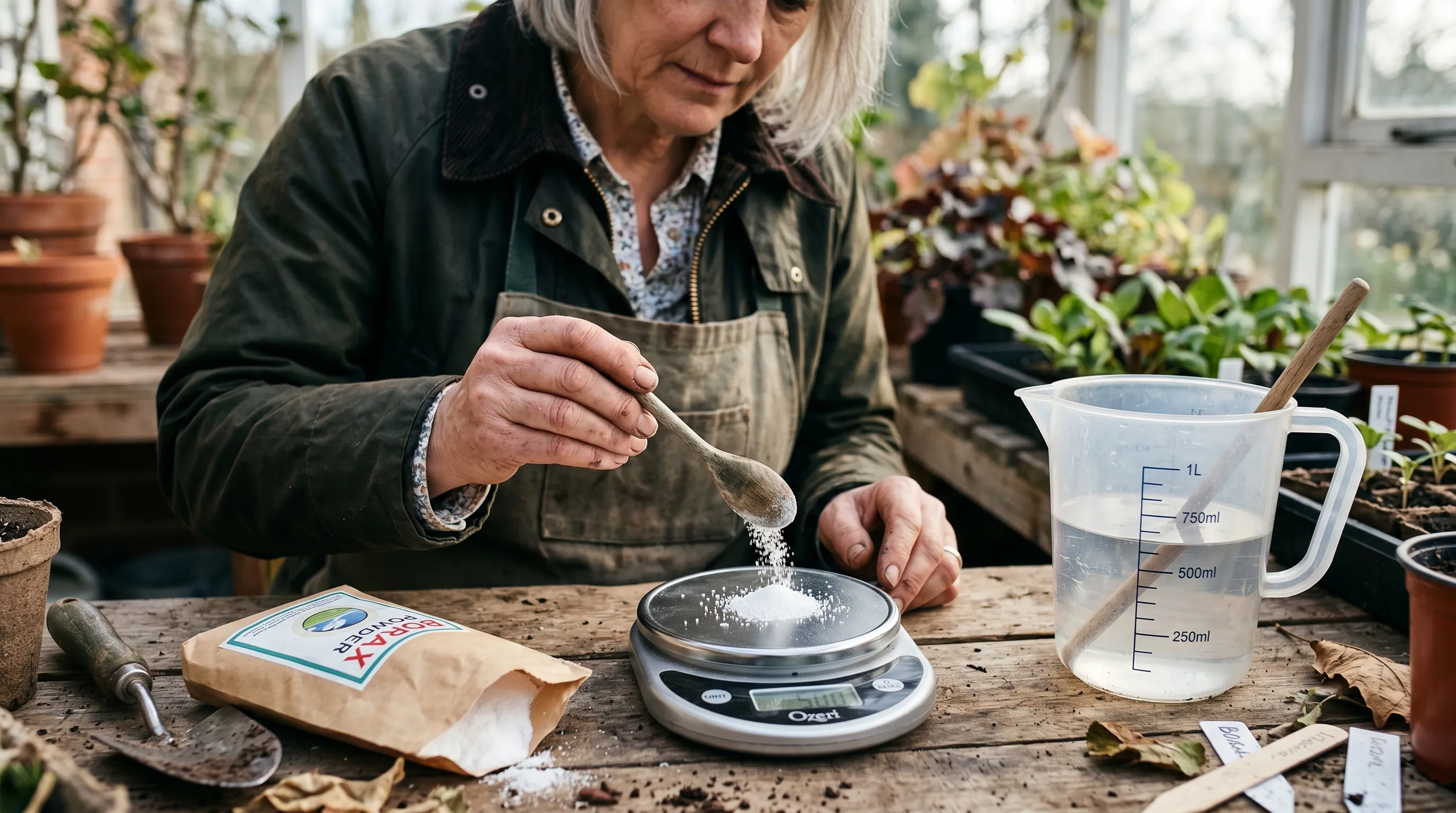 Weighing 5g of borax on a kitchen scale. Boron has the narrowest safe range of any trace element: therapeutic at 5g per square metre, toxic at 10-15g per square metre. Always weigh, never guess.
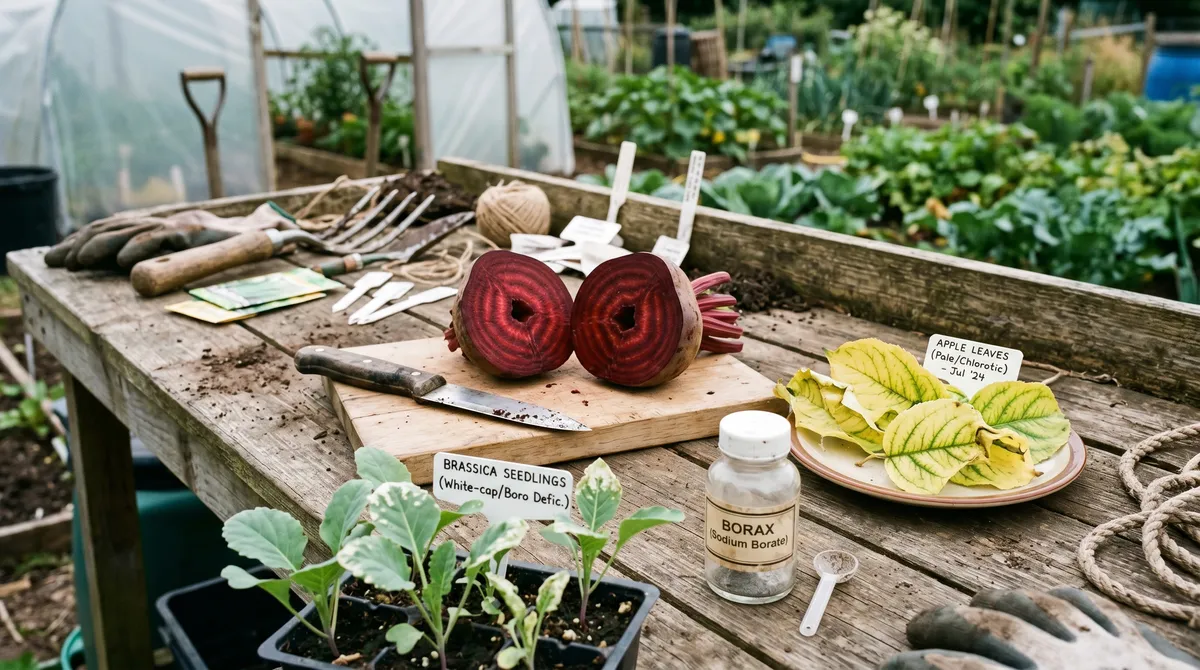
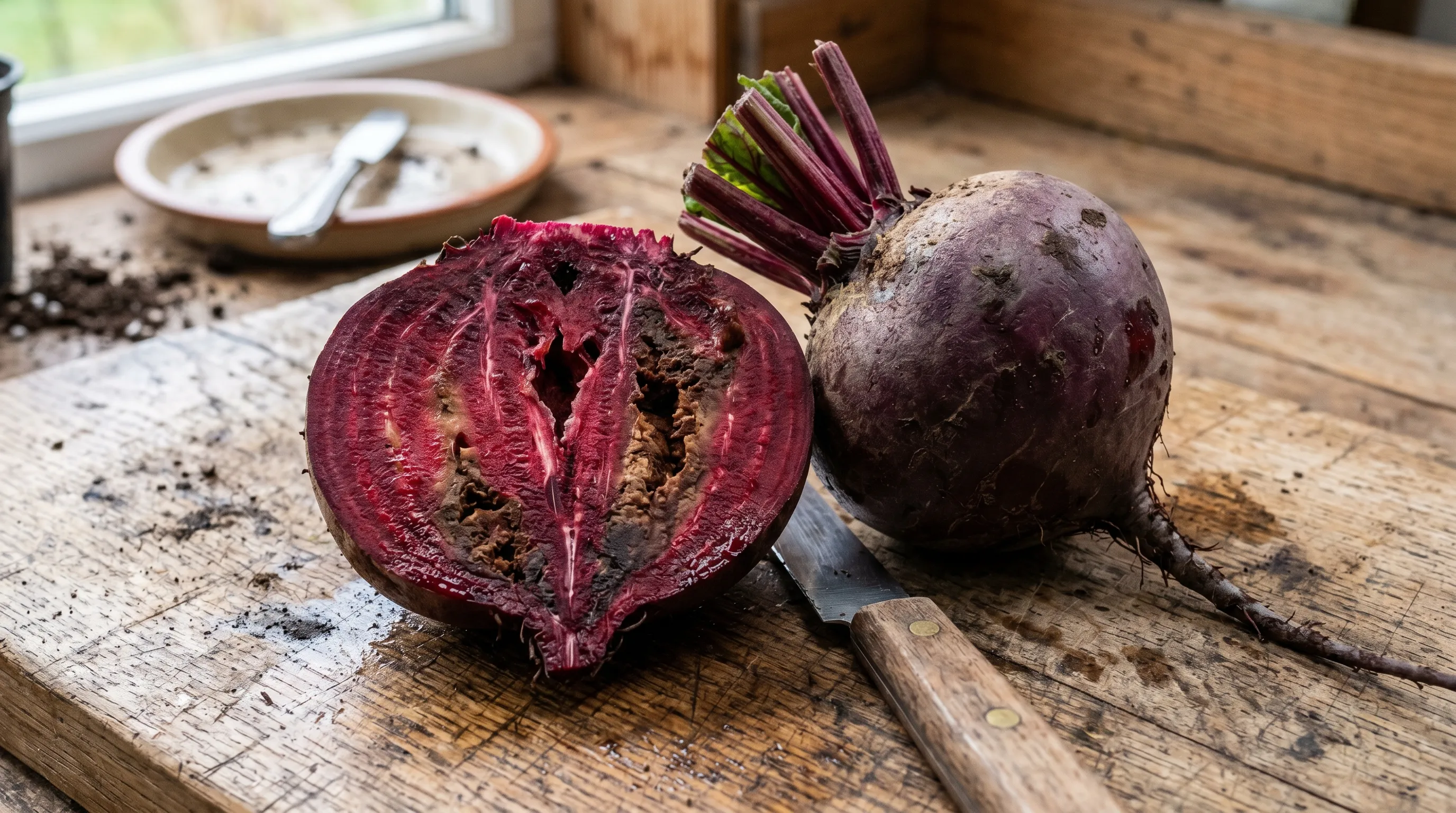 Boron deficiency hollow heart in beetroot. The brown patches start at the centre and spread outward. A pre-planting drench of borax at 5g per square metre prevents 90-95% of cases on UK sandy or chalky soils.
Manganese: Yellowing on Alkaline UK Soils
Manganese deficiency is the most common trace problem on UK alkaline soils, especially in the chalk belt of southern England and on plots that have been over-limed. Symptoms look like iron deficiency but the test and treatment differ.
Classic UK garden symptoms:
- Interveinal chlorosis on young leaves (yellow between green veins)
- Pale apple and pear foliage, fruit drop in summer
- Tan grey patches on cereal crops
- Slow brassica establishment in spring
- Yellowing raspberry canes with darker veins
- Stunted seedlings with pale upper leaves
Sources of manganese:
| Source | Manganese content | Application | Rate |
|---|---|---|---|
| Manganese sulphate | 31% Mn | Foliar or soil | 1g per litre foliar |
| Chelated manganese (EDTA) | 13% Mn | Foliar, lasts longer | 0.5g per litre |
| Manure (well-rotted) | 0.01% Mn | Slow background | 4-6kg per m² |
| Wood ash | 0.5% Mn | Light boost | 50-100g per m² |
| Acidified bed compost | Variable | Lowers pH to free Mn | 5-10kg per m² |
Foliar manganese sulphate is the fastest treatment. Mix 1g in 1 litre of water with 1 drop of washing-up liquid as a wetter. Spray leaf undersides on a cool morning. Visible green return in 7-14 days. Cost: £8-£12 per 500g pack, enough for 500 litres of finished spray.
The longer-term fix on chronically alkaline soil is lowering pH by 0.3-0.5 units using elemental sulphur at 25-50g per m² applied in autumn. Once pH drops below 7.0, soil manganese becomes available again without supplementary feeding.
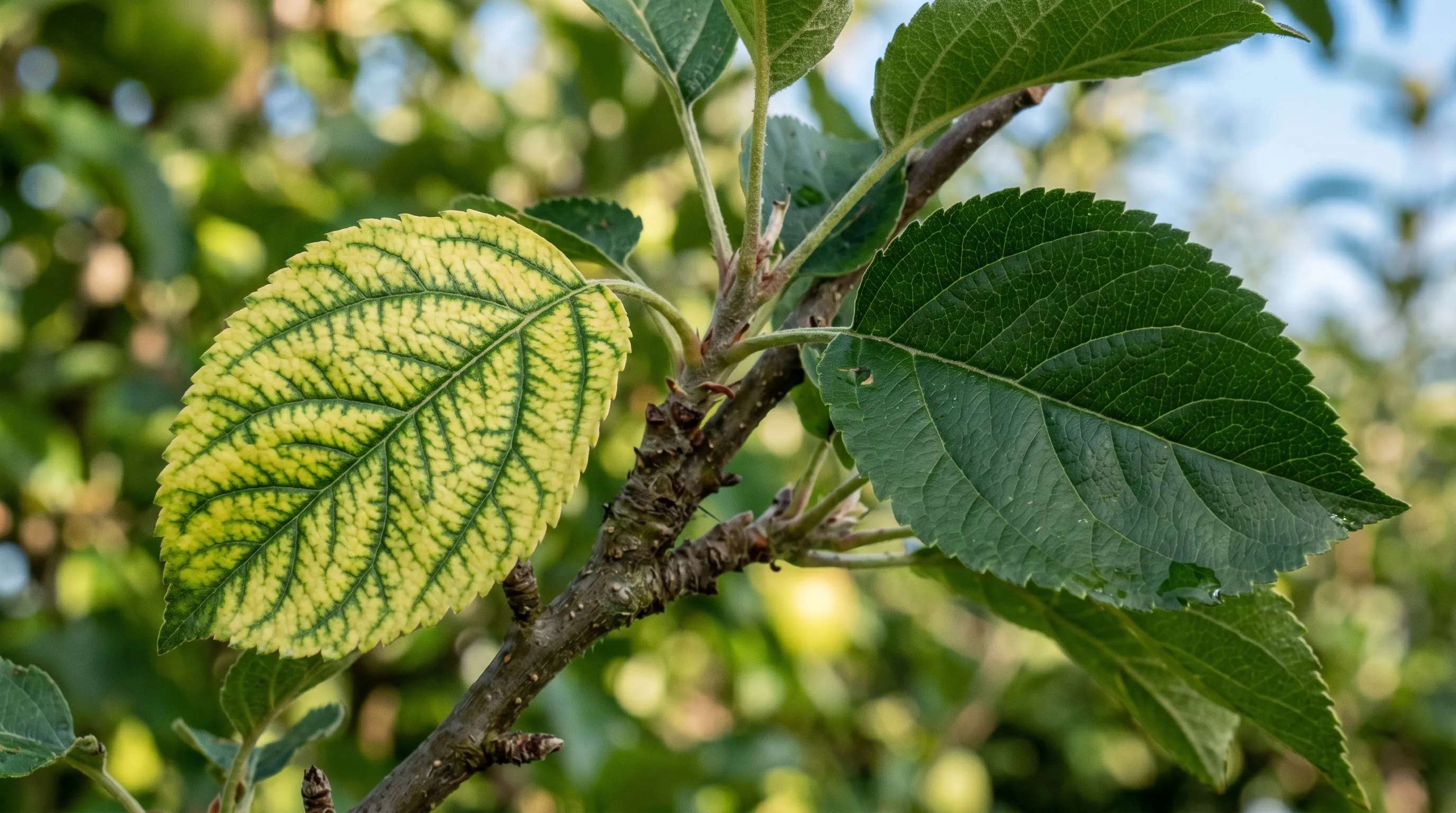 Manganese deficiency on a UK apple tree on chalky soil. The yellowing between green veins is the diagnostic pattern. A foliar manganese sulphate spray at 1g per litre returns leaves to green in 7-14 days.
For how to manage UK soil pH, our guide covers the testing, lime and sulphur application that controls trace element availability long-term.
Zinc: The Seedling Booster
Zinc deficiency rarely shows on established crops but is common on early seedlings, especially in cold UK spring weather. Zinc uptake collapses below 12C soil temperature.
Classic UK garden symptoms:
- White or pale yellow caps on young seedling leaves
- Rosette growth with shortened stems and bunched leaves
- Small fruit on apples (also called “little leaf”)
- Stunted brassica seedlings that never establish
- Forked stems on tomato cordons
- Reddened raspberry leaves in spring
Sources of zinc:
| Source | Zinc content | Application | Rate |
|---|---|---|---|
| Zinc sulphate | 22% Zn | Foliar or soil | 0.5g per litre foliar |
| Chelated zinc (EDTA) | 9% Zn | Foliar, longer lasting | 0.5g per litre |
| Manure (well-rotted) | 0.005% Zn | Slow background | 4-6kg per m² |
| Wood ash | 0.04% Zn | Light boost | 50-100g per m² |
| Compost (well-rotted) | 0.005% Zn | Background | 4-6kg per m² |
Foliar zinc sulphate at 0.5g per litre with a wetter agent corrects most seedling deficiencies in 7-10 days. A single dressing of 5g zinc sulphate per m² in spring carries crops through the season on most UK plots.
Avoid mixing zinc with phosphate fertilisers in the same week. Soluble phosphate combines with zinc to form unavailable zinc phosphate. Apply zinc 2-3 weeks before or after a phosphate dressing.
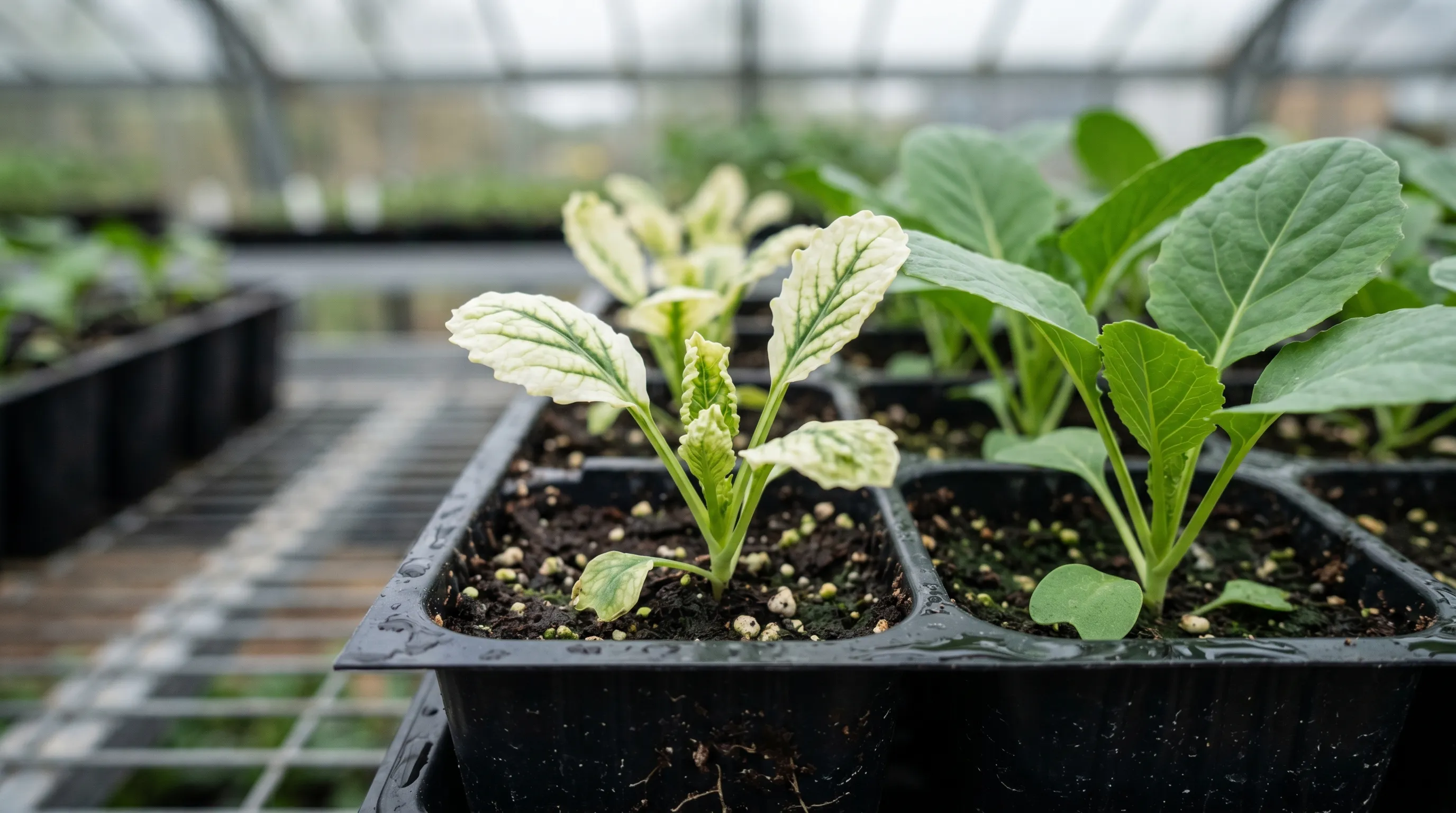 Zinc deficiency in cool spring brassica seedlings. The white-yellow leaf caps and bunched rosette growth resolve within 7-10 days after a single zinc sulphate foliar spray at 0.5g per litre.
Copper: The Rarest UK Deficiency
Copper deficiency is the rarest of the four trace elements in UK gardens but the most damaging when it appears. UK peat and sandy soils run shortest.
Classic UK garden symptoms:
- Dieback of new shoots on apples, pears and stone fruit
- Wilted root tips on lettuce and salad crops
- Pale or white seed heads in cereal crops
- Curled leaf edges with brown necrotic spots
- Weak stem strength, lodging in tall crops
- Yellowing tips that progress down the leaf
Sources of copper:
| Source | Copper content | Application | Rate |
|---|---|---|---|
| Copper sulphate (CuSO4) | 25% Cu | Soil or foliar | 1g per litre foliar, 3g per m² soil |
| Manure (well-rotted) | 0.001% Cu | Slow background | 4-6kg per m² |
| Compost from kitchen waste | 0.001% Cu | Routine | 4-6kg per m² |
| Bordeaux mixture (fungicide) | Active Cu | Disease control + trace boost | Per label |
Copper sulphate at 3g per m² as a soil drench, or 1g per litre as a foliar spray, corrects most deficiencies in 14-21 days. Use sparingly: copper accumulates in soil and is toxic to worms and beneficial soil microbes above 100 mg/kg total content.
 Foliar seaweed extract application as routine trace element baseline feed. A 500ml bottle of Maxicrop makes 50 litres of finished spray, enough for 100 square metres of beds across a full UK growing season.
Bordeaux mixture (a copper-based fungicide approved for organic gardens) provides both disease control and a small trace copper boost where applied for blight prevention. Use only as directed for fungal control; not as a routine trace element source.
How to Diagnose Trace Element Deficiency
Three diagnostic tools beat guessing.
1. Visual diagnosis by symptom and position. Trace deficiencies usually affect specific tissues:
| Symptom location | Likely deficiency |
|---|---|
| Young leaves only | Calcium, sulphur, boron, manganese, zinc, copper, iron |
| Old leaves only | Nitrogen, potassium, magnesium |
| Fruit only | Calcium, boron |
| Roots only | Copper, calcium |
| Whole plant | Sulphur, multiple deficiencies, light, temperature |
2. The single-leaf spray test. Mix the suspect trace element at recommended foliar rate. Spray only one affected leaf. Mark with a soft tag. If symptoms reverse within 7-14 days, the diagnosis is confirmed. Cost: under £1 per test.
3. Lab soil analysis. £20-£40 per sample at UK labs (NRM Laboratories, Eurofins Agro). Returns total and available levels of all major and trace nutrients, plus pH and organic matter. Useful on new plots, after heavy cropping, or where multiple deficiencies suspected.
Take soil samples from 5-7 spots across the bed, mix in a clean bucket, then submit. Sample to a depth of 100-150mm for vegetables, 200-250mm for fruit trees.
For routine testing intervals, plots growing the same intensive crops (brassicas, tomatoes, top-fruit) benefit from a trace element check every 3 years. Plots with regular manure and lime applications can stretch to 5-6 years.
 A complete trace element soil sample workflow: 5-7 sub-samples mixed, taken at 100-150mm depth, labelled with bed and date, ready to post to a UK lab for £20-£40 per analysis.
Common Mistakes With Trace Elements
Mistake 1: over-applying boron. Boron has the narrowest safe range of any trace element. Therapeutic at 5g/m², toxic at 10-15g/m². Weigh every application; never use a “scoop” method.
Mistake 2: ignoring pH before treating. Most trace element problems on alkaline soils are pH-driven, not absence-driven. Always check pH before applying trace fertilisers. Lowering pH from 7.5 to 6.5 with sulphur fixes more deficiencies than any trace dressing.
Mistake 3: routine annual trace dressings without testing. Trace elements accumulate. Three years of “preventative” copper or zinc applications can push soil into toxic territory. Test before treating after the first year.
Mistake 4: trusting wood ash to supply all traces. Wood ash contains useful boron, zinc and manganese, but only in tiny quantities. A 100g/m² ash dressing supplies less than 50mg of each trace element. Use ash as one tool among several, not as a single solution.
Mistake 5: mixing trace fertilisers with calcium or phosphate. Most trace elements form unavailable compounds with calcium and phosphate. Apply traces at least 2-3 weeks apart from any lime or bonemeal dressing.
For the wider soil-nutrient picture, our NPK explained guide covers the primary three macronutrients. The garden lime guide covers the calcium side.
For the foliar feed schedule across the full season, our best fertilisers for UK gardens guide covers seaweed, bone meal, fish blood and bone, and the other UK-available feeds.
Trace Element Calendar UK Month-by-Month
| Month | Trace element task |
|---|---|
| January | Order borax, manganese sulphate, zinc sulphate for the year |
| February | Apply soil borax to brassica and beetroot beds (5g per m²) |
| March | Soil test problem beds from last season |
| April | Begin fortnightly seaweed foliar feed on seedlings |
| May | Foliar zinc on cold-shocked brassica seedlings |
| June | Foliar manganese on chlorotic apples and pears |
| July | Continue seaweed feed every 14 days |
| August | Watch for late-season boron symptoms in beetroot |
| September | Soil test for autumn corrections |
| October | Apply elemental sulphur to lower pH where Mn-deficient |
| November | Final soil drenches before winter |
| December | Plan next year’s trace strategy based on test results |
The February-March soil-applied window and the April-July foliar window together cover most UK trace element problems. Routine seaweed across the growing season prevents most deficiencies before they appear.
Frequently asked questions
What are trace elements in garden soil?
Trace elements (micronutrients) are nutrients plants need in tiny quantities: boron, manganese, zinc, copper, iron, molybdenum and chlorine. Required in grams per square metre or less, but their absence causes specific deficiency symptoms that look like disease.
How do I know if my UK garden soil is low in boron?
Hollow centres in beetroot, internal browning in cauliflower, forked carrots, and papery patches on Brussels sprouts are classic boron deficiency signs. UK sandy and chalky soils run short fastest. Apply borax (sodium tetraborate) at 5g per square metre as a one-off pre-planting drench.
Why do my apple trees have pale yellow leaves between green veins?
Manganese deficiency. UK alkaline soils (above pH 7.0) lock manganese into unavailable forms. Apply foliar manganese sulphate at 1g per litre. The same yellowing also indicates iron deficiency. Always check soil pH before treating.
How often should I test for trace elements?
Every 3 years on stable plots, annually on new ground or after heavy cropping. Lab tests cost £20-£40 per sample and return all major and trace nutrients. NRM Laboratories and Eurofins Agro both serve UK home gardeners. Soil pH affects which trace elements are available.
Are wood ash and seaweed good trace element sources?
Yes for both. Wood ash supplies potassium, calcium, magnesium, and trace boron, zinc, manganese. Seaweed extract supplies all trace elements in small amounts. Apply wood ash at 50-100g per square metre per year, seaweed extract as foliar feed every 14-21 days through the growing season.
Now build the complete feed plan
Trace elements complete the nutrient picture. For the primary three nutrients, our NPK explained guide covers nitrogen, phosphorus and potassium. To check pH before applying any trace fertilisers, our soil pH explained guide shows how acidity affects nutrient availability. The garden lime guide covers calcium delivery via routine liming. And for the bagged-feed catalogue that brings it all together, our best fertilisers for UK gardens guide lists the products that match each gap.
Our team produces practical UK gardening guidance from source research, contributor records and established horticultural practice. Editorial standards are overseen by Matt W.