Key takeaways
- Conkers are horse chestnut seeds and fall from mid-September to October
- Pick shiny conkers that have just dropped from their spiky cases
- Conkers don't keep spiders away, whatever the old tale says
- Plant a fresh conker in a pot in autumn and leave it outside to sprout in spring
- Horse chestnuts grow very big, so they don't suit small gardens
- Conkers are poisonous to people and dogs, so keep them away from little ones
Conkers are the shiny brown seeds of the horse chestnut tree, and they fall from mid-September to October. They’re brilliant for playing conkers and easy to grow into a little tree in a pot. Sadly, they won’t keep spiders out of your house. Conkers are also poisonous, so don’t let children or dogs eat them.
Here’s when to collect conkers, how to play, how to grow your own tree and the truth about conkers and spiders.
What are conkers?
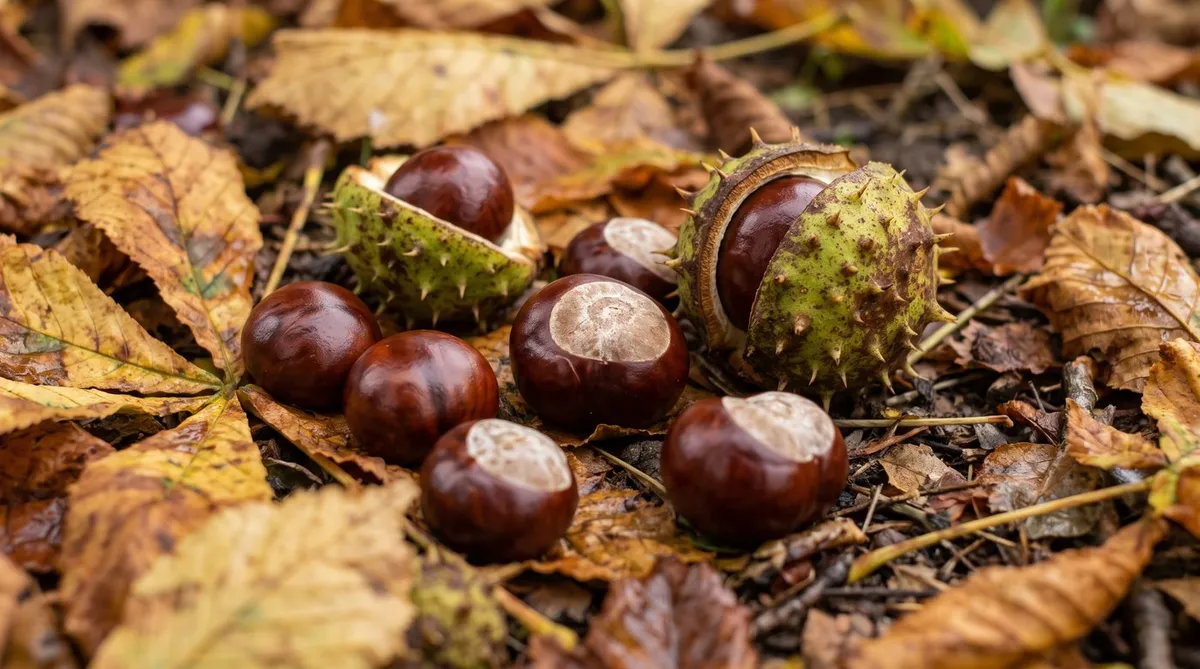
Conkers are the seeds of the horse chestnut tree, Aesculus hippocastanum. The tree has big hand-shaped leaves and tall white candle flowers in May. In autumn, spiky green cases split open and drop one or two glossy conkers each.
Horse chestnuts are huge trees, often 25m or more. You’ll find them in parks, village greens, churchyards and along old roads. Many trees go brown and crispy by late summer, thanks to a tiny moth. Our guide to horse chestnut leaf miner explains why the trees still produce conkers every year.
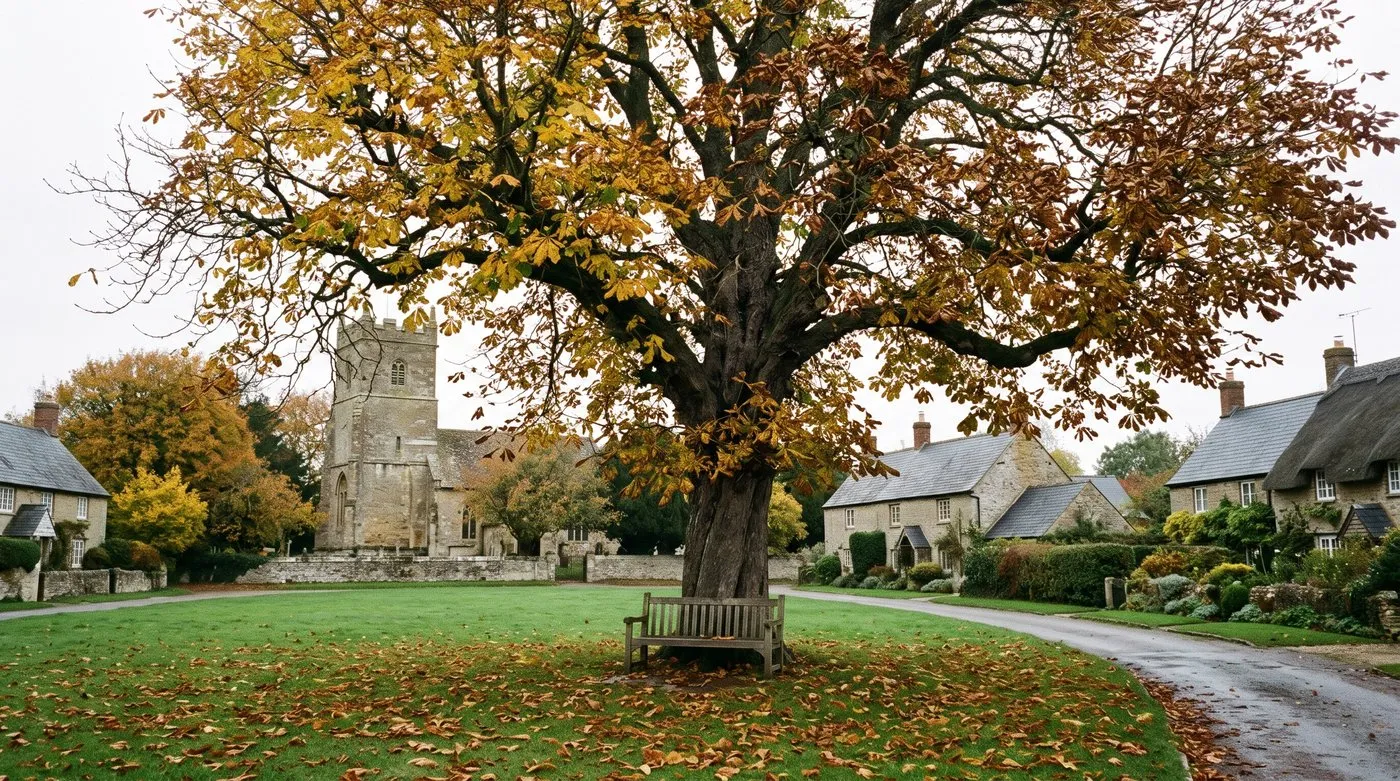
Horse chestnuts are big, spreading trees. Look for them in parks, churchyards and on village greens.
When do conkers fall?
Conkers fall from mid-September to late October. The peak is usually late September and early October. A windy night brings plenty down.
The best conkers have just fallen. They’re shiny and smooth, and often still half inside their split case. Leave any that are dull, wrinkled or soft.
Gardener’s tip: Go conker hunting the morning after a windy night. You’ll find fresh conkers before squirrels, deer and other collectors get to them.
Do conkers keep spiders away?
No. It’s a lovely old tale, but there’s no good evidence that conkers keep spiders away.
The idea is that a chemical in conkers puts spiders off. But spiders don’t eat plants, so it doesn’t affect them. In 2010, a group of Cornish schoolchildren put it to the test. Their spiders walked straight past the conkers.
Big house spiders often wander indoors in September and October. That’s when male spiders go looking for a mate. It’s the same time as conker season, which is probably how the myth started.
If you’d like fewer spiders indoors, try these instead:
- Fill gaps around windows, doors and pipes.
- Fit fine mesh to air vents.
- Keep clutter down in corners, garages and sheds.
- Pop a spider out with a glass and a piece of card.
Most garden spiders are harmless helpers that catch flies and aphids. Our guide to garden spiders shows which ones you’ll meet.
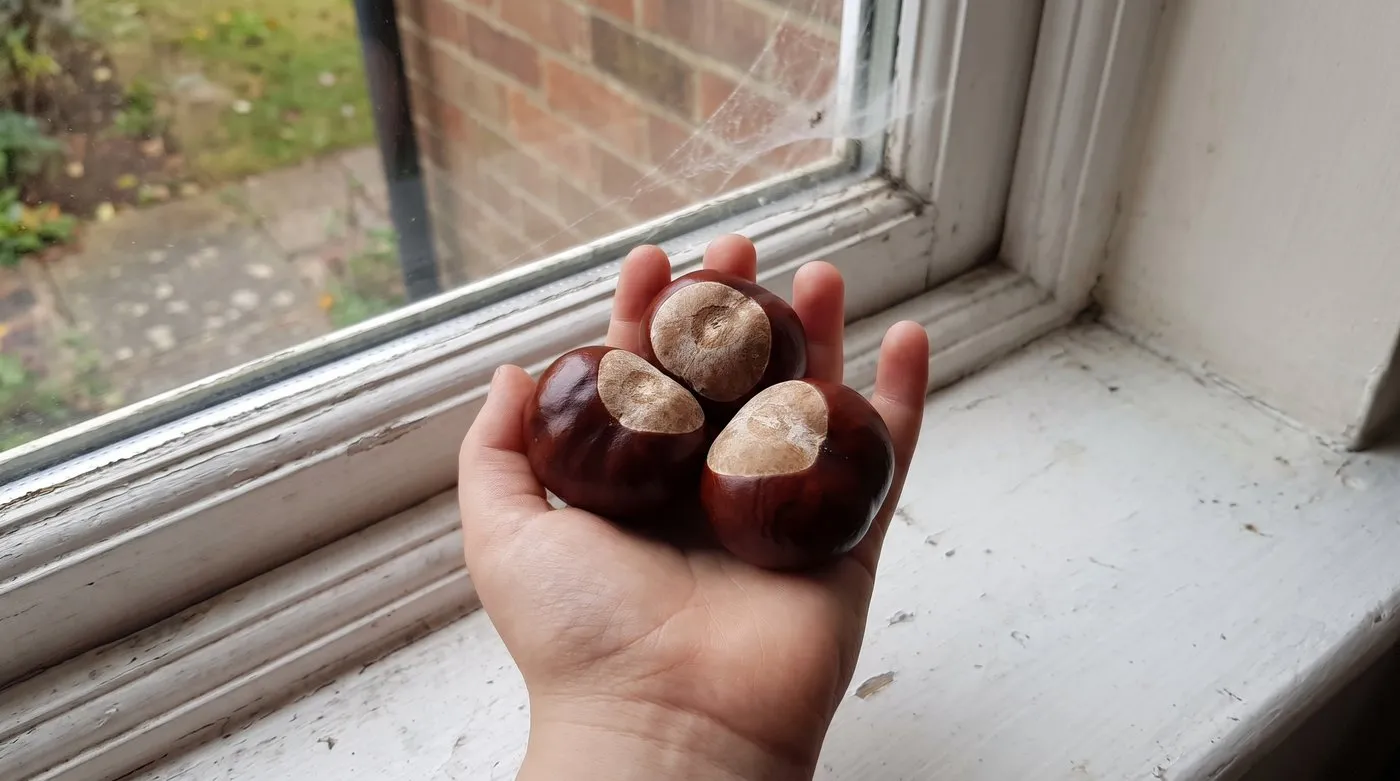
Conkers on the windowsill look lovely, but they won’t stop spiders coming in.
How to play conkers
Conkers is a classic playground game for two players. Here’s how to set up and play.
- Pick a good conker. Choose a round, firm, symmetrical conker with no cracks.
- Make a hole. An adult should make a hole through the middle with a skewer or small drill.
- Thread the string. Push a strong string or shoelace through, about 25cm long. Tie a big knot at the bottom.
- Take turns. One player holds their conker still, dangling at arm’s length. The other player wraps the string round their hand and swings to hit it.
- Keep going. Swap turns after each strike. The winner is the conker that breaks the other one.
A conker that wins one game is a “one-er”. If it beats a two-er, it becomes a three-er, adding the loser’s score to its own. Wear safety glasses if you like, because conker bits can fly.
The World Conker Championships are held every October in Southwick, Northamptonshire. Players use conkers supplied on the day, so there’s no cheating with old ones.
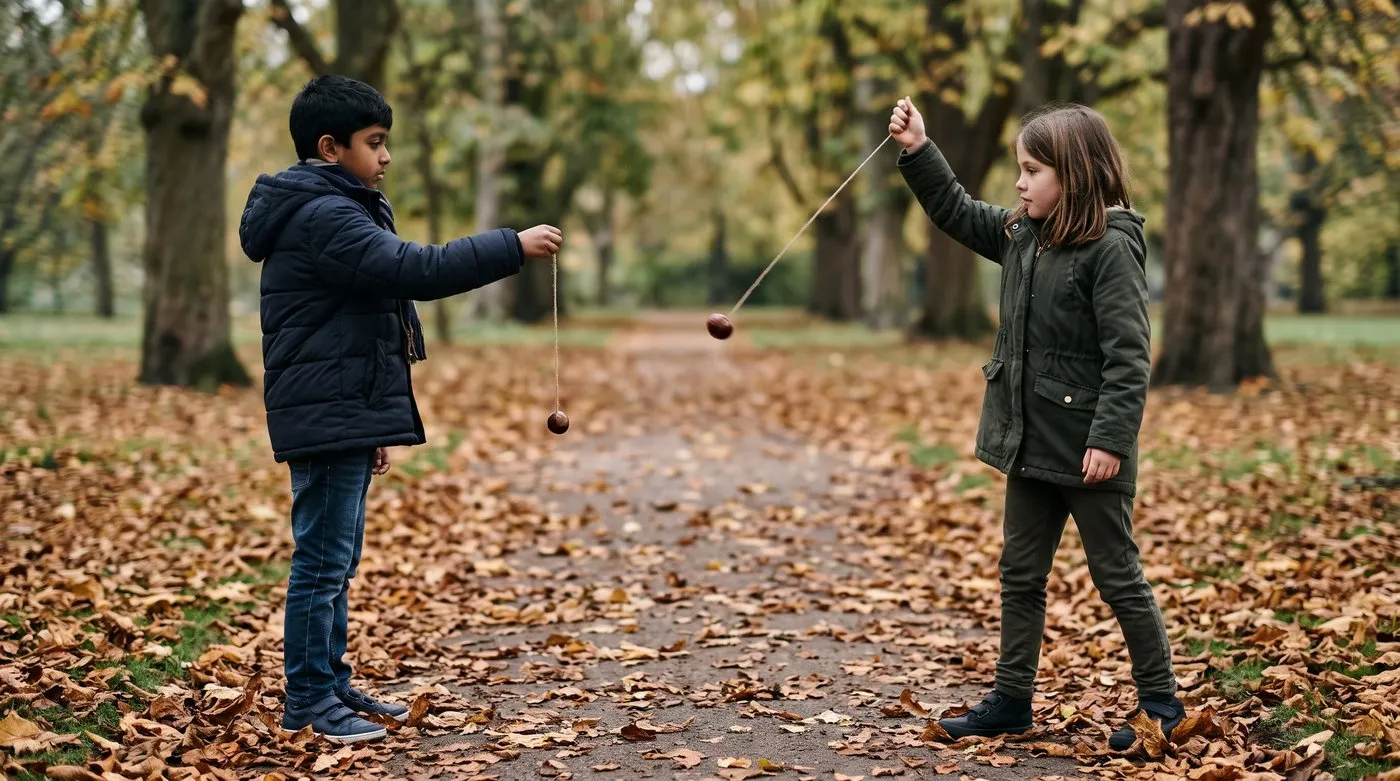
Hold your conker still and let your opponent take their swing. Then it’s your turn.
How to make conkers harder
The traditional trick is patience. Keep conkers in a dry, dark cupboard for a year. They shrink and go rock hard. Some players soak conkers in vinegar or bake them for a short while. It works, but most people think it’s cheating.
How to grow a conker tree
Growing a conker tree is a fun, easy project for children. You’ll see a shoot in spring. For more ideas, see our gardening projects for kids.
- Pick fresh conkers. Use shiny conkers in October. Old, dried conkers won’t grow.
- Fill a pot. Use a 15cm pot of peat-free compost with a little grit mixed in.
- Plant it. Push the conker in on its side, about 2-3cm deep.
- Leave it outside. Stand the pot outdoors all winter. Conkers need a cold spell to sprout.
- Protect it. Cover the pot with wire mesh, because squirrels and mice love to dig them up.
- Watch for a shoot. A sturdy shoot with big leaves appears in March or April.
Keep the compost damp but not soggy through summer. Move the seedling into a bigger pot the following autumn.
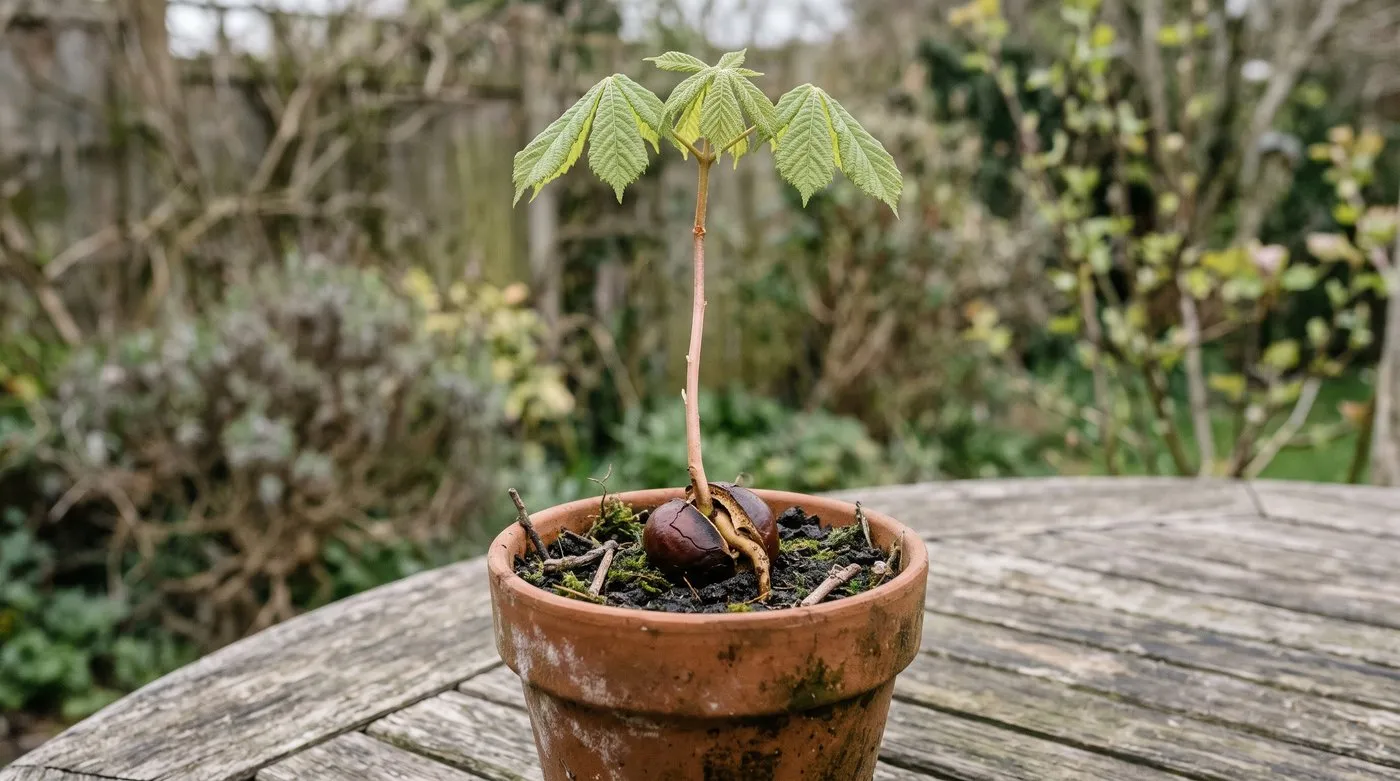
A conker planted in autumn sends up a strong shoot in spring. The old conker often sits at the base.
Warning: Horse chestnuts grow far too big for most gardens. Don’t plant one near a house, drains or walls. Grow it in a pot for a few years. Then find it a home in a big space, such as a farm or school field, with permission.
If you’d like a tree for a smaller garden, see our guide to the best trees for small gardens.
Are conkers poisonous?
Yes. Conkers are poisonous if eaten, to people, dogs and horses. They can cause sickness, tummy pain and diarrhoea. In dogs, a swallowed conker can also block the gut.
Conkers are safe to handle and play with. Just stop little ones putting them in their mouths. If your dog chews conkers on walks, pick them up and call your vet if they swallow one. Our guide to plants toxic to dogs covers what to watch for.
Conkers or sweet chestnuts?
The two are easy to mix up. Sweet chestnut cases are covered in long, fine spines, like a hedgehog. The nuts are flat-sided with a little point. They’re delicious roasted.
Conker cases have fewer, short, thick spikes. The conker inside is round and glossy, with a pale patch. It isn’t edible. Our guide to growing sweet chestnuts has photos to help you tell them apart.
Conker calendar
| Month | What’s happening |
|---|---|
| May | White candle flowers on horse chestnut trees |
| August | Leaves often brown early from leaf miner |
| Mid-September | First conkers start to fall |
| Late September to early October | Best time to collect conkers |
| October | Plant fresh conkers in pots. World Conker Championships |
| November to February | Leave potted conkers outside in the cold |
| March to April | Seedlings sprout |
Common mistakes with conkers
Planting old, dried conkers is a common mistake. They’ve lost the moisture they need to grow. Use fresh ones collected in October.
Bringing a planted pot indoors for winter sounds kind, but conkers need the cold to sprout. Leave them outside.
Piling conkers on windowsills to stop spiders won’t help. Seal gaps instead.
Planting a conker tree in a small garden causes trouble later on. These trees get huge, with roots to match.
Leaving conkers where toddlers and dogs can reach them is risky. They’re poisonous, so tidy them away after play.
Frequently asked questions
Do conkers keep spiders away?
No. It’s a popular old tale, but there’s no good evidence it works. Spiders don’t eat conkers, so the chemicals inside them don’t bother spiders at all.
When do conkers fall?
Conkers fall from mid-September to late October in the UK. The best ones have just dropped and are still shiny, often still half inside their split spiky case.
Are conkers poisonous?
Yes. Conkers are poisonous to people, dogs and horses if eaten. They usually cause sickness and diarrhoea and can block a dog’s gut. They’re perfectly safe to handle.
How do you grow a conker tree?
Plant a fresh conker on its side, about 2-3cm deep, in a pot of compost in autumn. Leave the pot outside all winter. It needs the cold to sprout, and a shoot appears in spring.
How do you make conkers harder?
The traditional way is to keep conkers in a dry, dark cupboard for a year. Old conkers shrink and go rock hard. Baking or soaking them in vinegar is common too, though it’s seen as cheating.
What’s the difference between conkers and sweet chestnuts?
Conkers come from horse chestnut trees and are poisonous. Sweet chestnuts have cases covered in long, fine spines and are good to eat roasted. Conker cases have fewer, short, thick spikes.
Can you eat conkers?
No. Conkers are poisonous and taste very bitter. Only sweet chestnuts are safe to eat.
For more autumn fun with children, try our children’s garden ideas. Then head out on a windy morning to find the shiniest conker in the park.
Our team produces practical UK gardening guidance from source research, contributor records and established horticultural practice. Editorial standards are overseen by Matt W.