Key takeaways
- Keep a poinsettia in bright light at about 15-21°C, away from draughts and radiators
- Water when the top 2cm of compost feels dry, then empty the saucer or foil sleeve
- Buy one that was kept indoors and wrapped for the journey home, as cold makes leaves drop
- The red parts are leaves called bracts, so a plant with tight yellow buds in the centre lasts longest
- With good care the colour lasts into February or March
- For colour next Christmas, give it 14 hours of darkness each night from early October
Poinsettia care comes down to two things: keep it warm and don’t drown it. Give it the brightest spot in a room at 15-21°C, away from draughts. Water only when the top of the compost feels dry. Do that and the colour should last well past Christmas.
Most poinsettias that die in January were either chilled on the way home or kept too wet. Below you’ll find how to pick a healthy plant, where to put it and how to water it. You’ll also learn why leaves drop and how to get it red again. There’s also a simple calendar if you want to keep it going.
What a poinsettia is and why it’s so fussy about cold
A poinsettia (Euphorbia pulcherrima) is a shrub from Mexico, where it grows into a small tree. That’s why it hates cold. Temperatures below about 10°C damage it. Even a short blast of frosty air can make the leaves fall a few days later.
The coloured parts aren’t petals. They’re bracts, which are leaves that change colour as the nights get long. The real flowers are the tiny yellow-green buds clustered in the middle. Once those flowers open and drop, the bracts start to fade. So the fresher the buds, the longer your plant will look good.
Like the Christmas cactus, a poinsettia is a short-day plant. It colours up when nights are long and dark. The guide to day length and flowering explains why some plants work this way.
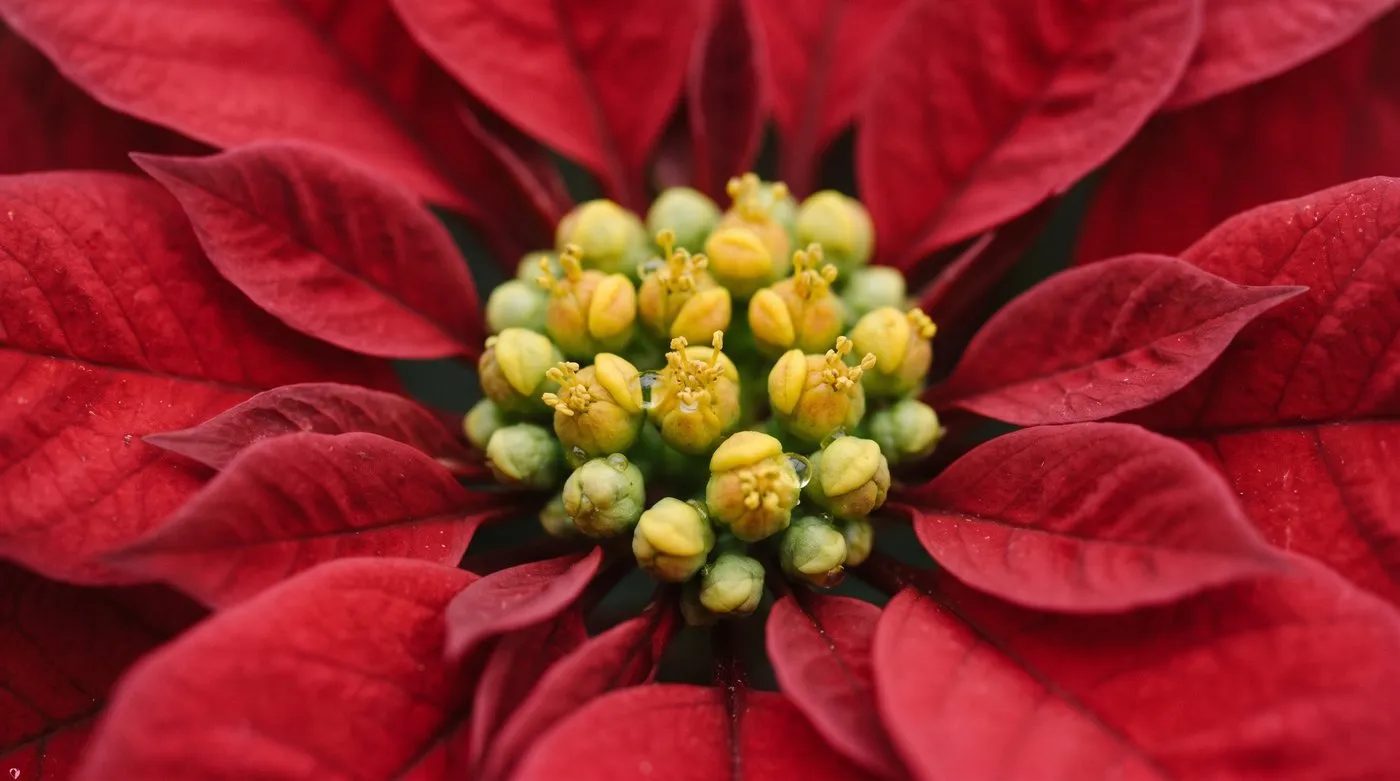
The tiny buds in the centre are the real flowers. Tight, unopened buds mean the plant is fresh and the colour will last.
How to choose a healthy poinsettia
Buy a poinsettia that has been kept indoors in a warm part of the shop. Ask for it to be wrapped for the journey home. Plants stacked outside a door or by a draughty entrance may already be chilled, even if they look fine on the day.
Check these before you buy:
- Buds in the centre are tight and yellow-green, not open or dropped
- Leaves go right down the stems, with no bare lower stems or yellow leaves
- Compost is just moist, not soggy or bone dry
- Bracts are evenly coloured, with no grey mould or bruising
A local garden centre is a good place to buy, as you can see how the plants have been kept. You can find one near you in the garden centre directory.

Ask for a paper or plastic sleeve and get it home quickly. Never leave a poinsettia in a cold car while you finish your shopping.
Warning: Even ten minutes in a car on a frosty day can be enough to chill a poinsettia. The damage often doesn’t show until the leaves drop a few days later.
Which poinsettia to choose
Red is the classic, but there are plenty of others. They all need the same care.
| Type | Colour | Size | Good for |
|---|---|---|---|
| Classic red | Deep red bracts | 25-40cm | Traditional Christmas display |
| White or cream | Ivory bracts | 25-40cm | Modern rooms and table centres |
| Pink and marbled | Pink, or pink edged with cream | 25-40cm | A softer festive look |
| Mini poinsettia | Usually red | 10-15cm | Windowsills, gifts and table places |
| ’Princettia’ types | Bright pink or white | 20-30cm, compact | Small spaces, lots of colour |
| ’Winter Rose’ types | Red with curled bracts | 25-35cm | A rose-like, unusual look |
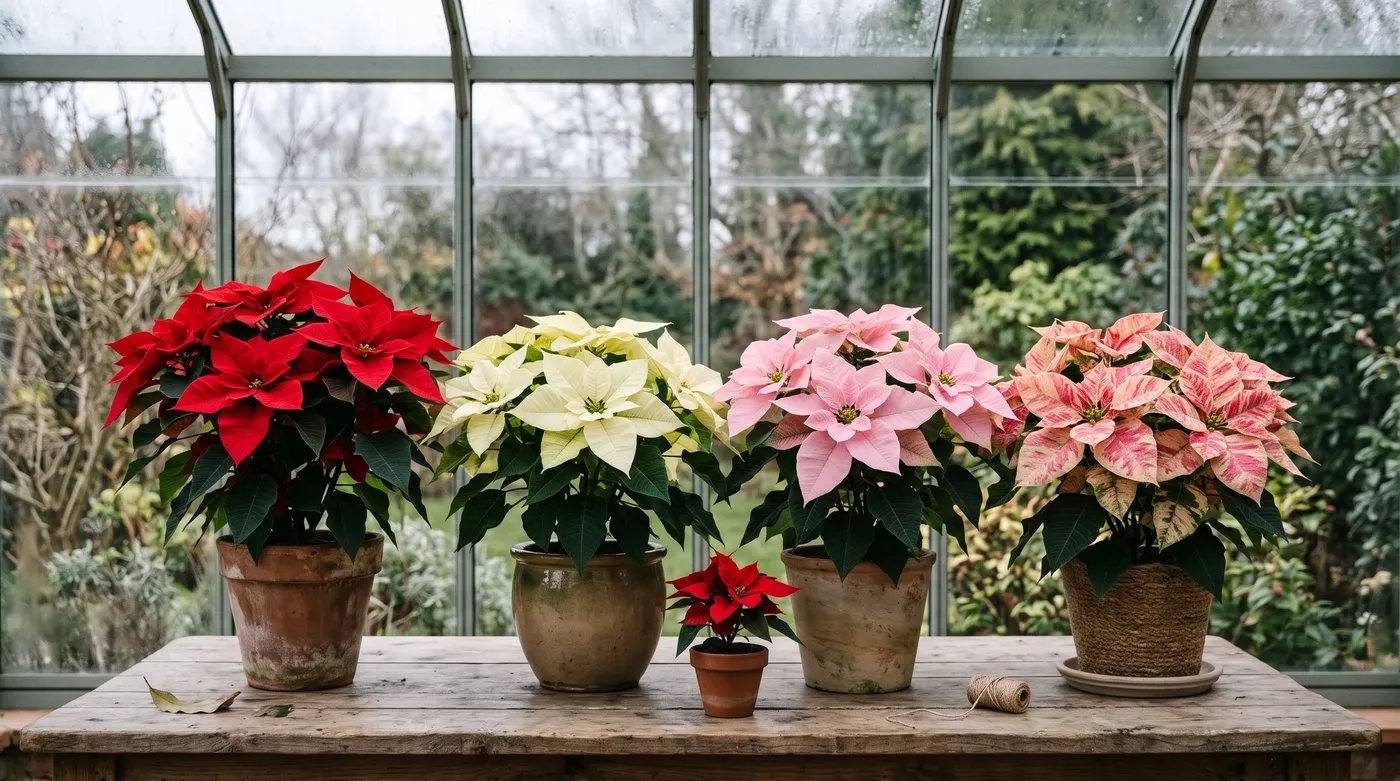
Red, white, pink and marbled poinsettias, with a mini one in front. They all need the same care.
Prices vary a lot. Roughly, expect £3-5 for a mini plant, £6-12 for a standard pot and £15-30 for a large or multi-stemmed one.
Where to put a poinsettia at home
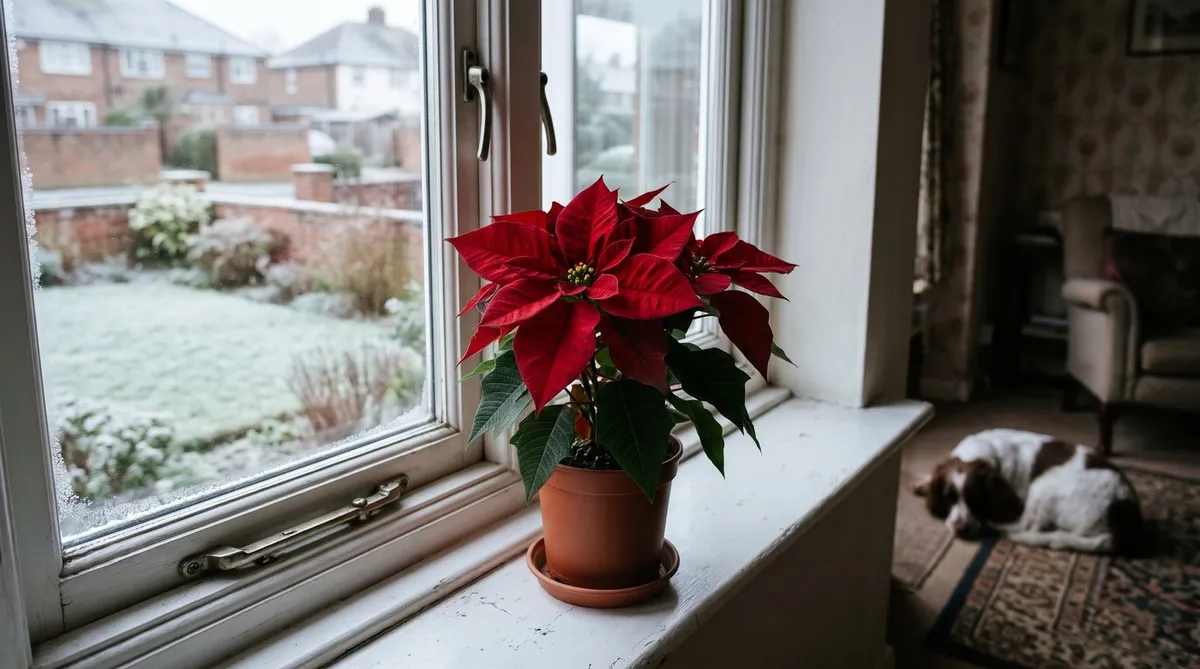
Put your poinsettia in the brightest spot in a room kept at about 15-21°C. A south- or west-facing windowsill is ideal by day, as winter sun isn’t strong enough to scorch it.
Watch out for these at night:
- Behind closed curtains, a windowsill gets very cold. Move the plant into the room before you draw them.
- Next to a radiator or fire, it dries out fast and the bracts fade.
- Near an outside door, every cold blast chills it.
A cool hallway is fine for a few hours as a festive display. Keep it in a warm room the rest of the time. If your home is dark, read the guide to low-light houseplants for plants that cope better.
How often to water a poinsettia
Water a poinsettia when the top 2cm of compost feels dry. In a warm room that’s usually every five to seven days. Check with your finger rather than watering on a set day.
Take it to the sink, water until it runs out of the bottom, and let it drain for ten minutes. Then put it back. Most poinsettias come in a foil or plastic sleeve, which holds water like a bucket. Tear a hole in the bottom or lift the plant out to water it.
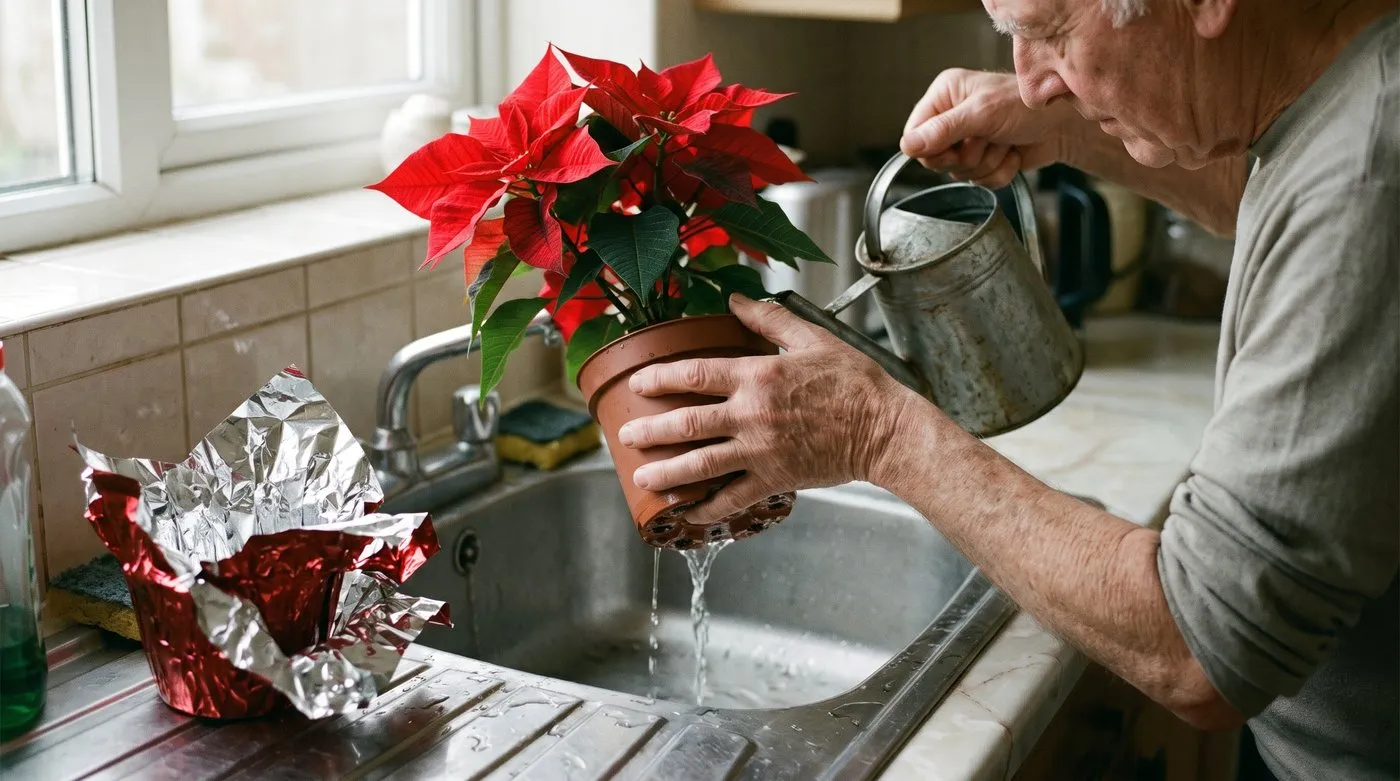
Water at the sink and let it drain. A poinsettia sitting in water in its foil sleeve will rot at the roots.
Use room-temperature water, not cold water from the tap. You don’t need to feed it while it’s in colour. Start feeding again in spring if you’re keeping it, using the routine in the guide to feeding houseplants.
Gardener’s tip: Lift the pot to check it. A dry poinsettia feels surprisingly light. Once you know the difference, you’ll never overwater it again.
Why poinsettia leaves drop, wilt or turn yellow
Most poinsettia problems come from cold, draughts or the wrong amount of water. Find the symptom below, fix the cause, and the plant usually settles down.
| What you see | Likely cause | What to do |
|---|---|---|
| Green leaves falling, often days after buying | Cold on the way home, or a draught | Move it somewhere warm and still. It may lose a few more, then stop |
| Wilting with wet compost | Overwatering, roots starting to rot | Let it drain and dry out. Empty the foil sleeve |
| Wilting with dry, light compost | Too dry, often near a radiator | Water well at the sink, then move it away from the heat |
| Yellow lower leaves | Too wet, too dark, or both | Water less and move to a brighter spot |
| Bracts fading or going green | Age, too dark or too warm | Normal by late winter. A bright, cooler room slows it |
| Sticky leaves, tiny white flies | Whitefly | See the whitefly guide |
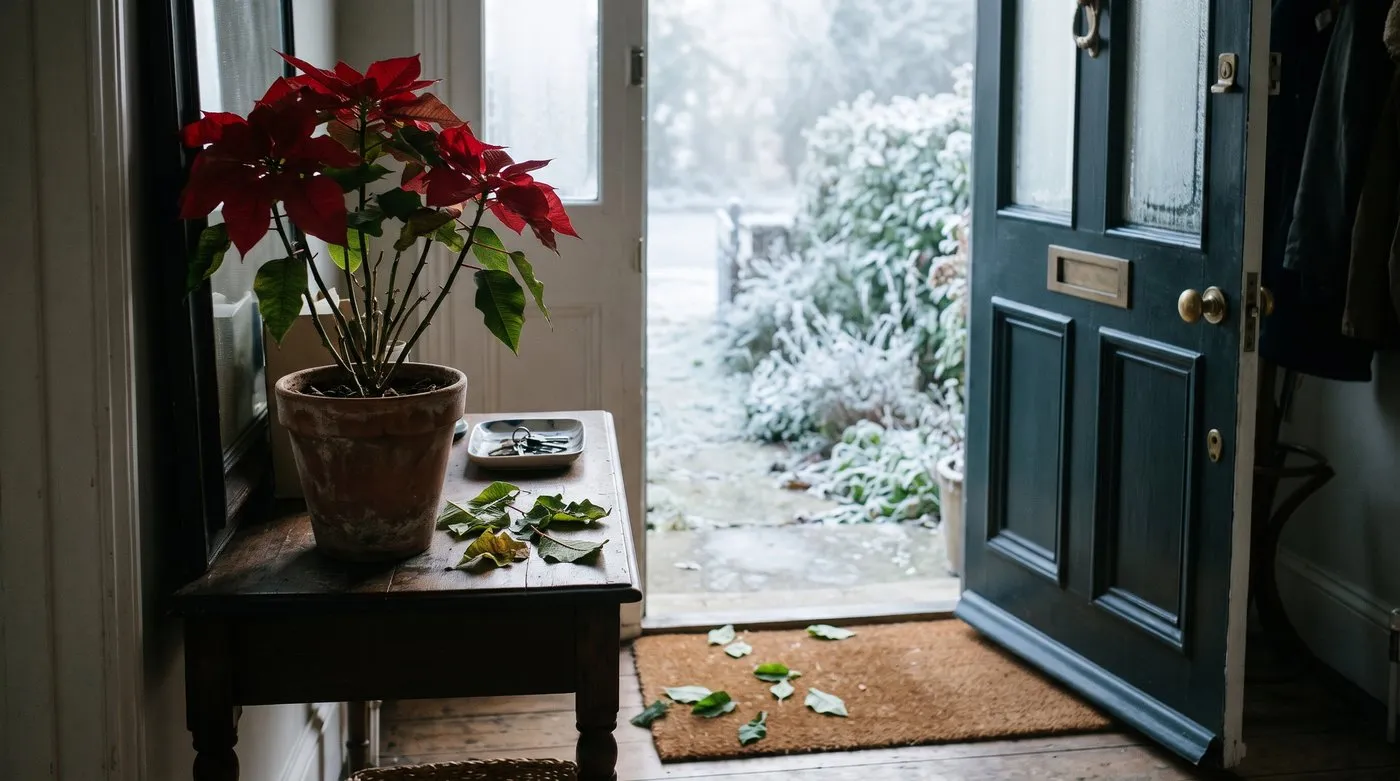
A plant by a front door gets a cold blast every time it opens. Leaf drop like this is the usual result.
Are poinsettias poisonous to pets and children?
Poinsettias are mildly toxic, not deadly, despite their reputation. The milky sap can make the mouth sore and cause drooling or sickness if a pet or child chews the leaves.
Keep the plant on a shelf or table out of reach, especially from puppies, kittens and toddlers. Wear gloves when you cut it, as the sap can irritate skin. People with a latex allergy should take extra care, because the sap is a type of latex. Our guides to plants toxic to cats and plants toxic to dogs cover other festive plants such as mistletoe and holly.
How long do poinsettias last?
A poinsettia stays colourful for six to twelve weeks with good care. Buy one in early December, keep it warm and don’t overwater it, and it often looks good until February or March.
After that, most people put it in the green waste or on the compost heap, which is perfectly fine. If you’d like a challenge, you can keep it and get it to colour up again.
How to get a poinsettia to turn red again
To turn a poinsettia red again, give it 14 hours of total darkness every night for about eight weeks from early October. Before that, it needs a rest, a trim and a summer of growth.
Rest and cut back in spring
When the bracts fade in March or April, water a little less and let it rest. In May, cut each stem back to about 10-15cm, just above a leaf joint. Wear gloves because of the sap. Then repot it into fresh peat-free houseplant compost, one size up, using the steps in how to repot houseplants.
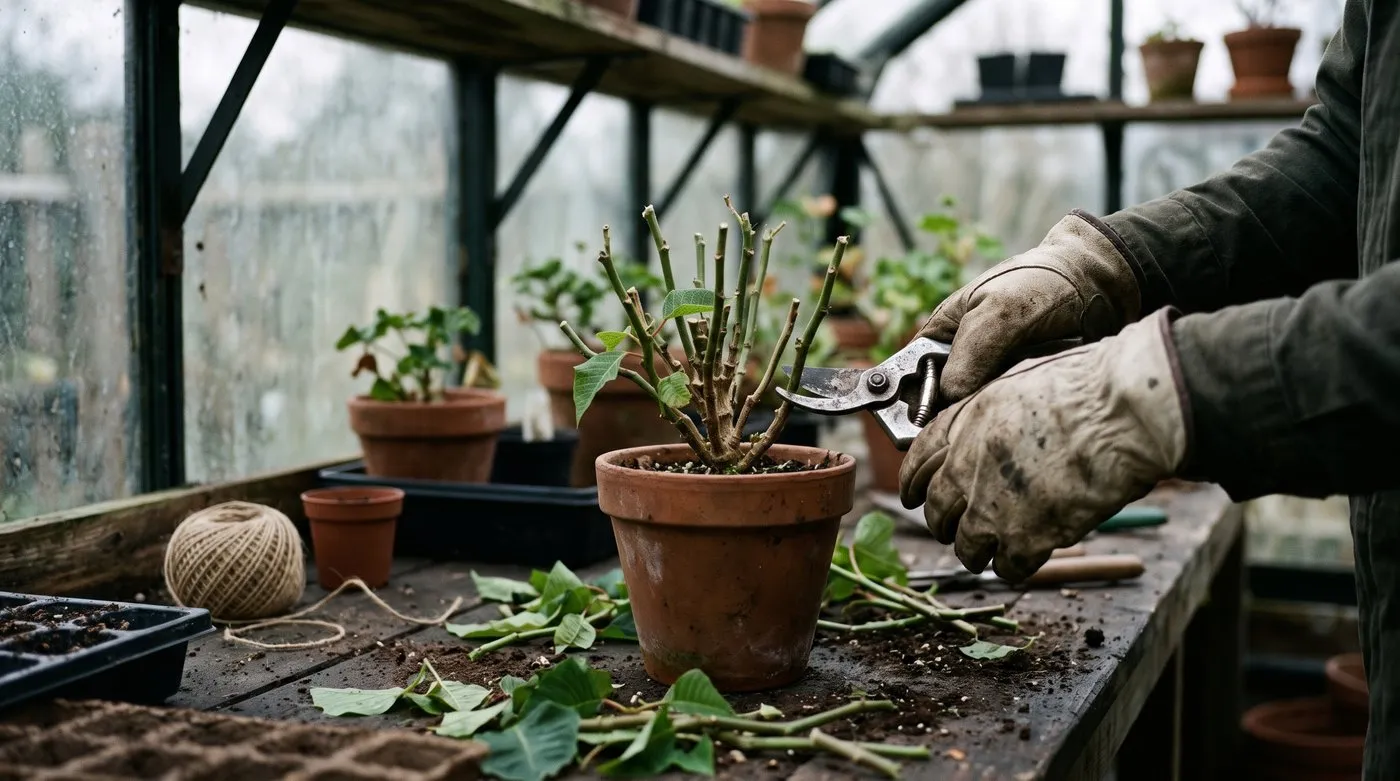
Cut each stem back to 10-15cm in May. New shoots grow from the leaf joints below the cut.
Grow it on over summer
Water it normally and feed every two weeks with a balanced houseplant feed. It can go outside in a sheltered, lightly shaded spot from June, once nights are mild. Bring it back in by early September, before nights turn cold. Pinch out the tips in July to keep it bushy.
Give it long nights from October
From early October, every evening at about 5pm, cover it with a large cardboard box or put it in a dark cupboard. Uncover it at about 7am and put it back in a bright spot. Even a little light, such as a lamp switched on in the room, can stop it colouring.
Keep going until you see the bracts colouring, usually by early December. Then you can stop and enjoy it.
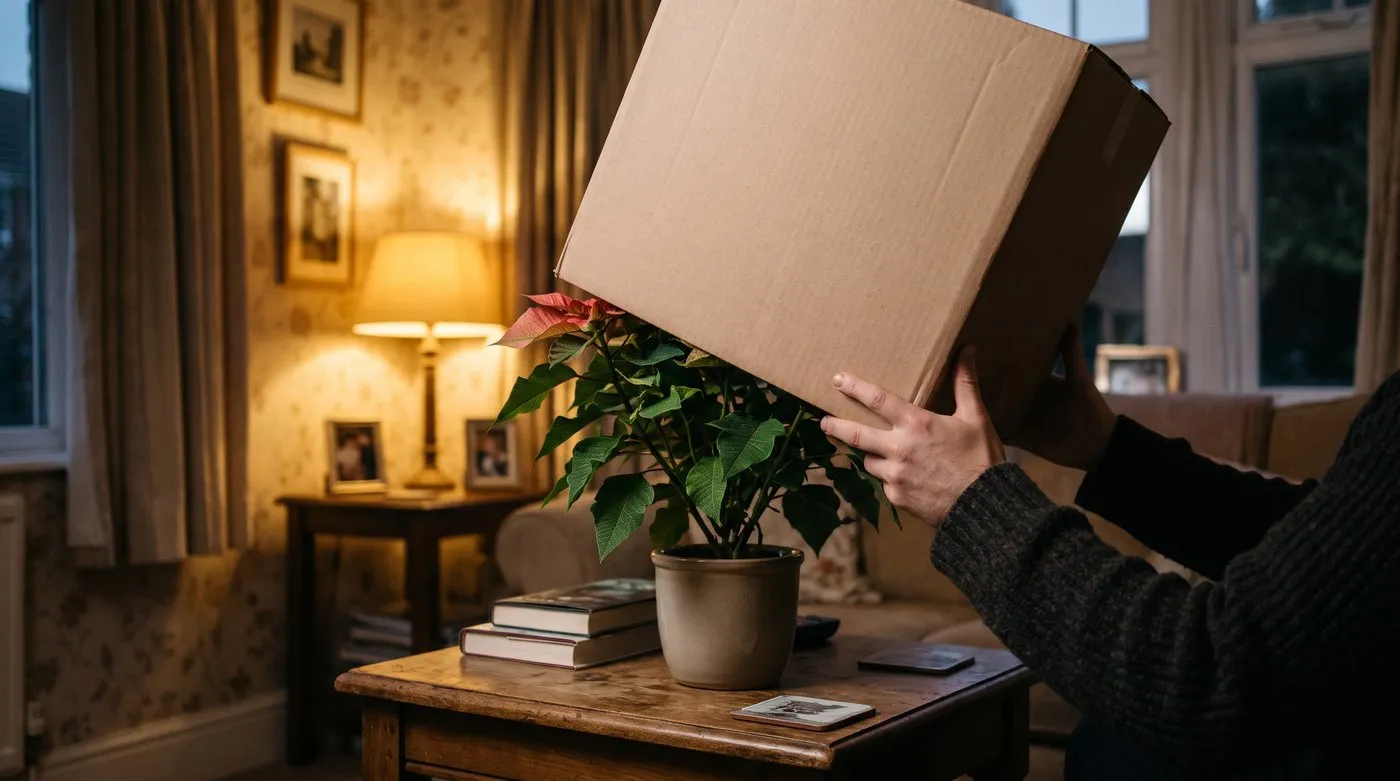
A cardboard box every evening from early October gives it the long nights it needs. Uncover it each morning.
Poinsettia care calendar
This month-by-month plan covers buying, keeping and reflowering a poinsettia in a UK home.
| Month | What to do |
|---|---|
| November to December | Buy indoors, wrapped. Keep at 15-21°C in bright light. Water when the top feels dry |
| January to February | Keep warm and bright. Water less as growth slows. Remove dropped leaves |
| March to April | Bracts fade. Compost it, or water lightly and let it rest |
| May | Cut stems back to 10-15cm. Repot into fresh compost. Start watering and feeding |
| June to August | Grow on in a bright spot, or outside in shelter. Feed every two weeks. Pinch out tips in July |
| September | Bring indoors by early September. Keep in a bright room |
| October to November | 14 hours of darkness every night, bright light by day |
| December | Bracts colour up. Stop the dark treatment and enjoy it |
Common poinsettia mistakes
Leaving it in the car. A cold car chills a poinsettia in minutes. Take it straight home, wrapped, and go there last on your shopping trip.
Watering in the foil. The decorative sleeve traps water, so the roots sit in a puddle and rot. Water at the sink, or tear a drainage hole in the bottom of the sleeve.
Putting it behind the curtains. A windowsill can drop close to freezing at night once the curtains are drawn. Bring it into the room every evening.
Standing it on the radiator shelf. Dry heat makes it wilt and the bracts fade fast. A spot a metre or two away is much better.
Expecting colour without darkness. A kept poinsettia stays green if it gets light every evening. It needs long, unbroken dark nights from October.
Frequently asked questions
How often should I water a poinsettia?
Water when the top 2cm of compost feels dry. In a warm room that is usually every five to seven days. Water until it drains, then tip away any water left in the saucer or foil wrap after ten minutes.
Why are the leaves falling off my poinsettia?
Leaf drop is usually caused by cold or a draught. A chilly trip home, a cold windowsill at night or a door opening onto frosty air can all do it. Too much or too little water causes it too.
How long does a poinsettia last?
With good care, the colour lasts six to twelve weeks. A healthy plant bought in early December often stays bright into February or March. The plant itself can live for years.
Can I keep my poinsettia for next Christmas?
Yes, but it takes some effort. Cut it back in May, grow it on over summer, then give it 14 hours of darkness each night from early October. The colour returns after about eight weeks.
Are poinsettias poisonous to cats and dogs?
Poinsettias are mildly toxic, not deadly. The milky sap can make a pet’s mouth sore and may cause drooling or sickness. Keep the plant out of reach, especially from puppies and kittens.
Where is the best place to put a poinsettia?
Put it in the brightest spot in a room kept at 15-21°C. A windowsill is fine by day, but move it into the room at night if you close the curtains. Keep it away from radiators, fires and outside doors.
Can poinsettias go outside in the UK?
Not in winter. Poinsettias are tender and damaged by temperatures below about 10°C. A sheltered spot outside suits them from June to August, once nights are reliably mild.
For more festive colour indoors, browse our plant guides, then read the guide to growing amaryllis for big blooms from January.
Our team produces practical UK gardening guidance from source research, contributor records and established horticultural practice. Editorial standards are overseen by Matt W.