Key takeaways
- Mistletoe is a semi-parasite that grows on tree branches, mainly apple, lime, hawthorn and poplar
- Sow ripe, squishy berries onto a thin branch in February or March, not Christmas berries
- It takes two or three years to show leaves and up to seven years to berry
- Only female plants have berries, so sow several seeds to get both sexes
- The berries and leaves are poisonous to people and pets, so hang it out of reach
- Always ask the landowner before cutting mistletoe from any tree
Mistletoe is an evergreen plant that grows on tree branches, most often apple, lime, hawthorn and poplar. You can grow your own by pressing ripe berries onto a thin apple branch in late winter. Be patient, though. It takes a few years to grow into a ball. The berries are poisonous, so hang your Christmas sprig well out of reach of children and pets.
Here’s how to grow mistletoe and which trees suit it. You’ll also find how to keep a bought bunch fresh, and what to do if someone eats the berries.
What is mistletoe?
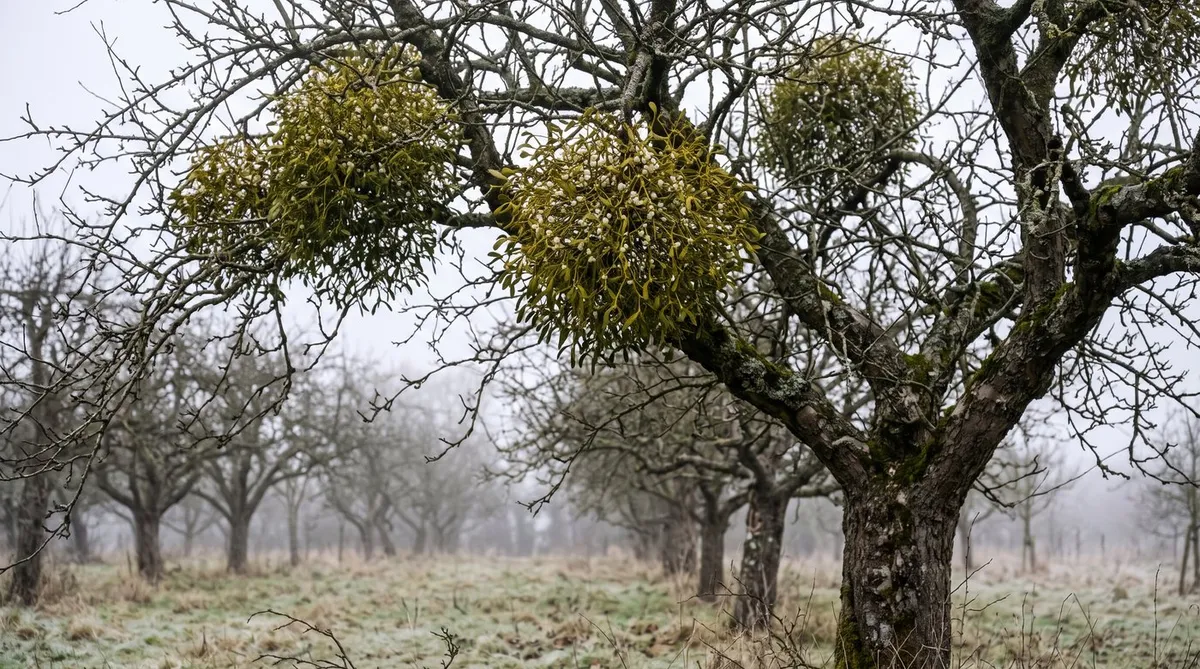
The mistletoe you see in the UK is Viscum album. It’s a semi-parasite. Its roots grow into a tree branch and take water and minerals. Its green leaves make its own food from sunlight.
It grows as a rounded ball of forked stems with pairs of leathery, yellow-green leaves. Female plants carry sticky white berries from November to March. Male plants never berry.
You’ll see the most mistletoe in the south and west of England, especially Herefordshire, Worcestershire, Gloucestershire and Somerset. It’s rare in Scotland and the north. It likes open spots such as orchards, gardens, parks and churchyards rather than deep woodland.
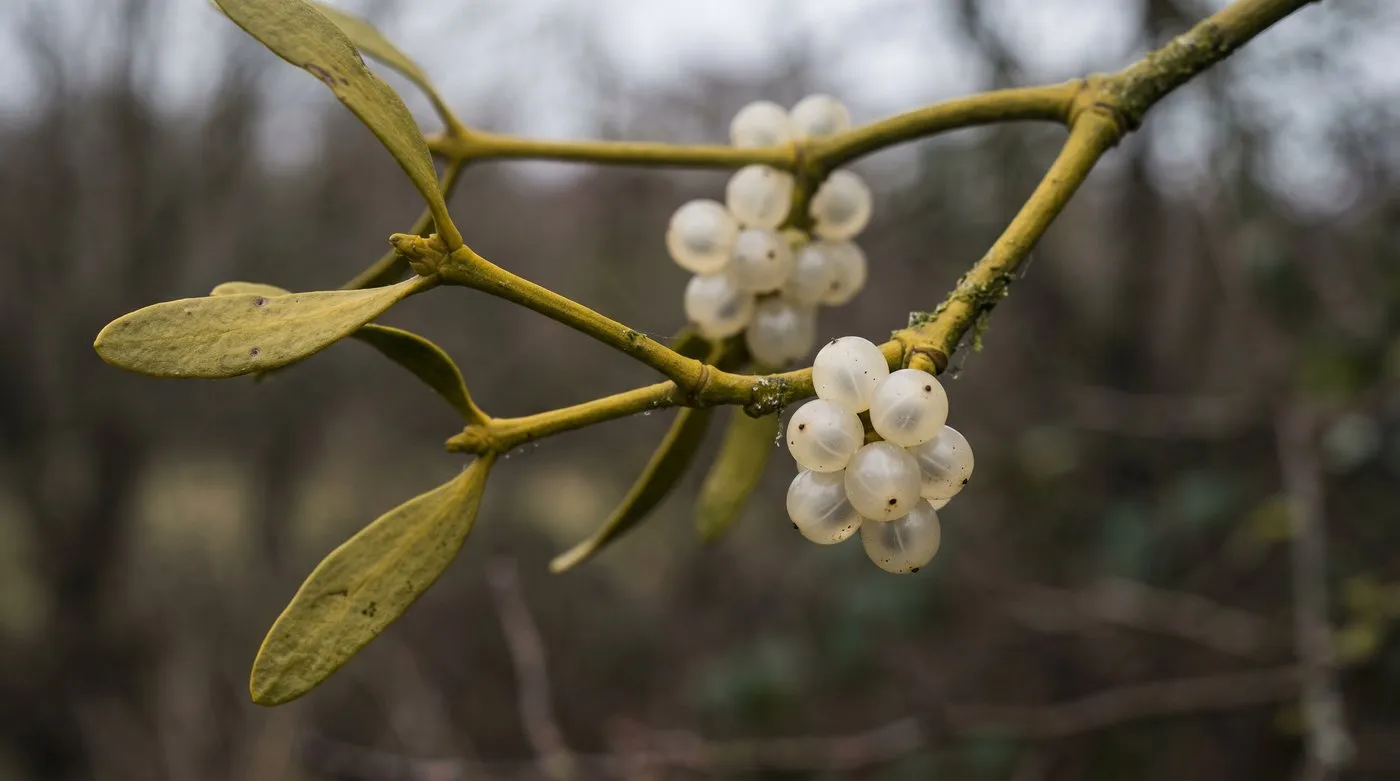
Mistletoe has forked stems, paired leathery leaves and sticky white berries. Only female plants have berries.
Which trees does mistletoe grow on?
Apple trees are the favourite host in the UK. These trees all suit it well:
| Tree | How well mistletoe grows |
|---|---|
| Apple and crab apple | Very well. The most common UK host |
| Lime | Very well. Look for big balls in parkland limes |
| Hawthorn | Well |
| Poplar | Well |
| Rowan and willow | Sometimes |
| Pear | Rarely |
| Oak | Very rarely |
The host doesn’t need to match the tree your berries came from. A berry from a lime will grow happily on an apple. Choose a healthy, established tree rather than a young or struggling one. See our guides to growing apple trees, crab apples and hawthorn if you’re planting a host.
How to grow mistletoe from berries
Growing mistletoe is easy to try and fun to watch, even if it takes a while. February and March are the best months to sow.
- Get ripe berries. You need soft, squishy berries in late winter. Christmas berries are often unripe. Keep a sprig in a cool, light shed or porch and use the berries in February.
- Pick a branch. Choose a smooth, healthy branch about as thick as a pencil or your finger. Pick one in a sunny, open spot rather than deep shade.
- Squeeze out the seed. Gently squeeze a berry so the sticky seed pops out.
- Wipe it on. Smear the seed onto the underside of the branch, where it’s sheltered and dew collects. It sticks on its own. Don’t cut the bark or cover the seed.
- Sow several. Put three or four seeds along the same branch. Many get eaten by birds, and more seeds give you a better chance of a male and a female.
- Label it. Tie a label on the branch so you can find the spot again.
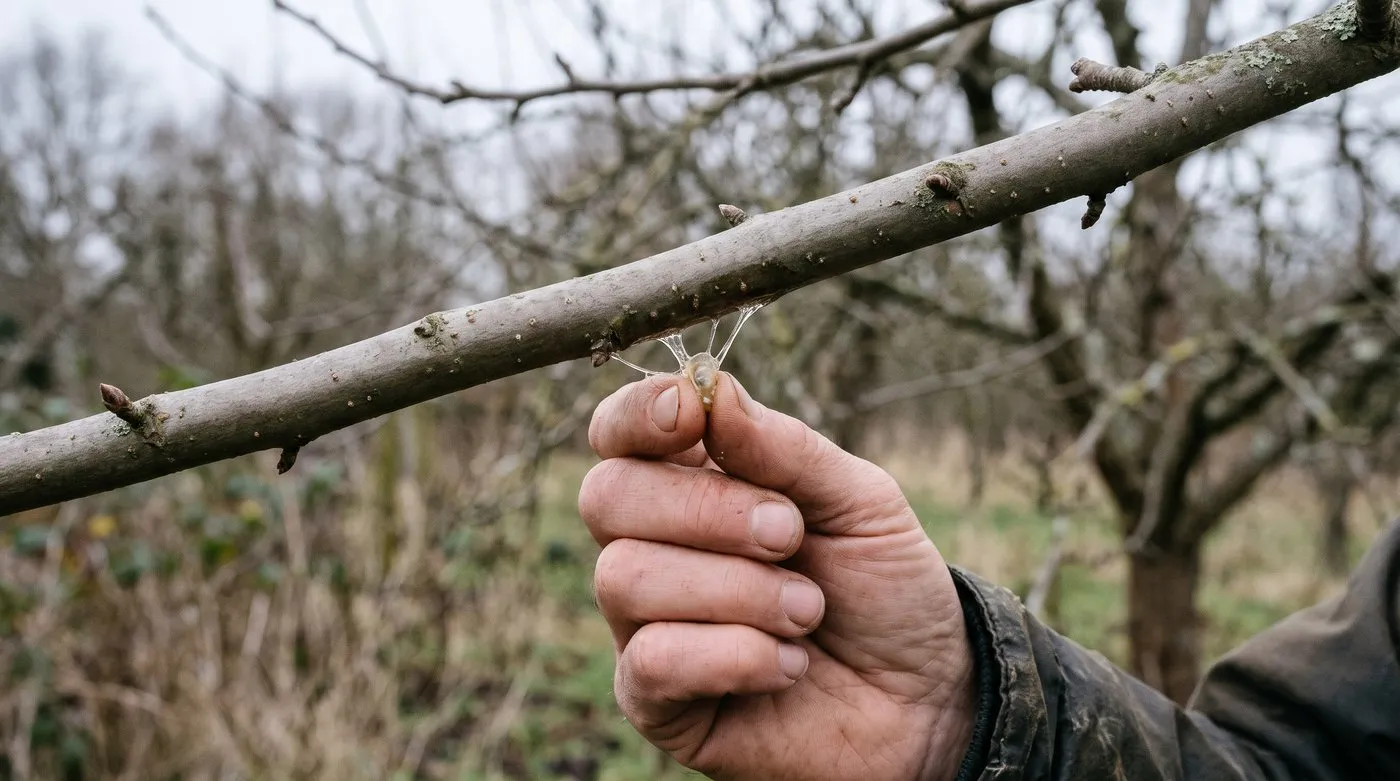
Squeeze out the sticky seed and wipe it onto the underside of a thin branch. It holds on by itself.
Gardener’s tip: Sow on a few different branches and on more than one tree if you can. Seedlings are fragile, and spreading your seeds out improves your chances.
How long does mistletoe take to grow?
This is one for patient gardeners. Here’s what to expect:
| Time after sowing | What you’ll see |
|---|---|
| A few months | The seed swells and a tiny green shoot bends towards the bark |
| Year 1 | Little change on the outside while it grows into the branch |
| Years 2 to 3 | The first pair of leaves appears |
| Years 4 to 5 | It branches out and may start to flower |
| Up to year 7 | Female plants start to carry berries |
Once a ball is established, you can cut stems for Christmas every year. It’s a lovely thing to have in your own garden.
Does mistletoe harm the tree?
A little, but not much in small amounts. One or two clumps won’t trouble a healthy apple tree. Big, heavy balls can weaken a branch, and lots of mistletoe can slow an older tree down.
Keep it in balance by cutting some each winter. Cut back hard if a branch starts to struggle. Old orchards often had mistletoe thinned every December, and the cut stems were sold for Christmas.
If you’ve spotted a twiggy ball in a bare birch, it might not be mistletoe. Our guide to witches’ broom shows how to tell the two apart.
Are mistletoe berries poisonous?
Yes. All parts of mistletoe are poisonous, including the berries and leaves. Eating the berries usually causes stomach upset, sickness and diarrhoea. Children can be more badly affected than adults, because a few berries go further in a small body.
Mistletoe is also poisonous to dogs and cats. Our guides to plants toxic to dogs and plants toxic to cats cover the symptoms to watch for.
Warning: If a child eats mistletoe, call NHS 111 or your GP for advice. Go to A&E if they seem unwell. If a pet eats any, call your vet straight away and take a sprig with you.
To keep everyone safe at Christmas:
- Hang mistletoe high, away from where children and pets can reach.
- Pick up fallen berries and leaves straight away.
- Wear gloves to handle it if you have sensitive skin, and wash your hands afterwards.
- Throw it out once it starts to dry and drop berries.
For a wider list of risky plants, see our guide to poisonous garden plants.
Mistletoe and wildlife
Mistletoe is great for wildlife. Mistle thrushes guard mistletoe bushes in winter and feed on the berries. Blackcaps, small warblers that now often winter in the UK, eat the berries too. They wipe the sticky seeds off their beaks onto twigs, which is how mistletoe spreads from tree to tree.
The rare mistletoe marble moth lives only on mistletoe, mainly in a few English counties. It’s one reason not to strip wild mistletoe. Our guide to helping wildlife in winter has more ways to support birds in the cold months.
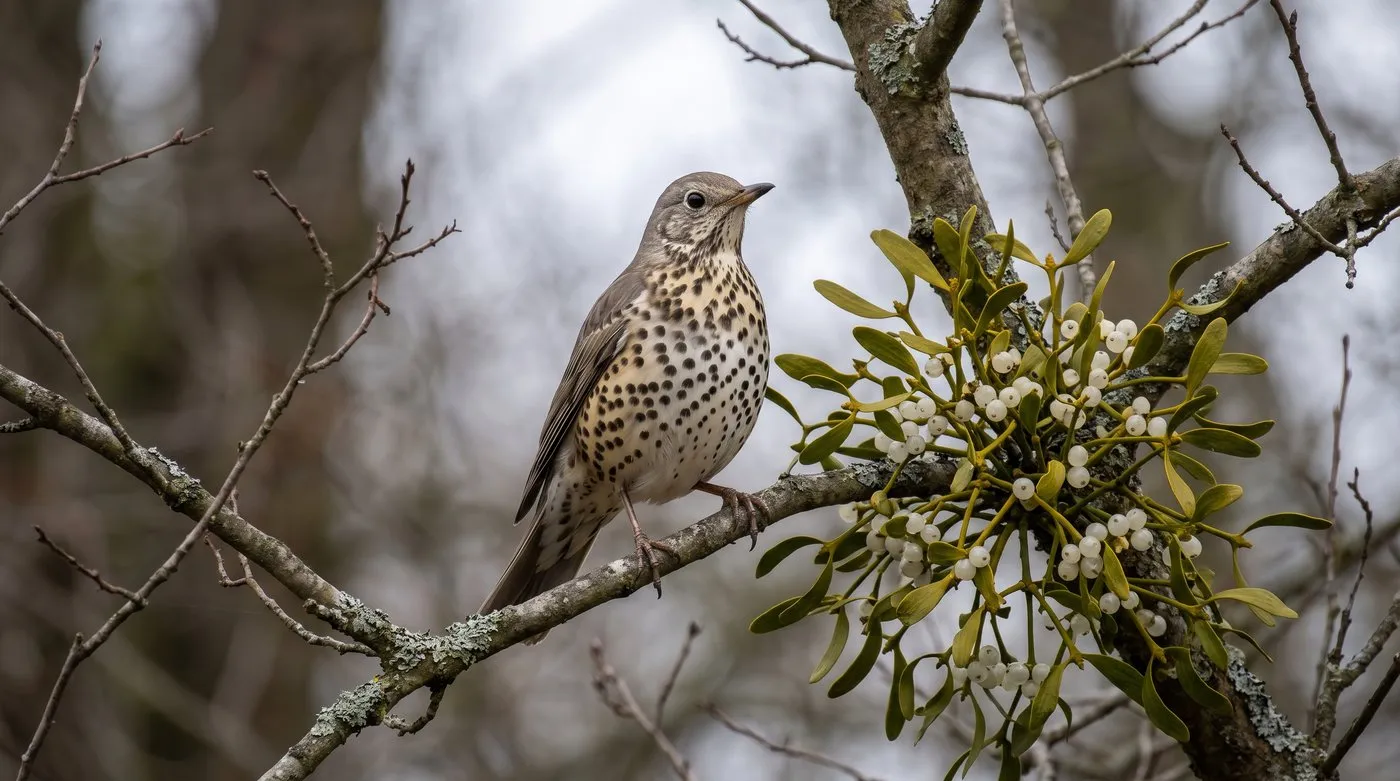
Mistle thrushes guard mistletoe bushes through the winter and feed on the berries.
Buying mistletoe and keeping it fresh
A lot of the UK’s Christmas mistletoe comes from old apple orchards in Herefordshire and Worcestershire. Tenbury Wells in Worcestershire is famous for its winter mistletoe sales. Garden centres, florists and markets sell bunches from late November.
When buying, look for:
- Fresh green leaves, not yellow or crispy ones
- Plump, white berries that aren’t wrinkled
- Firm stems that bend without snapping
Cut mistletoe keeps for two or three weeks. Store it somewhere cool, such as a shed or garage, until a few days before Christmas. If you want to sow the berries later, keep it in the light, or the seeds die. Mist it lightly every few days once it’s indoors.
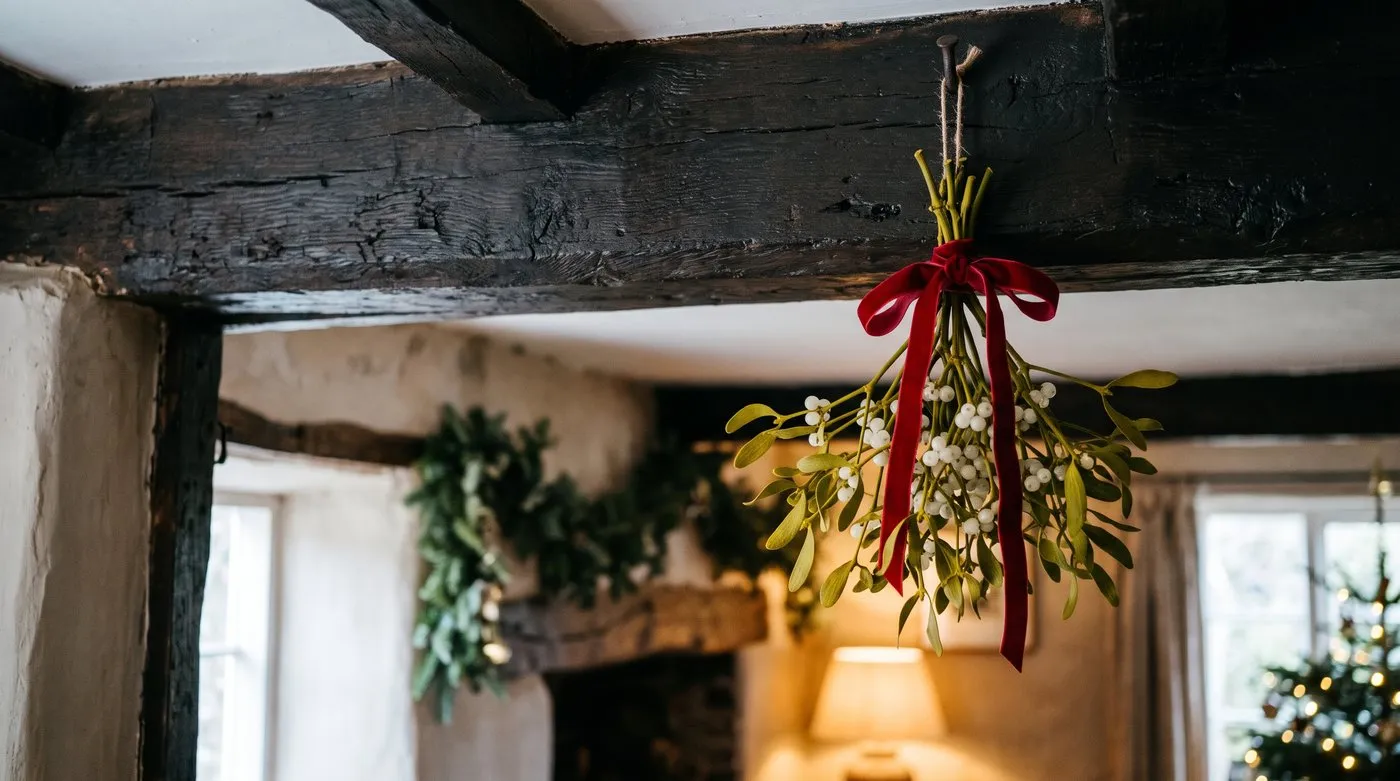
Hang mistletoe high in a doorway, out of reach of children and pets. Mist it every few days to keep it fresh.
Can you pick wild mistletoe?
Mistletoe isn’t a protected plant, but it belongs to whoever owns the tree. Always ask the landowner’s permission before cutting any. Take only a little, and leave plenty of berries for the birds.
Kissing under the mistletoe
The custom of kissing under the mistletoe was popular in Victorian England. One old rule says you should pick a berry for each kiss. When the berries run out, so do the kisses. It’s a good reason to keep a few spares, though not for eating.
Mistletoe calendar
| Month | What to do |
|---|---|
| November | Buy mistletoe from late in the month. Store it cool and light |
| December | Hang it high indoors. Thin the mistletoe in your own trees |
| January | Keep a berried sprig in a cool, light porch or shed for sowing |
| February to March | Sow ripe, squishy berries onto thin apple or hawthorn branches |
| April to October | Leave seedlings alone. Check labelled branches now and then |
Common mistakes with mistletoe
The most common mistake is sowing Christmas berries straight away. They’re often unripe and won’t grow. Wait until February, when they’ve gone soft.
Choosing a thick, old branch is another easy slip. The bark is too rough for the seed to get in. Go for a smooth branch about the thickness of your finger.
Cutting a slit in the bark sounds helpful, but it only lets disease into the tree. Just wipe the seed onto the bark.
Sowing a single seed often ends in disappointment. Birds eat lots of them, and you need a female and a male for berries. Sow several.
Hanging mistletoe low, where toddlers and dogs can reach fallen berries, is a real risk. Keep it high and sweep up anything that drops.
Frequently asked questions
Are mistletoe berries poisonous?
Yes. All parts of mistletoe are poisonous, and the berries are the part people most often swallow. Eating them usually causes stomach upset, but children and pets can be more badly affected. Call NHS 111 or your vet if any are eaten.
Can I grow mistletoe from my Christmas mistletoe?
Usually not straight away, because Christmas berries are often unripe. Keep the sprig in a cool, light place and sow the berries in February or March, once they’re soft and squishy.
What trees does mistletoe grow on in the UK?
Apple is the most common host in the UK. Lime, hawthorn and poplar are also popular. It grows on oak only very rarely.
How long does mistletoe take to grow?
It’s slow. Seeds can take months to germinate, and leaves take two or three years to appear. Berries can take up to seven years.
Does mistletoe harm the tree?
A little. Mistletoe takes water and minerals from the tree but makes its own food from its green leaves. One or two clumps won’t hurt a healthy apple tree, but too much can weaken branches.
Is it illegal to pick mistletoe?
Mistletoe isn’t a protected plant, but it belongs to whoever owns the tree. Always ask the landowner’s permission before cutting any.
Why does my mistletoe have no berries?
It’s probably a male plant, which never berries. A female plant needs a male nearby to produce berries, so sow several seeds to get both.
For more festive greenery, read our guides to growing holly and making a Christmas wreath. Then find a garden centre near you for fresh mistletoe this December.
Our team produces practical UK gardening guidance from source research, contributor records and established horticultural practice. Editorial standards are overseen by Matt W.