Key takeaways
- Plants absorb the same nutrient ions whether the source is synthetic or organic
- Synthetic feeds act fast and give precise NPK ratios; organic feeds release slowly
- Organic feeds build soil structure and microbe life; synthetics do not
- Overusing synthetics can cause salt build-up and leaching into waterways
- Use synthetic for quick fixes and containers, organic for long-term soil health
- Combining both gives most gardens the best results
Walk into any garden centre and the fertiliser shelf splits two ways: bright boxes of synthetic granules promising fast results, and sacks of manure, bonemeal, and seaweed promising healthy soil. The artificial-versus-natural question divides gardeners, but the honest answer is that both have their place, and understanding how each actually works lets you choose well rather than follow dogma. This guide compares synthetic and organic fertilisers on speed, soil health, cost, and environmental impact, then sets out exactly when to reach for each.
The starting point is a fact that settles half the argument: to the plant’s roots, a nutrient is a nutrient, whatever its source.
How plants take up nutrients
Plants do not absorb manure, granules, or compost. They absorb simple dissolved ions: nitrogen as nitrate or ammonium, phosphorus as phosphate, potassium as potassium ions, and so on. A nitrate ion released by rotting manure and a nitrate ion from a synthetic bag are chemically identical, and the root cannot tell them apart. This is why the claim that organic produce is more nourishing because of the feed is not supported at the level of plant nutrition.
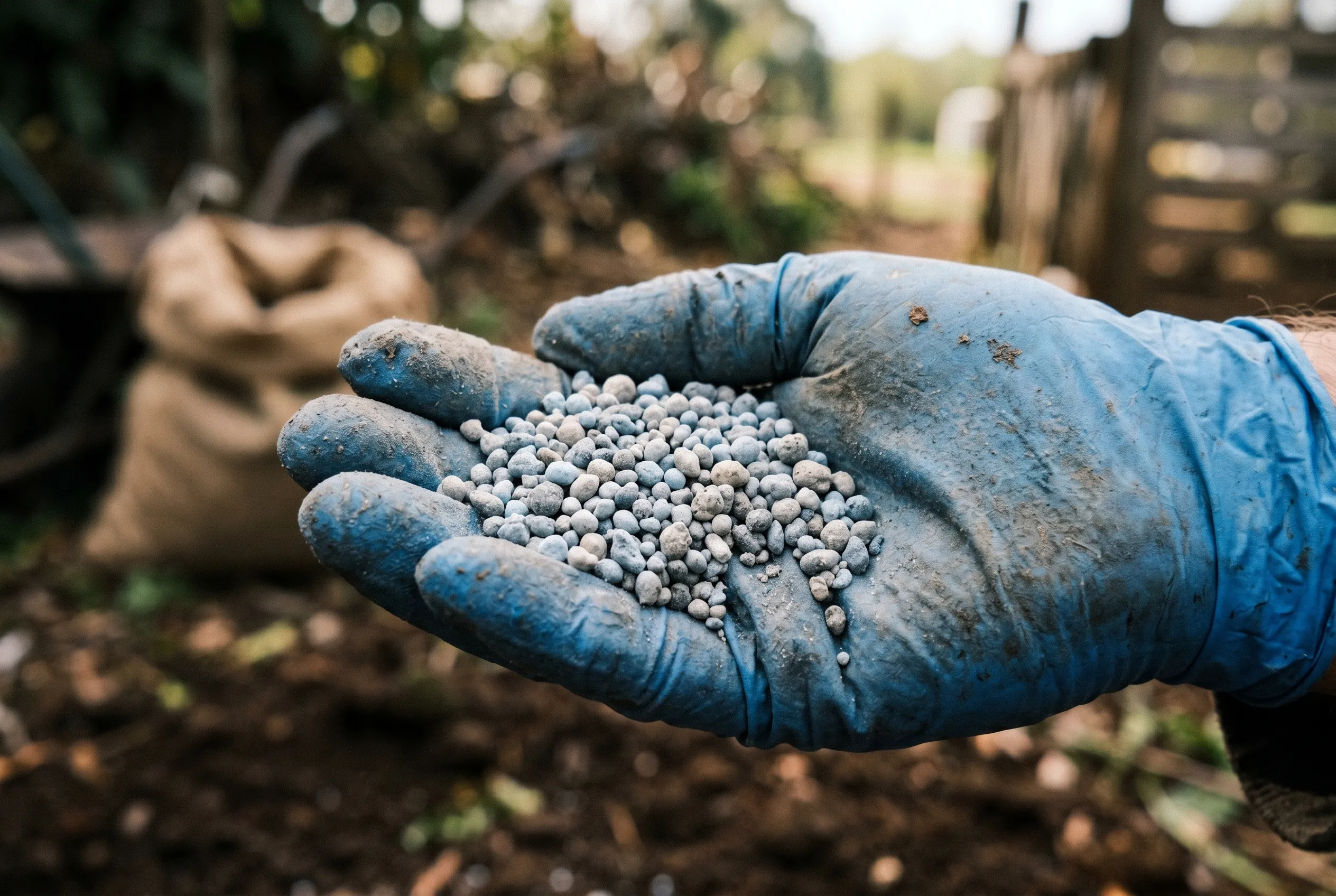 Synthetic granules are soluble salts that release nutrient ions within days, ready for the plant to take up immediately.
What artificial fertilisers do well
Artificial fertilisers are manufactured to deliver nutrients fast and in precise ratios. A box labelled 20-20-20 contains exactly that balance of nitrogen, phosphorus, and potassium, so you can target a known need. Their strengths are real:
- Speed. They correct a visible deficiency in days, where an organic feed takes weeks.
- Precision. Exact NPK ratios let you match a crop’s needs, such as high-potash feed for fruit and flowers.
- Convenience and cost per unit. They are concentrated, light to carry, and cheap per unit of nutrient.
- Clean and odourless. Useful for containers, houseplants, and small spaces.
The trade-offs come with overuse. Because they are soluble salts, excess synthetic feed leaches through the soil into groundwater and watercourses, and repeated heavy use can cause salt build-up that harms roots and soil organisms. They also add no organic matter, so they feed the plant while doing nothing for the soil. Used sparingly and accurately, though, they are a precise tool. For lawns in particular, where a quick green-up is often wanted, our guide on feeding the lawn covers their place.
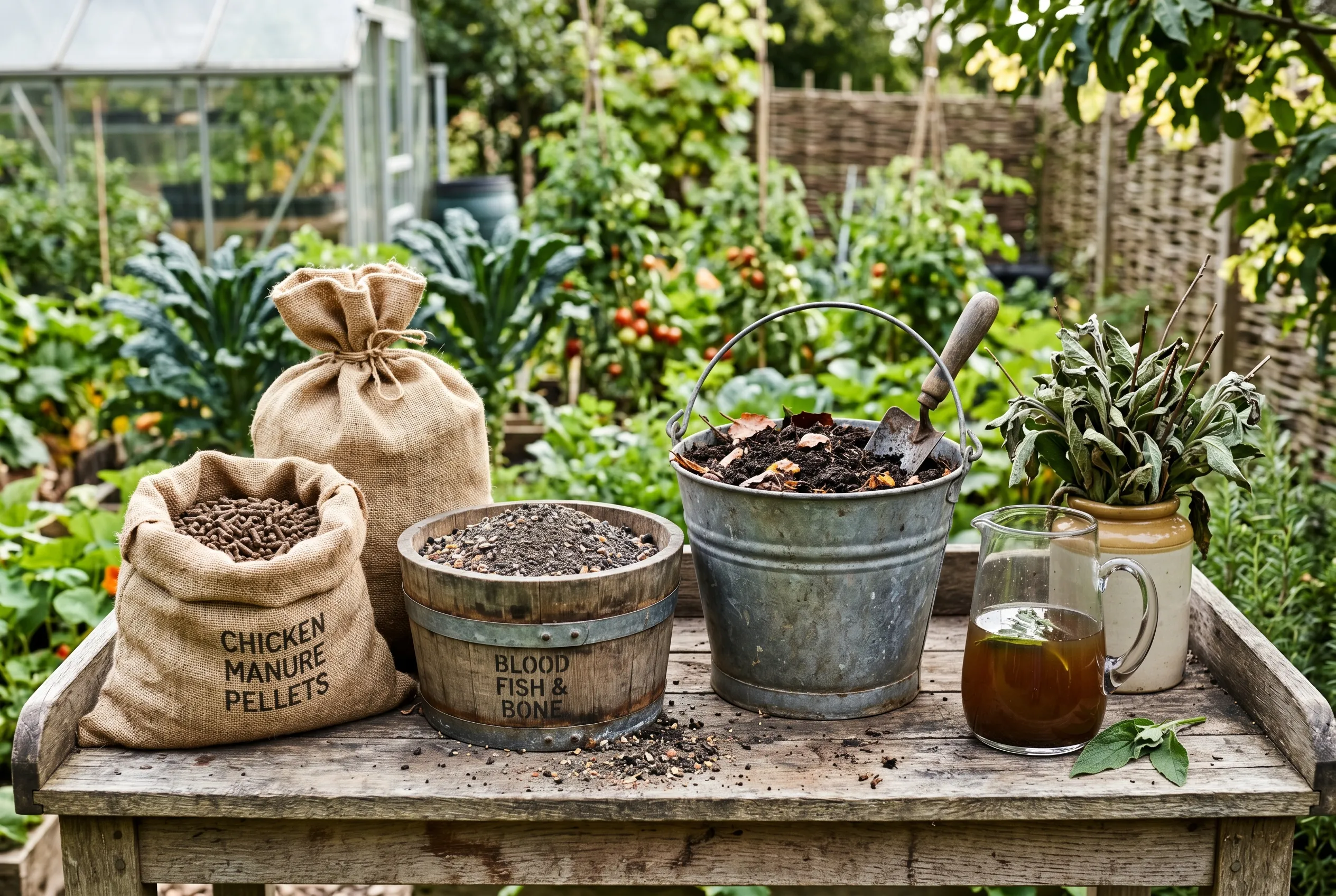 Natural feeds such as pelleted manure, blood fish and bone, compost, and comfrey release nutrients slowly as microbes work.
What natural fertilisers do well
Natural organic fertilisers, manure, compost, bonemeal, blood fish and bone, pelleted chicken manure, seaweed, and comfrey feeds, work differently. Their nutrients are bound up in organic matter and released slowly as soil microbes digest them. This slow release brings a different set of strengths:
- Soil building. Organic feeds add humus that improves structure, drainage, and water-holding.
- Feeding the soil food web. They nourish the bacteria, fungi, and worms that drive natural fertility.
- Slow, steady release. Nutrients become available gradually, with little leaching and less risk of scorch.
- Trace elements. Many carry a broad range of minor nutrients that synthetics lack.
The philosophy behind organic growing, set out well in Garden Organic’s soil advice, is to feed the soil, not the plant, trusting a living soil to feed the crop. The trade-offs are slower action, bulkier, heavier materials, variable and imprecise nutrient content, and sometimes smell. You cannot correct an acute deficiency quickly with manure. But over years, organic feeding builds a soil that needs less intervention. Our guides on the feed-the-soil organic approach and comparing animal manures cover the materials in depth.
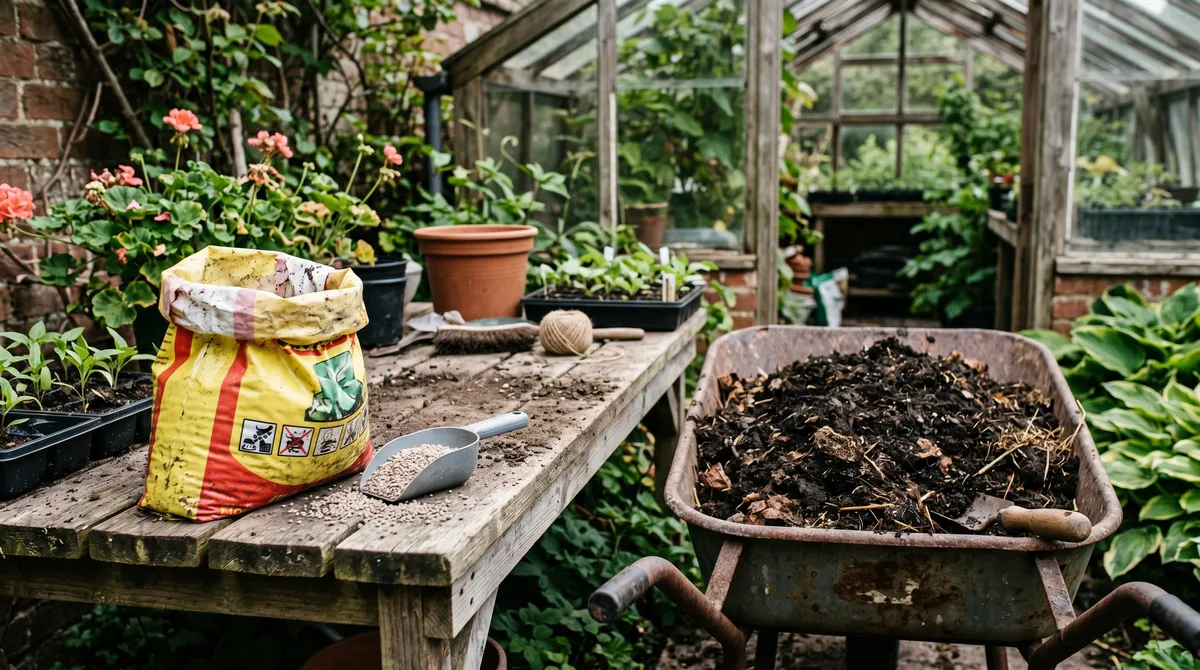
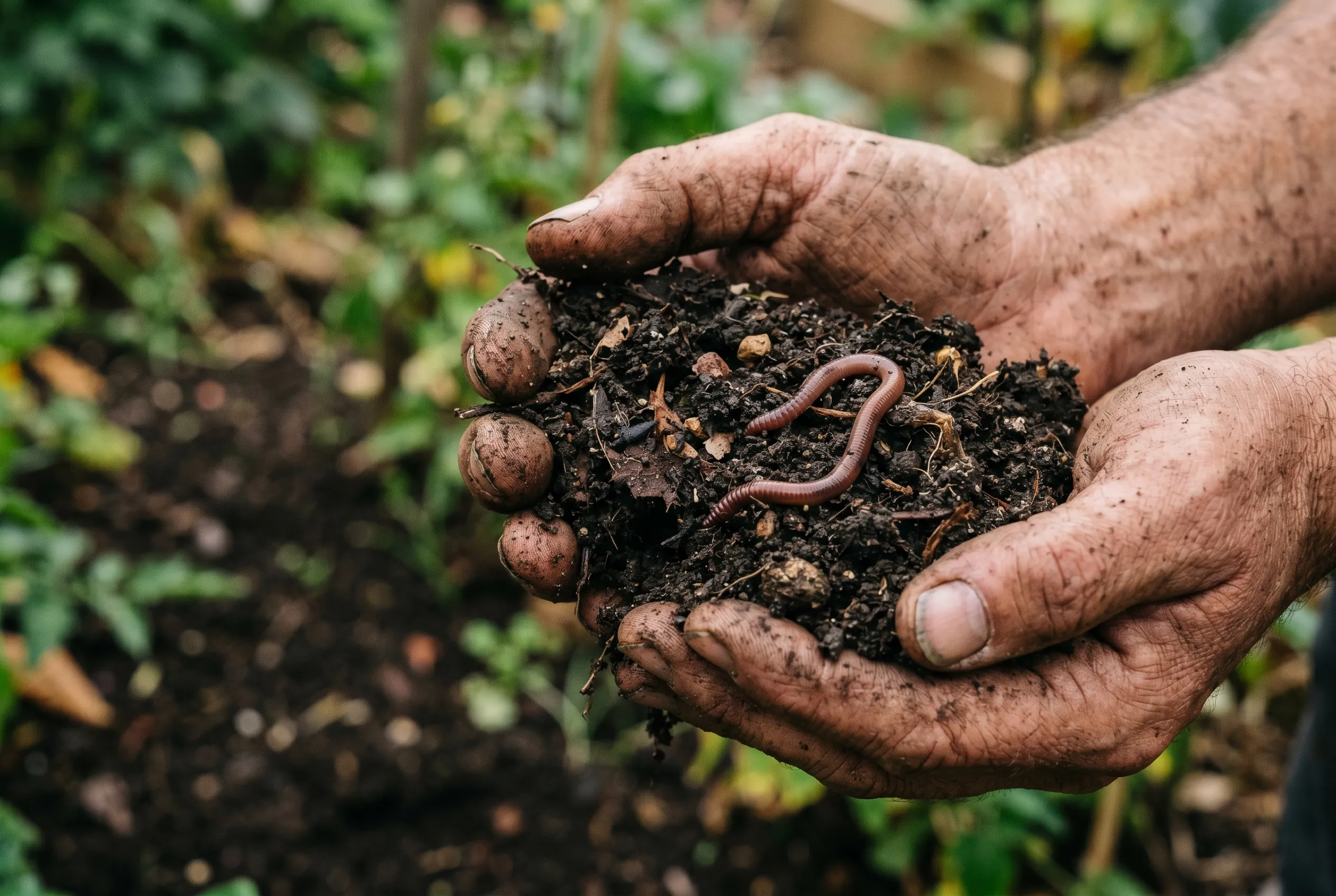 Organic feeding builds dark, living soil full of worms and microbes, the long-term fertility that synthetics cannot supply.
Artificial versus natural: side by side
The clearest way to choose is to compare the two on the factors that matter.
| Factor | Artificial (synthetic) | Natural (organic) |
|---|---|---|
| Speed of action | Fast, days | Slow, weeks to months |
| Nutrient precision | Exact NPK ratios | Variable, approximate |
| Effect on soil life | Neutral to harmful if overused | Builds microbes and structure |
| Leaching risk | Higher, soluble salts | Lower, slow release |
| Organic matter added | None | Substantial |
| Cost per unit nutrient | Lower | Higher, bulkier |
| Best for | Quick fixes, containers, lawns | Long-term soil, vegetables |
Neither column is all good or all bad. Synthetics are a scalpel for precise, immediate correction. Organics are a long game that builds fertility you cannot buy in a box. The skill is matching the tool to the job.
When to choose which
Choose synthetic fertiliser when you need speed or precision: correcting a visible mid-season deficiency, feeding container plants and houseplants where there is no soil ecosystem to build, greening a lawn quickly, or supplying an exact ratio to a heavy-cropping plant. A soluble feed acts within a week, which no organic feed matches.
Choose natural fertiliser when you are building for the long term: feeding vegetable beds year on year, improving poor or tired soil, growing as sustainably as you can, and supporting the soil life that does most of the work for free. For the patient gardener, organic feeding plus home-made compost, green manures, and comfrey liquid feed creates a self-sustaining system. Most gardens do best with both: organic matter as the foundation, synthetic feeds as occasional targeted boosts.
 Match the feed to the job: organic matter to build the bed over years, a fast feed to boost a hungry crop in season.
Reading the NPK label on any feed
Both types of fertiliser carry an NPK ratio on the pack, the three numbers that tell you the percentage of nitrogen (N), phosphorus (P), and potassium (K), as the RHS guide to fertilisers explains. Reading it lets you match any feed, synthetic or organic, to the job. Nitrogen drives leafy growth, phosphorus supports roots and establishment, and potassium feeds flowers and fruit.
A high-nitrogen feed such as 7-2-2 suits leafy crops and spring lawns. A balanced 7-7-7, like the old Growmore standard, suits general use. A high-potash feed around 4-3-8 suits tomatoes, fruit, and flowers. Organic feeds carry lower, gentler numbers, blood fish and bone sits near 5-5-6, because their nutrients release slowly, but the ratio still guides the match. Once you read NPK, the synthetic-or-organic question becomes secondary to picking the right balance for the plant in front of you.
The environmental and ethical questions
The ethics are less clear-cut than either side claims. Synthetic nitrogen is made by the energy-hungry Haber-Bosch process, and run-off from overuse causes nitrate pollution and algal blooms in rivers, a genuine and serious problem. That weighs heavily against careless synthetic use.
Yet organic is not automatically greener. Manure has its own run-off risks, peat-based products damage carbon-storing bogs, and shipping bulky organic materials carries a footprint too. Synthetic nitrogen also underpins much of the world’s food supply, so a blanket rejection ignores food security. The honest position for a gardener is moderation and accuracy: apply only what plants actually need, build soil so it holds nutrients rather than shedding them, and avoid the overuse that causes most harm whichever type you choose. A healthy, organic-matter-rich soil leaches far less of any fertiliser, which is the single best thing a gardener can do for the environment.
Warning: Never apply more synthetic fertiliser than the label states in the belief that more is better. Excess soluble salts scorch roots, build up in the soil, and leach straight into watercourses. With feeding, accuracy beats generosity every time.
Common fertiliser mistakes to avoid
These errors waste money and harm plants or soil whichever type you use.
- Treating it as either-or. The two are tools for different jobs. Using both well beats loyalty to one.
- Overdosing synthetics. More is not better. Excess scorches and leaches. Follow the label rate.
- Expecting organics to act fast. Manure cannot rescue a deficiency in a week. Plan organic feeding ahead.
- Ignoring the soil. Feeding plants while neglecting soil structure is a short-term fix. Build organic matter.
- Feeding without a need. Adding fertiliser a plant does not need wastes it and pollutes. Feed to symptoms and crop demand.
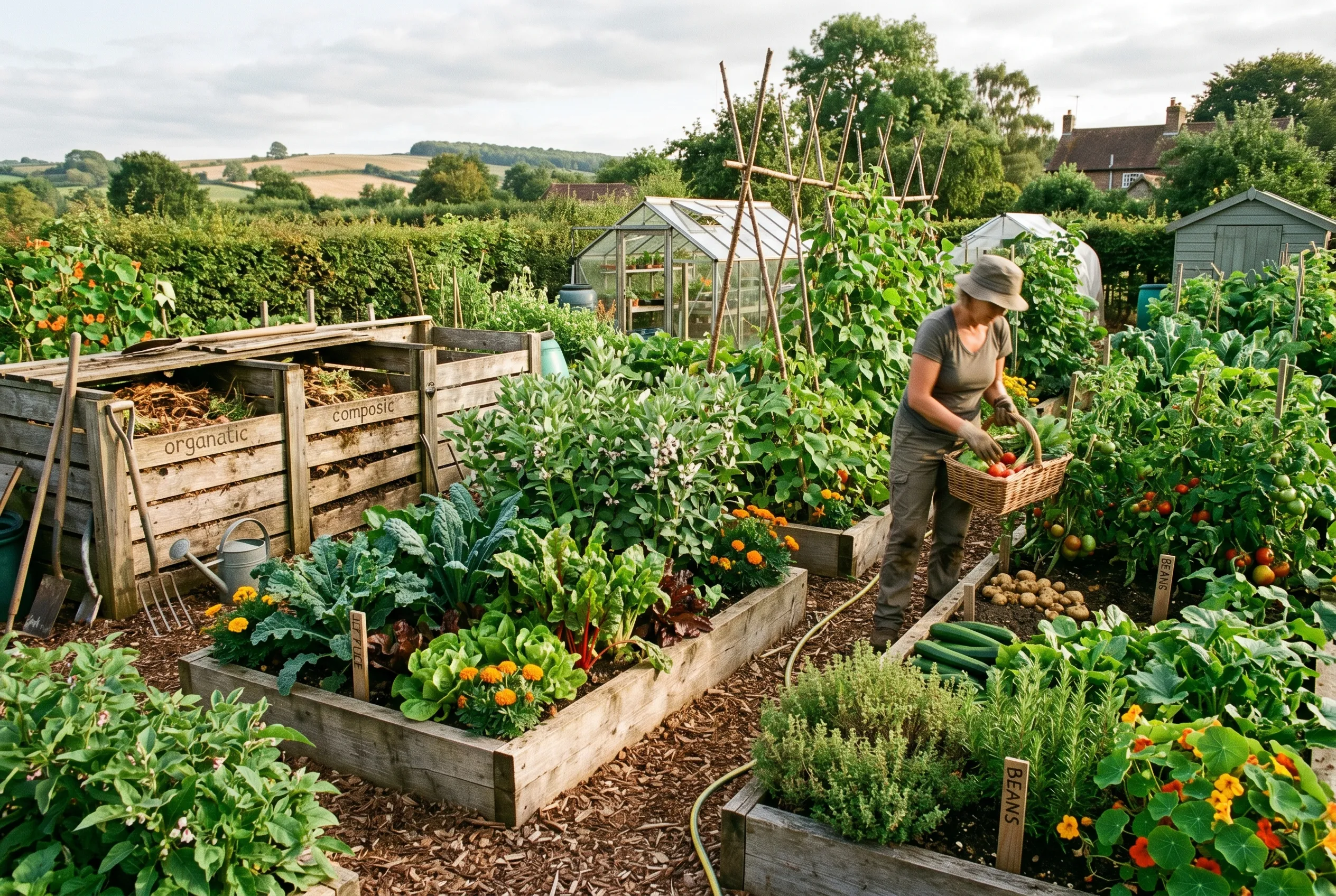 The long-term reward of soil-first feeding: a productive, healthy garden that needs less bought-in feed each year.
Frequently asked questions
What is the difference between artificial and natural fertilisers?
Artificial fertilisers are manufactured soluble salts that release nutrients fast. Natural fertilisers are organic materials like manure and bonemeal that release nutrients slowly as microbes break them down. Plants take up the same nutrients from both, but only organic feeds build soil life and structure.
Are organic fertilisers better than synthetic ones?
Organic fertilisers are better for long-term soil health, structure, and microbe life. Synthetic fertilisers are better for fast, precise nutrient correction. Neither is universally best. The plant absorbs the same ions from both, so the right choice depends on the job and your goals.
Do plants know the difference between organic and synthetic feed?
No, plants absorb nutrients as the same simple ions regardless of source. A nitrate ion from manure and from a synthetic feed are identical to the root. The difference is in the soil: organic feeds nourish the microbes that build fertility, synthetics do not.
Can you use both natural and artificial fertilisers together?
Yes, and many gardeners get the best results doing so. Build the soil with organic matter and feeds, then use a synthetic feed for fast, targeted fixes such as correcting a mid-season deficiency. The two complement each other rather than competing.
Are artificial fertilisers bad for the environment?
Overused synthetic fertilisers can leach into waterways and cause pollution, and their manufacture is energy-intensive. Used correctly and sparingly, the impact is smaller. Organic feeds leach less but are not impact-free either. Applying only what plants need is the key in both cases.
Which fertiliser is best for vegetables?
Organic feeds suit vegetables best long term, building the rich, living soil that grows healthy crops. Well-rotted manure, compost, and pelleted chicken manure are mainstays. A balanced or high-potash synthetic feed can supplement during heavy cropping when demand is high.
Now you understand the trade-offs, make your own free organic plant food with our comfrey and nettle feed recipe, and browse all our how-to gardening guides for the next job.
Our team produces practical UK gardening guidance from source research, contributor records and established horticultural practice. Editorial standards are overseen by Matt W.