Key takeaways
- Bitter pit is a calcium and watering disorder, not a disease
- Sunken brown skin spots and bitter brown flecks in the flesh show it
- Calcium moves with water, so dry spells stop it reaching the fruit
- Large apples on vigorous, over-fed trees suffer the most
- Steady watering, mulch and summer calcium sprays prevent it
- No fungicide helps, because no fungus or pest is involved
Bitter pit is one of the most disappointing things to find in a home-grown apple. The fruit looks fine on the tree, then sunken brown spots appear on the skin, the flesh fills with small brown flecks, and a bite tastes slightly bitter. The natural assumption is a disease or a pest. It is neither. Bitter pit is a disorder of calcium and water, where the fruit simply does not get enough calcium because the tree is short of water at the wrong time. This guide explains what causes bitter pit, why fungicides are useless against it, and exactly how to prevent it. You will see how mulch and calcium sprays cut pitting on a prone tree across two seasons.
The cause is plumbing, not infection. Once you understand that calcium travels with water, the prevention becomes obvious.
What bitter pit is and why fungicides do not work
Bitter pit is a physiological disorder, which means it comes from the apple’s own chemistry, not from any organism. The brown spots are areas of dead cells inside the fruit, caused by a shortage of calcium in those tissues.
Calcium does several jobs in a fruit, the main one being to hold cell walls firm. Where calcium runs short, small patches of cells collapse and die, turning brown and slightly bitter. These show as sunken pits on the skin and brown flecks scattered through the flesh, often worst near the base of the apple.
The reason fungicides and insecticides do nothing is that no fungus or pest is involved. There is nothing to kill. Spraying for disease wastes time and money. The only useful treatment is supplying calcium and, more importantly, fixing the water supply that carries it. This makes bitter pit closer to the nutrient disorder in our guide to chlorosis and yellow leaves than to any true disease.
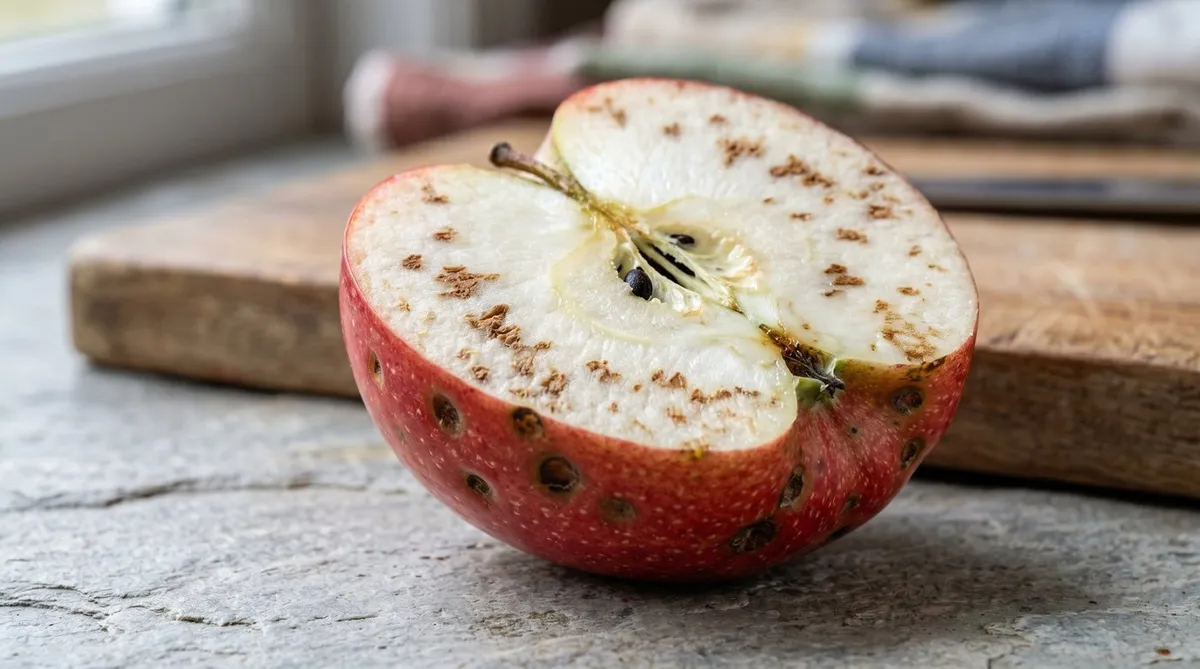
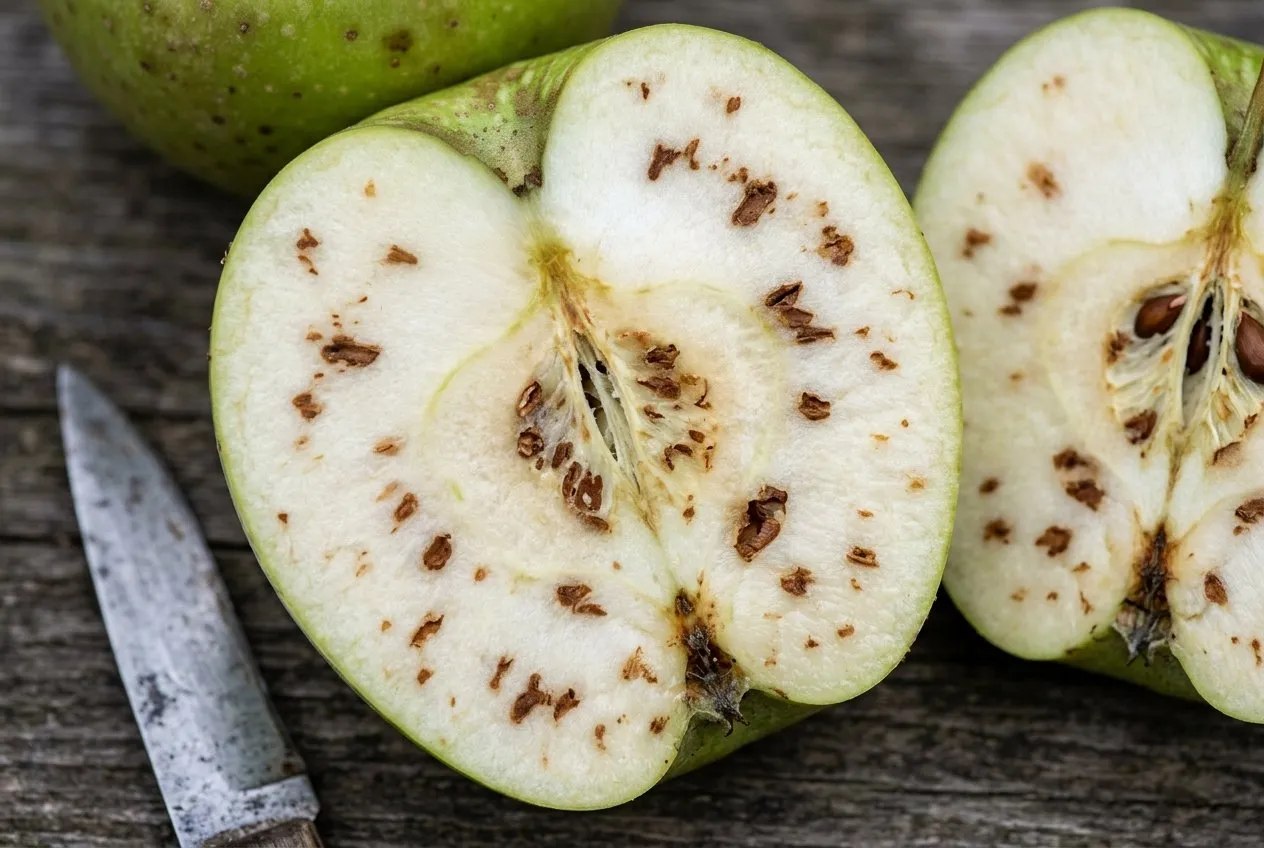 The flesh flecks are patches of dead, calcium-starved cells. Safe to eat once cut out, but bitter and poor for storage.
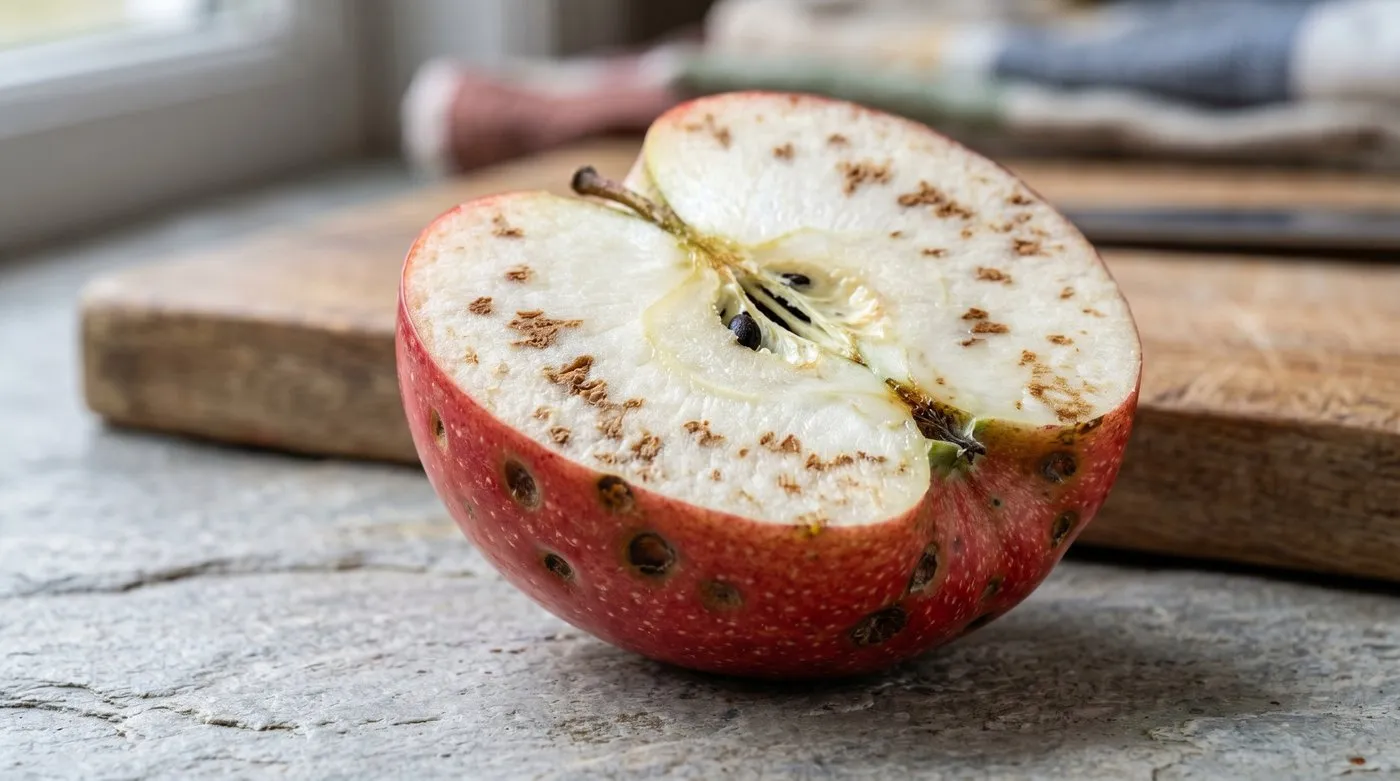 Bitter pit in section. Sunken spots on the skin and brown flecks in the flesh, both areas of calcium-starved dead cells.
Why calcium and watering are the real cause
The single most important fact about bitter pit is that calcium moves with water. Understanding this explains every prevention step that follows.
Unlike most nutrients, calcium travels almost entirely in the transpiration stream, the flow of water the tree pulls up from its roots and out through its leaves. It cannot move freely around the plant afterwards. So calcium only reaches a fruit while water is flowing steadily to it. In a dry spell or with erratic watering, that flow falters and the fruit is starved of calcium, even when the soil holds plenty.
This is why bitter pit follows dry summers and uneven watering, and why it strikes large fruit hardest. A big apple needs more calcium than a small one, and its size dilutes what little arrives. Vigorous, heavily fed trees make large fruit and leafy growth that competes with the fruit for calcium, so they suffer more. The disorder is a delivery failure, not a soil shortage, which is why steady watering matters more than any feed.
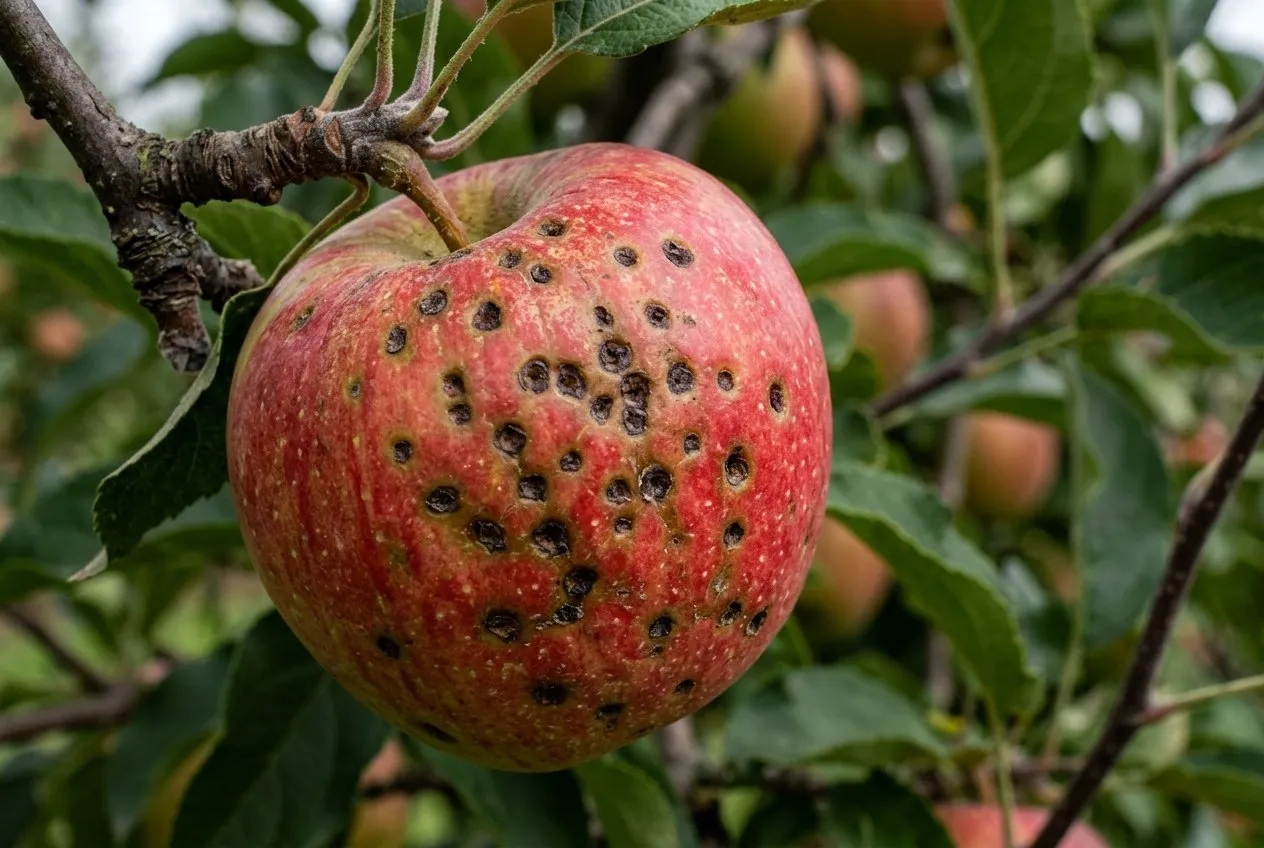 The skin pits are the first sign. Small dark sunken spots, often worst toward the base of large apples on vigorous trees.
Which apples get bitter pit and what makes it worse
Some varieties and growing habits make bitter pit far more likely. Knowing them tells you which trees need calcium sprays and careful watering.
Several growing factors make pitting worse. Heavy nitrogen feeding drives leafy growth that competes with fruit for calcium. Over-thinning to giant fruit raises each apple’s calcium demand. Hard pruning that pushes vigorous regrowth has the same effect. Low-calcium acidic soils and high potassium or magnesium levels, which block calcium uptake, all add to the risk. The common thread is anything that either reduces calcium delivery or increases fruit demand. Keeping a tree in steady, moderate condition is the foundation of prevention, alongside the watering covered in our guide to apples and pears tasting bitter.
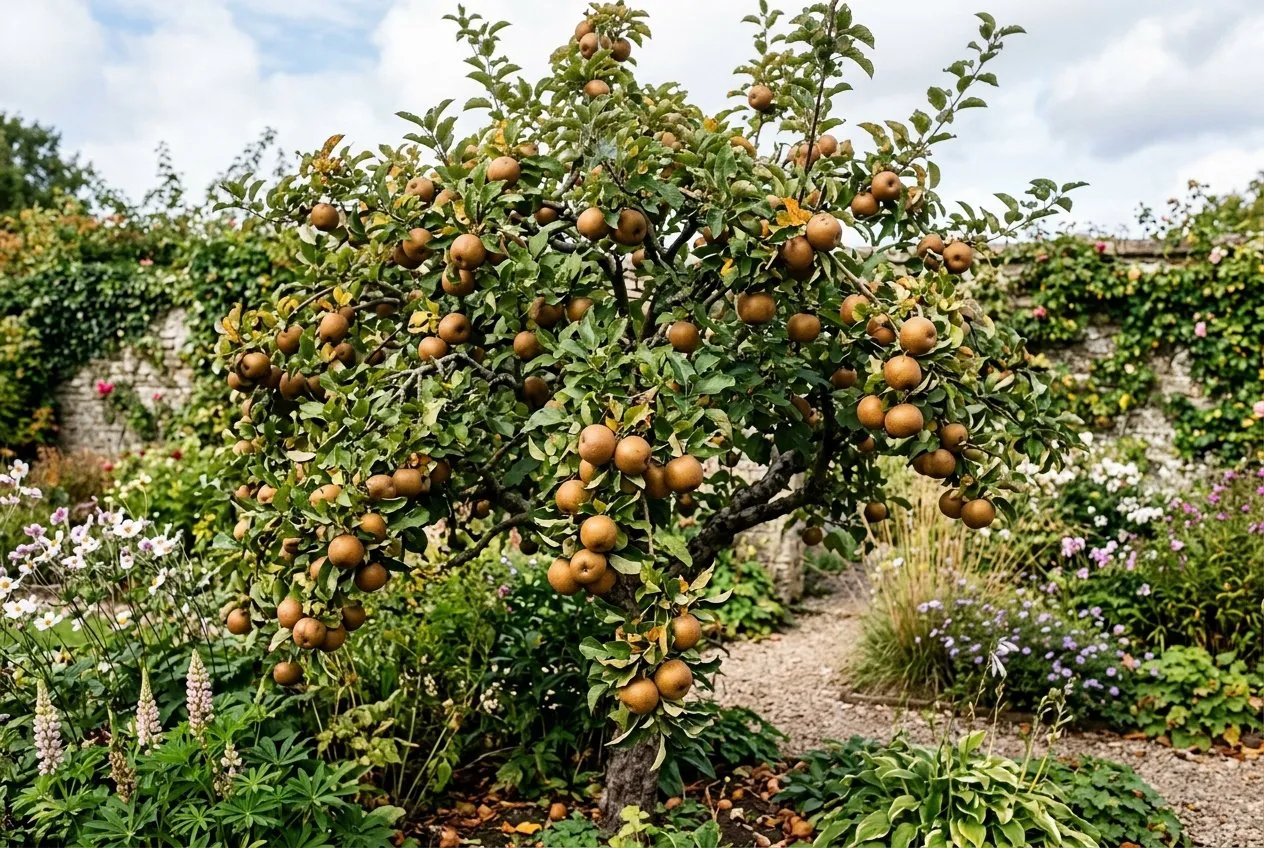 Egremont Russet is prone to bitter pit. Vigorous trees with large fruit need steady watering and summer calcium most.
Bitter pit prevention methods compared
This table ranks the ways to prevent bitter pit by how much each helps. Combine the top methods on prone varieties for the best result.
| Method | When | Effectiveness | What it does | Role |
|---|---|---|---|---|
| Steady watering and mulch | Spring to harvest | High | Keeps calcium flowing to fruit | Primary control |
| Calcium sprays on fruit | June to August, every 2 weeks | High | Adds calcium direct to the fruit | Primary control |
| Moderate nitrogen feeding | All season | Moderate | Avoids vigorous competing growth | Supporting |
| Sensible fruit thinning | June | Moderate | Avoids over-large fruit | Supporting |
| Liming acidic soils | Winter | Moderate | Raises soil calcium where low | Prevention |
The gold standard for preventing bitter pit is steady watering plus summer calcium sprays. Watering keeps the calcium moving to the fruit, and the sprays top up what the flow delivers. Feeding adjustments and thinning support these but cannot replace them. No fungicide belongs on this list, because the disorder is not a disease. On a prone tree in a dry summer, the watering and the calcium spray together do the heavy lifting.
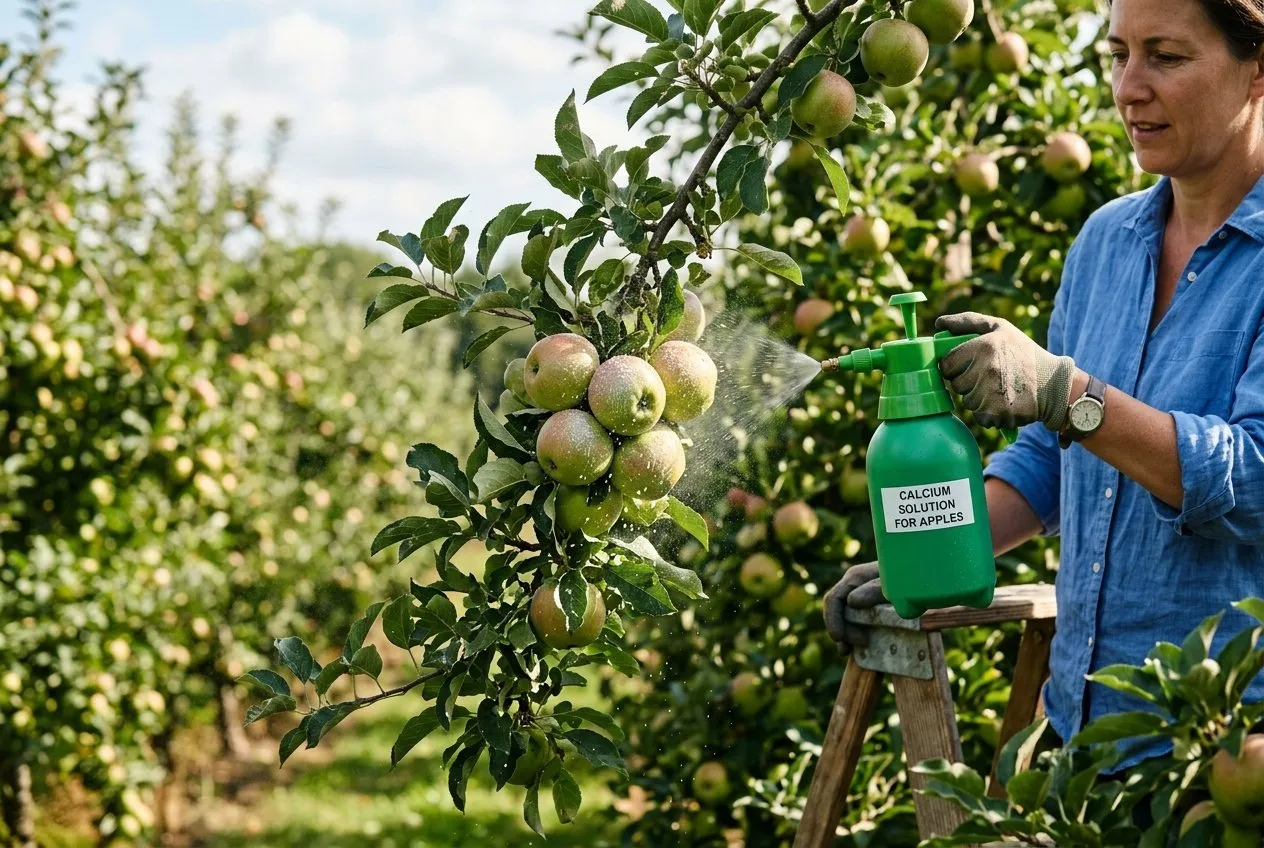 Summer calcium sprays go on the fruit, not the soil. Repeated every two weeks from June, they top up the calcium the water delivers.
A month-by-month plan to prevent bitter pit
Preventing bitter pit follows the growing season, with the key work in the watering months. This calendar keeps prone apples sound through the UK year.
| Month | Action |
|---|---|
| January | Test soil pH and calcium, lime acidic ground if low |
| February | Prune moderately, avoid hard cuts that force vigorous regrowth |
| March | Mulch the root zone thickly to hold soil moisture |
| April | Feed lightly, avoid high-nitrogen feeds on vigorous trees |
| May | Begin steady watering as fruit sets, never let the soil dry out |
| June | Thin fruitlets sensibly, start calcium sprays on prone varieties |
| July | Water deeply and regularly, continue calcium sprays every 2 weeks |
| August | Keep watering through dry spells, final calcium sprays |
| September | Pick at the right time, handle fruit gently |
| October | Store sound fruit only, use prone varieties first |
| November | Check stored apples for developing pit, eat affected fruit soon |
| December | Review the season, note which trees pitted for next year |
Why even watering matters more than anything else
Treating only the symptom misses the cause. The root cause of bitter pit is interrupted water flow carrying calcium to the fruit, and the permanent fix is steady soil moisture.
A tree that swings between dry and wet cannot deliver calcium evenly, so the fruit pits. The answer is to keep the soil moisture constant through the swelling and ripening months. A thick spring mulch of compost or bark holds water in the soil and evens out the supply. Regular deep watering in dry spells does the same. Together they stop the dry patches that starve the fruit of calcium.
This is also why over-feeding backfires. Nitrogen drives leafy growth that pulls water and calcium away from the fruit, so a lush, hard-fed tree pits more, not less. Moderate feeding and even watering beat heavy feeding every time. For prone trees, pair this with the summer calcium sprays, and keep the soil pH from dropping too low, since acidic ground holds less available calcium. Garden Organic’s advice on growing healthy fruit reinforces the same focus on soil condition and steady moisture.
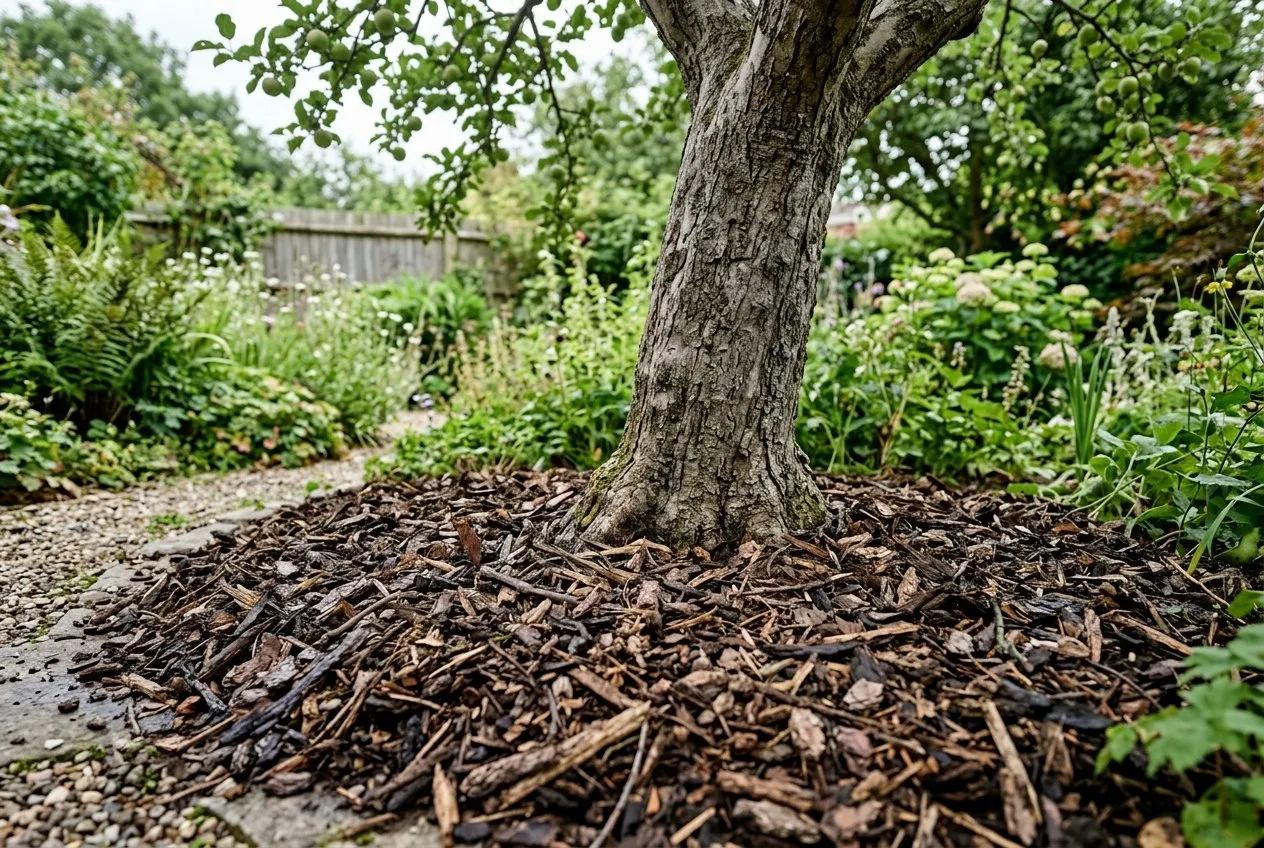 Mulch is half the cure. A thick layer holds even soil moisture so calcium keeps flowing to the fruit through dry spells.
Using mulch and sprays together works because they tackle both sides of the problem. The mulch keeps the calcium-carrying water flowing through the soil, and the sprays add calcium straight to the fruit where the flow may still fall short. Either alone helps, but the pair gives the reliable result.
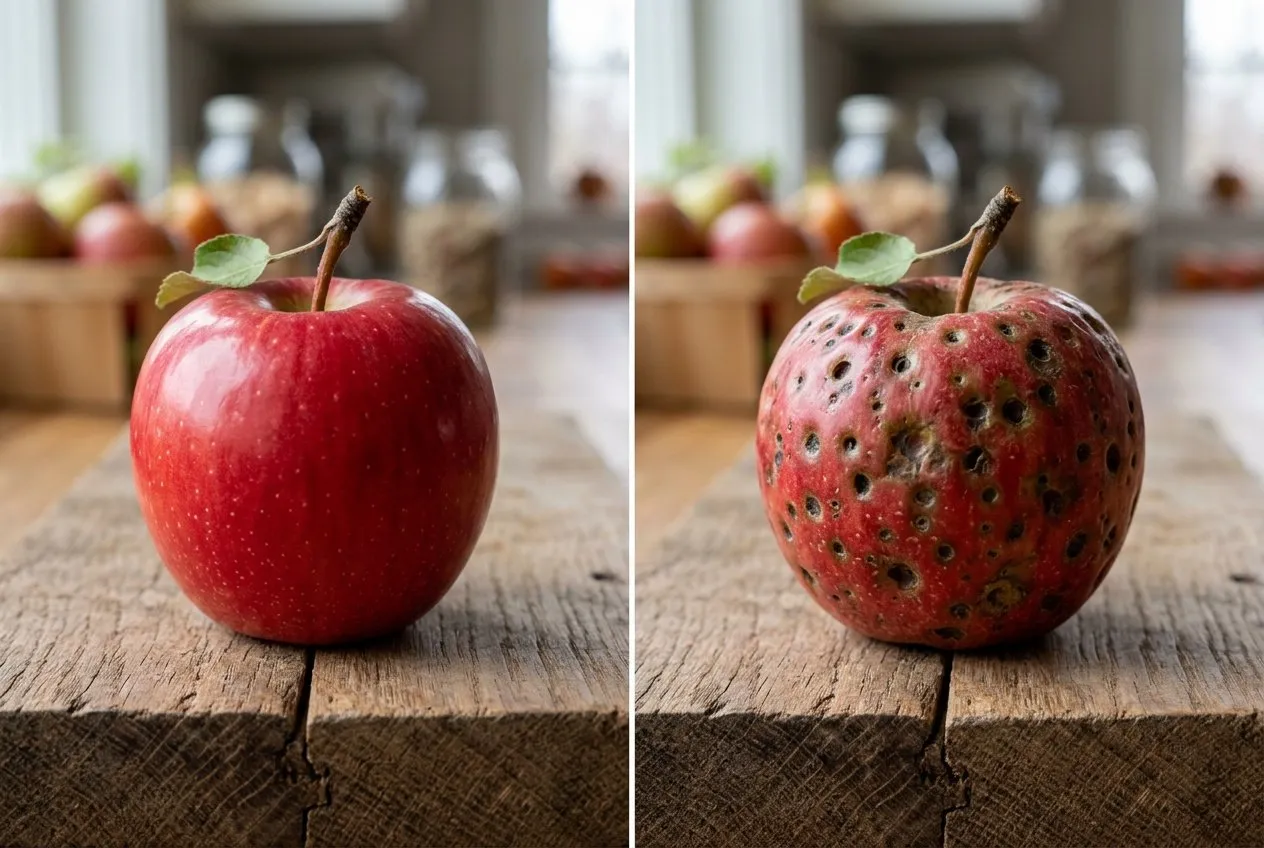 Clean versus pitted. Steady watering and summer calcium are the difference between sound fruit and a spotted, bitter crop.
Common mistakes when dealing with bitter pit
Most bitter pit is made worse by treating it as the wrong problem. These are the errors to avoid.
- Spraying fungicide. No fungus is involved, so it does nothing. Spray calcium on the fruit instead.
- Feeding more nitrogen. Extra nitrogen drives leafy growth that competes for calcium. Feed moderately, not heavily.
- Letting the tree dry out. Erratic watering is the main trigger. Mulch and water steadily through summer.
- Over-thinning to huge fruit. Giant apples need more calcium than the tree can deliver. Thin sensibly, not drastically.
- Storing affected fruit. Bitter pit worsens in store. Use prone or marked apples first and store only sound fruit.
Frequently asked questions
What causes bitter pit in apples?
A shortage of calcium in the fruit causes bitter pit. Calcium moves with water, so dry or erratic watering stops it reaching the apples. It is not a disease. Large fruit on vigorous, heavily fed trees suffer most, especially after a dry summer.
Is bitter pit a disease and can I spray for it?
No, bitter pit is a physiological disorder, not a disease. No fungus or pest is involved, so fungicides do nothing. The useful spray is calcium, applied to the fruit through summer. Steady watering and mulch matter as much as any spray.
How do I prevent bitter pit?
Keep the soil evenly moist with mulch and watering through summer. Avoid heavy nitrogen feeding that drives vigorous growth. Do not over-thin to giant fruit. Spray calcium on the fruit every two weeks from June to August on prone varieties.
Can I eat apples with bitter pit?
Yes, apples with bitter pit are safe to eat. Cut out the brown flecks, which taste slightly bitter. The disorder affects quality and storage life, not safety. Use affected fruit soon rather than storing it, as the pitting worsens in store.
Which apple varieties get bitter pit most?
Bramley, Egremont Russet, Newton Wonder and Crispin are prone to bitter pit. Large-fruited and vigorous varieties suffer most. Cox and Discovery are less affected. On a prone variety, calcium sprays and steady watering are worth doing every year.
Does bitter pit appear in storage?
Yes, bitter pit often shows up weeks after picking, in store. The brown skin pits and flesh flecks develop and worsen during storage. Check stored apples regularly and use prone varieties first. Steady summer watering reduces how much appears later.
Now you can prevent bitter pit by getting the watering and calcium right. Another apple oddity that looks alarming but is harmless is apple tree burr knots, the woody bumps that form on some trunks. For the wider care that keeps fruit sound, read our guide to growing apple trees, or browse the full problems section for more plant diagnosis.
Our team produces practical UK gardening guidance from source research, contributor records and established horticultural practice. Editorial standards are overseen by Matt W.