Key takeaways
- Brown patches plus black stem streaks and white spores under leaves means box blight
- Webbing, frass and green-black caterpillars mean box tree moth, not disease
- Box blight cannot be cured; you manage it by cutting out and improving airflow
- Pheromone traps detect box tree moth; Bacillus thuringiensis sprays kill young caterpillars
- Waterlogging, Phytophthora root rot, drought scorch and dog urine cause the rest
- After two failures most UK gardeners are better off planting Ilex crenata
A dying box hedge in a UK garden almost always comes down to two culprits: box blight or box tree moth caterpillar. They look similar from the path but need completely different treatment. Get the diagnosis wrong and you waste a season spraying the wrong thing while the hedge keeps thinning.
After six years watching box fail and recover at Staffordshire, the pattern is clear. Blight is a fungus you manage, never cure. Box tree moth is an insect you can beat if caught early. After two failures, switch to Ilex crenata.
Box Blight Or Box Tree Moth: The Quick Decision Key
Start with the stems and the leaf undersides. That one check separates the two main causes in under a minute.
Box blight (Cylindrocladium buxicola, sometimes Volutella):
- Brown or bronzed patches of dead leaves, often starting low and inside the plant
- Bare twigs where leaves have dropped, leaving a thin see-through look
- Dark brown to black streaks running along the green stems
- White or pinkish spore masses on leaf undersides after warm wet weather
- No insects, no webbing, no droppings
Box tree moth (Cydalima perspectalis):
- Green caterpillars with black stripes and black heads, up to 40mm long
- Fine white silk webbing binding the twigs together
- Crumbly yellow-green frass (droppings) caught in the webbing
- Rapid defoliation, sometimes a whole plant stripped in days
- Leaves chewed to skeletons, not browned evenly
If you see caterpillars or webbing, it is the moth. If you see black stem streaks and white spores but no insects, it is blight. Many badly hit hedges have both at once.
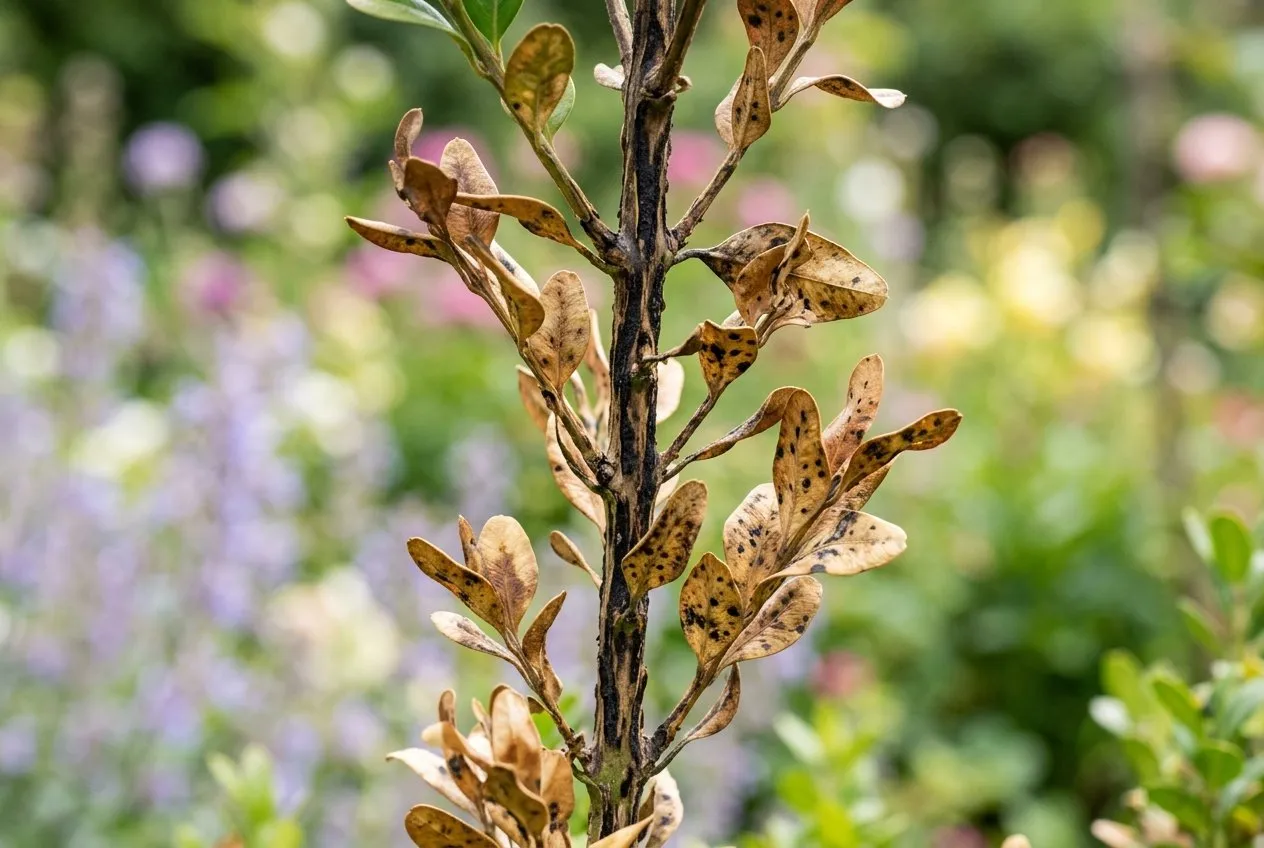
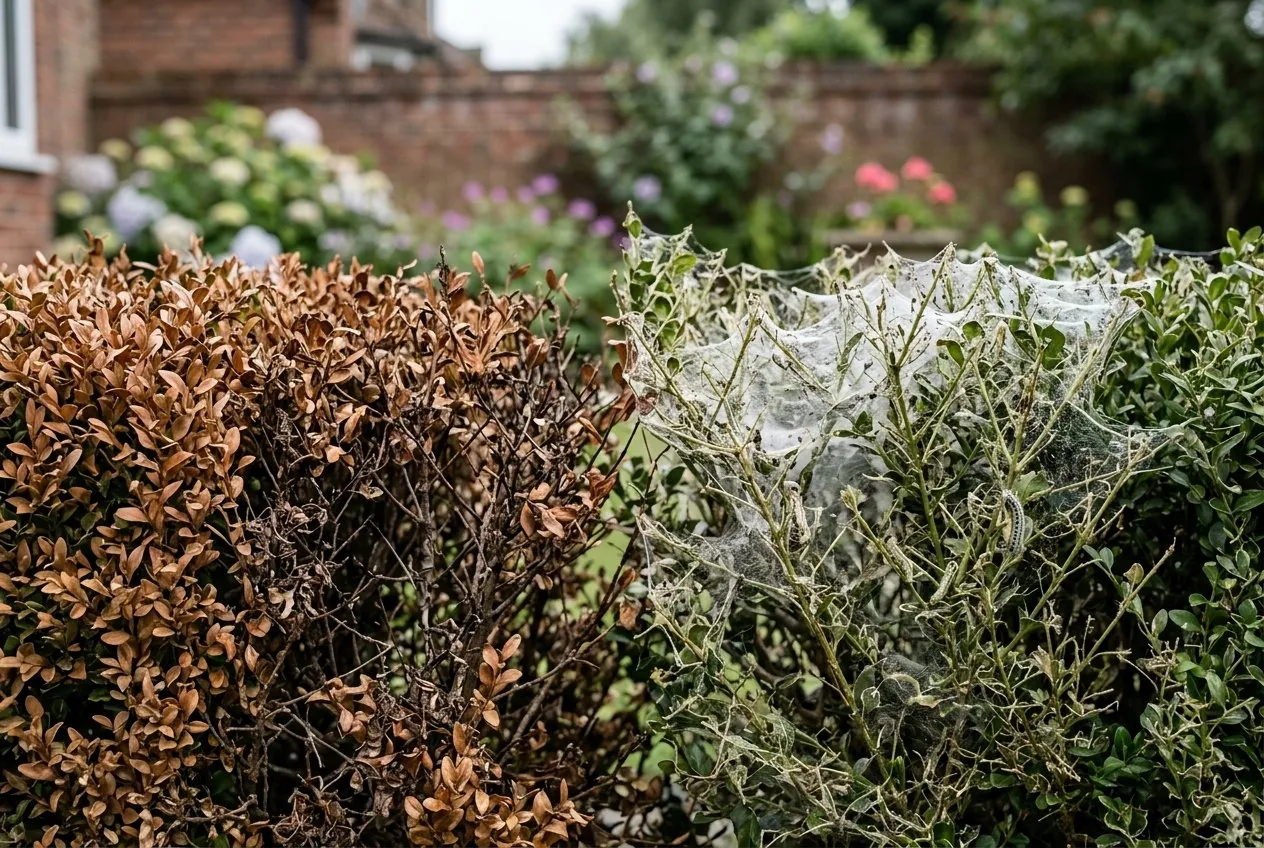 Blight (left) versus box tree moth (right) on the same suburban Staffordshire hedge in June. Blight browns the leaves evenly and streaks the stems black. The moth chews leaves to skeletons and binds the twigs with white silk.
Identifying Box Blight On A UK Hedge
Box blight is the disease most UK gardeners fear, and it earns the reputation. It spreads fastest in warm, humid weather between May and September.
The first sign is usually a patch of brown leaves low down or deep inside the hedge, where airflow is poorest. Leaves drop and leave bare, straw-coloured twigs. Run a thumbnail along an affected green stem and you find dark streaks under the bark. After a muggy night, turn a leaf over and look for white spore masses. That is the diagnostic that confirms Cylindrocladium rather than simple winter dieback.
What blight does:
- Spreads on wind, rain splash, tools and dirty boots
- Defoliates whole sections, leaving a thin, gappy hedge
- Survives in fallen leaves and soil for up to six years
- Hits tight, dense, formal box hardest because it stays damp
| Symptom | Box blight | Winter cold damage |
|---|---|---|
| Timing | May-September, warm and wet | After hard frost or cold wind |
| Stems | Black streaks present | No streaks |
| Spores | White masses under leaves | None |
| Pattern | Spreads through the plant | Worst on exposed faces |
| Recovery | Poor, recurs | Often reshoots in spring |
The RHS keeps a detailed identification page worth checking against your plant; see the RHS box blight guidance for current spore-trap data and approved products.
Spotting Box Tree Moth Caterpillars And Webbing
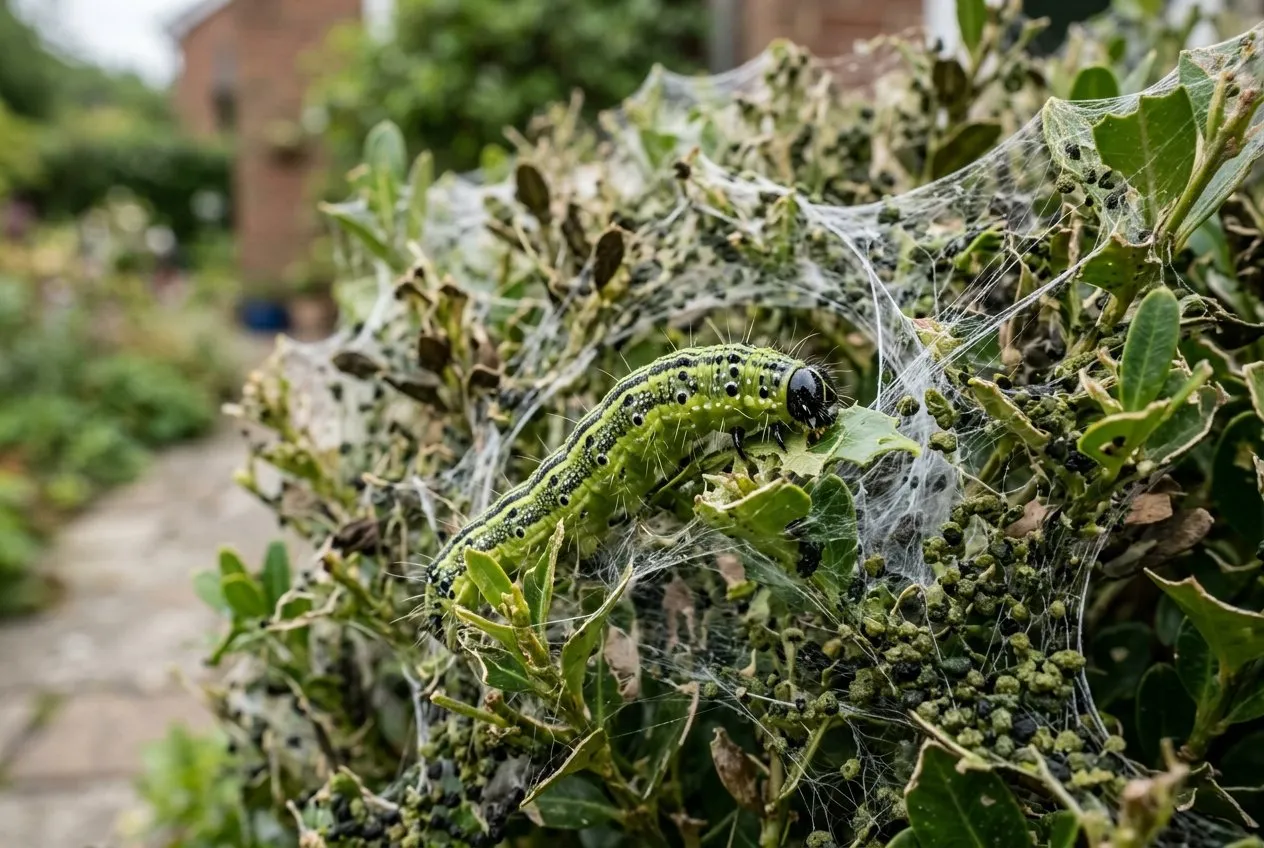
The adult moth is white with a brown border, about 40mm across. You rarely see it. You see the damage: green-black caterpillars feeding inside a cage of silk webbing. They eat the leaves first, then strip the green bark, which kills whole stems. A heavy infestation can skeletonise a mature box ball in under a week.
Look in spring once temperatures climb past 10C, then again through summer. There are two or three generations a year. The webbing and the dry, crumbly frass give them away even when the caterpillars hide deep inside.
The Other Reasons A Box Hedge Browns And Dies
Not every dying box hedge has blight or moth. Rule these out before you spray anything.
Waterlogging: Box hates wet feet. Sodden clay drowns the roots and browns the whole plant evenly from the base up. Common after a wet winter on heavy Staffordshire soil.
Phytophthora root rot: A soil-borne fungus that rots the roots. The plant wilts, yellows and dies from the bottom. Dig and check: dead roots are dark, soft and smell sour. There is no cure; remove and improve drainage.
Drought and wind scorch: New plants and exposed faces brown off in dry, windy spells. The damage sits on the windward side, not deep inside. Water in and the plant often recovers.
Dog urine: A repeated favourite spot browns one end of a low hedge. The pattern is local, low and beside a path or post.
If there are no caterpillars, no webbing, no black streaks and no spores, the cause is the soil or the weather, not blight or moth.
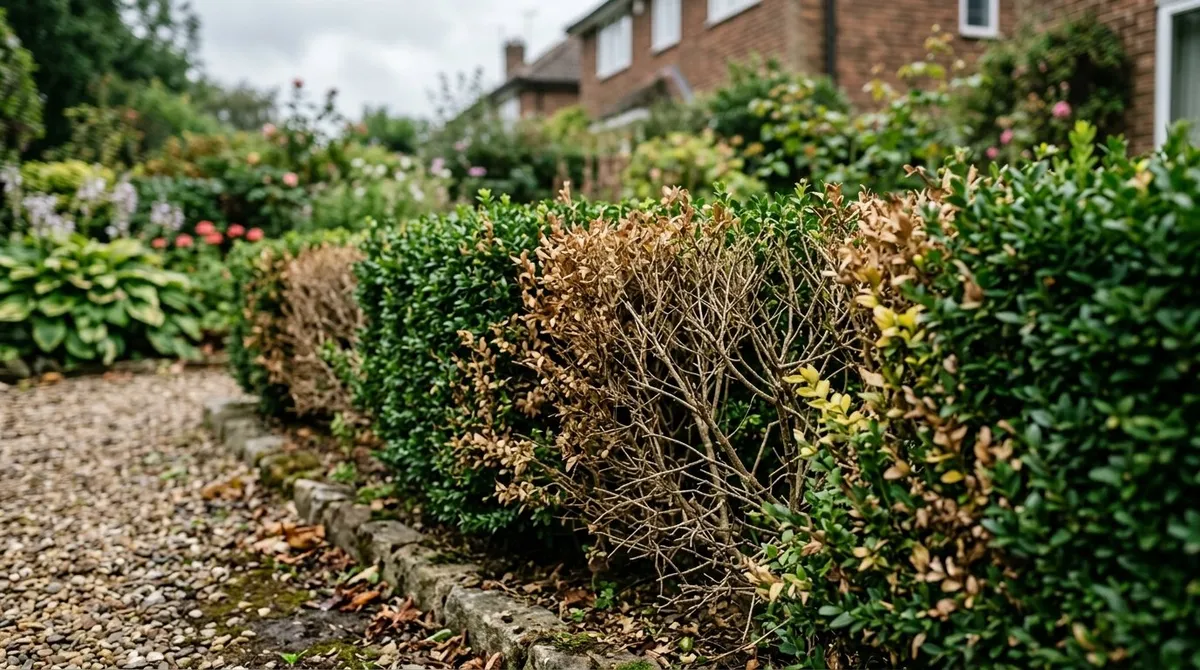
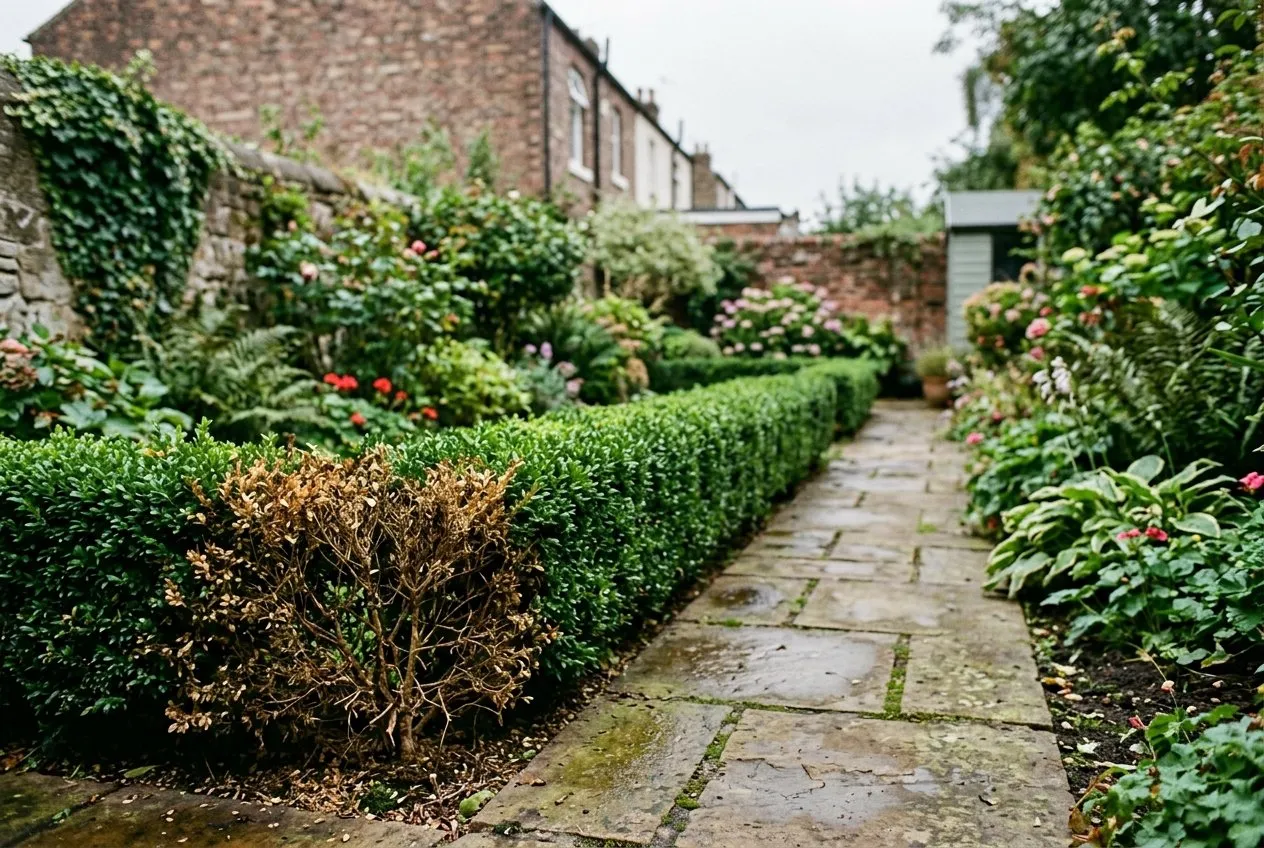 Localised browning on a low box edge beside a path in a Staffordshire terrace, March. The damage sits at one end at dog height, not through the plant. This is urine and wind scorch, not blight.
How To Treat Box Blight And Box Tree Moth
The two need opposite kits. Match the treatment to the diagnosis.
Treating box blight:
- Cut out all affected growth in dry weather, well into healthy wood
- Clear and bin every fallen leaf from under the hedge
- Bag clippings for the council green bin or burn them; never compost
- Disinfect shears with Jeyes Fluid or a 1:10 bleach solution between plants
- Thin and open the hedge to improve airflow so foliage dries fast
- Stop tight formal clipping; loose growth resists blight better
Treating box tree moth:
- Hang a pheromone trap from April to track the male moths and time sprays
- Pick caterpillars off by hand and drop them in soapy water
- Spray young caterpillars with Bacillus thuringiensis (a natural soil bacterium)
- Repeat as each new generation hatches through summer
- Cut out and bag heavily webbed sections
Bacillus thuringiensis only works on small caterpillars, so timing off the pheromone trap matters. Hand-removal on a small hedge is genuinely effective if you keep at it.
When To Replace Box And What To Plant Instead
Be honest about the odds. A single mild attack caught early is worth treating. Repeated failures are not.
If blight has hit twice, or the moth keeps coming back despite traps and sprays, the kindest thing for your time and money is to replace the hedge. Box blight stays in the soil for years, so a new box plant in the same spot often fails again.
A Healthy Box Routine That Holds Problems Back
Where box still works, a simple routine keeps it strong. Good husbandry is your best defence.
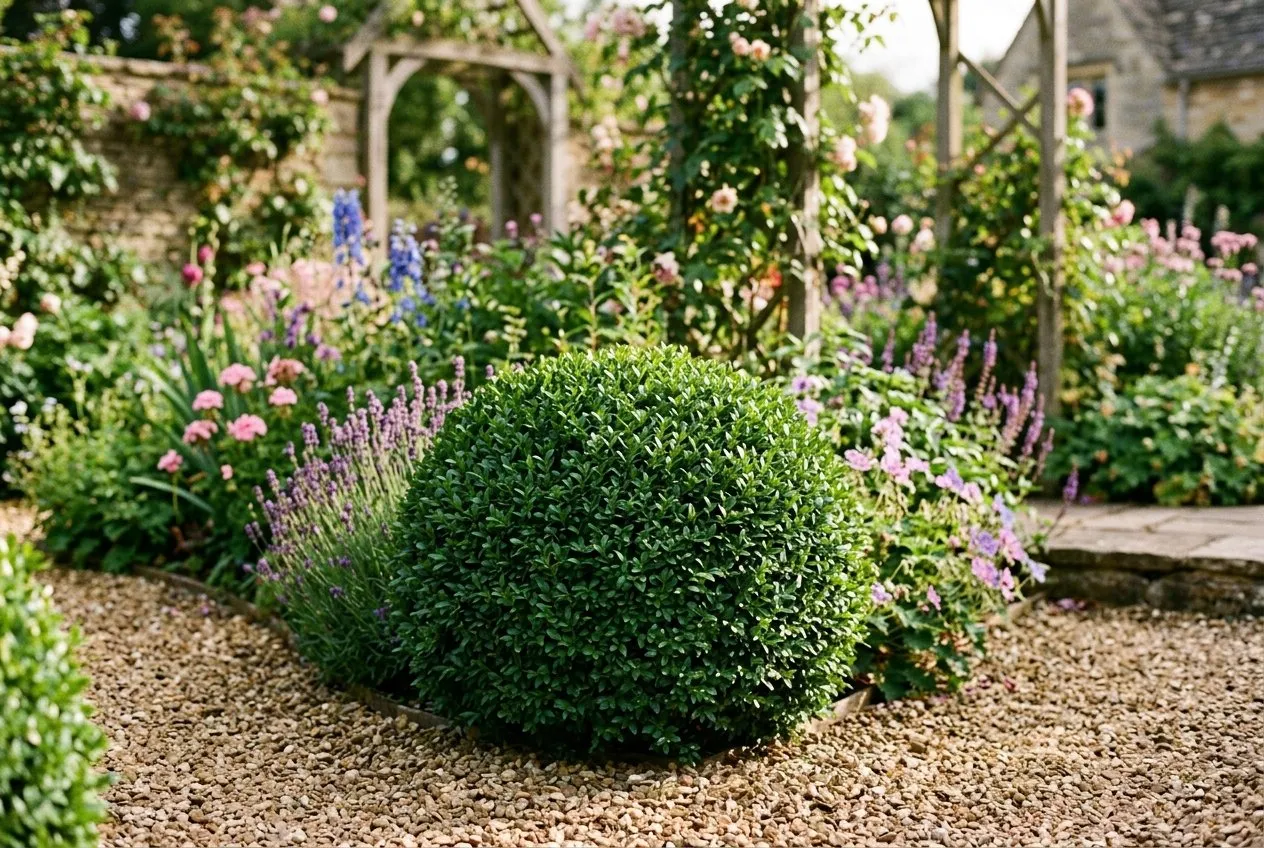
Clip only in dry weather, ideally a settled spell with no rain forecast that day. Disinfect tools between plants. Feed in spring with a balanced fertiliser, mulch to hold moisture without wetting the stems, and keep the base clear of fallen leaves where spores overwinter. Avoid tight, dense surfaces; a slightly looser clip dries faster and resists blight. Hang a pheromone trap each April as an early warning even on healthy plants.
Box Hedge Problem Calendar UK Month-By-Month
| Month | Box hedge task |
|---|---|
| January | Check for waterlogging; improve drainage if soil is sodden |
| February | Inspect for winter cold damage and bare patches |
| March | Clear fallen leaves from the base; first scorch checks |
| April | Hang pheromone traps for box tree moth |
| May | Watch for first caterpillars and early blight in warm wet spells |
| June | First dry-weather clip; spray young caterpillars with Bt |
| July | Peak blight risk; cut out infected growth, do not shear if damp |
| August | Second moth generation; check webbing and frass |
| September | Reduce feeding; tidy fallen leaves to limit overwintering spores |
| October | Final light dry clip; clear all debris from the base |
| November | Mulch roots; check exposed faces for wind scorch |
| December | Plan replacements where blight or moth recurred |
Frequently asked questions
Why is my box hedge going brown and dying?
Usually box blight or box tree moth caterpillar. Blight gives brown patches, bare twigs and black streaks on the stems, with white spore masses under leaves in humid weather. Box tree moth strips the leaves fast and leaves fine webbing and green frass. Check the stems and undersides to tell them apart.
How do I tell box blight from box tree caterpillar?
Look for webbing and caterpillars. Box tree moth leaves silk webbing, green-black striped caterpillars and crumbly green frass among the stems. Box blight has no insects at all, just brown leaves, black stem streaks and white powdery spores on leaf undersides after warm wet spells. One is an insect, one is a fungus.
Can box blight be cured?
No, box blight cannot be cured once a plant is infected. You manage it by cutting out affected growth, clearing fallen leaves, improving airflow and disinfecting tools. Fungicides like Topbuxus protect new growth but do not clear an established infection. Badly hit hedges are usually best replaced.
Should I replace my box hedge or try to save it?
Replace it if blight has hit it twice or the moth keeps returning. A single mild attack caught early is worth treating. Repeated failures across two seasons mean the site or the pressure is too high. Ilex crenata gives the same clipped look without blight or moth risk.
What is killing my box if there are no caterpillars or spots?
Likely waterlogging, root rot or scorch rather than blight or moth. Sodden soil and Phytophthora rot the roots and brown the whole plant from the base. Drought, cold wind and dog urine scorch foliage in patches. Check drainage and exposure before blaming disease.
Now plan your box recovery or replacement
Our team produces practical UK gardening guidance from source research, contributor records and established horticultural practice. Editorial standards are overseen by Matt W.