Key takeaways
- Broad-leaved dock (Rumex obtusifolius) has a deep tap root that regrows from the top 15cm
- One plant can shed up to 60,000 seeds that survive in the soil for decades
- Digging must remove the whole root crown, or the plant simply regrows
- It is an injurious weed under the Weeds Act 1959, like creeping thistle
- A dock leaf is the traditional rub for a nettle sting, growing conveniently near nettles
- Dock feeds the small copper butterfly and many moths, and its seeds feed birds
If your garden, lawn or paddock edge keeps throwing up big, coarse, oval-leaved plants with tall rusty-red seed spikes, that is broad-leaved dock. Broad-leaved dock, Rumex obtusifolius, is one of the most familiar perennial weeds in Britain, and it is tenacious for two reasons: a deep tap root that regrows from the smallest crown left behind, and an astonishing output of long-lived seed. Beat those two and you beat the dock. It is not all bad news, though: dock has a genuine place in wildlife gardening and a famous use on a nettle sting.
This guide covers how to identify broad-leaved dock, why it is so persistent, how to dig it out properly, the legal position, and the surprising uses that make it worth knowing rather than simply hating.
How to identify broad-leaved dock
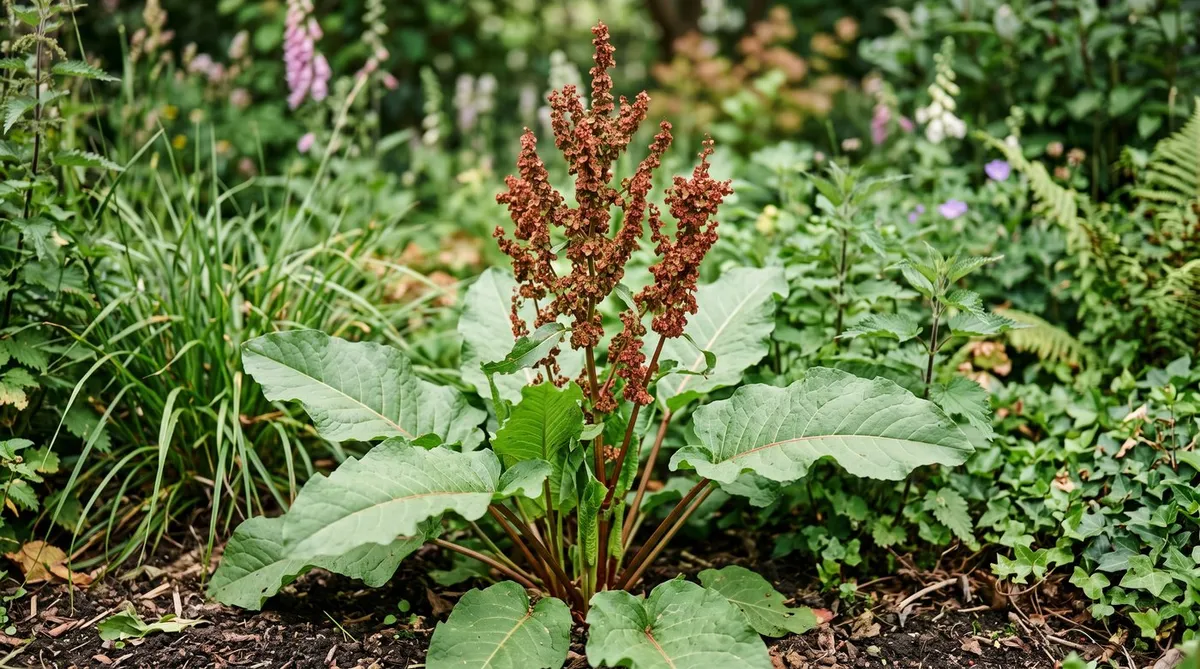
Broad-leaved dock is an established perennial that forms a rosette of large leaves and, in summer, sends up a flowering stem to 60-120cm. The leaves are the giveaway: broadly oval, up to 25cm long, with a rounded or slightly heart-shaped base, a bluntish tip, and often reddish veins and stalks. They are coarse to the touch and the whole plant has a substantial, leathery look.
From June onwards the plant produces a tall branched spike of tiny green flowers that turn a distinctive rusty red-brown as the seeds ripen. Those dried seed spikes persist into winter and are one of the easiest ways to spot dock across a field or verge.
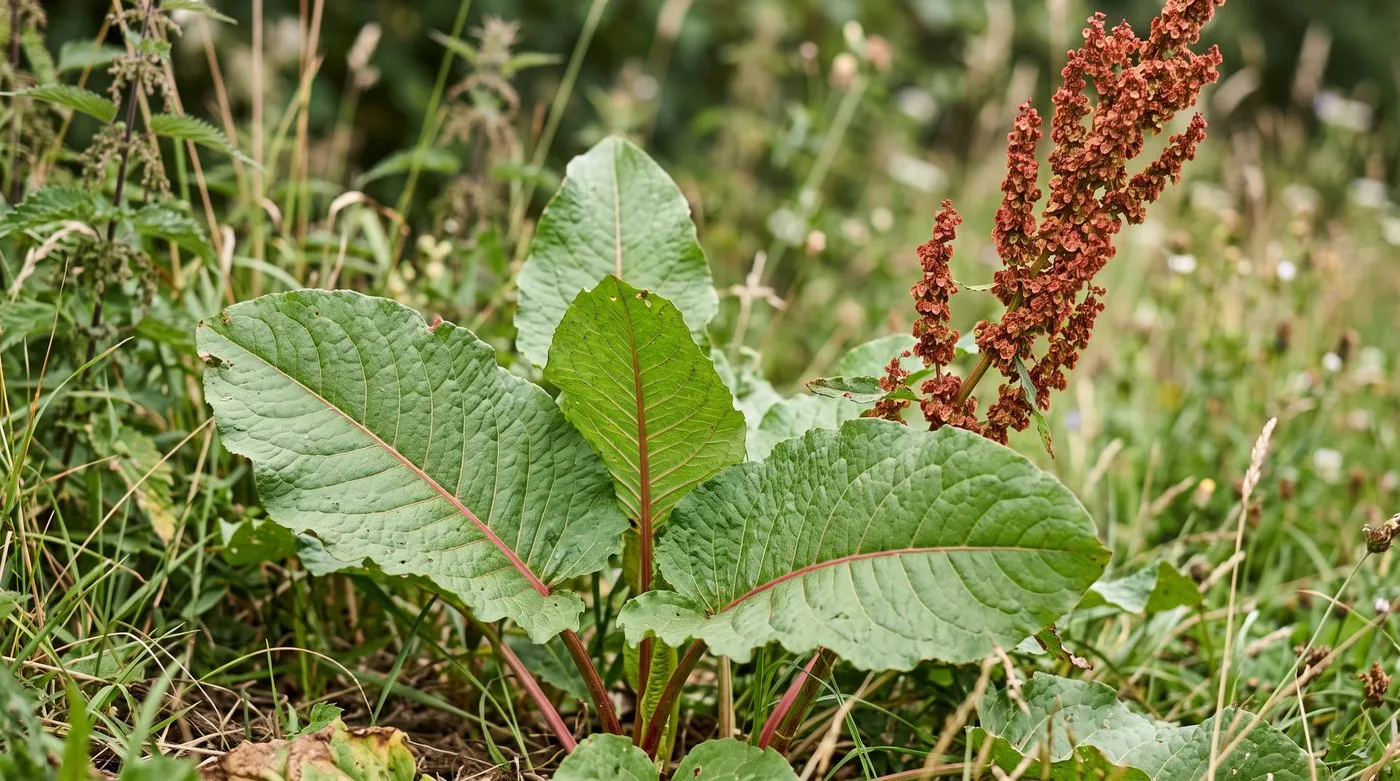 Broad-leaved dock: large oval leaves up to 25cm with reddish stalks, and the tall rusty-red seed spike that makes it easy to spot in summer.
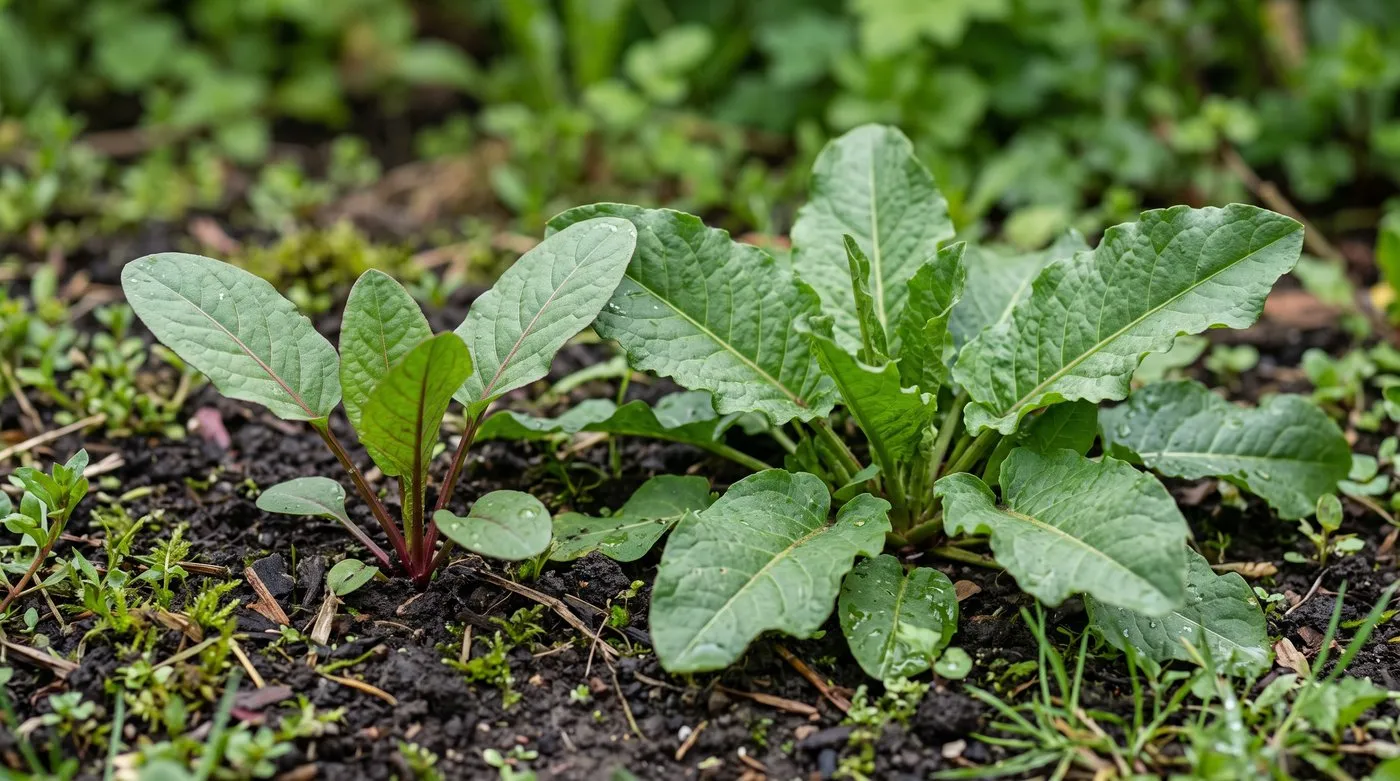 Young dock is easiest to remove. Learn the reddish stalks and broad oval leaves before the tap root thickens.
Why broad-leaved dock is so persistent
Two features make dock a weed you have to take seriously, and understanding both points straight at the cure.
First, the tap root. Broad-leaved dock drives down a thick, fleshy tap root that stores large energy reserves and can reach well over 300mm deep on good soil. The crown and the top 150mm of that root can regenerate a whole new plant. So pulling off the leaves does nothing, and levering the plant out sideways, which snaps the root, simply leaves the regrowing section in the ground. Within weeks a new rosette appears from the stub. This is the single reason most dock control fails.
Second, the seed. A single mature dock can shed up to 60,000 seeds, and those seeds are among the longest-lived in the plant world, staying viable in the soil for decades. They germinate whenever the ground is disturbed and light reaches them, which is why freshly dug or cultivated ground so often erupts with dock seedlings. You are not always fighting new arrivals; you are fighting a seed bank laid down years ago.
Put together, these mean dock control has two non-negotiable rules: remove the whole crown and upper root, and never let a plant set seed. Miss either and the weed persists. The same brittle-root and seed-bank challenge appears in other tough perennials, as our guide to getting rid of bindweed describes.
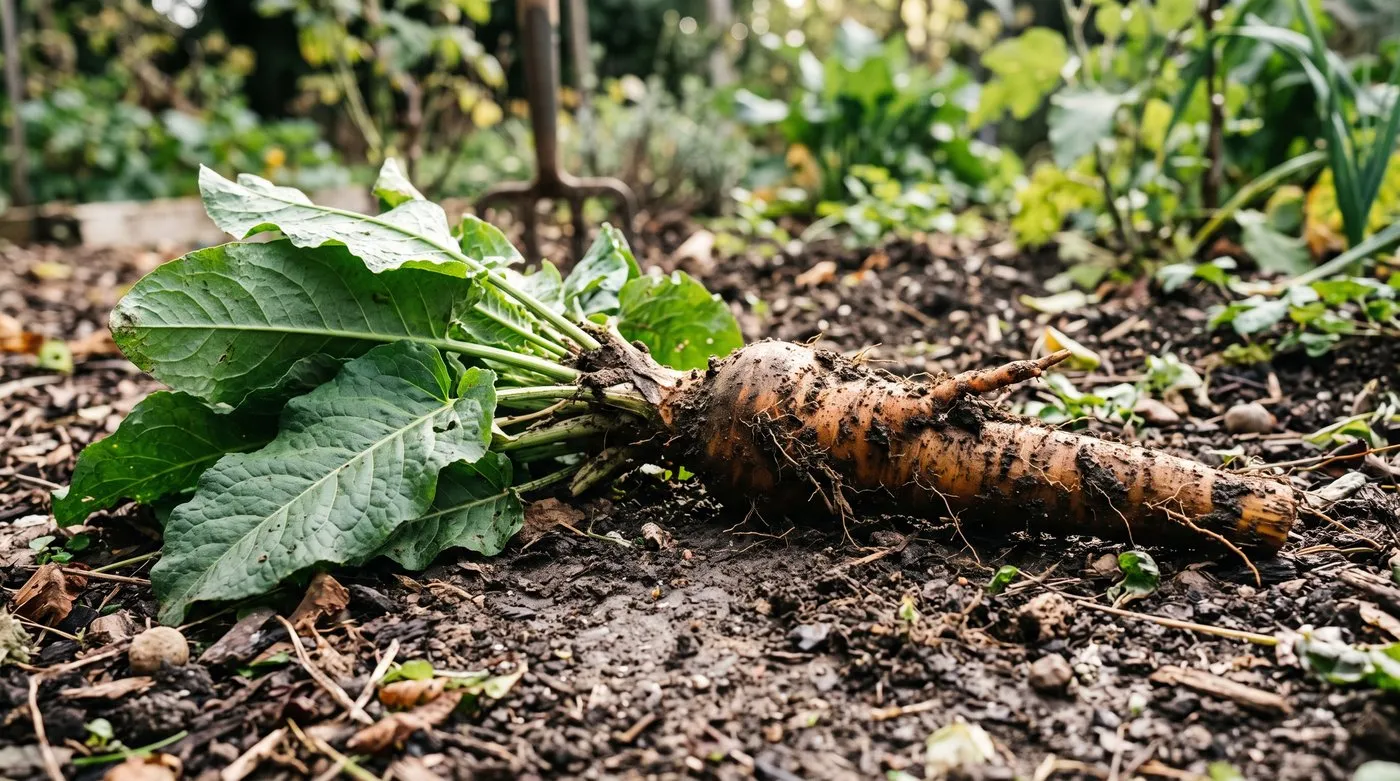 The thick tap root stores energy and regrows from its top 150mm. Removing only the leaves or snapping the root leaves the plant very much alive.
Digging out dock the right way
For a garden, digging is the most reliable control, but only if you get the whole crown and the top of the tap root out. The technique matters more than the effort.
The mistake most people make is to lever the plant out sideways with a fork, which snaps the brittle root and leaves the regrowing section behind. Instead, use a narrow-bladed spade or a purpose-made dock lever, and work vertically. Drive the blade straight down close alongside the root to about 300mm, wiggle it to loosen the tap root, then draw the whole thing up in one piece. Aim to get at least the top 150mm of root and the crown. A 50mm stub is enough to regrow.
Timing and conditions make a big difference:
For a large infestation where digging every plant is impractical, repeated leaf removal works over a season, exhausting the root much as it does with thistle, and a systemic weedkiller applied to the leafy rosette gives good control where chemicals are acceptable. Our guides to organic weedkillers and preventing weeds without chemicals cover the non-chemical routes.
 Work vertically with a narrow spade, driving down beside the root and drawing it up whole. Levering sideways snaps the root and leaves it to regrow.
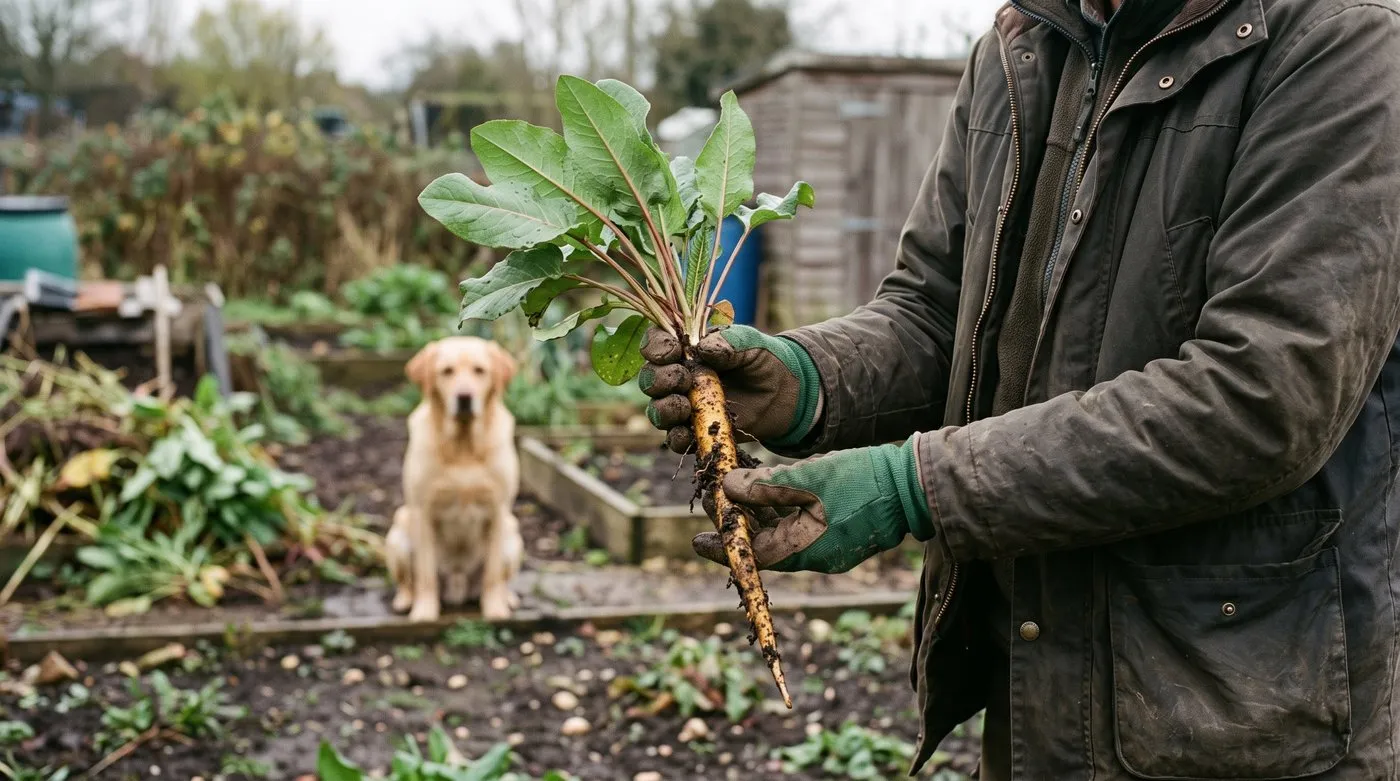 Moist soil releases the complete crown and tap root more cleanly. Check the hole for broken root pieces before refilling it.
Never let it seed
Even if you cannot dig every plant at once, the one thing you must do is stop dock setting seed. With a seed bank that lasts decades and up to 60,000 seeds per plant, every spike allowed to ripen sets your control back years.
Cut off the flowering spikes before they turn from green to rusty brown, from midsummer. Removing the spike stops that plant adding to the seed bank, and it also diverts the plant’s energy, weakening it slightly. Bag and remove the cut spikes rather than composting them, because dock seed can ripen on cut stems and survives cool composting easily.
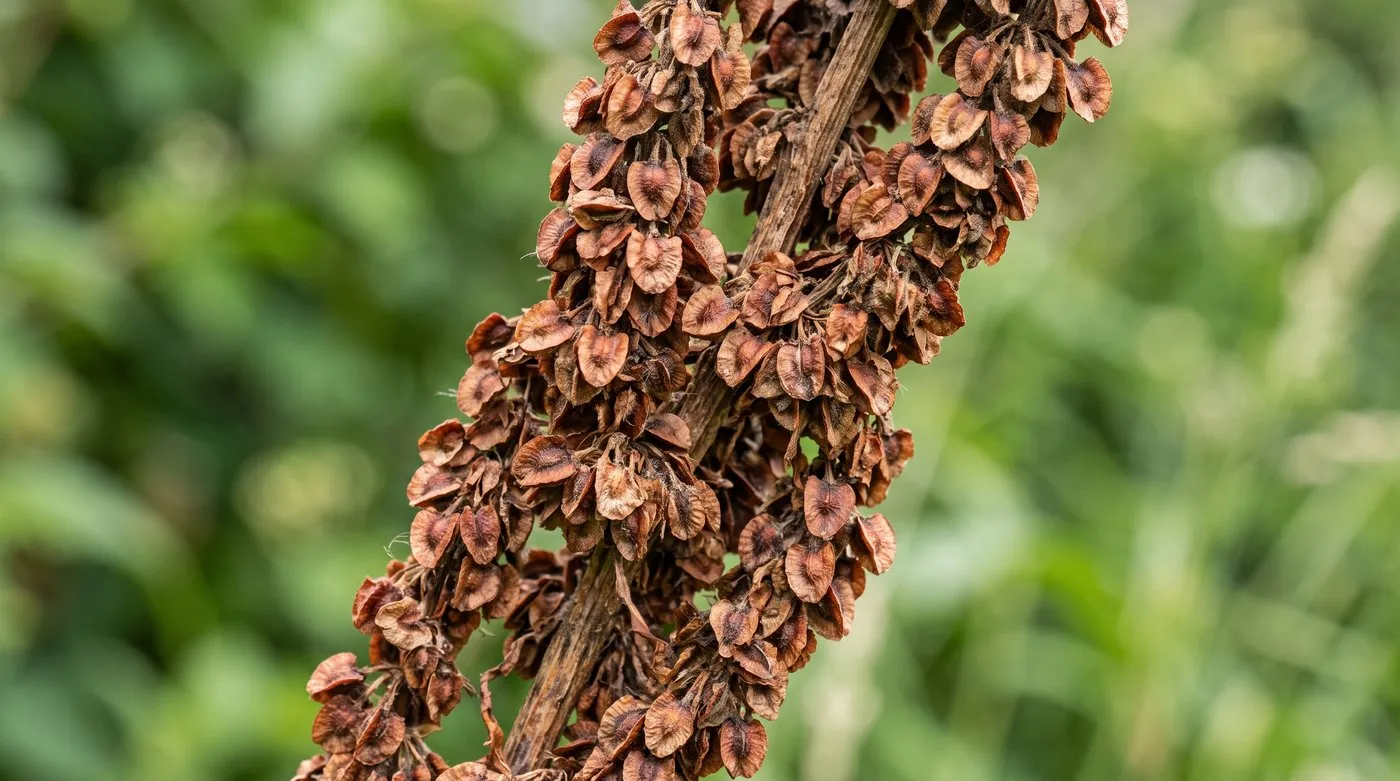 One spike like this carries thousands of seeds that last decades in the soil. Cut spikes while still green, before they turn this rusty brown and shed.
In a lawn, regular mowing prevents dock flowering and keeps rosettes weak, and any survivors can be spot-treated or dug. Our guide to lawn weed identification and control covers the wider lawn picture. The principle everywhere is the same: no seed, no new dock.
Warning: Do not add dock seed spikes to a home compost heap. Unless your heap runs consistently above 60C, the seeds survive the process and you spread them across the garden with the finished compost. Bin or burn seeding spikes instead.
The legal side: an injurious weed
Broad-leaved dock is one of the five injurious weeds listed under the Weeds Act 1959, alongside curled dock, creeping thistle, spear thistle and common ragwort. As with thistle, this is worth understanding calmly.
Injurious status does not make dock illegal to have in a garden, and no gardener is prosecuted for a dock in the border. The Act allows authorities to require control where the weed is spreading onto agricultural land and causing a problem for crops or grazing. It is not a notifiable weed, so there is no duty to report it.
The real-world duty is one of good neighbourliness: if you border farmland, grazing or an allotment, do not let your docks seed onto that land. Cutting the spikes before they ripen meets that duty easily. The RHS guidance on docks covers the identification and legal background in more detail.
The uses of dock: nettle stings, food and wildlife
Before you treat dock as pure enemy, it is worth knowing that this is a genuinely useful plant, which is part of why it has followed us around for centuries.
The most famous use is on a nettle sting. The tradition of rubbing a dock leaf on nettle-stung skin is real and, conveniently, dock very often grows right beside nettles. The relief owes more to the cool sap and the rubbing than to any proven chemical antidote, but many people feel genuine benefit, it does no harm, and a cool dock leaf on a child’s stung arm is a piece of garden lore worth passing on. Our guide to comfrey and nettle feed covers the nettle’s own uses.
Finally, dock is valuable for wildlife. It is a food plant for the caterpillars of the small copper butterfly and several moths, and its abundant seeds feed finches and other birds through autumn and winter. This is why, as with thistle, many gardeners tolerate dock in a wild corner while controlling it in beds and lawns. Our guide to making a wildflower meadow covers managing such areas.
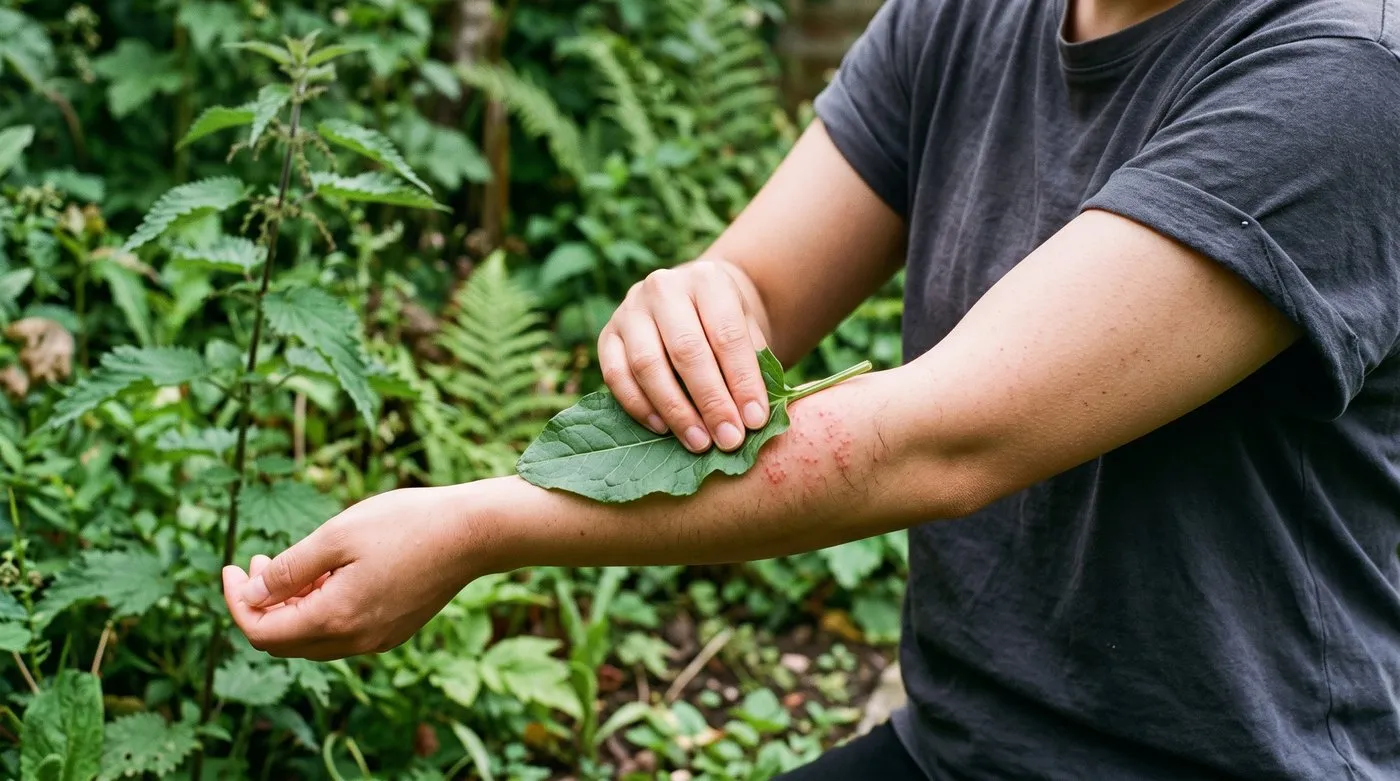 The traditional dock-leaf rub on a nettle sting. The cool sap and the rubbing soothe more than any proven antidote, and dock grows conveniently near nettles.
Control methods ranked by effectiveness
Treating these as equal is how people pull the leaves off a dock for years and wonder why it thrives. Ordered by what each actually delivers.
| Method | Role | Effectiveness | What it cannot do |
|---|---|---|---|
| Digging out the whole crown and tap root | Primary | Kills the plant outright if the crown is fully removed | Hard on established plants in dry clay |
| Cutting seed spikes before they ripen | Preventive | Stops new seed entering the decades-long seed bank | Does nothing to the existing root |
| Repeated leaf removal over a season | Primary alternative | Exhausts the root where digging is impractical | Slow; needs consistency |
| Systemic weedkiller on the rosette | Chemical | Good control, reaches the root | Needs care near other plants; may repeat |
| Regular lawn mowing | Maintenance | Keeps rosettes weak and stops flowering in turf | Only works in a mown lawn |
| Pulling off the leaves | Not effective alone | Tidies briefly | Root regrows within weeks |
The gold standard is the top two rows together: dig out the whole crown, and cut any seed spikes before they ripen. Do both and you kill the plant while stopping it restocking the seed bank. The bottom row is on the list only because it is what most people do, and it is why their dock never goes away.
Month-by-month dock calendar
| Month | What to do |
|---|---|
| March-April | Dig out young rosettes while roots are small and soil is soft. Easiest time to get the whole root. |
| May | Continue digging established plants after rain. Fill and firm the holes. |
| June | Flowering spikes rise. Begin cutting them before they colour. |
| July | Peak flowering. Cut every spike before it turns rusty brown. Bag and remove. |
| August | Seed ripens on any missed spikes. Keep cutting. Dig where soil allows. |
| September | Dig after autumn rain, when roots lift cleanly from softened ground. |
| October-November | Remove standing seed spikes so they do not shed over winter. |
| December-February | Roots dormant. Plan spring digging. Note plant positions for early attack. |
Common mistakes with broad-leaved dock
- Pulling off the leaves. The tap root regrows from its crown within weeks. Removing the top does nothing lasting.
- Levering the root out sideways. This snaps the brittle root and leaves the regrowing section behind. Work vertically with a narrow spade.
- Letting it seed. Up to 60,000 seeds per plant enter a seed bank that lasts decades. Cut every spike before it ripens.
- Composting seed spikes. The seeds survive cool composting and spread with the finished compost. Bin or burn them.
- Digging bone-dry clay. The root snaps when the soil is hard. Dig after rain, when the whole root lifts cleanly.
The short version on broad-leaved dock
Broad-leaved dock persists for two reasons and falls to two answers. It regrows from the crown of a deep tap root, so you must dig out the whole crown, working vertically with a narrow spade and choosing a day after rain when the root lifts clean. And it sheds tens of thousands of decades-lived seeds, so you must cut every rusty spike before it ripens. Do both and the dock is beaten; neglect either and it stays forever.
And before you declare total war, remember the plant has its uses: a cool leaf for a nettle sting, a cautious young leaf for the pot, and real value for the small copper butterfly and the finches. Control it where it competes, in beds, lawns and near farmland, and consider tolerating a plant or two in a wild corner. For the rest of the persistent weeds, work through the garden problems section.
Frequently asked questions
How do I get rid of broad-leaved dock?
Remove the complete tap root and crown, or weaken the plant through repeated cutting. The root regrows from its top 15cm, so any stub left behind produces a new plant. Drive a narrow spade down alongside the root and lever the whole thing up vertically. For heavy infestations, a systemic weedkiller at the rosette stage or repeated leaf removal over a season also works.
Why does dock keep growing back?
Because it regrows from the top of its deep tap root. Broad-leaved dock stores energy in a thick tap root, and the crown and upper 15cm can regenerate a whole plant even after the top is removed. Pulling the leaves off, or snapping the root by levering it sideways, leaves that regrowing section in the soil. Only removing the entire crown kills it.
How many seeds does a dock plant produce?
A single broad-leaved dock can produce up to 60,000 seeds. The seeds form on the tall rusty-red spike in summer and are extremely long-lived, surviving in the soil for decades and germinating when the ground is disturbed. Cutting off the seed spikes before they ripen prevents another crop entering the soil, which is why dock keeps appearing in freshly dug ground.
Is broad-leaved dock a notifiable weed?
No. Broad-leaved dock is an injurious weed, not a notifiable weed. The Act lets authorities require control where it spreads to agricultural land, but it is not illegal to have in a garden and there is no duty to report it. The practical duty is neighbourly: do not let it seed onto farmland or a neighbour’s plot.
Does a dock leaf really help a nettle sting?
It soothes more by cooling and distraction than by chemistry. The traditional rub of a dock leaf on a nettle sting brings relief for many people, helped by the cool sap and the rubbing, though there is little evidence of a specific antidote. Conveniently, dock often grows right beside nettles. It does no harm, so the folk remedy is worth a try.
Can you eat broad-leaved dock?
Young cooked leaves are edible, but eat them sparingly because they contain oxalic acid. Historically dock was used as a pot herb and to wrap butter, which gave it the name butter dock. It should not be eaten in quantity, and never by anyone prone to kidney stones. The young leaves are the mildest; older leaves are tough and very bitter.
When is the best time to remove dock?
Remove dock in spring or after rain, while the soil is soft. Young plants in spring have smaller roots and lift easily. Established plants come out most cleanly when the ground is wet. Whatever the season, cut off any seed spikes before the flowers turn to rusty-brown seed, to stop it spreading.
Our team produces practical UK gardening guidance from source research, contributor records and established horticultural practice. Editorial standards are overseen by Matt W.