Key takeaways
- The stage at which cherries drop tells you the cause: post-flowering drop is pollination or frost, June drop is natural plus water stress, late drop is drought or overload
- The natural June drop sheds excess fruitlets and is normal; a good crop still ripens on a healthy tree
- Poor weather at blossom and low temperatures in early fruit development are the main climatic triggers (RHS research)
- Potted cherries dry out fast and drop heavily; they can need 4-8 litres on a hot day
- Frost during blossom, cherry blackfly and brown rot are secondary causes that stack on top of weather
- In severe UK seasons up to 90 percent of set cherries can fall before ripening
Some years a cherry tree sets a heavy crop, then drops most of it on the grass before a single fruit turns red. It is one of the most frustrating things in a UK fruit garden. The good news is that the tree is telling you exactly what went wrong.
The clue is timing. When the cherries fall points straight at why they fell. A drop right after flowering has a different cause from a wave of pea-size fruitlets in June, which is different again from fruit tumbling off as it colours. Read the stage and you can fix the real problem instead of guessing.
What cherry fruit drop actually is
Cherry fruit drop, sometimes called cherry run off, is when a sweet cherry sheds much of its crop before the fruit ripens. It is not the same as a few windfalls. In bad seasons it can strip a tree almost bare. The Royal Horticultural Society records that in 2000, as much as 90 percent of the fruit that first set on sweet cherries was lost before harvest (RHS).
The problem is worse in cool, northern climates. Cherries grown in the UK and Norway drop far more heavily than the same varieties in southern Europe or the USA. Our weather at flowering and during early fruit development is the root of it. RHS research links heavier drop to poor weather and low light at blossom time, and to low temperatures while the young fruit is forming.
That does not mean you are helpless. Some drop is natural and healthy. The rest usually traces to a cause you can influence: pollination, frost, water, canopy light, or an overloaded tree. The trick is knowing which one, and the timing gives it away.
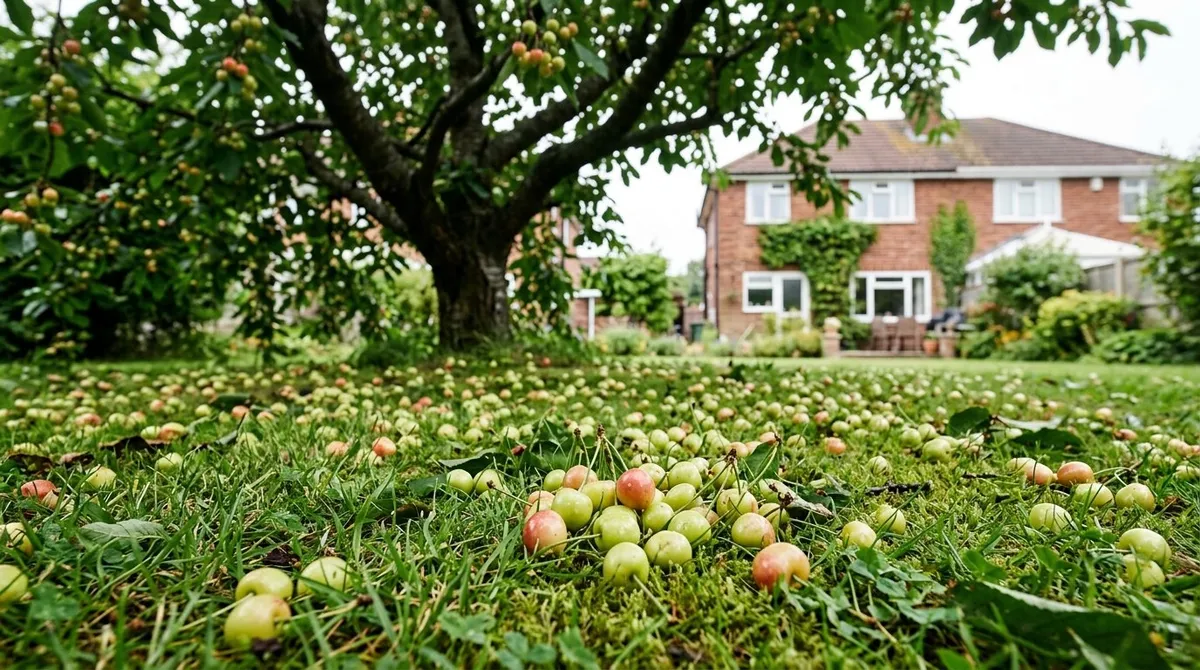
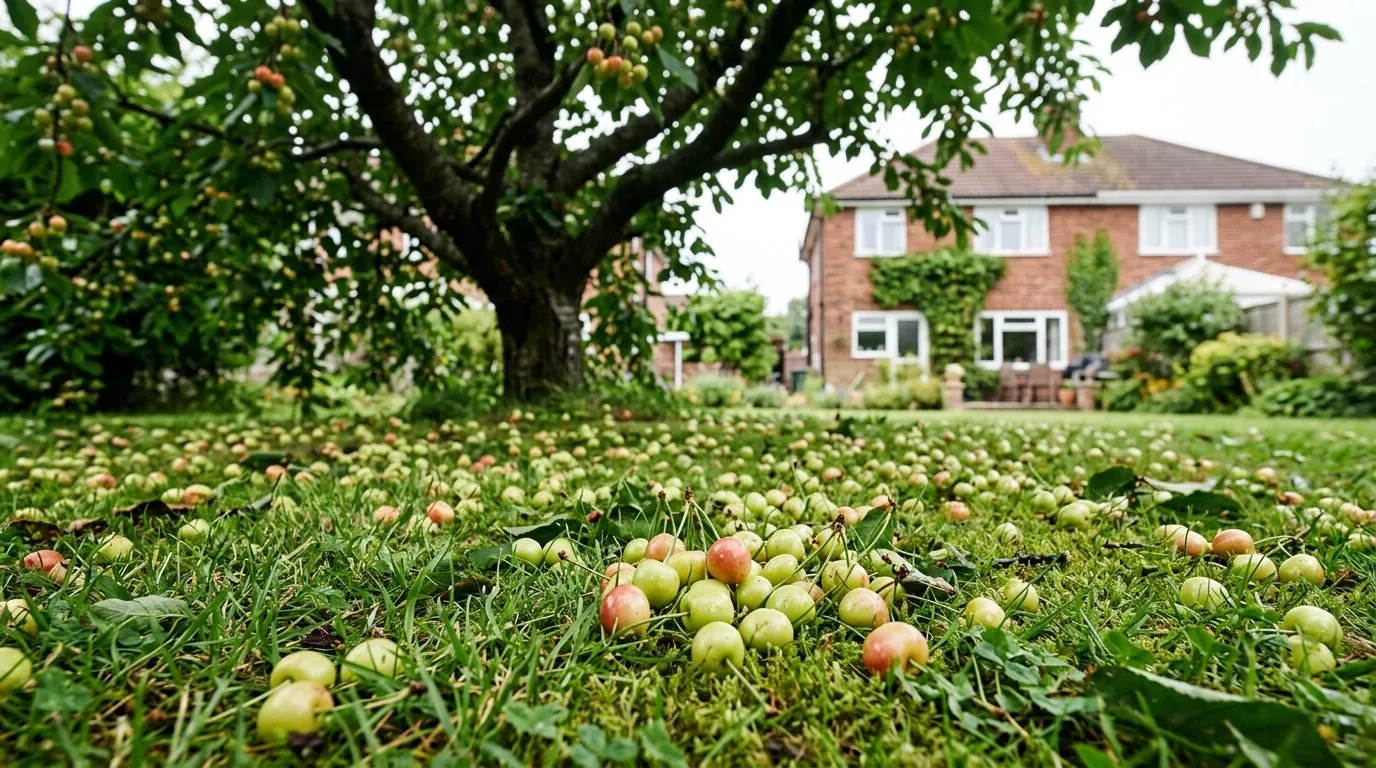 Unripe cherries on the grass. When they fall, not just how many, tells you the underlying cause.
When your cherries drop tells you why
Straight after the petals fall, any drop is about pollination and frost. In June, a flush of small green fruitlets is mostly the tree thinning itself, with water stress adding to it. Later, as the fruit swells and colours, drop is about drought, heat, and whether the tree bit off more than it could ripen.
Work through it in order. If the fruit fell with shrivelled flower remains attached, look at pollination first. If it fell plump and healthy in a dry July, look at water. Matching the stage to the cause saves you treating the wrong thing.
Post-flowering drop: pollination and frost
Fruit that falls within a fortnight of flowering, tiny and often still wearing the dead flower, almost always failed to pollinate or was frosted. No fertilised seed forms inside, so the tree has no reason to hold the fruitlet and lets it go.
Poor pollination has two common causes in UK gardens. The first is a lack of a compatible partner. Older sweet cherries need another cherry flowering at the same time to set fruit. Modern self-fertile cultivars such as ‘Stella’, ‘Lapins’ and ‘Sweetheart’ fruit on their own, which is why they dominate garden centres. Even these set a heavier crop with a second cherry nearby, so a solo tree in a bad year can disappoint. If you are choosing a tree, our guide to the best cherry tree varieties UK flags which are reliably self-fertile.
The second cause is weather. Cherries flower early, often in late March and April, when it is cold, wet and windy. Bees do not fly below about 12C or in heavy rain, so the blossom goes unvisited and unpollinated. There is little you can do about a cold spring, but a sheltered, sunny spot lifts the odds. On a small or wall-trained tree you can even help by hand, dabbing pollen between open flowers with a soft brush on a dry day.
Frost is the other early killer. A single hard frost while the tree is in flower kills the open blooms and any tiny fruitlets, which then drop with nothing set. Because cherries flower so early, they are more exposed than apples or pears.
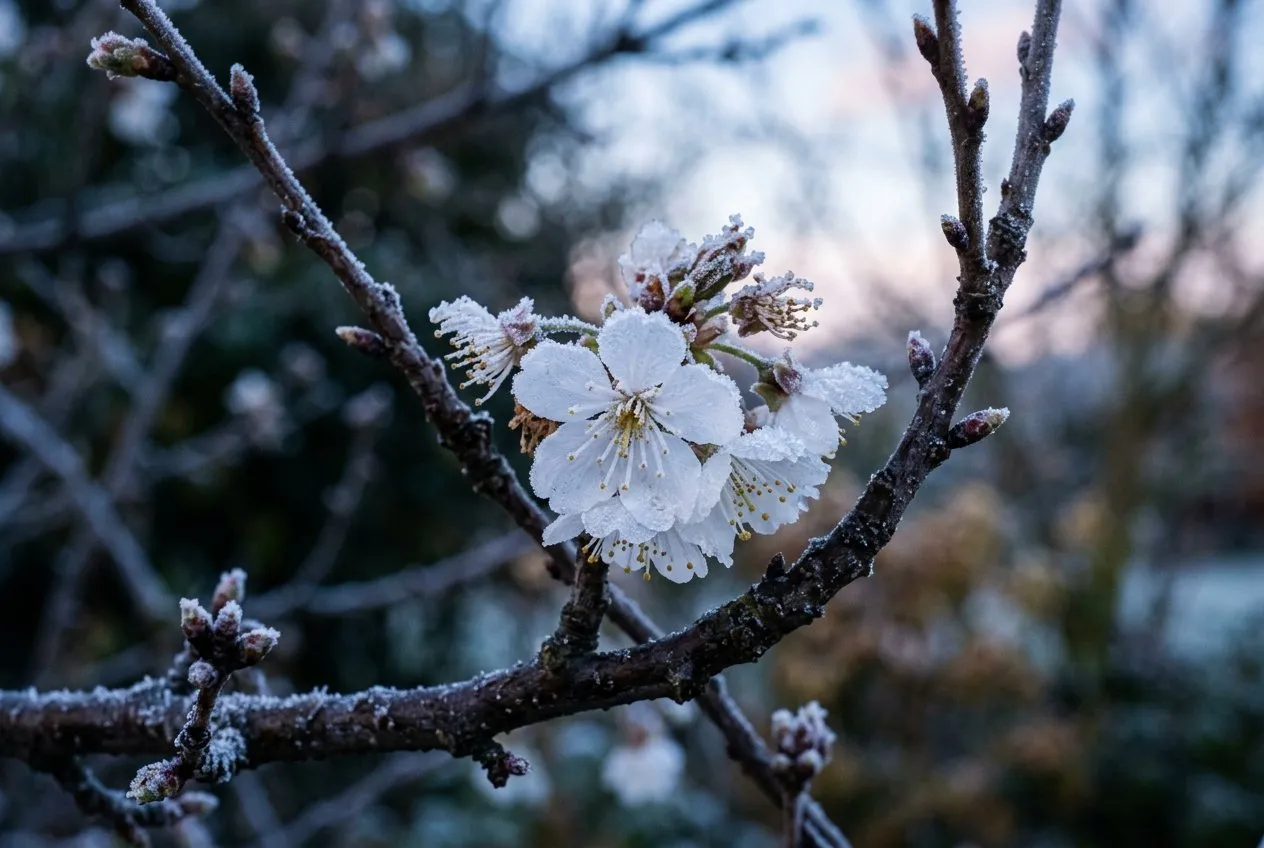 Frost on open cherry blossom. A single hard frost at flowering kills the crop before it sets.
For a full run-through of protecting early blossom, see how to protect plants from frost UK, and if you are unsure which grade to buy, the garden fleece guide explains weights and timing.
The June drop: how much is normal
A wave of pea-size fruitlets falling in June is usually nothing to worry about. This is the natural June drop, and cherries share it with apples, pears and plums. The tree sets more fruit than it can ripen, then sheds the surplus in early summer. It can look alarming, a scatter of green fruit under the tree over just a few days, but a healthy tree still holds plenty.
The point of the June drop is self-thinning. Ripening cherries to full size and sugar is expensive for the tree. It cannot feed every fruitlet it set, so it drops the weakest, the poorly pollinated, and the shaded. What remains gets a bigger share of water and sugars and ripens better. In that sense the June drop is the tree doing you a favour.
The trouble comes when water stress piles on top. If June is dry and the tree is short of water, it sheds far more than the natural share, sometimes most of the crop. This is the point where a normal process tips into a real loss. The fix is not to stop the drop, which you cannot, but to keep the tree well watered so it only sheds the surplus, not the crop you wanted.
Judging what is normal takes a season or two of watching your own tree. As a rough guide, losing a fifth to a third of set fruitlets in June is typical and leaves a good crop. Losing three-quarters or more means something is wrong, and in a dry June that something is almost always water.
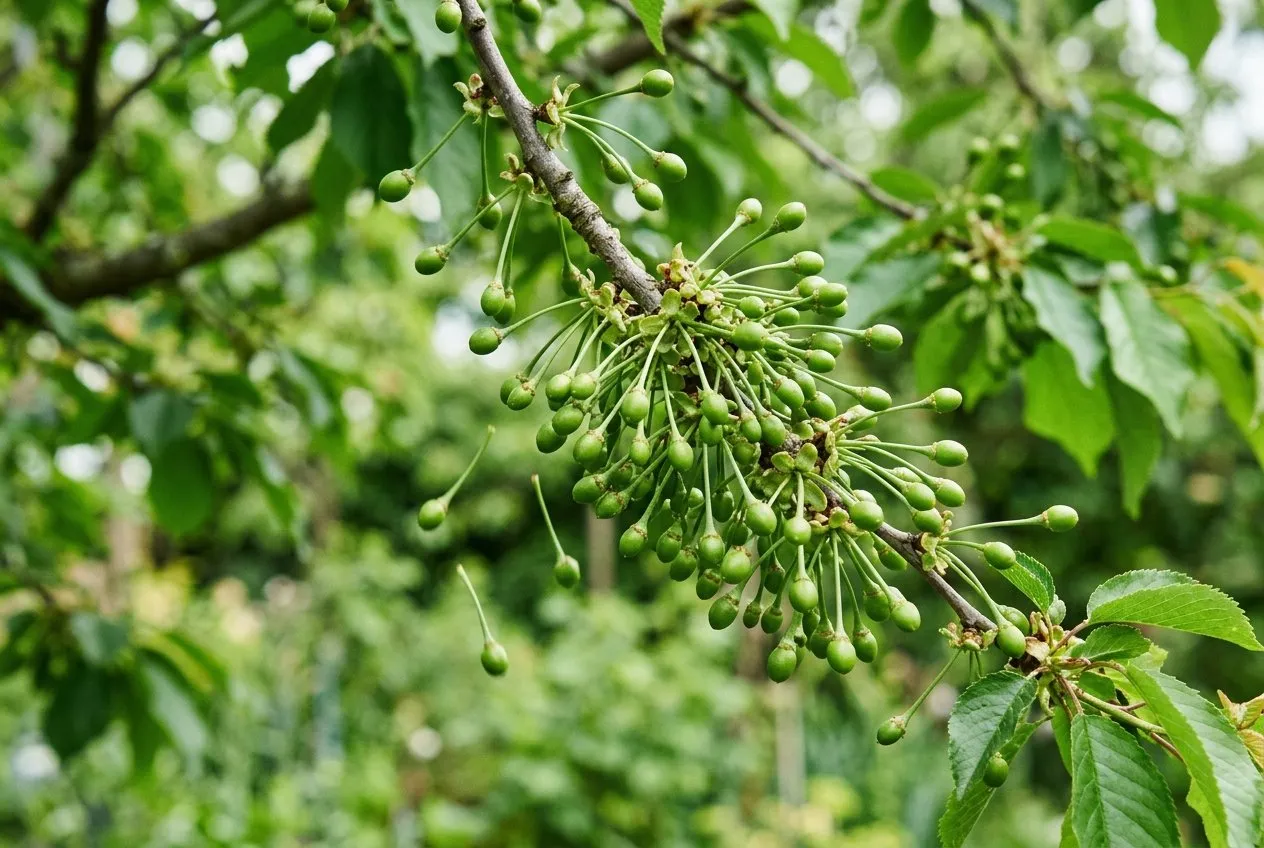 Pea-size fruitlets in June. Shedding a share of these is natural self-thinning, not a fault.
Colouring-stage drop: drought, heat and overloading
Cherries that fall plump and half-coloured in late June or July are almost always water-stressed or on an overloaded tree. This is the most heartbreaking drop because the fruit looks nearly ready. The tree, faced with hot, dry weather and more fruit than it can supply, cuts its losses and drops fruit to save itself.
Water is the biggest lever here. Fruit swells by taking up water, and the final push to full size and colour needs a steady supply. A tree that dries out, then gets a soaking, then dries again, sheds fruit and often splits what stays. Consistency beats volume. Deep, regular watering through the three or four weeks of swelling and colouring holds far more fruit than occasional heavy soakings. In a heatwave, the demand is relentless; our hot weather watering UK guide covers how much and how often for fruit.
Overloading is the second factor, and it links to biennial cropping. A tree that sets a huge crop one year exhausts itself and drops heavily, then may barely fruit the next. Thinning the fruitlets early, when they are under 5mm across as the RHS advises, takes the pressure off and gives a steadier crop year to year. If your tree swings between a glut one year and nothing the next, thinning the crop early each season is what breaks the cycle.
Light and heat matter too. Cherries ripen better in an open, sunlit canopy, which is why the RHS recommends pruning for an open shape and, in cool gardens, growing against a warm south or west wall. More light and warmth on the fruit means fewer drops and sweeter cherries.
Warning: Never let a fruiting cherry, especially one in a pot, dry out to wilting and then flood it. That swing is what triggers the worst colouring-stage drop and splits the skins on the fruit that hangs on. Steady is the whole game once the fruit starts to swell.
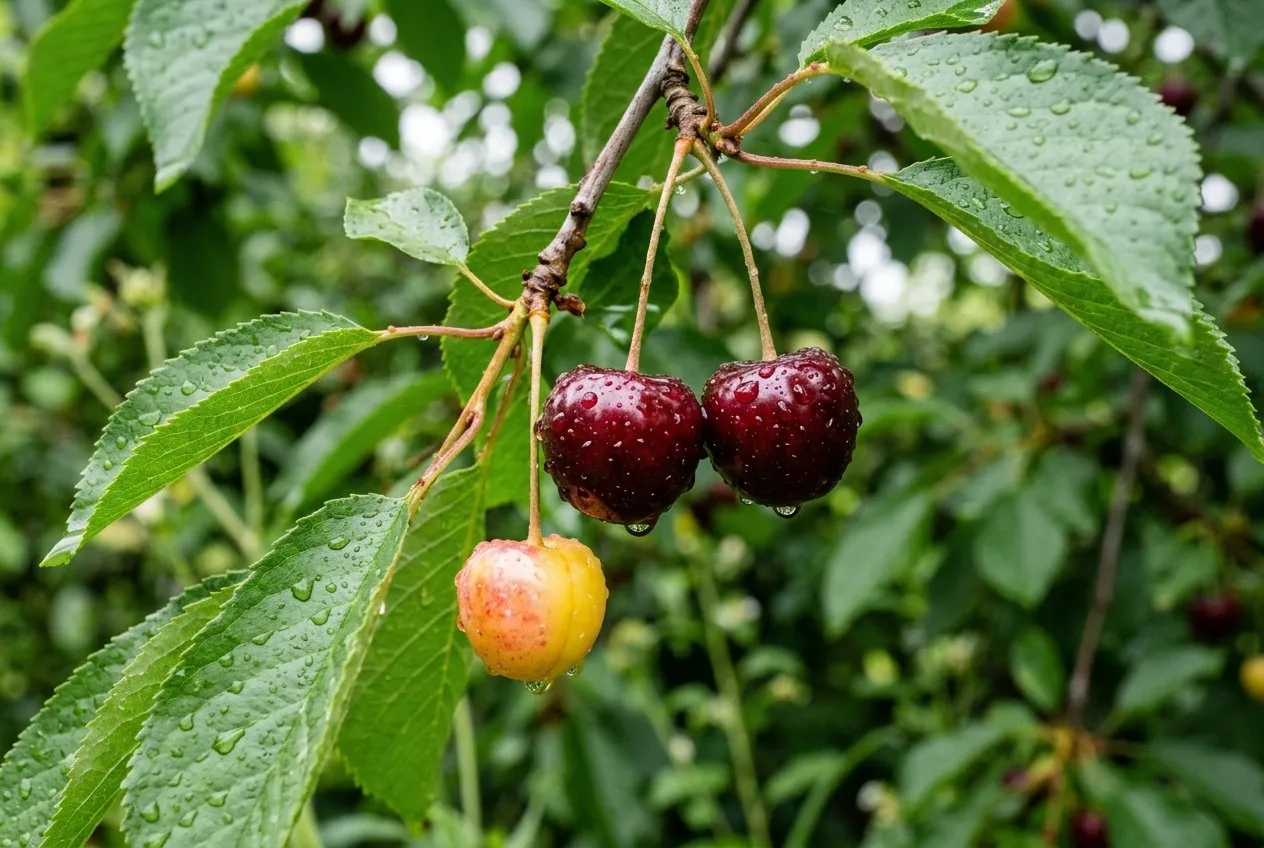 Fruit turning colour is the danger window. A tree short of water sheds cherries at this stage.
Same tree, same 40cm pot, same spot against a sunny fence. The only variable was steady water. That is how much moisture consistency matters to a container cherry during the fruiting weeks.
| Season | Watering approach | Cherries set | Cherries dropped | Picked |
|---|---|---|---|---|
| 2022 | Watered when remembered, pot dried out | ~110 | ~70 | Small bowl |
| 2023 | 4L daily, mulched, saucer under pot | ~100 | ~25 | 80+ |
| 2024 | 4L daily plus liquid feed fortnightly | ~120 | ~30 | 90+ |
A few practical points from those years. Stand the pot on a saucer or tray through the fruiting weeks so it holds a reserve, but tip the tray in winter so the roots never sit cold and wet, which rots them. Mulch the compost to slow evaporation. Feed a potted cherry every couple of weeks in the growing season, because a container runs out of nutrients fast. For the wider picture on container fruit, our guide to growing fruit in pots and containers covers compost, pot size and feeding.
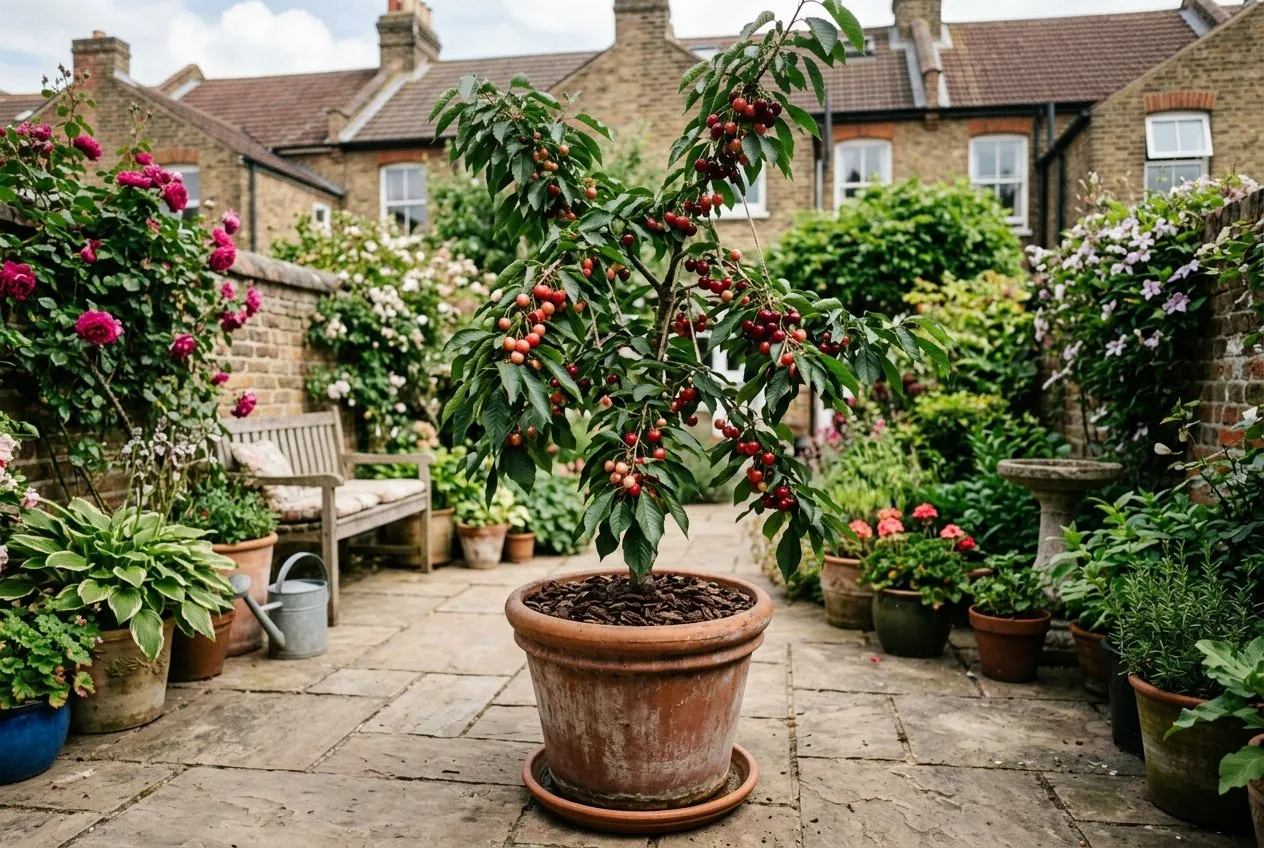 A potted cherry on a saucer with a bark mulch. Steady moisture in the pot is what holds the crop.
Cherry blackfly and brown rot: the secondary causes
Two pests and diseases stack on top of the weather causes and make drop worse. Neither is usually the main reason a tree sheds its crop, but both weaken the tree and spoil fruit, so they are worth ruling in or out.
Cherry blackfly is the common one. It is a black aphid, Myzus cerasi, that colonises the shoot tips from spring, curling and distorting the young leaves and coating them in sticky honeydew that turns to black sooty mould. It rarely stops a tree fruiting on its own, but a heavy infestation drains a young or potted tree and adds to stress-related drop (RHS). Squash early colonies by hand, encourage ladybirds and hoverflies, and only reach for a fatty-acid spray on a bad outbreak on a small tree. Our general how to get rid of aphids guide covers the safe options.
Brown rot is the disease to watch. The fungus turns cherries brown and fuzzy, and infected fruit either rots on the tree or drops. It spreads fast in warm, wet weather and overwinters in mummified fruit left on the branch. Pick off and bin any rotting cherries the moment you see them, and clear fallen fruit from under the tree. Do not compost it. The full control routine is in our brown rot in stone fruit UK guide.
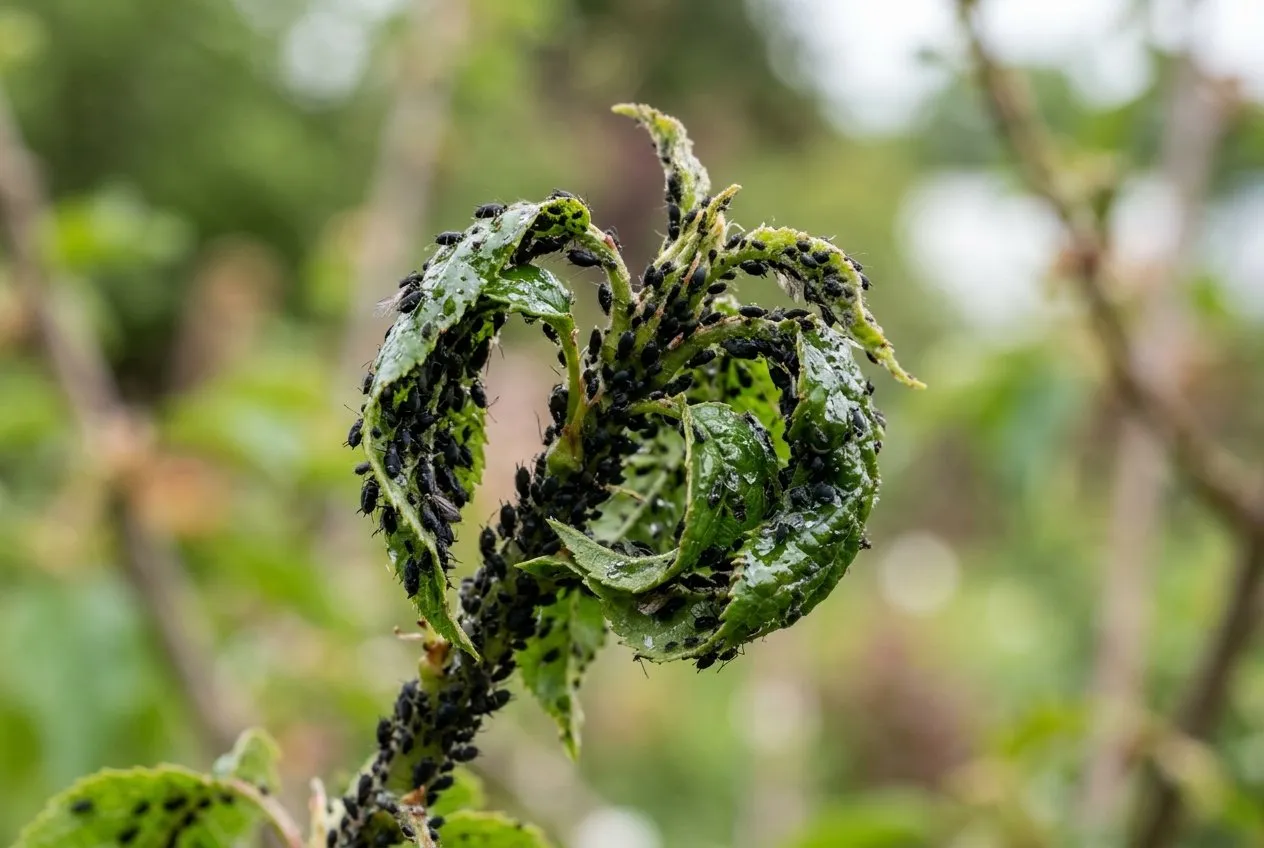 Cherry blackfly curling the shoot tips. A heavy colony drains the tree and adds to fruit drop.
Birds versus netting: losing fruit you never see drop
Birds strip ripening cherries so fast that gardeners often blame drop for a loss the birds caused. If your fruit vanishes rather than falls, and you find pecked stones and stalks, it is birds, not fruit drop. Blackbirds and starlings can clear a small tree in a day once the cherries colour.
Netting is the only reliable answer. Before the fruit starts to colour up, drape a fine net over the tree or, on a bigger tree, build a fruit cage. Use a net with a mesh of around 20mm or less so small birds cannot get through, and secure it to the ground or trunk so nothing can get under and trapped. A trained fan or a potted tree is easy to net; a large standard is not, which is one more reason garden cherries are best kept small on dwarfing rootstocks.
Time it right. Net too early and you shut the pollinators out; net too late and the birds beat you to it. The window is as the first fruit turns from green to pale yellow or pink, a week or two before ripe. That is your cue to get the net on.
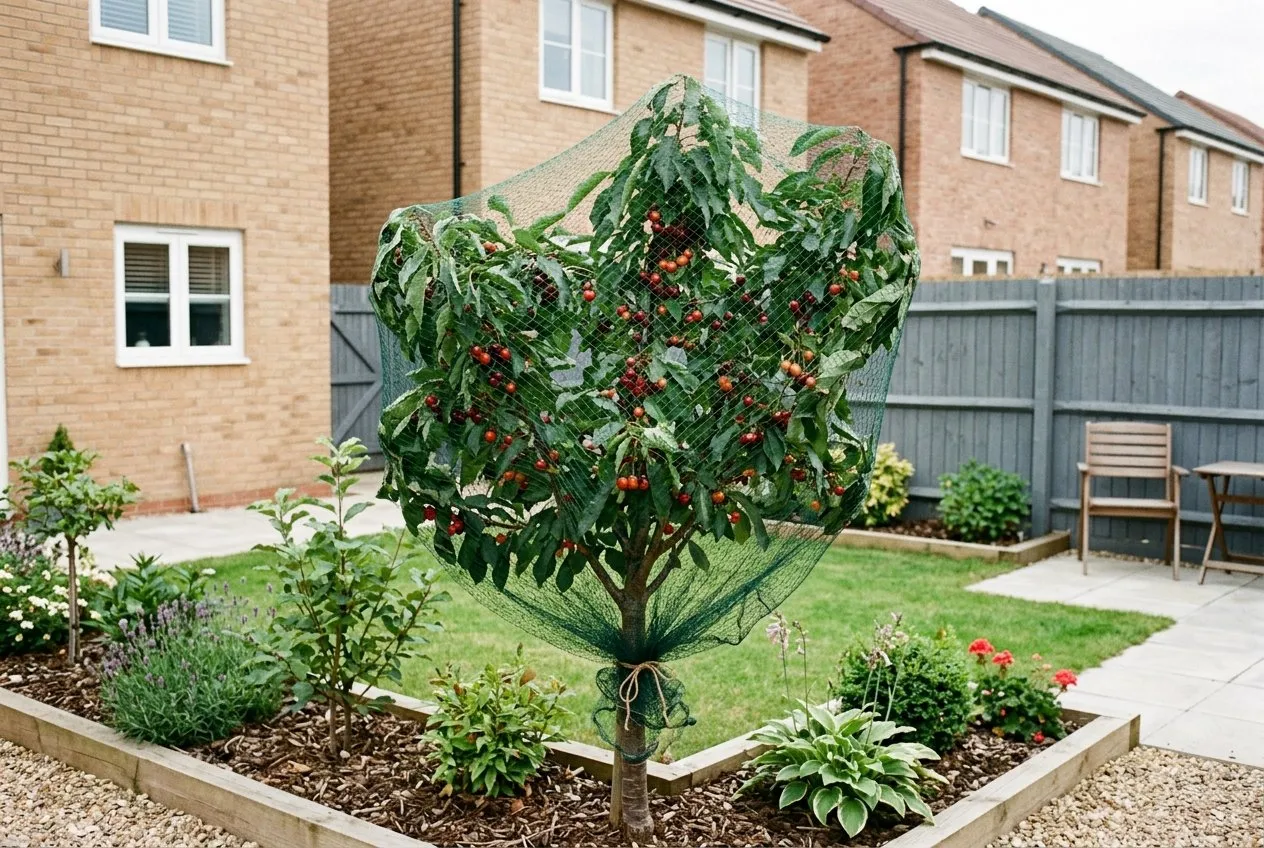 Netting a cherry as the fruit starts to colour. Birds take more fruit than genuine drop in many gardens.
A fix programme that actually holds the crop
Start with the right tree. On a fresh planting, choose a self-fertile cultivar like ‘Stella’ or ‘Sweetheart’, or plant two compatible cherries close enough for the bees to cross them. Keep the tree small on a dwarfing rootstock so you can fleece and net it easily, which makes frost cover and bird netting far less of a chore.
Through the year, the key jobs are frost cover at blossom, steady water through the fruiting weeks, an open sunlit canopy, and early control of blackfly and brown rot. Mulch matters more than most people think: a 5-7cm ring of bark or compost over the root zone, kept clear of the trunk, holds soil moisture through the dry weeks that trigger late drop.
| Month | Job | Why it stops drop |
|---|---|---|
| March | Fleece on frost nights as buds break | Frost kills blossom and sets no fruit |
| April | Fleece frosty nights in full flower; ensure pollination | Cold snaps and poor set cause post-flower drop |
| May | Mulch the root zone 5-7cm; watch shoot tips for blackfly | Locks in moisture; early aphid control |
| June | Water deeply and steadily; expect the natural June drop | Water stress turns normal drop into crop loss |
| July | Keep watering as fruit colours; net before it ripens | Drought and heat cause colouring-stage drop; birds strip fruit |
| August | Clear any rotted or mummified fruit; harvest | Removes brown rot before it spreads |
| Winter | Prune for an open shape while dormant; remove mummies | More light next year; less rot carryover |
Run this and you tilt every stage in your favour. You cannot control a cold spring, but you can cover the blossom, feed the roots steady water, keep the canopy light and open, and clear the pests before they add to the load.
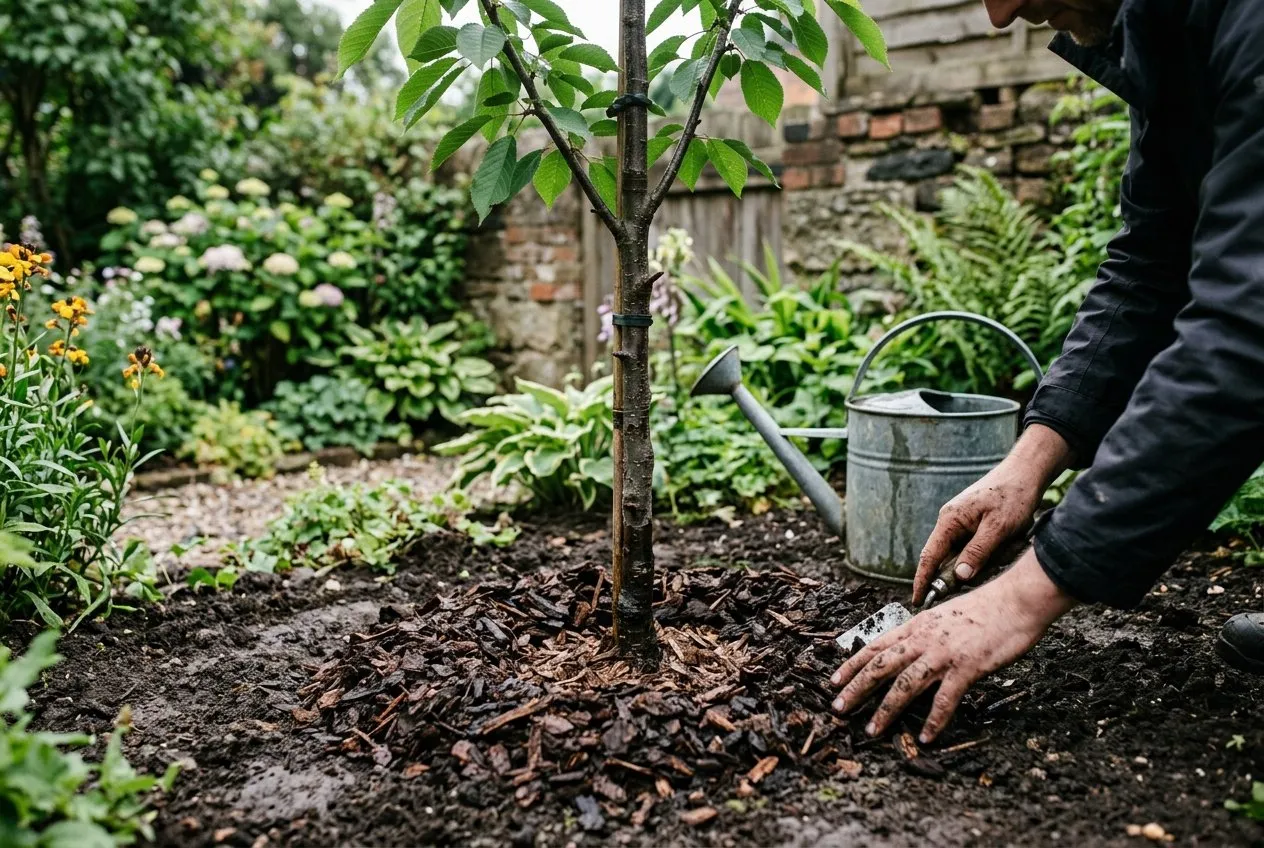 Mulching and watering the root zone. Holding soil moisture through the dry weeks stops the worst late drop.
Common mistakes that make cherry drop worse
Panicking at the natural June drop
A scatter of pea-size fruit in June sends people reaching for feeds and sprays. It is normal self-thinning and needs no action beyond steady watering. Learn what your tree’s normal June drop looks like before you treat it as a problem. Over-feeding in a panic just pushes soft growth and blackfly.
Letting a potted cherry dry out and then flooding it
The single biggest cause of drop on container cherries. A pot that swings from bone-dry to waterlogged sheds fruit and splits skins. Water little and often, keep a mulch on the compost, and stand the pot on a saucer through the fruiting weeks. Consistency beats volume every time.
Ignoring frost at blossom time
Cherries flower early and get caught by late frosts, yet many gardeners never cover them. Keep fleece to hand from mid-March and use it on any tree small enough to reach. Two nights of cover through a cold snap can be the difference between a full crop and none.
Netting too late
Birds do not wait for fully ripe fruit. Once cherries turn from green to pale pink or yellow, the birds move in. Net before the colour comes, not after you have lost the first handful. A day late and blackbirds will have taken the lot.
Leaving rotted fruit on the tree
Mummified, brown-rotted cherries left hanging over winter reinfect next year’s crop. Pick every rotted fruit off and bin it, and clear fallen fruit from the ground. This one job in autumn saves a lot of grief the following summer.
Frequently asked questions
Why are my cherries falling off before they ripen?
The timing tells you why. Fruit dropping soon after flowering usually means poor pollination or frost damage. A wave of pea-size fruitlets in June is the natural June drop, which is normal. Cherries falling as they colour up point to drought, heat, or a tree carrying more fruit than it can feed. Match the stage to the cause before you act.
Is it normal for a cherry tree to drop fruit in June?
Yes, the June drop is completely normal. Cherry, apple, pear and plum trees all shed a proportion of immature fruitlets in early summer. The tree is thinning its own crop to what it can ripen. A healthy tree still holds plenty of fruit afterwards. Only worry if almost every fruitlet falls, which points to pollination failure or water stress.
Does my cherry tree need a pollination partner?
Not always, but it helps. Self-fertile cultivars like ‘Stella’, ‘Lapins’ and ‘Sweetheart’ fruit alone. Older varieties need a compatible partner flowering at the same time. Even self-fertile trees set a heavier crop with another cherry nearby. Cold, wet, still weather at blossom stops bees flying and reduces set on any tree, self-fertile or not.
Can lack of water cause cherries to drop?
Yes, water stress is a major cause of drop. When fruit is swelling and colouring, a tree short of water sheds cherries to survive. Potted cherries are worst hit because the compost dries in hours. Water deeply and regularly through the fruiting weeks, 4-8 litres a day for a pot in hot spells, and mulch to hold moisture in the soil.
Does frost cause cherry fruit drop?
Yes, frost at blossom time is a common cause. A late frost kills open flowers and young fruitlets, which then drop with no crop set. Cherries flower early, in March and April, so they are exposed. Cover small or trained trees with horticultural fleece on frosty nights when they are in flower, and remove it by day for the bees.
How do I stop my cherries dropping next year?
Fix the cause the timing points to. Ensure a pollination partner or grow a self-fertile variety, fleece against blossom frost, and water steadily through the fruiting weeks. Prune for an open, sunlit canopy and mulch to hold soil moisture. Control cherry blackfly early and remove any brown-rotted fruit. No single fix works if you ignore the real trigger.
Why do cherries drop more in the UK than in warmer countries?
Our cooler, wetter climate is the reason. RHS research links heavier drop to poor weather and low light at blossom and low temperatures in early fruit development. Northern regions like the UK and Norway suffer far more than southern Europe or the USA. Growing against a warm, sunny wall and keeping the canopy open both help lift light and temperature.
Once you have this year’s crop safe, keep your tree productive with our guide to how to grow cherry trees UK for pruning, feeding and long-term care.
Our team produces practical UK gardening guidance from source research, contributor records and established horticultural practice. Editorial standards are overseen by Matt W.