Key takeaways
- Blackleg blackens the stem base and turns it soft and slimy, with yellowing wilting leaves above
- It is bacterial, so there is no spray that cures it; control is prevention and removal
- Infected seed tubers are the main source, so certified seed potatoes matter most
- Warm, wet, poorly drained soil makes outbreaks far worse
- Remove and bin infected plants whole and promptly to stop it spreading
- Never store bruised, damaged, or suspect tubers; soft rot spreads through the whole box
You walk down the potato row and one plant looks wrong: the leaves are yellowing and wilting while the rest are green and vigorous. Pull it gently and the base of the stem is black, soft, and slimy, and it smells foul. That is potato blackleg, a bacterial disease that can spread from a single plant to ruin a crop and rot a store.
This guide shows you how to recognise blackleg, tell it apart from blight, stop it spreading the moment you see it, and prevent it coming back. There is no spray that cures it, but the disease is very controllable once you understand where it comes from and how it moves.
How to identify potato blackleg
Blackleg is named for its single most distinctive symptom, and it is usually easy to spot once you know what you are looking at.
The black, slimy stem base
The defining sign is the stem base. From soil level upward, the stem turns black or dark brown, soft, and slimy, often for several centimetres. The tissue is wet and rotten, not dry, and it gives off a foul smell. Above this rot, the foliage yellows, curls upward, wilts, and is stunted compared with healthy plants. Badly affected plants collapse and die.
It typically shows on individual plants scattered through a row rather than the whole crop at once, because each infection traces back to its own infected seed tuber.
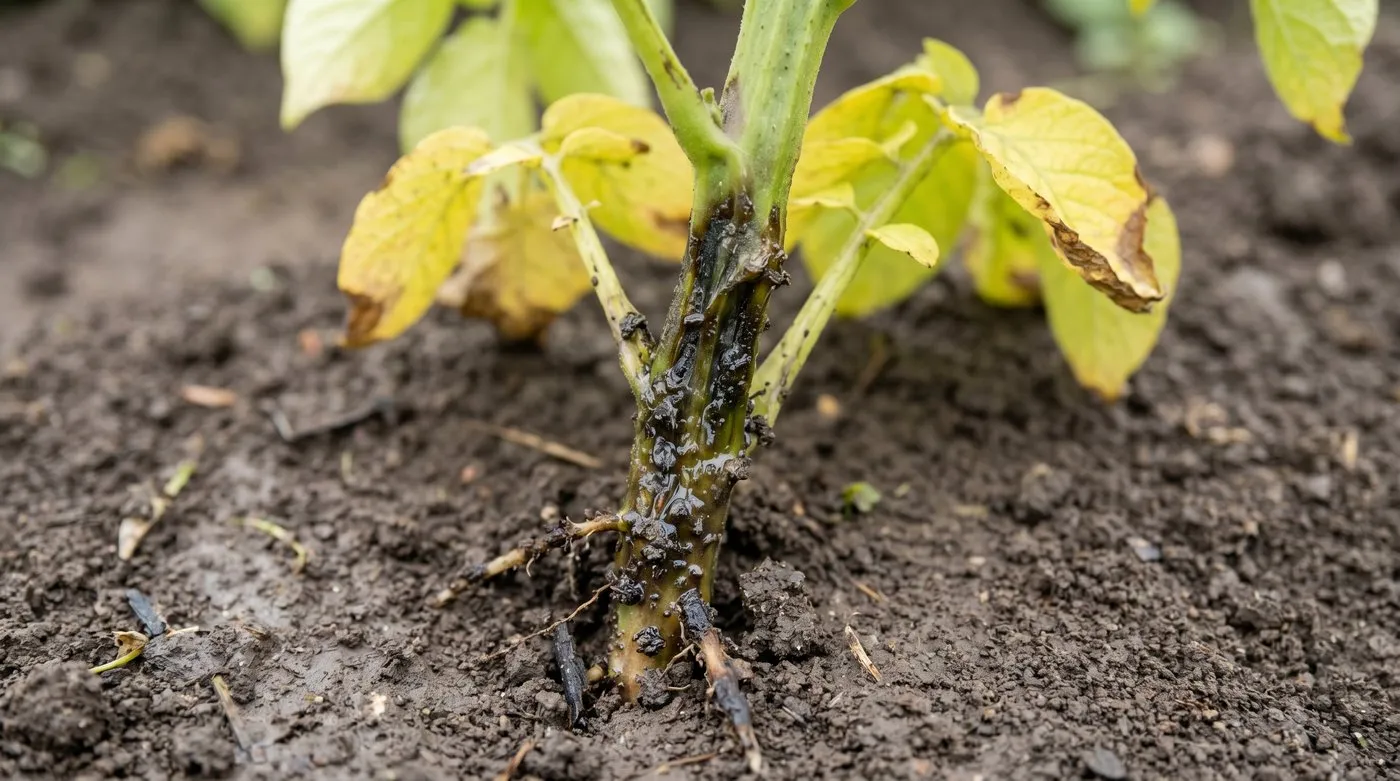 The defining symptom: a black, soft, slimy stem base rotting upward from soil level. The wet rot and foul smell separate blackleg from the dry damage of blight.
What the tubers look like
Underground, affected tubers may rot into a soft, wet, foul-smelling mush (bacterial soft rot), often starting at the stolon end where they joined the plant. Importantly, some tubers from an infected plant look perfectly sound but still carry the bacteria, which is how the disease travels into storage and into next year’s crop if those tubers are saved as seed.
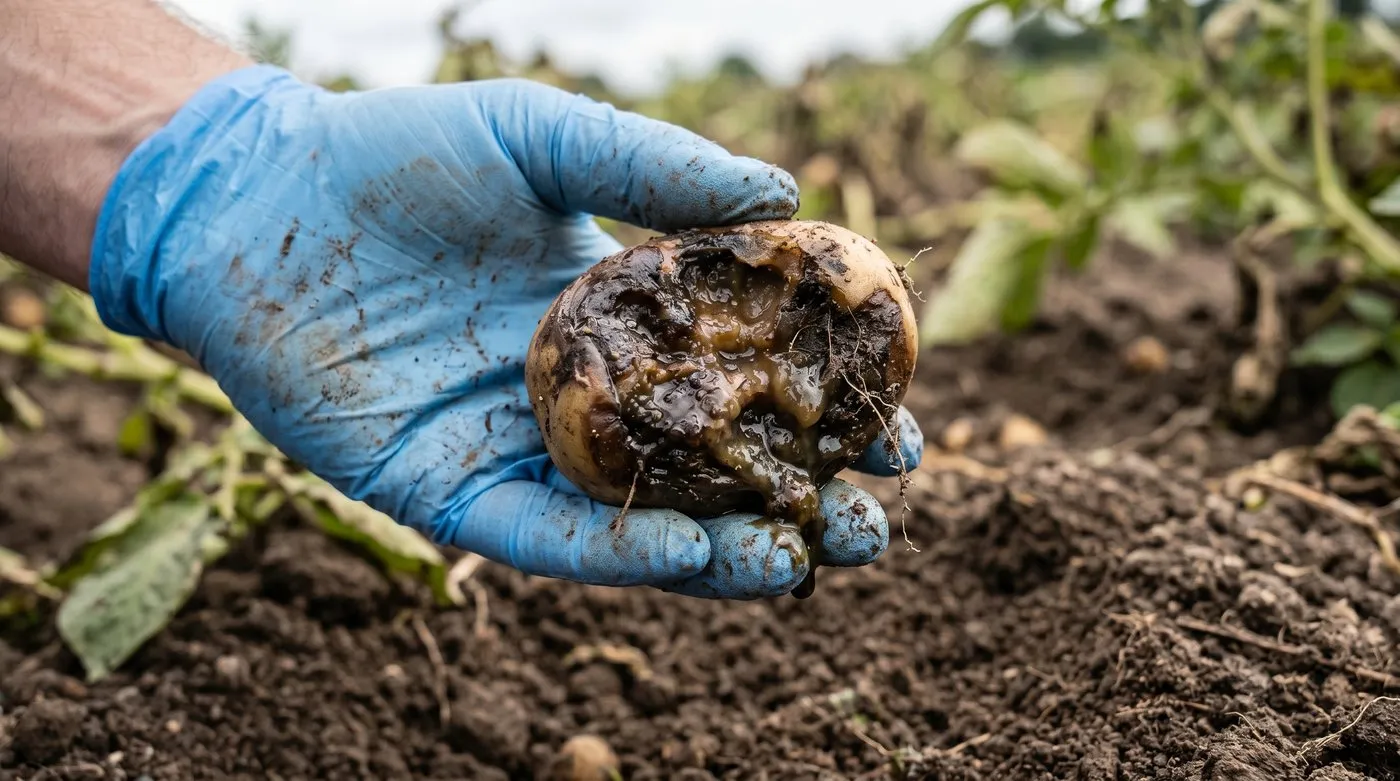 Bacterial soft rot turns affected tubers to foul-smelling mush. Other tubers from the same plant may look fine yet still carry the bacteria, which is how blackleg spreads into storage.
Blackleg versus blight: telling them apart
Gardeners often confuse blackleg with potato blight, but they behave very differently, and the response differs too.
| Feature | Blackleg | Potato blight |
|---|---|---|
| Cause | Bacteria (Pectobacterium, Dickeya) | Fungus-like Phytophthora infestans |
| First sign | Black, slimy stem base | Brown leaf patches, white mould edge |
| Texture | Wet, slimy, foul-smelling | Dry brown lesions, then collapse |
| Spread pattern | Scattered single plants | Sweeps across the crop in days |
| Tubers | Soft wet rot from stolon end | Reddish-brown firm rot under skin |
| Trigger | Warm, wet, poorly drained soil | Warm, humid, muggy “blight weather” |
The quick test: wet and slimy at the stem base is blackleg; dry brown patches spreading across the leaves is blight. For the latter, see our guide to late blight in potatoes and tomatoes. They can occur in the same wet season, so check carefully before you act.
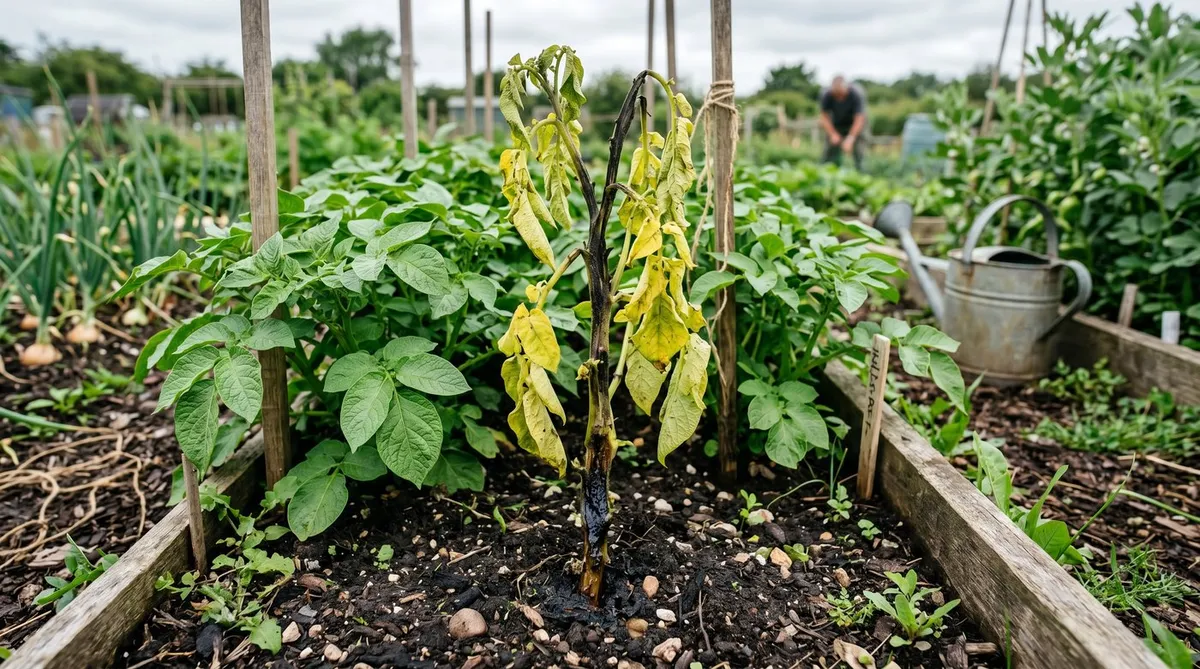
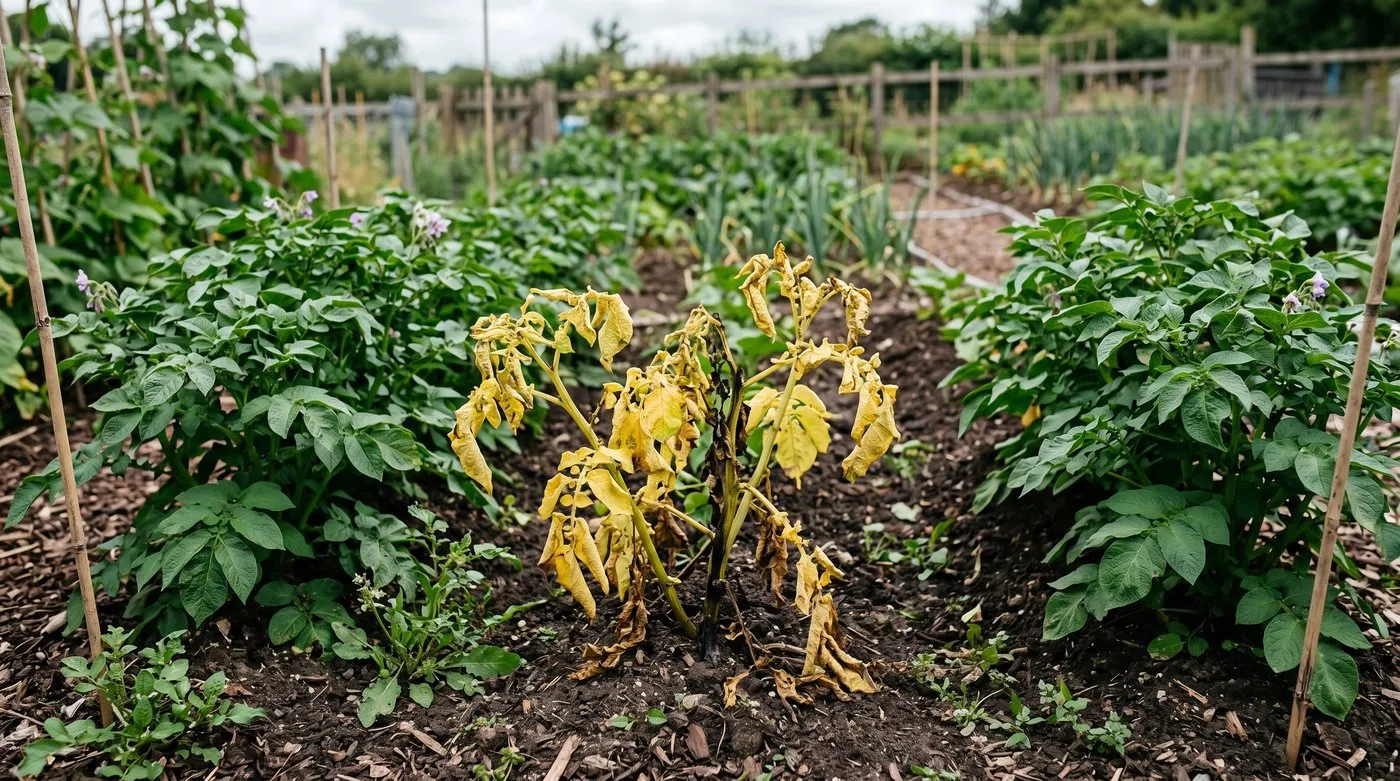 Blackleg usually strikes scattered single plants: this one yellows and wilts while its neighbours stay green, because each infection traces back to its own infected seed tuber.
Why there is no cure, and what to do instead
Blackleg is bacterial, and that single fact shapes everything. There is no fungicide or spray that cures a bacterial infection in a living potato plant. Anyone selling you a “blackleg treatment” is selling false hope. The disease is controlled entirely through prevention and removal, not chemistry.
The moment you spot an infected plant, the job is to stop it spreading:
- Lift the whole plant promptly, including as many of its tubers as you can find.
- Bin it or burn it, never compost it. Home compost rarely gets hot enough to kill the bacteria.
- Do not leave infected debris or tubers in the soil, where they overwinter and reinfect.
- Wash hands and tools after handling, as the bacteria spread on contaminated surfaces.
This prompt removal, called rogueing, is the heart of in-season control. One infected plant left in the row seeds bacteria into the soil and onto your hands, and you carry it down the bed.
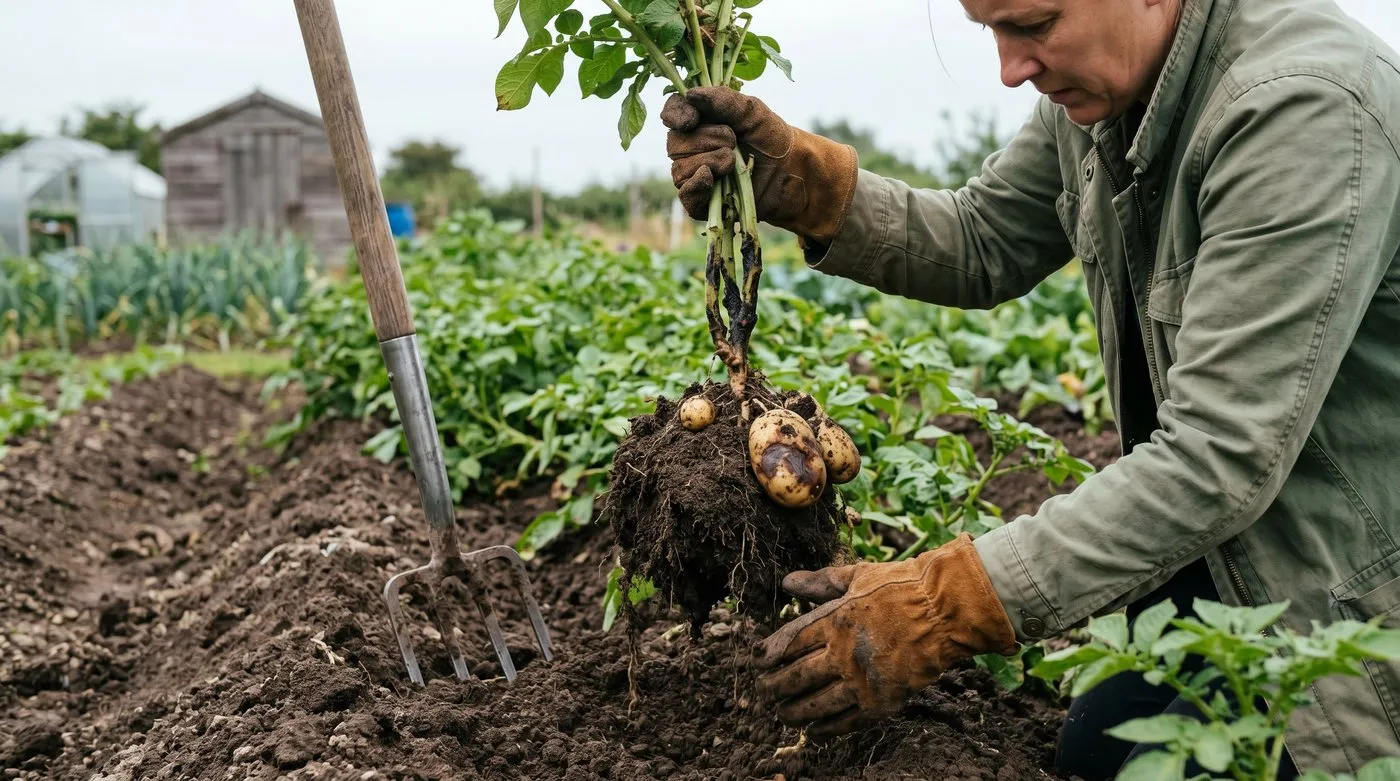 Rogueing in action: lift the whole infected plant and its tubers promptly and bin it. Removing one plant early beats losing half a row to spread later.
The root cause most people miss
Most gardeners see blackleg as something that strikes from nowhere in the soil. In truth, the overwhelming source is the seed tuber you planted. The bacteria travel inside seed potatoes, often without any visible sign, and the disease you see in June was usually planted in April.
This is why the most powerful control happens before a single plant is in the ground. Start clean and stay clean:
- Buy fresh certified seed potatoes each year. Certified seed is inspected and grown to minimise disease, and it is the single best defence. Saving your own seed, or using supermarket potatoes, is the commonest way gardeners introduce blackleg.
- Do not cut seed tubers unless you must; cut surfaces are open wounds the bacteria exploit. Plant whole, well-chitted tubers.
- Handle gently. Bruising at planting and harvest creates the wounds the bacteria enter through.
The second root cause is soil conditions. The bacteria multiply fastest in warm, wet, poorly drained, or waterlogged soil, and waterlogging also weakens the plant’s defences. Plant into free-draining ground, and in heavy soil consider ridges or raised beds so water drains away from the developing tubers.
How to prevent blackleg next season
Pull the prevention together into a simple seasonal routine and blackleg rarely gets a foothold.
- Certified seed every year. The foundation of control. Our guide to the best potato varieties for UK gardens covers choosing reliable stock.
- Rotate. Grow potatoes on fresh ground each year, ideally a three- or four-year gap, so soil-borne bacteria decline. Our guide to growing potatoes sets out a sensible rotation.
- Plant into warm, well-drained soil at the right time; see when to plant potatoes.
- Earth up carefully without wounding stems or tubers; our guide to earthing up potatoes shows the technique.
- Harvest and store only sound tubers. Never store anything bruised, damaged, or suspect; one soft-rotting tuber spreads through the whole box. See storing potatoes for doing it right.
Common mistakes with potato blackleg
These errors let a controllable disease turn into a lost crop.
Saving your own seed potatoes
The single biggest source of blackleg. Buy fresh certified seed each year; saved tubers carry the bacteria invisibly.
Composting infected plants
Home compost rarely kills the bacteria, so you spread the disease back onto your beds. Bin or burn infected material, never compost it.
Leaving infected plants in the row
Hesitating to pull a plant that still has leaves lets the bacteria spread. Rogue promptly: one plant lost early beats a row lost later.
Storing damaged tubers
A single bruised or infected tuber rots and takes the box with it. Store only firm, sound, undamaged potatoes.
Planting into waterlogged ground
Wet, poorly drained soil is where blackleg thrives. Improve drainage or use ridges and raised beds so water moves away from the tubers.
Frequently asked questions
What is potato blackleg?
Potato blackleg is a bacterial disease caused by Pectobacterium and Dickeya species. It rots the base of the stem, turning it black, soft, and slimy, while the leaves above yellow, curl, and wilt. It usually arrives on infected seed tubers and spreads in warm, wet soil. There is no chemical cure, so control relies on prevention and prompt removal.
How do I know if my potatoes have blackleg?
Look at the stem base. Blackleg turns it black, soft, and slimy from soil level upward, and the foliage above yellows, wilts, and is often stunted. Pull a suspect plant and the rot is wet and foul-smelling, not the dry brown of blight. Affected tubers may be soft and rotten or look fine but carry the bacteria.
Can you cure potato blackleg?
No. Blackleg is bacterial, and no spray or treatment cures an infected plant. The only effective response is to remove and bin infected plants promptly so the bacteria do not spread to healthy plants or into the soil. All the real control happens through prevention: certified seed, good drainage, and careful handling.
What causes blackleg in potatoes?
The bacteria usually arrive on infected seed tubers, even ones that look healthy. They multiply in warm, wet, poorly drained soil and enter plants through wounds and natural openings. Cutting seed potatoes, bruising tubers at planting, and waterlogged ground all increase the risk. Saved or uncertified seed is the most common way gardeners introduce it.
Can I eat potatoes from a plant with blackleg?
Tubers from an infected plant that are still firm and sound are safe to eat, but use them quickly and never store them, as they often carry the bacteria and will rot in storage, spreading soft rot through the box. Any tuber that is soft, slimy, or smells bad should be discarded. When in doubt, do not store it.
How do I prevent potato blackleg next year?
Buy fresh certified seed potatoes each year rather than saving your own, plant into well-drained soil, avoid cutting or bruising seed tubers, and practise crop rotation. Remove any infected plants promptly during the season, and never store damaged tubers. These steps together keep blackleg from establishing in your beds.
Catch it early, start with clean seed, and blackleg stays a minor nuisance rather than a crop-killer. For the wider potato-growing picture, see our guide to harvesting potatoes, and for trusted disease guidance the Royal Horticultural Society’s advice on potato blackleg is a reliable reference.
Our team produces practical UK gardening guidance from source research, contributor records and established horticultural practice. Editorial standards are overseen by Matt W.