Key takeaways
- Badgers dig for grubs: 1 night of feeding can churn 10sq m of turf into rolled-back clods
- Root cause is leatherjackets and chafer grubs, both reaching 18-30mm in the top 5cm of soil
- Nematodes work only when soil sits at 12-20C, so apply late August to October, not in spring
- Chafer nematodes (H. bacteriophora) cost from £18 and treat 100sq m; water in within 2 hours
- Badgers and setts are protected: blocking or harming one risks a £5,000 fine and 6 months in jail
- Electric fencing 150-200mm off the ground stops re-entry while nematodes clear the grubs
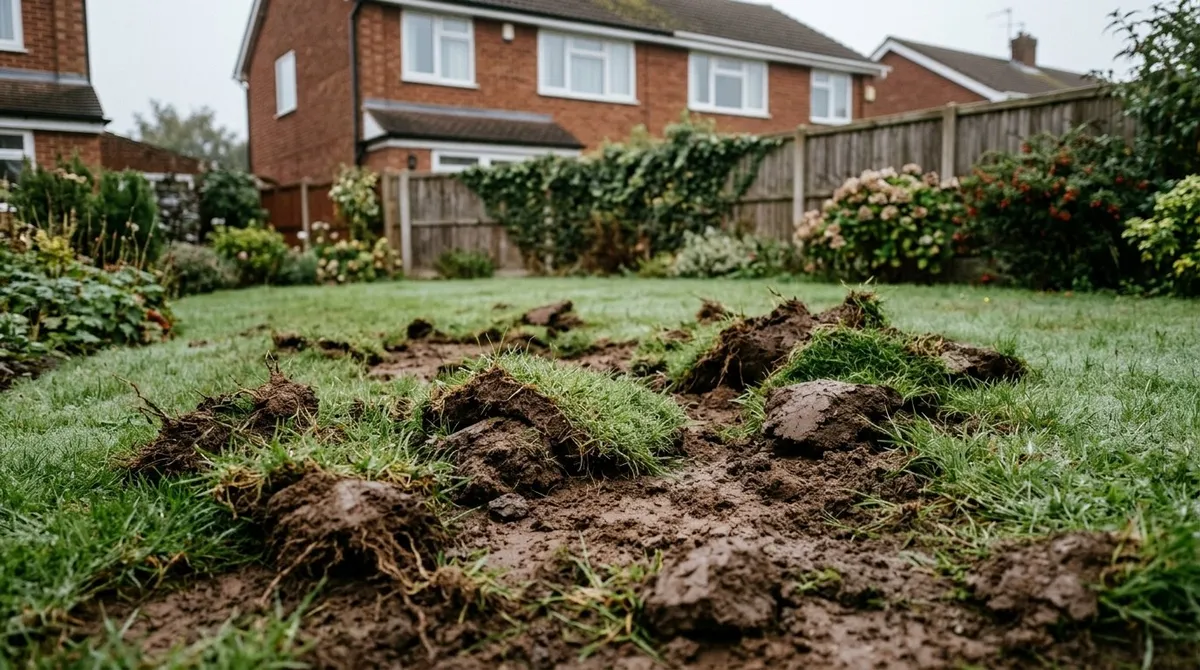
Most UK gardeners discover the problem the same way: an intact lawn at dusk, then chaos by breakfast. If you want to stop badgers digging up your lawn, the first thing to understand is what they are actually after. They are not interested in the grass. They are mining the soil beneath it for fat, protein-rich grubs. A single badger can roll back ten square metres of turf in one night, leaving the surface looking ploughed. The damage looks personal. It is not. It is a feeding response to what lives under your lawn, and that distinction changes everything about how you fix it.
What badger damage actually looks like
Badger feeding damage is unmistakable once you know the signs. They dig cone-shaped holes 50-100mm deep with their long snouts, then peel back flaps of turf in search of grubs. The clods are often rolled neatly to one side, still hinged at the edge. This is different from other animals.
Foxes dig narrower, scrappier holes and leave food remains behind. Birds such as crows and magpies make shallow stabs across the surface without lifting whole sods. Badgers work methodically, returning to the same patches on a fixed route. You may also find a latrine pit, a small dug hole used as a toilet, near a hedge or fence line. That confirms a resident badger rather than a passing one.
Look at your boundaries at first light. Badgers force gaps about 250mm wide under fences and leave coarse black-and-white guard hairs snagged on the wire. Their runs are well-worn and greasy where the same body brushes through nightly. For a side-by-side check, see our guide to small holes in the lawn overnight.
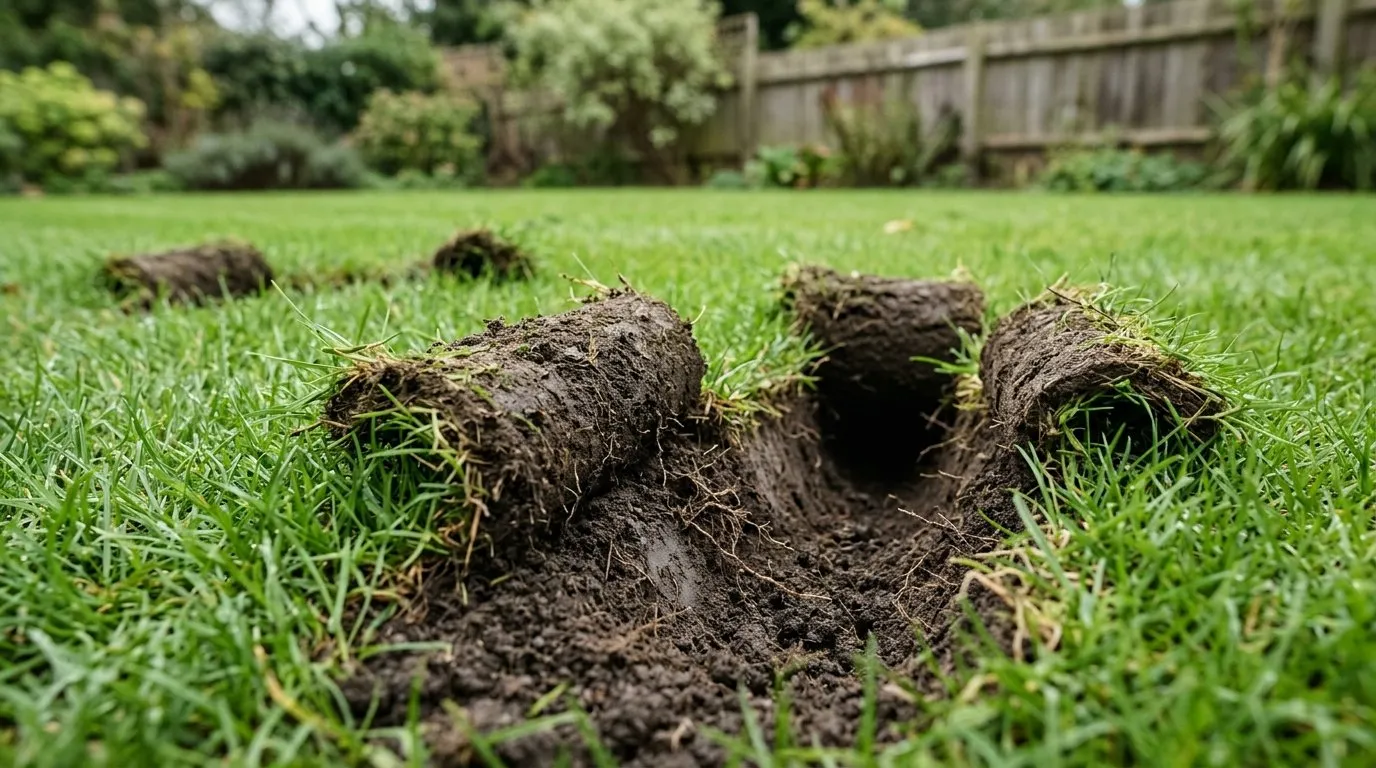 Cone-shaped holes and rolled turf flaps are the classic signature of badger feeding, not foxes or birds.
The grubs badgers are really digging for
The root cause sits in the top 50mm of your soil. Badgers tear up turf to reach two grubs in particular: leatherjackets and chafer grubs. Solve the grub problem and the digging stops, because the reward disappears.
Leatherjackets are the larvae of crane flies, the daddy-long-legs that swarm in late summer. They are grey-brown, legless, with no obvious head, and grow to around 30mm. Chafer grubs are the larvae of chafer beetles. They are creamy white, C-shaped, with three pairs of legs and a light brown head, reaching about 18mm when straightened out. Both feed on grass roots, which is why heavily infested lawns also yellow and lift like a loose carpet even before the badgers arrive.
Numbers matter here. A lawn that supports badger digging usually carries well over 100 grubs per square metre. At that density the grass is already weakening from root loss. The badger is simply the visible symptom of an invisible infestation. Our deep-dive on leatherjackets and why your lawn has brown patches covers identification in detail.
Telling leatherjackets and chafer grubs apart
You need to know which grub you have, because the nematode treatment differs. Lift a 100mm square of turf in a damaged patch and count what you find.
| Feature | Leatherjacket | Chafer grub |
|---|---|---|
| Adult insect | Crane fly (daddy-long-legs) | Chafer beetle |
| Body shape | Long, tubular, no legs | Fat C-shape, six legs |
| Colour | Grey-brown, leathery | Creamy white, brown head |
| Length | Up to 30mm | Up to 18mm |
| Peak in lawn | September to April | August to April |
| Nematode needed | Steinernema feltiae | Heterorhabditis bacteriophora |
If you find both, treat for the one you see most. Some suppliers sell a combined autumn nematode pack that covers both species in a single application, which is the simplest route for a badly hit lawn. For the chafer side of the problem, our chafer grub lawn treatment guide goes deeper on timing.
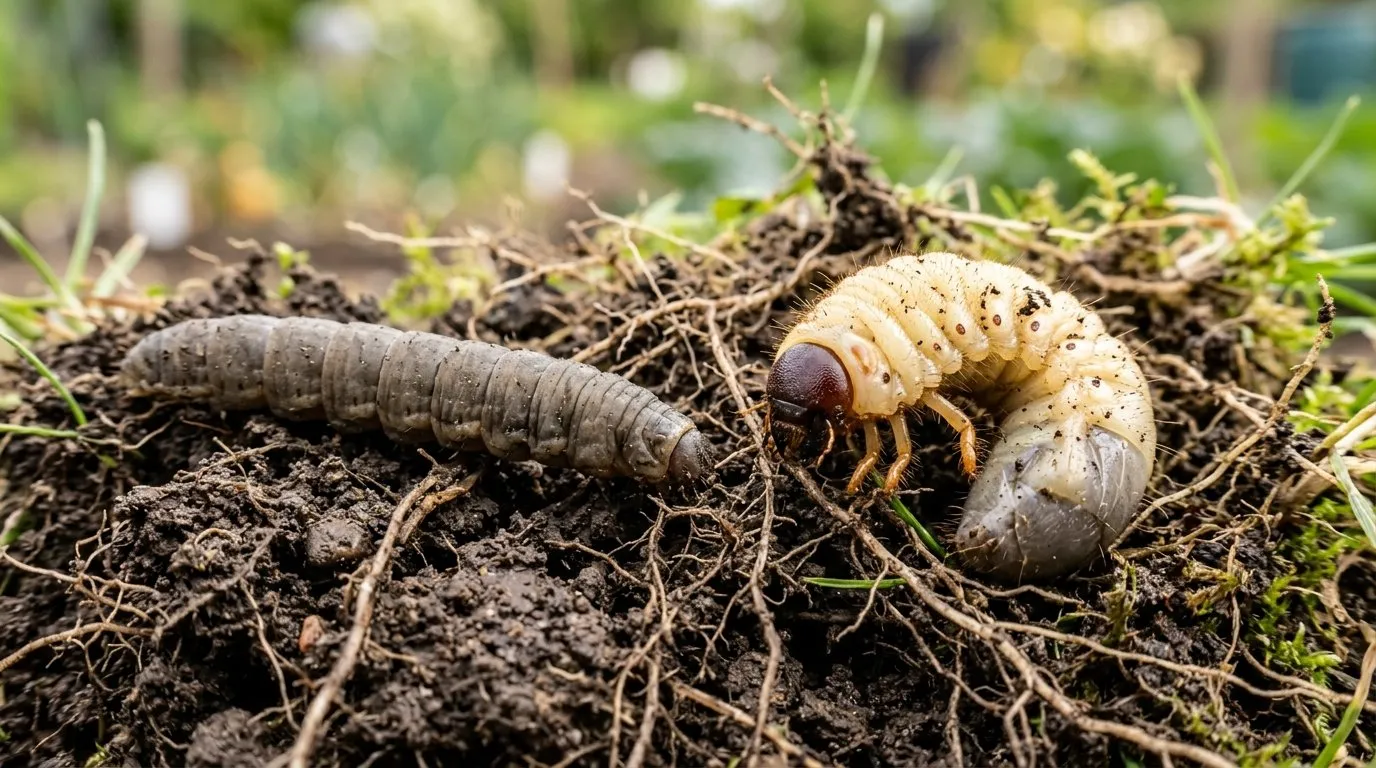 Leatherjackets are legless and tubular; chafer grubs curl into a fat C with six visible legs.
Nematodes: the fix that ends the digging
Nematodes are the only treatment that reliably removes the food source. They are microscopic worms that hunt grubs in the soil, releasing bacteria that kill the larvae within days. There is no chemical residue and they are safe around children, pets, birds and the badger itself.
The catch is timing, and most people get it wrong. Nematodes only work when soil temperature sits between 12C and 20C. In the UK that means late August to October. By the time badger damage becomes obvious in winter, the soil has often dropped to 8C and the nematodes will die without working. That is the single most common reason treatments fail.
Apply them on a dull, damp day or in the evening. Water the lawn thoroughly first, mix the nematodes into a watering can or hose feeder, drench the affected area, then water again within two hours to wash them down to the grubs. Keep the surface moist for the following fortnight. A 100 square metre pack of chafer nematodes costs from around £18, leatherjacket packs slightly more.
For the wider picture on using these in the garden, read our biological pest control guide.
Applying nematodes step by step
Getting the application right is what separates an 85% reduction from a wasted £20. Follow the sequence in order.
- Check the soil temperature. Push a soil thermometer 50mm down at 9am. If it reads below 12C, wait or you are throwing money away.
- Mow and water the lawn. Cut to about 30mm and soak the soil the day before so the grubs sit near the surface.
- Mix at the correct rate. Dissolve the full sachet in water per the pack, usually 5 litres per 100 square metres. Use it within an hour.
- Apply evenly. Use a coarse rose or a hose-end feeder. Walk the area twice at right angles for even coverage.
- Water in immediately. Drench again within two hours to carry the nematodes down to the grubs.
- Keep it damp for 14 days. Water every two to three days if there is no rain. Dry soil kills nematodes fast.
The critical mistake most people make is treating in spring when they finally notice the mess. By then the soil is too cold and the grubs are pupating. Autumn, while the grubs are small and the soil is warm, is the only window that works.
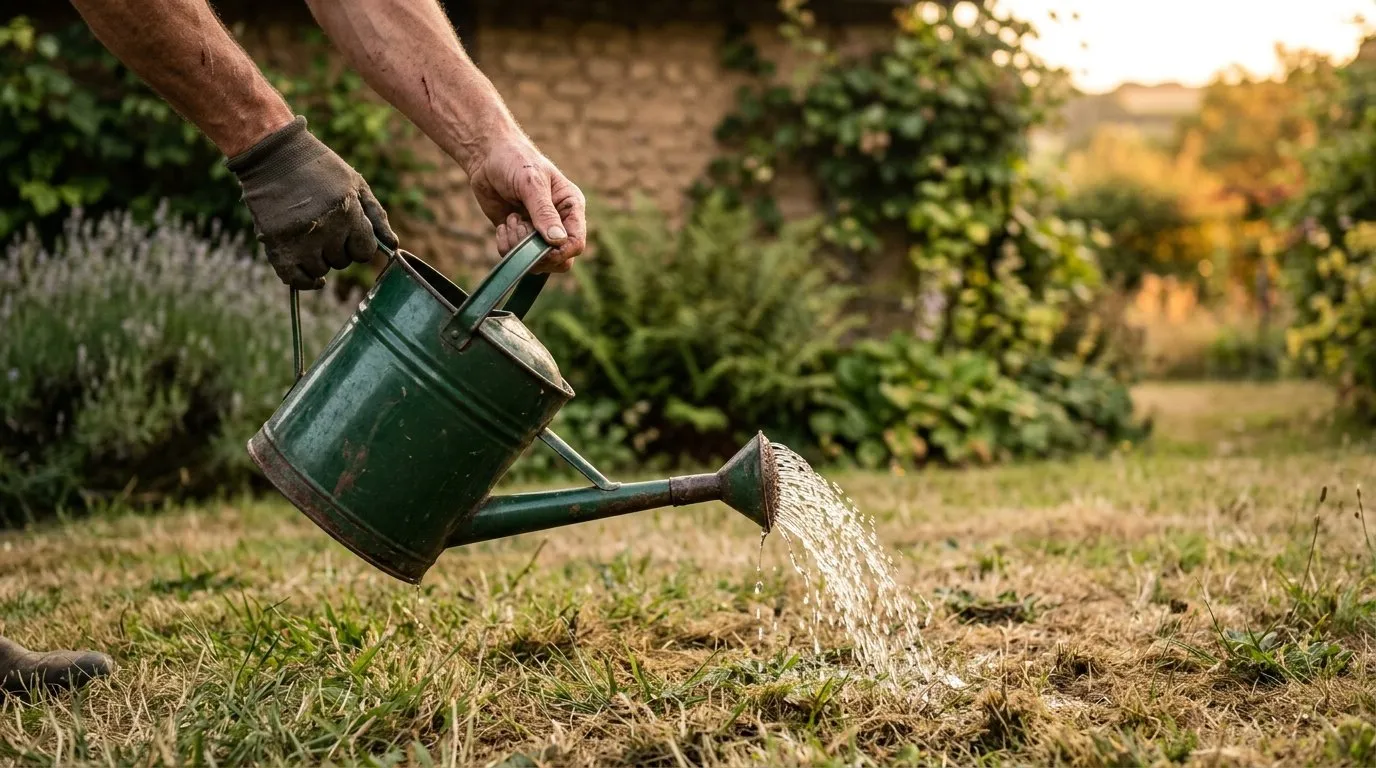 Water nematodes in on a dull evening, then keep the soil moist for a fortnight so they reach the grubs.
The law: badgers and setts are protected
Before you reach for any drastic deterrent, know the law. Badgers and their setts are protected under the Protection of Badgers Act 1992. It is an offence to kill, injure or take a badger, and a separate offence to damage, destroy, obstruct or disturb a sett, whether on purpose or through negligence.
This applies to homeowners exactly as it does to developers and farmers. You must not trap a badger, block its run, fill in a sett entrance, or send a dog into a sett. Penalties are serious: an unlimited fine, often quoted as up to £5,000 per badger or per sett offence, and up to six months in prison.
What you can do is entirely legal: fence the badger out, use approved repellents, and remove the grubs it feeds on. If a sett sits on or near your boundary, you cannot interfere with it. Contact your local badger group or Natural England first. They can advise, and in genuine cases a licence may be issued. The guidance from the Badger Trust is worth reading before you touch anything near a sett.
Warning: Never block a hole you think is a sett entrance, even on your own land. If badgers are using it, that single action can be a criminal offence carrying a £5,000 fine and a custodial sentence.
Deterrents that work and ones that waste your money
Once the grubs are dealt with, deterrents stop a hungry badger re-testing your lawn while the population drops. Not all of them are worth the effort. Ranked by what actually holds up in the field:
| Method | Role | How it works | Effectiveness |
|---|---|---|---|
| Remove grubs (nematodes) | Primary | Ends the food reward | Very high |
| Electric fence wire | Barrier | Low single wire stops re-entry | High |
| Solid fence buried 300mm | Barrier | Physical exclusion | High |
| Olbas oil / scent stations | Maintenance | Mild scent deterrent | Low, short-lived |
| Repellent granules | Maintenance | Taste and smell barrier | Low to moderate |
| Ultrasonic deterrent | Emergency | Sound discomfort | Very low, habituates |
The honest verdict on ultrasonic units and scent repellents: badgers habituate within a week or two. They are driven by hunger and follow fixed routes, so a mild deterrent rarely outweighs the reward. Treat scent products as a short-term stopgap, never the main plan.
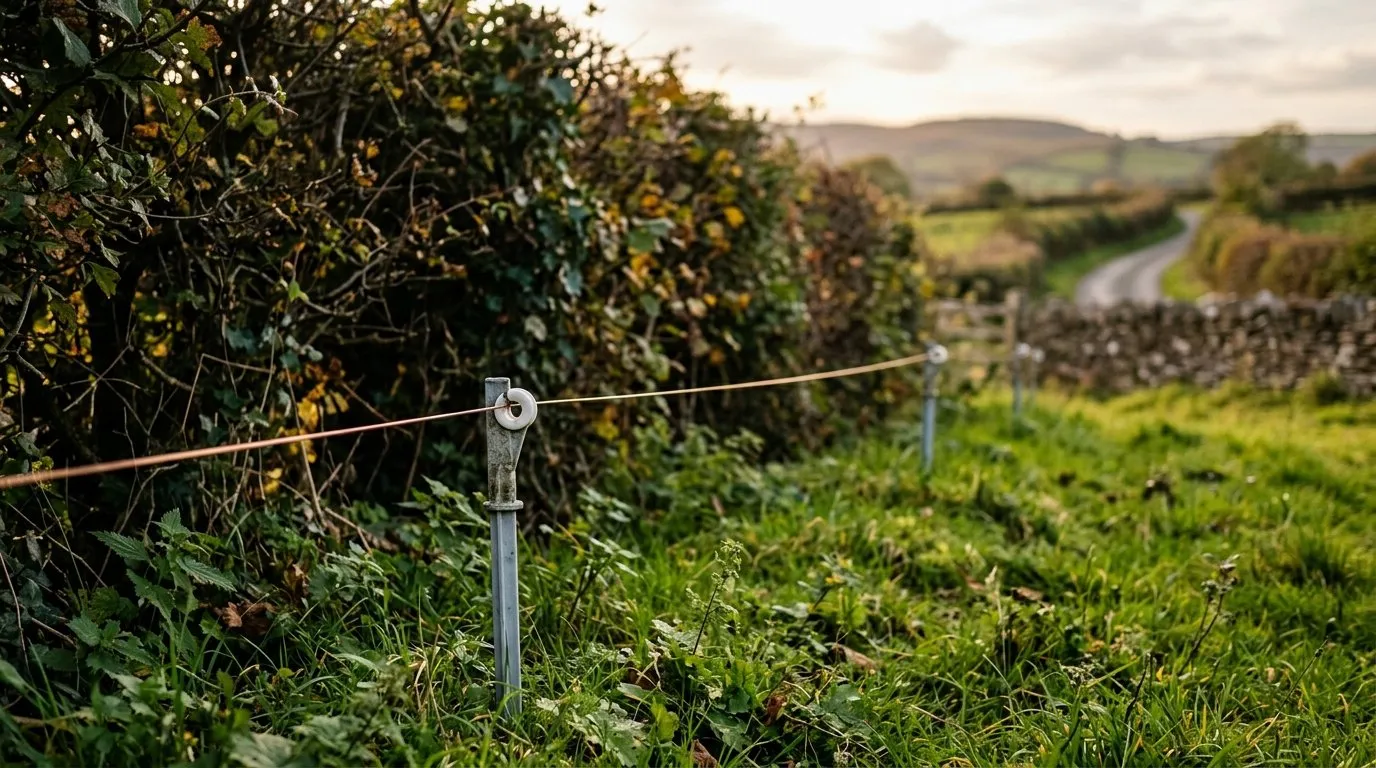 A single electrified wire 150-200mm above the ground is the most reliable barrier against a returning badger.
Fencing badgers out without breaking the law
Fencing is the strongest physical deterrent, but badgers are powerful diggers and strong climbers for their size. A flimsy panel fence will not hold them.
A single electric wire set 150-200mm above the ground is the most cost-effective barrier. The badger touches it nose-first on its run, gets a harmless shock, and learns to avoid the route. Run it off a battery energiser used for stock fencing. For a permanent solution, a solid fence needs to be buried at least 300mm below ground, ideally with an L-shaped outward return at the base, because a badger will dig down to get under it.
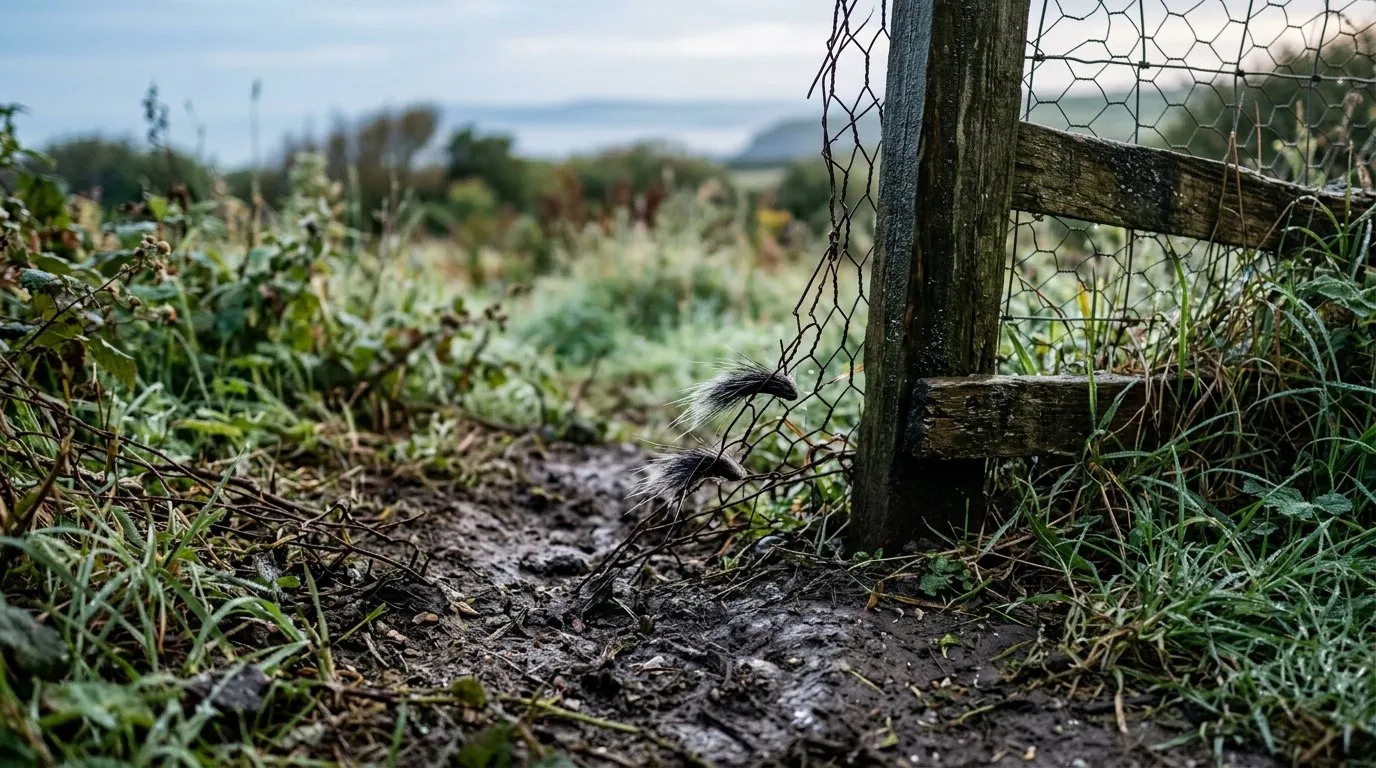 A greasy worn run and a 250mm gap under the fence confirm a resident badger on a fixed route.
Repairing and over-seeding the damage
Once the digging stops, the lawn recovers quickly. Act while the rolled turf is still alive and hinged at the edge.
Tread the flaps back into place and firm them down with your heel or a light roller. They re-root within a fortnight if kept watered. For bare patches, rake out the loose debris, level the soil, and over-seed with a hard-wearing perennial rye mix at 35g per square metre. The best windows are September, while the soil is still warm, and April once it warms again. Keep the seed moist and it germinates in 10-14 days, knitting in within six weeks. Our guide on how to fix a patchy lawn walks through the over-seeding detail.
Gardener’s tip: Mix a little sieved topsoil or sharp sand with the grass seed before scattering. It holds the seed in contact with the soil and stops birds clearing the lot in an afternoon.
 Over-seed bare patches with a rye mix at 35g per square metre in September, then keep them watered.
The mistakes that keep badgers coming back
Three errors send gardeners round in circles. Each one is easy to avoid once you know it.
Treating in spring instead of autumn. People apply nematodes when they notice the damage in winter or spring. The soil is too cold and the treatment fails. Always check the soil reads 12C or above, which in the UK means autumn.
Chasing the badger instead of the grubs. Repellents and ultrasonic gadgets attack the symptom. The lawn stays grub-rich, so the badger keeps coming. Remove the food and the behaviour stops at source.
Blocking a run or sett out of frustration. This is illegal and risks prosecution. A badger excluded suddenly from a familiar route may dig harder elsewhere, and you may have committed an offence under the 1992 Act.
A fourth, quieter mistake is mowing too short and over-watering in summer. Soft, damp turf is exactly what crane flies choose for egg-laying in late August. Firm, well-drained grass is far less attractive. If foxes are also visiting, our guide on how to get rid of foxes helps, and the lawn care calendar keeps the grass strong year-round.
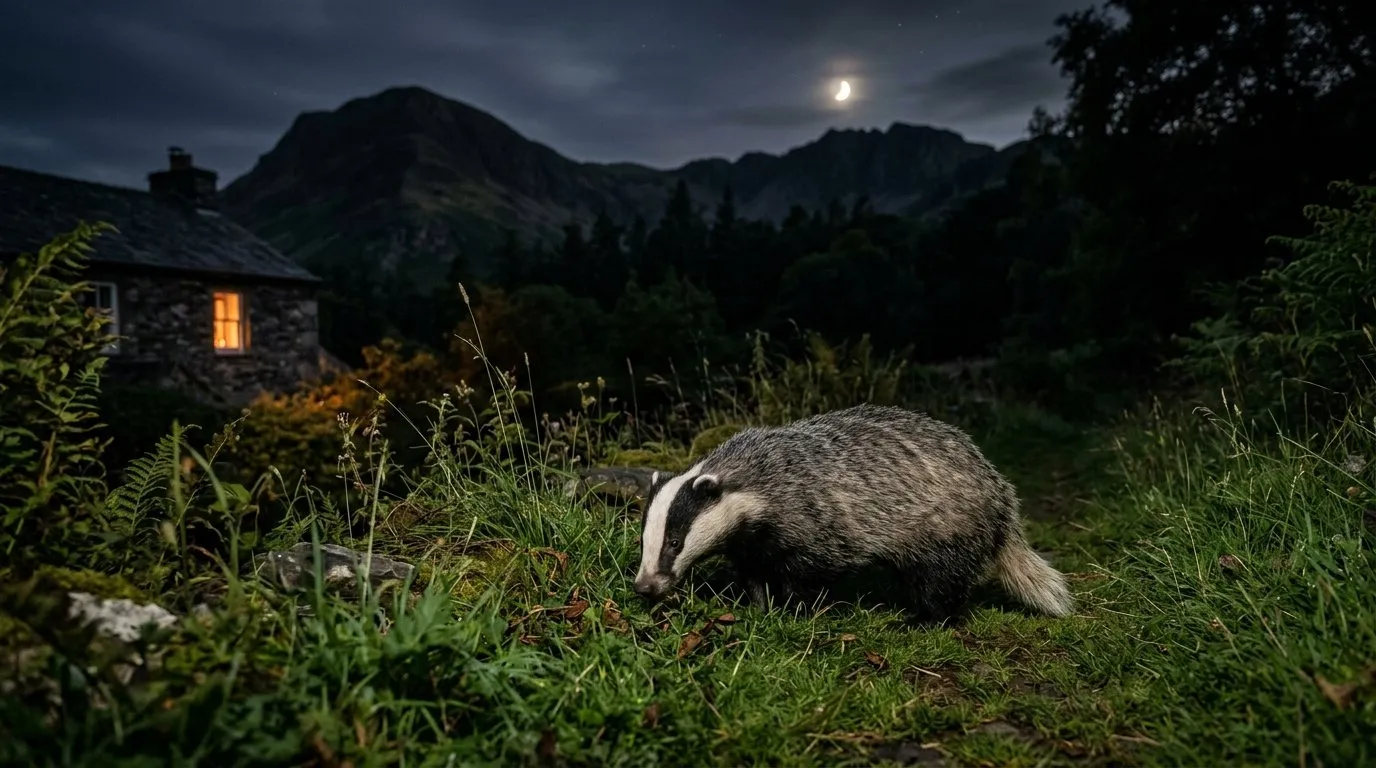 Badgers follow fixed nightly routes driven by hunger, which is why removing the grubs is the lasting fix.
The wider truth is that a badger-dug lawn is a grub problem wearing a disguise. Garden Organic notes that nematodes are the cleanest control once timing is right. Fix the soil, respect the law, and the lawn looks after itself.
Frequently asked questions
How do I know it is badgers and not foxes digging my lawn?
Badgers leave snout-shaped cone holes 50-100mm deep and roll back whole turf flaps. Foxes dig narrower, scattered holes and leave bone or food remains. Badgers also follow fixed runs and dig latrine pits near boundaries. Check fence lines at dawn for greasy gaps about 250mm wide and coarse black-and-white hairs.
Why do badgers keep digging up my grass?
They are eating grubs in the soil, mainly leatherjackets and chafer larvae. A wet, grub-rich lawn is a feeding station. Until you reduce the grub population the badger will keep returning, because the reward is worth the effort. Kill the grubs and the digging stops within a season.
Is it illegal to stop a badger coming into my garden?
No, but you must not harm, trap or block the badger or its sett. The Protection of Badgers Act 1992 protects the animal and the sett. Deterrents like fencing, repellents and removing the food source are all legal. Interfering with a sett risks an unlimited fine, often up to £5,000, and six months in prison.
When should I apply nematodes for grubs?
Apply from late August to October while soil stays above 12C. Spring treatment usually fails because UK soil is still too cold and the grubs are pupating. Use Steinernema feltiae for leatherjackets and Heterorhabditis bacteriophora for chafer grubs. Water the lawn before and after application.
Do ultrasonic deterrents and lion dung pellets stop badgers?
Rarely, and never for long. Badgers habituate to ultrasonic units and scent repellents within a week or two. They follow established runs driven by hunger. The reliable deterrents are a low electric wire, solid fencing dug 300mm into the ground, and removing the grubs they are after.
Will my lawn recover after badger damage?
Yes, most lawns recover in one growing season. Tread the rolled turf back down while it is still attached, firm it, then over-seed bare patches in September or April. Use a hard-wearing rye mix at 35g per square metre. Keep it watered and the grass knits back within six weeks.
Can I put up a fence if there is a badger sett nearby?
Yes, but the fence must not block the sett or its access routes. Keep any digging and posts well clear of sett entrances and runs. If a sett sits on the boundary, contact your local badger group or Natural England before fencing. Penned-in or excluded badgers can trigger an offence under the 1992 Act.
Now you have spotted the grubs behind the digging, read our guide on leatherjackets and why your lawn has brown patches for the full identification and treatment detail.
Our team produces practical UK gardening guidance from source research, contributor records and established horticultural practice. Editorial standards are overseen by Matt W.