Key takeaways
- The main cause is irregular watering: drought then heavy rain splits the swelling fruit
- Scab cracks follow corky lesions, growth cracks are smooth and radial, boron cracks come with internal browning
- Mature trees in the ground rarely need watering, but young and potted ones do
- Mulch and steady watering keep soil moisture even, which prevents most splitting
- Cracked apples are safe to eat but will not store, so use or cook them quickly
- Choosing scab-resistant and thicker-skinned varieties reduces cracking long term
Apples crack because the fruit swells faster than its skin can stretch. Most often the trigger is water: a dry spell that checks the tree, followed by heavy rain that floods it, so the flesh balloons and the skin splits. It is one of the most common apple problems in the UK, and in a year of dry summers and wet autumns it can spoil a good slice of the crop. The reassuring part is that it is almost entirely preventable once you understand the cause.
Why do apples crack?
Apples crack mainly because of irregular water supply: a dry period followed by heavy rain makes the flesh expand faster than the skin can grow, so it tears. The Royal Horticultural Society puts the main cause squarely on heavy rain after a dry spell, which makes the fruit expand and break its own skin. It is not the amount of rain that matters so much as the sudden change from dry to wet.
Picture what happens inside the fruit. Through a dry spell the apple grows slowly and its skin toughens. Then the rain arrives, the roots take up water fast, and the soft inner flesh swells in a rush. The skin, already firmed up, cannot keep pace, and it splits to relieve the pressure. The same surge that plumps the fruit is the one that breaks it.
This is why the swing matters more than the total. A tree kept evenly moist all season rides out a wet spell, because there is no sudden change to drive a surge of growth. A tree that bakes dry then drinks deeply is the one that splits. Everything in the prevention section below comes back to this single idea: keep the moisture steady. Our guide to growing apple trees sets the wider context for healthy, even growth.
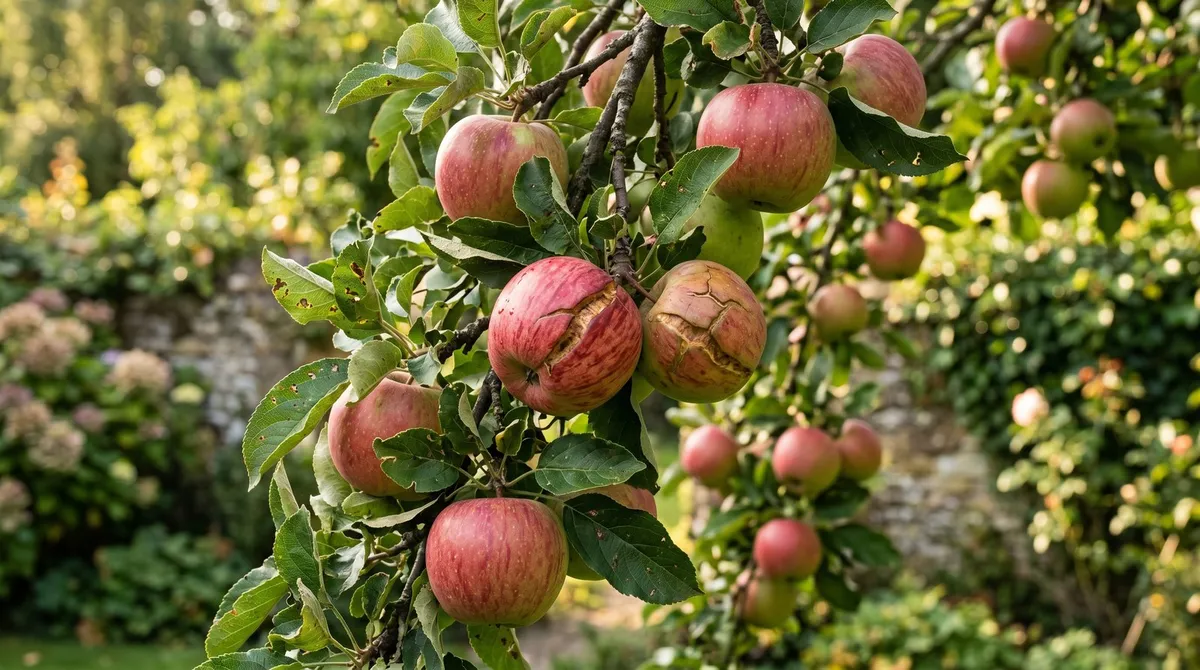
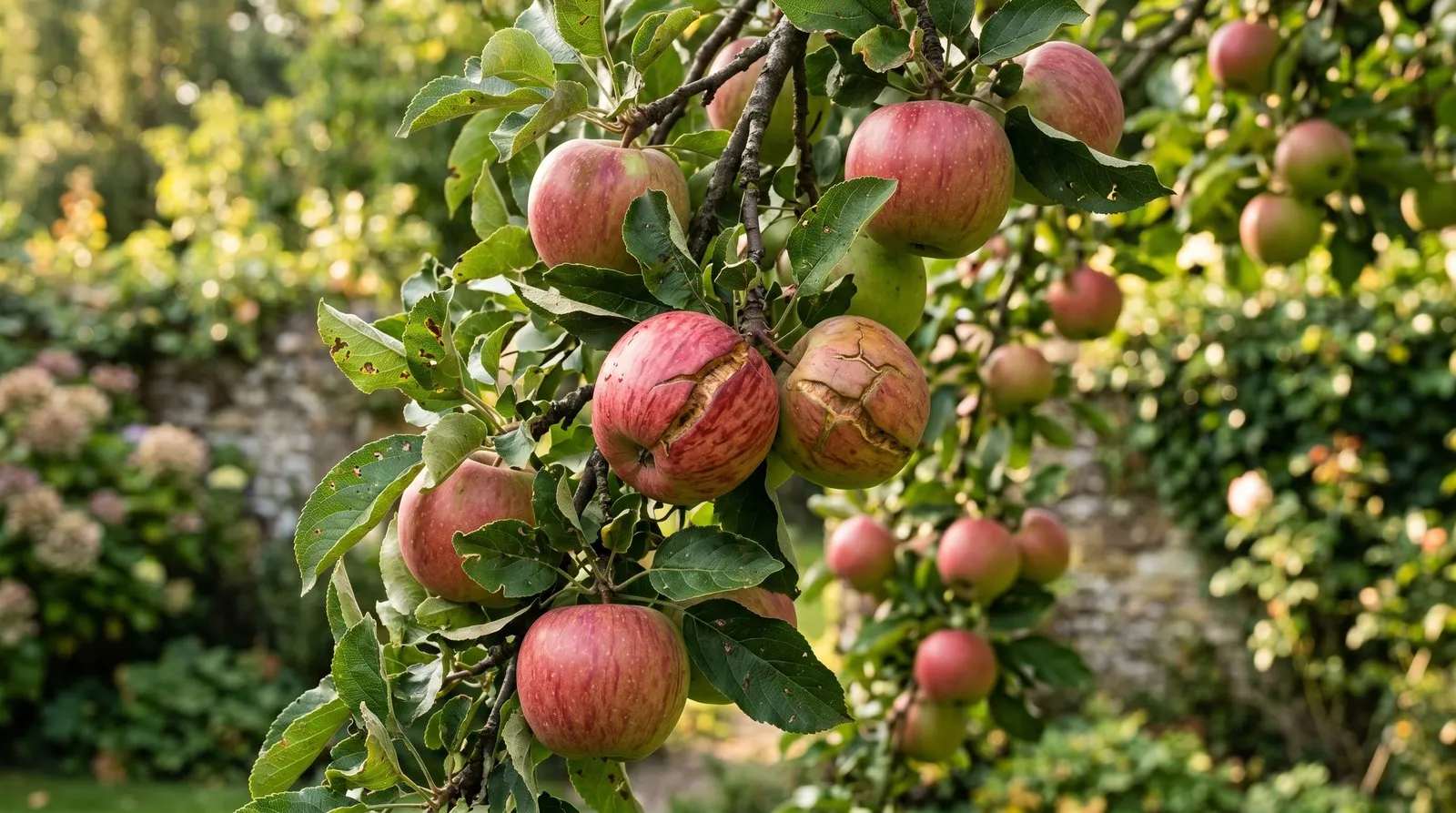 Splits among sound fruit after a dry-then-wet summer. The cracked apples drank up the rain faster than their skins could stretch.
The different kinds of apple crack
Not every crack is a watering crack, and reading the type tells you whether to change your watering, treat scab, or correct a nutrient fault. Four causes produce four fairly distinct looks. Match what you see before you decide what to do, because the fixes are different.
| Crack type | What it looks like | Cause | What it tells you |
|---|---|---|---|
| Growth crack | Smooth-edged split, often radiating, clean flesh | Drought then heavy rain | Sort out watering and mulch |
| Scab crack | Crack on a corky olive-brown patch, rough edges | Apple scab fungus | Treat scab, improve airflow |
| Boron-related crack | Cracks with internal brown flecks or corking | Boron deficiency | Check soil, feed trace elements |
| Frost russet crack | Crack around a rough russet ring or band | Frost at fruitlet stage | Earlier-season frost, not your fault |
The growth crack is the common one and the one this guide is mostly about. It is smooth, clean and appears after wet weather, with no disease or blemish underneath. Scab cracks are different: they sit on the corky, olive-brown lesions of apple scab, which restrict the skin so it tears as the fruit grows. If your cracks come with scabby patches, you have a fungal problem to manage, covered in our guide to apple and pear scab.
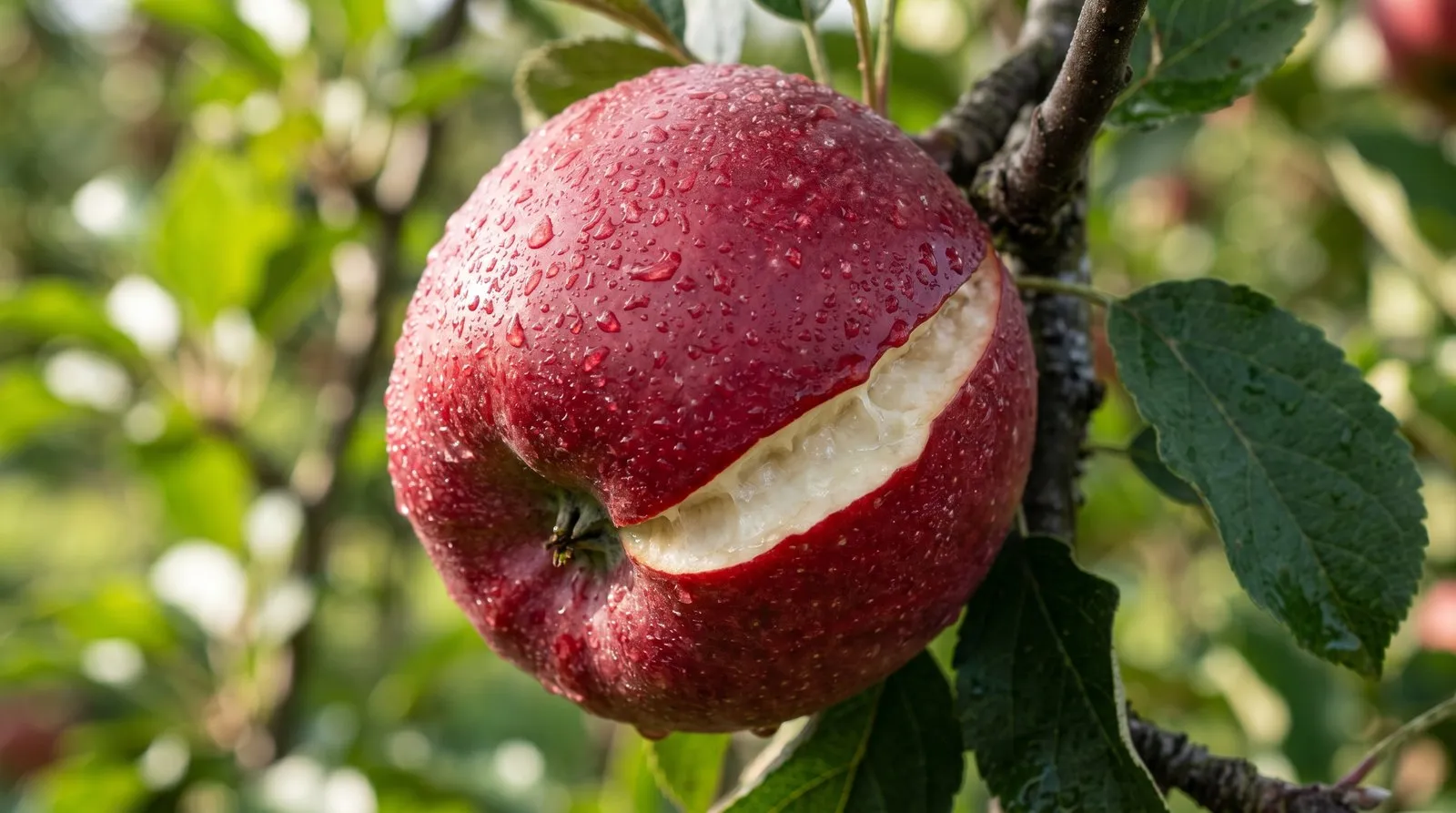 A classic growth crack: smooth-edged and clean, with no scab or blemish underneath. This is the signature of irregular watering.
Scab cracks versus growth cracks
Telling a scab crack from a growth crack is the most useful diagnosis you can make, because one needs disease control and the other needs better watering. They look different up close, and getting it right saves you treating the wrong problem.
A growth crack is clean. The skin has simply split under pressure, the edges are relatively smooth, and the flesh inside looks normal. There is no patch, no roughness and no discolouration around it. It tends to appear after a wet spell and often runs from the stalk end or down the side. The cause is mechanical, the fix is steady moisture.
A scab crack always sits on damage. Apple scab first makes corky, olive-brown to black blotches on the skin, and as the fruit grows those rigid patches cannot stretch, so the skin tears along them with rough, feathery edges. The crack is a symptom of the scab, not of watering. The RHS guidance on scab notes that scab-cracked fruit becomes prone to rots and will not store. Scab thrives in damp, still conditions, so pruning for airflow, autumn leaf clearance and scab-resistant varieties are the answers, and good fruit tree pruning is a large part of it.
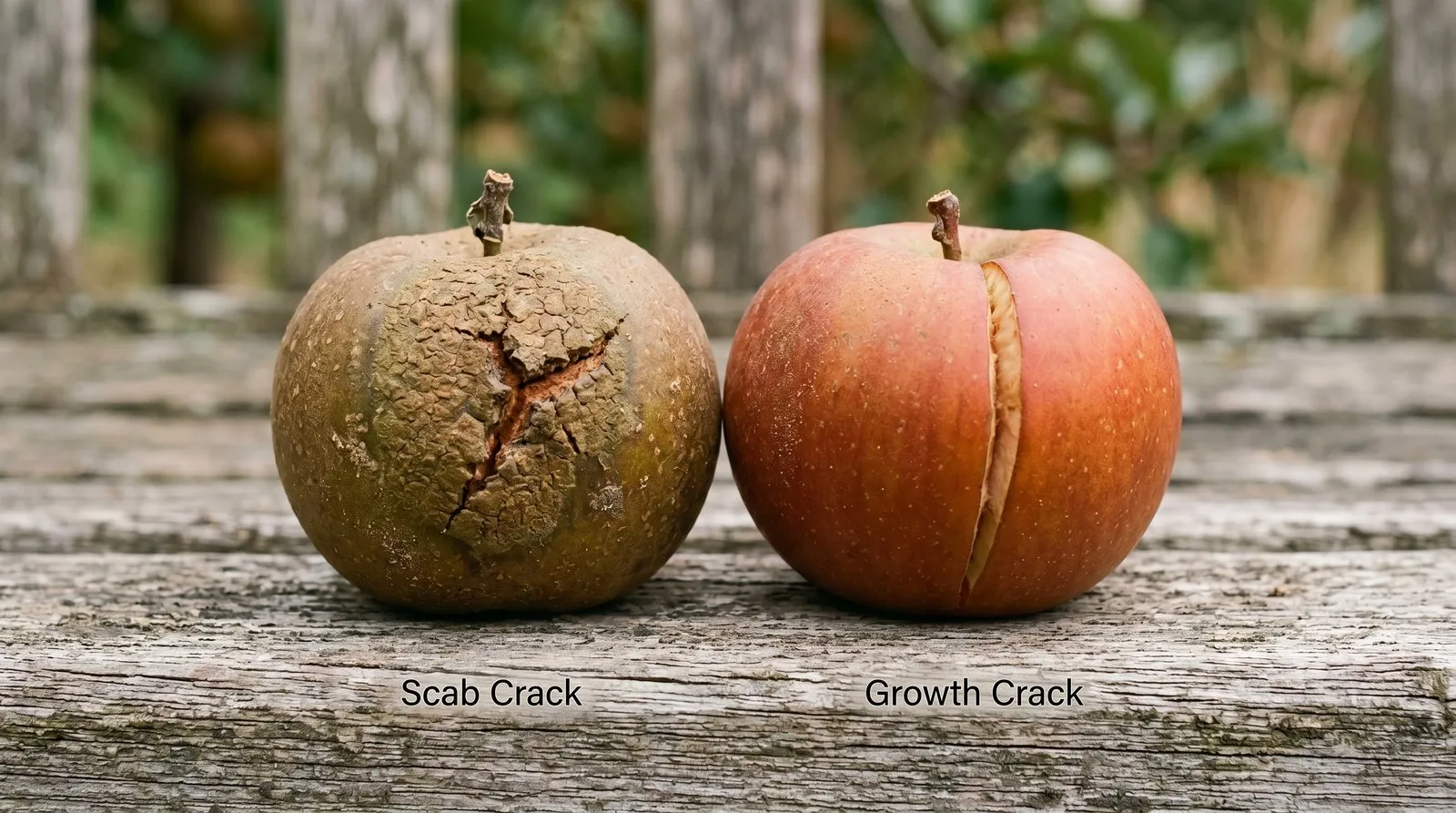 Left, a scab crack on a corky lesion. Right, a clean growth crack. The patch underneath is what separates a disease from a watering fault.
How to stop apples cracking
Even out the soil moisture and most cracking stops, because you remove the dry-to-wet surge that splits the fruit. Everything else is a refinement on that. The plan is different for established trees, young trees and pots, because their watering needs differ so much.
Work to these points through the season:
Container apples deserve a special mention, because they crack most of all. A pot dries out fast and is then drenched at watering, which is exactly the surge to avoid. Water them little and often rather than in big swings, and read our guide to growing fruit in pots for the full routine.
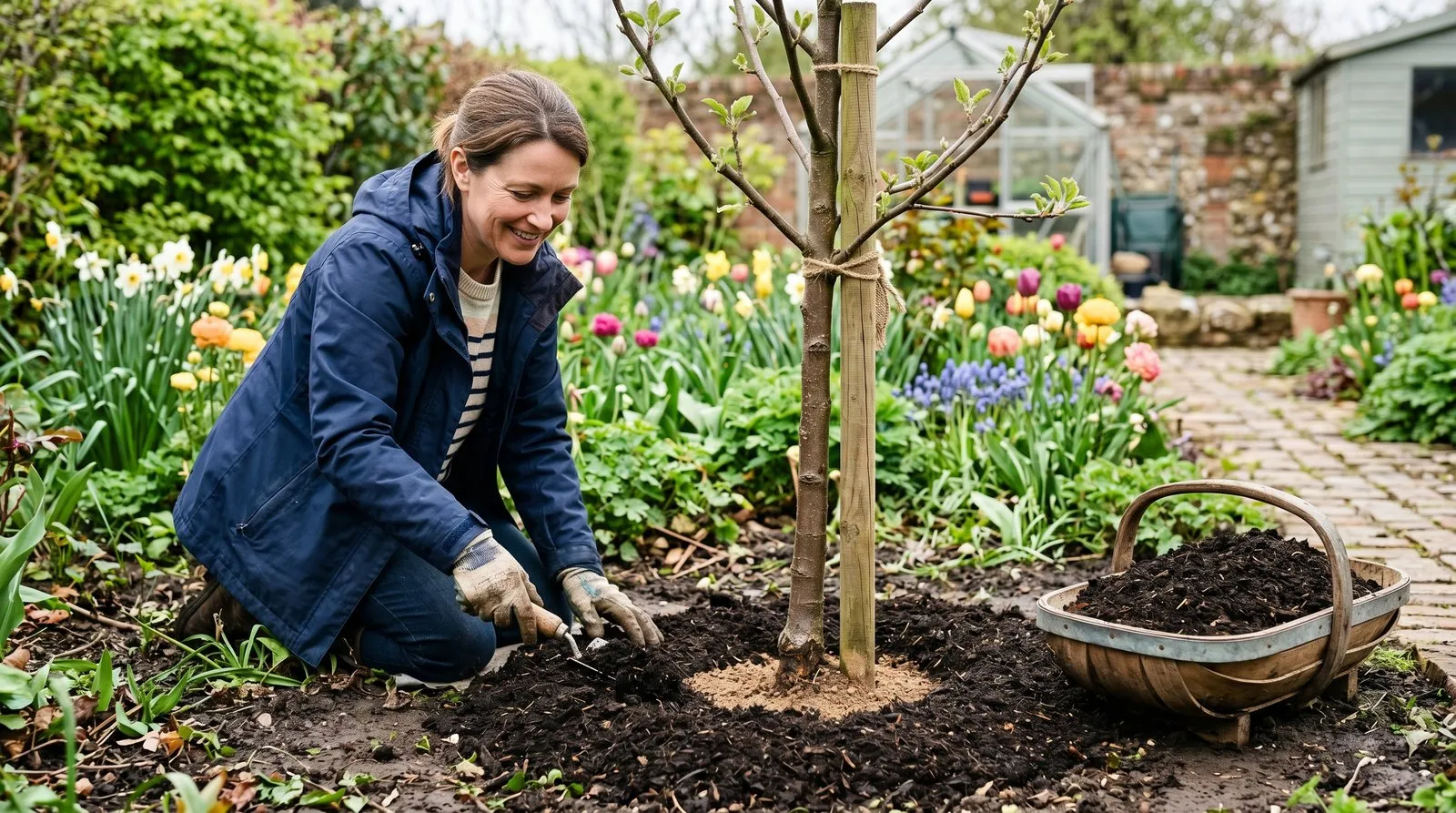 Mulching the root area holds soil moisture steady and softens the dry-to-wet swings that split fruit. Keep it off the trunk.
Thinning and watering: the two habits that matter most
Thinning the crop in early summer and watering the vulnerable trees steadily are the two habits that prevent most cracking between them. They tackle the problem from both ends: thinning builds tougher skin, watering removes the surge that tests it.
Thinning feels counterintuitive, because you are removing fruit you could keep. But a tree carrying too heavy a crop makes lots of small apples with thin, easily split skin, and they compete for water and nutrients. Thin after the June drop to leave the apples well spaced, and each one grows larger, with a thicker, stronger skin and fewer competitors for moisture. It also improves next year’s crop by reducing biennial bearing.
Watering is the other half. The trees that crack are the ones whose roots cannot reach steady moisture: the young, the shallow-rooted and the potted. Water those deeply once or twice a week through dry spells rather than splashing them daily, so the soil stays evenly damp and never dries out hard. Do that and the wet weather, when it comes, brings no sudden surge, because the fruit was never short of water in the first place.
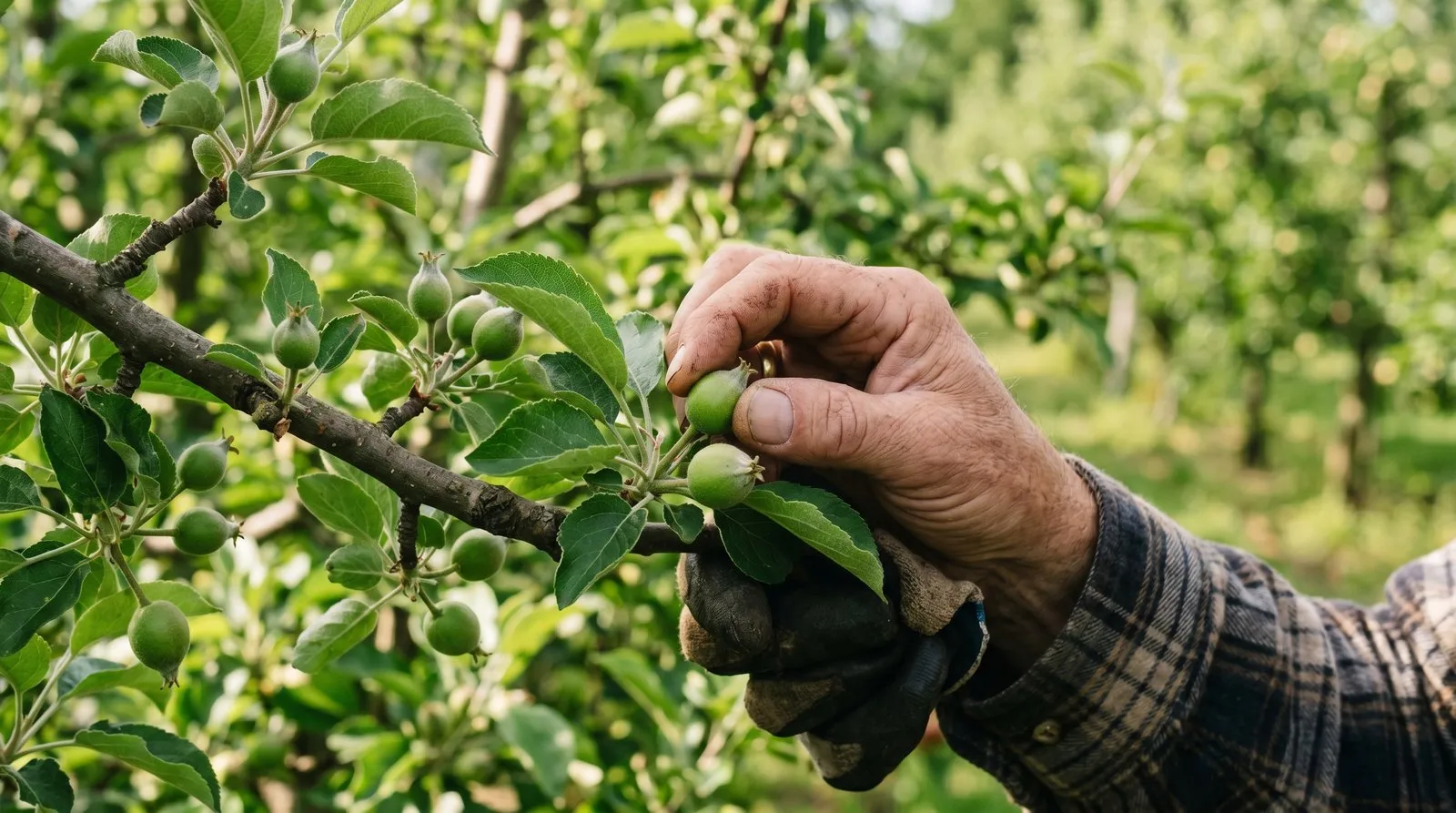 Thinning after the June drop leaves fewer, larger apples with thicker, split-resistant skin. It is one of the best defences against cracking.
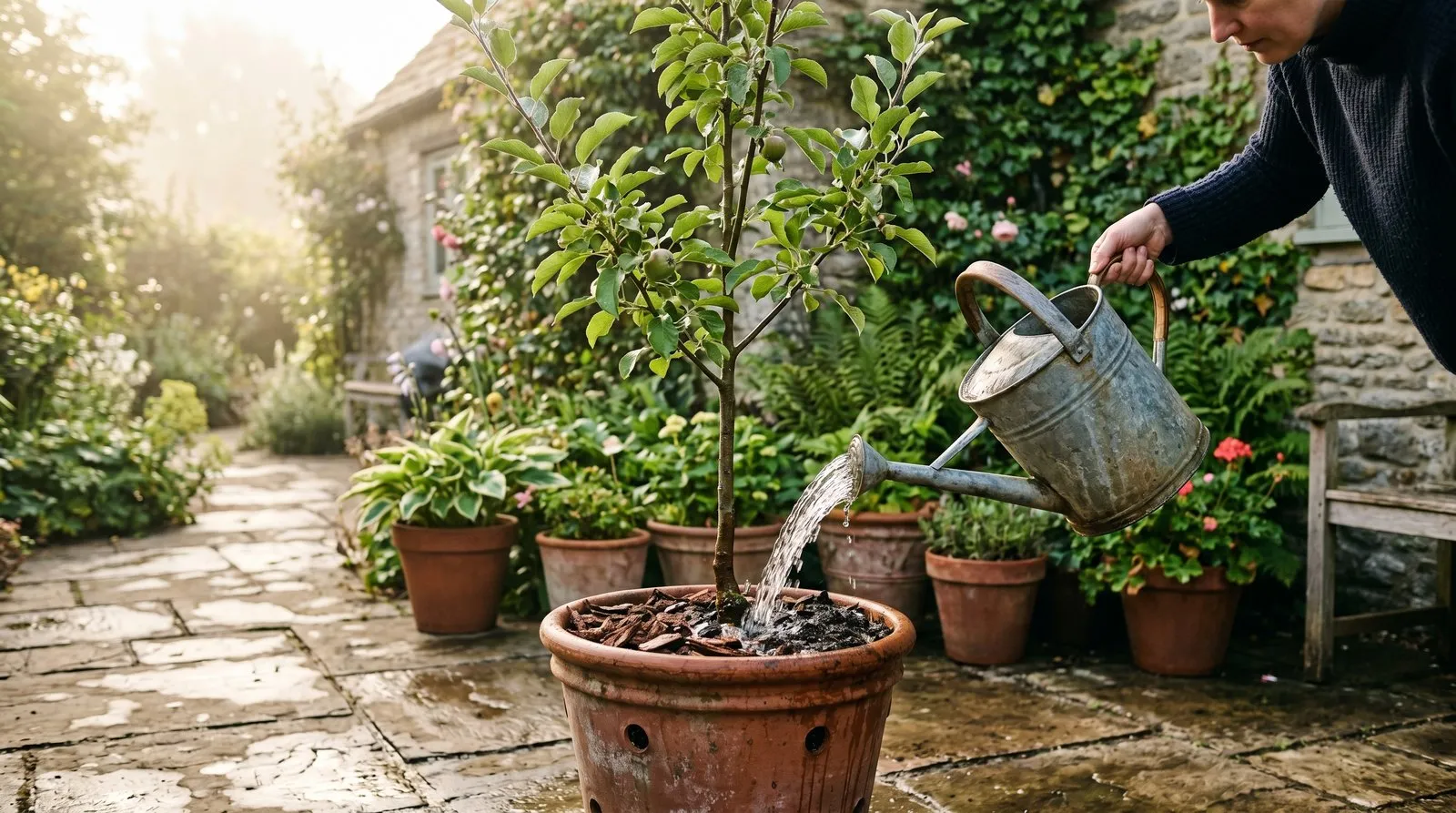 Young and potted trees are the ones that crack, because their roots dry out fast. Steady watering through dry spells removes the surge that splits fruit.
What to do with apples that have already cracked
That, in the end, is the whole story of cracked apples. The cause is almost always the swing from dry to wet, the fix is steady soil moisture, and the cure for fruit already split is the kitchen rather than the store. Bitter or off flavours in stored fruit are a separate matter, a storage problem rather than a watering one, and our guide to apples and pears tasting bitter or off diagnoses those once the fruit is picked.
For more help across the orchard, browse our full problems section and learn to tell a watering fault from a disease before you reach for a treatment.
Frequently asked questions
Why are my apples splitting and cracking?
Most apple splitting is caused by irregular watering. When a dry spell is followed by heavy rain, the tree takes up water fast and the flesh swells quicker than the skin can stretch, so the fruit cracks. Apple scab, boron deficiency and frost damage cause other crack types. The single biggest factor is the swing from dry soil to wet, not the total rainfall.
Can you eat cracked apples?
Yes, cracked apples are safe to eat as long as the split is fresh and clean, with no rot setting in. Cut out the cracked area and use the rest straight away in cooking, juicing or a crumble. The problem is storage, not safety: a split lets in rot and moisture loss, so cracked apples will not keep and must be used within a day or two.
How do I stop my apples from cracking?
Keep the soil moisture even so the fruit never has a feast-and-famine of water. Mulch around the tree to hold moisture, and water young and container-grown trees deeply and regularly through dry spells. Thin a heavy crop in June so each apple has thicker, stronger skin. Control scab and choose scab-resistant, thicker-skinned varieties to reduce cracking over the long term.
Do mature apple trees need watering to stop cracking?
Established apple trees in open ground rarely need watering, because their deep roots even out the swings that cause cracking. It is young trees in their first few years, and any tree in a pot, that need regular watering. These have shallow or confined roots and dry out fast, so they suffer the dry-then-wet surges that split fruit unless you water them steadily.
What is the difference between a growth crack and a scab crack?
A growth crack is a smooth-edged split, often radiating from the top or side of the fruit, caused by fast swelling after rain. A scab crack follows a corky, olive-brown scab lesion, with rough feathery edges where the diseased skin could not stretch. Growth cracks come with no other marks; scab cracks always sit on a scab patch, which is the giveaway.
Our team produces practical UK gardening guidance from source research, contributor records and established horticultural practice. Editorial standards are overseen by Matt W.