Key takeaways
- Dark off-blacks and deep greens add the most perceived value, reading as modern in 2026.
- Charcoal and near-black recede, making a 6m garden feel deeper and planting stand out.
- Pale soft greys and muted sage brighten small, shady, north-facing plots best.
- Coverage runs 10-12m squared per litre by brush, halving to 5-6m squared on rough sawn wood.
- Most fences need two coats; recoat every 2-4 years for colour and protection.
- Painting damp wood is the top failure; moisture must read under 18% first.
The colours that read as expensive
The fence paint colours that add value share one trait. They recede. Deep off-blacks, charcoals and dark greens pull back from the eye, so the boundary stops competing with the garden. Property advice from titles like Ideal Home now points the same way: dark fences read as modern and considered.
A near-black such as Cuprinol Black Ash or Thorndown Blackdown gives the most dramatic frame. Green planting and pale flowers leap forward against it. A softer choice is deep forest or sage green, which ties the fence to the foliage and feels calm rather than stark. Both sit in the value-adding band because UK buyers in 2026 read them as current.
Mid greys like Urban Slate split the difference. They are dark enough to recede but soft enough for a smaller or shadier plot. The common thread is restraint. Calm, muted, dark colours look more expensive than anything bright.
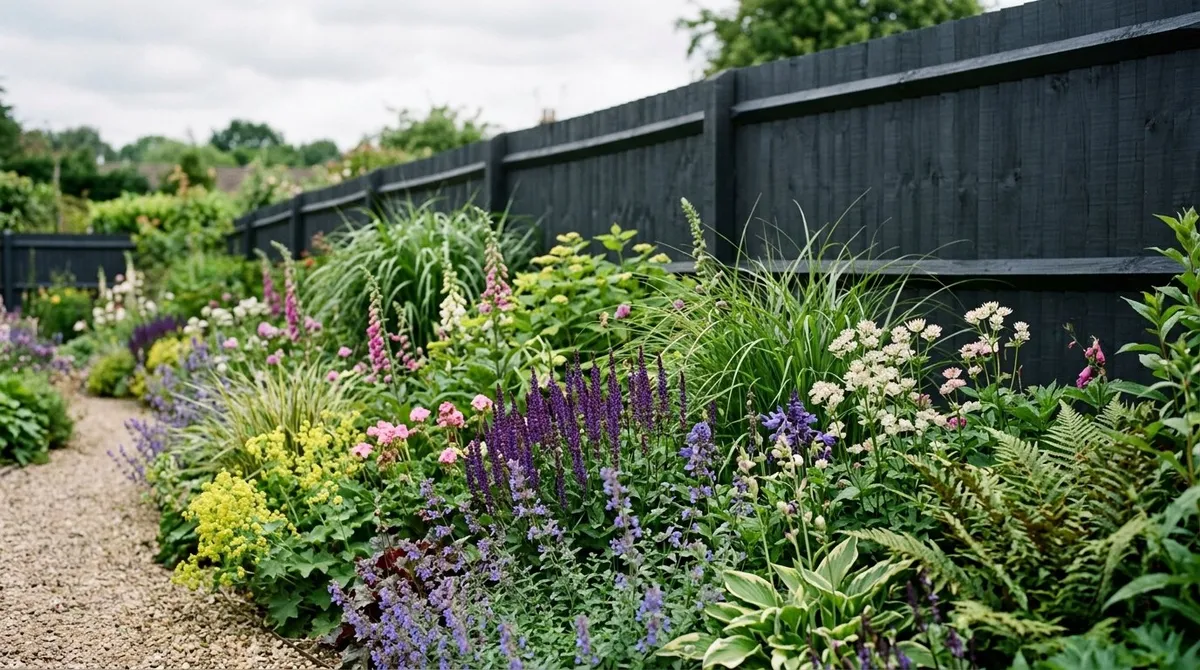
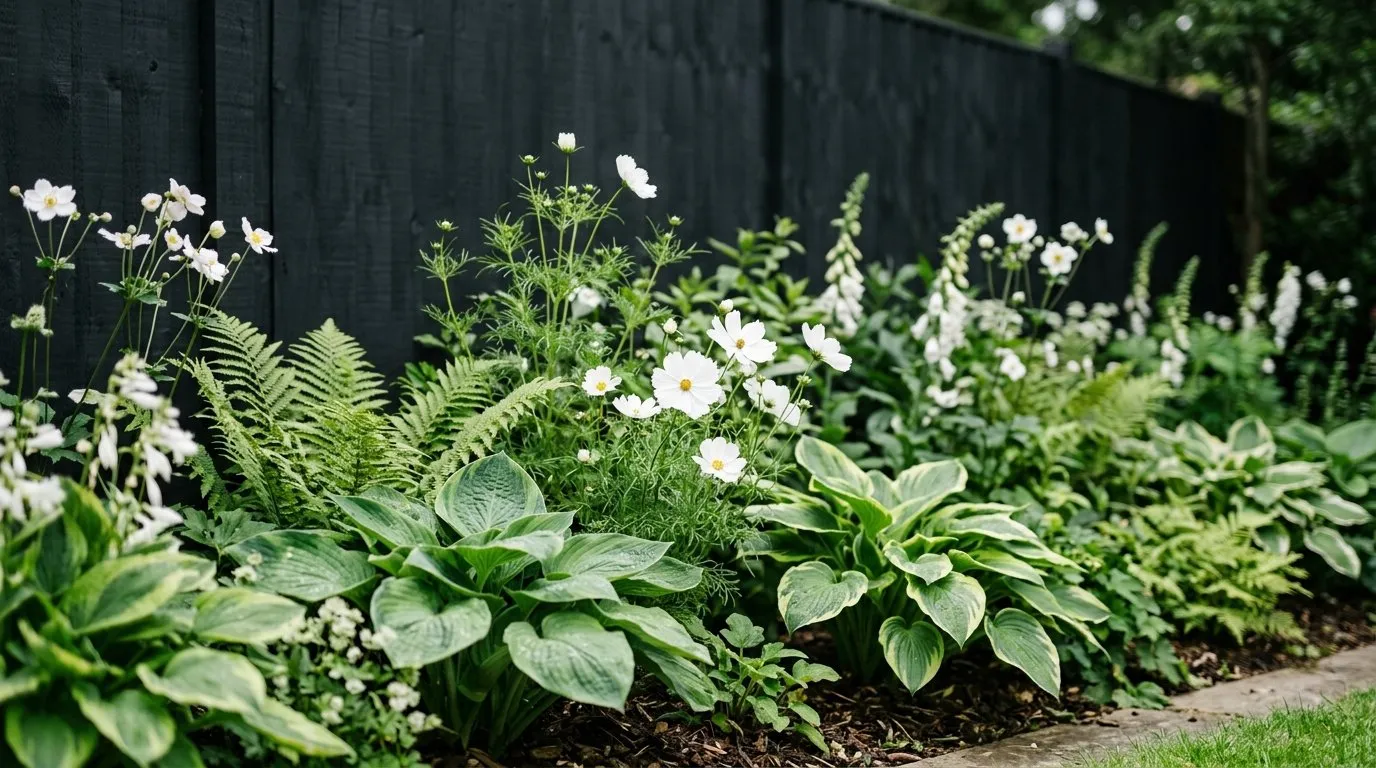 A near-black fence pushes the boundary back and lets the planting take centre stage.
How dark fences make a garden feel bigger
The old advice said paint a small garden pale to open it up. For boundaries, the opposite is true. A dark fence makes a small garden look bigger because the surface recedes into shadow. Your eye reads the layered planting in front, not the panel behind it. The boundary blurs, and the garden seems to carry on past where it actually stops.
When pale and neutral colours win
Pale fence colours have their place. In a small, shady or north-facing town garden, a soft grey, muted sage or off-white lifts the gloom. These shades reflect light back into the space and stop a sunless corner feeling like a pit.
A pale fence also suits a cottage or informal scheme where you want the boundary to feel gentle, not graphic. It works as a quiet backdrop for pastel planting. The trade-off is upkeep. Pale colours show algae, splash and dirt faster than dark ones, so expect to wash and refresh more often.
Avoid stark brilliant white outdoors. It glares in sun, greens up with algae within a year, and looks harsh against soil and foliage. A warm off-white or stone tone like Cuprinol Natural Stone ages far better. Pick pale to brighten, not to make a statement.
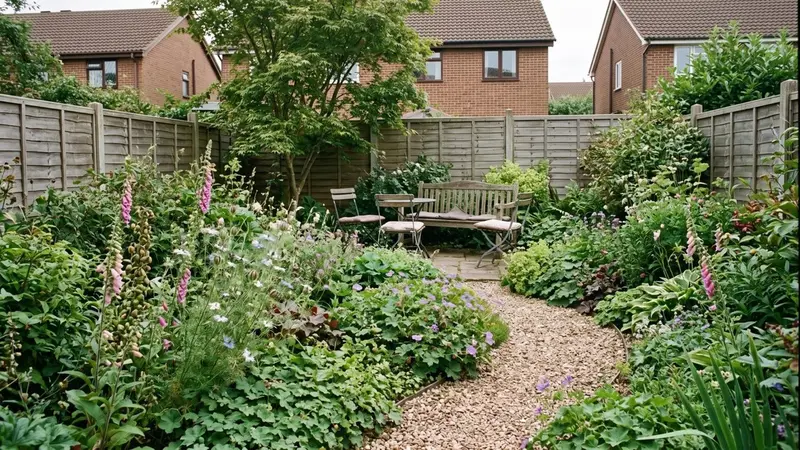
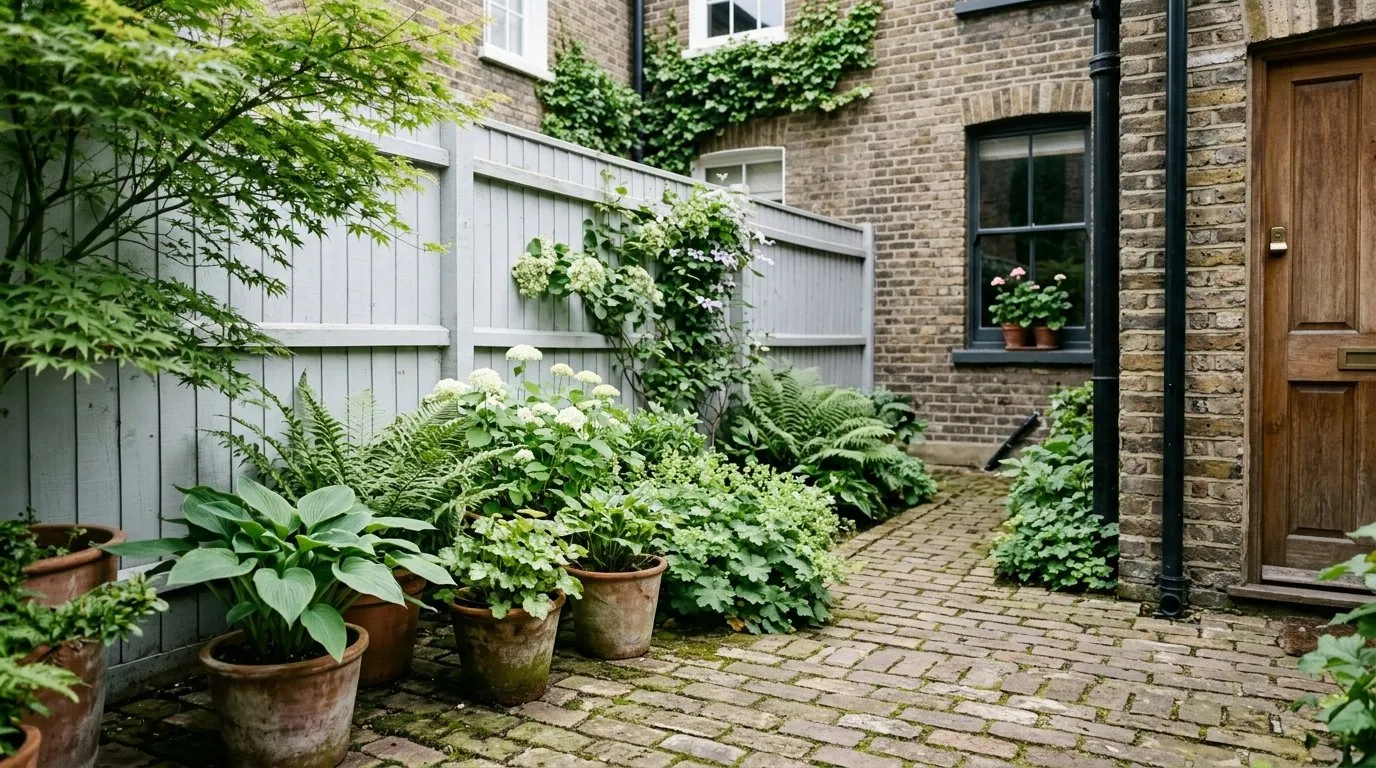 In a sunless London courtyard, a soft grey reflects light where black would deaden it.
The colours that quietly lose you money
Some fence colours date a garden and put buyers off. Bright orange, strong red and vivid blue are the worst offenders. They clash with planting, read as cheap, and pull the eye straight to the boundary. In a small garden they shrink the space.
Fence colour comparison: effect, value and best use
The table ranks colours by how much value they tend to add, with the strongest performers first. Use it to match a shade to your garden type and aspect.
| Colour | Effect on space | Best garden type | Adds-value rating | Example shade |
|---|---|---|---|---|
| Off-black / near-black | Recedes hard, planting pops | Modern, medium to large, sunny | High | Cuprinol Black Ash |
| Deep forest / sage green | Recedes, ties to foliage | Most gardens, traditional or modern | High | Cuprinol Forest, Thorndown Old Pew Green |
| Charcoal / dark grey | Recedes, sophisticated | Contemporary, courtyard, small | High | Cuprinol Urban Slate |
| Soft grey | Mild lift, calm | Small, shady, north-facing | Medium | Ronseal Pebble |
| Muted sage / soft green | Gentle, natural | Cottage, informal, shady | Medium | Cuprinol Willow |
| Warm off-white / stone | Brightens, ages well | Small, shaded, coastal | Medium | Cuprinol Natural Stone |
| Bright orange-brown | Advances, dates fast | None recommended | Low | Standard fence stain |
| Strong red / vivid blue | Advances, clashes | Accent panel only | Low | Bright garden paints |
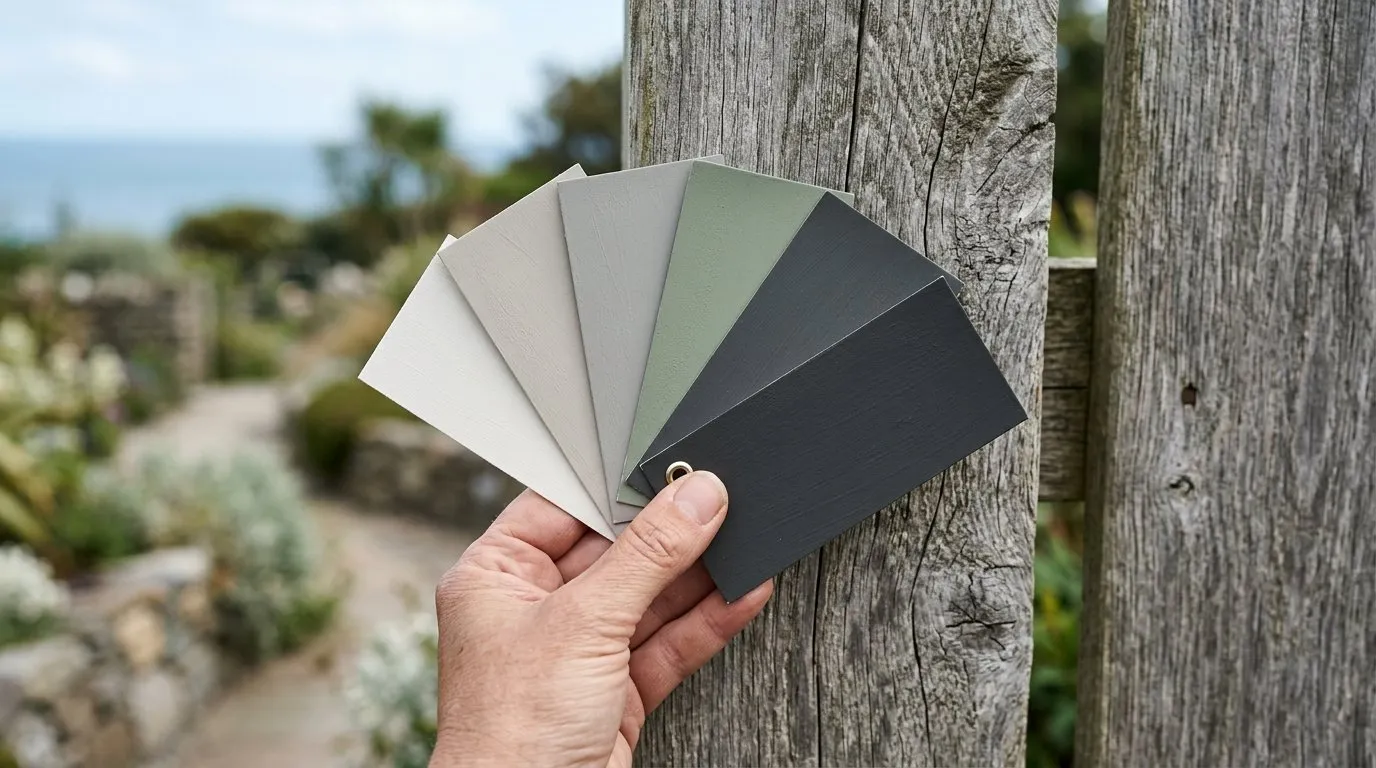 Test shades against your own timber in daylight before committing to a colour.
Coverage, coats and what it costs
Knowing the numbers stops you under-buying paint. Cuprinol Garden Shades, Ronseal Garden Paint and Thorndown all quote around 10-12m² per litre per coat on smooth planed wood. Most fence panels are rough sawn and thirsty, so coverage roughly halves to 5-6m² per litre on the first coat. Spraying drops it again, to about 4-5m² per litre.
A standard 1.8m by 1.8m closeboard panel is about 3.2m² per side. Plan on two coats for solid colour on rough sawn timber. Dark colours can sometimes cover in one coat on smooth wood, but lighter shades almost never do. Budget the paint, not the hope.
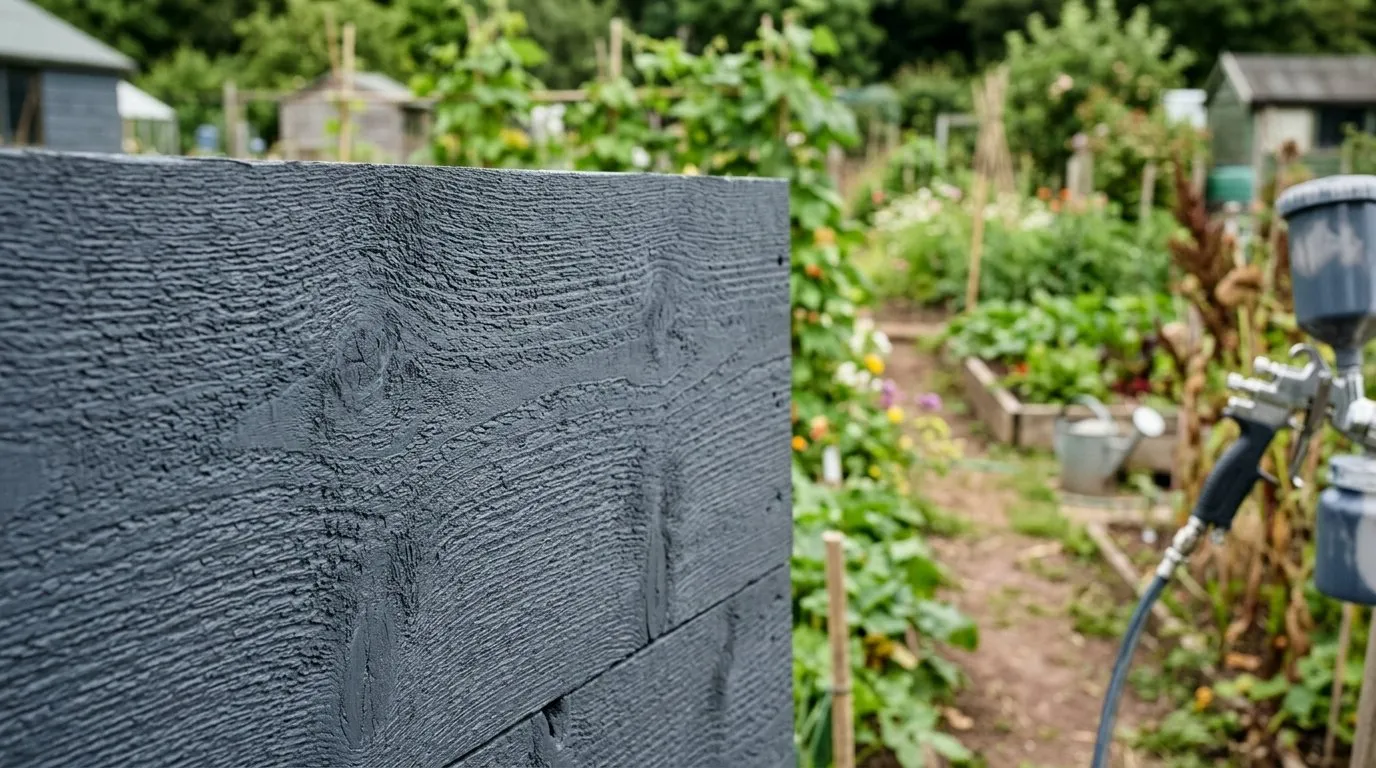 A sprayer covers long runs fast, but the end grain still needs a brush by hand.
Prep mistakes that ruin a good colour
- Painting damp or wet wood. Trapped moisture pushes the paint off from behind, so it blisters and peels. Wait for a dry spell and a moisture reading under 18%. After rain, leave the timber two to three dry days.
- Painting in the wrong weather. Too cold and the paint will not cure; too hot and it skins before it bonds. Stay between 8C and 25C, out of direct hot sun, with no rain forecast for 24 hours.
- Not treating bare or new wood. Fresh and untreated timber needs a preservative base first, or rot starts under the colour. Pressure-treated panels must weather for several weeks before paint will hold.
- Painting over flaking old stain. New paint only grips sound material. Scrape and sand off anything loose, or the new coat lifts with the old. This is the step people skip most.
- Skipping the end grain and gravel boards. End grain and the low gravel board soak up water and fail first. Brush these by hand and give them an extra coat, even when you spray the panels.
Warning: Overloading the brush is the single quickest way to wreck a finish. Thick coats run, sag and dry with a skin over wet paint underneath, which then cracks. Two thin, well-spread coats always beat one heavy one.
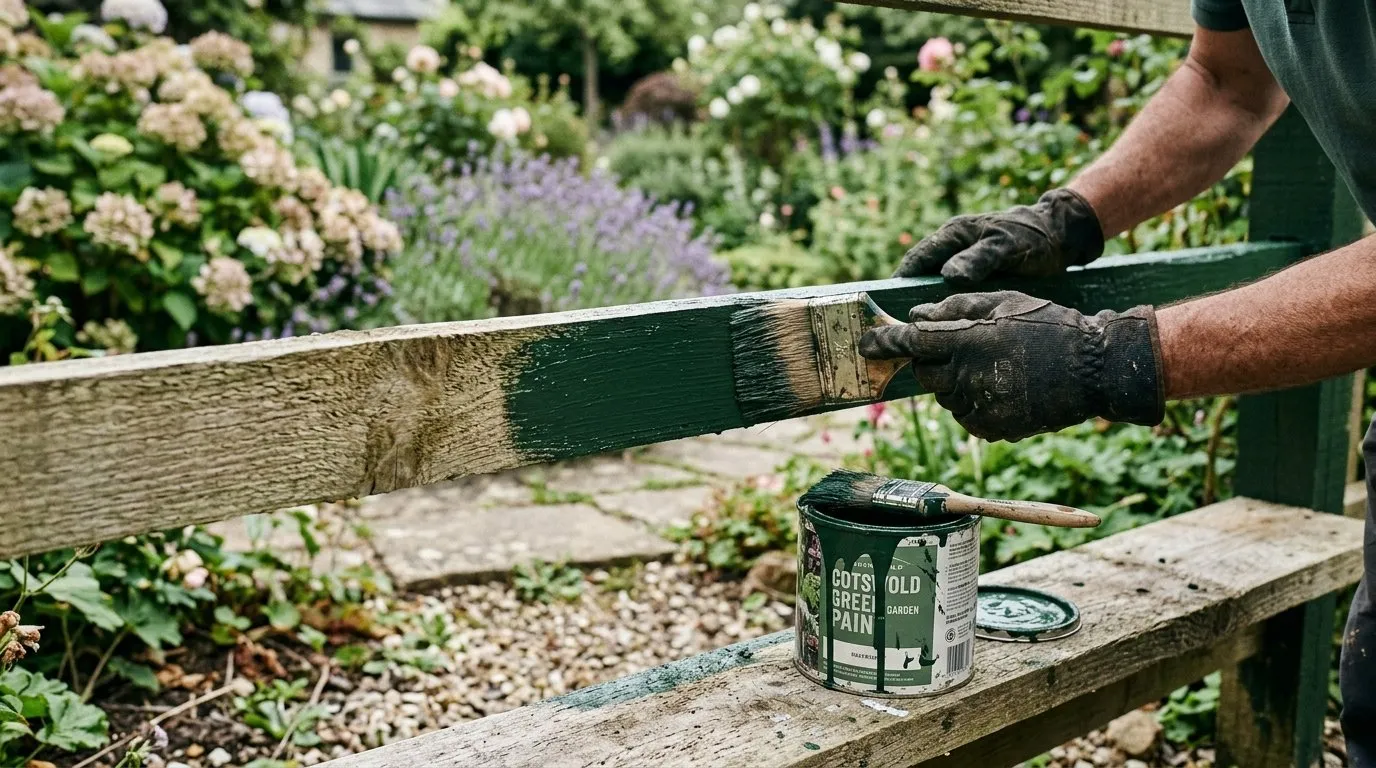 Two thin coats, worked well into the grain, beat one heavy coat every time.
The root cause behind most fence-paint failures
When a fence finish fails early, people blame the paint. The real cause is almost always moisture and movement in the timber, not the tin. Wood swells when wet and shrinks as it dries, and that constant flexing cracks a poorly bonded film. A coat applied over damp or unsound wood never stood a chance.
This is why prep matters more than the brand on the label. A mid-range paint over sound, dry, treated timber outlasts a premium paint slapped onto a wet, flaking fence. The colour you chose is only as durable as the surface under it.
It also explains the recoat cycle. South-facing and exposed panels take more sun, wind and rain, so they move and fade faster and need attention every two to three years. Sheltered north-facing runs can stretch to four or more. Look at the fence, not the calendar, and address tired patches before they flake.
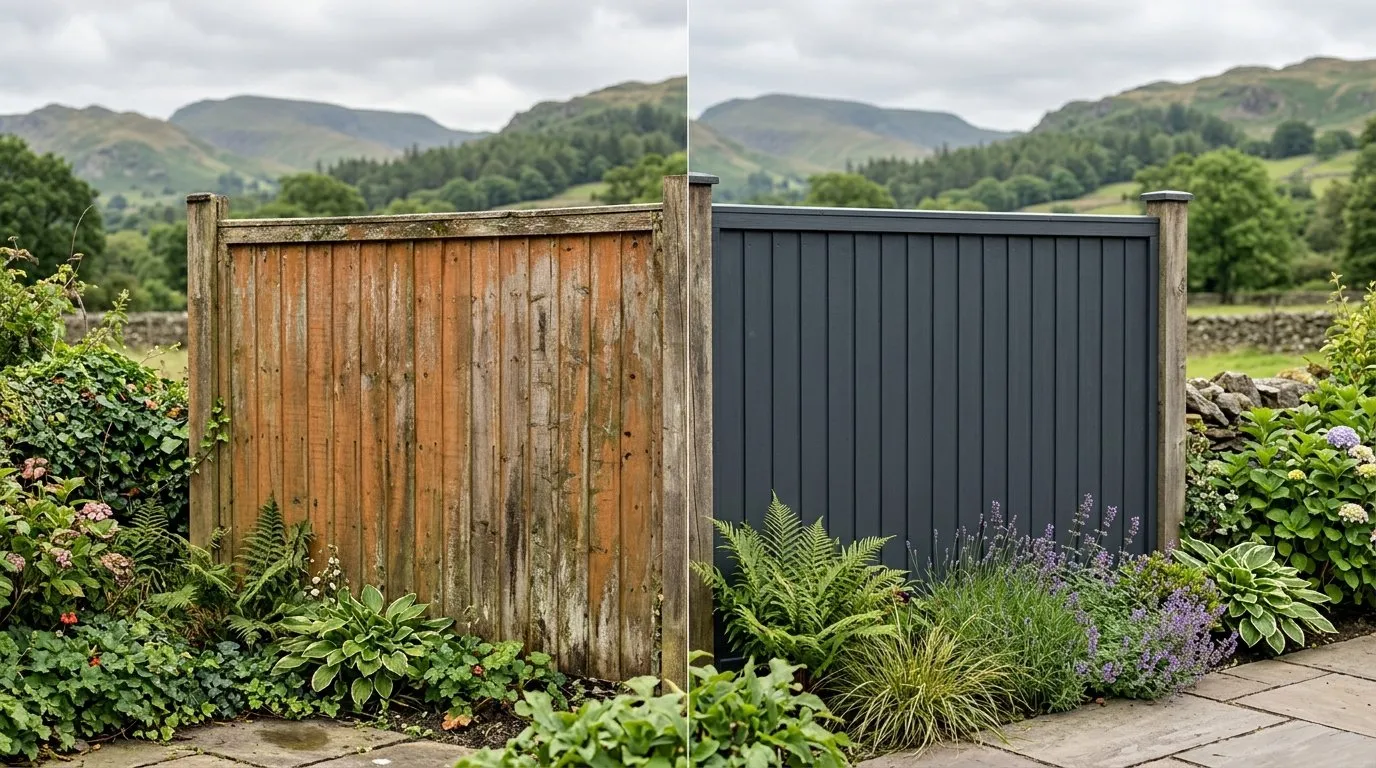 Left, the dated orange-brown buyers ask to change. Right, the same fence in deep charcoal.
Matching the colour to your wider garden plan
If your real aim is to hide an ugly boundary, paint plus planting beats paint alone. A dark fence behind climbers disappears completely, and you can speed that up with the species in our guide to climbers that cover an ugly fence fast. The paint sets the backdrop; the planting does the rest.
Gardener’s tip: Test your shortlist before you commit. Paint an offcut or one hidden panel in two or three colours and live with them for a week. Colours shift hugely between a sunny morning and a grey afternoon, and what looks right in the tin can read very differently across a whole fence run.
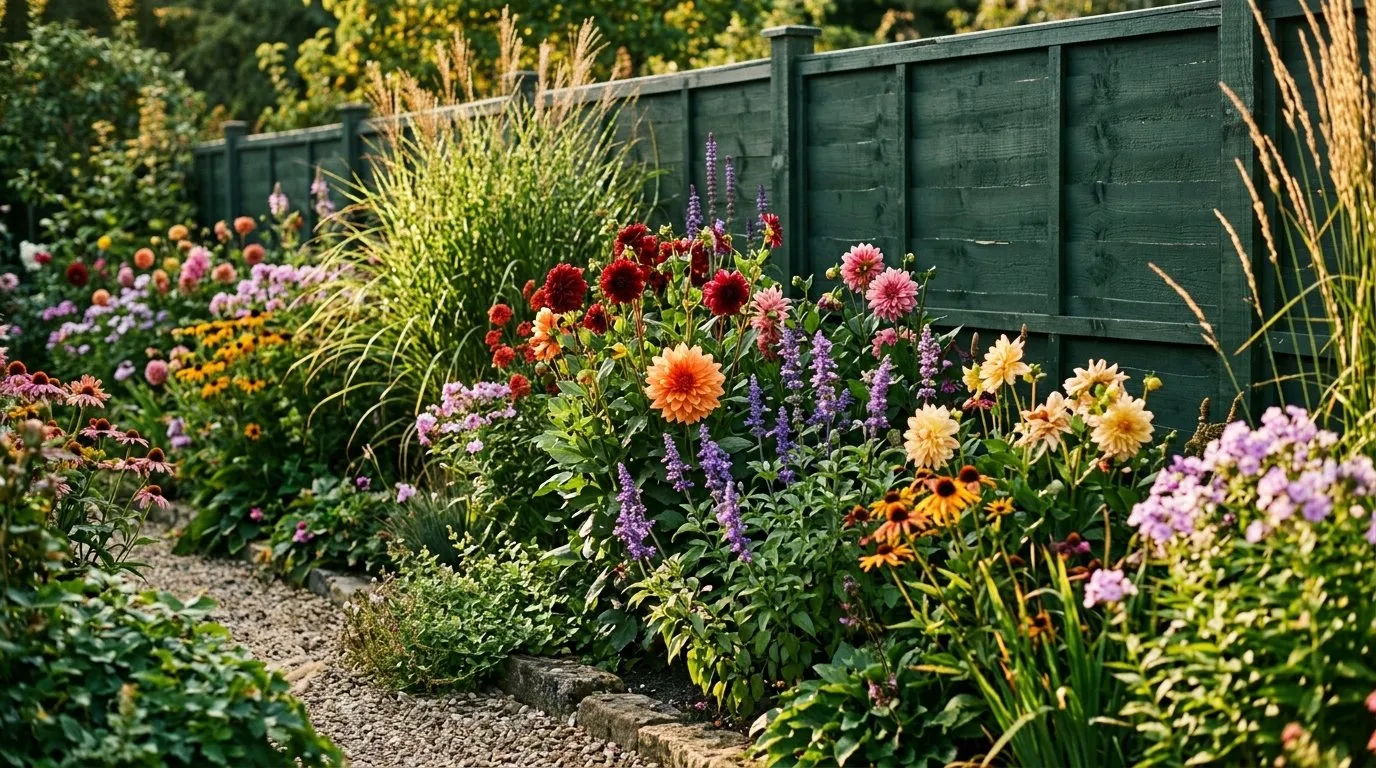 A deep green fence reads as part of the planting, throwing flower colour forward.
Keeping the colour looking good
A painted fence is not a fit-and-forget job, but maintenance is light if you stay ahead of it. Wash panels once a year with a soft brush and plain water to clear algae and splash. Pale colours need this more than dark ones.
Refresh tired patches with a single coat before they flake, rather than waiting for a full strip-back. Catching it early turns a half-day touch-up into a one-tin job. Check the end grain and gravel boards each spring, since those fail first. The maintenance side overlaps with general fence repair and maintenance, where rot and post problems get covered in full.
The RHS notes that good drainage and air flow around timber slow decay, so keep soil and dense planting from sitting hard against the boards. Clear that gap and the paint, and the fence beneath it, both last longer.
Frequently asked questions
What fence paint colour adds the most value?
Off-black and deep green add the most value. These shades read as modern and considered to UK buyers. They make planting stand out and the boundary recede. Charcoal, near-black, and forest or sage green all sit in this band. Bright primary colours do the opposite and can put buyers off.
Does a dark fence make a small garden look bigger or smaller?
How many coats of fence paint do I need?
Most fences need two coats. Rough sawn timber drinks the first coat, so one coat looks patchy. Dark colours can sometimes cover in one on smooth wood. Bare or new wood needs a treatment coat first. Leave the recommended drying time between coats, usually 2-4 hours.
Can I paint a fence in any weather?
No. Paint between 8C and 25C on a dry day. Avoid painting in direct hot sun, which dries the surface too fast and traces brush marks. Never paint if rain is forecast within 24 hours or onto frosty or damp timber. Spring and early autumn give the most reliable UK conditions.
How often should I repaint a garden fence?
Repaint every 2-4 years. Solid colour paints like Cuprinol Garden Shades hold up to 6 years on sheltered panels. South-facing and exposed fences fade faster and need attention sooner. A light wash and a single refresh coat is enough if you do not let it flake. Waiting until it peels means full prep again.
Is it better to spray or brush fence paint?
What colours should I avoid on a garden fence?
Avoid bright orange, strong red and vivid blue. These date a garden quickly and clash with most planting. Orange-brown is the colour buyers most often want changed. Strong primaries shrink a space and read as cheap. Stick to off-blacks, deep greens, soft greys and muted neutrals for a calm, modern result.
Do I need to treat new fence panels before painting?
Yes, most new panels need treating first. Pressure-treated timber must weather and dry for several weeks before paint will hold. Bare untreated wood needs a preservative base coat to stop rot. Painting straight onto fresh, damp or oily timber causes peeling within a season. Check the panel is dry below 18% moisture before you start.
Our team produces practical UK gardening guidance from source research, contributor records and established horticultural practice. Editorial standards are overseen by Matt W.