Key takeaways
- Map light and moisture before choosing plants.
- Check stream-edge soil rather than assuming waterlogging.
- Use foliage texture and form to connect contrasting areas.
- Plan the joins between planting zones.
- Recheck your observations across seasons and after rain.
- Church Gill's public reveal is planned for June 2027.
Church Gill’s restoration gives us a useful starting point for thinking about contrasting garden conditions. Garden UK’s translation has three lessons: map conditions first, connect foliage textures and give the joins between areas some attention.
You can apply these ideas to the garden you already have. Start with its actual light and moisture, then decide how the planting should relate.
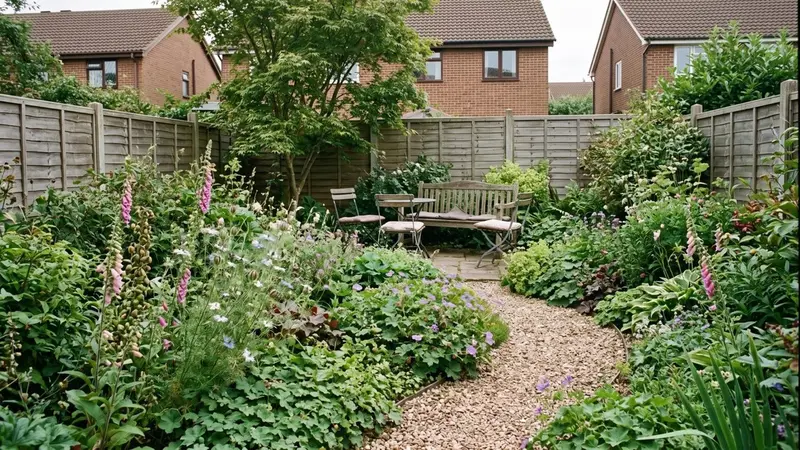
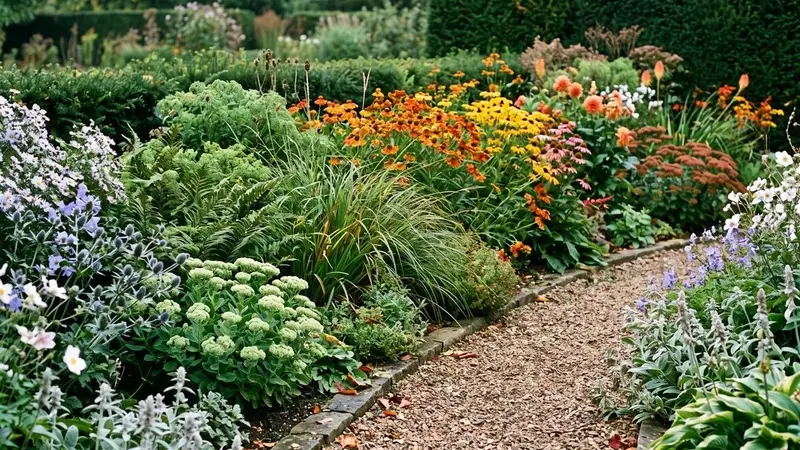
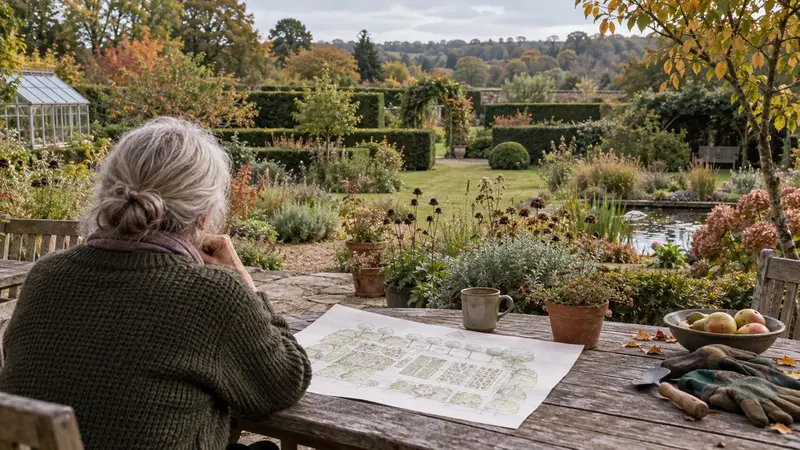
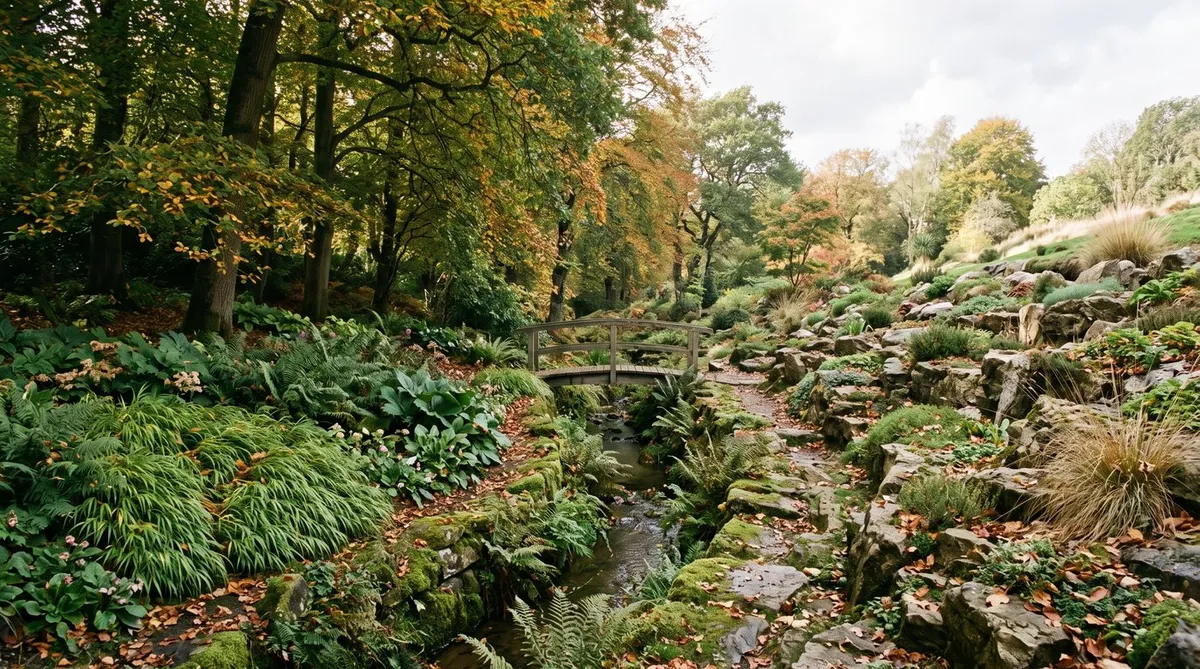
All eight images are modern editorial illustrations. They do not show Church Gill, Hever Castle, Jamie Butterworth or the BBC production.
What is happening at Church Gill?
The BBC listing for Gardeners’ World Episode 29 records its BBC Two broadcast on Friday 16 October 2026. It aired at 20:00 and ran for 59 minutes. The listing names Jamie Butterworth and describes his exploration of shade-loving plants. It also mentions his explanation of how colour, texture and form can create interest.
Hever Castle’s announcement, dated 15 October 2026, identifies Church Gill as the garden visited. It describes restoration work in a garden with more than 120 years of history. The work included clearing bamboo, laurel and bracken.
Hever describes shaded woodland, a brighter alpine area and a stream edge for moisture-loving planting. Its named planting ideas include Japanese forest grass, giant-leaved plants, primulas and woodland perennials. The announcement also describes a solar-powered stream.
The public reveal is planned for June 2027.
The sources do not provide an exact planting plan or instructions for recreating Church Gill.
Garden UK’s design lesson is to examine the relationship between the conditions. That gives an ordinary garden owner something practical to investigate before drawing beds or buying plants.
What the three garden conditions reveal
Three different conditions need three separate checks. A description such as “woodland” or “alpine” is a starting point, rather than a complete growing specification.
The clues below are prompts for your own garden. They are not recorded observations from Church Gill.
| Condition described by Hever | Visible clue to check at home | Useful first check | Garden UK’s home-garden response |
|---|---|---|---|
| Shaded woodland | Shade beneath or beside woody growth | Record when direct sunlight reaches the planting area | Choose planting after checking light and soil moisture |
| Stream edge for moisture-loving planting | Soil close to moving water | Compare moisture beside the water and farther back | Draw separate planting areas where conditions differ |
| Brighter alpine area | Open ground with fewer overhead obstructions | Check sunlight and drainage separately | Investigate the site before choosing alpine-style planting |
Do not turn these descriptions into assumptions about soil. A stream edge does not automatically mean boggy ground or permanent waterlogging. A sunny alpine area does not establish pH, slope, scree or a particular soil mix.
For your own plan, write down what you can observe and leave uncertain details marked as unknown. That makes the next check easier to identify.
Lesson 1: map light and moisture before choosing plants
Garden UK’s first translation is to separate what an area looks like from the conditions you have actually checked.
A shaded corner may look different at another hour. Your moisture notes also need a date and some context. Record whether you checked after rain or during a dry spell.
Start with a rough outline of the garden. Mark the house, boundaries, existing trees and the places you regularly use. Add observations without trying to make the drawing attractive.
Use our guide to mapping sunlight in a UK garden to organise the light checks. Keep these notes separate from your plant list.
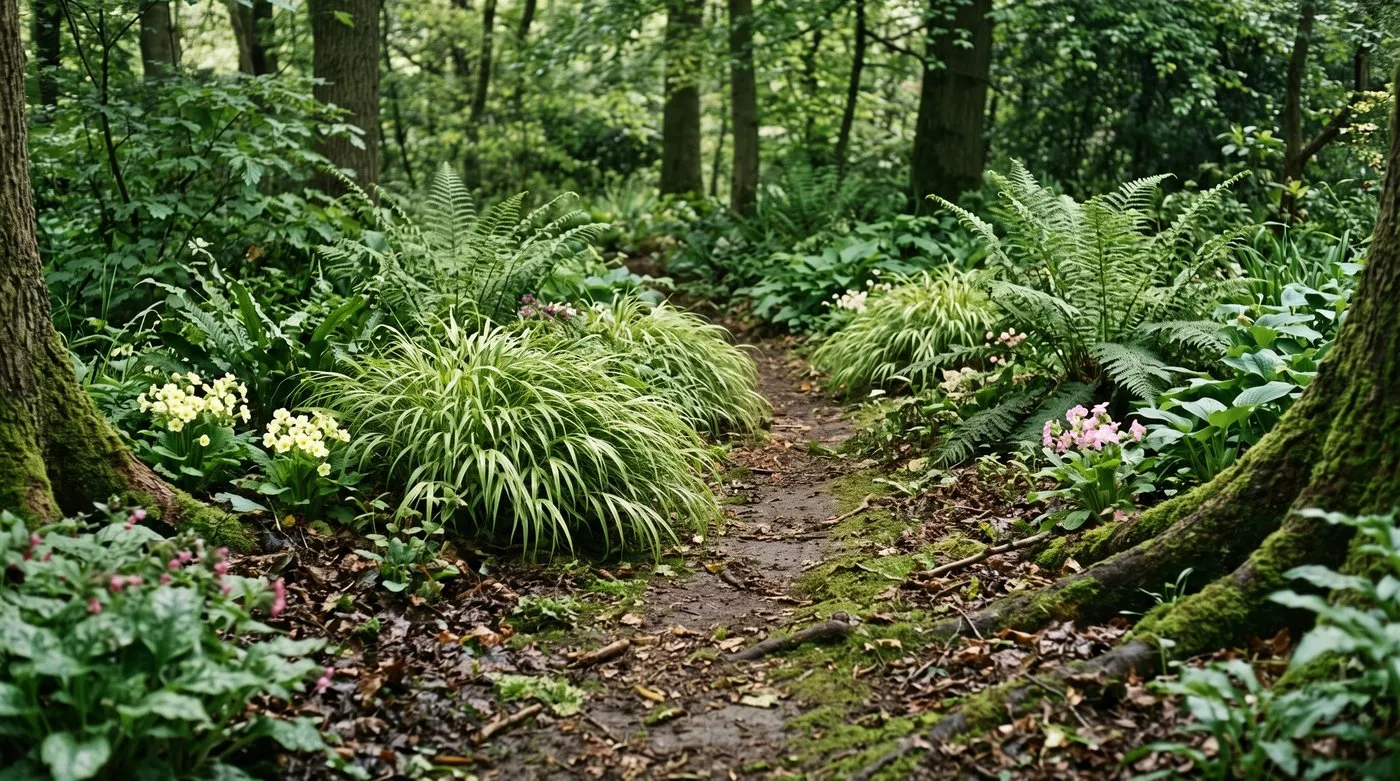 Editorial illustration of layered woodland planting in a generic garden, not Church Gill.
For moisture, compare several places within the same apparent zone. Check the intended planting position rather than judging it from a path. Record what you find without immediately naming the area “dry shade” or “bog garden”.
Use plain descriptions such as “Shaded at the morning check”, rather than assuming shade lasts all day. “Damp after rain” leaves room for a later observation.
Keep existing planting on the drawing too. It helps you locate the same checking points next time. Plant presence alone should not settle your assessment of the whole bed.
The practical decision comes afterwards. If the evidence remains unclear, postpone the plant choice and repeat the check. There is no need to complete the planting plan during the first walk around.
Lesson 2: use foliage texture to connect contrasting zones
The BBC description mentions colour, texture and form. Garden UK’s second lesson concentrates on the latter two as a way to connect areas with different conditions.
Treat texture as the visual character of the foliage. Broad leaves and narrow blades create different patterns. Form concerns the plant’s overall shape, such as an upright outline or a low spreading mass.
You can repeat a visual quality without repeating the same plant everywhere. That distinction gives you room to respect different growing conditions.
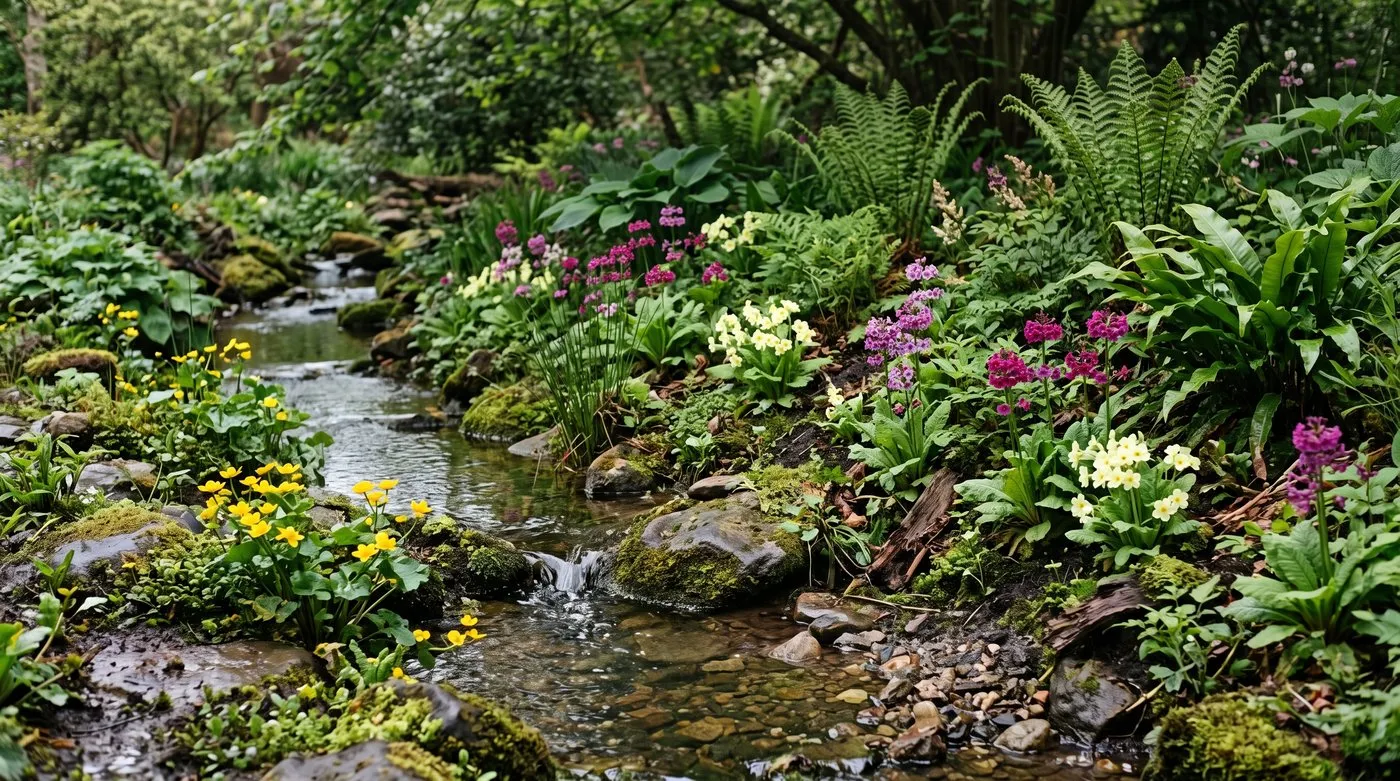 Editorial illustration of generic stream-edge planting, not Church Gill.
Try marking broad foliage shapes on your plan before adding plant names. Look at the whole view, then consider each planting area separately. Decide where a repeated shape would help connect the beds.
Hever’s announcement names Japanese forest grass and giant-leaved plants among its ideas. That gives us a factual starting point for discussing contrasting foliage. It does not establish a combination or planting arrangement for readers to copy.
For your garden, choose the visual relationship first, then check suitable plants for each position. Our guide to the 70/30 planting rule is a separate planning reference for considering repetition and variety.
Avoid making every border repeat every texture. Choose the connections that matter from your normal viewing positions. A drawing with fewer deliberate repetitions is easier to assess than an unexplained collection of plant names.
Lesson 3: design the transitions between zones
Garden UK’s third translation is to draw the joins between areas as carefully as the areas themselves.
A planting plan can describe each bed clearly while leaving the space between them unresolved. Look at where the path meets planting, where shade changes to light and where one foliage pattern ends.
These design decisions shape your route through the garden. They also determine what you see along the way.
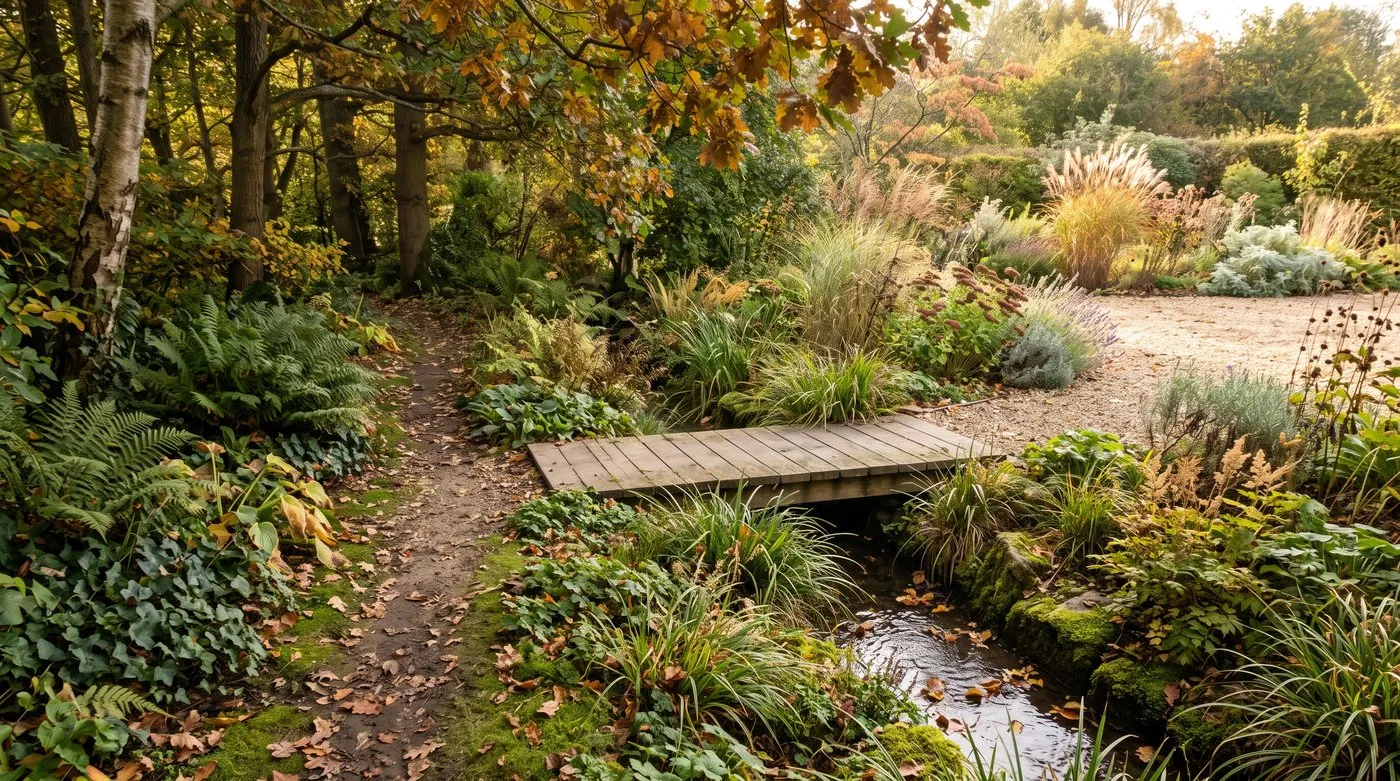 Editorial illustration of a generic garden connection, not Church Gill.
Walk your usual route and pause at each change. Note whether the next area is visible and whether planting obscures the route. Mark awkward corners on the drawing before deciding that another plant will solve them.
One practical approach is to carry a similar foliage shape across the join. Another is to make the change clear through a deliberate edge. Choose according to the conditions and the view you want.
A bridge appears in our illustration, but it is not a recommendation to build one. The transferable idea is the connection between areas.
If your garden changes level, assess that separately from the planting pattern. Our guide to sloped gardens, terracing and planting explores that particular design problem.
Trace the route on your plan and record a decision for every transition, even where you retain the existing arrangement.
A 30-minute three-zone audit for your garden
This is an original Garden UK editorial framework. It is not a method documented or endorsed at Church Gill.
Use the session to identify observations and unanswered questions. It cannot establish a full seasonal picture in half an hour.
| Time | Task | What to record |
|---|---|---|
| 0-5 minutes | Sketch the garden and your usual route | Boundaries, existing planting and places you stop |
| 5-15 minutes | Compare light and soil moisture | Current observations, recent weather and uncertain areas |
| 15-25 minutes | Examine foliage patterns and the joins between areas | Existing connections, abrupt changes and awkward edges |
| 25-30 minutes | Choose the next checks | Questions to resolve before choosing plants or altering beds |
You do not need to find all three Church Gill conditions. Work with the differences your garden actually contains. Leave absent conditions off the drawing rather than inventing a reason to add them.
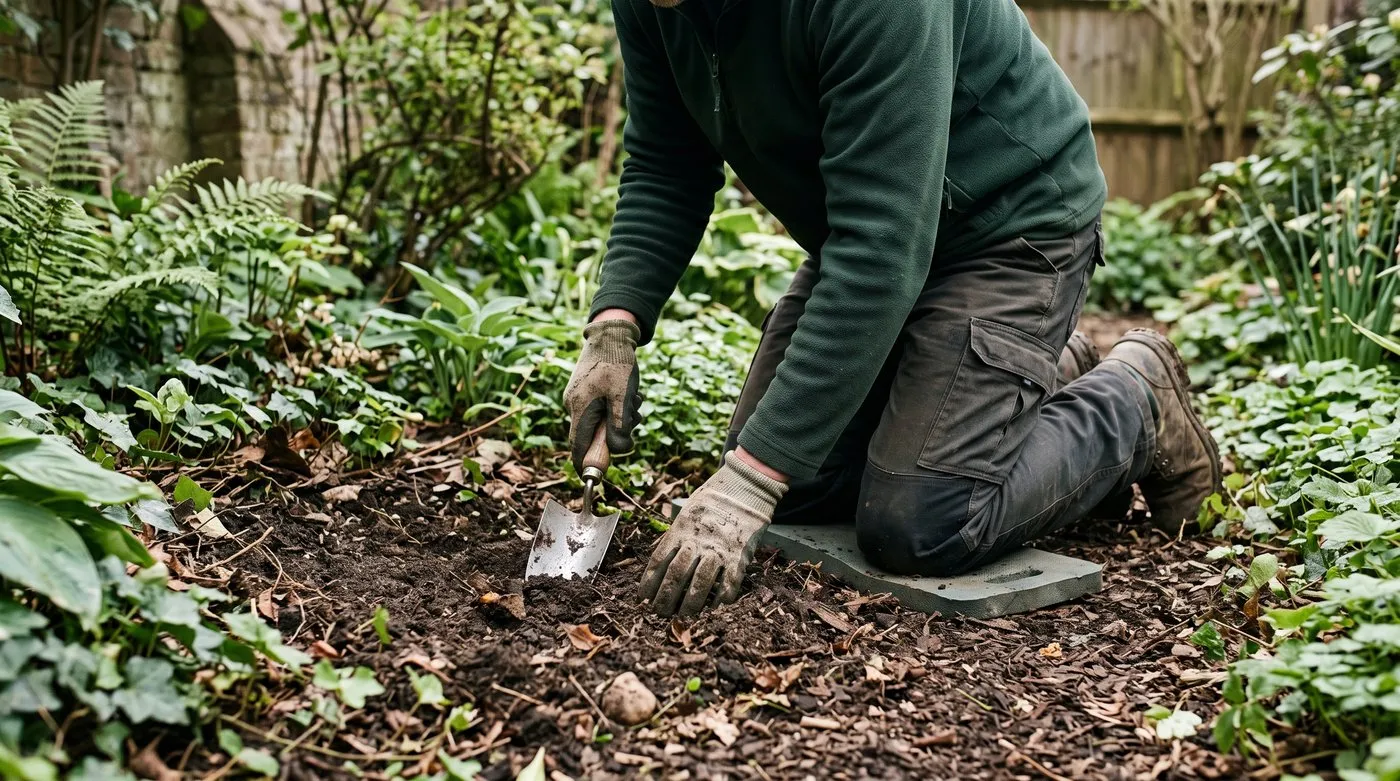 Editorial illustration of a gardener checking soil in a generic garden, not Church Gill or Jamie Butterworth.
Keep your sketch and confirmed observations with your notes, then draft using our guide to writing a planting plan.
Unknowns belong in a separate list as clear questions for later checks.
Revisit the same positions through the year. This short table is another Garden UK planning prompt.
| Recheck | What to compare |
|---|---|
| Spring | Compare light observations as surrounding foliage develops |
| Midsummer | Repeat light and moisture checks in the intended planting positions |
| Autumn | Review planting outlines and the visibility of routes |
| After heavy rain | Record where water collects and check again afterwards |
Date each entry and compare observations before changing the boundaries of your proposed planting zones.
Planting ideas for each zone
The following ideas are Garden UK’s translation of the case study. They are broad planning directions, not a reconstruction of Church Gill’s planting.
Woodland shade
Begin with the light and moisture notes for the intended bed. Then decide what the planting needs to do visually.
You might want a low layer beneath taller foliage or a clearer edge beside a path. Keep that purpose visible on the plan while you assess suitable plants.
Hever names woodland perennials and Japanese forest grass in its announcement. It does not supply an exact species or cultivar list here.
Use our guide to plants for shade for the next stage. Match choices to your recorded conditions rather than relying on the word “woodland”.
Damp stream edge
Mark the actual planting position and its moisture pattern on your sketch, with the water’s edge distinct from nearby ground.
Hever names primulas among its planting ideas. That reference does not establish that every primula suits every damp position.
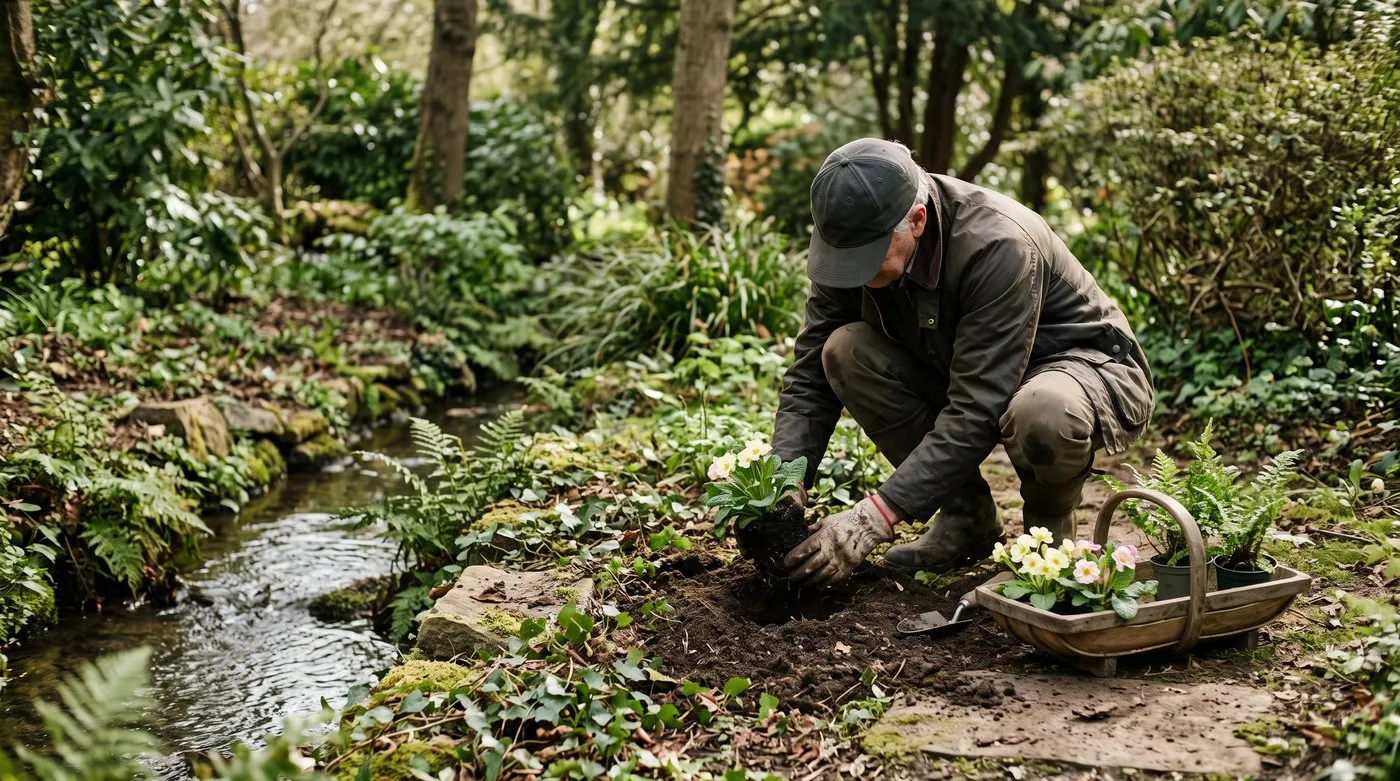 Editorial illustration of generic stream-edge planting work, not Church Gill or Jamie Butterworth.
If repeated checks identify wet or boggy soil, consult our guide to plants for wet and boggy ground. Use that guide for those conditions, rather than treating every streamside bed as a bog.
Base planting decisions on the soil conditions in your own garden.
Brighter alpine-style planting
Treat “brighter” and “alpine” as separate prompts for investigation. Check the available light, then investigate the ground before choosing plants.
A gravel surface cannot tell you the soil conditions underneath. Nor does an alpine-style appearance establish a particular soil recipe.
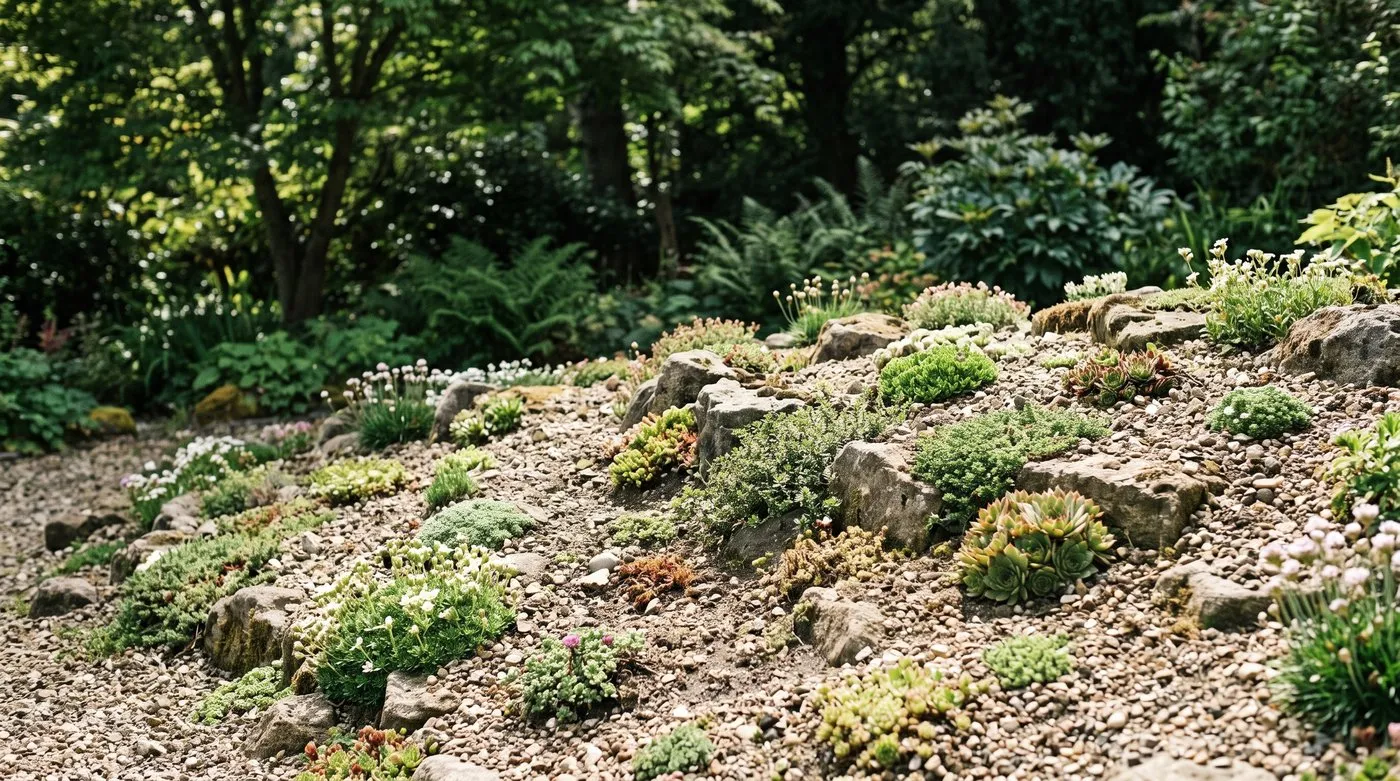 Editorial illustration of a generic alpine-style gravel bank, not Church Gill.
Our Beth Chatto Dry Garden article provides a separate design reference. Keep its subject distinct from Church Gill’s brighter alpine area.
Ground-level connections
Garden UK’s suggestion is to consider the lower planting layer across your plan. Decide where you want continuity and where a clear break would suit the design.
Consult our guide to ground-cover plants after checking each position. You can seek a related visual effect without requiring one plant to cross incompatible conditions.
Mistakes to avoid
The first mistake is shopping before recording conditions. An attractive plant does not answer an unresolved question about the place you intend to put it.
Complete the checks first. Keep any early plant ideas provisional until you can assess them against the site.
A second mistake is confusing a garden’s appearance with its growing conditions. Gravel, shade and nearby water are clues. None supplies a complete description of the soil.
Another mistake is copying the illustrated layout. Our images explain design relationships, but they contain no evidence about Church Gill’s exact arrangement.
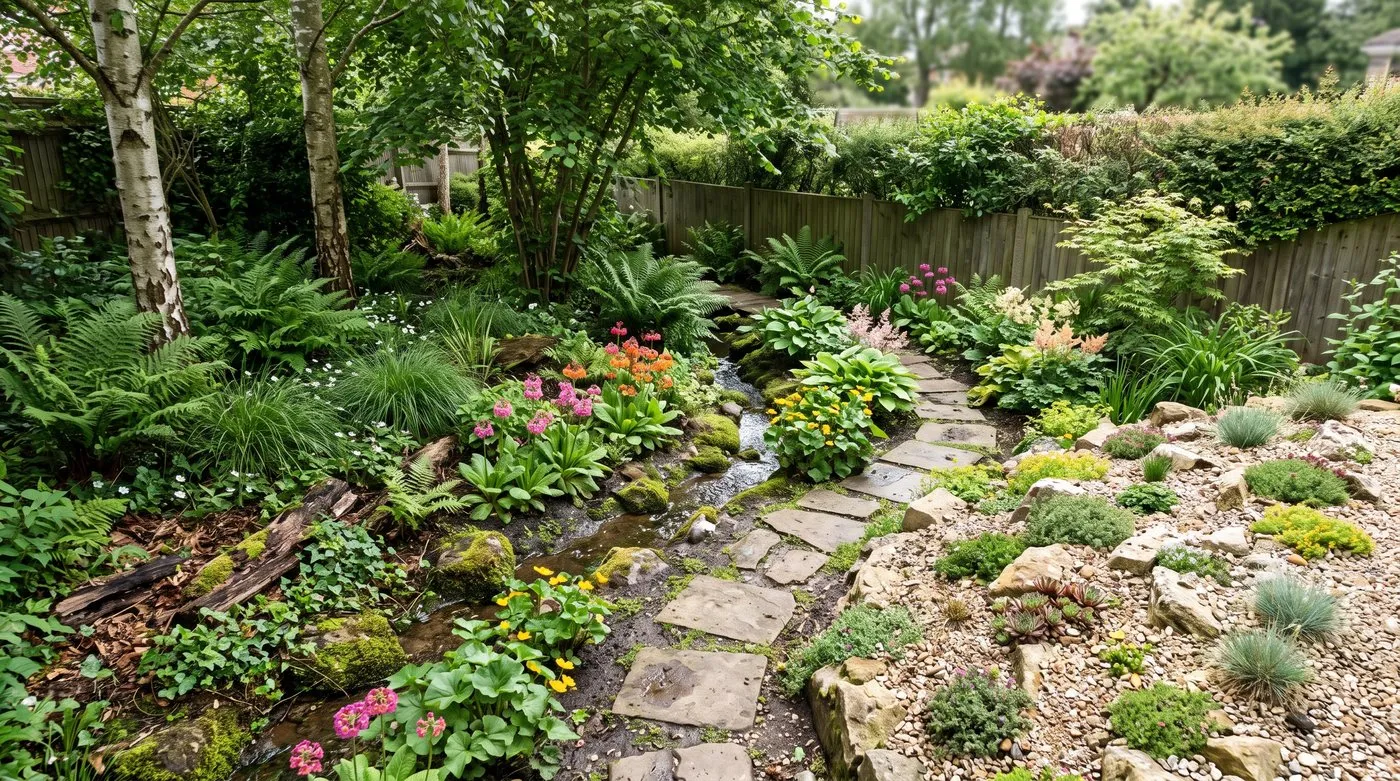 Editorial illustration of a generic three-zone garden layout, not Church Gill.
Avoid giving each area an entirely separate visual language without considering the joins. Garden UK’s recommendation is to review the whole view before finalising individual beds.
Equally, do not force repetition where your site checks suggest different planting needs. Repeat an outline or texture where appropriate, then assess the actual plant choices separately.
Finally, do not read extra claims into the solar-powered stream description. The official announcement does not provide wattage, flow, running costs or reliability information in the facts used here.
Those details are unknown. They cannot support a specification for a home installation.
What to watch before the planned 2027 reveal
The public reveal is planned for June 2027. Treat that as a plan, rather than a guaranteed opening date or confirmed access arrangement.
Check future official notices for access information, and do not infer public access from the television programme.
For your own garden, the useful next step does not depend on the reveal. Choose one planting area and record its current light and moisture.
Then examine its connection to the next area. Mark the observation date and the question you need to resolve before choosing plants.
Frequently asked questions
What are the three conditions described at Church Gill?
Hever describes woodland shade, a brighter alpine area and a moisture-loving stream edge.
When is Church Gill’s public reveal planned?
The public reveal is planned for June 2027.
Do the images show Church Gill?
No. All eight images are modern editorial illustrations of generic gardens and gardening tasks.
Does a stream edge mean permanently waterlogged soil?
No. A stream edge does not establish whether nearby soil stays permanently waterlogged.
Can I apply these lessons without adding a stream?
Yes. Garden UK’s translation starts with the light and moisture differences already present in your garden.
Our team produces practical UK gardening guidance from source research, contributor records and established horticultural practice. Editorial standards are overseen by Matt W.