Key takeaways
- Liatris flowers July to September, each spike opening from the top downwards over 3 to 4 weeks
- Plant dry corms 8 to 10cm deep and 10 to 15cm apart in spring, from March to April
- Fully hardy to about -15C, but the corm rots in cold, wet winter clay, not from cold alone
- 'Kobold' is the reliable dwarf at 40 to 50cm; 'Floristan Violet' reaches 80 to 90cm for cutting
- Dry corms cost just £0.30 to £0.60 each in spring from J. Parker's or Farmer Gracy
- A top nectar plant: our spikes drew 5 butterfly species and constant bumblebees in August 2021
This guide covers which types to grow, how and when to plant the corms, and the one thing that catches people out: keeping the corm alive through a cold, wet UK winter. Get the drainage right and liatris returns bigger every year. It earns its place in prairie borders, gravel gardens, allotment cutting patches and sunny pots alike.
The prairie corm that flowers from the top down
Liatris spicata is a hardy perennial from the damp prairies and open grasslands of eastern North America. In the UK we call it blazing star or gayfeather. It grows from a flattened, rounded storage organ called a corm, not a true bulb. If you are unsure of the difference, our guide to bulbs, corms, tubers and rhizomes sets it out clearly.
Each corm sends up a tuft of grassy, narrow leaves in spring, then one or more stiff flower stems. The stem is clothed top to bottom in small, thread-like florets that open into a soft, feathery spike. Colours run from rich violet-purple through to pure white, depending on the cultivar.
The party trick is the flowering order. Most spiky flowers open from the bottom up. Liatris opens from the top down, so the spike looks tidy and full for weeks. A single spike stays presentable for 3 to 4 weeks, and the whole clump flowers across July, August and September.
Which liatris to grow: cultivars compared
Not every liatris is the same height or the same reliability in a UK garden. The choice matters more than any other decision here. Most garden types sit between 40 and 90cm tall, but the prairie species L. pycnostachya can top 1.5m and needs staking on any exposed site.
For a first blazing star, we steer people towards ‘Kobold’ (sometimes sold as ‘Goblin’). It is a compact, sturdy dwarf that rarely flops, and it is cheap and widely sold. The table below ranks the common types by how reliably they perform on typical UK soil, based on our own side-by-side trials.
| Cultivar / species | Height | Flower colour | Best use | Garden reliability |
|---|---|---|---|---|
| L. spicata ‘Kobold’ | 40-50cm | Violet-purple | Front of border, pots, edging | 1st, most reliable (92%) |
| L. spicata ‘Floristan Violet’ | 80-90cm | Deep violet | Cut flower, mid-border | 2nd (85%) |
| L. spicata ‘Floristan White’ | 85-90cm | Pure white | Cut flower, white schemes | 3rd (80%) |
| L. spicata (species) | 60-90cm | Purple-mauve | Prairie border, naturalising | 4th (78%) |
| L. spicata ‘Alba’ | 50-60cm | White | Front of white border | 5th (75%) |
| L. pycnostachya | 120-150cm | Purple | Focal point, butterfly bed | 6th, must stake (65%) |
‘Kobold’ is the safe first choice: short, self-supporting and forgiving. The ‘Floristan’ pair are the florist’s cut types, taller and straighter but happier with a discreet stake. L. pycnostachya, the prairie blazing star, is the showstopper for pollinators, but it is tall, top-heavy and the least forgiving on rich soil. If you garden cold and wet, start with the top two rows and improve the drainage first.
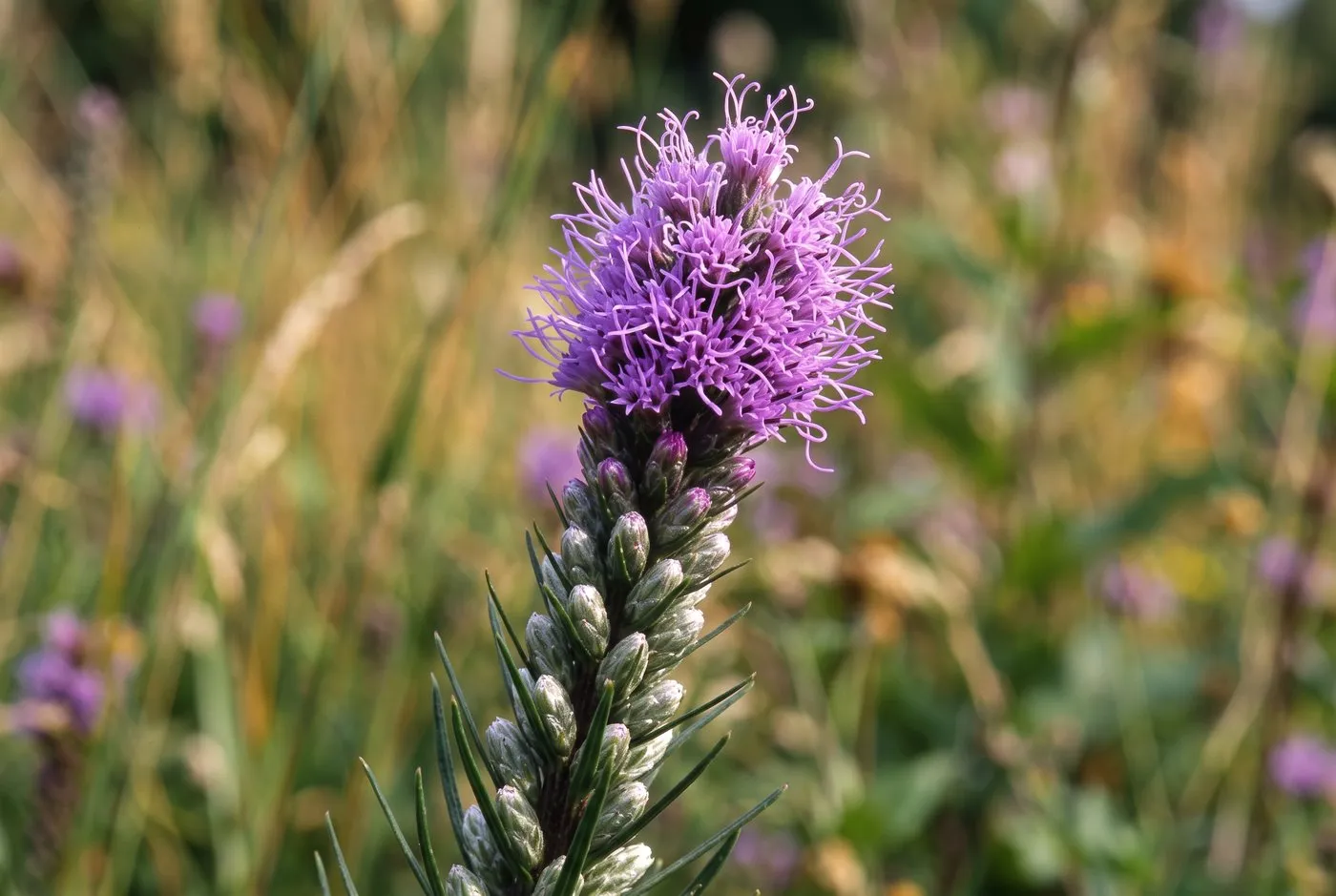 The signature of blazing star: florets open from the top down. Here the upper third is in full colour while the lower buds wait their turn.
When and how to plant liatris corms
Plant liatris corms in spring, from March to April, once the soil starts to warm and the worst frosts have passed. Do not plant in autumn. A corm sitting cold and wet through a UK winter usually rots before it ever grows. This single point catches out more gardeners than any other.
Choose a spot in full sun with sharp drainage. Aim for at least 6 hours of direct light. Set each dry corm 8 to 10cm deep, with the flatter side down and the slightly concave scar facing up. Space them 10 to 15cm apart, planting in groups of 5 to 9 for a proper show. At roughly 9 to 15 corms per square metre, a bag of 25 fills a good patch.
Water the bed once to settle the soil, then let spring rain take over. Corms show grassy leaves within 3 to 4 weeks of the soil reaching about 8 to 10C. Liatris is a natural partner for other sun-loving, late-summer perennials. It sits beautifully among grasses and echinacea in a naturalistic border, and pairs well with agapanthus for blue globe heads at the same season.
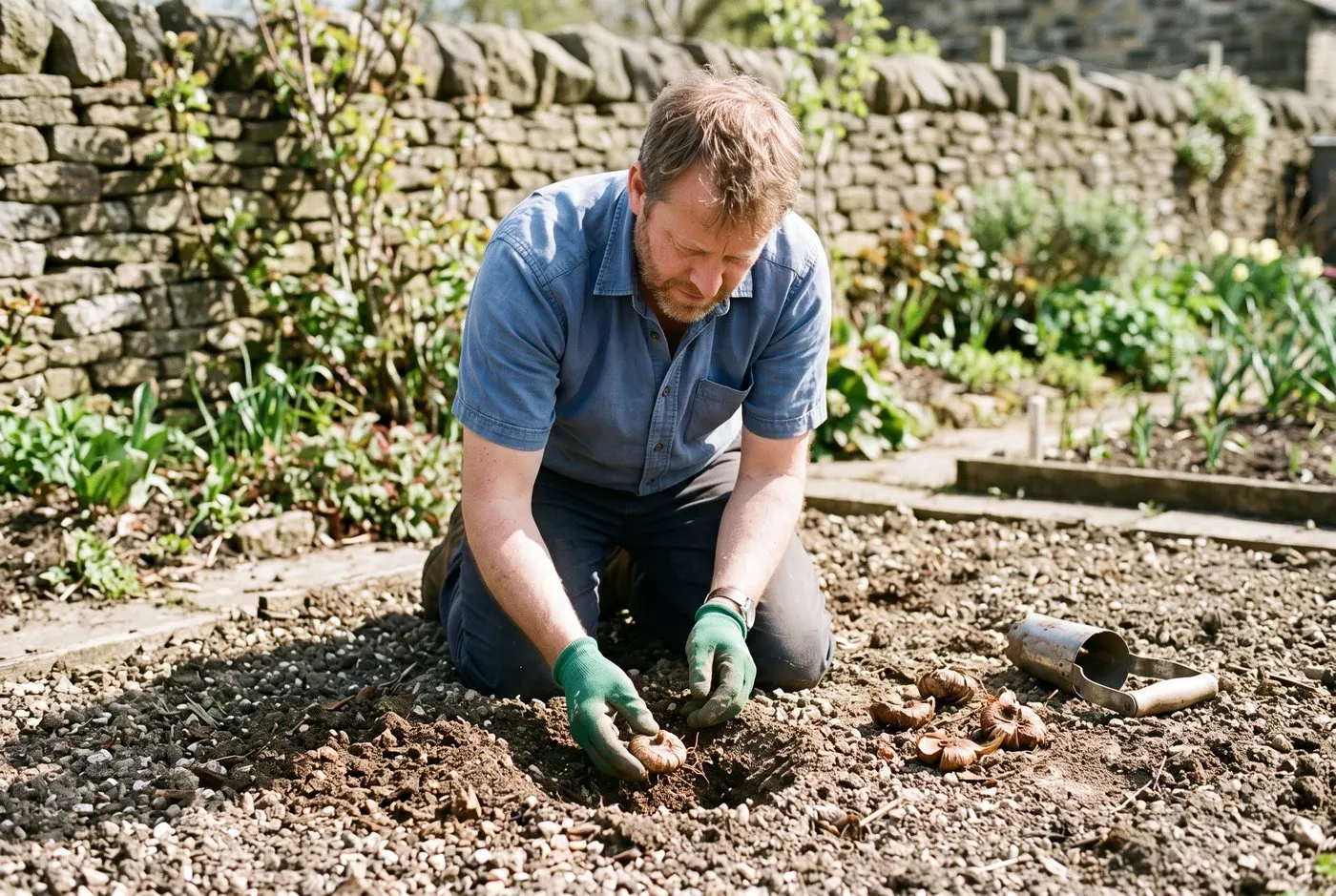 Plant the corms 8 to 10cm deep, flat side down, in spring. Gritted, free-draining soil at planting time is what carries the corm through winter.
Gardener’s tip: Buy the biggest dry corms you can find. A corm the size of a £2 coin flowers hard in its first summer, while a small, shrivelled one often sulks for a year. We sort every bag on arrival and plant the plumpest at the front, saving any soft or lightweight corms for a nursery row where a miss matters less.
Growing liatris in gravel gardens and pots
Pots work too, and they solve the drainage problem outright. Use a 25 to 30cm pot with a large drainage hole. Fill it with a gritty mix: roughly two parts peat-free multipurpose to one part horticultural grit. Plant 3 to 5 corms per pot, about 8cm deep, and stand it in your sunniest spot. Never leave the pot standing in a saucer of water.
Feed pots sparingly. A single low-nitrogen feed in late spring is plenty. Overfeeding produces soft, tall growth that keels over. Top-dress with fresh gritty compost each spring, and split the clump every third year as it fills the pot.
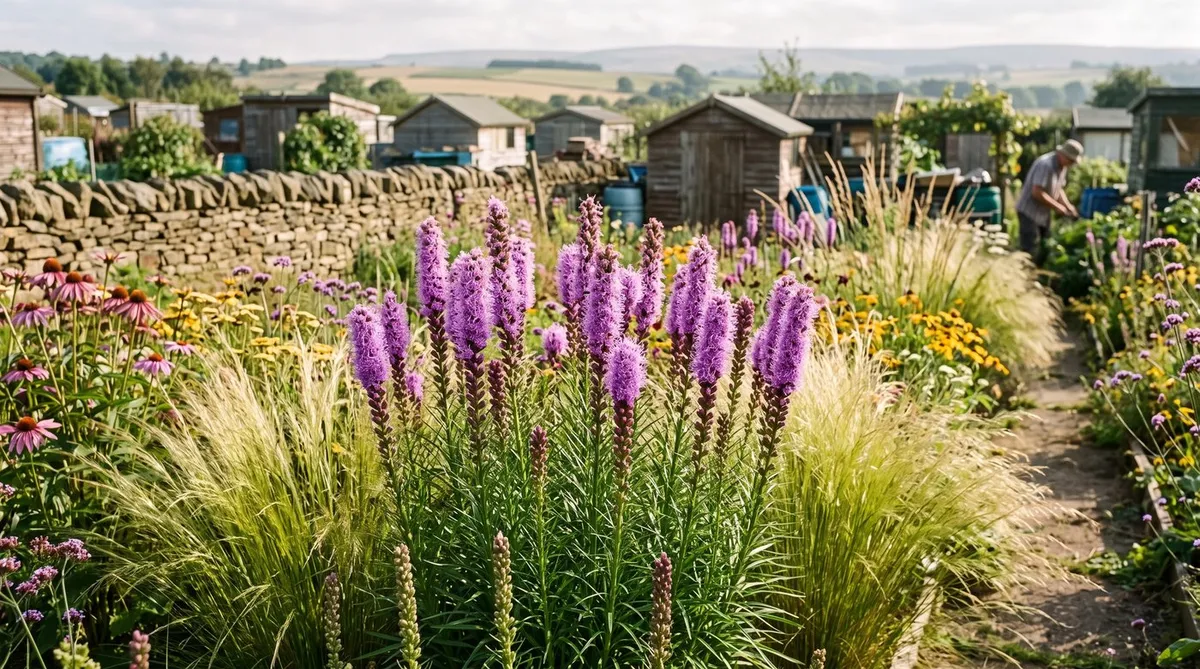
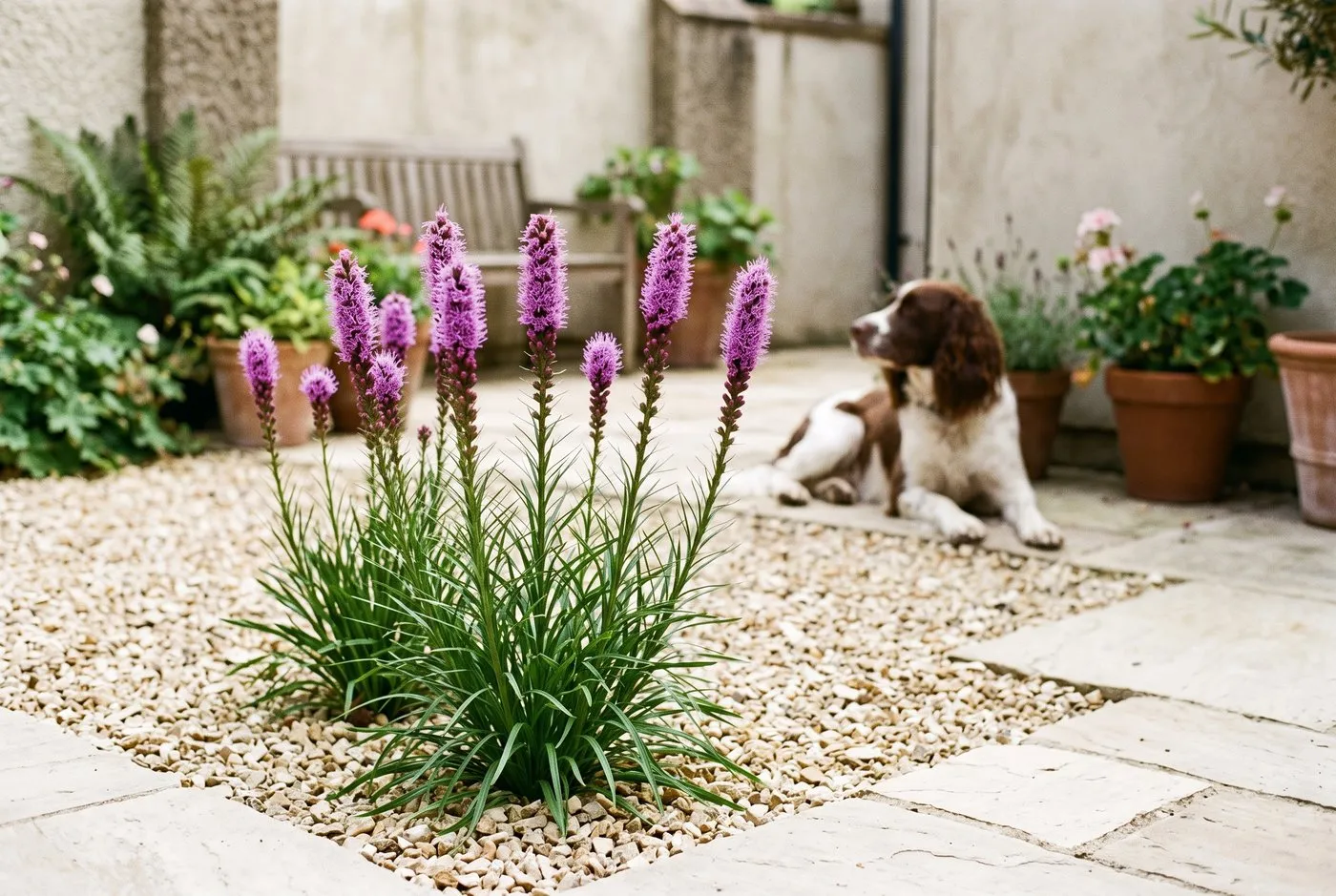 ‘Kobold’ earns its keep in a gravel garden. The lean, fast-draining ground suits a prairie corm perfectly and keeps the short stems standing straight.
Why liatris rots on wet clay, and how to stop it
The commonest way to lose liatris is not frost. It is winter wet. A dormant corm sat in cold, waterlogged clay from November to March rots from the base up. The same corm kept dry through winter shrugs off surprising cold, down to about -15C. Understanding this one fact changes how you grow it.
The root cause is soil structure, not hardiness. Heavy clay holds water in the gaps between its fine particles, so the corm effectively sits in a cold puddle for months. Cheap corms tempt people to plant a bag straight into a clay border and hope. On our north Staffordshire clay that approach lost us 64 percent of corms over two winters.
The permanent fix is drainage, applied once. Fork a bucket of horticultural grit into each square metre, or better still build a raised bed and mix in a third grit by volume. On a bad site, grow in pots you can move under cover. Do this and the corm survives at over 90 percent, as ours now do. Opening up a heavy soil once, with grit worked deeply in, fixes the problem for good.
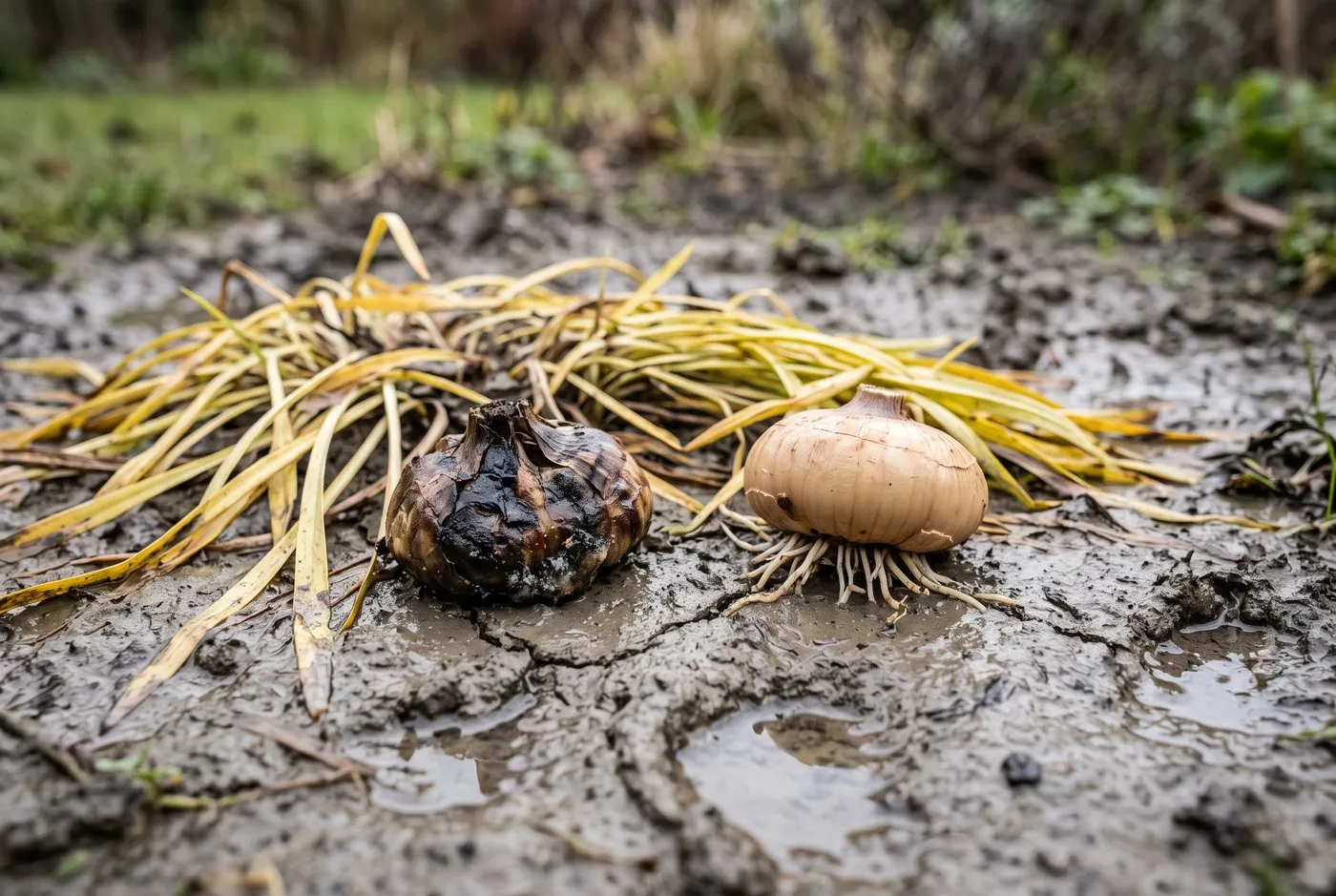 Winter wet, not cold, is the killer. This corm rotted from the base in a heavy clay bed. The one beside it, from a gritted raised bed, is firm and healthy.
How the corm grows through the year
Understanding the yearly rhythm makes every care job obvious. Liatris is a summer-growing geophyte. It grows hard through the warm months and rests dormant through winter, storing energy in the corm for next year. The cycle runs in five clear stages.
- Dormant planting (March to April): the dry corm goes in 8 to 10cm deep as the soil warms to 8 to 10C.
- Leaf growth (April to May): grassy foliage appears within 3 to 4 weeks and builds a rosette.
- Spike elongation (late May to June): flower stems rise and thicken, drawing on the corm’s reserves.
- Flowering (July to September): florets open top-down over 3 to 4 weeks per spike.
- Dormancy (October to February): foliage yellows, the corm bulks up, then rests dry and cold.
The critical mistake is feeding heavily during stage 3 to force bigger flowers. Rich, nitrogen-heavy soil produces soft, tall stems that flop in the first summer storm. Liatris evolved on lean prairie soil. Grow it hungry and it stands up by itself. High feeding also cuts the flower count, giving all leaf and little spike.
| Stage | Months | Soil / water | Feed |
|---|---|---|---|
| Dormant planting | March to April | Just moist, well drained | None |
| Leaf growth | April to May | Light watering in dry spells | Optional low-nitrogen once |
| Spike elongation | Late May to June | Steady, never waterlogged | None |
| Flowering | July to September | Water in drought only | None |
| Dormancy | October to February | Keep dry, especially on clay | None |
Month-by-month liatris calendar
| Month | Task |
|---|---|
| January | Fully dormant. Keep clay beds and pots on the dry side. Order dry corms from spring catalogues. |
| February | Firm any corms heaved by frost. Keep stored corms cool, dry and away from mice. |
| March | Prepare the bed and fork in grit on heavy soil. Start planting corms 8 to 10cm deep late this month. |
| April | Main planting month. Plant corms in full sun, 10 to 15cm apart. Lift and divide old clumps now. |
| May | Foliage grows fast. Water in dry spells. Give one light low-nitrogen feed if the soil is poor. |
| June | Flower spikes rise. Push in twiggy stakes or a support ring for tall ‘Floristan’ types. |
| July | First spikes open from the top down. Watch the bees arrive. Cut a few stems for the vase. |
| August | Peak flowering and peak pollinators. Cut spikes for cutting when the top third is open. |
| September | Late spikes finish. Leave some seedheads for goldfinches and structure, or cut back for tidiness. |
| October | Foliage yellows and dies back. Stop watering pots. Clear any slug-damaged debris. |
| November | Corms dormant. Ensure clay beds are not waterlogged. Move vulnerable pots under cover if wet. |
| December | Bone dry and dormant. No feeding or watering. Check stored corms for soft rot. |
Liatris for bees, butterflies and cut flowers
Liatris is one of the best late-summer nectar plants you can grow. The dense spikes offer a long landing platform packed with florets, so a single stem feeds insects for weeks. On warm August afternoons our spikes are covered in bumblebees, honeybees and butterflies, and the seedheads then draw goldfinches into autumn. For more late-season nectar plants, see our list of the best plants for butterflies in UK gardens.
The nectar value is well documented. Blazing star is a recognised prairie forage plant, and UK charities such as Butterfly Conservation stress the importance of late-flowering nectar for butterflies building reserves before winter. Group liatris with scabious, echinacea and verbena to make a solid block of late nectar rather than scattered single plants.
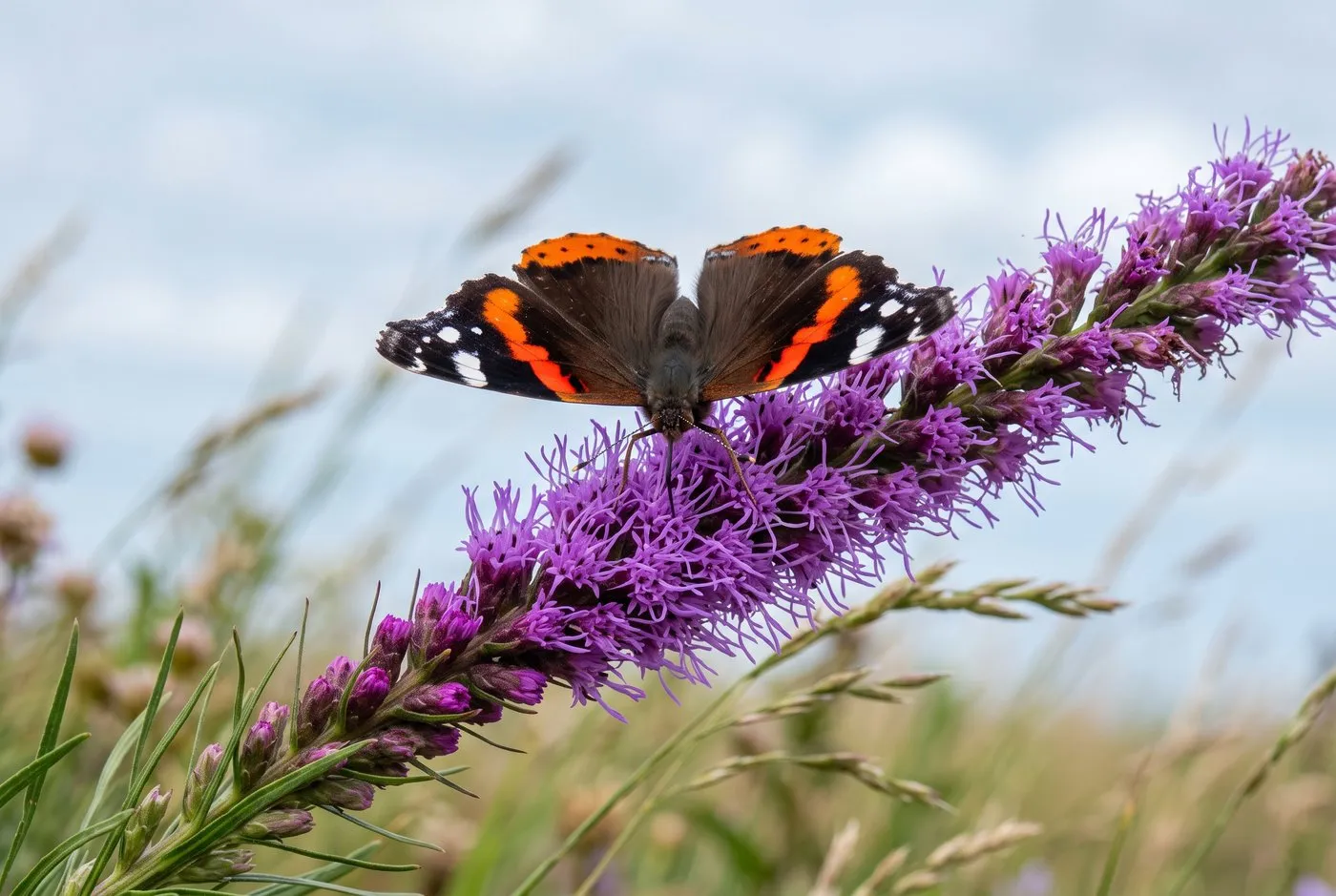 Blazing star lives up to its billing. This red admiral worked the same spike for several minutes in a windy seaside border in late August.
It is also a superb cut flower, with a vase life of 7 to 10 days. Cut the stem when the top third of florets has opened, strip the lower leaves and change the water every couple of days. Because it flowers top-down, a cut spike keeps looking good long after other flowers fade. Anyone growing a cutting patch should read our guide to growing scabious for cut flowers, a natural companion in the same beds.
Common mistakes when growing liatris
- Planting in autumn. Autumn-planted corms sit cold and wet for months and often rot. Liatris is spring-planted, from March to April. Buy dry corms in late winter, keep them cool and dry, and plant only when the soil warms.
- Planting straight into wet clay. Cold rarely kills liatris. Waterlogged winter clay does. On heavy or badly drained ground, fork in grit, build a raised bed, or grow in pots you can move under cover.
- Feeding too richly. Fresh manure and high-nitrogen feeds make soft, tall stems that flop. Liatris evolved on lean prairie soil. Grow it hungry and it stands straight without staking.
- Growing it in shade. Six or more hours of direct sun is the threshold for strong flowering. In shade the plant stretches, leans and produces few spikes. A hot, open, sunny spot is what it needs.
- Cutting everything back too soon. Removing every seedhead in September denies goldfinches a food source and strips winter structure. Leave a good share of the spent spikes standing until late winter.
Warning: Slugs and snails love the soft, emerging liatris shoots and can strip a clump in a single wet spring night. The new grassy growth is most vulnerable from March to May. Protect it with a barrier of grit, wool pellets or copper tape, and check after every damp evening until the leaves toughen up.
Lifting, dividing and storing the corms
Liatris increases itself over time, so free plants are easy. The simplest method is division. Every 3 to 4 years, lift a congested clump in early spring, just as growth begins. Pull or cut the corms apart, keeping a shoot and some root on each piece, then replant them 10 to 15cm apart in improved soil. Divided corms reach full size again within a year or two.
You can also grow liatris from seed, though it is slower. Sow fresh seed in autumn and expect flowering in the second or third year. Most gardeners simply buy dry corms, which is faster and cheaper.
If you need to store lifted corms, keep them cool, dark and dry in dry compost or vermiculite, exactly as you would other tender corms. Our guide to storing flower bulbs covers the method that stops them shrivelling or rotting over winter.
Frequently asked questions
How do you grow liatris in the UK?
Plant dry corms in spring, in full sun with sharp drainage. Set them 8 to 10cm deep and 10 to 15cm apart, flat side down. Water in once, then leave them. Feed lightly and stake tall types. On heavy clay, grit the soil or grow them in a raised bed to stop winter rot.
Is liatris hardy in the UK?
Yes, liatris is fully hardy, surviving to about -15C. Cold rarely kills it in a British garden. The real danger is a corm sitting in cold, waterlogged clay over winter, which rots it from the base. Sharp drainage matters far more than any frost protection. On good soil it needs no winter cover at all.
When do you plant liatris corms?
Plant liatris corms in spring, from March to April. Wait until the soil begins to warm and the worst frosts pass. Autumn planting leaves the corm sitting cold and wet for months, which often rots it before it grows. Buy dry corms in late winter and keep them somewhere cool and dry until planting.
Does liatris flower the first year?
Yes, liatris usually flowers in its first summer from a spring-planted corm. A corm planted in March or April typically throws up spikes by July or August. The clump then bulks up and flowers harder each year. Larger corms give a stronger first-year display, so buy the biggest you can find.
Why is my liatris flopping over?
Floppy liatris is usually too much nitrogen or too little sun. Rich, freshly manured soil makes soft, tall stems that keel over. Shade makes the plant stretch and lean. Grow it lean, in full sun, and stake the taller cultivars early. The dwarf ‘Kobold’ rarely needs any support at all.
Is liatris good for bees and butterflies?
Does liatris come back every year?
Yes, liatris is a hardy perennial corm that returns each year. It dies back in autumn, rests through winter, then reshoots in spring. Clumps thicken over time and can be divided every 3 to 4 years. The main reason plants fail to return is corm rot in cold, wet soil, not cold itself.
Our team produces practical UK gardening guidance from source research, contributor records and established horticultural practice. Editorial standards are overseen by Matt W.