Key takeaways
- Plug plants are cell-raised young plants sent by post; sizes run from 2cm minis to 9cm garden ready
- Unpack the box the day it arrives, water dry plugs, and pot on within 24-48 hours
- Pot mini and standard plugs into 9cm pots of peat-free compost and grow on frost-free for 4-6 weeks
- Harden off for two weeks before planting out after the last frost, mid to late May in most of the UK
- The three big killers are drying out, damping off and leggy growth, and all three are avoidable
- Mini plugs cost from 14p each against £2.99 or more for the same plant potted at a garden centre
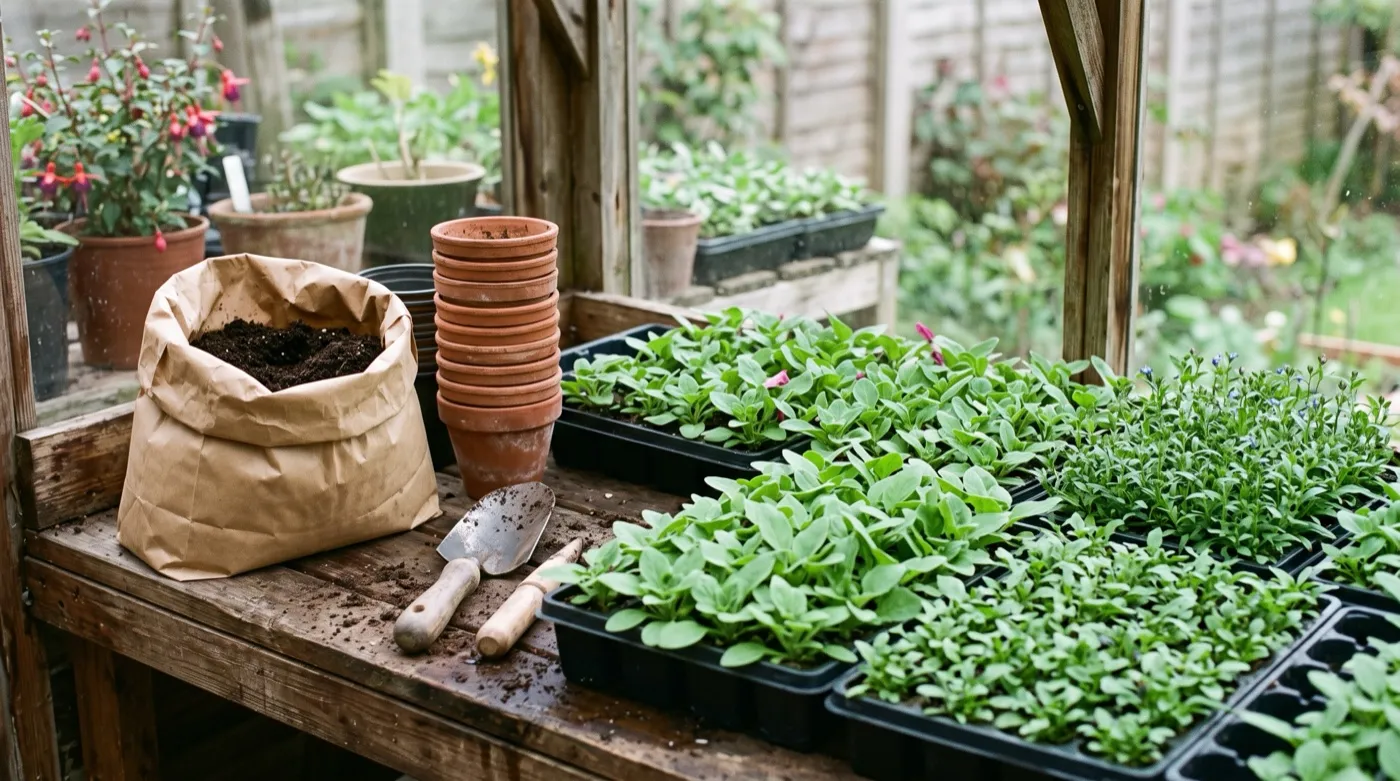
Plug plants are the shortcut between a packet of seed and a £2.99 potted plant, and for most beginners they are the best value route into summer bedding. You order online, a box arrives by courier, and inside sit rows of young plants, each with its own small cone of compost and roots. Grow them on for a few weeks and you get garden centre results for a fraction of garden centre money.
What are plug plants and are they worth buying?
Plug plants are young plants raised by nurseries in cell trays, sold and posted while the rootball is still small enough to survive transit. Each “plug” is a self-contained unit of roots and compost that slides out of its cell intact. Nurseries germinate the seed or root the cuttings in controlled conditions, then ship the plants at anywhere from four weeks to four months old.
For a beginner they solve the two hardest parts of raising bedding. Germination is done for you, so there is no propagator, no heat mat, and no tray of failures in February. And the timing is done for you, because the nursery posts each variety in the window when it should be potted on. What is left is the easy middle bit: potting on, watering, and hardening off.
Are they worth it? On cost, emphatically yes at the small sizes. A tray of 50 mixed bedding plugs sells for around £6.99, which is 14p a plant. The same plants potted up individually at a garden centre in May cost £2.99 or more each. Even allowing for compost and a few losses, growing on your own plugs cuts the cost of filling a border or six baskets by 70-80%. If you enjoy raising plants but seed feels like a step too far, our guide to growing annuals from seed shows what the full-length version of the job involves, and plugs skip the worst half of it.
 Standard plugs going into 9cm pots. One step from cell to pot is all most plugs need before the garden.
Plug plant sizes explained: from mini plugs to garden ready
Plug plants come in four broad sizes, and the size you buy decides how much work sits between the postbox and the border. The names vary between suppliers, which causes real confusion. Suttons sells “plugs”, “postiplugs”, “jumbo plugs” and “garden ready”. Other nurseries say mini, standard, large and garden ready. Ignore the branding and look at the cell or pot dimensions.
Mini or postal plugs are the smallest and cheapest, raised in cells roughly 2-3cm across and deep, with 1.5-5cm of top growth. They are sold in trays of 40-50 and sometimes hundreds, at 14-50p each. They need 4-6 weeks of growing on in pots before hardening off. Standard and large plugs sit in 3-4cm cells with 5-12cm of growth. They need the same potting-on step but a shorter stay, around 3-5 weeks. Jumbo plugs run 4-6cm and are strong enough to go straight into baskets and patio containers kept under cover. Garden-ready plants arrive in 6cm, 7cm or 9cm pots, need no potting on at all, and go straight outside after hardening off.
Plug sizes, prices and time to planting out
| Size | Cell or pot | Typical price each | Growing on needed | Weeks to planting out |
|---|---|---|---|---|
| Mini / postal plug | 2-3cm cell | 14-50p | Pot into 9cm, grow 4-6 weeks | 8-10 |
| Standard / large plug | 3-4cm cell | 50p-£1 | Pot into 9cm, grow 3-5 weeks | 6-8 |
| Jumbo plug / postiplug | 4-6cm | £1-£1.75 | Straight to baskets under cover | 3-5 |
| Garden ready | 6-9cm pot | £1.50-£2.50 | None, harden off only | 1-2 |
| Garden centre potted plant | 9-10cm pot | £2.99+ | None | 0 |
The right size depends on your kit and your nerve. No greenhouse, no cold frame, and one sunny windowsill? Buy jumbo or garden ready and pay the premium. A frost-free greenhouse, staging and a daily watering habit? Minis give you the most plants per pound by a mile. Most of the classic bedding plants are sold in every size, so you can match the plant to your setup rather than the other way round.
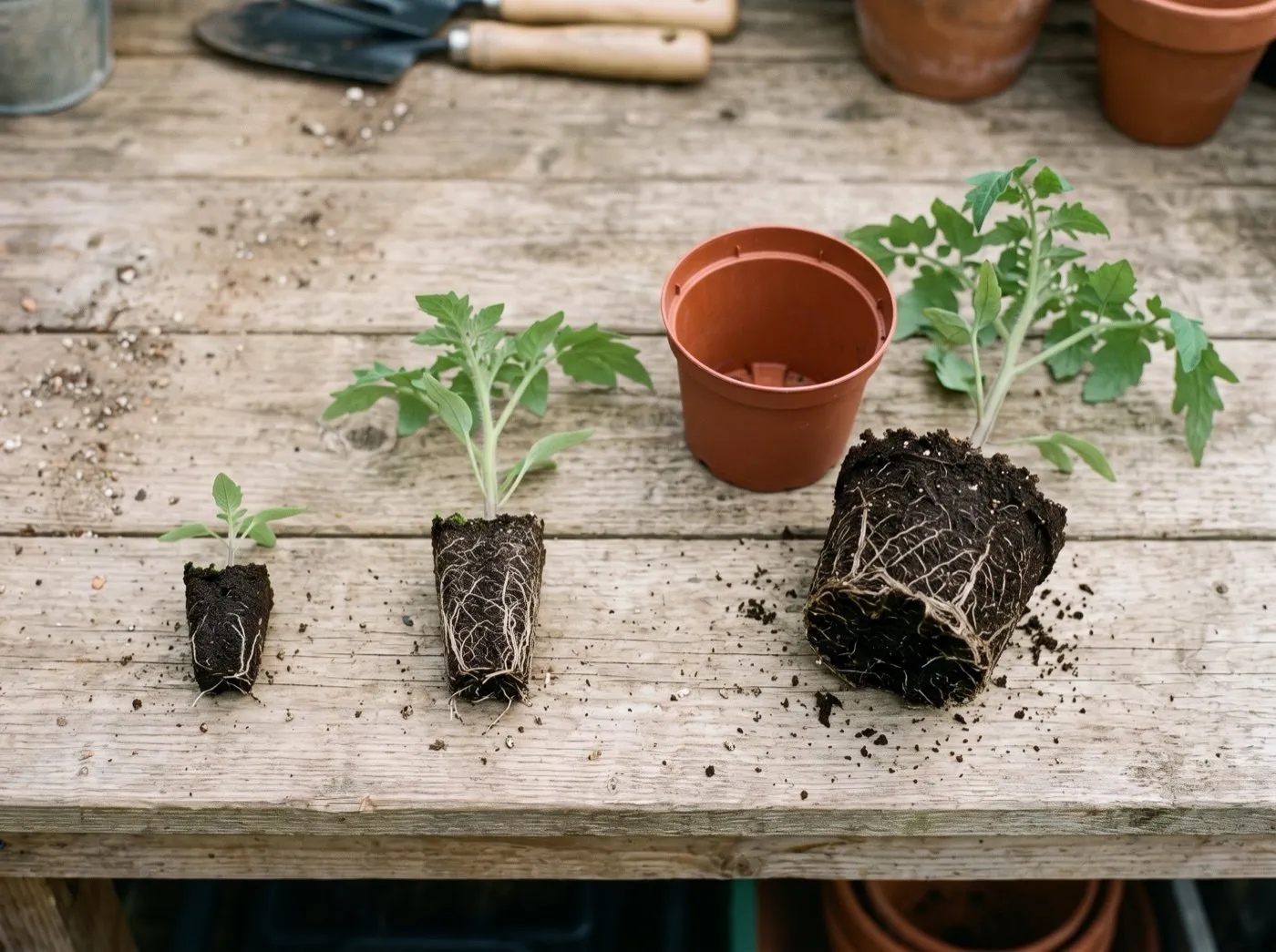 Mini, jumbo and garden ready side by side. The price per plant triples with each step up, but so does the survival margin.
The day the box arrives
Open the box the day it lands, whatever else is going on. Plug plants travel well for 48 hours in the dark, but every extra day sealed in cardboard costs you. Slide the trays out, stand them upright, and get them into light. Do not leave the box in the porch until the weekend.
Expect them to look underwhelming. Two days of transit leaves plugs slightly yellow, a bit flattened, sometimes with a snapped leaf or two. This is normal and not grounds for a complaint. What matters is the compost and the stem. If the compost is moist and the stems are firm, they will right themselves within three or four days in the light.
If the compost feels dry, and it often does in spring, stand the whole tray in 2cm of water for about an hour and let it soak up from below. Watering tiny cells from above washes compost off the roots and flattens the seedlings. Soaking from the base is the same principle as bottom watering seed trays, and it is the safest way to water plugs for their whole first month. Then stand the tray somewhere bright, airy and frost-free, out of direct midday sun. A greenhouse bench, a cool porch or a bright windowsill all work. Pot minis and standards on within 24-48 hours. Garden-ready plants can wait a week in their pots, watered as needed, before hardening off starts.
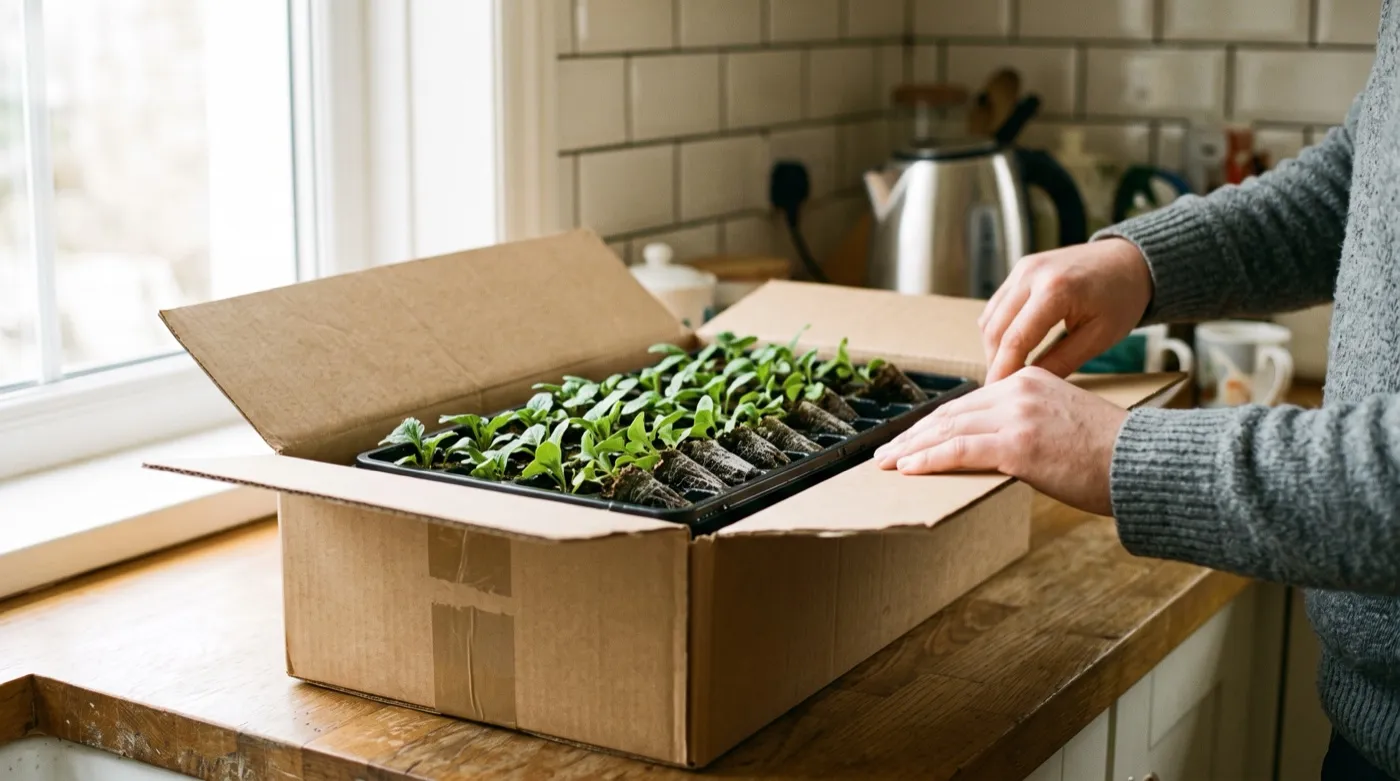 Unpack the same day. Two days in the dark is fine; five days in a porch is how a £15 tray becomes compost.
Potting on plug plants: compost and pot sizes
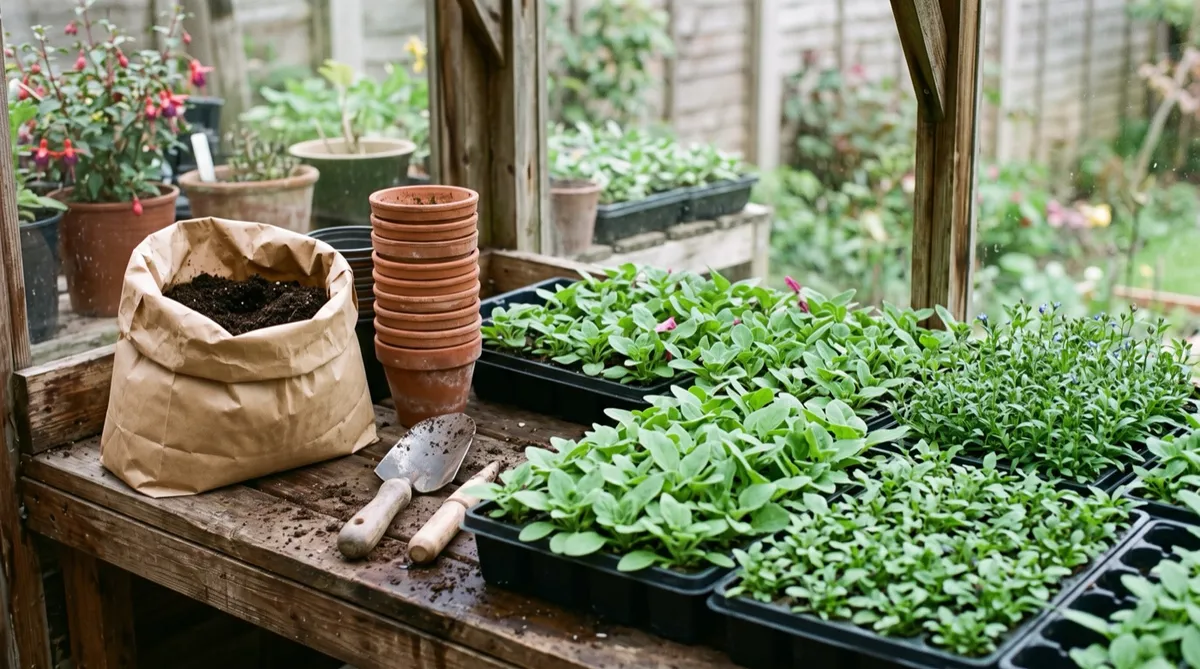
Pot mini, standard and jumbo plugs into 9cm pots of fresh peat-free multipurpose compost, one plug per pot. One step is enough. There is no benefit in moving up through 7cm then 9cm then 1 litre; each move risks the roots, and a plug’s rootball establishes fastest with a moderate volume of new compost around it, not a huge one.
The technique takes longer to read than to do. Fill the pot loosely, tap it once to settle, and poke a hole the size of the plug with a dibber or a finger. Push each plug up out of its cell from below with a pencil, or squeeze the flexible cell gently. Never pull a plug out by its stem. The stem is the plant’s one non-replaceable part; hold it by a leaf or the rootball instead, because a plant can spare a leaf. Set the plug at the depth it grew before, firm the compost lightly around it, and water in from below.
Compost choice matters more with plugs than with mature plants, because tiny roots meet the new bag first. Use a fresh bag of peat-free multipurpose, not last year’s half bag that overwintered in the shed. Our peat-free compost guide covers which brands hold water evenly, which is exactly the property a plug needs. The RHS runs through the same potting-up sequence with photographs in its schools resource (RHS: how to pot up plug plants).
Label everything as you go. Forty potted petunias and forty potted lobelia look identical for the first fortnight, and the planting plan you had in your head will not survive until May.
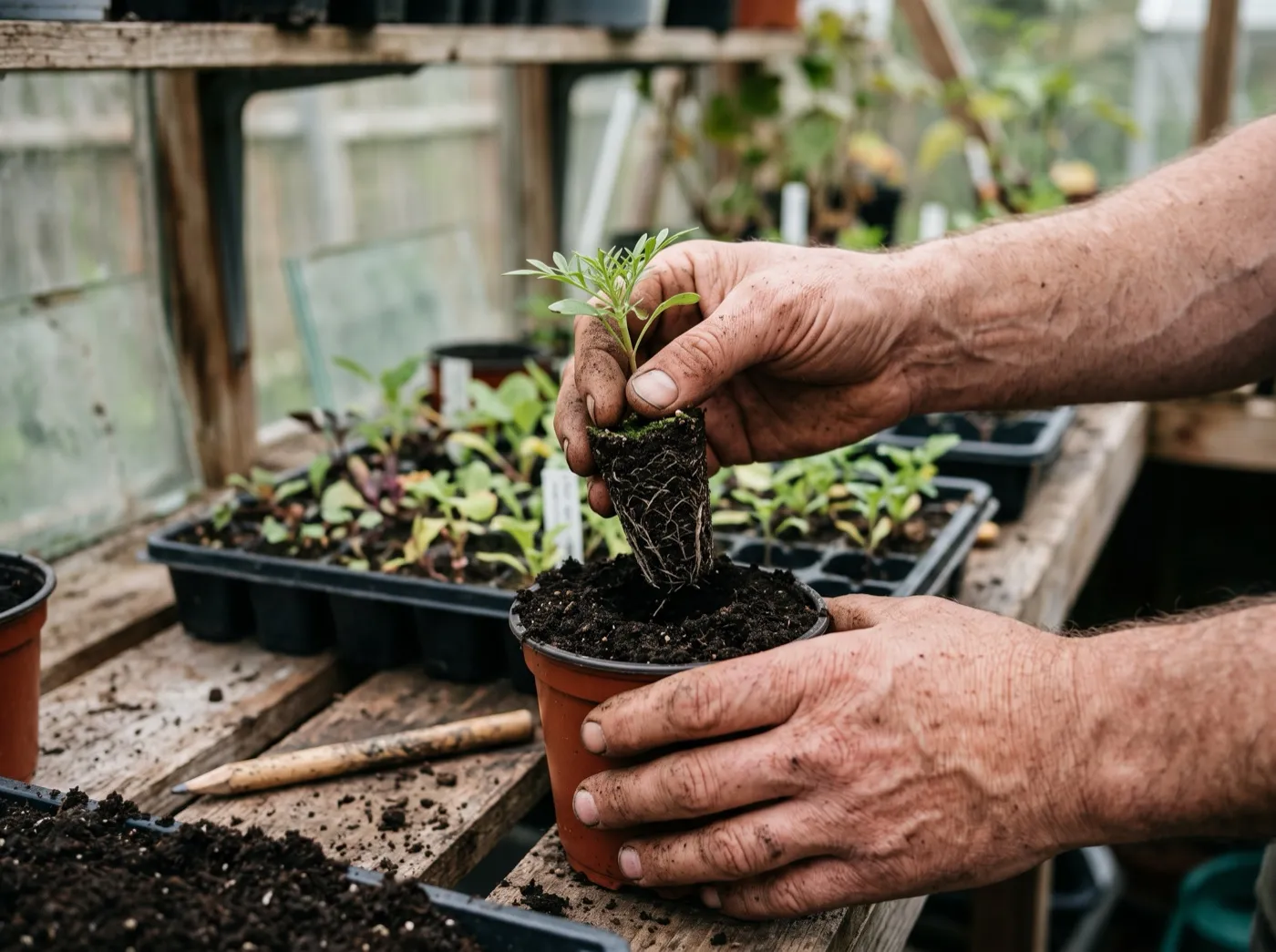 Push the plug up from below, hold it by a leaf, plant at the original depth. Thirty seconds a plant once you find a rhythm.
Growing on: light, warmth and water for the next six weeks
Grown-on plugs want maximum light, modest warmth, and compost that never quite dries out. Get the balance right and a mini plug fills a 9cm pot with roots in four to six weeks. Get it wrong and you grow pale spaghetti.
Light first. A frost-free greenhouse or a bright conservatory is ideal. A windowsill works, but only your brightest one, and turn each pot a quarter turn daily or the plants lean hard into the glass. From March onwards, UK light levels rise fast, and plugs grown under glass rarely stretch. Warmth second, and less is more. Aim for 10-15C by day. Plugs do not need the 20C of a heated living room, and that warmth without matching light is precisely what draws them out thin and weak. Frost-free is the only hard rule: one freezing night kills half-hardy bedding at any stage.
Water little and often, from below. Stand pots in a tray, pour water into the tray, and let them drink for twenty minutes. Check daily; a 9cm pot in April sunshine can dry in a day. When plants have five or six pairs of leaves, pinch out the growing tip of anything you want bushy: petunias, fuchsias, snapdragons, cosmos. It feels destructive and doubles the flower count. The full technique is in our guide to pinching out fuchsias and bedding plants. A weak liquid feed at half strength once a week from week three keeps growth moving if the compost’s own fertiliser runs low.
Gardener’s tip: Water by weight, not by looks. Lift a freshly watered 9cm pot and remember the heft, then lift pots daily and water any that feel light. Compost surfaces lie: peat-free mixes often look dry on top while soaked below, and looking alone made me overwater a whole bench of lobelia one April. Hands are better instruments than eyes here.
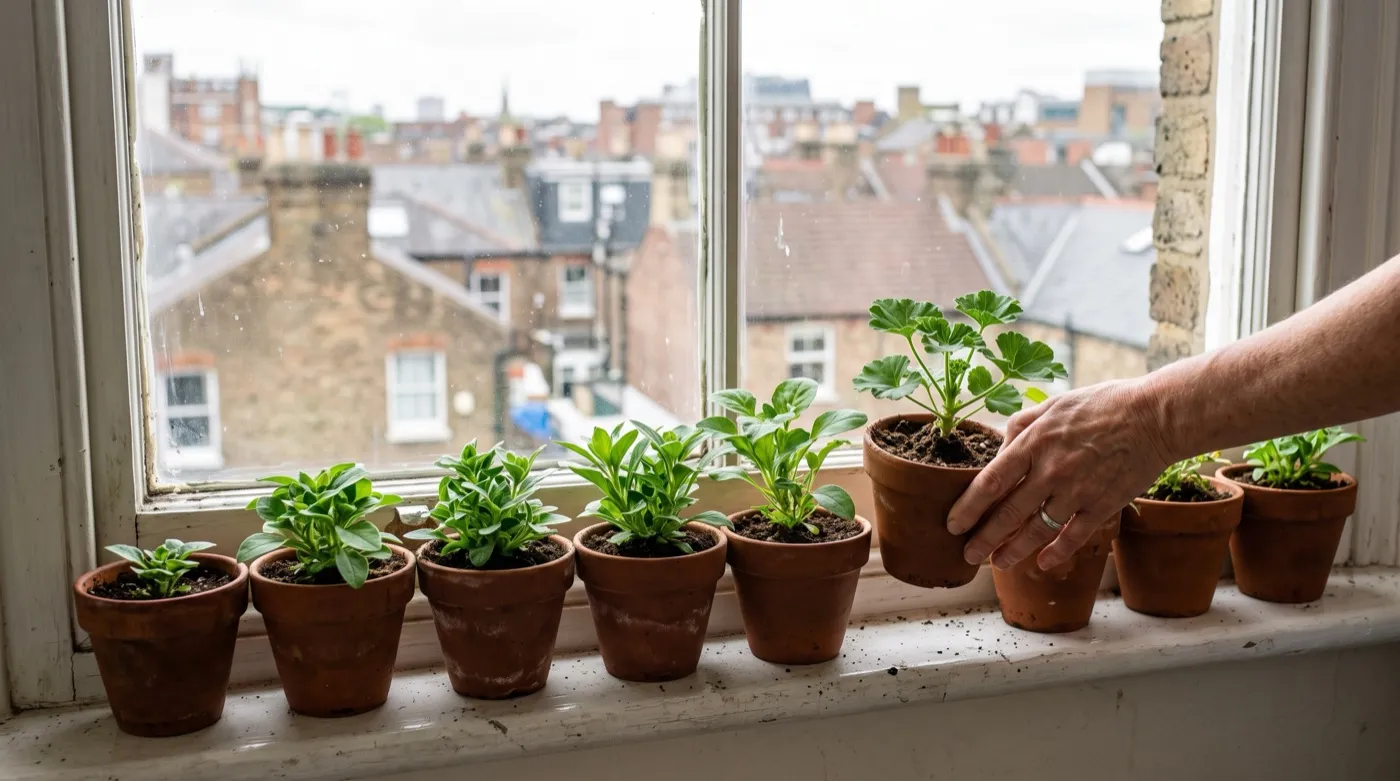 A bright windowsill grows decent plugs if you turn the pots daily. Cool and bright beats warm and dim every time.
How to harden off plug plants
Hardening off means acclimatising indoor-raised plants to outdoor life over two to three weeks, and skipping it is the most common cause of ruined plants in late May. A plug grown under glass has soft, thin-walled leaves. Put it straight into wind, cold nights and full sun and the leaves scorch, bleach or simply stop, setting the plant back a month even if it survives.
The routine is simple. For the first week, stand the plants outside in a sheltered, lightly shaded spot by day and bring them back under cover at night. In the second week, leave them out overnight too, unless frost is forecast, in which case everything comes back in. By the end of week two, half-hardy bedding is ready to plant. The RHS advice runs to two to three weeks for the most tender subjects and describes a fleece variation, two layers reducing to none, for gardeners without a greenhouse (RHS: hardening off tender plants).
A cold frame makes the whole job lazier and safer. Plants go in, the lid opens a little further each day, stays shut on cold nights, and comes off entirely in the final few days. If you are growing plugs every year, a frame earns its space fast; our cold frame gardening guide covers building and running one. For the wider method across everything you raise under cover, see how to harden off seedlings, because the same fortnight of patience applies to home-sown plants too.
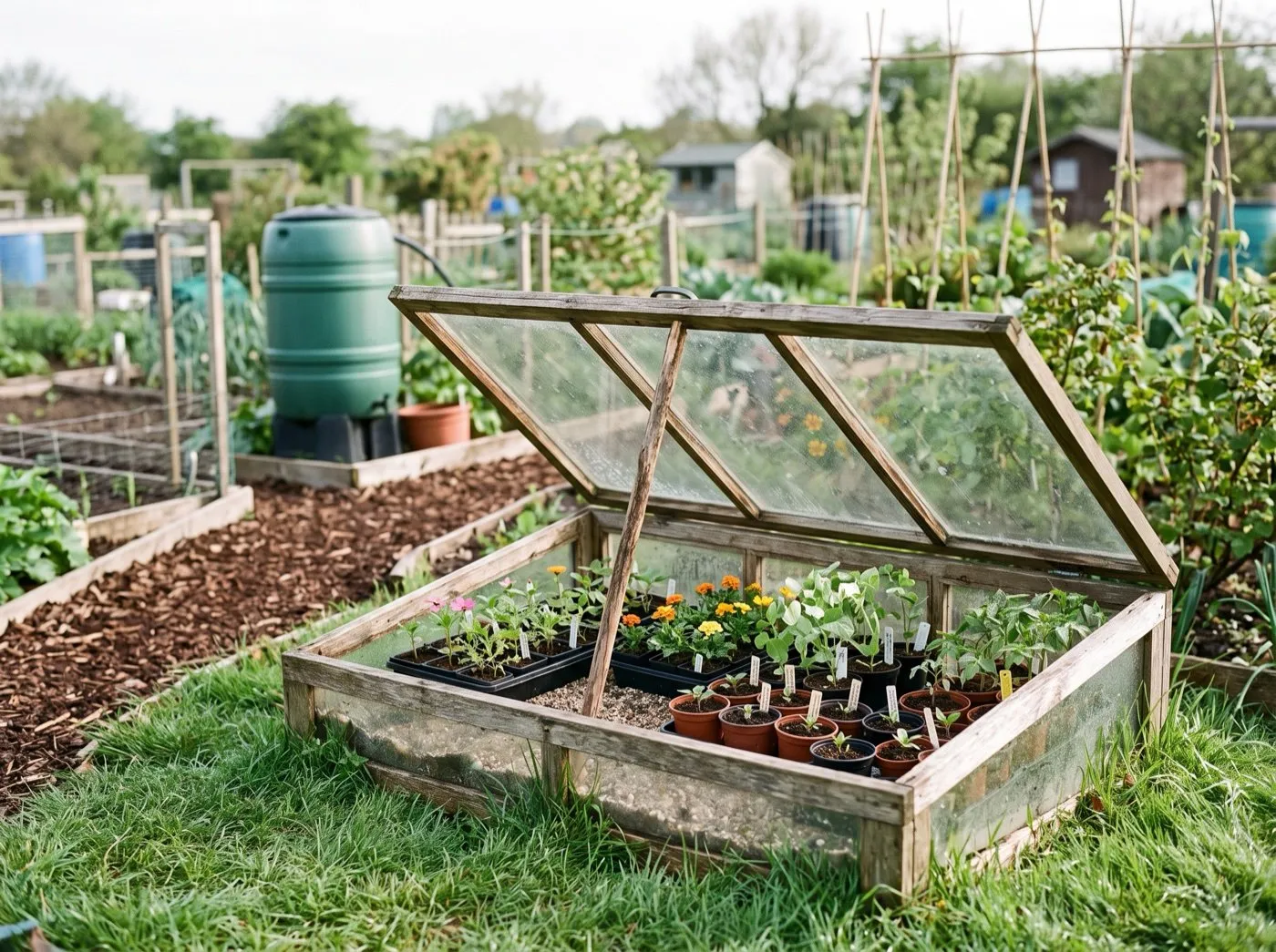 A cold frame does the hardening off for you: lid open by day, shut on cold nights, off entirely by planting week.
When can plug plants go outside in the UK?
Half-hardy plug plants go outside permanently only after your last frost, which means mid to late May across most of England and Wales and late May to early June in northern England and Scotland. Petunias, begonias, lobelia, marigolds and fuchsias are all killed or crippled by a single air frost. The date on the calendar matters less than the forecast: check the week ahead before you commit forty plants to the border.
Hardy plugs play by kinder rules. Pansies, violas, wallflowers, sweet Williams and most perennial plugs shrug off frost and can be planted out in autumn or early spring, whenever they arrive and the soil is workable. This is why autumn plug deliveries of spring bedding go straight out in October while the summer bedding routine stretches over three months.
Plant properly and the plugs establish fast. Water the pots an hour before planting. Dig each hole slightly wider than the rootball, set the plant at its original depth, firm, and water in well even if rain is due. Space summer bedding 15-25cm apart depending on vigour; the labels err generous and the plants fill gaps quicker than you expect. Water every couple of days for the first fortnight while the roots move out of the plug compost and into your soil. After that, established bedding needs far less attention than the pots ever did.
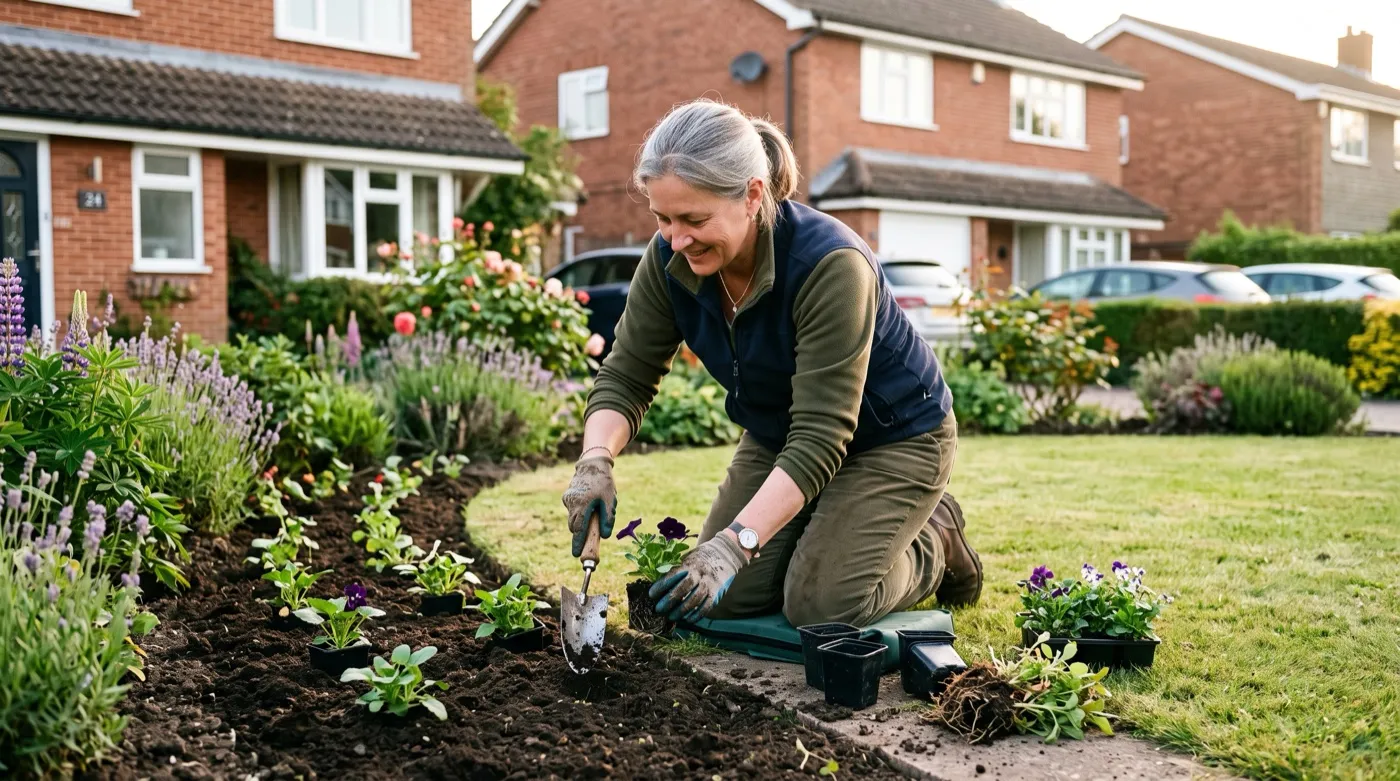 Late May in the Midlands: hardened-off plugs going out at 20cm spacing. Water in even if rain is forecast.
The three ways beginners kill them
Drying out
Damping off
A fungal rot that fells small plants at compost level; the stem pinches to a thread and the plug keels over, often in patches across a tray. It thrives in still, damp, crowded conditions. Prevent it with fresh compost, clean pots, mains water rather than the water butt at this stage, watering from below, and air moving through the space on mild days. There is no cure once a stem has gone, so remove casualties promptly and space the survivors out.
Leggy growth
Pale, stretched, weak-stemmed plants that flop under their own weight. The cause is almost always a warm room with weak light, the classic February windowsill. Cool the plants down, get them into your brightest spot, turn pots daily, and pinch out the tips to force side shoots. Stretched plugs usually recover if caught inside a fortnight. The full diagnosis and rescue routine is in our guide to leggy seedlings, and it applies to bought plugs exactly as it does to home-sown trays.
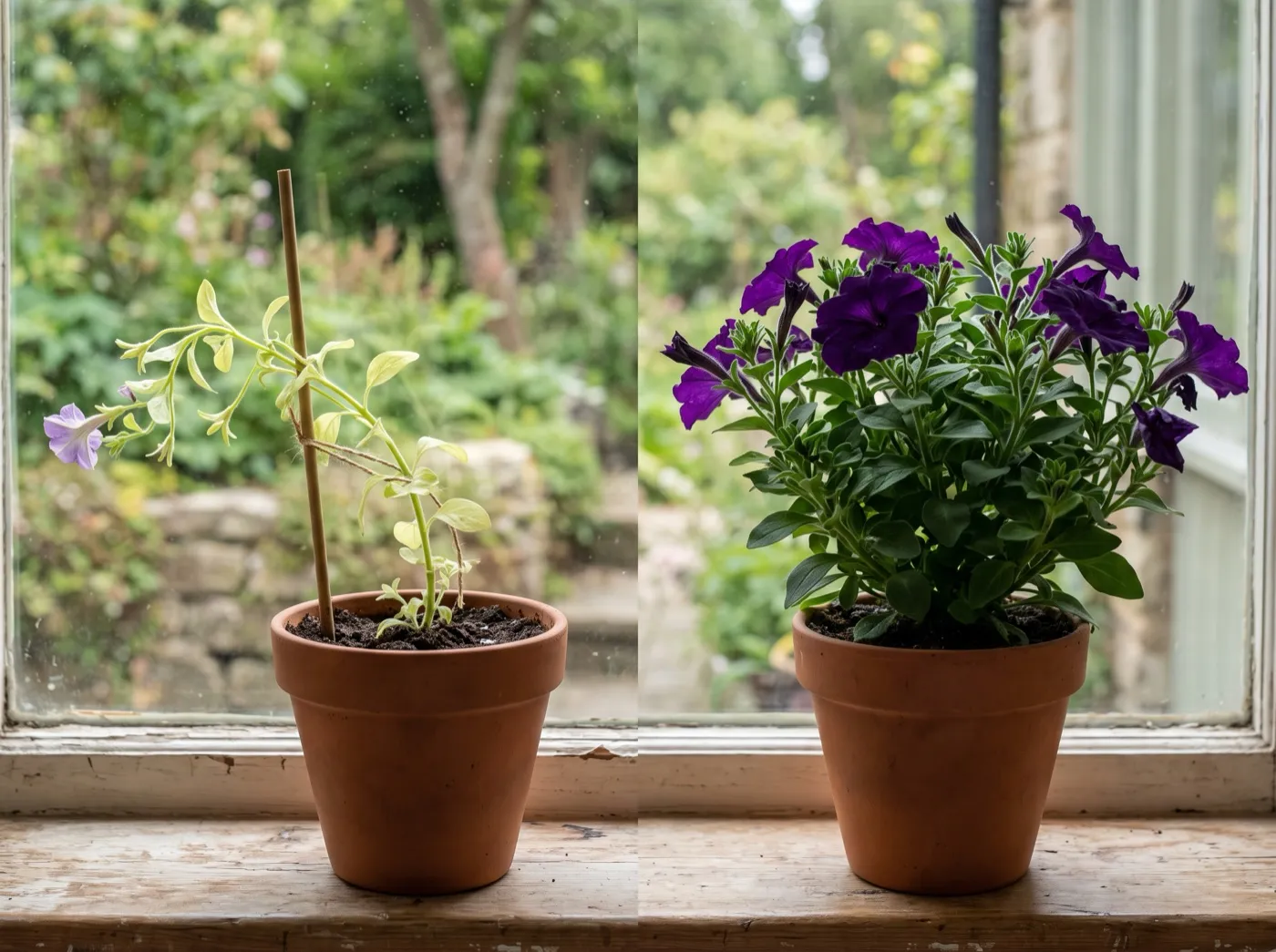 Same variety, same week, different windowsills. Warm and dim stretches a plug; cool and bright keeps it stocky.
Plug plants vs seed vs garden centre trays: real costs
Plugs restructure that deal. Last year’s 40 mini plug petunias cost £14.99, and 36 made it to the border: 42p per planted plant, six weeks of light work, no heat needed beyond frost protection. Garden-ready plugs at £1.50-£2.50 each cut the work to a fortnight of hardening off. The garden centre tray in May costs £2.99-£4 per plant for the same varieties, and its only real advantage is that you can see exactly what you are buying and plant it that afternoon.
The honest summary: buy seed for easy, fast things like calendula and nasturtiums, buy mini plugs for expensive-per-plant bedding you need in bulk, and pay for garden ready when time is shorter than money.
A season-by-season buying calendar
Plug plant buying runs to a rhythm, and the best varieties sell out weeks before they ship. Nurseries list spring plugs from midwinter and post them in flushes from late February. Order early, then let the delivery date, not the order date, set your workload.
| Month | Plug plant jobs |
|---|---|
| January | Browse and order summer bedding plugs; earliest orders get first pick of varieties |
| February | First mini plug deliveries arrive; clear frost-free windowsill or greenhouse space |
| March | Main mini and standard plug deliveries; pot on within 48 hours of arrival |
| April | Jumbo plugs arrive; pot on, watch water daily, pinch out tips at 5-6 leaf pairs |
| May | Garden-ready deliveries; harden everything off for 2 weeks; plant out after last frost |
| June | Final planting out; water new bedding every 2-3 days for a fortnight |
| July | Feed baskets and containers weekly; order autumn bedding plugs |
| August | Autumn plug catalogues peak; order pansies, violas and wallflowers |
| September | Autumn plug deliveries; pot on or plant hardy types straight out |
| October | Plant out spring bedding plugs; last mild soil of the year |
| November | Order perennial plugs for spring delivery while lists are full |
| December | Wash pots and trays with hot soapy water; clean kit prevents damping off |
Two buying habits save the most disappointment. First, match the delivery window to your diary: a tray of minis arriving the week you are on holiday is money in the bin. Second, read the size description in centimetres, not the photograph, because every listing photo shows a mature flowering plant and none of them post you one of those.
Frequently asked questions
What are plug plants?
Plug plants are young plants raised in cell trays and sold with a small self-contained rootball. Sizes run from 2-3cm mini plugs, through 3-4cm standard plugs and jumbo plugs, up to garden-ready plants in 7-9cm pots. They are posted to your door in rigid packaging, ready to pot on or, for the biggest sizes, plant straight out once hardened off.
What should I do with plug plants when they arrive?
Unpack them the same day, even if you cannot pot them up. Stand the cells upright in a bright, frost-free spot out of direct sun. If the compost feels dry, stand the tray in 2cm of water for an hour to rehydrate. Pot small and standard plugs on within 24-48 hours. A slightly yellow or flattened look after two days in a box is normal and rights itself quickly.
What size pot should I use for potting on plug plants?
A 9cm pot suits most mini, standard and jumbo plugs. Fill it with fresh peat-free multipurpose compost, make a hole the size of the plug, and set the rootball at its original depth. Handle plugs by a leaf or the rootball, never the stem. One step from plug to 9cm is enough; there is no need to move up through several pot sizes.
When can plug plants go outside in the UK?
After the last frost, which is mid to late May in most of England and Wales and early June in the north and Scotland. Half-hardy bedding like petunias, lobelia and begonias will be killed by a single frost. Harden plants off for two weeks first, standing them out by day and bringing them in at night. Hardy plants such as pansies and wallflowers can go out earlier.
Why are my plug plants leggy?
Too much warmth and too little light, usually on an indoor windowsill. A plug grown at 20C in a dim room stretches pale and thin within a fortnight. Move plants to your brightest spot, drop the temperature to 10-15C, and turn pots a quarter turn daily so they grow straight. Pinching out the growing tip makes stretched plants bush out again.
Are plug plants cheaper than garden centre plants?
Yes, by a wide margin at the small sizes. Mini plugs in trays of 40-50 work out at 14-50p each, against £2.99 or more for the same variety potted at a garden centre. Garden-ready plugs at £1.50-£2.50 still undercut potted plants. Seed is cheaper again per plant but needs heat, light and 8-12 more weeks of your time.
Can you plant plug plants straight into the ground?
Only the garden-ready sizes, and only after hardening off. Plugs in 6cm, 7cm or 9cm pots have enough root to go straight into borders, baskets and containers from late May. Mini and standard plugs planted straight out usually fail; the rootball is too small to compete and dries out or gets eaten within days. Grow the small sizes on in pots first.
Our team produces practical UK gardening guidance from source research, contributor records and established horticultural practice. Editorial standards are overseen by Matt W.