Key takeaways
- Sow spring cabbage outdoors between mid-July and mid-August; one £2.50 packet holds 200+ seeds
- Transplant in September or early October at 30cm spacing, or 15cm apart for a spring greens row
- Firm plants in hard and earth up stems 5cm in November to stop winter wind rock
- Wood pigeons strip unprotected plants between November and February, so net from planting day
- Feed 35g per square metre of sulphate of ammonia in late February to restart growth
- Cut alternate plants as loose spring greens from March; the rest heart up in May and June
Spring cabbage is the crop you sow this month and thank yourself for next March. The window is open right now: seed goes in from mid-July to mid-August across the UK. Get a short row started this week and you will be cutting fresh greens while the rest of the plot is bare soil.
It is an odd crop on paper. Eight months from sowing to a finished heart. Barely any growth between November and February. Yet nothing else fills the early spring kitchen so cheaply. One £2.50 packet holds more than 200 seeds, enough for three seasons.
This guide covers the whole cycle: the July sowing, autumn planting, winter defence, the late February feed that restarts everything, and the double harvest of loose greens followed by pointed hearts.
Why is spring cabbage worth growing?
Spring cabbage earns its bed space by cropping in the hungry gap, the lean weeks from March to May when stored vegetables are finished and new sowings are weeks away. A 3m row of spring cabbage fills that gap with cut-and-come greens from mid-March and solid hearts from May.
The economics stack up too. Supermarket spring greens run to about £1.20 for a 250g bag. A single row gives 15-20 pickings at their freshest, for the price of half a packet of seed. Our guide to what to grow for the hungry gap puts spring cabbage alongside purple sprouting broccoli and chard as the backbone crops for those weeks.
There is a quieter reason as well. Established plants take -10C in their stride, so a failed winter crop is rare once the row is netted and firm. Few vegetables offer that much certainty for so little work.
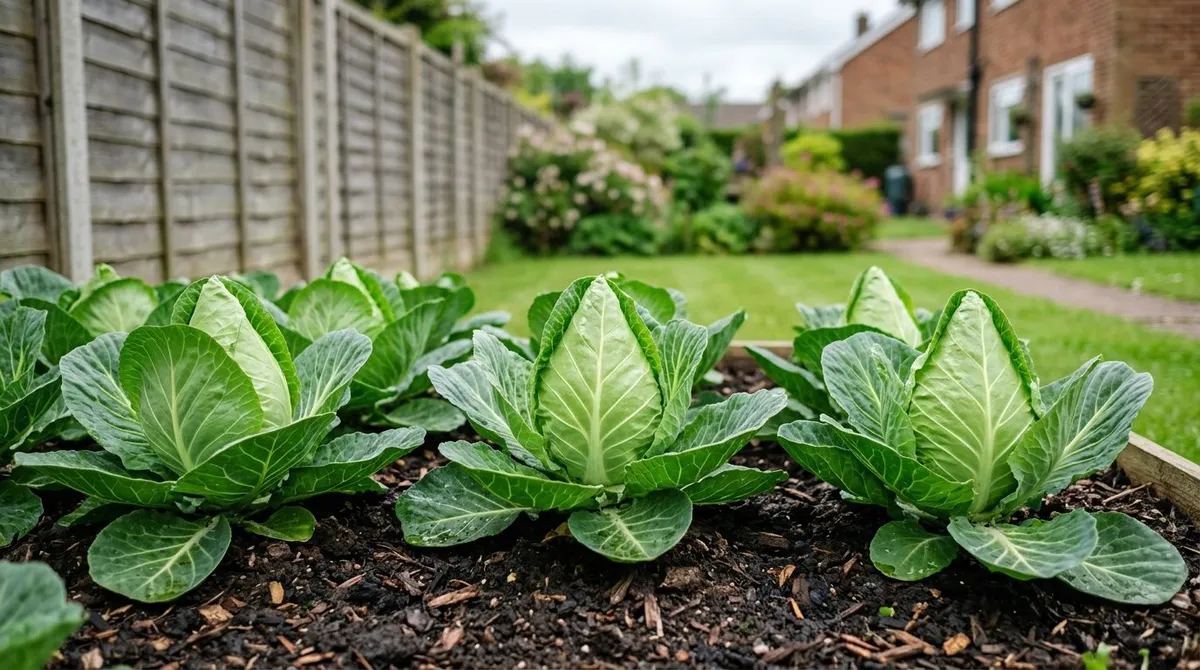
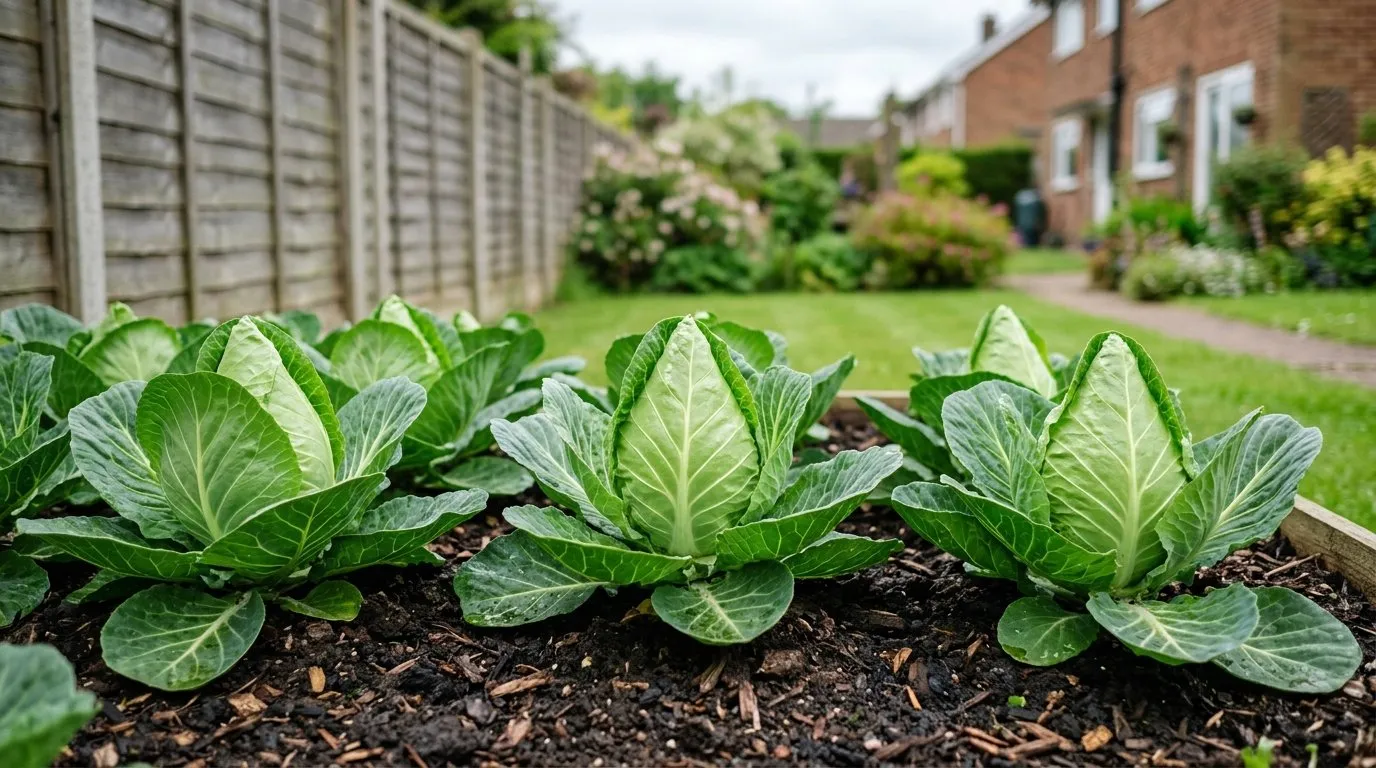 Pointed hearts forming in May. Every plant in this row was sown the previous July.
When do you sow spring cabbage in the UK?
Sow spring cabbage between mid-July and mid-August, and lean towards the earlier half of that window the further north you garden. In Scotland and northern England, sow 15-31 July. In the Midlands, 20 July to 7 August is about right. Southern gardens can push to mid-August because autumn arrives later.
The timing matters more with this crop than almost any other. The target is a plant with a stem no thicker than a pencil by late autumn. Bigger than that and winter cold can vernalise it, which means it bolts to flower in spring instead of hearting. Smaller, and it lacks the root system to sit out the winter. Six to eight weeks of growth before transplanting hits the mark.
Sow into a well-raked outdoor seedbed, in drills 1cm deep with rows 15cm apart, and thin seedlings to 7cm. Seed comes up in 5-10 days in summer warmth. No seedbed? Modules work just as well: two seeds per cell, snip out the weaker one, and keep the tray watered through any August heat. The RHS cabbage growing guide recommends transplanting once plants are 10-15cm tall with five or six true leaves.
One warning for a July seedbed: butterflies are still flying. Check leaves twice a week for the yellow egg clusters of the cabbage white butterfly and the harder-to-spot green caterpillars of the cabbage moth, which bore straight into growing tips. A square of fine insect mesh over the seedbed stops both for under £10.
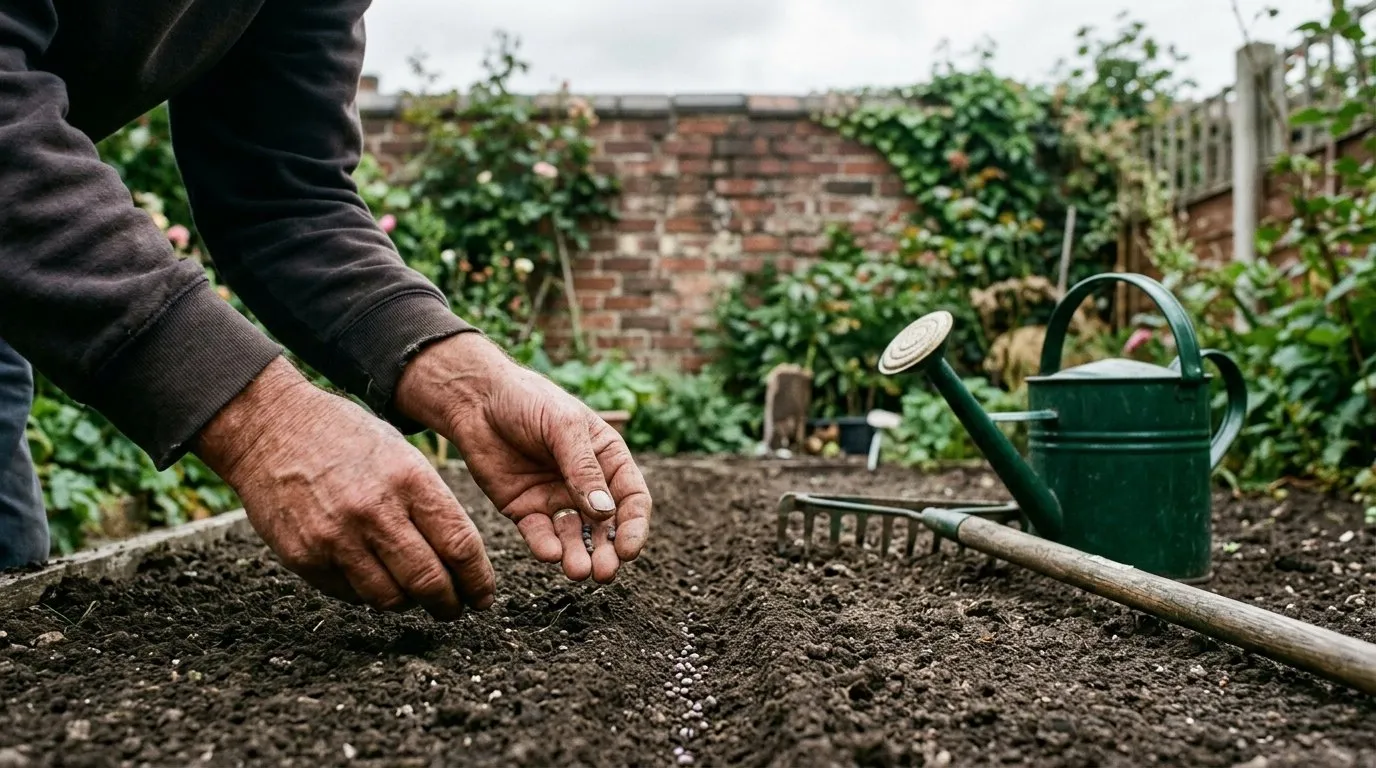 A 1cm drill in a finely raked seedbed. Summer warmth brings spring cabbage seed up inside ten days.
Which spring cabbage varieties should you grow?
‘Durham Early’ is the variety to start with, and ‘Pixie’, ‘April’ and ‘Spring Hero’ all earn their space. The same trusted names appear in catalogue after catalogue, and between them these varieties have survived a century of British winters.
| Variety | Head type | Best for | Notes |
|---|---|---|---|
| ’Durham Early’ | Pointed | Greens and hearts | The traditional dual-purpose choice; very hardy, dark leaves |
| ’Pixie’ | Small pointed | Small beds | Early and compact; hearts tightly at 25cm spacing |
| ’April’ | Compact pointed | Early hearts | Dense, well-wrapped heads with little waste |
| ’Spring Hero’ F1 | Round ball head | June hearts | Unusual for the season; solid 500g-1kg heads that stand well |
| ’Winterjewel’ | Loose pointed | Spring greens | Holds an RHS award; cut loose or leave for soft hearts |
| ’Offenham 2’ | Large pointed | Big greens | Old favourite where volume matters more than tidiness |
Seed costs £2-£3.50 a packet from the main UK houses. If July slips past you, garden centres sell strips of spring cabbage plants in September, usually 10-12 plants for £4-£6. They plant out exactly like home-raised seedlings.
For a first attempt, sow ‘Durham Early’ for the main row and ‘Pixie’ where space is tight. Between them they cover every harvest option this crop offers.
How do you plant out spring cabbage in autumn?
Transplant spring cabbage in September or the first half of October, into firm, settled ground that fed a previous crop. Do not dig the bed over first and do not add manure or fertiliser now. Loose, rich soil produces soft sappy growth that winter weather punishes, and it will not hold a rocking plant. A bed cleared of onions or early potatoes is ideal.
Spacing depends on what you want in March. For hearted cabbage, plant 30cm apart each way. For a greens-first row, plant 15cm apart in rows 30cm apart, and plan to cut two of every three plants young. Water the seedbed the evening before lifting, keep as much root as possible, and plant each seedling deep, up to the first true leaves.
Then firm. This is the step beginners skip and regret. Press the soil around each stem with your full weight through your knuckles or a trowel handle, water in with a full can, then firm again once the water drains. Brassicas heart poorly in loose soil and rock loose in gales.
Two soil pests need thinking about at planting time. Fit a 12cm collar of cardboard or carpet underlay around each stem to stop the cabbage root fly laying eggs at the base. And if brassicas on your plot have ever wilted with swollen, distorted roots, read up on club root before planting: liming the bed to pH 7 over winter is the standard defence.
 Planted deep and firmed hard. The tug test tells you whether a transplant will survive its first gale.
How do you protect spring cabbage over winter?
Stretch butterfly netting over hoops of blue water pipe, keep it taut and pegged at every edge, and leave a hand’s width of clearance above the leaves. A 4m x 2m net costs £8-£12 and lasts five or six seasons. Check it after every gale. A lifted corner is an open door, and pigeons find it within a day.
Wind is the second enemy. Autumn gales rock the stems, which opens a socket in the soil at the base of each plant. Rain fills it, frost freezes it, and the fine roots tear. Earth up 5cm of soil around every stem in November, tread it firm, and firm plants back down whenever a hard frost lifts the ground.
Pests do not vanish in the cold either. Grey, floury clusters of mealy cabbage aphid sit out mild winters folded inside the leaves, and cabbage whitefly carries on through frost that kills other pests. Turn a few leaves over once a month and rub off anything you find.
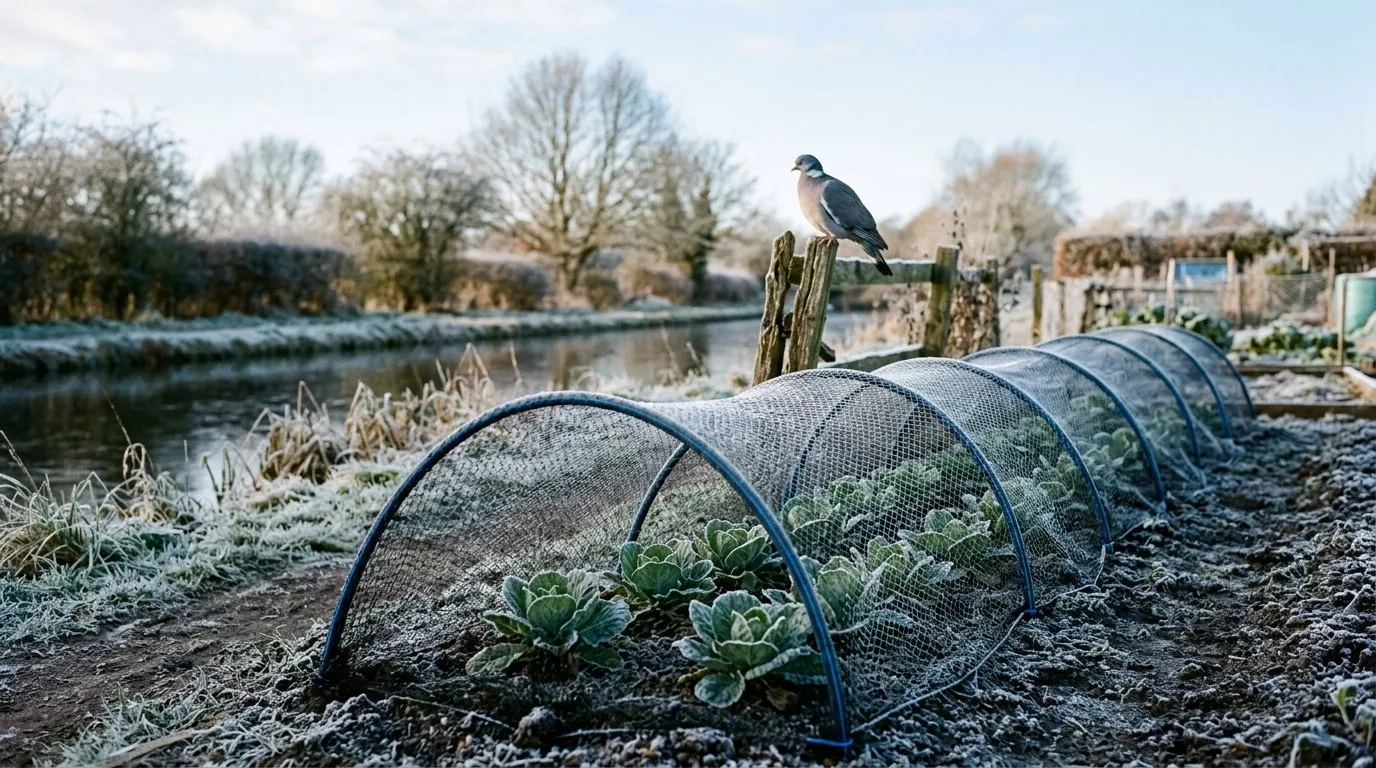 Taut netting over pipe hoops. The pigeon on the fence post is exactly why it went on in November.
When do you feed spring cabbage?
Feed once, in the last week of February, with a high-nitrogen fertiliser to restart growth. This is the move that separates a decent row from a heavy one. Overwintered plants sit paused with cold roots in cold soil. Nitrogen, warmth and lengthening days flip the switch together.
Do not be tempted to feed in autumn instead. Autumn nitrogen forces soft growth just as the weather turns, and soft growth is what frost and pigeons take first. Late February, no earlier, no later than mid-March.
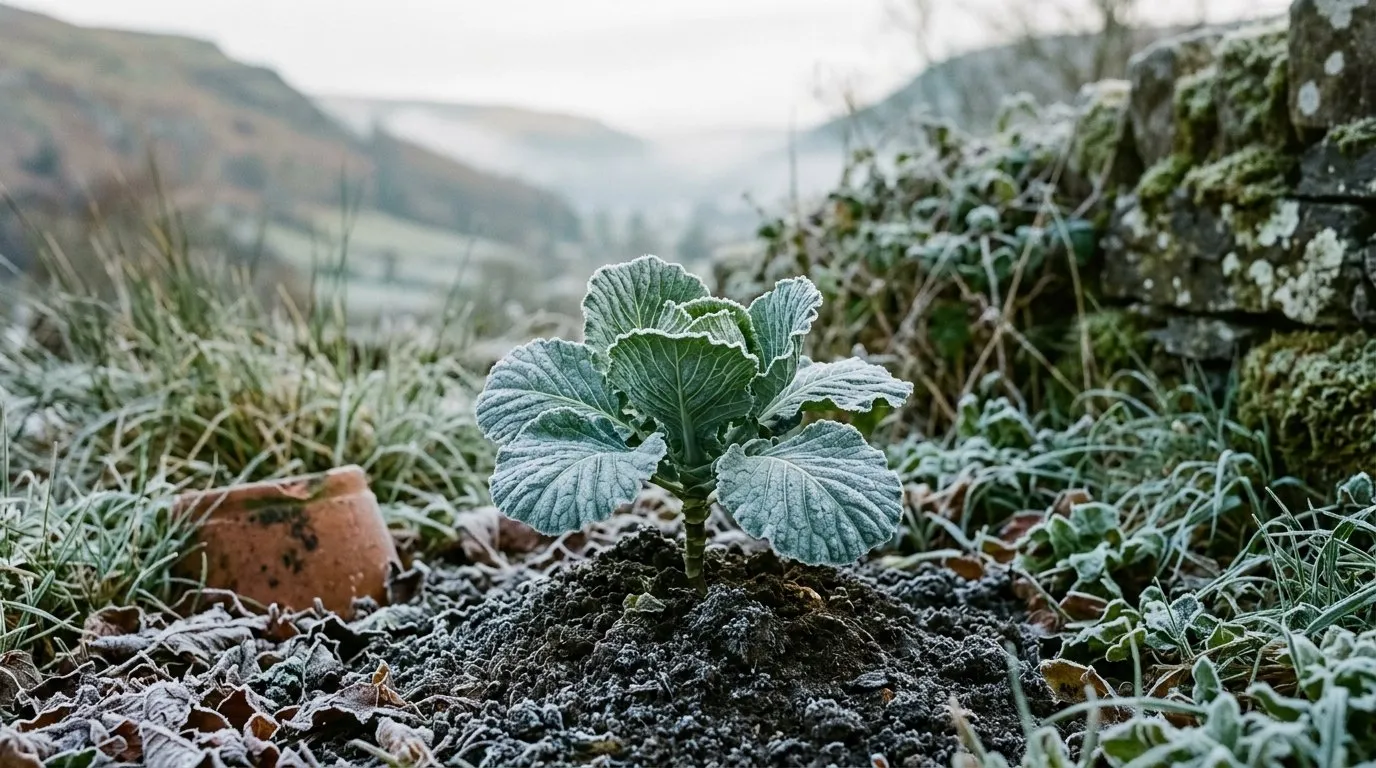 Mid-winter pause. The plant looks stalled from November to February, then the February feed wakes it.
When can you cut spring greens?
Spring greens are ready from mid-March, as soon as plants carry a loose head of fresh new leaves. Cut whole young plants at ground level with a sharp knife, taking every second plant and leaving the rest standing at 30cm spacing to mature.
The cut stumps have one more trick. Slice a 1cm-deep cross into the top of each stump and it sprouts a second flush of four small greens clusters within four to five weeks. Two harvests from one plant, before the main hearts have even started to wrap.
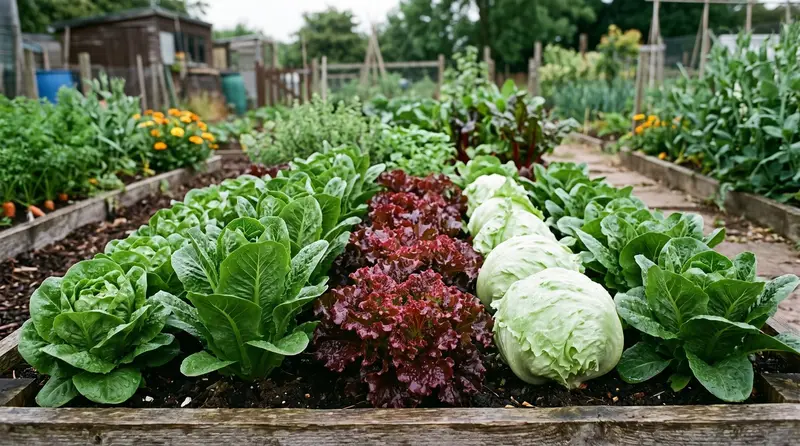
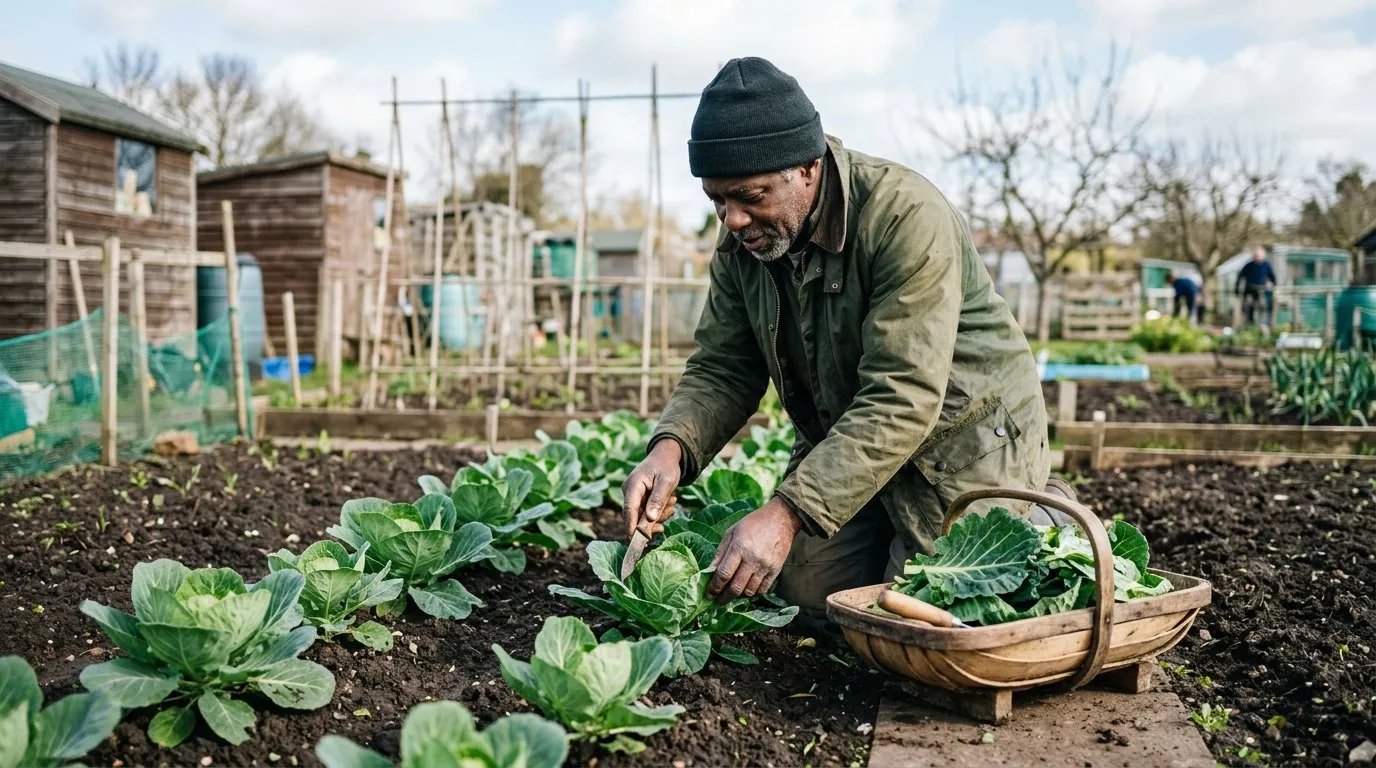 Alternate plants cut as greens in March. The survivors inherit the space and heart up by late May.
How do you get spring cabbage to heart up?
The plants left standing after the greens harvest wrap into firm hearts through May and June. This is where the 30cm final spacing pays off: crowded plants produce loose, leafy heads that never tighten.
Water matters most once hearts start forming. In a dry spell, give the row a thorough soak every 10 days rather than a daily sprinkle. Sudden heavy water after drought is what splits a maturing heart, so consistency beats volume.
Test with a squeeze. When the pointed centre feels firm right through, cut at the base with a knife. Hearts stand in reasonable condition for three to four weeks before they split or the slugs move in, so a row of six hearts covers most of May and June. Cross-cut these stumps too for a bonus flush. Then clear the bed: it is free by July, in perfect time for leeks or French beans, and for the next spring cabbage sowing to begin the cycle again.
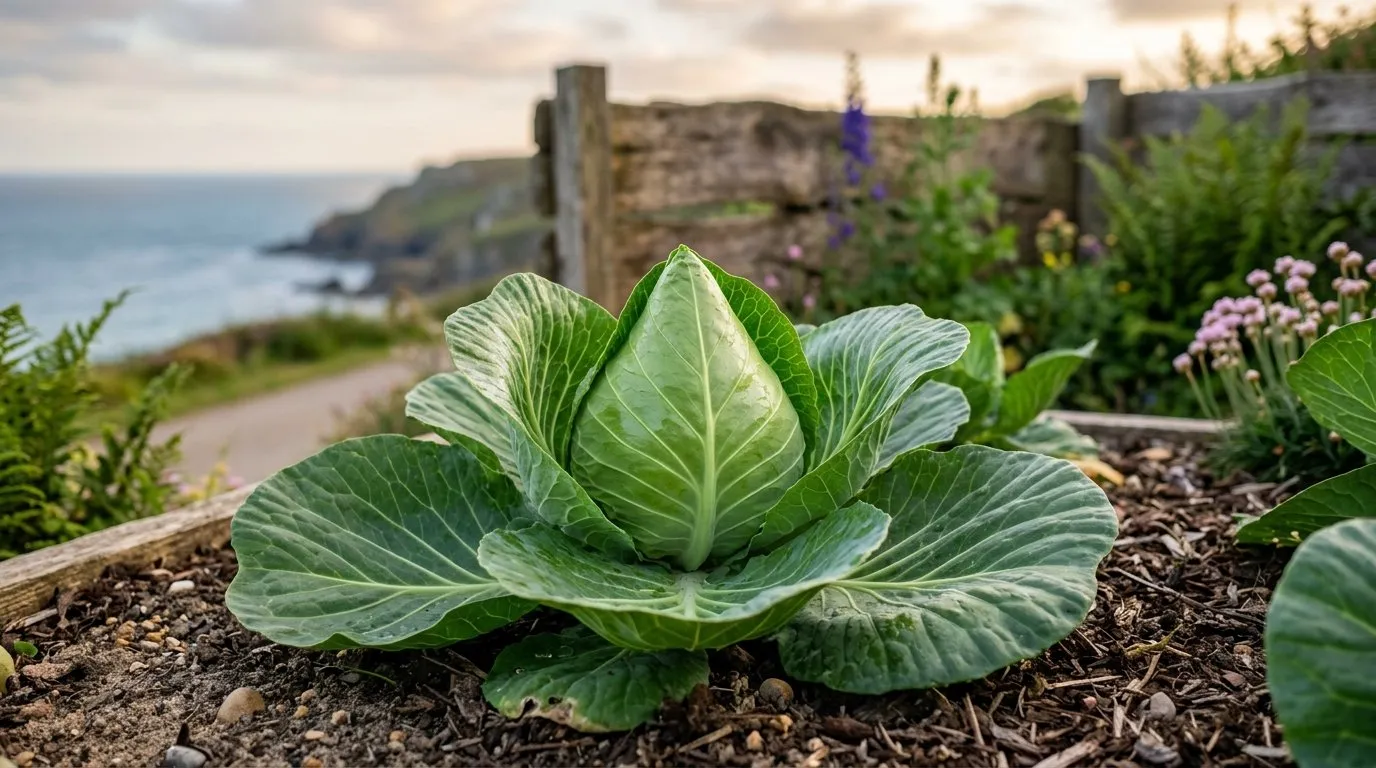 The squeeze test in late May. A firm point right through the centre means the heart is ready.
The season at a glance, month by month
| Month | Task |
|---|---|
| July | Sow from mid-month in the north; prepare a fine outdoor seedbed |
| August | Main southern sowing to mid-month; mesh the seedbed against caterpillars |
| September | Transplant at five to six true leaves; plant deep, firm hard, fit collars |
| October | Finish planting by mid-month; put netting on now, not later |
| November | Earth up stems 5cm; tread soil firm after gales; check nets weekly |
| December | Pigeon patrol; refirm any plants lifted by frost |
| January | Little to do beyond net checks; ignore the yellowing outer leaves |
| February | Last week: feed 35g per square metre of sulphate of ammonia |
| March | Cut alternate plants as spring greens; cross-cut the stumps |
| April | Keep cutting greens and stump regrowth; hoe between plants |
| May | First hearts firm up; soak every 10 days if dry |
| June | Cut remaining hearts; clear and refill the bed |
Bolting, wind rock and other problems solved
Most failures trace back to three causes: sowing too early, planting too soft, and leaving the net off. Bolting in April means the plant went into winter too big; note the sowing date and push it a fortnight later next year. A row that rocks loose and sulks was never firmed properly. And a stripped row is almost always pigeons, not frost.
Slugs take some autumn transplants, especially in wet Septembers. A torchlit patrol on the first two damp evenings after planting removes most of the culprits.
Yellowing outer leaves through winter look alarming and mean nothing. Plants shed their oldest leaves in the cold months while the growing point stays tight and healthy.
Waterlogging is the quiet killer on heavy ground. Roots that sit in cold standing water rot by February. On clay, grow spring cabbage on a slight ridge or in a raised bed, and the problem largely disappears.
Frequently asked questions
When should I sow spring cabbage in the UK?
Sow between mid-July and mid-August, outdoors in a seedbed or in modules. Northern gardens should sow in the second half of July, because plants need six to eight weeks of growth before autumn. Southern gardens can wait until early August. Sown too early, plants grow too big and bolt in spring. Sown too late, they stay weak all winter.
What is the difference between spring cabbage and spring greens?
They are the same plant harvested at different stages. Spring greens are young spring cabbages cut loose and leafy from March, before any heart forms. Leave the same plants until May or June and they wrap into firm pointed hearts. Most gardeners cut alternate plants as greens and let the rest mature.
Do I need to net spring cabbage over winter?
Yes, netting is the difference between a crop and a row of stalks. Wood pigeons strip overwintering brassicas from November to February, worst in hard weather when other food runs out. Fix netting over hoops on planting day, keep it taut, and check it after every gale. A 4m x 2m net costs £8-12.
Why has my spring cabbage bolted?
It was sown too early and grew too big before winter. A cabbage stem thicker than a pencil going into winter can be vernalised by the cold, so the plant flowers in spring instead of hearting. Sow from mid-July in the north and late July further south, and never before.
How far apart should spring cabbage be planted?
Plant 30cm apart each way for hearted cabbage. For spring greens, plant 15cm apart in rows 30cm apart, then cut two of every three plants young. The survivors gain the room to heart up. Closer spacing also lets plants shelter each other from winter wind.
Will spring cabbage survive frost?
Yes, established plants shrug off -10C without protection. Frost may bleach or purple the outer leaves, and plants grow through it in spring. The real winter killers are pigeons, wind rock and waterlogging, not cold. Firm soil, earthed-up stems and taut netting matter far more than fleece.
Can I still plant spring cabbage out in October?
Yes, the first half of October works in most of the UK. Roots still establish while the soil holds summer warmth. Any later, pot the seedlings into 9cm pots, stand them in a cold frame for winter and plant out in late February. They catch up quickly once fed.
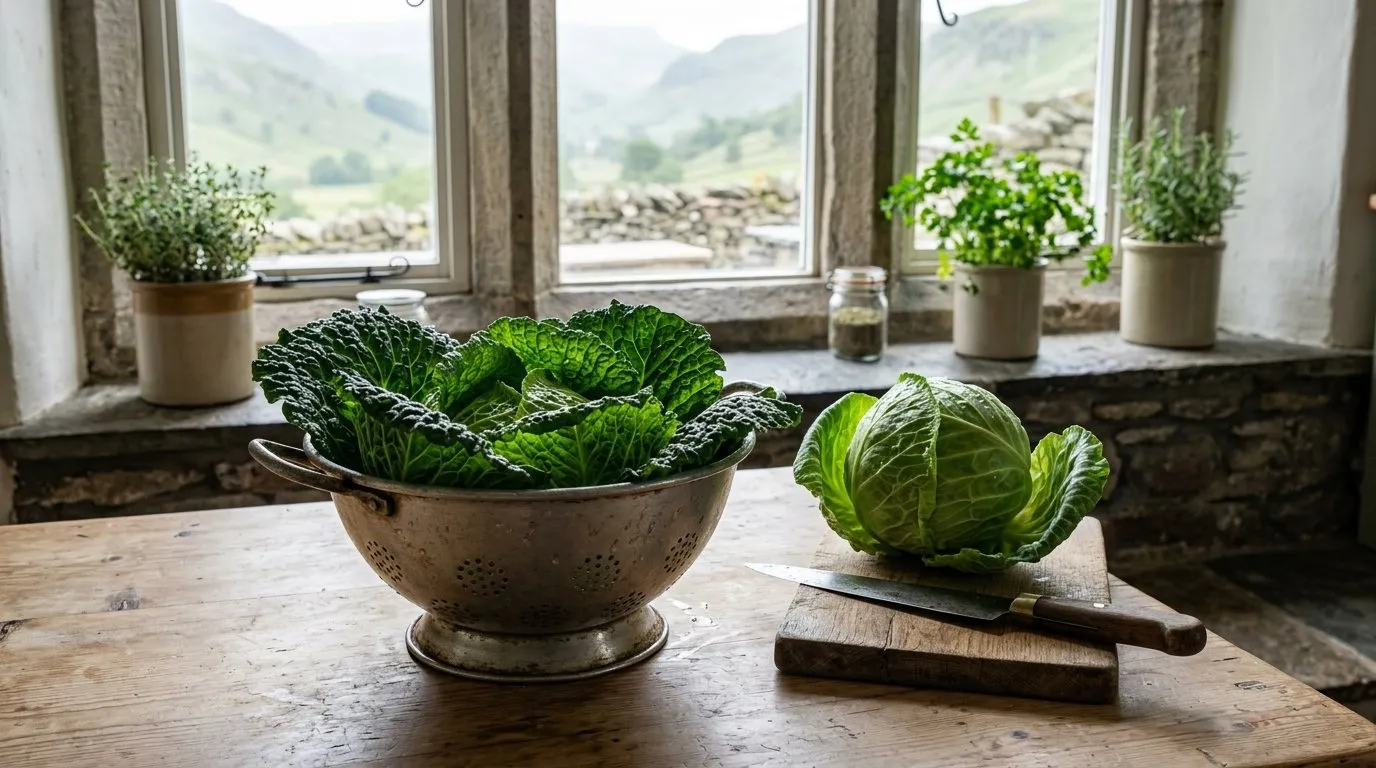 The payoff: March greens and a June heart from the same July sowing.
The sowing window is open now and it does not stay open long. Rake a seedbed flat this weekend, draw a 1cm drill, and by this time next year you will wonder why the bed ever stood empty in March.
Our team produces practical UK gardening guidance from source research, contributor records and established horticultural practice. Editorial standards are overseen by Matt W.