Key takeaways
- A healthy soil supplies most plant nutrients without bottled fertiliser
- Annual compost or manure (5-7kg/m²) is the foundation practice
- Mulching reduces watering by 30-50% and feeds soil biology
- Worms and microbes do the soil-building work - feed them, not the leaves
- Organic feeds (comfrey, nettle, seaweed) are top-ups, not the main meal
- Three years of feeding the soil transforms heavy clay or thin sand
Feed the soil not the plants is the founding idea of organic gardening. It says that healthy soil supplies most plant nutrients through natural biological cycles - worms, microbes, fungi, organic matter - and that adding compost, manure and mulch to feed those biology systems beats applying bottled fertiliser directly to plant leaves.
The practical effect: three years of feeding the soil transforms a struggling UK garden into a productive, low-input plot. Annual fertiliser bills drop to near zero. Watering needs fall 30-50%. Yields stabilise and rise. Pests and diseases reduce.
For the foundation practices that put this into action, see our how to make compost UK, no-dig gardening guide UK, what is mulch and how to use it and how to make leaf mould UK guides.
What healthy soil actually contains
A handful of healthy UK garden soil contains:
| Component | Typical content per gram |
|---|---|
| Bacteria | 100 million to 1 billion |
| Fungi | 50 million |
| Protozoa | 200,000 |
| Nematodes | 100 |
| Earthworms | 200-500 per m² (whole garden basis) |
| Organic matter | 5-10% by weight |
| Mineral particles | 80-90% by weight |
| Water and air | 25% of volume each |
These living organisms drive the entire nutrient cycle:
- Bacteria and fungi decompose organic matter into plant-available nutrients.
- Mycorrhizal fungi form partnerships with plant roots, extending the effective root zone tenfold and trading nutrients for plant sugars.
- Protozoa and nematodes eat bacteria and excrete nutrient-rich waste close to plant roots.
- Earthworms physically mix the soil, create drainage and aeration channels, and deposit nutrient-rich casts.
When you add compost or manure, you are feeding this whole ecosystem. When you spray bottled fertiliser on leaves, you are bypassing it - and over time, starving it.
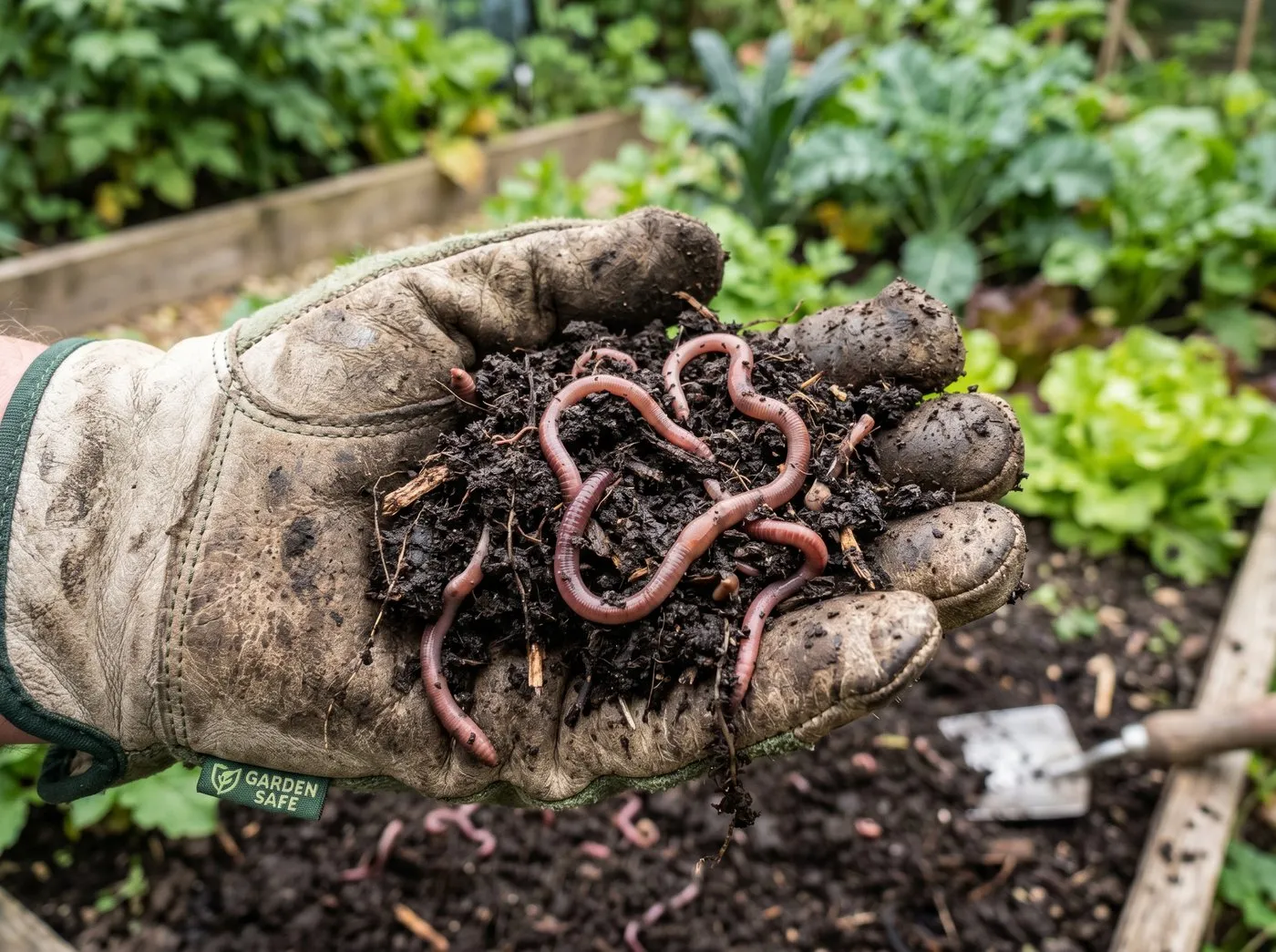 A handful of healthy UK soil - dark, crumbly, alive with earthworms and microbes. This is what 3 years of feeding the soil looks like.
The chemical fertiliser trap
Bottled fertilisers (Growmore, Miracle-Gro, Phostrogen) deliver concentrated nitrogen, phosphorus and potassium in water-soluble form. Plants take up what they can use immediately. The rest leaches into groundwater within days.
Side effects of regular chemical fertiliser use on UK gardens:
Soil biology starves. Microbes feed on organic matter; with no organic matter coming in, populations crash. Worms move out. Mycorrhizal fungi associations break down.
Salt buildup. Most chemical fertilisers are salt-based. Repeated use raises soil salinity, especially in containers and dry beds.
Acidification. Ammonium-based nitrogen sources lower soil pH over time. Five years of regular use can drop pH by 0.5-1.0 - enough to lock out other nutrients.
Pest and disease pressure rises. Plants grown on bottled fertiliser have higher sap nitrate levels, which attracts aphids and weakens disease resistance.
Dependency. As soil biology declines, plants need more fertiliser each year to achieve the same growth. Year 5 of chemical-only gardening typically uses 2-3x the fertiliser of year 1 for the same result.
This trap is real and well-documented in UK soil-science research. Feeding the soil reverses it.
The 4 foundation practices
Organic soil-building rests on four practices that work together:
1. Annual compost or manure application (5-7kg/m²)
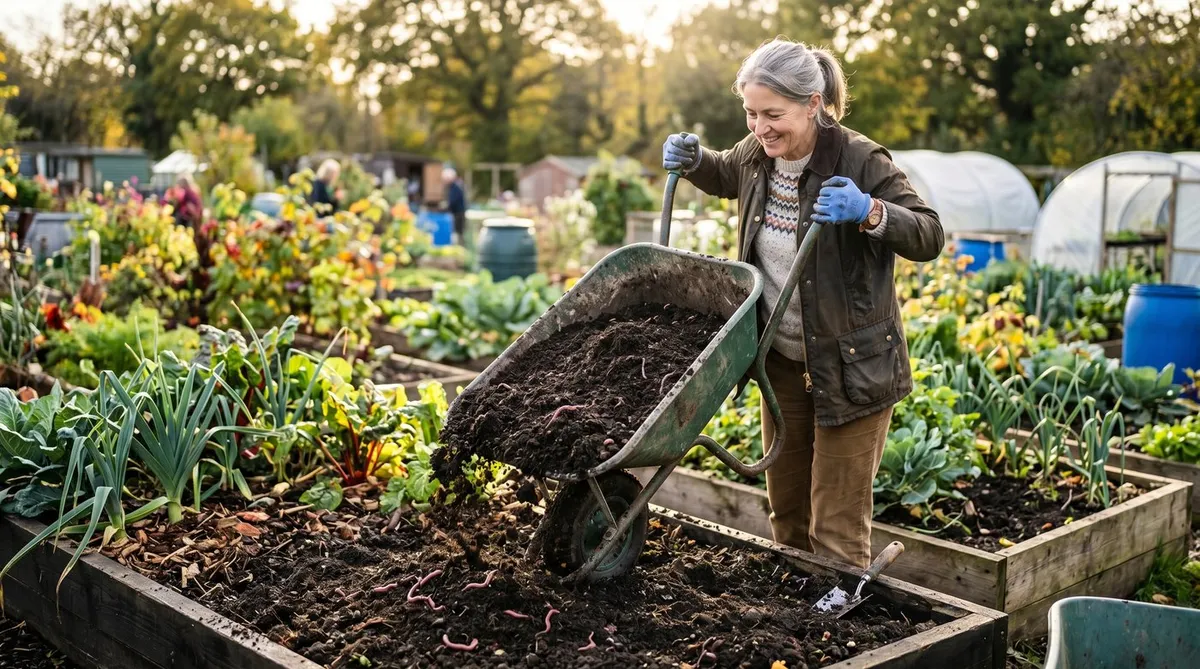
The single most powerful soil-feeding practice. Spread 50-70mm of mature compost or well-rotted manure as a surface mulch in autumn each year. Worms work it into the soil through winter. By spring the bed is ready to plant.
A typical UK allotment of 50m² needs about 350kg of compost annually. Home composting can supply 100-200kg from kitchen and garden waste; the balance comes from manure, council compost, or local farm/stable sources.
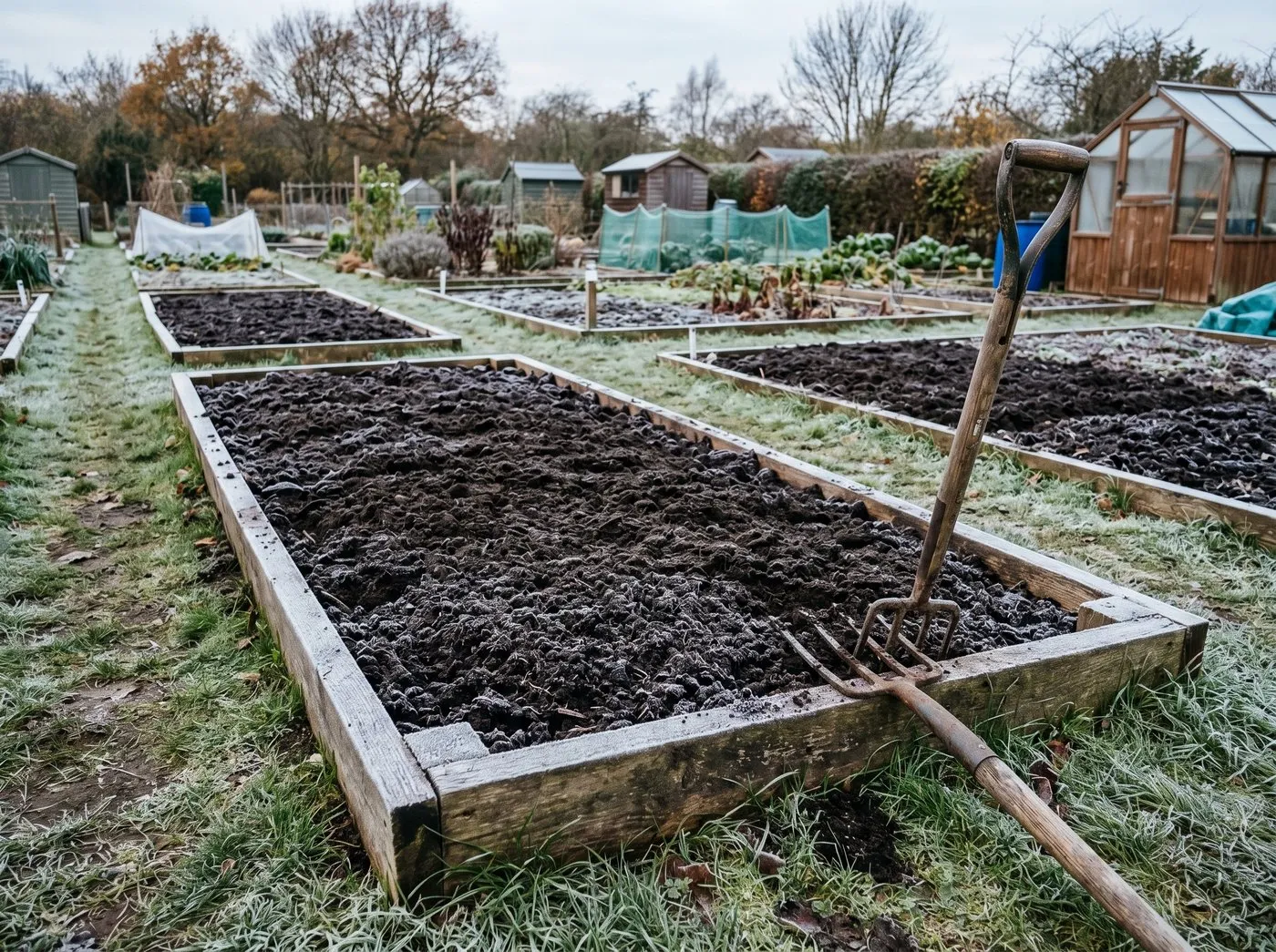 Autumn compost mulch - the foundation organic-gardening practice. 50-70mm spread on the surface, no digging. Worms incorporate it by spring.
2. Mulching all exposed soil
Bare soil loses water, structure and biology to sun, wind and rain. Mulched soil retains all three.
Mulches that double as soil food:
- Compost or well-rotted manure (already covered above)
- Leafmould - free, slow-acting, holds water excellently
- Grass clippings (in thin layers under 20mm to avoid matting)
- Wood chip (best on paths and around trees, breaks down slower)
- Straw or pea straw (good for strawberries and around tomato plants)
Mulched UK gardens use 30-50% less water in dry summers. Mulch also suppresses weeds and stabilises soil temperature.
3. Cover crops and green manures
When a bed is empty between summer and autumn crops, sow a green manure. Phacelia, field beans, mustard, grazing rye, crimson clover - all work in UK climate. Roots break up soil structure; foliage builds organic matter when chopped down in spring.
See our green manures and cover crops UK guide for variety choice and timing.
4. No-dig method
Stop digging. Pile compost on top each year. Let worms and roots do the structural work. The benefits are real and well-documented:
- Soil structure builds faster (worms keep their tunnel networks intact).
- Weed seeds stay buried under the compost mulch rather than being turned to the surface where they germinate.
- Mycorrhizal fungal networks remain intact and feed plants more effectively.
- No back pain.
Charles Dowding’s UK no-dig trials over 15+ years show no-dig outperforming dug systems on yield, weeding time, and soil biology indicators. See our no-dig gardening guide UK for the full method.
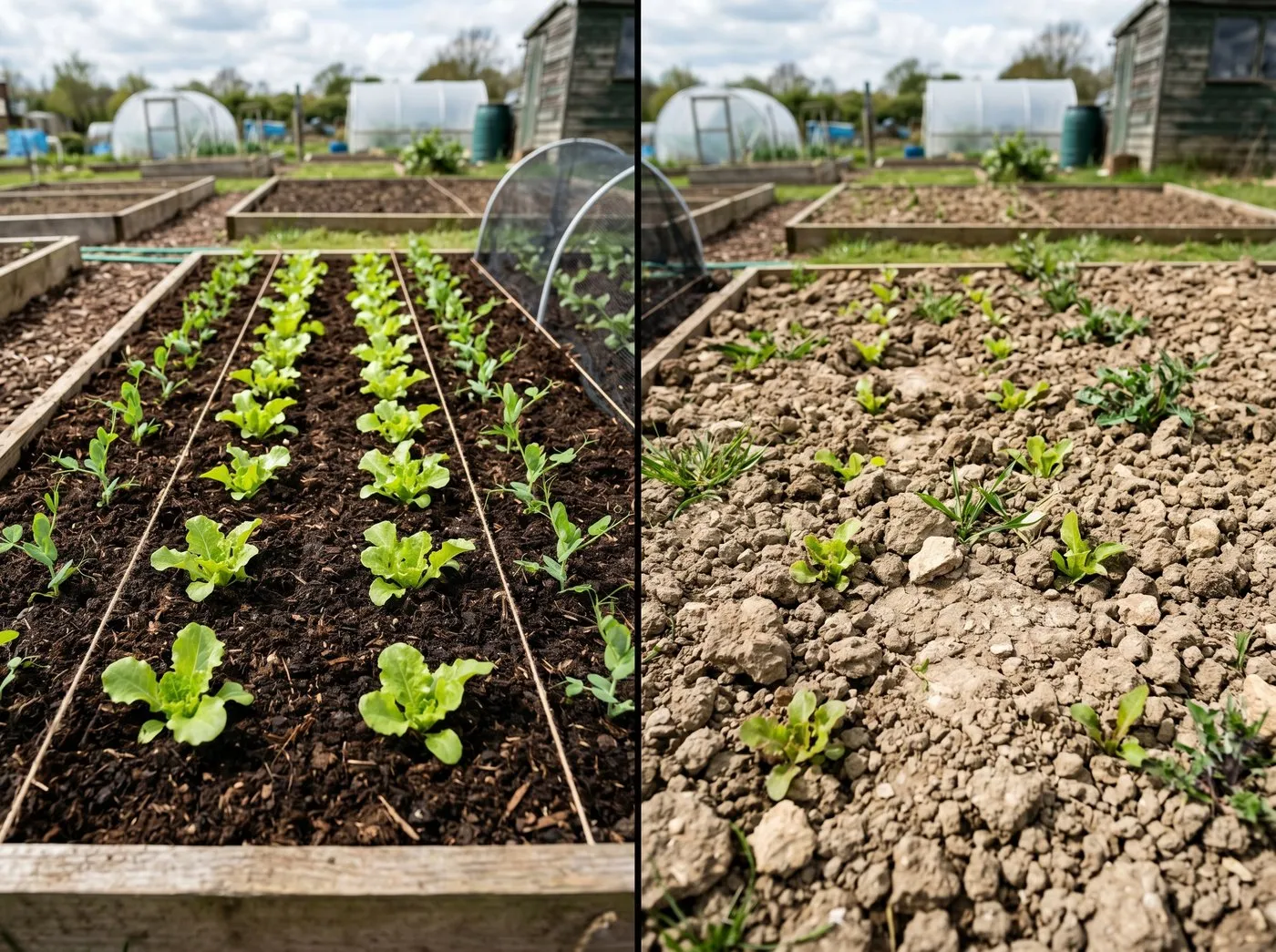 No-dig (left) vs traditional dug bed (right). Same plot, same crops - the no-dig side has stable structure, worm castings, and consistent moisture. The dug side dries out, weeds faster, and needs more watering.
The liquid top-ups (used sparingly)
Even with great soil, some heavy-feeding crops appreciate a midsummer boost. Organic gardeners use liquid feeds made from plant material rather than bottled chemicals:
Comfrey feed (high potassium)
Steep comfrey leaves in water for 4-6 weeks. Strain. Dilute 1:10 with water. Use weekly on tomatoes, peppers, fruiting crops from first flower.
Comfrey accumulates potassium from the subsoil. It’s effectively a free tomato food. See our comfrey liquid feed recipe UK guide for full method.
Nettle feed (high nitrogen)
Steep nettle tops in water for 2-3 weeks. Strain. Dilute 1:10. Use on leafy crops and seedlings.
Nettles concentrate nitrogen and trace elements. Good for early-season seedling boosts.
Seaweed extract (trace minerals)
Liquid seaweed extract (£8-£12 per litre concentrate) supplies micronutrients (iron, manganese, zinc) and a small amount of NPK. Useful as a foliar feed on plants showing micronutrient deficiency. Apply every 2-3 weeks during heavy growing phases.
Worm-bin liquid (general purpose)
The tap on a worm composter produces a dilute liquid. Use 1:10 as a general-purpose plant feed. High in available nutrients and beneficial microbes.
These are top-ups, not the main meal. The main meal is what you put into the soil in autumn.
What feeding the soil delivers
After 3 full seasons of feeding the soil rather than the plants:
| Metric | Year 1 | Year 3 |
|---|---|---|
| Soil organic matter % | 2-3% | 5-8% |
| Earthworm count per m² | 30-80 | 200-500 |
| Soil depth (working layer) | 10-15cm | 25-30cm+ |
| Fertiliser cost per year | £30-£60 | Near zero |
| Water needed in dry summer | Daily | Every 3-4 days |
| Pest pressure (aphids, slugs) | Heavy | Manageable |
| Disease pressure (blight, mildew) | Heavy | Reduced |
The transformation is real and measurable. UK organic gardening trials (Garden Organic at Ryton, Charles Dowding at Homeacres, Sarah Raven at Perch Hill) all show this pattern.
Common objections answered
“Organic is too expensive.” Wrong direction - chemical fertiliser costs £30-£60/year forever. Compost made at home costs nothing forever after the initial bin purchase.
The 5-step starter plan for a new UK garden
For a UK gardener wanting to start feeding the soil this year:
-
Buy or build a compost bin. Wooden slat type or Hotbin Mk2 - £40-£250 depending. See our how to make compost UK guide.
-
Start a leaf-mould cage. Free chicken wire and 4 stakes. Fill with autumn leaves. Wait 12-18 months for compost-grade leafmould.
-
Get 4 bags of council compost or well-rotted manure. 300L is enough for a small bed at 5kg/m². Spread on the surface in autumn.
-
Plant a green-manure cover crop in empty beds going into winter. Phacelia or field beans, £5 a packet.
-
Stop digging. Plant straight through the autumn compost layer in spring. Add another layer of compost next autumn.
That’s it. One autumn afternoon of work, repeated annually. The soil transforms within 3 years.
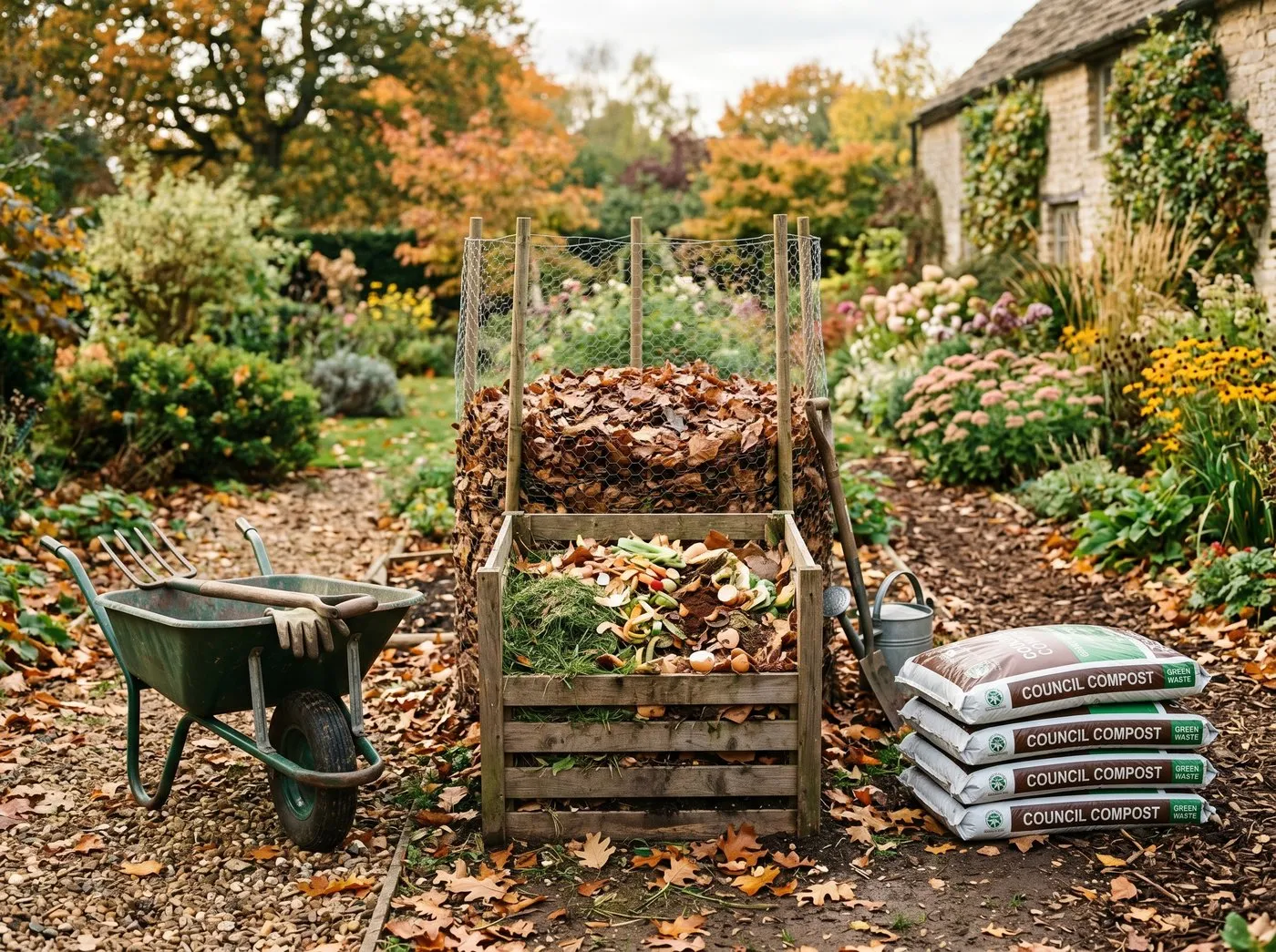 The starter kit - compost bin, leaf-mould cage, a few bags of bought compost to bridge year 1. All up cost: about £80. Recurring cost from year 2: near zero.
Field note: Garden Organic at Ryton runs the UK’s longest-established organic-vs-conventional research garden, with 30+ years of trial data on the difference. Their visitor centre demo plots show the difference visually.
The pillar references
- Composting: how to make compost UK
- Leaf mould: how to make leaf mould UK
- Mulching: what is mulch and how to use it
- No-dig method: no-dig gardening guide UK
- Heavy clay: no-dig heavy clay soil UK and how to improve clay soil
- Green manures: green manures and cover crops UK
- Liquid feeds: comfrey liquid feed recipe UK
- NPK basics: NPK explained for UK fertilisers
Pick one to start with. Build the habit over a year. Add a second the year after. By year 3 the philosophy will be running your garden.
The honest take
Feed-the-soil-not-the-plants is the single best return on investment a UK gardener can make. Five minutes a week of compost-bin maintenance. One autumn afternoon of mulching. Three years of patience. The soil then feeds your garden forever, with no recurring fertiliser bill.
The hardest part is the first year. Yields look smaller, beds look browner, neighbours with chemical fertiliser get bigger tomatoes. Stay the course. Year 3 changes everything.
Now you have the philosophy
For the practical methods that put feed-the-soil into action, our best fertilisers for UK gardens, NPK explained for fertilisers and soil pH explained guides cover the variations on the theme.
Our team produces practical UK gardening guidance from source research, contributor records and established horticultural practice. Editorial standards are overseen by Matt W.