Key takeaways
- Most foliage houseplants benefit from a summer outdoors, often with a flush of new growth
- Wait until after the last frost, late May or June in most of the UK
- Harden off gradually over one to two weeks, starting in full shade
- Keep most houseplants in dappled shade outdoors; direct midday sun scorches them
- Watch for pests and water more often, as pots dry out faster outside
- Bring plants back indoors before the cold nights of September, after checking for pests
Your houseplants spend the winter coping with dim light, dry central heating and still air. Give them a summer outside and many of them transform, putting on more growth in a few warm months than they manage all year on a windowsill. Brighter light, fresh air, and soft rainwater are exactly what most foliage plants crave. The catch is that outdoor light is far stronger than anything indoors, so a plant moved out carelessly burns within days. This guide covers which houseplants benefit, how to harden them off without scorch, and when to bring them back in.
Done well, a summer outdoors is the cheapest plant food there is. Done in a rush, it is the fastest way to ruin a treasured plant’s leaves.
Which houseplants benefit from going outside
Not every houseplant wants the same treatment, so start by knowing which ones gain most. Most foliage houseplants, plus succulents, cacti and many flowering types, grow better outdoors in summer, often with a strong flush of new growth. The fresh air and brighter light do what a windowsill cannot.
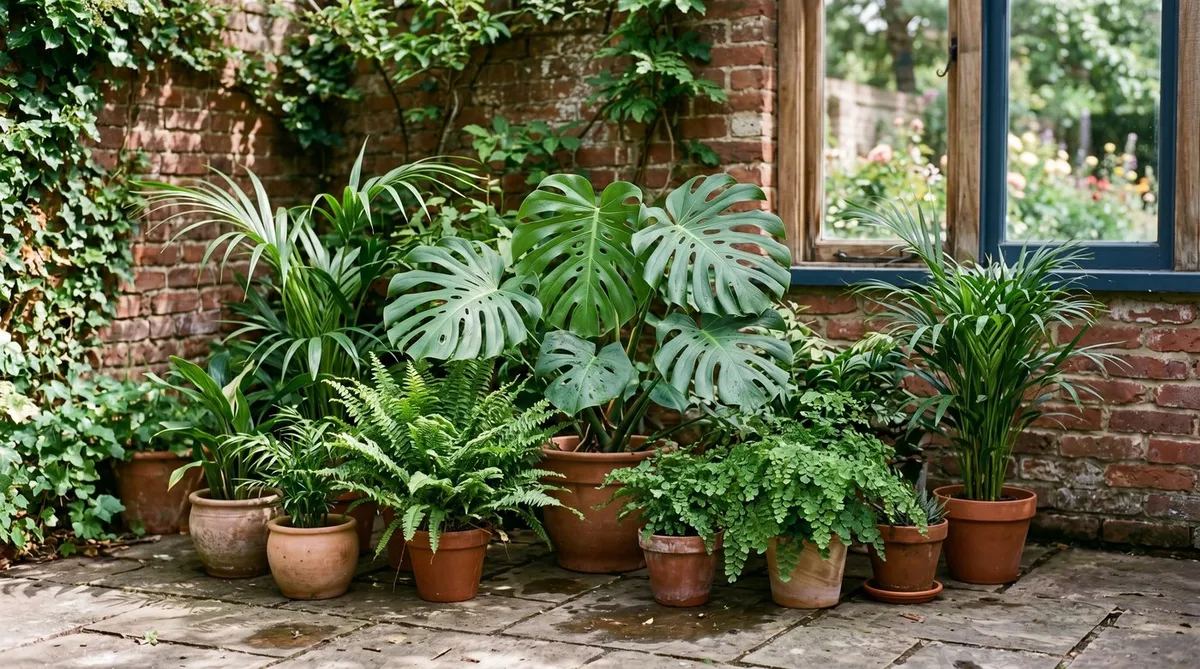
Tough foliage plants are the clearest winners: Monstera, ferns, spider plants, aspidistra, and most palms power away outside in shade. Succulents and cacti enjoy a brighter, sunnier spot and often colour up and flower. Flowering plants like clivia and citrus benefit too, and a summer outdoors can trigger better blooming.
A few need more caution. Fussy, humidity-loving plants such as calatheas can go out but only into deep shade, and very delicate or newly bought plants are best left to settle first. Our guides to growing Monstera and the wider houseplant collection help you judge each plant’s tolerance.
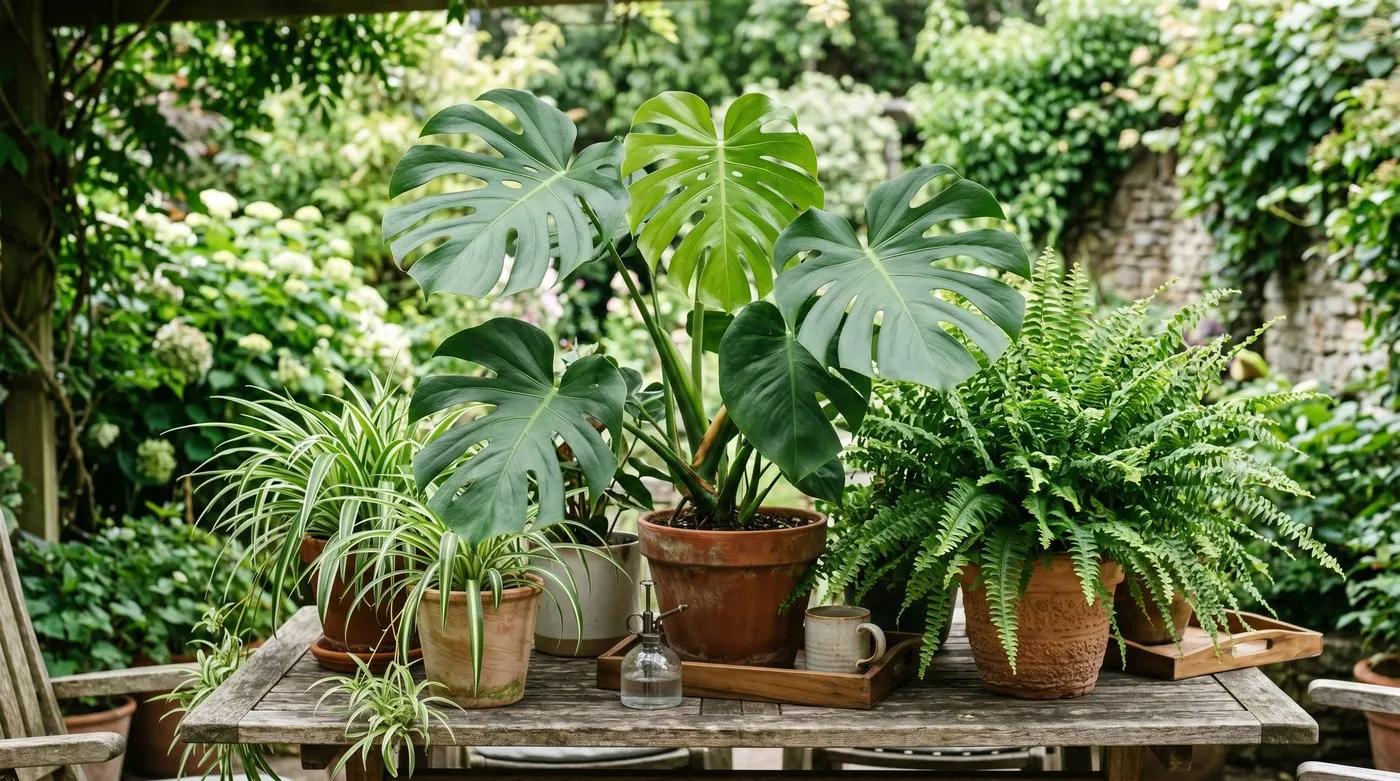 Tough foliage plants like Monstera, ferns and spider plants are the clearest winners outdoors, often growing more in one summer than a whole year indoors.
When and how to harden them off
This is the step that makes or breaks the whole exercise, so take it slowly. Move houseplants out after the last frost, then harden them off gradually over one to two weeks, starting in full shade. Rushing it is the single biggest cause of ruined leaves.
Wait until nights are reliably above about 12C, which in most of the UK means late May or June. Then begin the acclimatising. Stand each plant in a fully shaded, sheltered spot for a few hours on the first day, and bring it back in. Over the fortnight, increase the time outside and edge it towards its final position, but keep almost all houseplants in dappled shade.
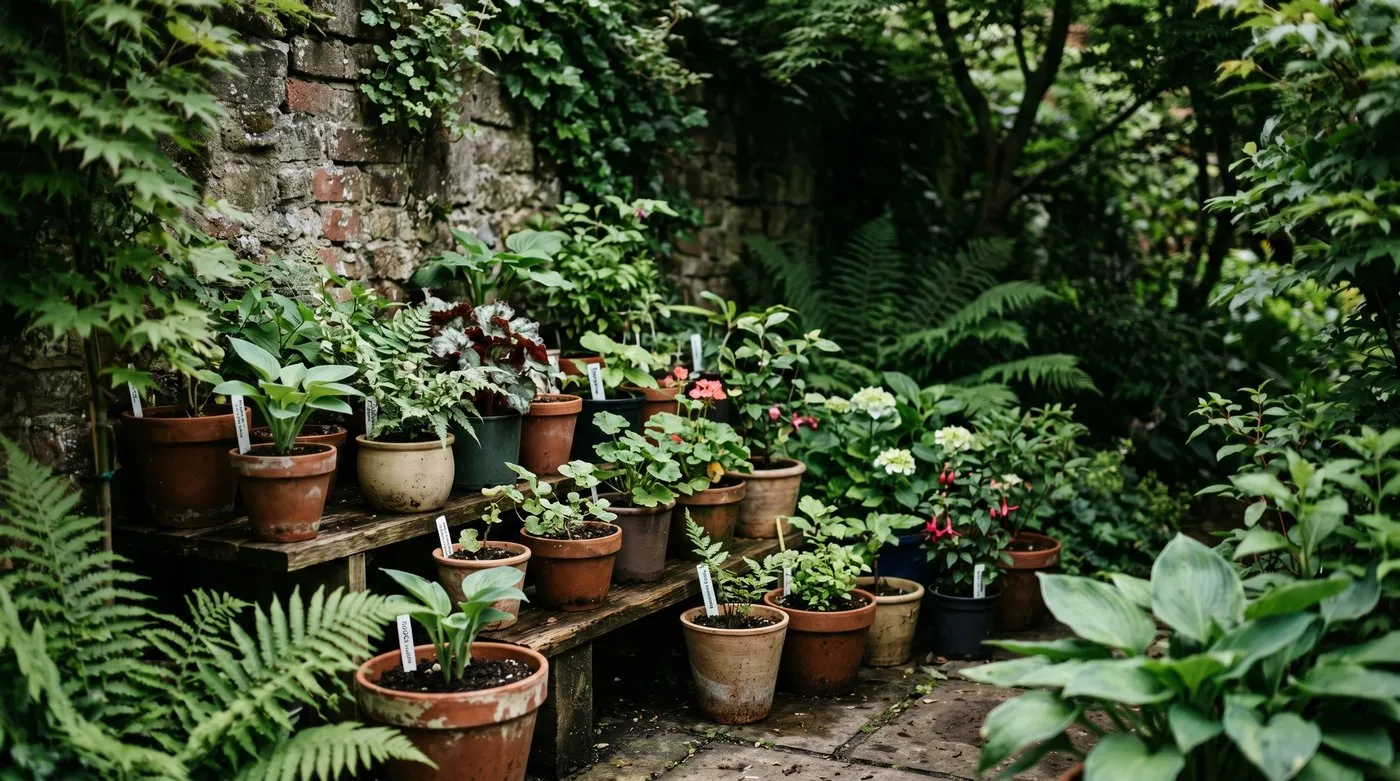 Start every plant in deep shade and increase the light a little each day over a fortnight. Slow hardening off is the one rule that prevents scorch.
Gardener’s tip: A spot under a tree, a north or east-facing wall, or beneath a table on a bright patio gives the dappled shade most houseplants want. If a leaf feels warm to the touch in the sun, the plant is in too much light, so move it somewhere shadier.
Getting the light right outdoors
Where you stand a plant matters as much as how you got it there. Keep most houseplants in dappled or light shade outdoors, as direct midday sun scorches even plants that take some sun indoors. Outdoor light overwhelms indoor foliage.
Match the position to the plant. Shade-loving foliage like ferns and calatheas want deep, constant shade. Tougher foliage such as Monstera and palms take bright shade or a little gentle morning sun. Only true sun-lovers, the succulents and cacti, belong in a sunnier spot, and even they appreciate easing in.
Watch the leaves for the warning signs. Pale, bleached patches or dry, brown crisping mean too much sun, so move the plant shadier at once. Dark, lush, slightly stretched growth means it could take a touch more light. Adjust over the first couple of weeks until each plant looks settled.
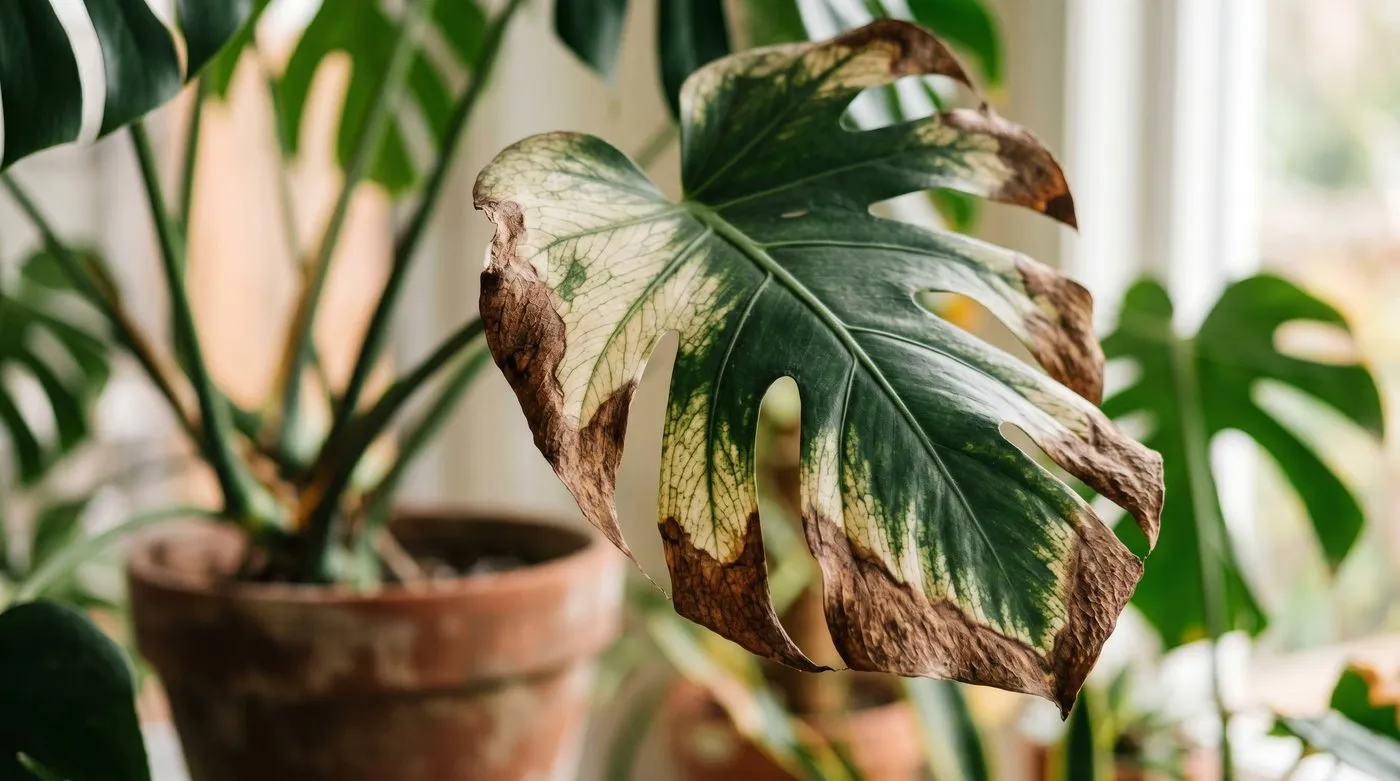 The warning sign of too much light too soon: pale bleached patches and crisp brown edges. Move a scorching plant into deeper shade straight away.
Outdoor positions compared
Different spots suit different plants, so match the plant to the place. This table sets out the main outdoor positions and what each one suits.
| Position | Light level | Best for | Watch for |
|---|---|---|---|
| Deep shade, under a tree | Low | Ferns, calatheas, aspidistra | Stays damp, watch slugs |
| North or east wall | Bright shade | Monstera, palms, spider plants | Gentle morning sun only |
| Dappled shade on a patio | Medium | Most foliage houseplants | Moving sun through the day |
| Sheltered, part sun | Medium to high | Citrus, clivia, tougher plants | Scorch if not hardened off |
| Full sun, open spot | High | Cacti, succulents | Drying out, ease in slowly |
Dappled shade is the safe default for almost any houseplant, which is why it does the most work on a typical patio. Reserve the sunny spots for the succulents and cacti, and the deepest shade for the humidity-lovers. When in doubt, go shadier; a plant in too little light merely grows slowly, while one in too much light burns.
Watering, feeding and pests outdoors
Life outside changes a plant’s needs, so adjust your routine. Outdoors, houseplants dry out faster and grow harder, so water more often, feed through summer, and watch for new pests. A windowsill routine will not keep up.
Pots dry quickly in summer wind and warmth, so check them daily in hot spells and water when the top of the compost feels dry. Rain helps, but a plant under a tree or eaves may stay dry despite a downpour. With more light and growth, plants also feed harder, so a regular liquid feed keeps them powering on, as our guide to feeding houseplants explains.
Outdoors brings new pests indoor plants never meet. Slugs and snails chew tender leaves, aphids find soft new growth, and ants nest in pots. Check plants regularly and deal with trouble early. If you go away, our holiday watering solutions keep them alive, and our container pest protection guide covers the common outdoor pests.
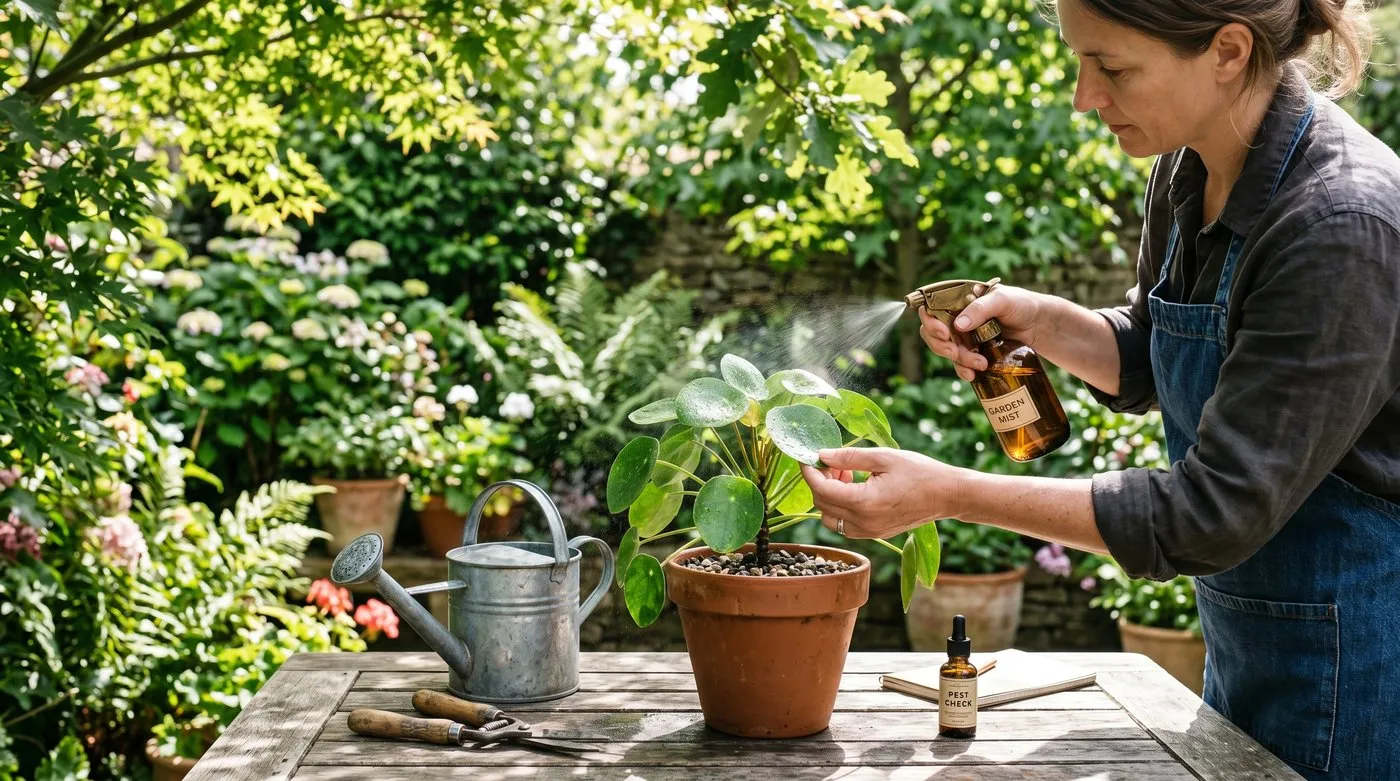 Outdoors, pots dry out faster and meet new pests. Check and water more often, feed through summer, and inspect for slugs, aphids and ants.
Bringing them back inside
The summer holiday has to end before the cold arrives, and how you bring plants in matters. Bring houseplants back indoors before the cold nights of early autumn, and check every plant for pests first to protect the rest of your collection. A single infested plant can spread trouble indoors.
Move plants in as nights drop below about 12C, usually September in most of the UK. Tender plants come first, tougher ones can linger a little longer. Reversing the hardening off is not needed, but expect a short sulk as plants adjust back to lower indoor light, perhaps dropping a leaf or two. Pot-grown bougainvillea works to the same rhythm: summer outside, winter behind glass.
Before any plant crosses the threshold, inspect it closely. Check under leaves and around the pot rim for pests, hose or wipe the foliage, and tip out the saucer in case slugs are hiding. A pest-free check now saves an indoor infestation later. Plants that summered outside often look fuller and greener, a good base for the winter ahead alongside our air-purifying houseplants.
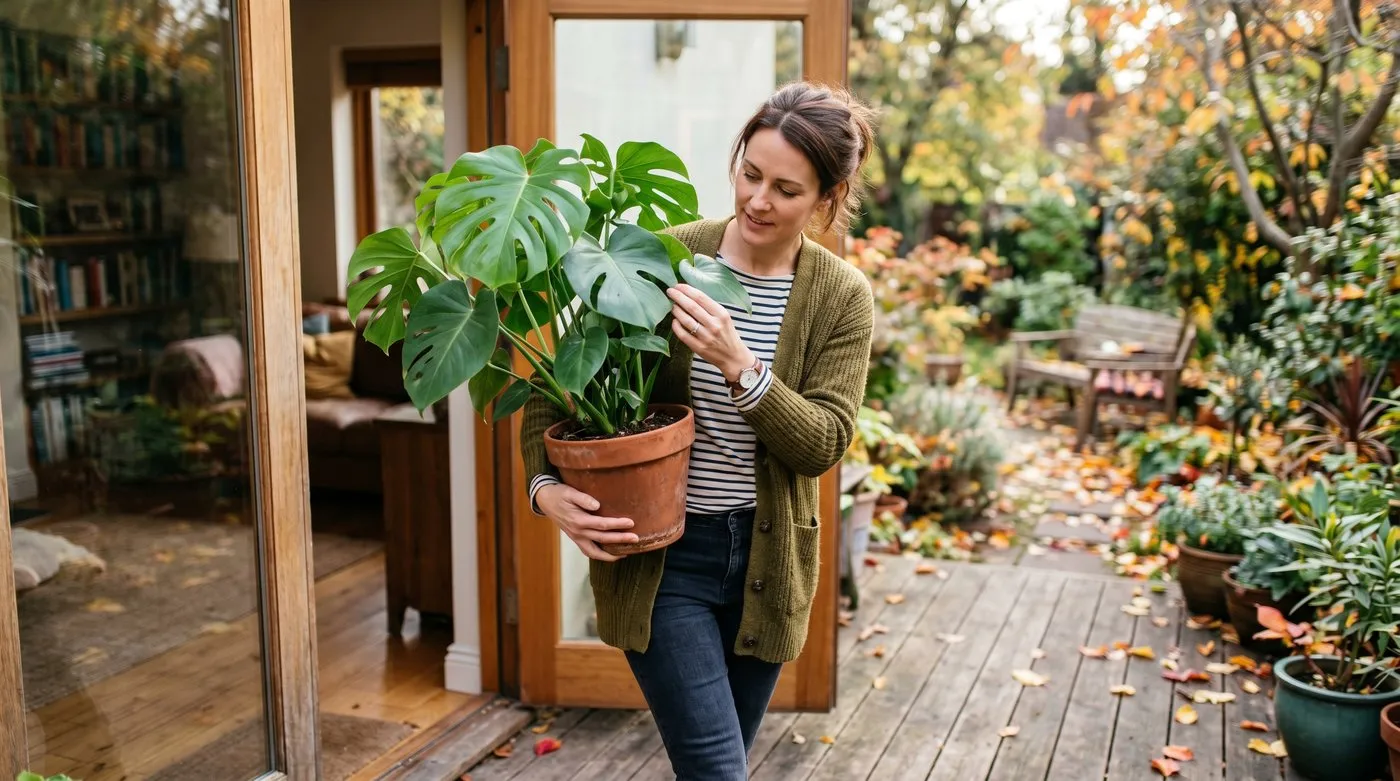 Bring plants in before the cold nights of September, and inspect each one for slugs, aphids and ants first. A pest-free check now saves an indoor infestation later.
Frequently asked questions
Can you put houseplants outside in summer?
Yes, most foliage houseplants thrive outdoors in the UK summer, enjoying brighter light, fresh air and rain. Wait until after the last frost, usually late May or June, and harden them off gradually so they do not scorch. Keep most in dappled shade rather than direct sun. Many reward a summer outside with a strong flush of new growth.
How do you harden off houseplants?
Harden off houseplants by moving them outside gradually over one to two weeks. Start in a fully shaded, sheltered spot for a few hours a day, then slowly increase the time and light over the fortnight. This lets the leaves adjust to brighter light and moving air without scorching. Rushing the process is the main cause of bleached, burnt leaves.
Which houseplants like being outdoors?
Foliage plants like Monstera, ferns, spider plants, aspidistra and most palms enjoy a summer outdoors, as do succulents and cacti in a sunnier spot. Flowering plants such as clivia and citrus also benefit. Fussy, humidity-loving types like calatheas can go out but need deep shade. Avoid moving very delicate or newly bought plants until they are established.
Will my houseplants get sunburn outside?
Yes, houseplants can scorch badly if moved into direct sun too quickly. Indoor light is far weaker than outdoor light, so leaves burn and bleach within days if not hardened off. Start every plant in full shade and increase light slowly. Most houseplants are happiest in dappled shade outdoors, even those that take some sun indoors.
When should I bring houseplants back inside?
Bring houseplants back indoors before the cold nights of early autumn, usually September in most of the UK, once nights drop below about 12C. Check every plant thoroughly for pests like slugs, aphids and ants before it comes in, and hose or wipe the leaves. Bringing plants in pest-free protects the rest of your collection indoors.
Move them out after the frosts, harden off slowly, keep them shaded, and bring them in clean, and your houseplants will reward a summer outdoors with their best growth of the year. Browse our houseplant guides and our wider how-to guides to keep them thriving year-round. The RHS advice on houseplant care is a useful reference for individual species.
Our team produces practical UK gardening guidance from source research, contributor records and established horticultural practice. Editorial standards are overseen by Matt W.