Key takeaways
- Cut most UK lawns to 25-40mm; never below 15mm unless it is a fine bowling-green sward
- Follow the one-third rule: remove no more than a third of the leaf in any single mow
- Raise the blade to 40-50mm in summer heat; longer grass shades roots and holds moisture
- Ryegrass family lawns need 25-50mm; fine fescue and bent tolerate 13-25mm
- Scalped lawns take 10-21 days to recover and let weeds and moss invade the bare patches
Knowing how low to mow a lawn is the single biggest decision you make each week in the growing season. Get the mowing height right and the turf stays dense, green, and free of moss with very little extra work. Get it wrong and you scalp the crowns, expose bare soil, and hand the ground to weeds. Most UK gardeners cut too short, chasing a bowling-green look on grass that was never bred for it. This guide sets out the correct cutting height by season and by grass type, in millimetres, with the trial data behind each number. It covers the one-third rule, why scalping does lasting damage, and how to read your own lawn rather than the calendar.
What height should most UK lawns be cut to?
Most UK domestic lawns should be cut to 25-40mm. That single range covers the typical mixed sward of ryegrass, smooth-stalked meadow grass, and fescue sold as hard-wearing or family lawn seed. Within it, 30mm suits the average garden used for sitting and light play.
The number that matters more than the target is the growing point, also called the crown. It sits low at the base of each grass plant. As long as your cut stays above it, the lawn regrows happily. Cut into it and the plant has to rebuild from reserves, which is slow and stressful.
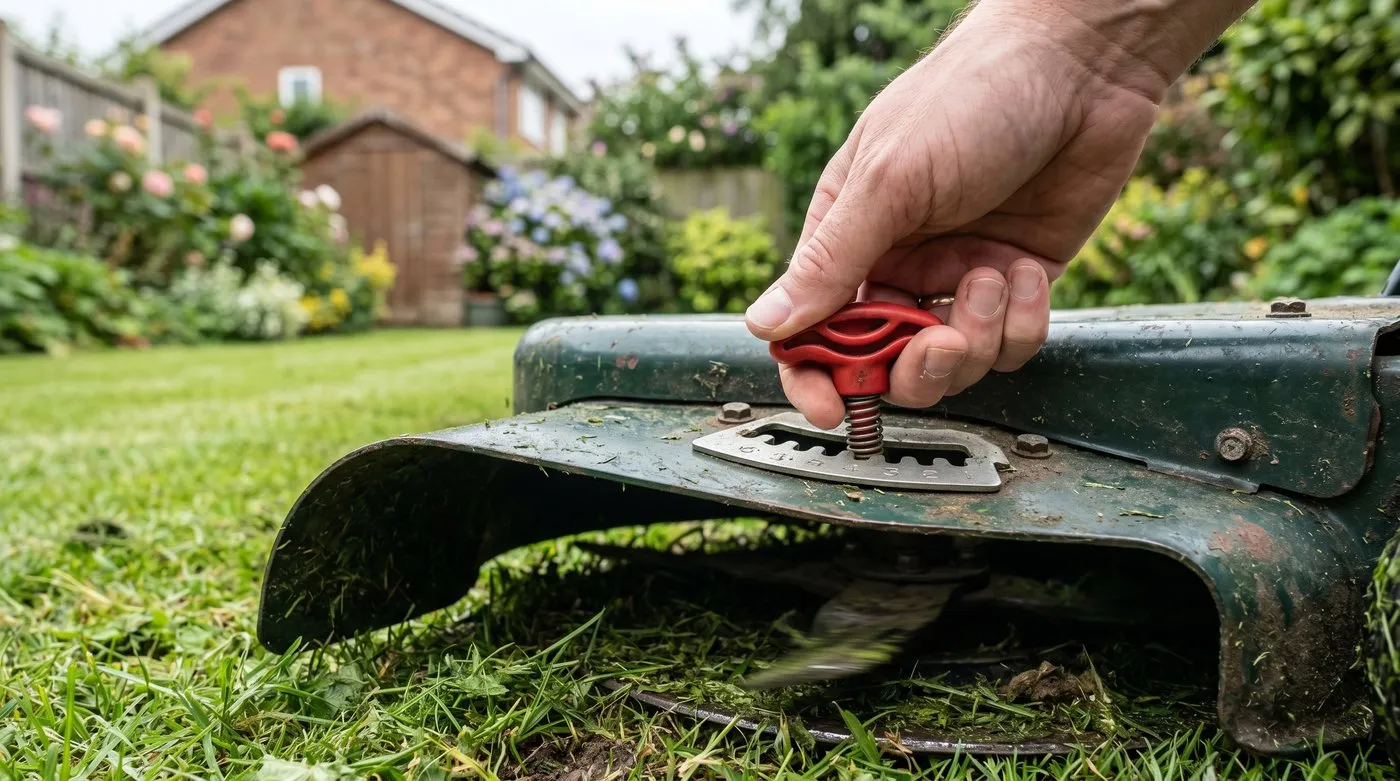 Most rotary mowers adjust at a single spring-loaded lever. Set it higher in summer and step down only in spring and autumn growth.
The one-third rule and why it protects your lawn
The one-third rule is the most important mowing principle there is: never remove more than one third of the leaf length in a single cut. If the grass is 60mm tall, cut no lower than 40mm that day. To reach a 30mm target from 60mm, mow twice across several days, not once.
The science is simple. Grass feeds its roots from the leaf through photosynthesis. Strip away more than a third of the leaf at once and the plant sheds roots to match the smaller top. Those shorter roots then cannot reach deep moisture, so the lawn becomes drought-prone and weak.
Gardener’s tip: If the lawn has got away from you after a holiday, do not panic-cut it to your usual height. Take the top third off, wait four days, then take another third. Two gentle cuts beat one scalp every time.
How grass type changes the right cutting height
Cutting height depends heavily on which grasses make up your lawn. The two broad camps behave very differently under the blade.
Fine fescues and bent grasses are the ornamental species used on bowling greens and formal lawns. They have thin, needle-fine leaves and a low growing point, so they tolerate close mowing at 13-25mm. They look superb but bruise under foot traffic and need feeding and watering to hold that look.
Perennial ryegrass and meadow grasses are the hard-wearing workhorses in most family seed mixes. Ryegrass has a broad, coarse leaf and a higher growing point. It needs 25-50mm and resents close cutting. Scalp it and it thins fast. The trade-off is that it shrugs off football, dogs, and trampling.
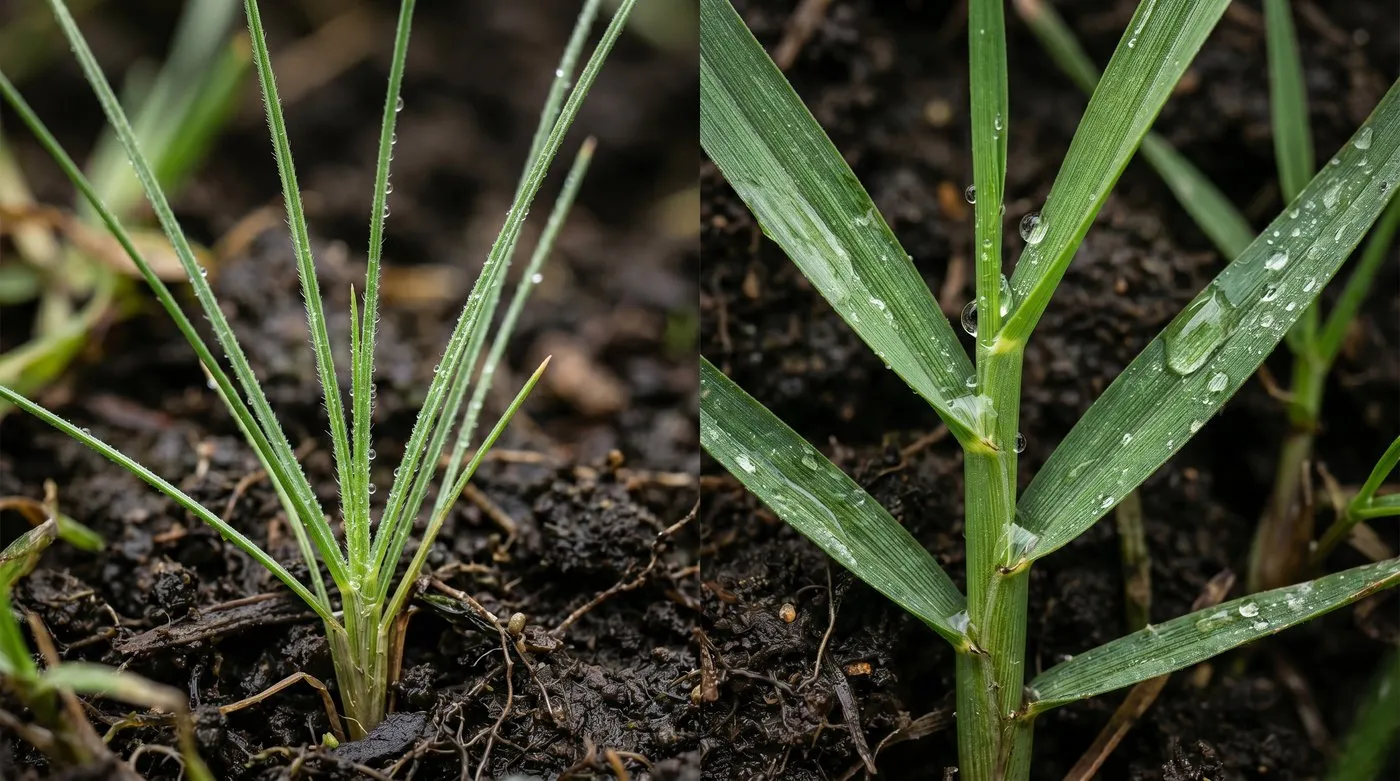 Fine fescue (left) carries a narrow blade and tolerates close mowing. Coarse ryegrass (right) needs to be kept longer.
To tell which you have, look closely at a single blade. Fescue is fine and rolled, almost like a green needle. Ryegrass is wide, glossy on the underside, and folds rather than rolls. Most real UK lawns are a mix, which is exactly why 25-40mm is the safe all-round range.
Cutting height by season and grass type
The table below sets out target cutting heights in millimetres. Use the lower end of each range only when grass is growing fast and conditions are mild. Raise to the upper end in heat, drought, or shade.
| Grass type | Spring | Summer (mild) | Summer (heat/drought) | Autumn | Winter |
|---|---|---|---|---|---|
| Fine fescue / bent (ornamental) | 13-20mm | 18-25mm | 25-30mm | 18-25mm | Avoid cutting; 25mm if needed |
| Mixed family lawn | 25-30mm | 30-35mm | 40-50mm | 25-35mm | 35-40mm if growing |
| Ryegrass hard-wearing | 30-40mm | 35-45mm | 45-50mm | 30-40mm | 40mm if growing |
| Shaded lawn (any mix) | 35-40mm | 40-50mm | 50mm | 40mm | Avoid cutting |
The pattern is the same across all of them. Cut a touch lower during cool, moist, fast-growing spells in spring and autumn. Raise the blade in summer heat and in shade. Back right off in winter, when growth nearly stops and wet grass tears rather than cuts.
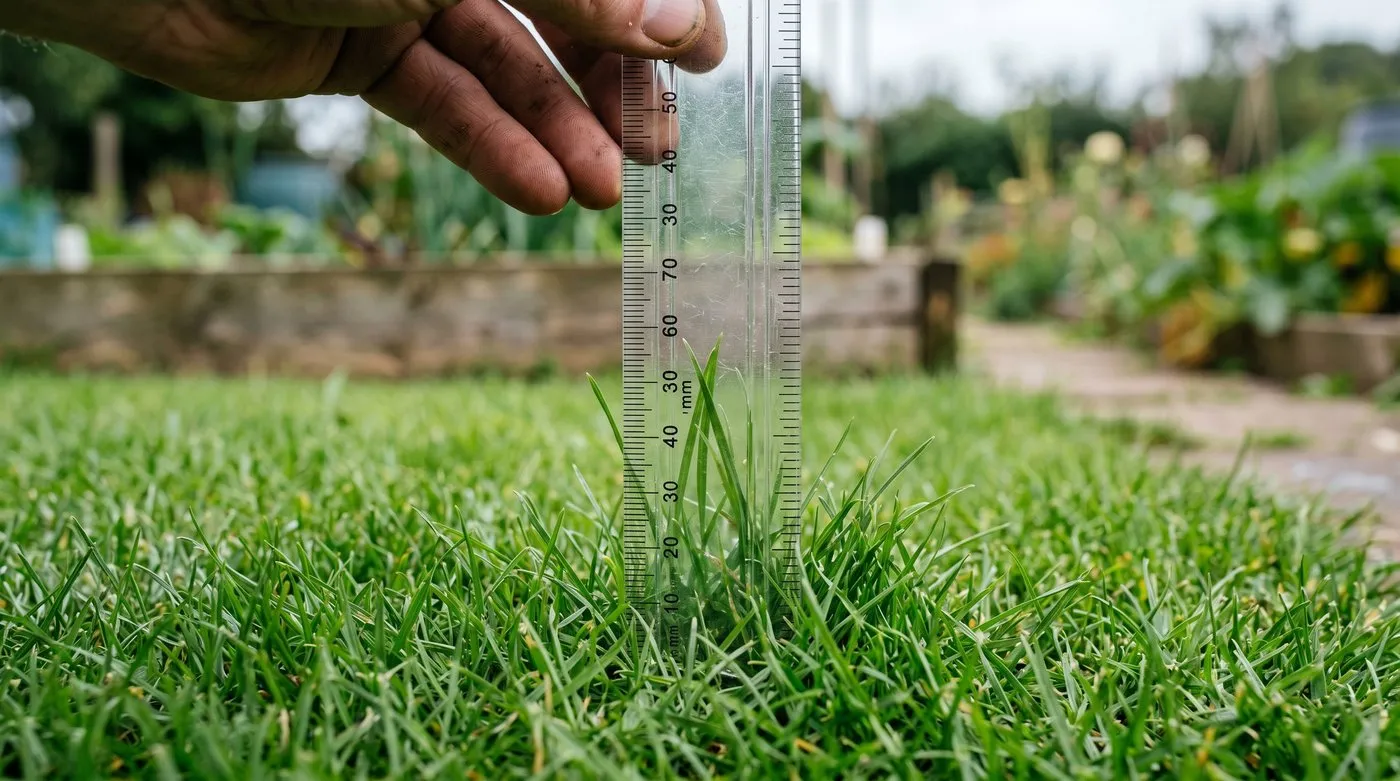 Check your actual cutting height with a ruler against freshly cut turf. Mower setting numbers rarely match the real height on the ground.
Why summer heat means you mow higher, not lower
Cutting short in summer is the most common and most damaging mistake UK gardeners make. The instinct is to cut low so you can mow less often on holiday. It does the opposite of what you want.
Longer grass shades the soil. A 45mm sward keeps the surface several degrees cooler than a 15mm one and slows evaporation sharply. The roots stay cool and moist, and the crowns are protected from scorch. Short grass bakes the soil, the roots dry out, and the lawn browns.
Warning: Never scalp a lawn going into a heatwave. Removing leaf right before heat strips away the shading the plant needs to survive. If a hot dry spell is forecast, raise the mower a notch and cut a day or two early instead.
For more on timing your cuts around hot weather, see our guide on whether you should cut grass in hot weather, and how to bring a parched lawn back in our lawn drought recovery guide.
What scalping does and how long recovery takes
Scalping is cutting below the growing point so you expose stem, crown, or bare soil. It shows as pale yellow or brown patches straight after mowing, usually on bumps and slopes where the deck dips closest to the ground.
A scalped lawn is doing four bad things at once. It has lost the leaf it needs to feed itself. Its roots are shrinking to match. Its bare soil is now open to moss spores and weed seed. And it is more prone to drought because the shortened roots cannot reach moisture. None of this is quick to fix.
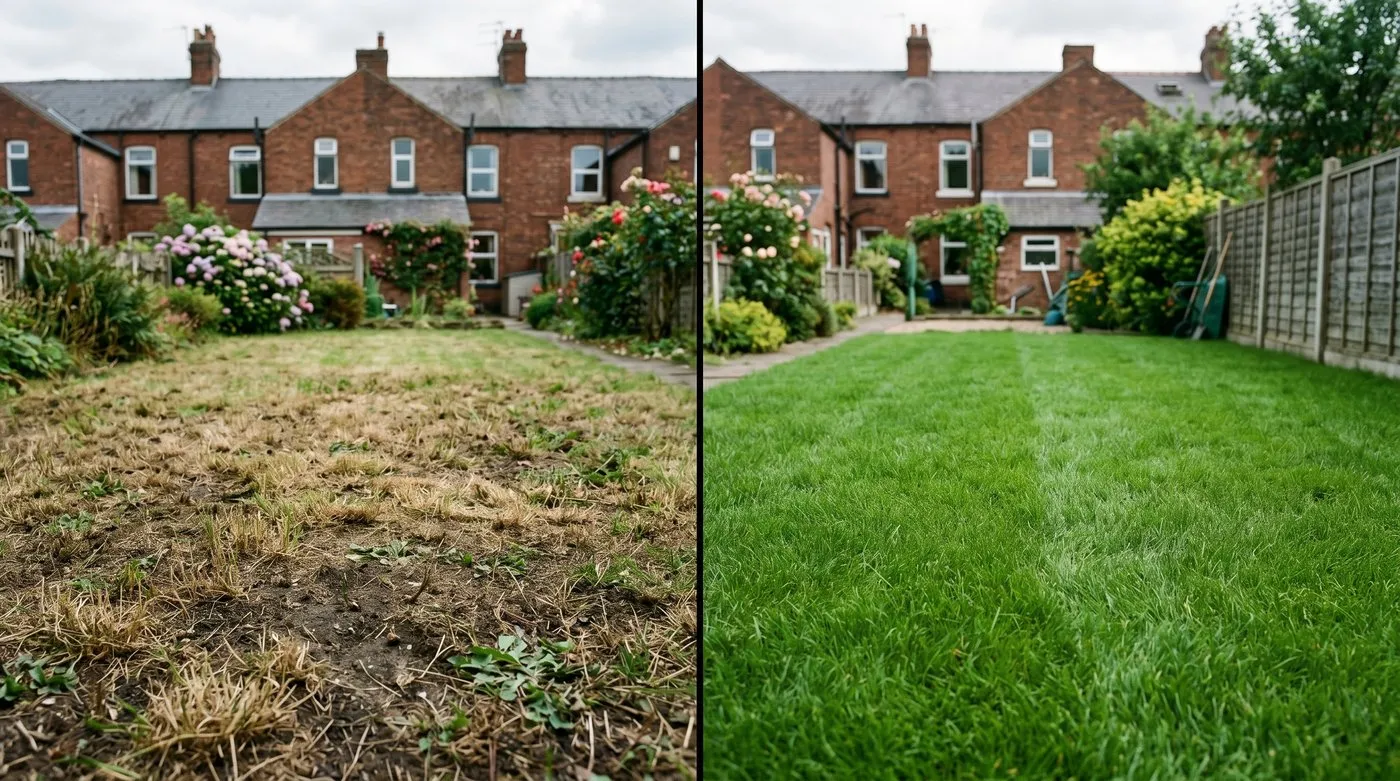 Scalped turf (left) loses its leaf, browns within days, and opens bare soil to weeds. Healthy turf (right) was kept above the growing point.
Bumpy lawns scalp far more easily because the mower bottoms out on the high spots. If yours scalps every cut on the same humps, the real fix is levelling, not lifting the blade. Our guide to levelling a bumpy lawn covers top dressing the dips so the deck rides evenly.
Reading mower settings and converting to millimetres
Mower height numbers are not standardised. One brand’s setting 3 might be 25mm; another’s might be 40mm. The dial often measures from the deck, not the ground, so the real cut height is shorter than the number suggests once wheels sink into soft turf.
Always check the true height yourself. Mow a test strip, then hold a ruler vertically against the freshly cut grass and read the leaf height. Adjust the setting until the ruler shows the millimetres you actually want. Write the correct notch on the deck with a paint pen so you are not guessing each week.
| Mower setting (typical 7-notch rotary) | Approx cut height | Best use |
|---|---|---|
| Lowest 1-2 | 15-20mm | Fine ornamental swards only, spring and autumn |
| 3 | 25mm | Mixed lawn, mild fast growth |
| 4 | 30-35mm | General all-round family lawn |
| 5 | 40mm | Summer, shade, hard-wearing ryegrass |
| 6-7 | 45-50mm+ | Heatwave, drought, very shaded, new lawns |
A sharp blade matters as much as the right height. A blunt blade tears the leaf tip, which then frays, browns, and lets in disease. See when to sharpen a lawn mower blade for how often to do it.
Month-by-month mowing height calendar for UK lawns
This calendar assumes a typical mixed family lawn in the UK. Shift heights up for ornamental fescue and adjust for your own region; the south and west grow earlier and longer than the north and Scotland.
| Month | Height and action |
|---|---|
| January | Do not cut unless growth continues in a mild south. If so, top lightly at 40mm on a dry day. |
| February | Usually no cutting. Sharpen the blade and service the mower ready for spring. |
| March | First cut of the year, blade high at 40mm. Just top the lawn, do not cut low. |
| April | Growth speeds up. Drop to 30-35mm. Mow weekly. Never cut wet grass. |
| May | Peak growth. Cut to 25-30mm on a mixed lawn. Mow weekly or twice weekly if fast. |
| June | Watch the weather. Mild and moist, hold 30mm. Dry and hot, raise to 40mm. |
| July | Usually the hottest, driest month. Raise to 40-50mm. Mow only when growing. |
| August | Keep high at 40-50mm through any drought. Resume normal cuts after rain returns. |
| September | Growth flushes again. Drop back to 30-35mm. Good month to scarify and overseed. |
| October | Final regular cuts at 35-40mm. Raise slightly as growth slows. |
| November | One or two final tidy cuts at 40mm if growing. Stop once frosts settle in. |
| December | No cutting. Keep off frosted or waterlogged turf to avoid bruising the crowns. |
The first cut of spring sets the tone for the year. Always take it high, then lower in steps. Our guide to the first lawn cut after winter and the full lawn care calendar walk through the timing in detail.
Common mowing height mistakes to avoid
Cutting too low all year. People leave the mower on its lowest notch to mow less often. This scalps the crowns, thins the sward, and invites moss. Fix: set the blade to 30-40mm and accept slightly more frequent cuts.
Scalping in a heatwave. Cutting short before hot weather strips away the shading the lawn needs to survive. Fix: raise the height before any forecast dry spell, not after the damage shows.
Breaking the one-third rule after a holiday. Coming home to long grass and cutting it all off in one pass shocks the plant badly. Fix: stage the cut over several days, taking a third each time.
Ignoring bumps. A lawn that scalps on the same humps every week needs levelling, not a higher blade for the whole lawn. Fix: top dress the dips so the deck rides level.
Mowing wet grass low. Wet blades fold under the mower and tear instead of cutting, and the wheels sink and scalp. Fix: wait until the surface is dry, or raise the height. See whether you can mow a wet lawn for the full picture.
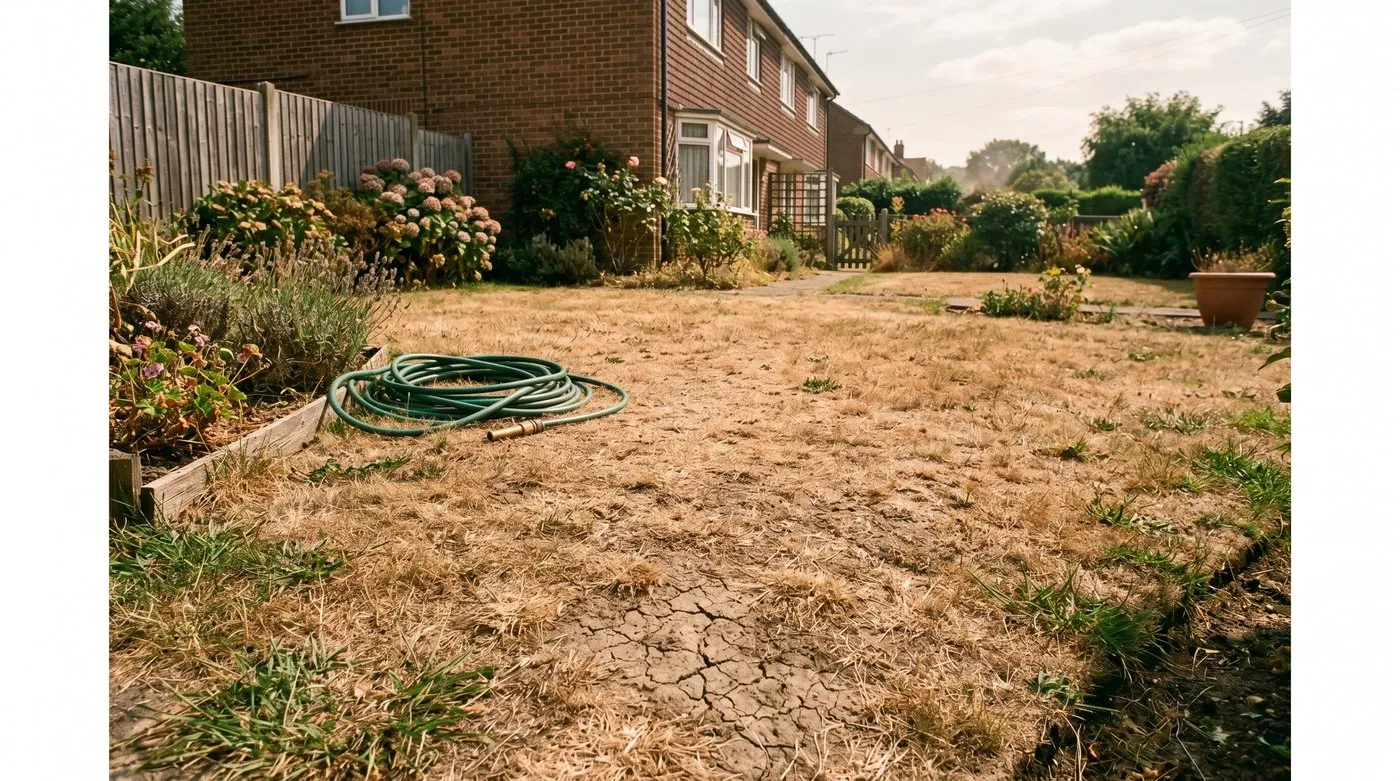 A lawn scalped before a dry spell goes dormant and brown. Kept longer, the same turf would have stayed green far longer.
A taller lawn also out-competes weeds for light. Dense, longer grass shades the soil surface so broadleaf weed and moss seed struggle to germinate. Mowing height is the cheapest, most effective weed control most gardeners have, and it costs nothing but a turn of the lever. Established greater plantain in a lawn still needs crown removal and repair beneath the turf.
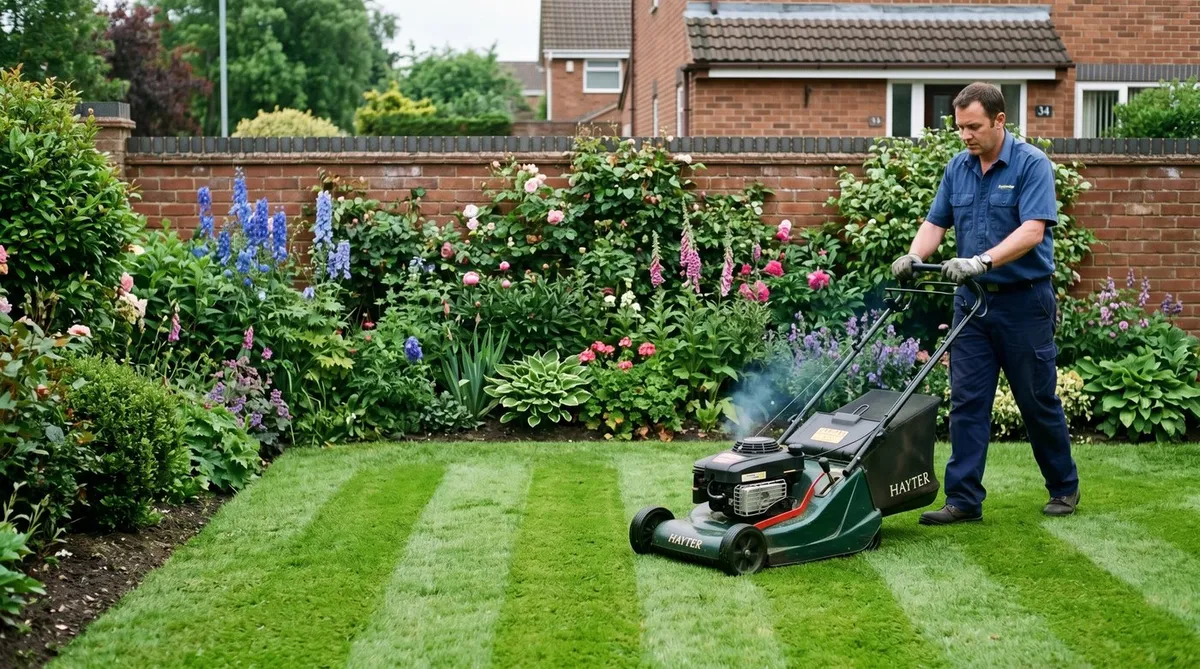
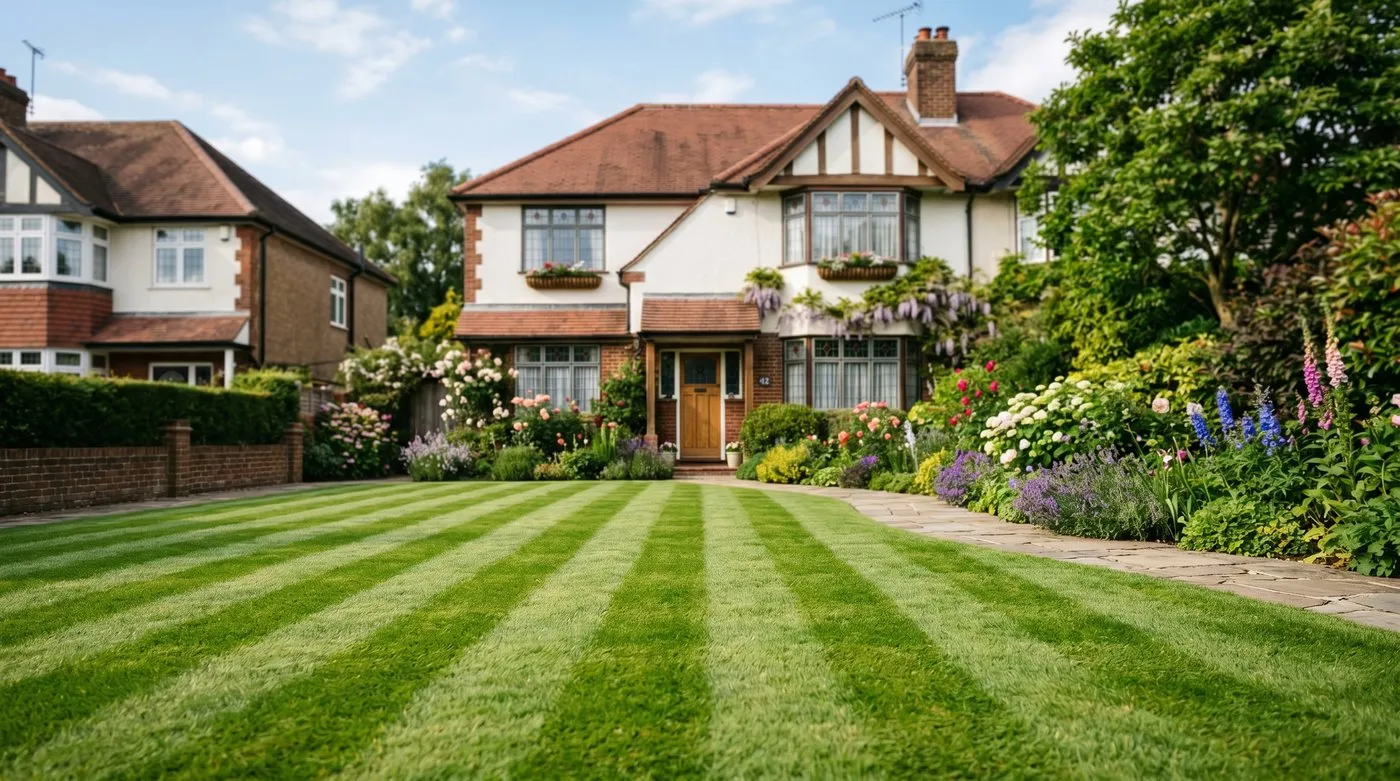 A lawn kept at 30-40mm and mown often looks lush and stripes well. You do not need to scalp it to get a smart finish.
You can still get crisp stripes on a longer lawn; it is the roller and mowing direction that make stripes, not the height. Our guide to lawn stripes without a roller shows how.
Now you have the right cutting height fixed, read our guide on when to mow your lawn for the timing that makes every cut count, and browse the full how-to library for the rest of the lawn care year.
Frequently asked questions about lawn mowing height
How low should you cut your grass in summer?
Raise the blade to 40-50mm in summer heat. Longer grass shades the soil, keeps roots cool, and slows moisture loss. Cutting short during a dry spell exposes the crowns and turns the lawn brown within days. Drop back to 25-30mm once cooler, wetter weather returns in autumn.
What is the lowest you should mow a lawn?
Most domestic lawns should never go below 15mm. Only fine fescue and bent ornamental swards tolerate 13mm or lower. Cutting a standard ryegrass family lawn below 15mm removes the growing point, scalps the turf, and leaves bare soil for moss and weeds to colonise.
What does the one-third rule mean for mowing?
Never remove more than a third of the leaf length in one cut. If your lawn is 60mm tall, cut no lower than 40mm that day. Removing more starves the roots, stresses the plant, and triggers shallow rooting. Mow more often in fast growth rather than cutting hard once.
Why does cutting grass too short kill it?
Short cutting removes the leaf the plant needs to photosynthesise. Roots then shrink to match the reduced top growth, so the lawn cannot reach water or nutrients. Bare crowns scorch in sun and let weeds and moss invade. Recovery from a bad scalp takes 10-21 days.
What height should I cut a new lawn?
Cut a new lawn high for the first season, around 40-50mm. Take only the top off the first few cuts once grass reaches 50-75mm. Light, frequent topping encourages tillering and a dense sward. Lower the height gradually over the following spring, never in one drop.
Should I mow lower in shade?
No, raise the height in shade to 40-50mm. Grass in shade gets less light and needs more leaf to survive. Cutting shaded grass short thins it fast and lets moss take over. Fine fescue copes best in shade; ryegrass struggles below half a day of sun.
Does mowing height affect weeds and moss?
Yes, cutting too low is the main cause of moss and weed invasion. Short, scalped turf opens bare soil that moss and broadleaf weeds colonise quickly. A dense lawn kept at 25-40mm shades out most weed seedlings before they establish. Mowing height is the cheapest weed control you have.
How often should I mow at the right height?
Mow when the grass is a third taller than your target height. At a 30mm target, cut when it reaches about 45mm. In spring and autumn that means weekly; in summer heat or winter it may be every two to three weeks. Frequency follows growth, not the calendar.
Our team produces practical UK gardening guidance from source research, contributor records and established horticultural practice. Editorial standards are overseen by Matt W.