Key takeaways
- Early morning, 5am to 9am, is the best time to water in the UK because evaporation is lowest and leaves dry fast
- Evening watering loses little water too, but damp overnight foliage feeds slugs and spreads fungal disease
- Midday watering wastes the most, with up to 50 percent lost to evaporation on a warm day
- Always water at the base of the plant, never over the leaves, to cut disease and waste
- Containers and hanging baskets often need watering twice a day in a UK heatwave
- A timer set for 5am to 6am gives the plant a full day of use before the heat arrives
The best time to water the garden in the UK is early morning, ideally between 5am and 9am. Watering in the morning beats both evening and midday because the cool air keeps evaporation low, the water reaches the roots before the day heats up, and the foliage dries quickly so fungal disease and slugs get less of a foothold. This guide is about timing alone: when in the day to water, and why a few hours either way changes how much water your plants actually receive.
Why early morning is the best time to water
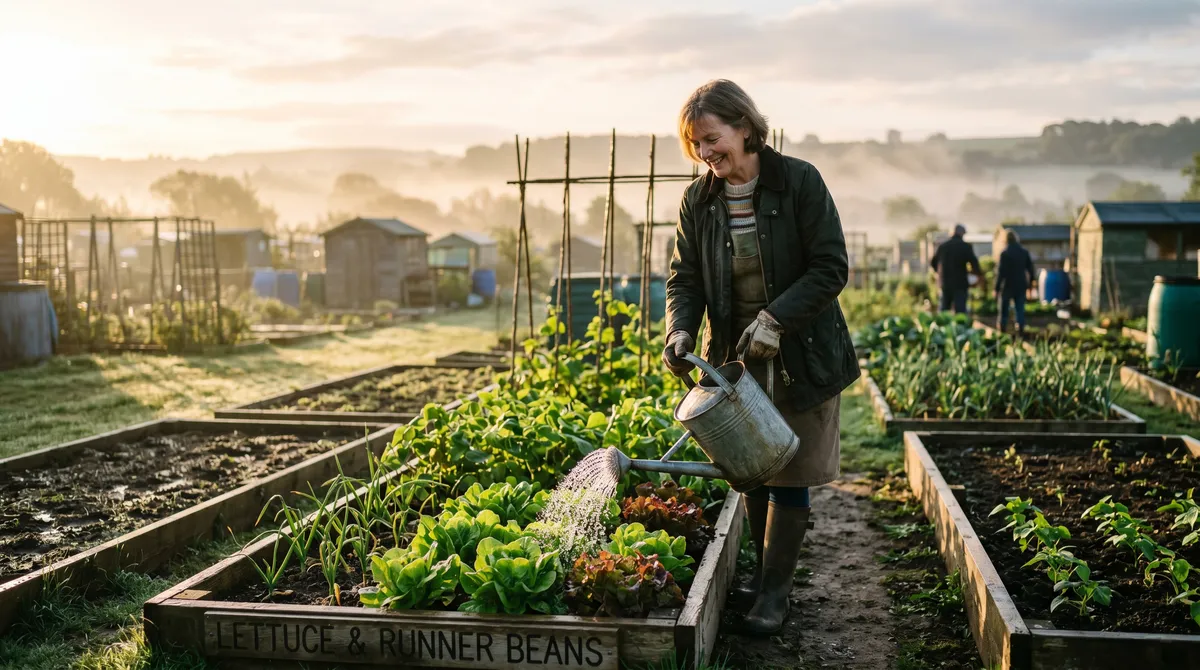
Early morning watering loses the least water and sets the plant up for the whole day. Between 5am and 9am the air is cool, often 10 to 15C even in summer, and there is little wind or direct sun to pull moisture off the soil surface. Water poured at dawn soaks down to the root zone before evaporation can take hold. By the time the sun is high, the plant is already full of water and braced for the heat.
A turgid plant copes far better with a hot afternoon. Water inside the cells keeps leaves firm and the stomata working, so growth does not stall. Wilting in the afternoon often means the plant ran dry overnight, not that it needs a midday drink.
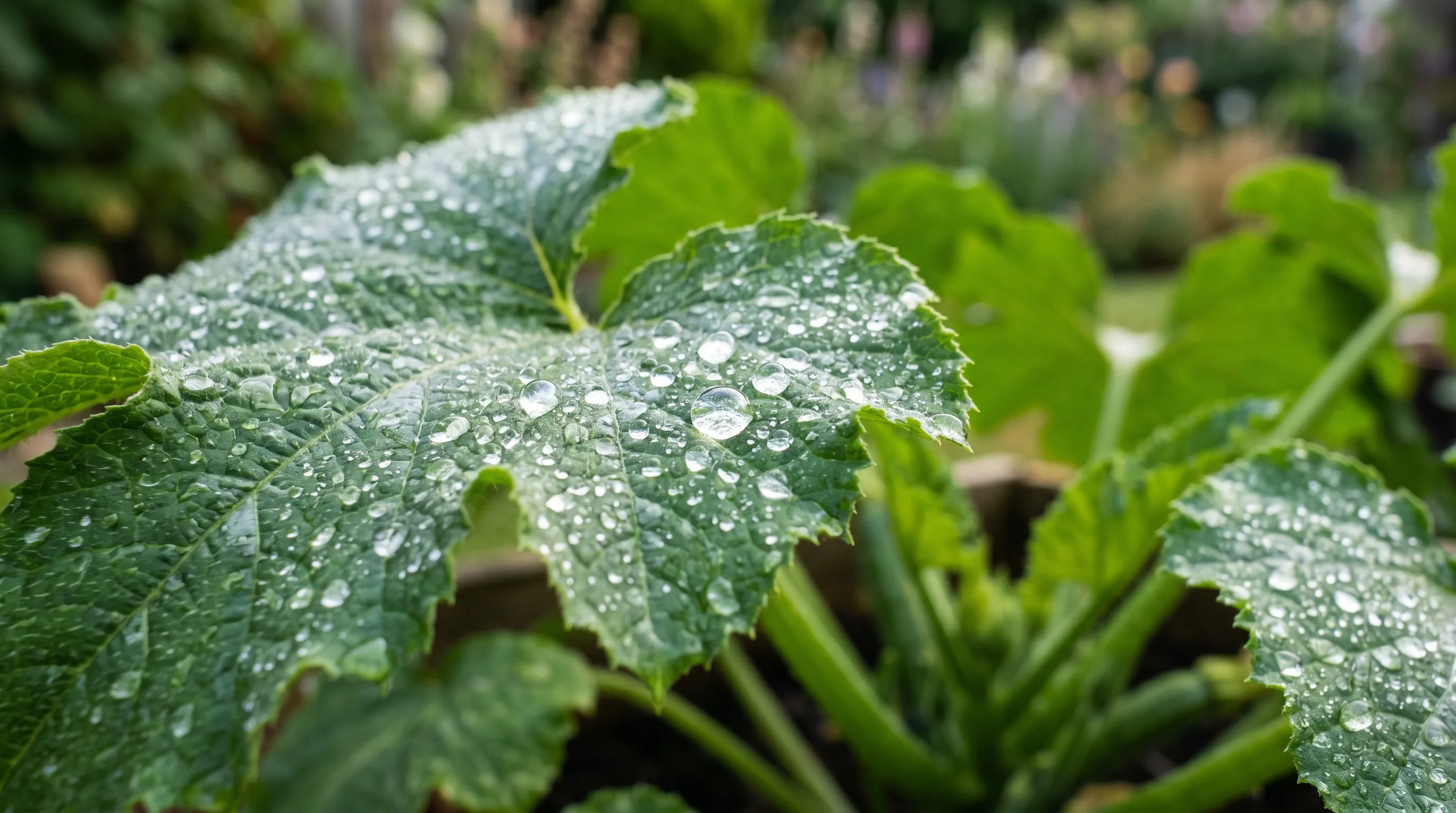 Morning splashes dry within an hour of sunrise, so fungal spores get no damp foothold on the leaves.
The case for and against watering in the evening
Evening watering is the second-best option, and sometimes the only practical one. From around 6pm to 8pm the air is cooling and the sun is low, so evaporation drops back to morning levels. In a heatwave an evening soak can rescue plants that have struggled through a 28C afternoon, and it gives the water all night to sink in undisturbed.
The problem is what happens to wet foliage overnight. UK summer nights are often humid, and leaves that stay damp for eight or nine hours are a gift to fungal disease. Tomato and potato blight, rose black spot, and powdery mildew all establish faster on foliage that never dries. If you must water in the evening, aim every drop at the soil and keep the leaves dry.
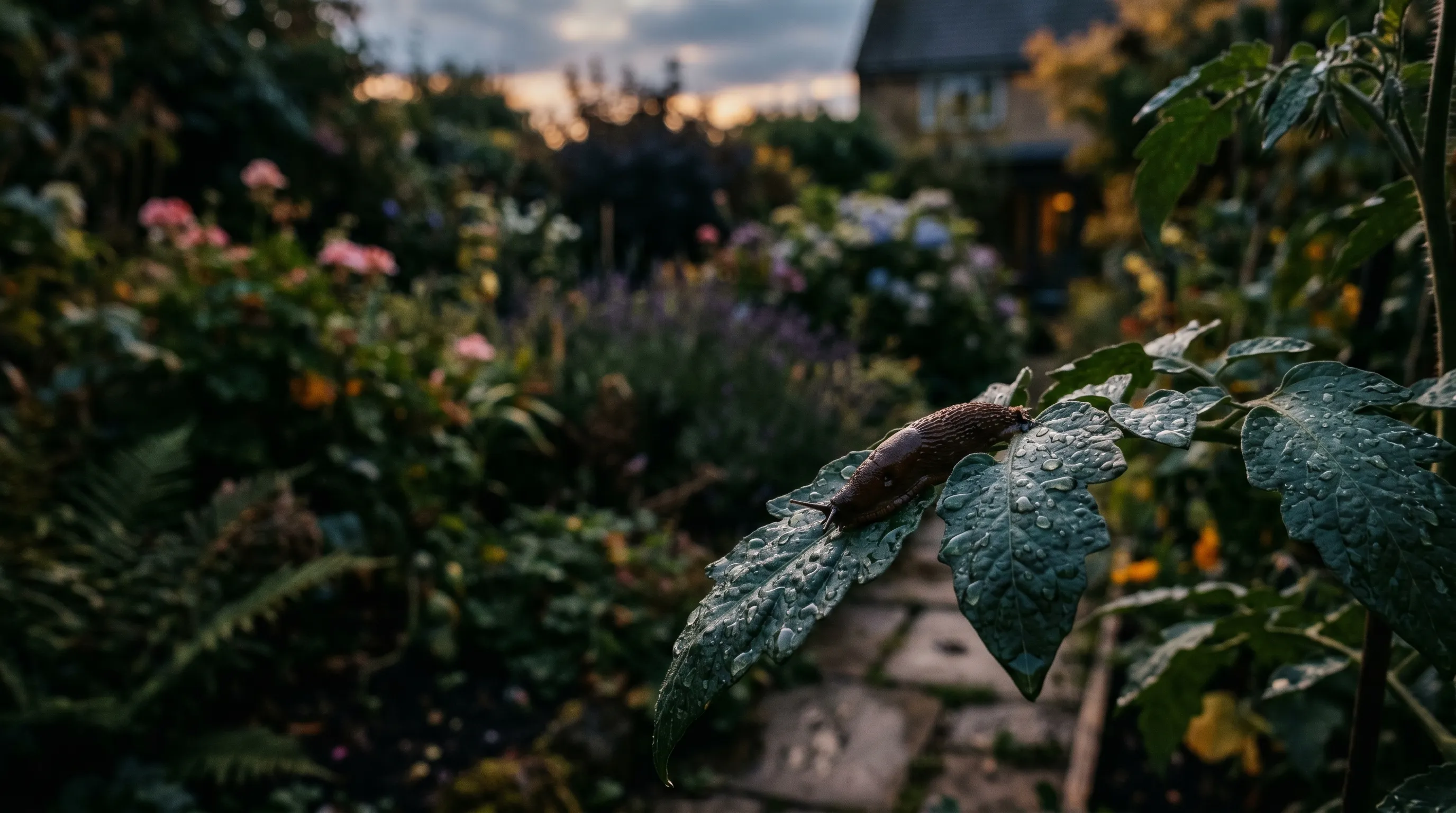 Foliage that stays wet all night after an evening watering gives slugs and fungal disease ideal conditions.
Why midday is the worst time to water
You will often hear that watering in bright sun scorches leaves, because droplets act like tiny magnifying lenses. In honest terms this is largely a myth for UK gardens. Lab work has shown the effect is negligible on flat leaves under our climate, though hairy leaves can hold droplets long enough to cause minor marking. The real reason to skip midday is not scorch. It is the sheer waste of water and the fact that a quick midday splash wets only the top centimetre, then bakes off, training roots to stay shallow.
If a plant is genuinely collapsing at midday, water it. A wilting plant needs help more than it needs perfect timing. Just accept that you are paying an evaporation tax.
How the best watering time compares
The table below sets the three windows side by side, based on a typical warm UK summer day. Evaporation figures are approximate and rise with heat, wind and sun.
| Watering time | Evaporation loss | Disease risk | Slug risk | Verdict |
|---|---|---|---|---|
| Early morning (5am to 9am) | Low, around 10 to 15% | Low, leaves dry fast | Low, surface dries by dusk | Best, the default choice |
| Late evening (6pm to 8pm) | Low, around 10 to 20% | High if leaves stay wet | High, damp ground after dark | Second best, keep leaves dry |
| Midday (11am to 4pm) | High, up to 50% | Low | Low | Worst, wasteful, emergency only |
| Night (after 9pm) | Very low | High, foliage wet all night | High | Avoid unless desperate |
Morning is the clear winner on every measure except sheer convenience. Evening is the sensible fallback for anyone who is out of the house at dawn, as long as the water goes on the soil. The lesson holds across the UK, from a Cornish coastal plot to a Highland garden, though hotter, drier southern summers make the morning advantage even larger.
Why watering time changes by what you grow
The best time shifts a little depending on what you are watering and what it grows in. The principle stays the same: morning first, soil not leaves.
Lawns, borders and vegetable beds
Lawns and established borders want a deep morning soak two to three times a week, not a daily sprinkle. Watering deeply and less often draws roots downward, so the plants reach moisture that survives a dry spell. A daily light watering keeps roots shallow and the lawn becomes more drought-prone, not less. For a lawn specifically, our guide on how often to water a lawn sets out the rates and signs of stress. Vegetable beds follow the same rule, with thirsty crops like courgettes, beans and tomatoes wanting the most.
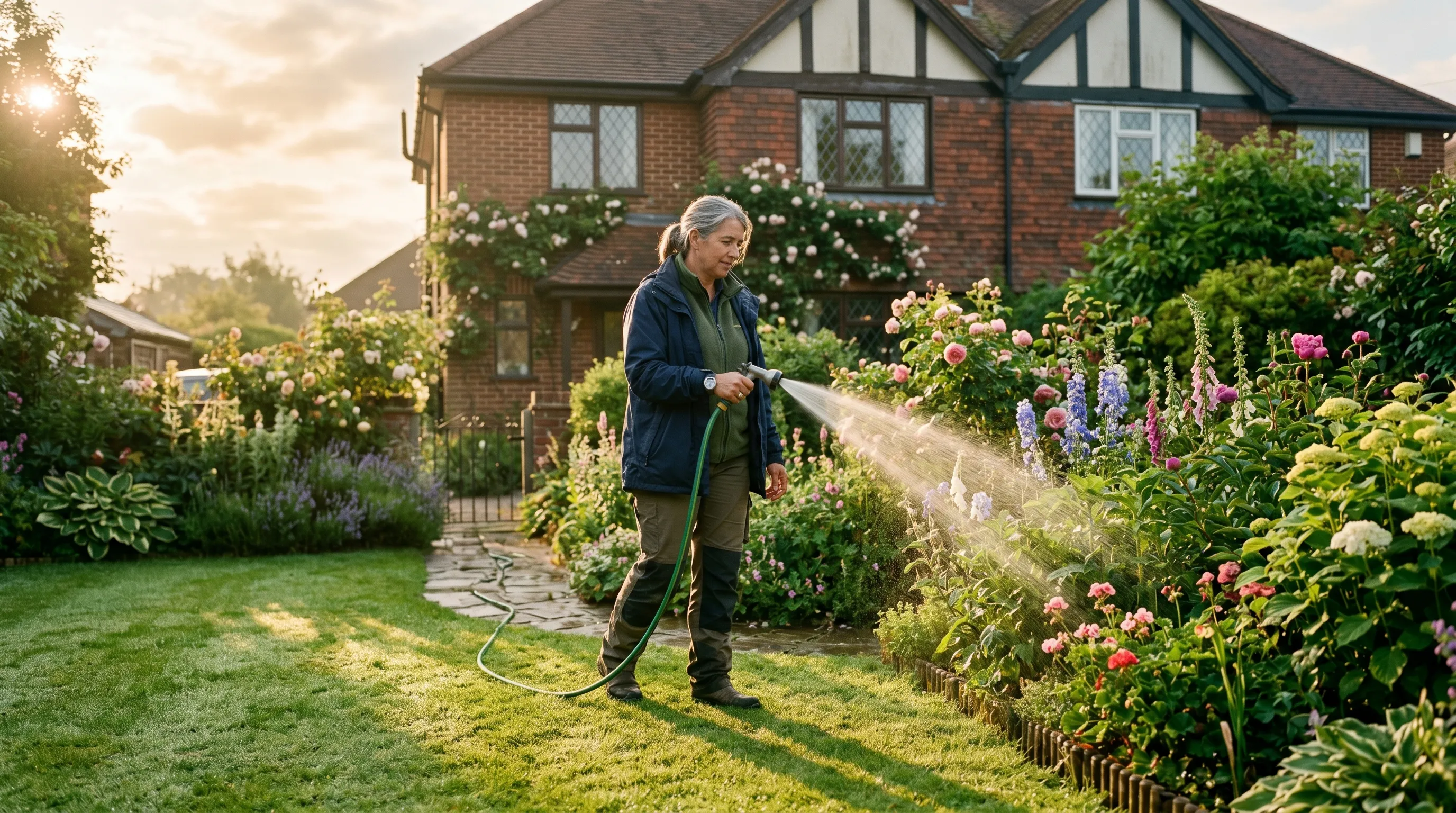 A deep morning soak two or three times a week draws lawn roots downward and beats a daily sprinkle.
Containers, pots and hanging baskets
Greenhouses and new plantings
Greenhouse plants heat up fastest and benefit from an early morning watering plus damping down the floor. A closed greenhouse can hit 35C by mid-morning, so watering at dawn fills the plants before that spike. Newly planted shrubs, trees and bedding have small root systems and need watering every day or two for the first few weeks, always in the morning, until they establish.
Water at the base, not over the leaves
Watering at the base of the plant, straight onto the soil, is the single most important habit after getting the timing right. Overhead watering wets the foliage, wastes water to evaporation off the leaves, and spreads fungal spores from leaf to leaf. A watering can with the rose removed, or a hose laid at the soil, delivers water exactly where the roots are.
Gardener’s tip: Water tomatoes, courgettes, squash and roses at the base only, never over the leaves. Wet foliage in humid UK conditions is the main trigger for blight and mildew, whatever time of day you water.
A short length of drainpipe or a cut-down plastic bottle sunk next to thirsty plants channels water straight to the roots and stops it running off the surface. Soaker hose and drip line do the same job across a whole bed, releasing water slowly at soil level with almost no evaporation. These methods also let you water in the morning automatically, which solves the dawn-start problem for anyone who is not an early riser.
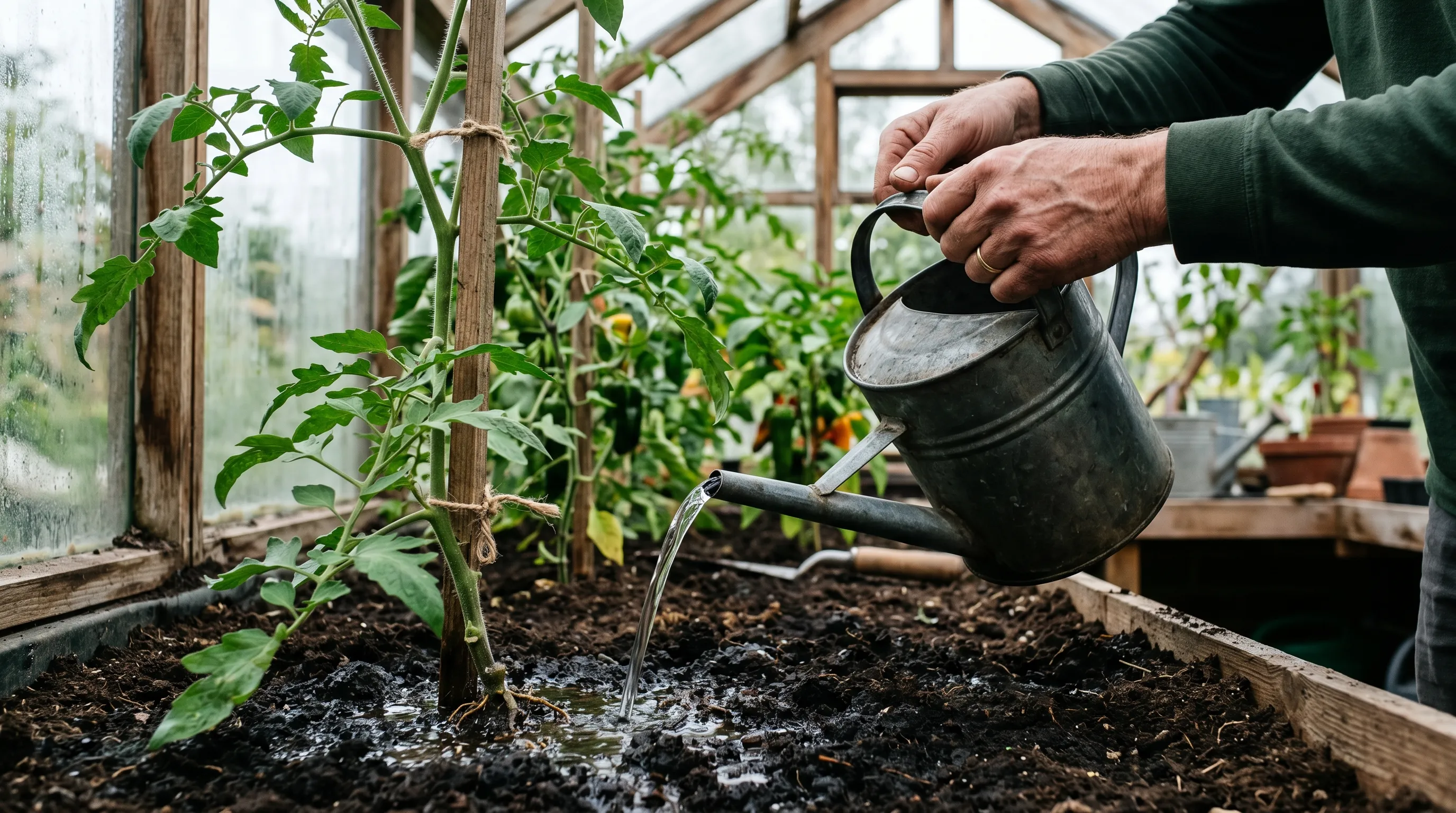 Pour at the base with the rose off, so water reaches the roots and the leaves stay dry.
Adjusting your watering through the UK seasons
Timing matters less in cool, damp months and far more in high summer. The table below shows the rough pattern for an average UK year.
| Month | Watering need | Best timing note |
|---|---|---|
| March to April | Low, often none | Water new plantings only, late morning is fine |
| May | Moderate | Morning watering as beds dry out |
| June to July | High | Strict early morning, containers twice daily in heat |
| August | High | Early morning, watch for hosepipe restrictions |
| September | Moderate | Morning, ease off as nights cool |
| October to February | Very low | Rarely needed outdoors, greenhouse only |
Warning: During a hosepipe ban it is illegal to use a hosepipe or sprinkler on most gardens, with fines up to 1000 pounds. You can still use a watering can filled from a water butt. Plan dawn can-watering and prioritise containers and new plantings. Our guide on gardening during a hosepipe ban explains what is and is not allowed.
Save water all year by fitting a water butt to every downpipe. A standard 200 litre butt fills from a single heavy shower off an average roof. Butt water is rainwater, which most plants prefer to tap water, and a can of it at dawn ticks every box. Mulching beds with 5cm of bark or compost cuts evaporation from the soil by up to 70 percent, so you water less often whatever the hour.
Common watering mistakes to avoid
A handful of timing errors waste water and cause more disease than they prevent. Avoid these and most watering problems disappear.
Watering at midday. The biggest waste of all. Up to half the water evaporates before it reaches the roots, and the wet surface bakes dry within the hour. Move the job to dawn and the same can of water goes twice as far.
Wetting the foliage in the evening. Spraying leaves at dusk leaves them damp all night, which is how blight, mildew and black spot take hold. If you water in the evening, keep the water on the soil and the leaves dry.
Little and often, shallow watering. A daily light sprinkle wets only the top centimetre and trains roots to stay near the surface, where they dry out first. A deep soak two or three times a week beats a daily splash every time.
Leaving the timer running in the rain. An automatic system set and forgotten will water through a downpour, wasting water and drowning roots. Fit a rain sensor, or check the forecast and pause the timer when wet weather is due.
The single biggest gain is from getting the timing right, then keeping the water off the foliage. Everything else, the mulch, the butt, the drip line, simply makes a good dawn watering go further. For how much to apply when temperatures climb, see our guide on watering in hot weather.
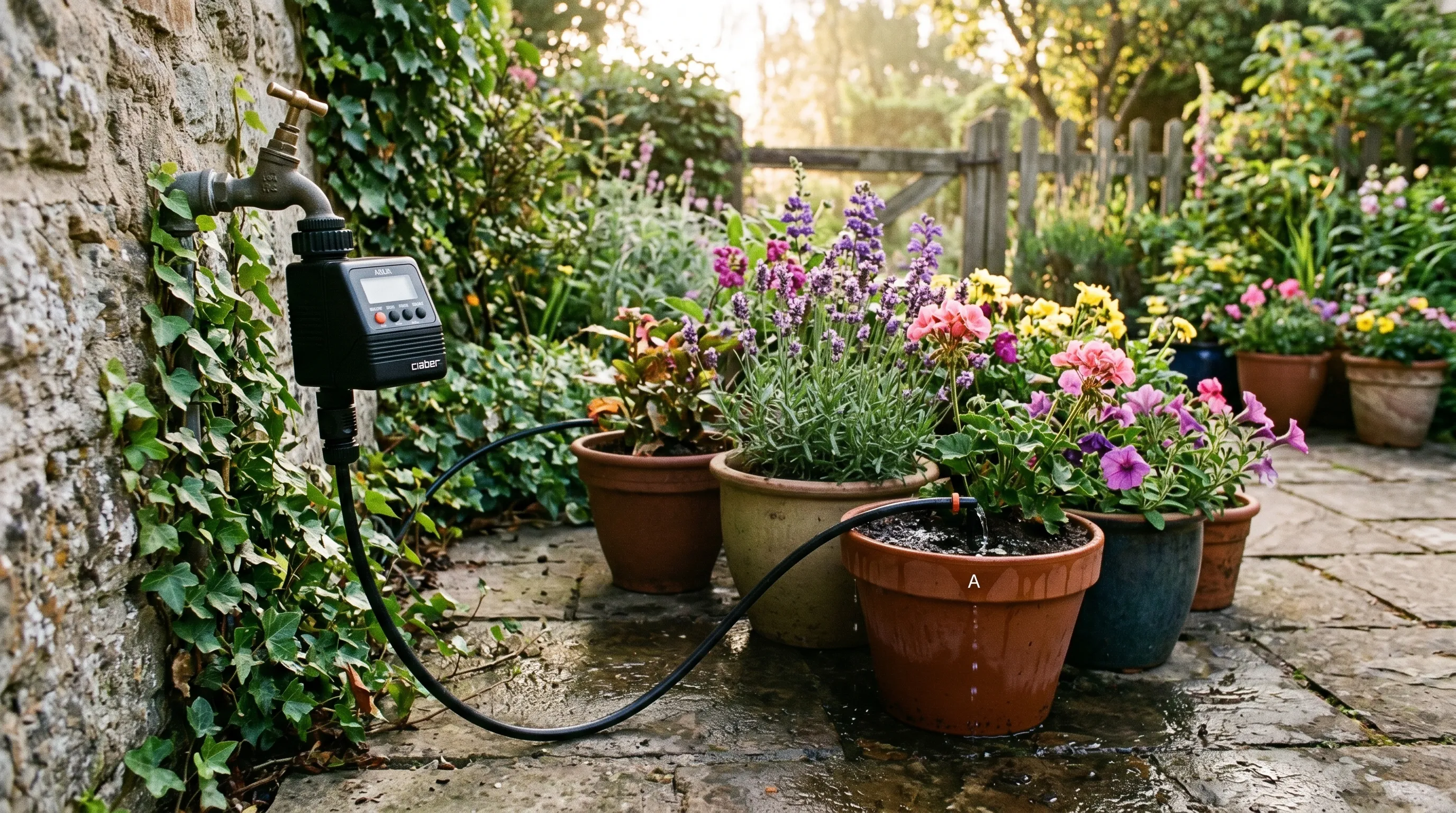 A battery tap timer set for 5am to 6am runs the dawn watering before you are even awake.
Frequently asked questions
Is it better to water plants in the morning or evening?
Early morning is better than evening. Both keep evaporation low, but morning lets foliage dry fast, which cuts fungal disease and gives slugs nowhere damp to feed overnight. Evening works as a second choice if you cannot water at dawn, especially in a heatwave, but always aim the water at the soil so the leaves stay dry.
What time of day should you water a garden in the UK?
Water between 5am and 9am for the best results. The air is cool, so little water evaporates, and the plant fills with water before the day heats up. If mornings are impossible, water from 6pm to 8pm instead and keep the leaves dry. Avoid watering between 11am and 4pm, when up to half the water is lost.
Why should you not water plants in the midday sun?
Midday watering wastes water and does little good. On a warm UK day up to 50 percent evaporates before it soaks in. The old idea that water droplets scorch leaves like tiny lenses is largely a myth in British conditions, but the real loss is the wasted water and a soil surface that dries within the hour.
How often should I water my garden in hot weather?
Most established beds need a deep soak two to three times a week. Containers and hanging baskets need far more, often once or twice a day in a heatwave because the compost dries fast. Water deeply and less often for borders, encouraging roots to grow down. A daily light sprinkle trains roots to stay shallow and weak.
Does watering in the evening cause slugs?
Evening watering can increase slug damage. Slugs and snails feed at night and need damp ground to move, so wet soil and foliage after dusk gives them ideal conditions. Morning watering lets the surface dry before nightfall, leaving slugs a drier, harder surface to cross when they come out to feed.
The Royal Horticultural Society recommends watering in the early morning or evening to reduce evaporation, with the soil as the target rather than the foliage.
Our team produces practical UK gardening guidance from source research, contributor records and established horticultural practice. Editorial standards are overseen by Matt W.