Key takeaways
- Bud drop is caused by dry roots in late summer, not by the plant dying
- Brown mushy flowers mean frost damage or balling from cold wet weather
- Yellow leaves with green veins mean lime-induced chlorosis from alkaline soil or tap water
- Brown crispy leaf edges mean cold wind or morning sun scorching frosted leaves
- Black sticky leaves mean sooty mould growing on scale insect honeydew
- Most struggling camellias recover once the root cause is fixed
A camellia that looks like it is dying is rarely actually dying. The same five problems cause almost every UK case. Bud drop, brown flowers, yellow leaves, scorched edges and black sticky foliage each point to a clear cause. This guide matches the symptom to the cause, then gives the fix.
The Five Camellia Symptoms And What They Mean
Start by naming the symptom. Each one has a different cause and a different fix.
| Symptom | Likely cause | The fix |
|---|---|---|
| Buds drop before opening | Dry roots in late summer | Water weekly July-September |
| Flowers turn brown and mushy | Frost or balling | Move out of morning sun and east wind |
| Yellow leaves, green veins | Lime-induced chlorosis | Rainwater, iron, ericaceous mulch |
| Brown crispy leaf edges | Cold wind or sun scorch | Shelter from east wind and early sun |
| Black sticky leaves | Sooty mould from scale | Treat the scale insects |
Most struggling camellias show one main symptom. Work through them in order. The most common UK problem by far is bud drop, so start there.
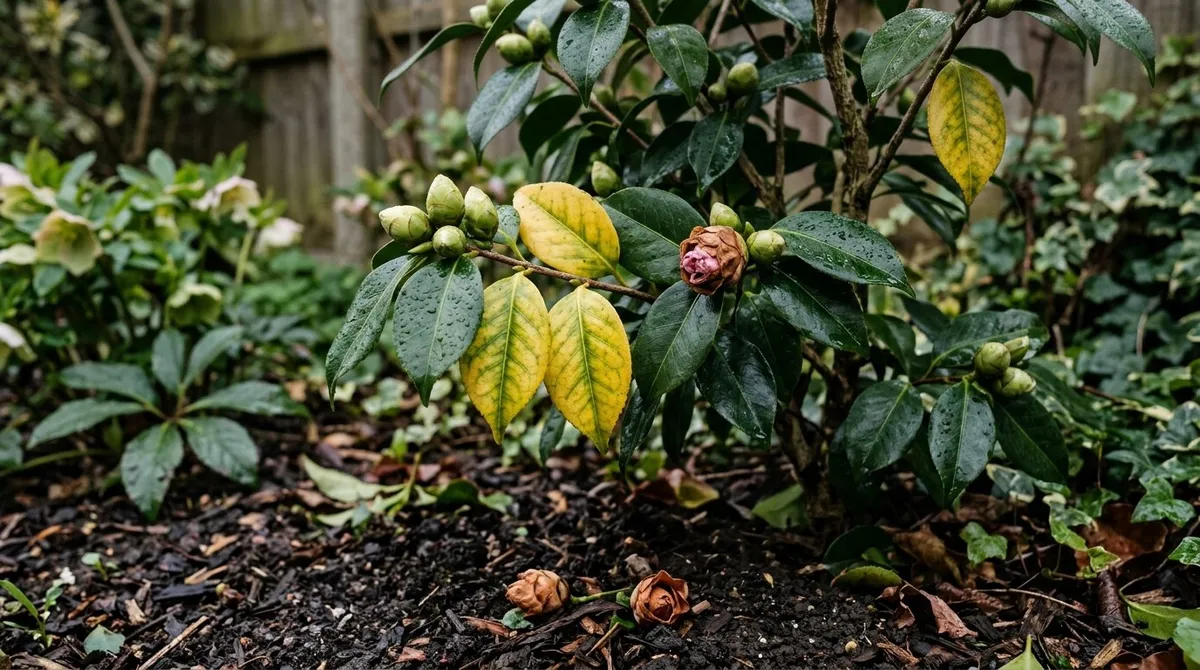
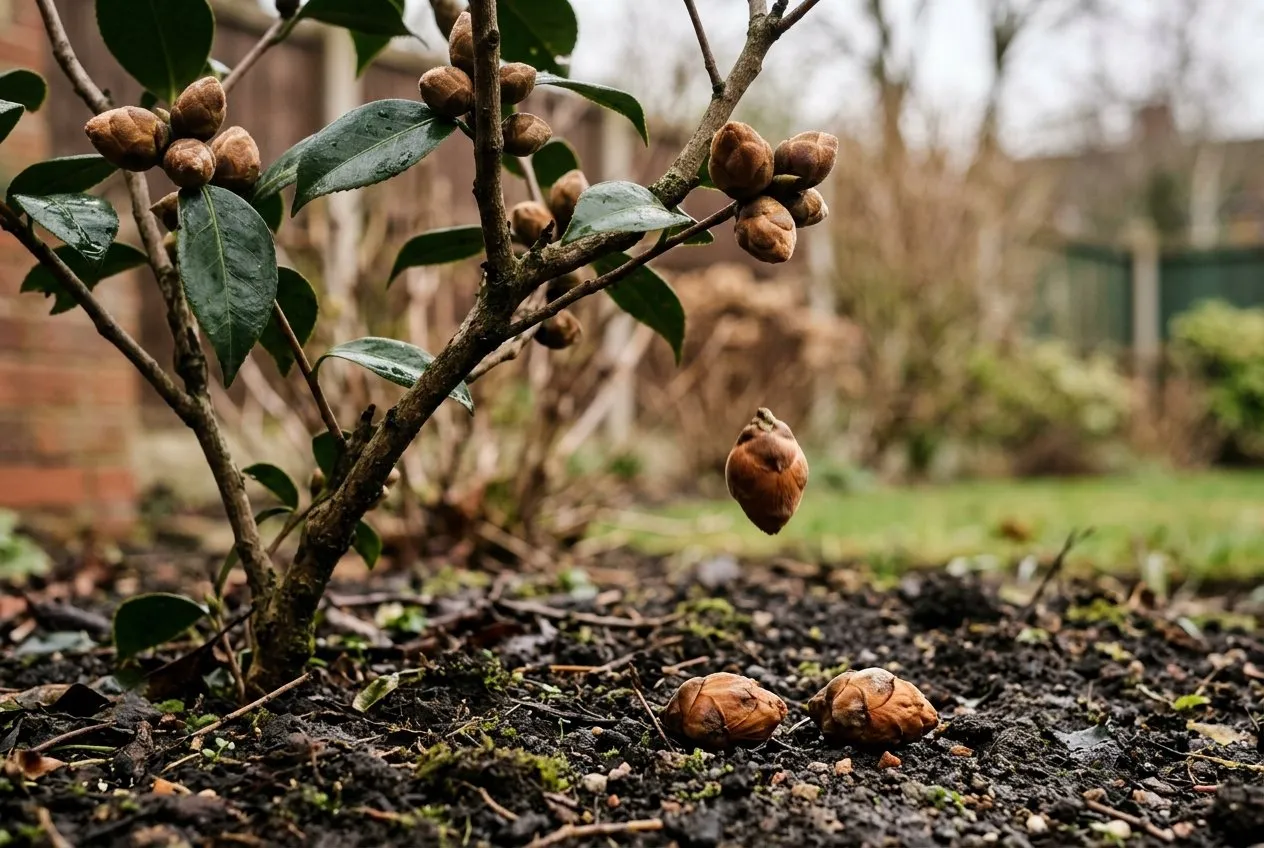 Bud drop on a Staffordshire Camellia japonica in February. The buds formed last August, then dry roots stopped them holding. They drop before opening. The plant is healthy; the watering was the problem.
Bud Drop: The Most Common Camellia Failure
Buds dropping before they open is the single most common camellia complaint in the UK. It looks like the plant is failing. It is not.
Camellias set next year’s flower buds in July and August. The roots need steady moisture in that window. If the soil dries out then, the buds still form. They just cannot hold through autumn and winter. They swell, brown, and drop from December onwards.
The trigger happens months before you see the result. A dry August gives bud drop the following February. That delay is why people miss the cause.
The fix is summer water. From late June to September, soak the roots once a week. Use rainwater from a butt, not tap water. One deep soaking beats a daily splash, because it reaches the deeper roots. Mulch with 50mm of ericaceous compost to hold the moisture in.
Container camellias drop buds far more often than border plants. Pots dry out in a day in July. If yours is in a pot, check it every morning in summer and stand it in a shadier spot.
For the wider picture on keeping the plant healthy, our guide on how to grow camellias in the UK covers feeding and positioning from the start.
Brown Flowers: Frost Damage Versus Balling
Brown mushy flowers are the second common worry. There are two causes, and both are weather, not disease.
Frost damage is sudden. An open flower caught by an overnight frost turns brown and limp the next morning. The petals look scorched. This hits camellias that flower early, especially in February and March when frosts still come.
Balling is slower. Rain soaks the half-open buds, then cold weather stops them opening. The wet petals brown and rot in place without ever opening fully. White and pale pink varieties ball worst because their thin petals hold water.
The fix for both is position. Plant camellias away from early morning sun. Frosted buds thaw too fast in direct morning light, and that fast thaw does the damage, not the frost itself. A spot that catches afternoon sun is far safer. Shelter from cold east wind helps too.
You cannot save the browned flowers. Pick them off so the plant looks tidy. The flowers next year will be fine if the position is right. A spring feed after flowering builds strong buds for the following season.
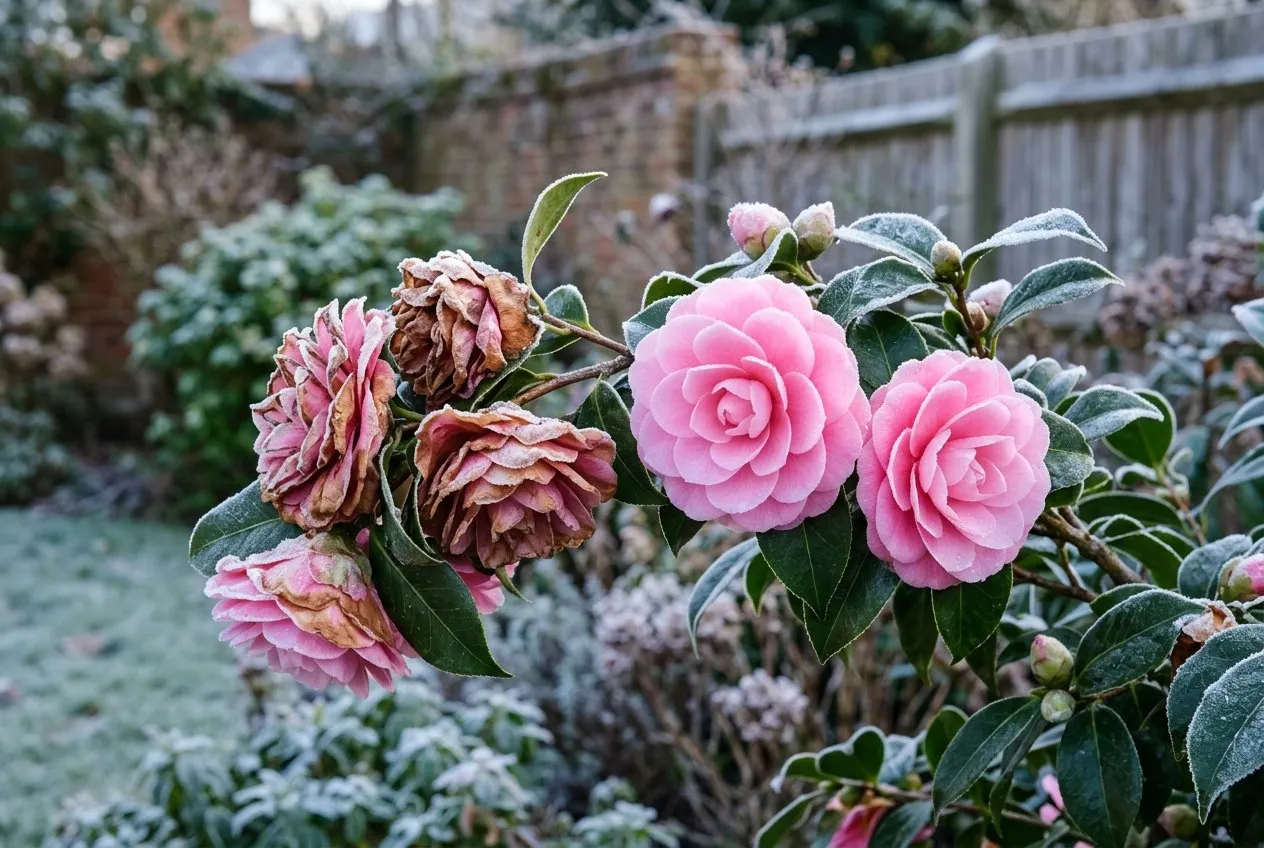 Frost-browned blooms beside healthy flowers on the same Staffordshire camellia in March. The damaged flowers caught early morning sun after an overnight frost. The undamaged ones were shaded until mid-morning.
Yellow Leaves: Lime-Induced Chlorosis Explained
Yellow leaves with green veins are a clear signal. This is lime-induced chlorosis, and it tells you the soil or water is too alkaline.
Camellias are acid-loving plants. They need a soil pH between 5.5 and 6.5 to take up iron and manganese. In alkaline soil, or when watered with hard tap water, those nutrients lock out of reach. The leaf tissue yellows while the veins stay green. That green-vein pattern is the giveaway.
Plain yellowing with no green veins is usually something else, often natural leaf ageing or a nitrogen shortage. Chlorosis is specifically the yellow-with-green-veins look.
The fixes work together:
- Water only with rainwater. Tap water in hard-water areas drives the soil alkaline over time.
- Apply sequestered iron in spring, following the pack rate. It puts iron back in a form the plant can use.
- Mulch with ericaceous compost each spring to acidify the surface roots.
- In very limy soil, grow the camellia in a large pot of ericaceous compost instead of the border.
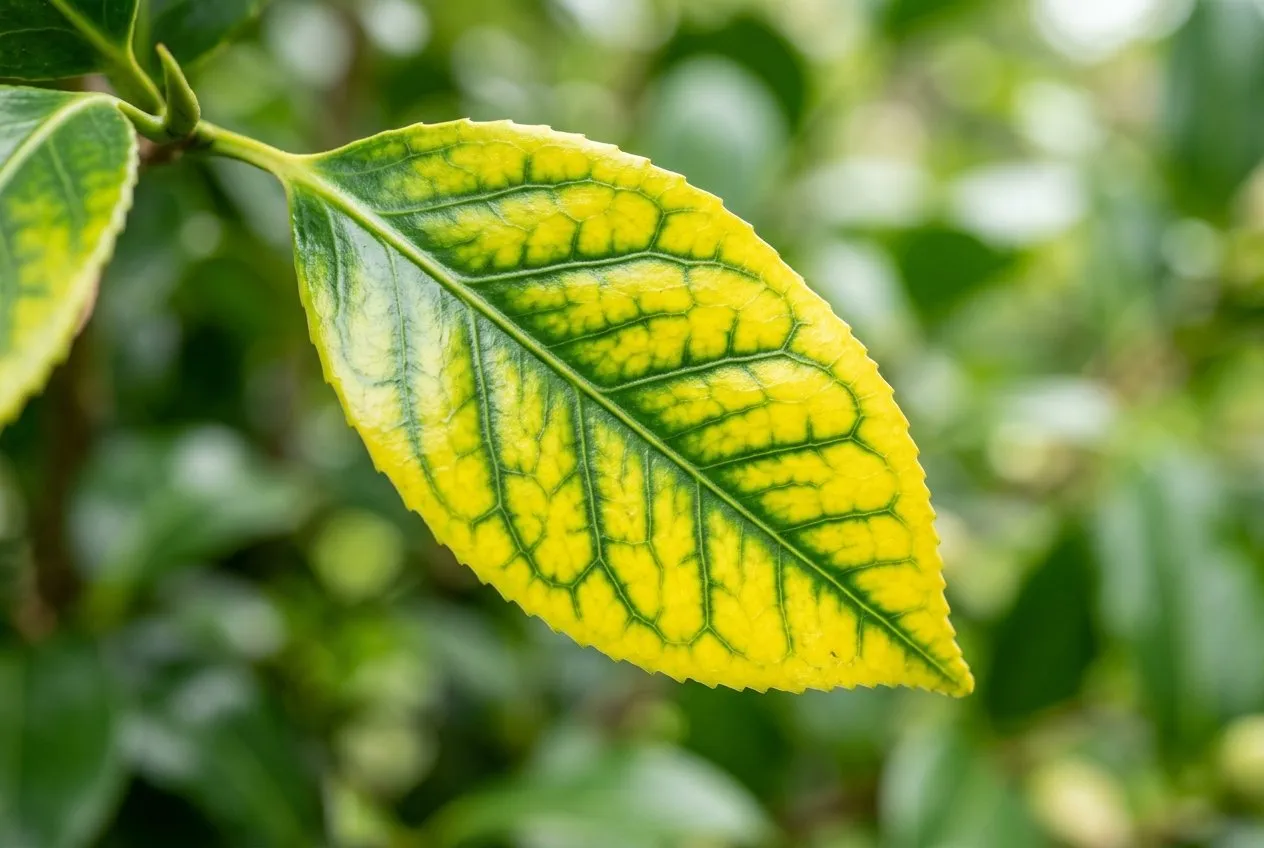 Lime-induced chlorosis on a Staffordshire camellia leaf. Yellow tissue, green veins. The plant had been watered from the tap all summer in a hard-water area. Sequestered iron and rainwater turned the new growth green again.
Leaf Scorch: Cold Wind And Morning Sun
Brown crispy leaf edges are leaf scorch. Two things cause it, and both are physical, not a pest or disease.
Cold east wind dries the evergreen leaves faster than the roots can replace the water, especially when the ground is frozen. The leaf edges turn brown and brittle. This shows up worst in late winter on the windward side of the plant.
Morning sun on frosted leaves does the same thing. Frozen leaf cells thaw too fast in direct sun and rupture. You see browning on the side that faces the morning sun.
The fix is shelter. Plant camellias where a hedge, fence or wall blocks the cold east wind. Avoid east-facing spots that catch the first sun of the day. A north or west aspect is often safest for a camellia. Our guide on how to protect plants from frost in the UK covers fleece and screening for an exposed plant.
Scorched leaves do not recover, but they do not signal a dying plant either. Trim off the worst once the risk of frost has passed in May. New leaves replace them through the season.
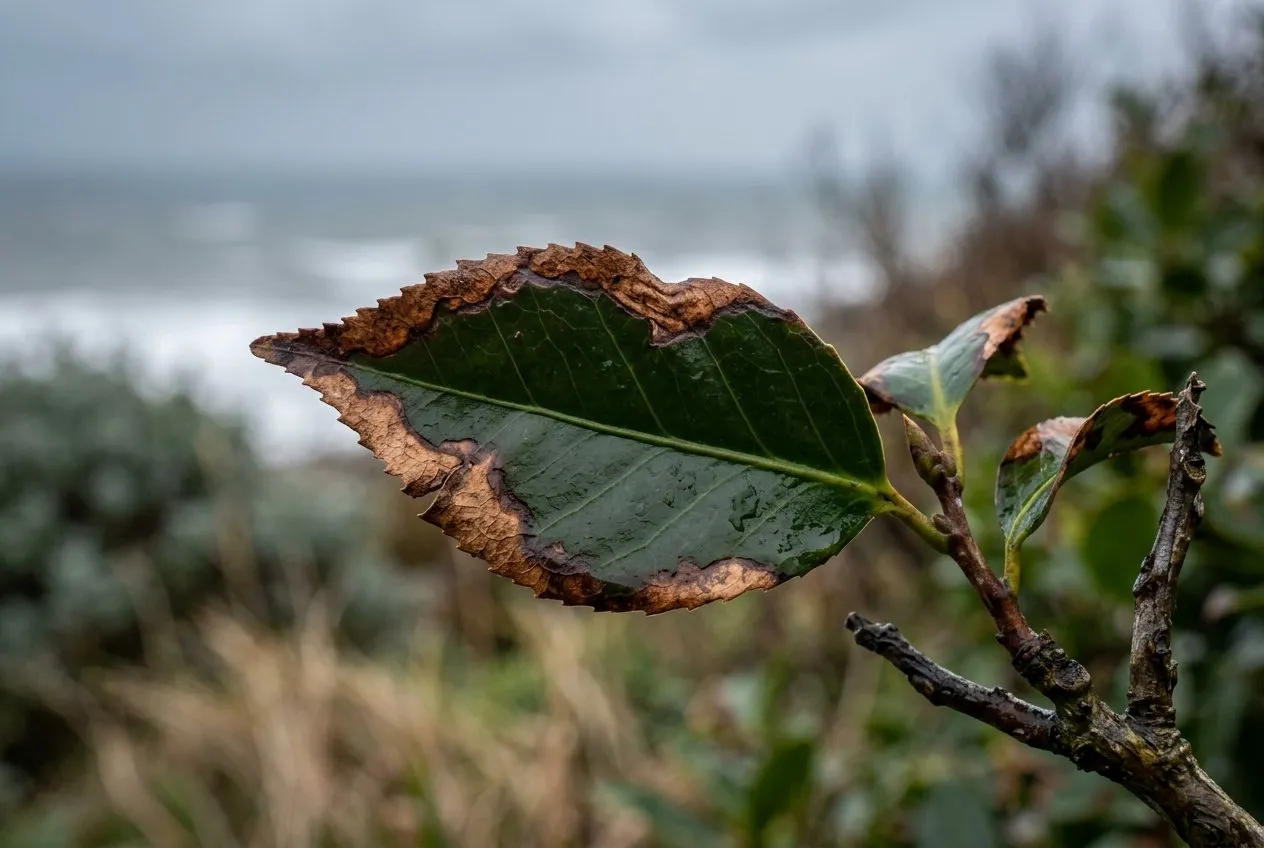 Wind scorch on a camellia in an exposed coastal garden. The brown margins formed on the side facing the cold east wind. A hedge planted upwind the following year stopped it recurring.
Black Sticky Leaves: Scale Insects And Sooty Mould
Black sticky leaves are a two-part problem. The black is sooty mould, a harmless fungus. It grows on honeydew, the sugary waste left by sap-sucking scale insects.
Turn the leaves over and check the stems. Scale insects look like small brown or cream limpets stuck to the bark and the leaf undersides. They sit still and suck sap. Their honeydew coats the leaves below, and the black mould follows.
The mould itself does little harm beyond blocking light. The scale insects are the real issue, weakening the plant slowly. Treat the scale and the mould clears as rain washes it off.
Control the scale:
- Wipe small infestations off with a damp cloth.
- Spray with an organic fatty-acid wash in spring when young crawlers are active.
- Encourage ladybirds and lacewings, which eat scale.
Time the fatty-acid spray for late spring when the young crawlers move, before they fix in place and form their protective shells.
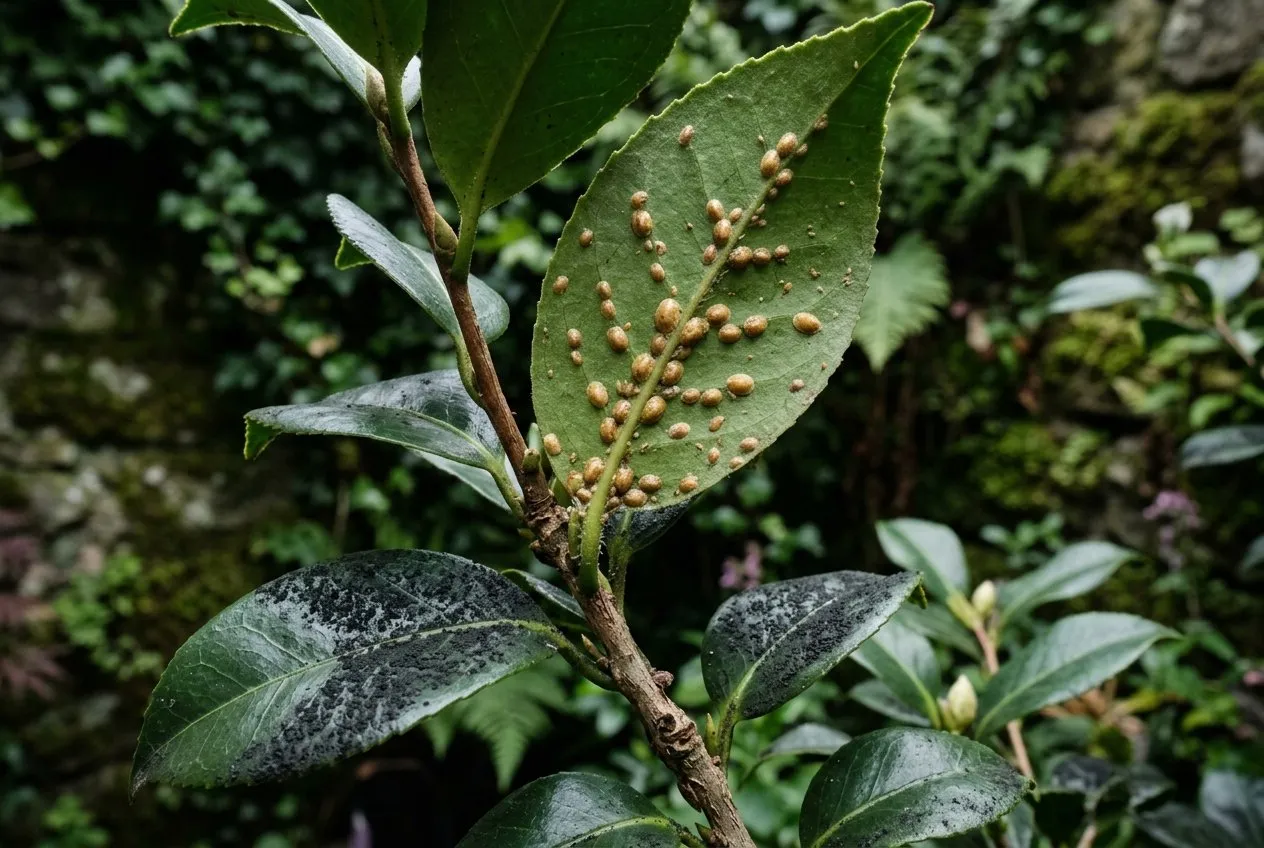 Scale insects on a camellia stem in a city courtyard, with sooty mould on the leaves beneath. The scales are the cause, the black film is the symptom. Treating the scale cleared both within a season.
Getting The Soil And Site Right From The Start
Most camellia problems trace back to soil pH and position. Get those two right and the plant looks after itself.
Camellias need acid soil, dappled shade and shelter from cold wind. On chalk or limy clay, they fail in the open ground. The honest answer there is a pot of ericaceous compost, or a raised bed built with acid soil. For a wider plant list that suits the same conditions, see our guide on the best plants for acid soil in the UK. Azaleas need the same acid ground and dappled shade; our guide on how to grow azaleas in the UK covers them.
The same rainwater rule helps other acid-lovers. If you grow hydrangeas nearby and want to hold their blue colour, the soil chemistry overlaps. Rainwater and acid soil keep both plants right.
The RHS camellia growing guide backs up the acid-soil and summer-watering advice with its own trial notes.
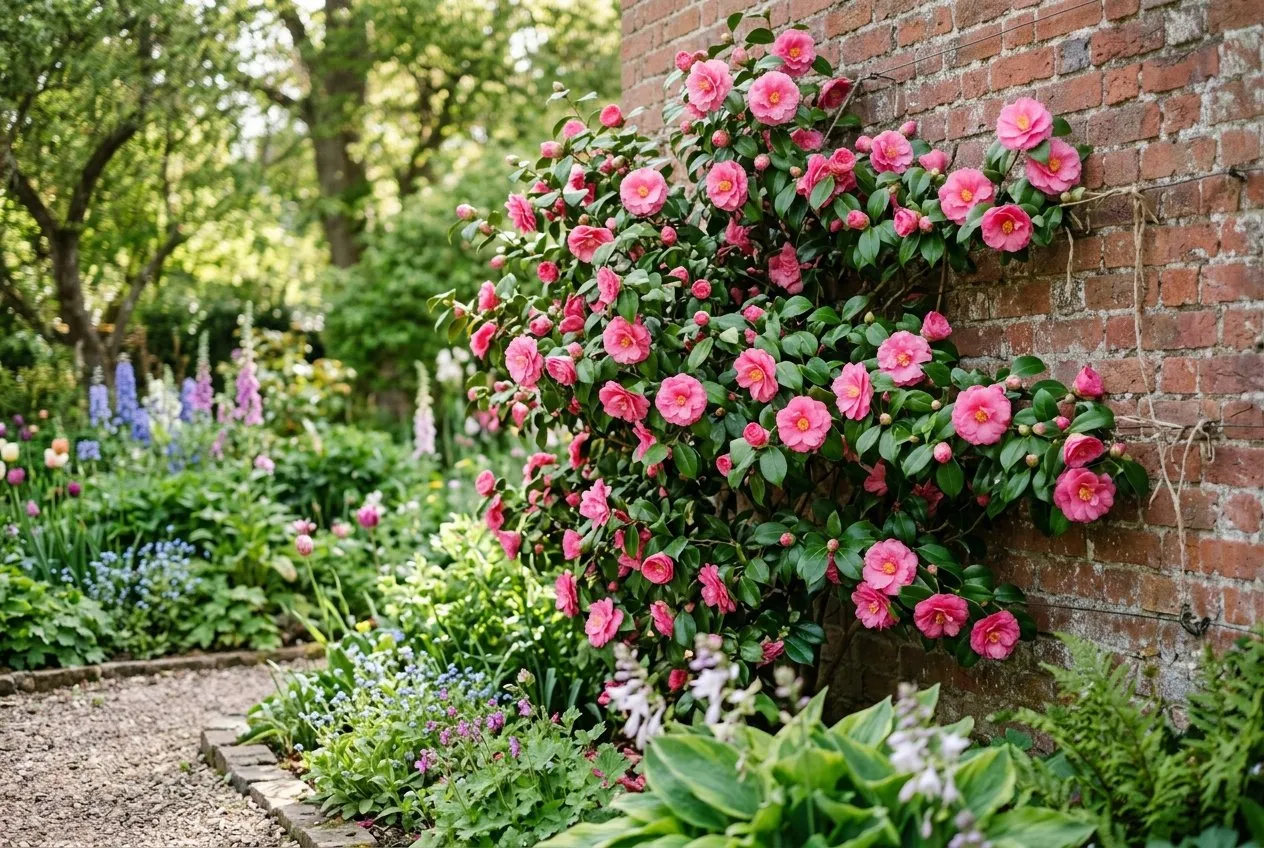 A healthy camellia against a sheltered Staffordshire wall in April. Acid soil, rainwater all summer, shelter from the east wind. Get the conditions right and the failures in this guide never appear.
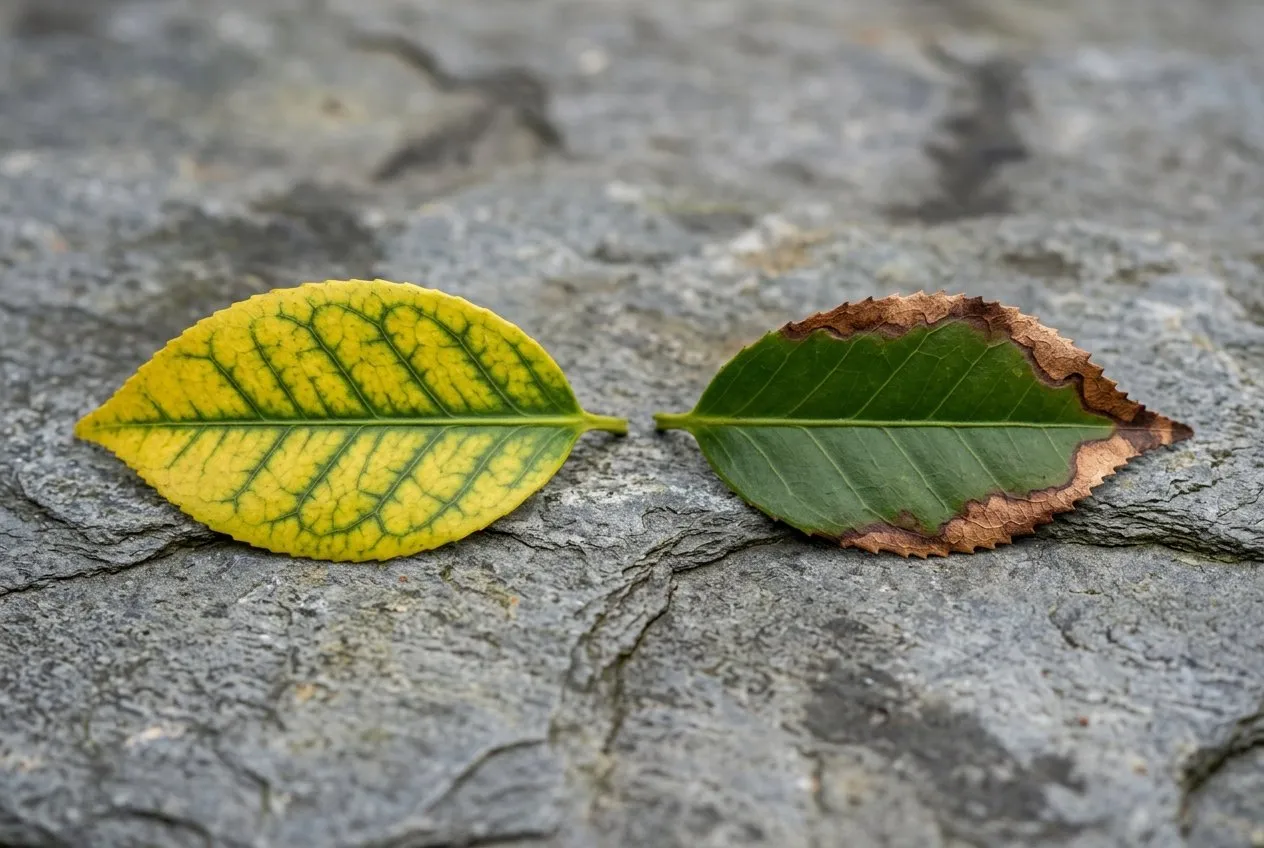 Two different camellia failures side by side. Chlorosis on the left, wind scorch on the right. They need opposite fixes, which is why naming the symptom first matters so much.
Frequently asked questions
Why are my camellia buds dropping before they open?
Dry roots in late summer when the buds formed. Camellias set next year’s buds in July and August. If the soil dried out then, the buds develop but cannot hold and drop over winter. Water deeply each week from late June to September to prevent it.
Why has my camellia got yellow leaves with green veins?
Lime-induced chlorosis from alkaline soil or tap water. Camellias need acid soil to take up iron and manganese. Hard tap water and limy soil lock those nutrients out. Use rainwater, feed with sequestered iron, and mulch with ericaceous compost.
Why did my camellia flowers turn brown and mushy?
Frost or balling, not disease. Frost browns open flowers overnight. Balling happens when rain soaks buds then cold stops them opening. Plant out of early morning sun and east wind to reduce both. The plant itself is fine.
Can a dying camellia be saved?
Usually yes, once you fix the cause. Camellias rarely die outright from these problems. Bud drop, chlorosis and scorch are all reversible. Correct the watering, the soil pH or the position and the plant recovers over one or two seasons.
Why are my camellia leaves black and sticky?
Sooty mould growing on scale insect honeydew. Scale insects suck sap and excrete sticky honeydew, and a black fungus grows on it. Check leaf undersides and stems for brown limpet-like scales. Treat the scale and the mould clears.
Now plan the recovery
Diagnosis is the first step. Now act on the cause. Once the flowers fade, our guide on what to do with camellias after flowering covers the feed and tidy-up that set up next year. If scale is your problem, our advice on scale insect identification and treatment in the UK sets out the spray timing. And to hold the colour of another acid-lover nearby, see our guide on how to keep hydrangeas blue in the UK.
Our team produces practical UK gardening guidance from source research, contributor records and established horticultural practice. Editorial standards are overseen by Matt W.