Key takeaways
- Blind daffodils make leaves but no flowers, or buds that wither
- Number one cause: cutting or knotting foliage too early
- Leaves must stay six weeks after flowering to feed next year's bud
- Congested clumps and shallow planting both cause blindness
- Feed with high-potash after flowering, never high-nitrogen lawn feed
- Lift and divide crowded clumps in June or July and replant deep
Blind daffodils come up every spring full of healthy green leaves and then give you nothing. No flower, or a bud that browns and withers before it opens. It is one of the most common spring bulb complaints in UK gardens, and almost always our own doing. This guide covers the six real causes, the feed-and-foliage fix, and a month-by-month routine to get the flowers back.
What blind daffodils actually are
A blind daffodil is a bulb that produces leaves but no open flower.
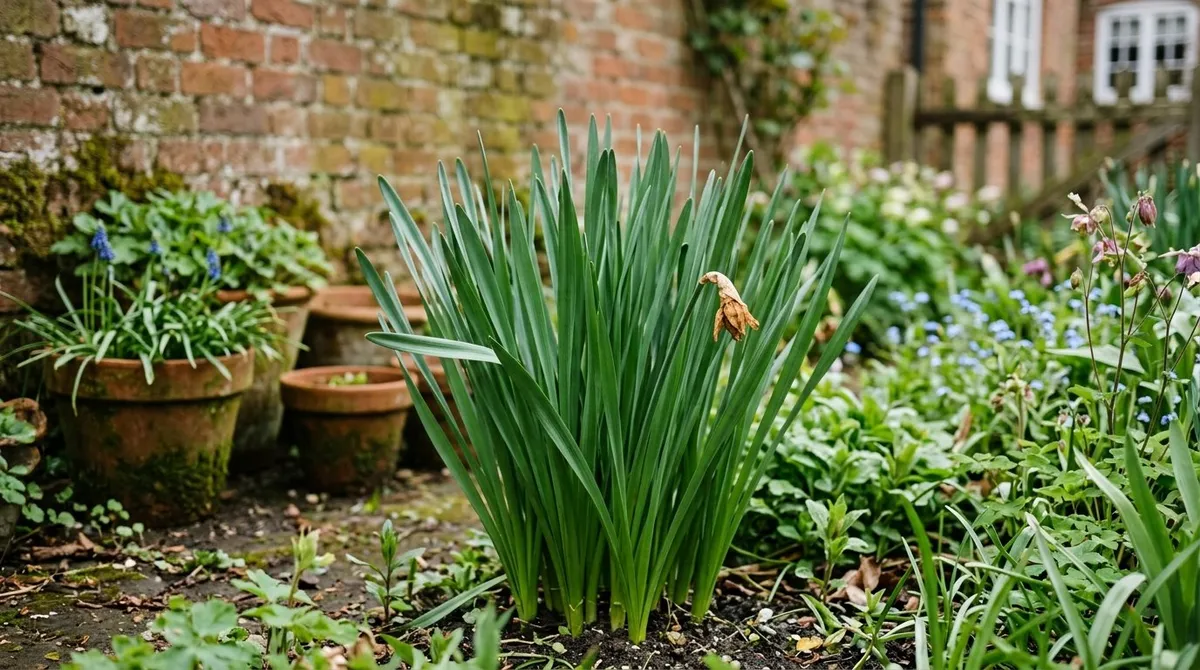
You will see one of two things. Either tall green leaves with no flower stem at all, or a flower stem that pushes up a bud which then dries to brown paper and never opens. Both mean the same thing. The bulb did not store enough energy last year to build a flower bud inside itself.
The flower for any given spring is formed inside the bulb the previous summer. So a blind daffodil this April is usually telling you what went wrong last May and June, not this week.
For a wider view of getting daffodils right from the start, see our guide on how to grow daffodils in the UK.
The six causes of daffodil blindness
Most blind daffodils trace back to one of six things. Often two or three combine.
| Cause | What happens | The fix |
|---|---|---|
| Foliage cut or knotted too early | Leaves removed before the bud is fed; no flower forms | Leave leaves 6 weeks after flowering |
| Congested clumps | Years of offsets crowd the bulbs; none reach flowering size | Lift and divide in June or July |
| Planted too shallow | Bulbs split into small immature offsets | Replant at 10-15cm, 2-3x bulb height |
| Dry and starved | Drought while the bud forms; no feeding | Water in dry springs, feed high-potash |
| Too much nitrogen | Lawn or leafy feed pushes leaf, not flower | Switch to high-potash feed |
| Deep shade | Light lost to new trees or moved into shade | Move bulbs to a sunnier spot in summer |
Why cutting the leaves early is the top cause
The leaves are not untidy mess to be cleared. They are how the bulb feeds itself.
For about six weeks after the flowers fade, those green leaves photosynthesise and pump sugars down into the bulb. That stored energy builds next year’s flower bud. Cut the leaves, fold them over, or tie them in those neat knots, and you cut off the supply. The bud never forms. You get leaves and nothing else next spring.
Mowing daffodils naturalised in a lawn is the classic version of this mistake. People want a tidy lawn by late April and run the mower over yellow-green daffodil leaves. Two or three years of that and the whole drift goes blind.
The rule is simple. Leave every leaf until it yellows and lifts away with a gentle tug, roughly six weeks after the last flower. Our full guide on spring bulb care after flowering walks through the timing in detail.
What not to do: knotting and tying foliage
There is an old habit of folding daffodil leaves down and tying them into tidy bunches with elastic bands or string. Skip it.
Knotting the leaves reduces the leaf area catching light and kinks the sap flow inside them. The bulb gets fed less. Gardens that knot their daffodils every spring tend to drift towards blindness over time. The same goes for plaiting them or bending them under the soil.
If the dying foliage genuinely looks bad, the answer is screening, not cutting. Plant your daffodils among hardy geraniums, hostas or day lilies. The new growth of those perennials covers the daffodil leaves while they finish feeding.
Deadhead, then feed for next year’s flower
Two jobs save a blind clump: deadheading and feeding.
Deadhead as soon as the flowers go over. Snap or cut off the faded flower head, leaving the stem and all the leaves. This stops the plant wasting energy on setting seed, and pushes that energy back into the bulb instead. It is one of the few daffodil jobs where less is more. Our guide on how to deadhead flowers in the UK covers the technique across spring plants.
Then feed. As the flowers fade, water on a high-potash feed: tomato feed at the dilution on the bottle, or sulphate of potash at about 15g per square metre. Potash builds flower buds. Repeat once a week for three or four weeks while the leaves are green.
Avoid high-nitrogen feeds and general lawn fertiliser near your daffodils. Nitrogen drives lush leaf growth and soft bulbs, and works directly against flower-bud formation. That said, daffodils are one of the few things you should not deadhead in some settings; see which plants you should never deadhead in the UK for the exceptions.
Lift and divide congested clumps
When a clump has been in the ground for five years or more, congestion alone can cause blindness.
Each parent bulb makes offsets every year. Over time the clump becomes a tight knot of bulbs all competing for food, water and root space. None of them reaches flowering size. You get a thicket of leaves and few or no flowers, even if you have done everything else right.
The fix is to lift and divide. Do it in June or July, once the foliage has yellowed but you can still see where the clump is.
- Lift the whole clump with a fork, working well clear of the bulbs.
- Gently pull the bulbs apart into singles and large offsets.
- Discard any soft, mushy or smelly bulbs (these may carry basal rot).
- Let the rest dry for a day in a shed or shaded spot.
- Replant the good-sized bulbs straight away, spaced two bulb-widths apart.
Spread the work out and you can clear a long border over a couple of weekends. For storing any spare bulbs until autumn, see our notes on how to store flower bulbs in the UK.
Plant deep and at the right spacing
Shallow planting is a quiet cause of blindness that builds over years.
Daffodil bulbs sitting too near the surface tend to split into clusters of small offsets rather than fattening up. Those offsets are too immature to flower. The fix is depth. Plant bulbs at two to three times their own height, which for most daffodils means a hole 10-15cm deep, deeper for big trumpet types.
Spacing matters too. Set bulbs about two bulb-widths apart so they have room to grow before they crowd. For drifts and naturalised lawns, our guide on bulb planting density per square metre gives the numbers. When you replant, firm the soil and water in.
Shade, immature bulbs and the rare pests
A few less common causes are worth a quick check.
Deep shade. Daffodils need good light in spring to feed. If a hedge has thickened or a tree has grown over a drift, the bulbs slowly go blind. Move them to a sunnier spot in summer.
Immature or small bulbs. Cheap bulbs sold under-sized, or freshly split offsets, may simply be too young to flower for a season or two. Grow them on with feeding and they catch up.
Pests and disease. In bad cases, narcissus bulb fly grubs hollow out the bulb, or stem and bulb eelworm and basal rot kill it from within. Lift a suspect bulb and cut it: a soft, ringed or maggoty centre means destroy it, do not replant. These are rare compared with the foliage and feeding causes, so check them last.
For more on the folklore around all this, our daffodil growing myths piece separates the real rules from the bad advice.
Daffodil care calendar to prevent blindness
| Month | Daffodil task |
|---|---|
| January | Bulbs dormant; nothing to do |
| February | First shoots appear; check for slugs |
| March | Flowering begins in milder UK gardens |
| April | Peak flowering; deadhead as flowers fade |
| May | Leave foliage; start high-potash feeding |
| June | Foliage yellowing; lift and divide congested clumps |
| July | Finish lifting and dividing; dry and replant bulbs |
| August | Store any spare bulbs cool and dry |
| September | Plant and replant bulbs deep, 10-15cm |
| October | Finish autumn bulb planting |
| November | Mulch beds; bulbs settling in |
| December | Bulbs rooting underground; no action |
Frequently asked questions
Why do my daffodils have leaves but no flowers?
They are blind, usually because the foliage was cut too early last year. The leaves feed next year’s bud for six weeks after flowering. Cut them sooner and no bud forms. Congestion, shallow planting and shade also cause blindness.
Will blind daffodils flower again?
Yes, most recover within one or two seasons once you treat the cause. Leave the foliage six weeks, feed with high-potash after flowering, and water in dry springs. Lift and divide congested clumps in summer. New flower buds form for the following spring.
When can I cut down daffodil leaves?
Wait at least six weeks after the flowers fade, or until the leaves yellow. By then the bulb has stored enough energy for next year’s flower. Cutting green leaves in April or May is the single most common cause of blind daffodils.
Should I feed daffodils to stop blindness?
Yes, feed with a high-potash fertiliser as the flowers fade. Tomato feed or sulphate of potash both work well. Avoid high-nitrogen lawn feeds, which push leaf growth at the expense of flower buds. Water the feed in during dry spring weather.
How deep should I plant daffodil bulbs?
Plant at two to three times the bulb’s own height, roughly 10-15cm deep. Shallow bulbs split into small offsets that are too immature to flower. Deep planting keeps bulbs at flowering size and is a common fix for blindness.
Now plan the wider bulb care
Blind daffodils are nearly always a fixable mistake. For the full feeding and tidying routine after flowering, follow our spring bulb care after flowering guide. To get spacing and depth right from the start, read bulb planting density per square metre. The Royal Horticultural Society also has sound general advice at the RHS website. And for the basics of growing a long-lived drift, our how to grow daffodils guide ties it all together.
Our team produces practical UK gardening guidance from source research, contributor records and established horticultural practice. Editorial standards are overseen by Matt W.