Key takeaways
- Voles make 30-40mm grass runs, not soil mounds like moles
- Field and bank voles gnaw bark at the base of young trees
- Open holes 25-35mm wide with no spoil heap point to voles
- Voles are not protected and not poisoned in UK gardens
- Short grass and cleared cover remove the food and shelter
- Owls and kestrels are the most effective long-term control
Voles in a lawn cause more confusion than damage. Most people who think they have voles actually have moles, and the two pests need completely different handling. Field and bank voles run through grass at the surface, gnaw bark off young trees, and leave small open holes with no soil heap. This guide covers how to tell voles from moles and mice, what damage they really do, and the humane, legal control that works in UK gardens.
After 6 winters watching them at Staffordshire, the pattern is clear. Voles are mistaken for moles far too often. The real harm is bark gnawing, not the lawn. Predators beat traps every time.
Voles, Moles or Mice: Settle the Confusion First
Get the identification right before you spend a penny.
The names sound alike but the animals are not related. A vole is a small rodent with a blunt nose, small ears and a short tail. A mole is a digging insectivore you almost never see. A mouse has a pointed nose, big ears and a long tail. Each leaves different signs in a lawn.
The single fastest test is the soil mound. Moles push up loose earth in conical hills as they tunnel. Voles never do this. If you have molehills, you have moles and need a different fix entirely. If you have worn runs at grass level and bare patches with no spoil heap, you have voles.
| Sign | Vole | Mole | Mouse |
|---|---|---|---|
| Soil mounds | None | Conical hills of loose earth | None |
| Surface runs | Narrow 30-40mm worn grass paths | None visible | Occasional faint tracks |
| Holes | Open, 25-35mm, no spoil | Rare; earth-plugged | Open, 20-30mm, often by walls |
| Bark damage | Gnaws base of young trees | Never | Sometimes on stored bulbs |
| Active by day | Yes, in short bursts | Underground only | Mostly at night |
If it makes a heap of earth, stop reading about voles. It is a mole.
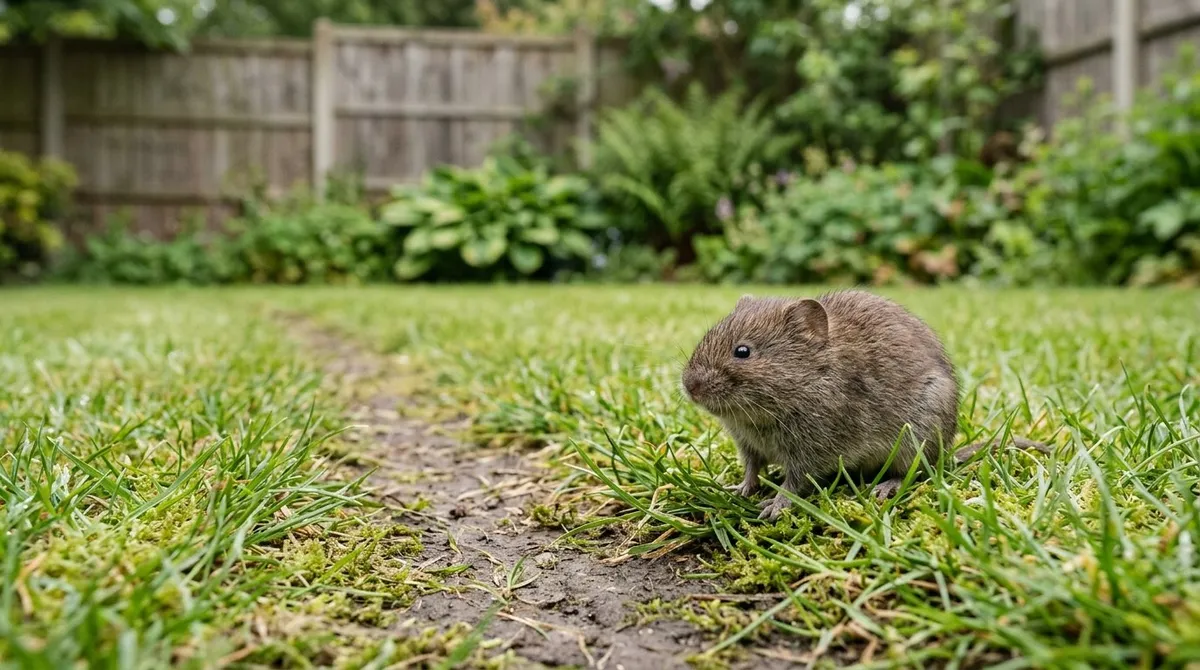
A field vole on a Staffordshire lawn edge in November. Note the blunt nose, small ears and short tail. This is the rodent behind most lawn vole reports, not the long-tailed mouse people often picture.
Field Voles and Bank Voles: Who Is in Your Garden
Two species turn up in UK lawns, and they behave slightly differently.
The field vole (Microtus agrestis) is the most common mammal in Britain. It lives in rough grass, makes surface runs and is grey-brown with a very short tail. It is the main lawn culprit. The bank vole (Myodes glareolus) is smaller, redder, and prefers hedge bottoms and woodland edges. It climbs better and strays into gardens near cover.
Both breed fast. A field vole can produce several litters between March and October, so numbers swing wildly from year to year. A mild winter and long grass give you a population spike by spring.
Neither is the protected one. The water vole is protected under the Wildlife and Countryside Act 1981, but it lives in riverbanks and ditches, not lawns. The voles in your turf are fair game for humane control.
The Real Signs: Runs, Holes and Gnawed Bark
Voles leave a clear set of clues once you know what to look for.
Surface runs. Worn channels about 30-40mm wide threading through grass, often hidden under longer growth at the edges. Part the grass and you see bare, flattened soil.
Open holes. Round entrances 25-35mm across, dropping straight down, with no earth pushed out around them. This is the key contrast with a mole, which always leaves spoil.
Gnawed bark. The damage that actually matters. Voles strip bark from the base of young trees and shrubs over winter, especially under snow or long grass where they feel safe. A ringed stem kills the whole plant above it.
Clipped grass and droppings. Short tufts of cut grass and small green-brown droppings collect along the runs.
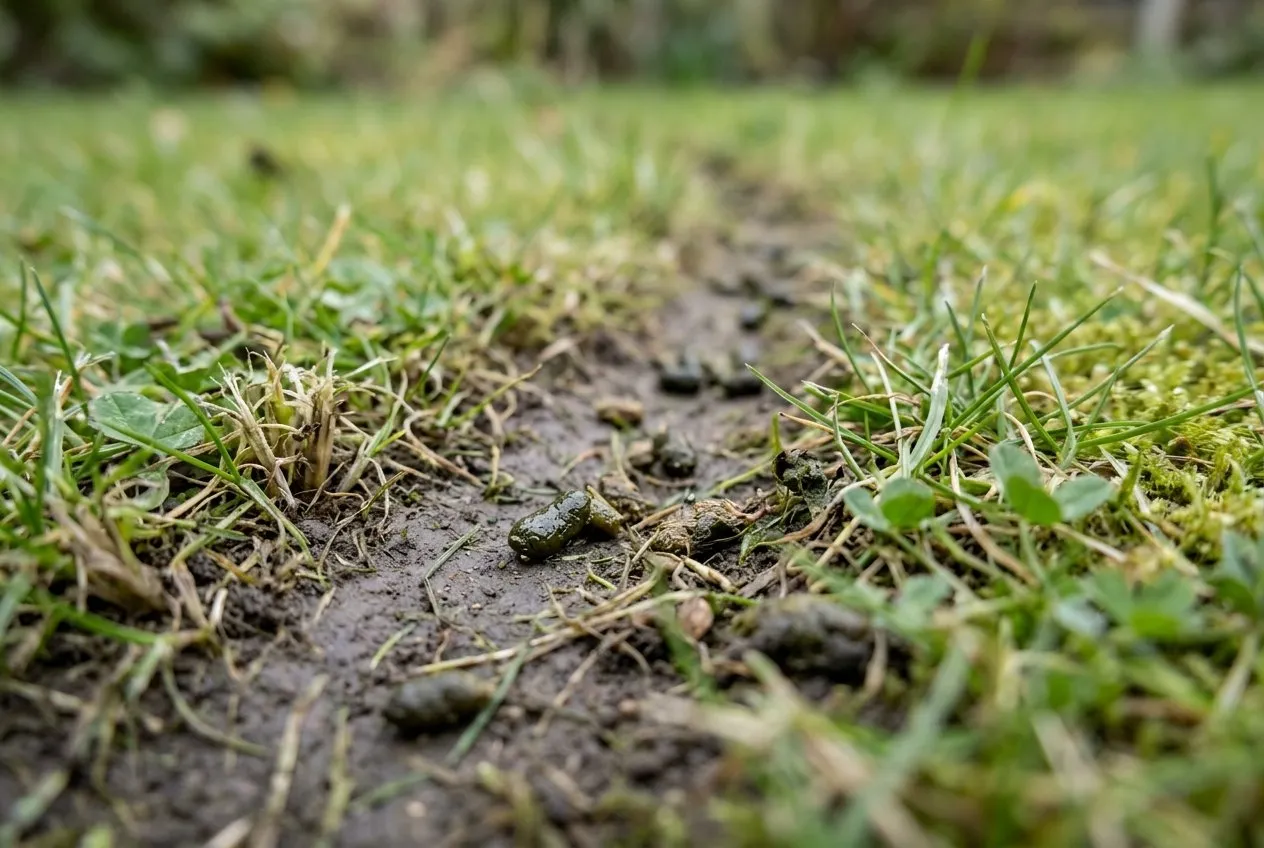 Clipped grass and droppings along a vole run on a Staffordshire lawn. These small green-brown pellets and snipped grass tufts collect in the runs and confirm voles rather than mice.
If you also see small bare patches appearing overnight with no clear cause, our guide to small holes appearing in lawns overnight helps you rule out other diggers first.
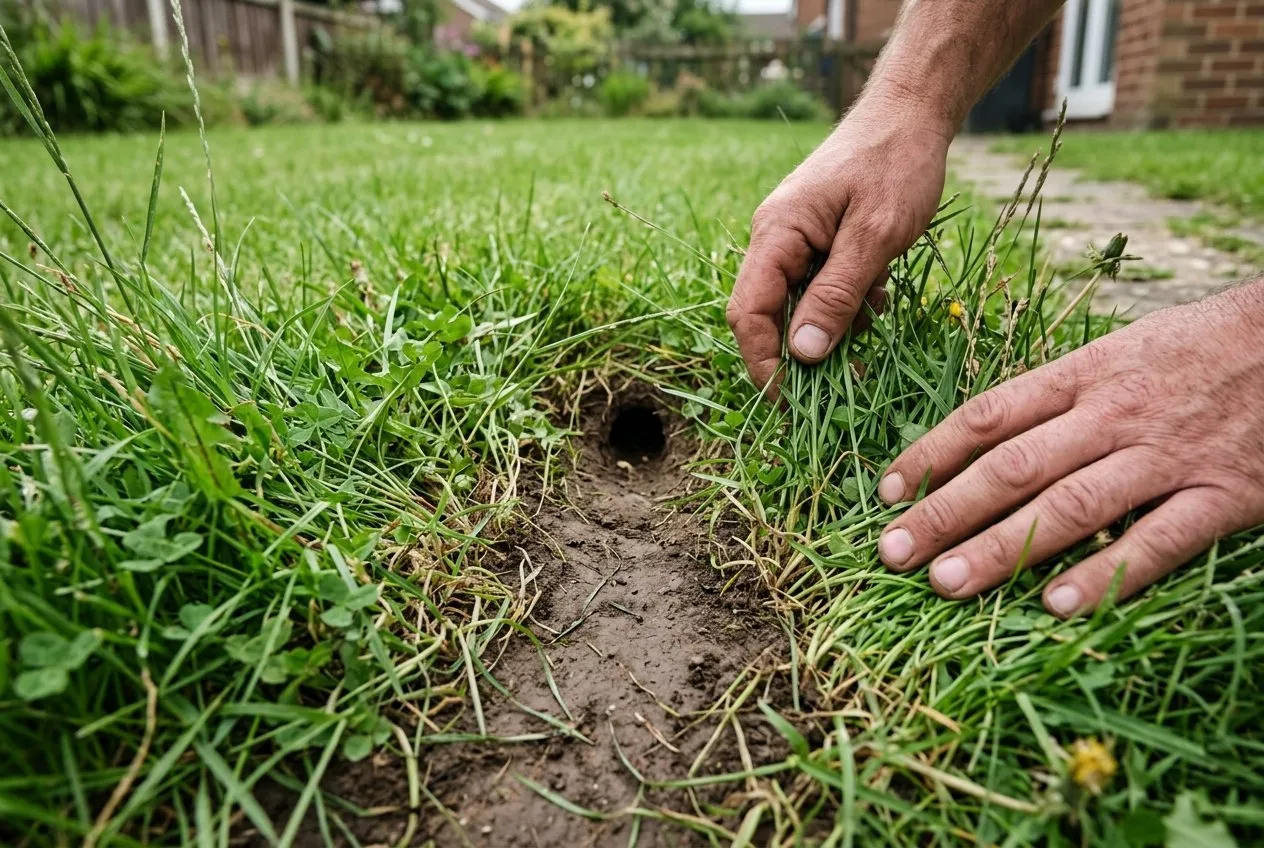 A field vole run at a Staffordshire lawn edge, with the grass parted to show the bare flattened soil. The open hole has no spoil heap, the single clearest sign that this is voles and not moles.
Why Voles Are Less Damaging Than You Fear
The serious damage is to woody plants. Bark gnawing over winter can ring young apple, plum and ornamental whips, and a ringed tree dies the next spring. Newly planted hedging and soft fruit are at the same risk. This is where vole control earns its place.
Compare that with other lawn pests. Leatherjackets, the larvae of crane flies, eat grass roots and cause spreading dead patches that birds then tear up. Rabbits digging up the lawn scrape larger holes and graze the sward down hard. Against those, a vole is a minor nuisance with one sharp edge: the trees.
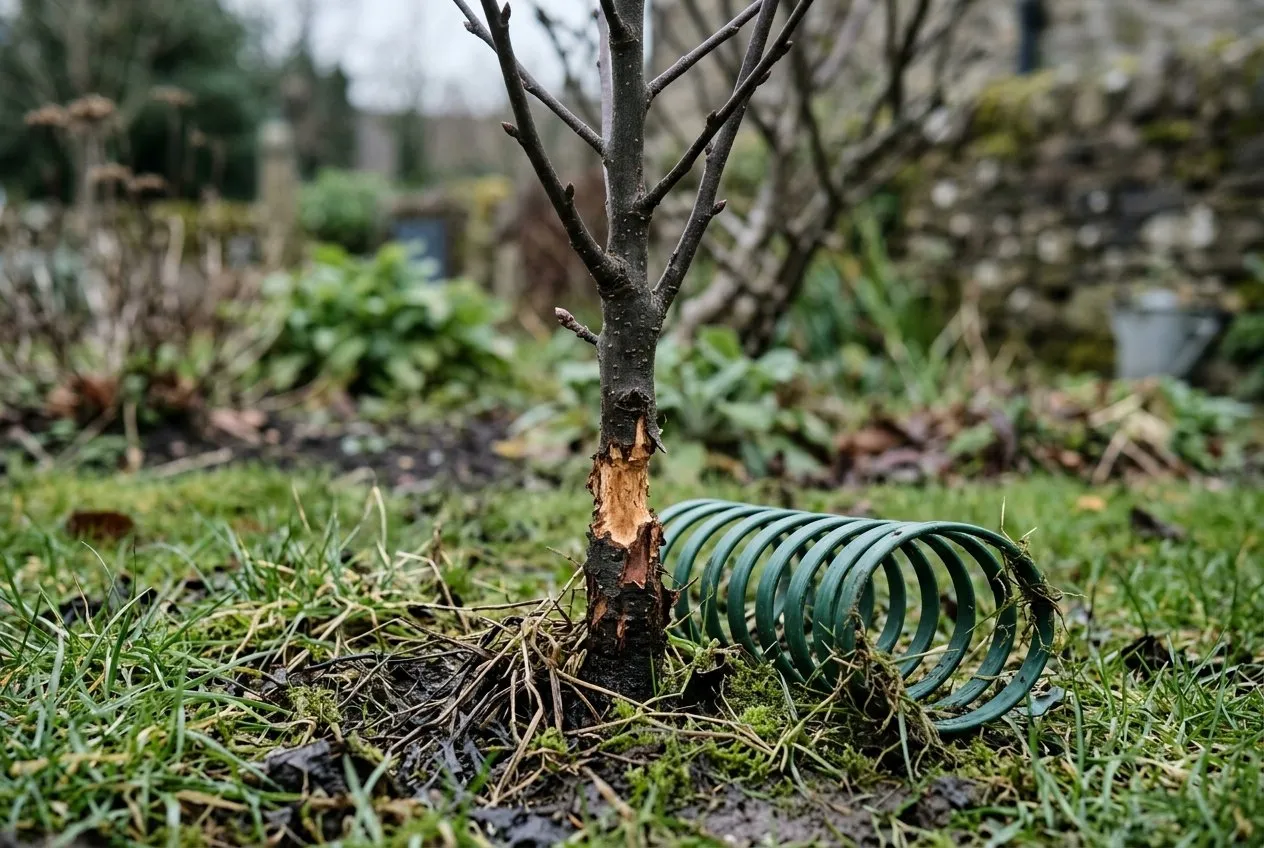 Vole bark damage on a young apple whip at Staffordshire in late winter. The bark is gnawed in a ring at ground level, which kills the tree above. A simple spiral guard fitted in autumn prevents this.
Humane, Legal Control That Actually Works
There is no poison for this, and you do not need one.
No vole-specific rodenticide is approved for UK garden use, and broad rodent poisons risk owls, kestrels and pets that eat poisoned prey. The legal, effective approach removes what voles need and brings in what eats them.
Cut the cover. Voles depend on dense grass and tangled edges to hide from predators. Mow the lawn to 25-40mm and keep it there. Strim long edges, clear leaf piles, and move log stacks and compost heaps away from the lawn. Exposed voles do not last long.
Guard the trees. Fit spiral rabbit and vole guards around the base of every young tree and whip before winter. They cost about £1 each and stop bark gnawing dead. Keep mulch pulled back 100mm from the trunk so voles cannot nest against the bark.
Trap if numbers are high. Standard snap mouse traps set in covered boxes along the runs work for a localised problem. Check them daily. Live-catch traps are an option but you must release well away and within the law.
Bring in predators. This is the real lever, covered next.
Once the voles have gone, the bare runs reseed easily, a job covered in the further reading below.
 Fitting a spiral guard on an allotment whip near Stafford in October. The guard wraps the lower 300mm of stem and stops winter bark gnawing. The cheapest and most reliable single fix for vole tree damage.
Let Owls and Kestrels Do the Work
Predators control voles better than any trap you can buy.
Field voles are the staple prey of barn owls, tawny owls and kestrels across the UK. A single barn owl pair eats several thousand voles a year. Encourage them and the vole population stays in check without any effort from you.
Give predators a clear hunting field by keeping the lawn short, then add a hunting perch: a 2-metre post with a crossbar at the garden edge gives kestrels and owls a base to drop from. Avoid all rodenticides, which kill the very birds you want. The Wildlife Trusts note that the field vole underpins much of Britain’s predator food web, so a few voles are a sign of a working garden, not a disaster.
Cats and hedgehogs help at the margins. A keen mousing cat takes voles, and hedgehogs disturb runs, but neither clears a population the way an owl does.
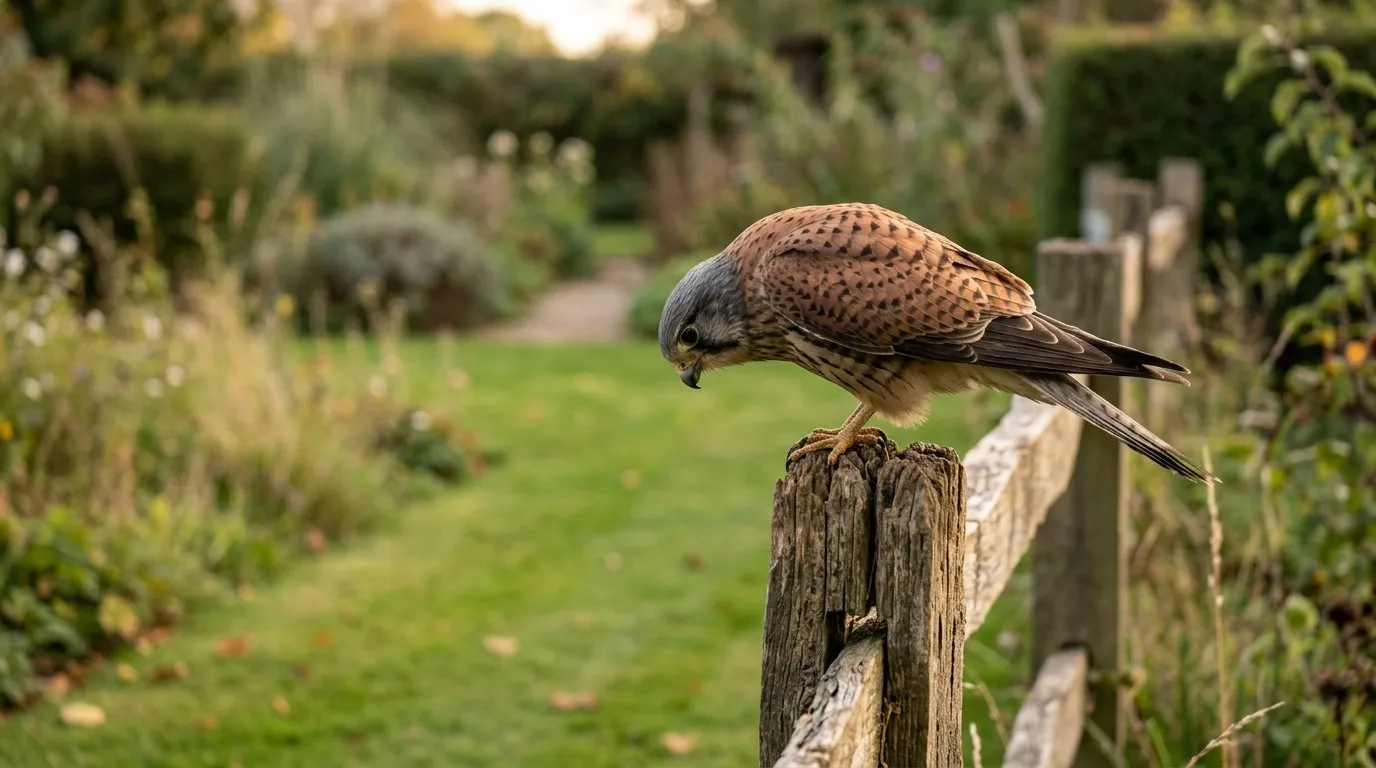 A kestrel hunting from a fence post above a short Staffordshire lawn. Open, well-mown grass lets birds of prey spot voles, which is why cutting the cover and encouraging predators work together.
A Year-Round Vole Plan for UK Gardens
Timing the jobs stops voles before the damage starts.
| Month | Vole task |
|---|---|
| January | Check tree guards are still snug; firm any frost-heaved stakes |
| February | Inspect young trees for fresh bark gnawing under snow |
| March | First mow; cut long winter edges back hard |
| April | Voles start breeding; keep grass short |
| May | Clear spring leaf and weed piles near the lawn |
| June | Keep mowing to 25-40mm; watch hedge-bottom runs |
| July | Move log and compost stacks away from grass |
| August | Population peak; trap localised hot spots if needed |
| September | Strim long edges before autumn growth slows |
| October | Fit spiral guards on all young trees and whips |
| November | Pull mulch back 100mm from trunks |
| December | Keep a predator perch clear; no rodenticides |
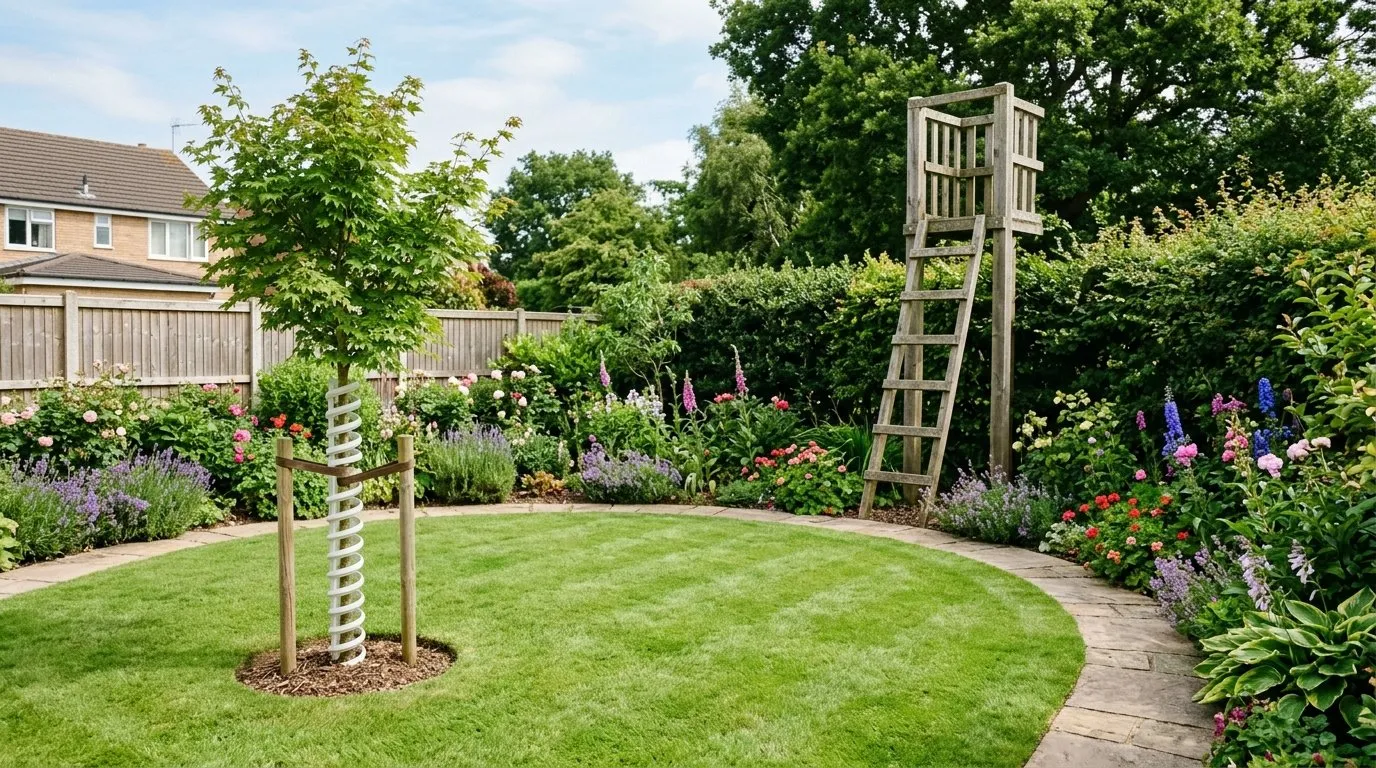 A vole-resistant setup on a suburban Staffordshire lawn in summer. Short grass, clear edges, guarded young tree and a corner hunting perch. Removing cover and inviting predators does most of the work.
Common Mistakes With Lawn Voles
Mistake 1: buying mole traps. Voles do not use the deep tunnels mole traps target. Money wasted.
Mistake 2: reaching for poison. No legal vole poison exists for gardens, and rodenticides kill owls and kestrels.
Mistake 3: leaving long grass for wildlife right up to young trees. That cover is exactly what voles use to gnaw bark unseen.
Mistake 4: skipping tree guards. A £1 spiral guard saves a £20 tree. Fit them every autumn.
Mistake 5: panicking about the lawn. The grass recovers with mowing. Protect the trees instead.
Set voles against the other garden visitors and they look minor, which is the honest takeaway. The RHS also keeps practical vertebrate pest advice for UK gardens.
Frequently asked questions
How do I tell voles from moles in my lawn?
Voles make no soil mounds; moles always do. Voles leave narrow worn runs through grass at surface level and small open holes around 30mm wide. Moles push up loose earth in conical hills and stay underground. If you see spoil heaps, it is a mole, not a vole.
Are voles protected in the UK?
No, field and bank voles are not legally protected. You may control them on your own land using humane methods. They are not poisoned, as no vole-specific rodenticide is approved for UK garden use. Water voles are protected, but they live by water, not in lawns.
What is the best way to get rid of voles in a lawn?
Remove their cover and food, then let predators do the work. Cut grass to 25-40mm, clear long edges, leaf piles and log stacks near the lawn. Fit spiral guards on young trees. Encourage owls and kestrels with a hunting perch. This combination cuts vole numbers within a season.
Do voles damage lawns badly?
Rarely. Voles cause cosmetic grass runs and small holes that recover with mowing. The real harm is gnawed bark on young trees and shrubs over winter, which can ring and kill a whip. Lawns themselves bounce back quickly once the cover is cut and predators move in.
Will a cat get rid of voles?
A keen mousing cat helps but rarely clears them alone. Cats take voles opportunistically, yet field voles breed fast and live in dense grass cover. Owls and kestrels hunt them far more efficiently. Use a cat as one part of the picture, not the whole answer.
Now plan the wider lawn and pest picture
Voles are one of several lawn visitors worth telling apart. For the wider mammal and bird pest overview start with our broad guide, then use our mole control guide if you do find soil mounds. To rebuild any thinned turf, our patchy lawn repair guide covers reseeding the runs, and our UK lawn care calendar sets out the mowing and feeding routine that keeps grass dense enough to discourage voles in the first place.
Our team produces practical UK gardening guidance from source research, contributor records and established horticultural practice. Editorial standards are overseen by Matt W.