How to Grow Mizuna in the UK
How to grow mizuna in the UK from seed. Covers varieties, sowing times, cut-and-come-again harvest, winter growing, pests, and month-by-month care.
Key takeaways
- Mizuna germinates in 3-5 days at 15-20C and produces baby leaf salad in just 21 days
- Sow outdoors from March to September, or under cover from February to October for year-round harvests
- Hardy to -10C, making it one of the best winter salad crops for UK gardens
- Cut-and-come-again harvesting gives 4-6 flushes of leaves per plant over 8-12 weeks
- Green and purple varieties available. Purple mizuna contains 35% more anthocyanins
- Flea beetle is the main pest. Fine mesh netting (0.8mm) prevents damage without chemicals
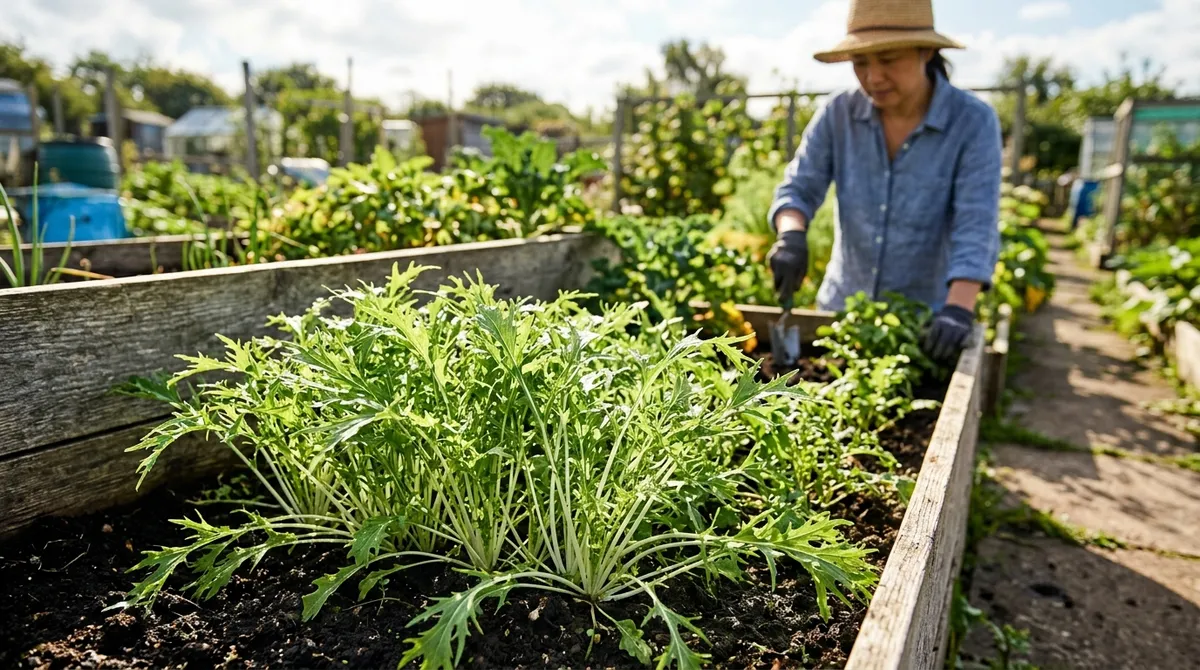
Mizuna is one of the fastest and hardiest salad crops you can grow in the UK. This Japanese mustard green produces its first baby leaves in just 21 days from sowing, tolerates frost down to -10C, and delivers 4-6 harvests from a single plant through cut-and-come-again picking.
Originally from the Kansai region of Japan, mizuna (Brassica rapa var. nipposinica) has been cultivated for over 1,000 years. It arrived in British kitchen gardens in the 1990s and has since become a staple of the UK salad leaf scene. The feathery, serrated leaves have a mild peppery bite that softens further when cooked. Few other crops offer this combination of speed, hardiness, and repeat harvesting.
Which mizuna variety should I grow?
Two main types dominate UK seed catalogues: green mizuna and purple mizuna. Both share the same growing requirements, but they differ in flavour intensity, appearance, and nutritional profile.
Green mizuna is the classic variety. It produces deeply serrated, bright green leaves on slender white stems. The flavour is mild and peppery with a slight mustard warmth. Green mizuna is the faster grower, reaching baby leaf stage in 21 days and full size at 35-40 days. It produces the most leaf volume per plant.
Purple mizuna (sometimes sold as ‘Red Knight’ or ‘Purple Streaks’) has dark red-purple leaves with green undersides. The colour intensifies in cooler weather. The flavour is slightly stronger than green mizuna with a deeper mustard note. Purple mizuna contains 35% more anthocyanins than the green form, according to Joy Larkcom’s research on oriental vegetables in British gardens.
| Feature | Green mizuna | Purple mizuna |
|---|---|---|
| Botanical name | Brassica rapa var. nipposinica | Brassica rapa var. nipposinica |
| Leaf colour | Bright green, white stems | Dark red-purple, green undersides |
| Days to baby leaf | 21 days | 25-28 days |
| Days to full size | 35-40 days | 40-45 days |
| Flavour | Mild peppery, light mustard | Stronger mustard, slightly bitter |
| Cold hardiness | Hardy to -10C | Hardy to -10C |
| Anthocyanin content | Baseline | 35% higher than green |
| Best use | Baby leaf salad, stir-fry | Salad colour contrast, garnish |
| Bolting resistance | Moderate | Slightly better in heat |
| Seed availability UK | Widely available | Most specialist catalogues |
Why we recommend growing both: After trialling six varieties across three seasons on Staffordshire clay, we found that mixing green and purple mizuna in the same bed gives the best results. Green varieties bulk up faster for volume. Purple varieties add visual contrast and deeper flavour. The combination also helps identify pest damage early, as flea beetle holes show more clearly on pale green leaves.
How to sow mizuna from seed
Mizuna seed is small but not tiny. Each seed is roughly 1-2mm across, larger than lettuce seed but smaller than pea seed. Germination rates are typically 85-95% from fresh seed.
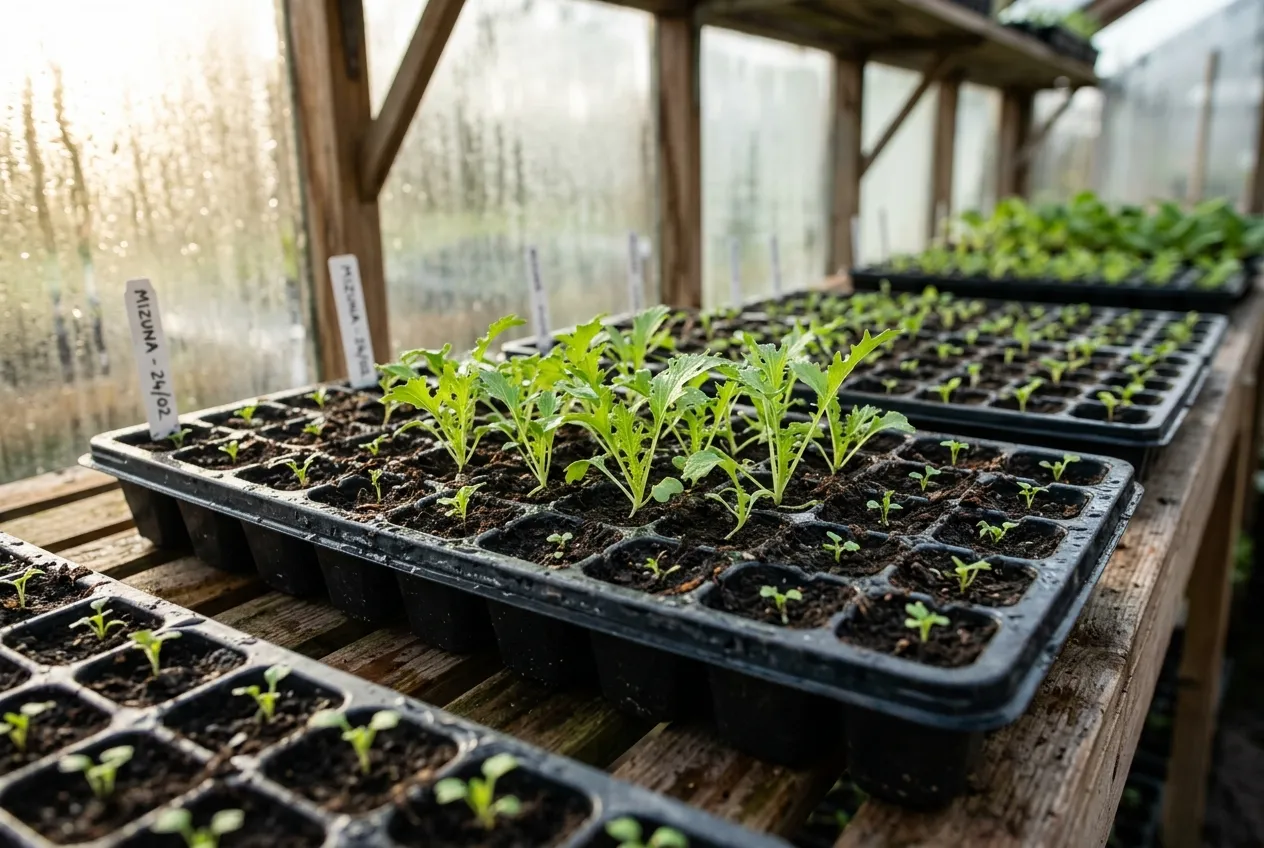 Mizuna seedlings emerge fast. These are 5 days from sowing in module trays inside an unheated greenhouse.
Direct sowing outdoors (March to September): Prepare the soil by raking to a fine tilth. Draw shallow drills 1cm deep and 15-20cm apart. Sow seed thinly along the drill and cover lightly. Water with a fine rose. For baby leaf, thin to 2-5cm apart. For full-sized plants, thin to 15-20cm. Germination takes 3-5 days when soil temperature is above 10C.
Indoor sowing (year-round): Fill module trays or 9cm pots with multipurpose compost. Sow 2-3 seeds per module at 1cm depth. Place on a bright windowsill or in an unheated greenhouse. At 15-20C, seedlings emerge in 3-4 days. Thin to one seedling per module when the first true leaves appear. Transplant outdoors after 3-4 weeks, once plants have 4-5 true leaves.
Broadcast sowing for baby leaf: This is the fastest method for salad production. Scatter seed evenly across a prepared bed or large container at roughly 2cm spacing. Press gently into the surface with a board and water well. This method gives the highest yield per square metre. Our trial plot produced 280g of baby leaf per square metre from a single broadcast sowing harvested twice over 6 weeks.
For sowing seeds indoors, use the same technique as for other brassicas. Mizuna transplants well and suffers minimal root disturbance when moved from modules.
Month-by-month mizuna growing calendar
| Month | Task |
|---|---|
| January | Harvest winter-sown plants under cover. Order seed for the new season. |
| February | Sow under cover in cold frame or unheated greenhouse. First outdoor sowings in mild southern areas. |
| March | Main outdoor sowing begins. Sow direct or in modules. Cover with fleece if frost expected. |
| April | Continue successive sowings every 3-4 weeks. First baby leaf harvest from March sowings. |
| May | Peak growing conditions. Thin broadcast sowings. Watch for flea beetle activity. |
| June | Sow in partial shade to reduce bolting risk. Harvest regularly to delay flowering. |
| July | Avoid full sun sowings. Continue cut-and-come-again harvest of spring-sown plants. |
| August | Resume main sowings for autumn and winter crops. Best month for winter-harvest plantings. |
| September | Final outdoor sowing by 25 September for winter cropping. Sow thickly for insulation effect. |
| October | Cover autumn sowings with fleece or cloches. Harvest continues from August sowings. |
| November | Harvest from cold frame and protected beds. Growth slows but does not stop. |
| December | Cut sparingly from winter crops. Plants survive to -10C but grow slowly below 5C. |
This schedule works alongside a broader seed sowing calendar to plan your full growing year.
How to grow mizuna in winter
Mizuna is one of the most valuable winter salad crops for UK gardens. While lettuce, rocket, and basil surrender to the first hard frost, mizuna survives temperatures down to -10C and continues producing harvestable leaves through the coldest months.
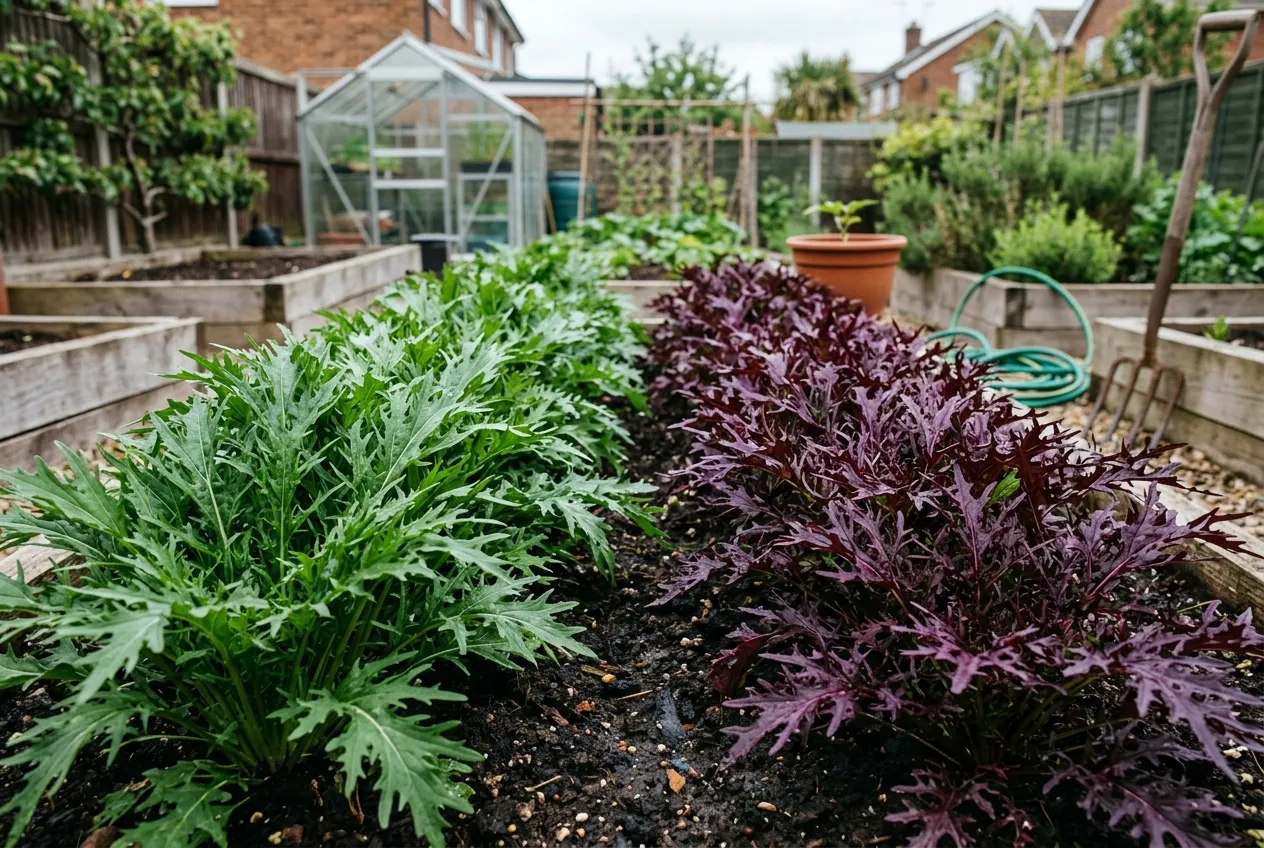 Green and purple mizuna growing side by side in a Midlands vegetable garden. The purple leaves intensify in colour as temperatures drop.
Sow by late September for winter harvesting. Later sowings lack the root establishment needed to survive prolonged cold. In our Staffordshire trial, plants sown on 25 September 2024 survived -8C in January under a single layer of horticultural fleece. Plants sown on 15 October struggled and lost 60% of their leaf area to frost scorch by December.
Cold frames are the gold standard for winter mizuna. They provide 3-5C of frost protection, enough to keep plants growing slowly even in January. Open the lid on sunny days above 8C to prevent botrytis from high humidity. Our cold frame trial produced 120g per square metre between November and February.
Unheated greenhouses extend the season further. Mizuna grows actively in an unheated greenhouse through autumn and resumes growth in February without any supplementary heating. Pair it with other cold frame crops such as winter lettuce, lamb’s lettuce, and claytonia for a full winter salad mix.
Fleece protection outdoors adds 2-3C of frost protection. Double-layered fleece gives 4-5C, enough to prevent leaf scorch in most UK winters. Drape fleece over hoops rather than directly on plants to avoid moisture trapping and grey mould.
Winter mizuna fills the hungry gap between the last autumn crops and the first spring harvests.
Cut-and-come-again harvesting
The cut-and-come-again technique is what makes mizuna so productive. A single sowing produces 4-6 harvests over 8-12 weeks, far outperforming crops that yield only once.
When to make the first cut: Begin harvesting when baby leaves reach 10-15cm tall, typically 21 days from sowing. At this stage the leaves are tender, mild, and perfect for salads. Waiting longer (35-40 days) gives larger, slightly coarser leaves better suited to stir-fries and soups.
Cutting technique: Use sharp scissors or a clean knife. Cut all leaves 2-3cm above the base, leaving the growing point intact. Never pull leaves, as this uproots the shallow root system. Cut in the morning when leaves are turgid and full of moisture. They wilt fast in afternoon heat.
Regrowth cycle: After each cut, new leaves emerge from the central growing point within 7-10 days in warm weather (15-25C) or 14-21 days in cool weather (5-10C). Feed with half-strength liquid seaweed after every second cut to maintain vigour. Our trial showed a 15% yield drop between the first and second cuts, with steady output for cuts 3-5, then a sharp decline at cut 6 as plants attempted to bolt.
Yield data from our trials:
| Cut number | Days after previous cut | Yield per m2 | Leaf quality |
|---|---|---|---|
| 1st | 21 (from sowing) | 280g | Excellent, tender baby leaf |
| 2nd | 12 | 240g | Excellent |
| 3rd | 14 | 230g | Good |
| 4th | 14 | 210g | Good, slightly coarser |
| 5th | 16 | 180g | Moderate, some toughening |
| 6th | 18 | 120g | Declining, bolt risk high |
After the 5th or 6th cut, pull plants and resow. Fresh sowings always outperform exhausted plants.
Pests and problems
Mizuna belongs to the brassica family, so it shares pests with cabbage, kale, and broccoli. However, its fast growth means most pest damage occurs in the early weeks.
Flea beetle is the most common and damaging pest. These tiny black beetles (1.5-3mm long) chew small round holes in leaves, creating a shotgun-blast pattern. Damage is worst in warm, dry weather from April to June. Heavy infestations can destroy seedlings entirely.
Prevention is the only reliable control. Cover beds with fine mesh netting (0.8mm or smaller) immediately after sowing. Standard insect mesh works well. The mesh must be pegged down tightly with no gaps at the edges. Our trial showed that mesh-covered beds had 95% less flea beetle damage than uncovered beds in the same plot. Keeping soil consistently moist also deters flea beetles, which prefer dry conditions.
Slugs target young mizuna seedlings, especially in damp weather and heavy clay soils. Our guide to getting rid of slugs covers organic controls in detail. Nematode biological controls (Nemaslug) applied in March and September reduce slug populations by 60-80%. Evening patrols with a torch and container of salty water remove the largest specimens.
Cabbage white butterfly lays eggs on mizuna leaves from May to September. The green caterpillars can strip plants quickly. Fine mesh netting prevents egg laying entirely. Check plants weekly if unprotected and remove caterpillars by hand. Our cabbage white butterfly control guide covers the full identification and treatment process.
Bolting is the main cultural problem. Mizuna is a long-day plant that flowers when day length exceeds 14 hours combined with temperatures above 25C. Midsummer sowings (late June and July) bolt fastest. Prevent bolting by sowing in partial shade during summer, harvesting frequently at baby leaf stage, and keeping soil consistently moist. Spring and autumn sowings rarely bolt before giving at least 4 cuts.
Downy mildew appears as yellow patches on upper leaf surfaces with grey-purple fuzz underneath. It occurs in cool, damp conditions with poor airflow. Space plants adequately (15-20cm for full size) and avoid overhead watering in the evening. Remove and destroy affected leaves promptly.
Growing mizuna in containers and raised beds
Mizuna is one of the best crops for container vegetable gardening and raised beds. Its shallow root system (10-15cm deep) means it thrives in surprisingly small spaces.
 Harvesting mizuna baby leaves into a trug. Pick when leaves reach 10-15cm for the mildest, most tender salad.
Container growing: Use any container at least 15cm deep with drainage holes. Window boxes, balcony troughs, and even recycled food-grade buckets work well. Fill with multipurpose compost mixed with 20% perlite for drainage. Sow seed 2cm apart across the surface for baby leaf, or transplant 3-4 seedlings per 25cm pot for full-sized plants. Water every 2-3 days in warm weather, daily in hot spells. Feed with half-strength liquid seaweed fortnightly.
Raised bed growing: Mizuna performs well on all UK soil types in raised beds. On heavy clay, mix in 30% composted bark or sharp sand to improve drainage. Sow in blocks rather than rows to maximise yield per square metre. A 1m x 1m raised bed produces enough baby leaf mizuna for two salads per week when cut-and-come-again harvested.
Windowsill growing: Sow thickly in a shallow tray (5-7cm deep) on a bright windowsill. Cut as microgreens at 7-10 days when cotyledons are fully open, or grow on to baby leaf at 21 days. Windowsill mizuna grows year-round without any outdoor space. This method complements a broader approach to growing microgreens at home.
Intercropping: Mizuna’s fast growth makes it ideal for tucking between slower crops. Sow between rows of spring onions, beetroot, or transplanted brassicas. The mizuna matures and is harvested before the main crop needs the space.
Cooking and using mizuna
Mizuna is versatile in the kitchen. The mild peppery leaves work raw in salads, wilted as a cooked green, or added to soups and stir-fries in the last minute of cooking.
Raw in salads: Baby leaf mizuna is the mildest. Mix with other salad leaves including rocket, lettuce, and spinach for a varied leaf base. The feathery texture adds visual interest and the peppery bite lifts bland leaves.
Stir-fried: Add larger mizuna leaves to a hot wok in the final 30-60 seconds of cooking. They wilt rapidly and absorb flavours from soy sauce, garlic, and sesame oil. Overcooking turns them slimy. The stems stay crisp longer than the leaves and add a pleasant crunch.
In soups and broths: Mizuna is traditional in Japanese nabemono (hot pot) dishes. Add whole leaves to miso soup, ramen, or any clear broth just before serving. The heat wilts the leaves gently without destroying their colour or nutrient content.
Nutritional value: Mizuna is rich in vitamins A, C, and K, plus calcium and folate. 100g of raw mizuna provides approximately 480mcg of vitamin A (60% of daily reference intake), 65mg of vitamin C (81% DRI), and 155mcg of vitamin K. The RHS recommends oriental salad leaves including mizuna as part of a nutrient-dense home-grown diet.
Companion planting with mizuna
Mizuna benefits from thoughtful placement alongside other crops. As a brassica, it shares both allies and enemies with the cabbage family.
Good companions:
- Alliums (onions, garlic, chives) deter flea beetle with their strong scent
- Lettuce and other salads share similar growing conditions and harvesting schedules
- Dill and coriander attract hoverflies and parasitic wasps that prey on aphids
- Nasturtiums act as trap crops, drawing aphids and flea beetles away from mizuna
Poor companions:
- Other brassicas (cabbage, kale, broccoli) compete for the same nutrients and attract the same pests. Avoid planting mizuna in beds where brassicas grew the previous season
- Strawberries can harbour the same slugs that target mizuna seedlings
Follow a 3-4 year crop rotation plan that keeps mizuna and all brassicas out of the same bed for at least three seasons. This breaks pest and disease cycles, particularly club root (Plasmodiophora brassicae), which persists in soil for up to 20 years.
For a full guide to beneficial pairings across your vegetable garden, see our companion planting guide.
Frequently asked questions
When should I sow mizuna in the UK?
Sow mizuna outdoors from March to September. Direct sow into prepared soil or containers when soil temperature reaches 10C. For earlier and later sowings, use a cold frame, cloche, or unheated greenhouse from February to October. Indoor sowings on a windowsill are possible year-round. Stagger sowings every 3-4 weeks for a continuous supply of tender baby leaves.
Can I grow mizuna in winter in the UK?
Yes, mizuna is one of the hardiest winter salad crops. Plants survive temperatures down to -10C outdoors without protection. Under a single layer of horticultural fleece or inside a cold frame, mizuna continues producing leaves through December, January, and February. Sow by late September for winter cropping. Growth slows below 5C but does not stop entirely.
How do I harvest mizuna without killing the plant?
Cut leaves 2-3cm above the growing point at the base. Use sharp scissors or a knife rather than pulling, which can uproot shallow plants. Begin harvesting at baby leaf stage (21 days) when leaves reach 10-15cm tall. Leave the central growing point intact and the plant regrows within 10-14 days. Each plant produces 4-6 harvests before quality declines and the plant bolts.
Why is my mizuna bolting?
High temperatures above 25C and long day length trigger bolting. Mizuna is a long-day plant that flowers when daylight exceeds 14 hours combined with heat stress. Midsummer sowings (June-July) bolt fastest. Prevent bolting by sowing in partial shade during summer, watering consistently, and harvesting frequently at baby leaf stage. Autumn and spring sowings rarely bolt.
What is the difference between mizuna and mibuna?
Mizuna has deeply serrated, feathery leaves on thin white stems. Mibuna has smooth, rounded, strap-shaped leaves. Both are varieties of Brassica rapa from Japan. Mizuna has a milder, peppery mustard flavour. Mibuna tastes slightly stronger with an earthier note. Both grow in identical conditions and tolerate the same cold temperatures. Mizuna is more widely available from UK seed suppliers.
Does mizuna grow well in containers?
Mizuna is excellent in containers. Use pots at least 15cm deep with drainage holes. A standard window box produces enough baby leaf for regular salads. Sow seed 1cm apart across the surface, thin to 5cm for baby leaf or 15cm for full-sized plants. Container-grown mizuna needs watering every 2-3 days in warm weather. Feed with half-strength liquid seaweed every fortnight.
Is mizuna safe for pets and children?
Mizuna is completely safe for humans and pets. It belongs to the brassica family alongside cabbage, kale, and broccoli. All parts of the plant are edible including flowers and seed pods. The RHS does not list any brassica as toxic to cats or dogs. Mizuna flowers attract hoverflies and bees, making it beneficial for pollinator gardens as well as the kitchen.
Now you know how to grow mizuna from seed to harvest, explore our guide to pak choi and other Asian greens to build a complete oriental salad bed in your garden.
Lawrie has been gardening in the West Midlands for over 30 years. He grows his own veg using no-dig methods, keeps a wildlife-friendly garden, and writes practical advice based on real UK growing conditions.