Key takeaways
- Most people in the UK take the tree down on Twelfth Night, 5 January
- Strip off every hook, light, bauble and strand of tinsel before it goes for recycling
- Councils collect or accept real trees in January, usually as garden waste
- Many local hospices and charities collect trees for a donation
- At home, shred the branches for mulch and stack the trunk as a wildlife log pile
- Don't burn a Christmas tree in a wood burner or open fire
Most people in the UK take their Christmas tree down on Twelfth Night, which is 5 January. After that, a real tree can go to the council, a local charity or the tip. It can also go straight into your own garden as mulch and wildlife habitat. Just make sure every hook, light and strand of tinsel comes off first.
Below you’ll find when to take the tree down and how to get it out without a trail of needles. You’ll also find the best ways to recycle it. There are also some handy garden uses for the branches and trunk, plus what to do with a potted tree.
When should you take your Christmas tree down?
By tradition, Christmas decorations come down on Twelfth Night. Most people in the UK count this as the evening of 5 January, twelve nights after Christmas Day. Some families wait until 6 January, the feast of Epiphany.
The old superstition says leaving greenery up after Twelfth Night brings bad luck for the year ahead. Earlier still, some households kept their evergreens up until Candlemas on 2 February.
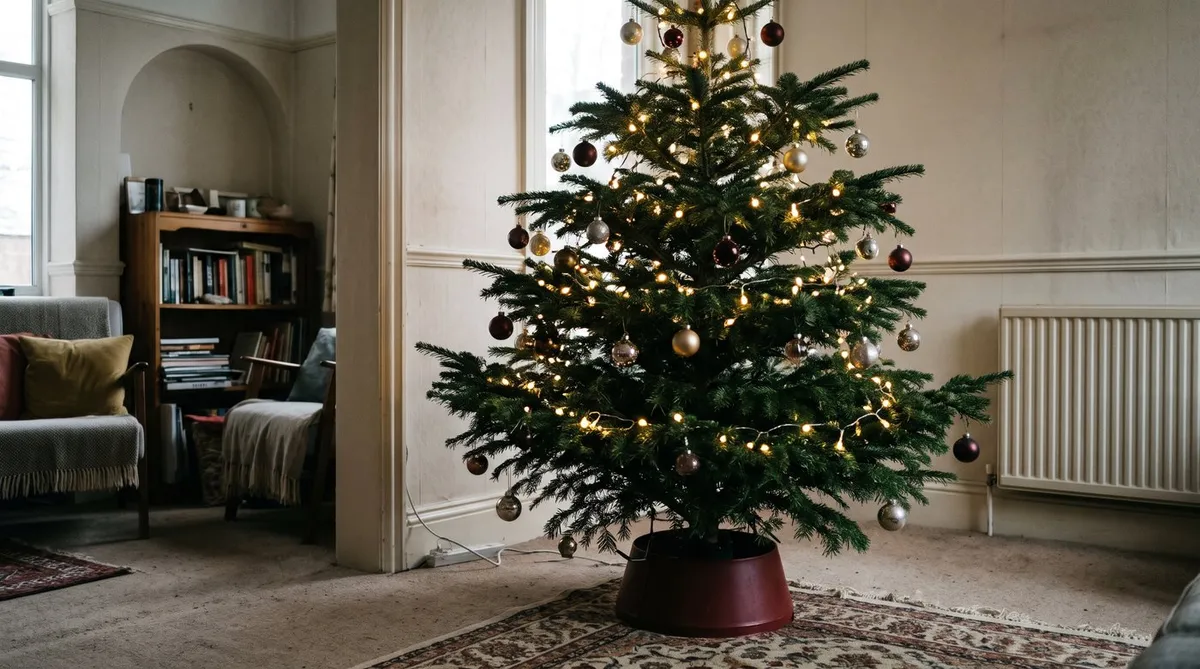
In practice, a real tree tells you when it’s ready. If it’s dropping needles every time someone walks past, take it down sooner. A well-watered Nordmann fir usually lasts happily to 5 January. Our guide to real Christmas tree care explains how to keep it fresh that long.
How to take a real Christmas tree down without the mess
Take the decorations off from the top down, then the lights. Go round the tree twice. Wire ornament hooks and small baubles hide deep in the branches, and they ruin shredders and recycling machines.
Then:
- Let the stand run dry for a day if you can. A drier trunk drips less.
- Lay an old sheet or a tree removal bag around the base.
- Unscrew the stand, then pull the bag or sheet up around the tree.
- Carry it out trunk first, so the branches fold back rather than snag.
- Vacuum the needles with the hose attachment rather than a brush head. Sharp needles can clog the brush roll.
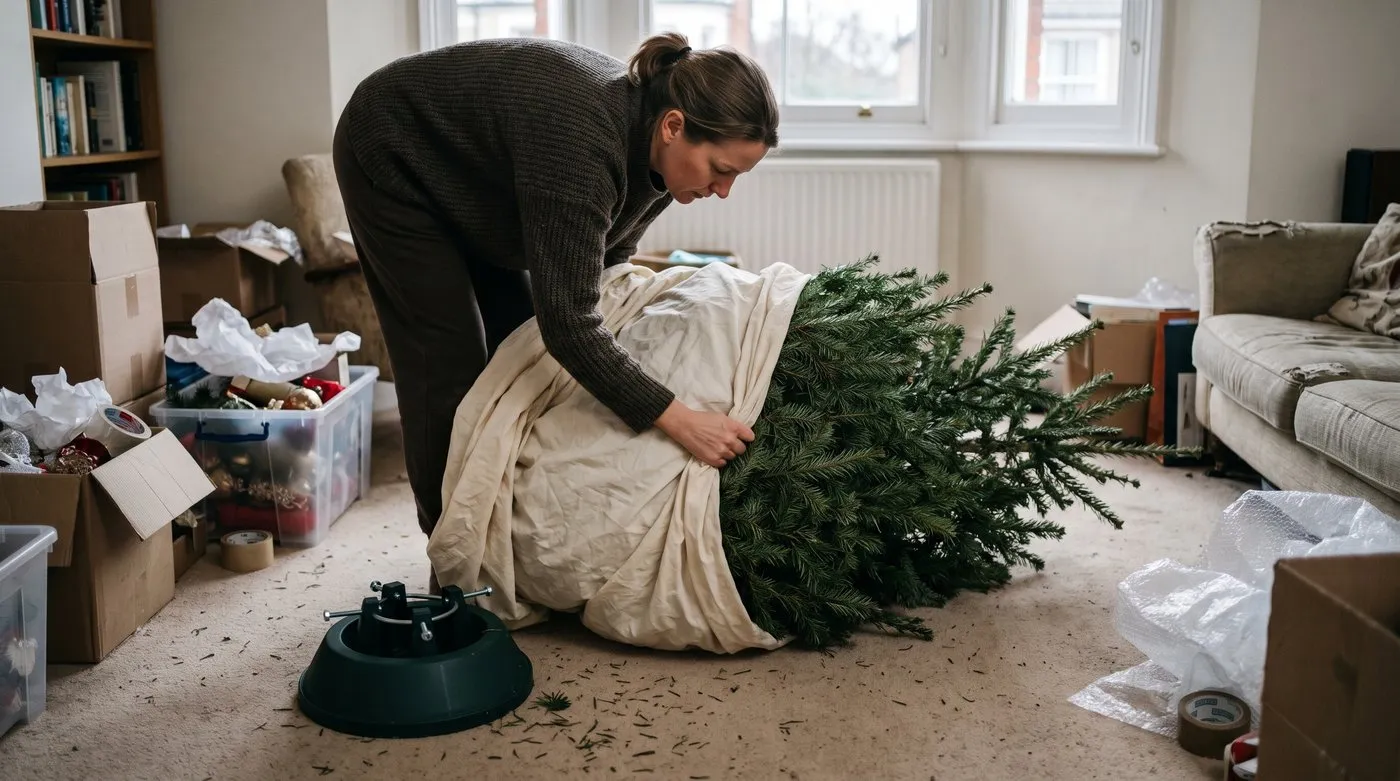
Wrap the tree in an old sheet before you move it. Most of the loose needles stay inside instead of on the carpet.
Gardener’s tip: Shake the tree outside before you cut or shred it. Lots of dead needles will drop, and the rest are easier to deal with.
Best ways to recycle a real Christmas tree
A real tree is easy to recycle. Most of it ends up as wood chip or compost, wherever it goes. Pick whichever option suits you.
| Option | What to do | Good to know |
|---|---|---|
| Council collection | Put it out on your collection day, or cut it up for the garden waste bin | Most councils collect or accept trees in the first two or three weeks of January. Check your council’s website |
| Charity collection | Book online and give a donation | Many local hospices and charities run January tree collections |
| Household recycling centre | Drop it in the green waste area | Usually free. Remove the stand and all decorations |
| Shred for mulch | Cut up and run through a garden shredder | Makes a good path and border mulch |
| Compost | Chop small and mix with green waste | Takes about a year to break down |
| Wildlife log pile | Cut the trunk into logs and stack in a shady corner | Great for beetles, woodlice and frogs |
The tree must be bare for council and charity collections. Tinsel, hooks, lights, plastic netting and pots can all get a tree rejected or damage the chipper. Snow spray and glitter can make a tree unsuitable for composting, so check before using it.
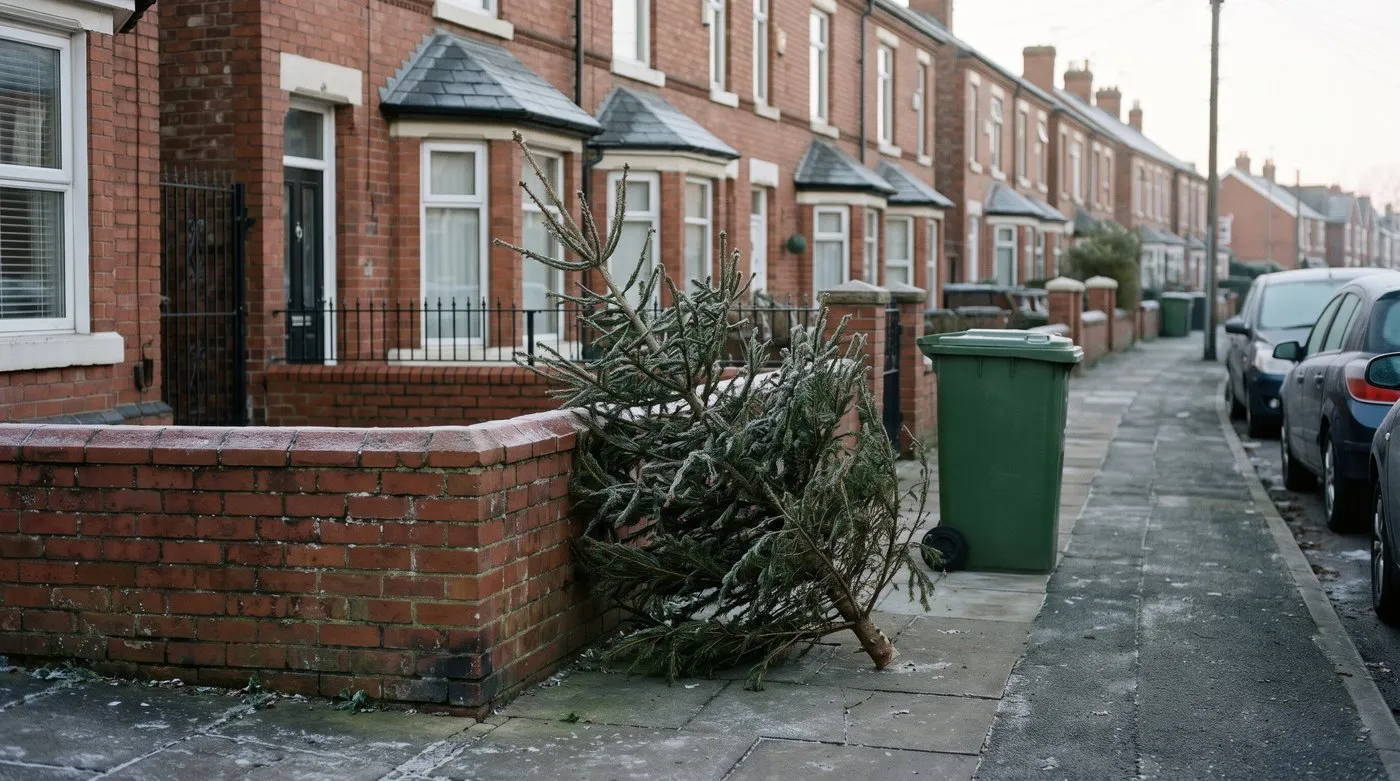
Put the tree out bare and on the right day. Collection dates are usually on your council’s website from early December.
How to use your Christmas tree in the garden
Your old tree is useful in the garden for months. These are the best ways to use each part.
Shred the branches for mulch
Cut the branches off with loppers and run them through a garden shredder. The chips make a springy, free mulch for paths and around shrubs. Pine and fir needles change soil pH very little, so you can use them almost anywhere. The guide to making soil acidic explains why. For more ideas, see our guide to woodchip mulch.
Cover borders with the branches
Lay whole branches over bare soil or newly planted bulbs. They give a little winter protection and help keep cats and pigeons from digging. Lift them in early spring before new shoots push through.
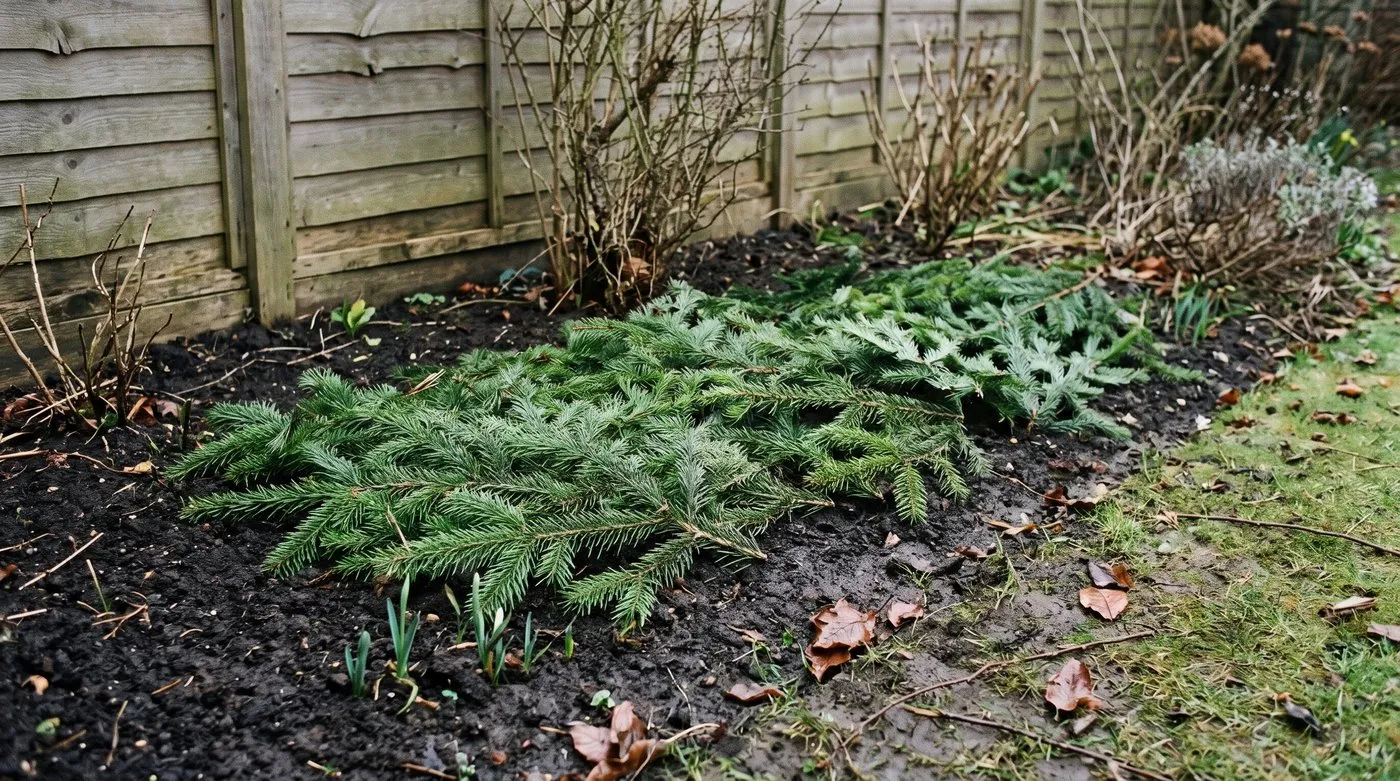
Laid over a border, old branches deter cats and pigeons and give bulbs some shelter. Lift them in March.
Compost the small pieces
Chopped twigs and needles go in the compost heap, mixed with plenty of green waste such as vegetable peelings. Whole branches take years to rot, so cut them into short pieces first. The guide to making compost explains how to get the mix right.
Build a log pile for wildlife
Saw the trunk into 30-50cm lengths and stack them in a damp, shady corner. Beetles, woodlice, frogs and wrens will move in. Our guide to building a wildlife log pile shows the best spot and size.
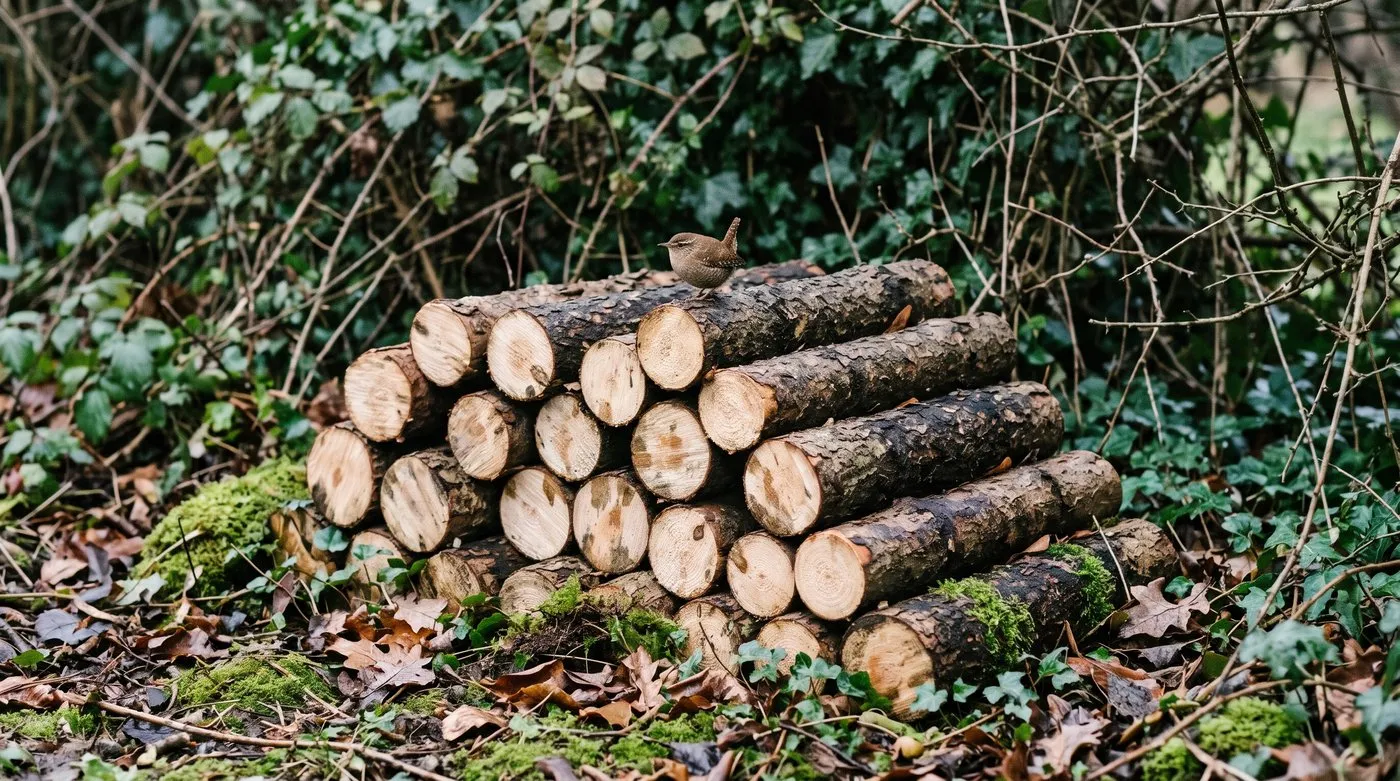
Short logs from the trunk, stacked in shade, soon become a home for beetles and other garden wildlife.
Can you burn a Christmas tree?
Don’t burn a Christmas tree in a wood burner or open fire. Fresh pine and fir are full of resin and moisture. They burn too hot and fast, spit sparks and leave sticky tar inside the flue, which raises the risk of a chimney fire.
If you want firewood, cut the trunk into logs and let them dry under cover for at least a year. A garden bonfire is possible, but the smoke can upset neighbours and some councils discourage bonfires. Recycling is easier and kinder to everyone.
Warning: Before lighting any bonfire, check the heap for hedgehogs and other animals sheltering inside. Better still, build it on the day you burn it. The guide to bonfires on allotments covers the rules.
What to do with a potted Christmas tree
A pot-grown tree can live on. Move it out of the house to a cool porch, shed or garage for a week. Then put it back outside in a sheltered spot and water it whenever the compost feels dry.
In spring, plant it in the garden or move it into a slightly bigger pot. Potted trees can come back indoors for a short stay next Christmas. The guide to real Christmas tree care covers keeping a potted tree from year to year.
Christmas tree after-care timetable
| When | What to do |
|---|---|
| Late December | Check your council’s collection dates and book any charity collection |
| 5 January (Twelfth Night) | Take decorations off, then take the tree down |
| First two weeks of January | Put it out for collection, or drop it at the recycling centre |
| January | Shred branches for mulch. Stack the trunk as a log pile. Lay spare branches over borders |
| March | Lift branches from borders before bulbs come through |
Common mistakes with old Christmas trees
Leaving a hook or bit of tinsel on the tree is the most common problem. It can damage council chippers and get the whole load rejected. Go over the tree twice, then once more outside in daylight.
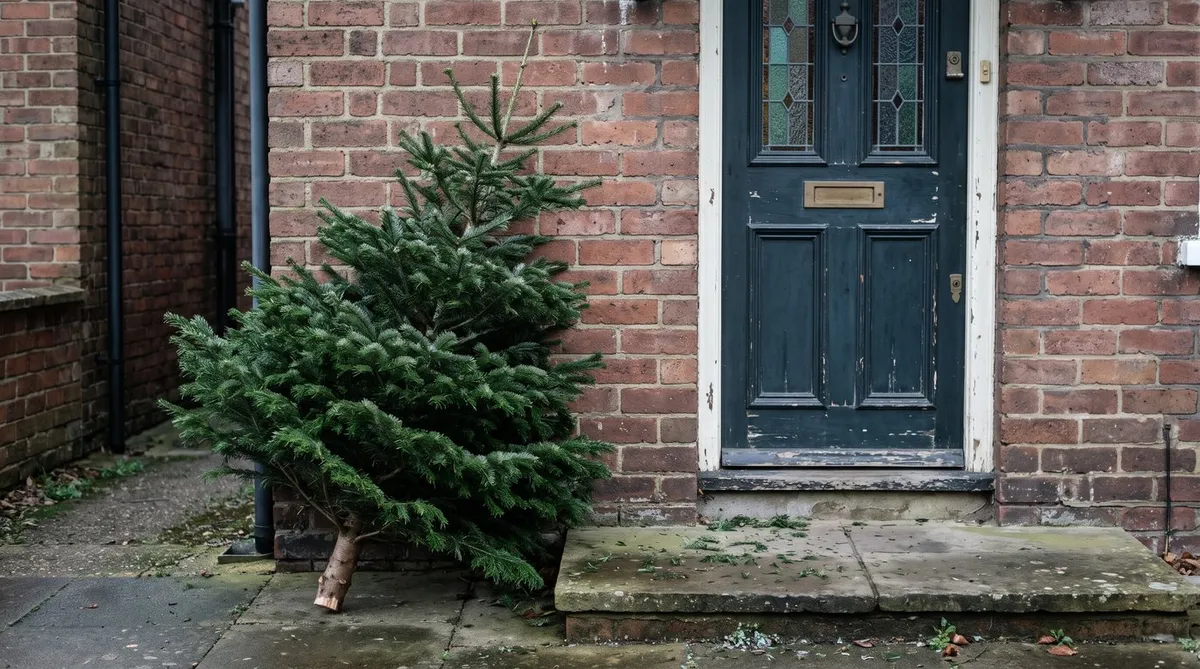
Dumping a tree in the street or on waste ground is fly-tipping, even though the tree is natural. Use a collection, the recycling centre or your own garden.
Putting a whole tree on the compost heap sounds easy, but it won’t rot down for years. Chop or shred it first.
Burning fresh branches in a wood burner causes tar build-up in the chimney. Season the wood for a year, or recycle it.
Missing your council’s collection date is easy to do in the post-Christmas fog. Note it in your phone in December.
Frequently asked questions
When should you take your Christmas tree down?
Traditionally on Twelfth Night, which most people count as 5 January. Some families wait until 6 January, the feast of Epiphany. A real tree that’s dropping lots of needles can come down sooner.
Is it bad luck to keep your Christmas tree up after Twelfth Night?
That’s the old superstition. Leaving greenery up was said to bring bad luck for the year ahead. Earlier still, some households kept their greenery up until Candlemas on 2 February.
What do I do with my real Christmas tree after Christmas?
Your council will usually collect it or take it as garden waste in January. Hospices and charities often collect trees for a donation. You can also shred it for mulch, compost it or use it for wildlife.
Can I put my Christmas tree in the garden waste bin?
Yes, if you cut it into pieces that fit with the lid closed. Most councils accept real trees in the brown or green garden waste bin. Remove the stand, decorations and any netting first.
Can I burn my Christmas tree in a log burner?
No, it’s a bad idea. Fresh, resinous pine and fir burns hot and fast, spits and leaves sticky tar in the chimney. Let the wood dry for a year first, or recycle it instead.
Can you compost a Christmas tree?
Yes, but chop or shred it first. Whole branches take years to rot. Shredded needles and twigs break down in a year or so and make a good mulch while they do.
Do Christmas tree needles make soil acidic?
Only very slightly. Pine and fir needles are a useful mulch, but they change soil pH very little. You’d need a lot to make any real difference.
For more January jobs, browse our how-to guides, then read the guide to winter wildlife gardening to help birds and hedgehogs through the cold months.
Our team produces practical UK gardening guidance from source research, contributor records and established horticultural practice. Editorial standards are overseen by Matt W.