Jungle Garden Design Ideas for UK Plots
Jungle garden design for UK gardens. Layer hardy bananas, tree ferns and palms for a tropical look that survives a British winter.
Key takeaways
- A UK jungle garden uses hardy exotics, not true tropicals, surviving minus 5C to minus 8C with shelter
- Layer planting in three tiers: canopy 2.5m plus, mid-storey 1 to 2m, and ground 30 to 90cm
- Musa basjoo, Trachycarpus fortunei and Dicksonia antarctica deliver 80% of the effect in three plants
- Leave a 1.2m winding path and one hidden seat to make a small plot feel larger and immersive
- Budget 600 to 1,500 pounds for a 30 square metre plot, with one tree fern alone costing 80 to 250 pounds
- Wrap tender crowns and mulch 15cm deep by mid-November to carry plants through a UK winter
A jungle garden turns an ordinary UK plot into a dense, green, immersive space full of big leaves and hidden corners. The trick to a convincing jungle garden in Britain is plant choice. You are not growing true tropicals. You are using hardy exotics that survive a cold, wet winter while reading as lush and tropical from late spring onwards.
This guide covers the look and how to build it. We will work through layered canopy planting, the structural plants that deliver the effect, how to handle a UK winter, hardscape and lighting, and small-space courtyard versions. The focus is design and atmosphere, not plant care detail. Where a plant needs its own deep guide, we link to it so you can grow it well.
What makes a garden read as a jungle
A jungle garden works through density, layering and big leaf shape, not through any single rare plant. The brain reads a space as tropical when foliage fills every level, when you cannot see the whole garden at once, and when scale feels generous. Three design moves do most of the work.
First, plant in tiers. A real jungle has a canopy, a mid-storey and a forest floor. Recreate this with tall palms or bananas overhead, medium shrubs at chest height, and ground-covering foliage below. The overlap of leaf shapes at different heights creates the layered, enclosed feel.
Second, block the sightlines. In a conventional border you can take in the whole plot in one glance. A jungle hides itself. Use large leaves and a winding path so the garden reveals itself in stages.
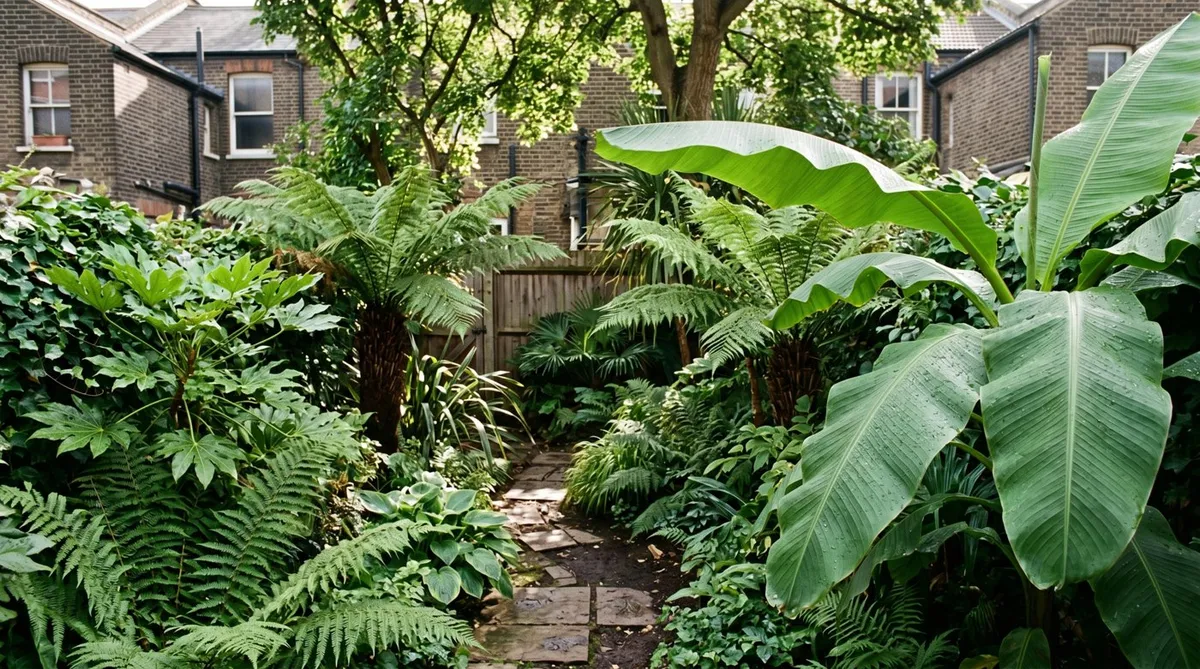
Third, vary leaf form and size dramatically. Pair the 1.5m paddle leaves of a hardy banana with the fine, dissected fronds of a tree fern and the glossy hands of Fatsia. Contrast is what makes the planting feel wild rather than tidy.
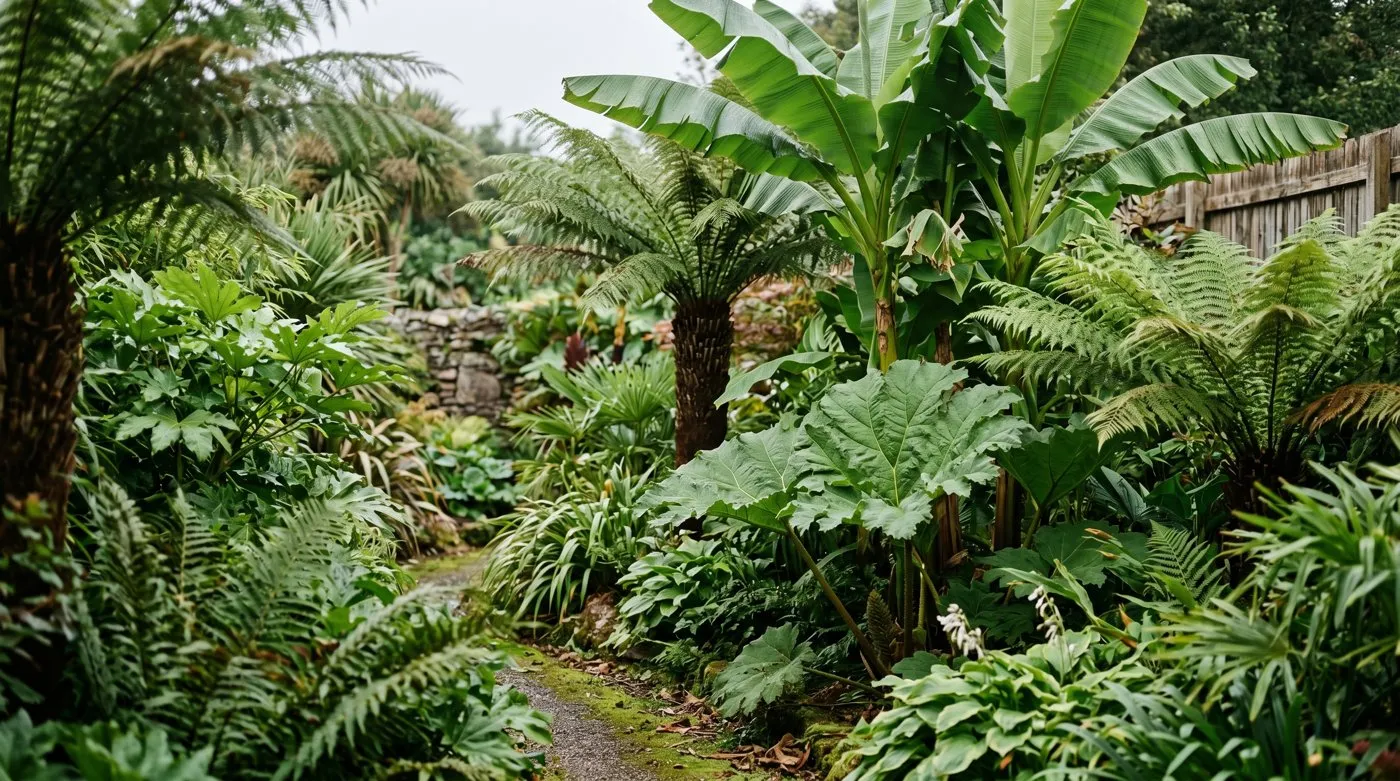 A layered exotic border in a UK garden, with banana, tree ferns and big-leaved foliage stacked by height for a jungle effect.
The hardy exotics that survive a UK winter
The plants below give a tropical look while tolerating real UK cold. None of these is a true tropical. They are temperate or marginally tender species chosen for big foliage, fast growth and winter hardiness. The table ranks them by overall impact in a jungle scheme, weighing leaf drama, hardiness and how fast they establish.
| Plant | Role | Hardiness | Mature size | Speed | Jungle impact |
|---|---|---|---|---|---|
| Hardy banana (Musa basjoo) | Canopy paddle leaves | minus 5C top, root hardy to minus 10C | 2.5 to 3.5m | Fast, full in 1 season | Very high |
| Tree fern (Dicksonia antarctica) | Mid canopy fronds | minus 5C crown with wrap | 1.5 to 3m | Slow, 2.5cm trunk a year | Very high |
| Chusan palm (Trachycarpus fortunei) | Overhead fan canopy | minus 12C established | 3 to 6m | Slow, fully hardy | High |
| Rice paper plant (Tetrapanax papyrifer) | Giant 60cm leaves | minus 8C root hardy | 2 to 4m | Fast, suckers freely | Very high |
| Fatsia japonica | Glossy ground to mid | minus 15C | 1.5 to 2.5m | Moderate, evergreen | High |
| Hardy bamboo (Fargesia) | Vertical screen | minus 20C | 2 to 4m | Moderate, clumping | Medium high |
| Canna (Canna indica) | Bold mid-storey colour | tender, lift or mulch | 1.5 to 2m | Very fast, 1 season | High |
| Hardy ginger (Hedychium) | Late scent and leaf | minus 5C with mulch | 1.5 to 2m | Fast in summer | Medium |
| Colocasia (elephant ears) | Dramatic floor leaves | tender, lift in winter | 0.9 to 1.5m | Fast in warmth | High |
Musa basjoo is the signature jungle plant in the UK. The top growth dies back below minus 5C, but the root crown survives to minus 10C under a thick mulch, then throws up 1.5m paddle leaves again the following summer. Dicksonia antarctica, the soft tree fern, gives the prehistoric understorey look but is the most expensive and the slowest, adding only 2.5cm of trunk a year. Trachycarpus fortunei is the toughest exotic on this list, hardy to minus 12C once established, and gives the overhead fan canopy that signals tropical at a glance.
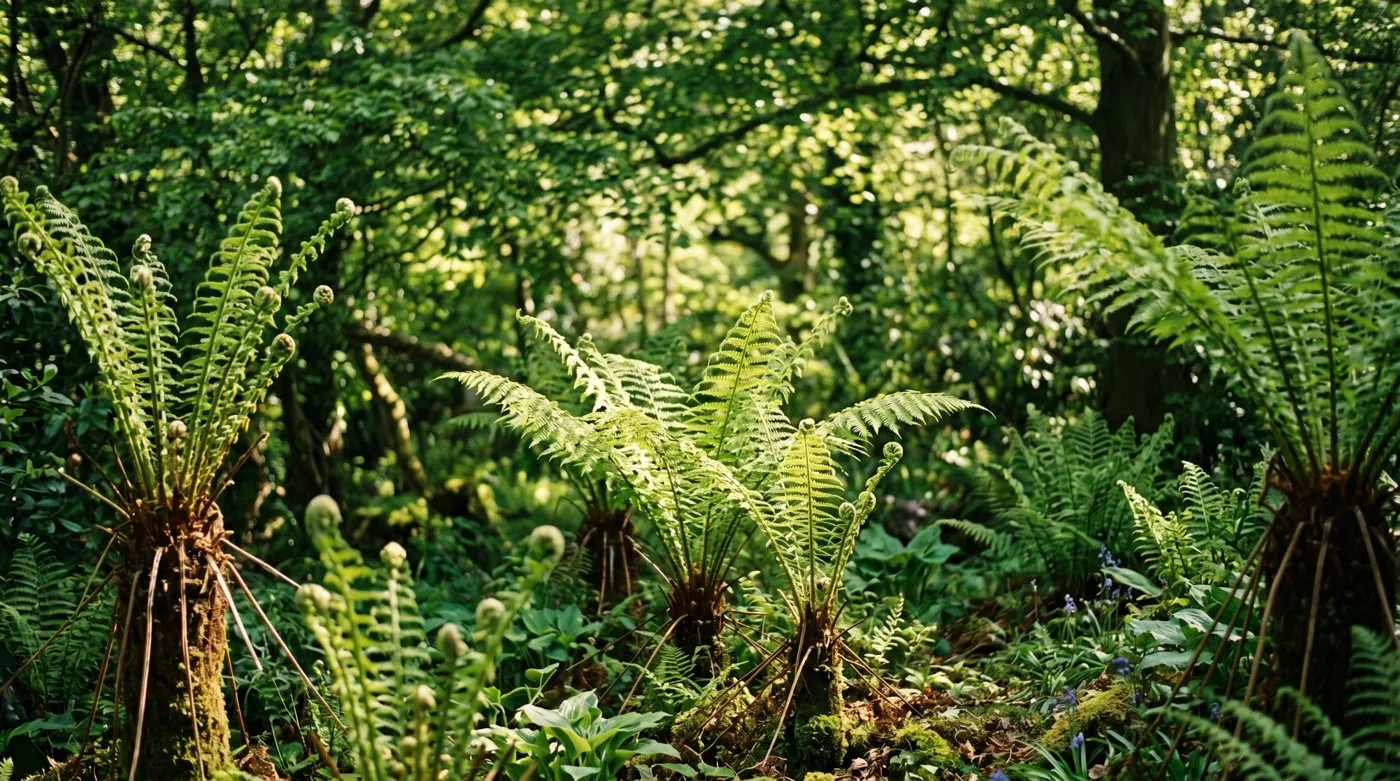 Tree ferns thrive in the dappled shade of a jungle understorey, the slowest but most atmospheric layer.
For the structural backbone, our guide to low maintenance architectural plants for UK gardens covers more bold-leaved options. For the deep detail on growing the hero plant, read how to grow banana plants in the UK. The full hardy palette is set out in our guide to hardy exotic and tropical plants for UK gardens.
How to layer planting by height for a canopy effect
Layering is the single most important technique in jungle design. A flat border of similar-height plants never reads as tropical, no matter how exotic the species. You need three distinct vertical zones that overlap and interlock.
The canopy layer, above 2.5m, casts the dappled shade that defines a jungle. Use Chusan palm, mature hardy banana and the tallest bamboo here. Space canopy plants 1.5 to 2.5m apart so their fronds and leaves meet overhead without crowding the trunks. Aim for three to five canopy plants in a small plot.
The mid-storey, 1 to 2m, fills the middle distance and stops the eye travelling through the bed. Tree ferns, Tetrapanax, cannas, Fatsia and gingers sit here. This is the busiest, densest layer and where most of the leaf contrast happens.
The forest floor, 30 to 90cm, covers bare soil and earth between stems. Use Colocasia, hostas, hardy ferns, ophiopogon and bergenia. A planted floor is what separates a real jungle feel from a few exotic plants dotted in gravel.
Gardener’s tip: Plant in odd-numbered groups of three or five rather than singletons. A single banana looks like a specimen. Three bananas of staggered height read as a stand, which is far more convincing. Stagger the planting depth too, raising the back of the bed 15 to 20cm so taller plants sit higher and the layering exaggerates.
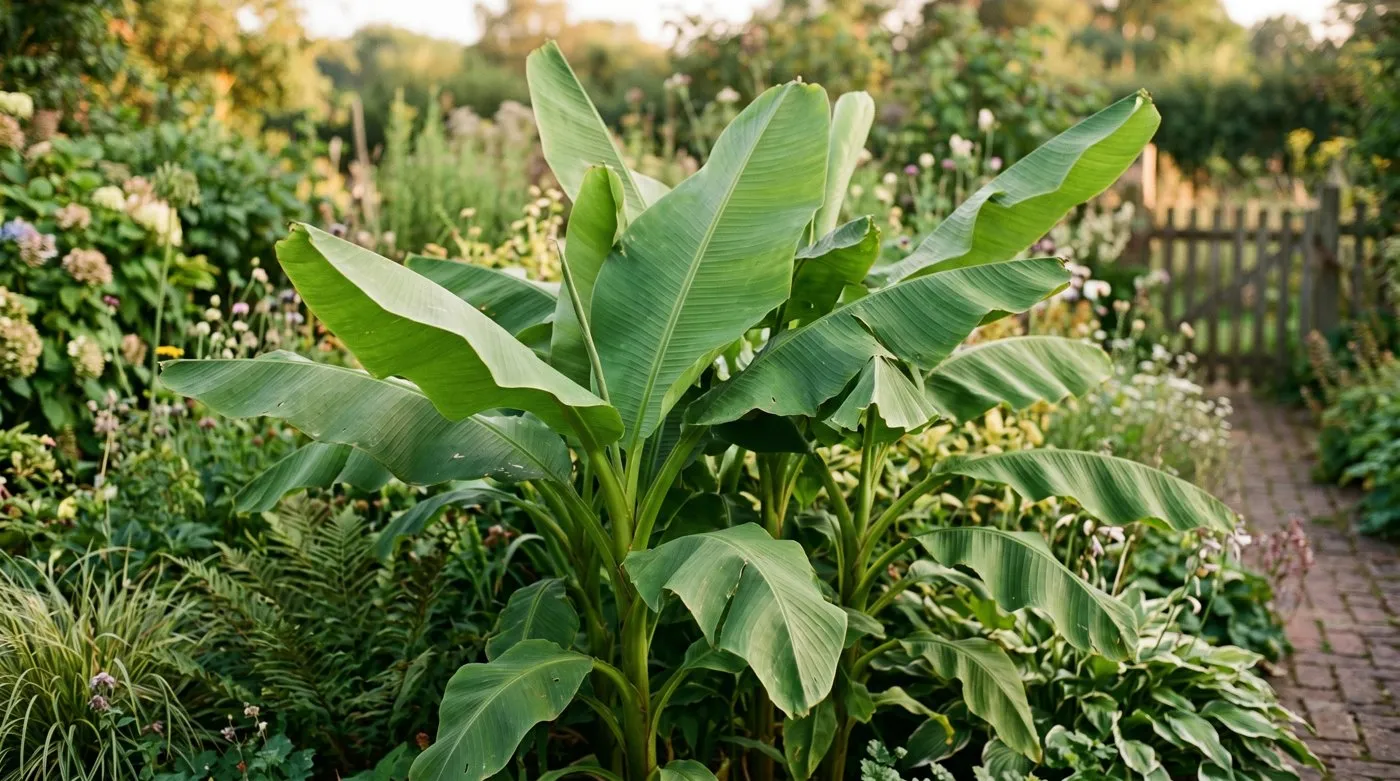 A hardy banana clump gives instant canopy scale, growing 1.5m of fresh paddle leaves in a single UK summer.
Creating shelter, humidity and a warm microclimate
Jungle plants perform best in a sheltered, humid pocket out of cold drying wind. Wind is more damaging to big soft leaves than cold itself. A banana leaf shreds in a gale and a tree fern frond browns at the edges in exposed positions. Building shelter is part of the design, not an afterthought.
Use the garden’s existing structure first. A south or west-facing wall stores heat and lifts the local temperature by 1 to 2C, which is enough to carry marginal plants through a hard night. Boundary fences, hedges and the densest exotics themselves create a windbreak that protects everything inside.
Dense planting raises humidity. As leaves transpire in a sheltered, enclosed space, the air holds more moisture, which big tropical-looking foliage loves. This is why a tightly planted small garden often grows better exotics than a large open one. A simple water feature adds evaporative humidity and the sound that completes the jungle atmosphere.
For privacy and shelter without running bamboo, our guide to bamboo alternatives for privacy in UK gardens covers clumping screens. To keep the canopy looking good across the seasons, see year-round interest garden planting in the UK.
Overwintering exotics and beating the winter wet
Winter is where most UK jungle gardens fail, and the cause is usually wrong. Winter wet kills more exotics than cold. Crowns and roots sitting in cold, waterlogged soil rot long before frost alone would kill them. Drainage is the first defence, fleece is the second.
Why we recommend raised, gritted planting: After testing 18 hardy exotics over four winters on heavy clay in Staffordshire, I traced almost every loss to crown rot, not frost. Plants on a 20cm raised berm with 30% horticultural grit dug into the holes lost under 5% of crowns. The same species in flat, unimproved clay lost 22%. Sharp drainage beat fleece in every comparison. If you do one thing, plant high and gritty.
For tender crowns, wrap by mid-November. Cut banana stems back if they have collapsed, then build a cage of chicken wire around the stump and pack it with dry straw or leaves, capped to keep rain out. Tree fern crowns need the growing point protected: stuff the crown with straw and fold the fronds over it, or wrap with horticultural fleece. Mulch all root zones 15cm deep with bark or composted leaves.
Lift the truly tender plants. Cannas, Colocasia and dahlias should come out after the first frost blackens the foliage. Store the tubers in dry compost in a frost-free shed at 5 to 10C. Our guides to how to overwinter plants in the UK and tree fern winter protection cover the detail.
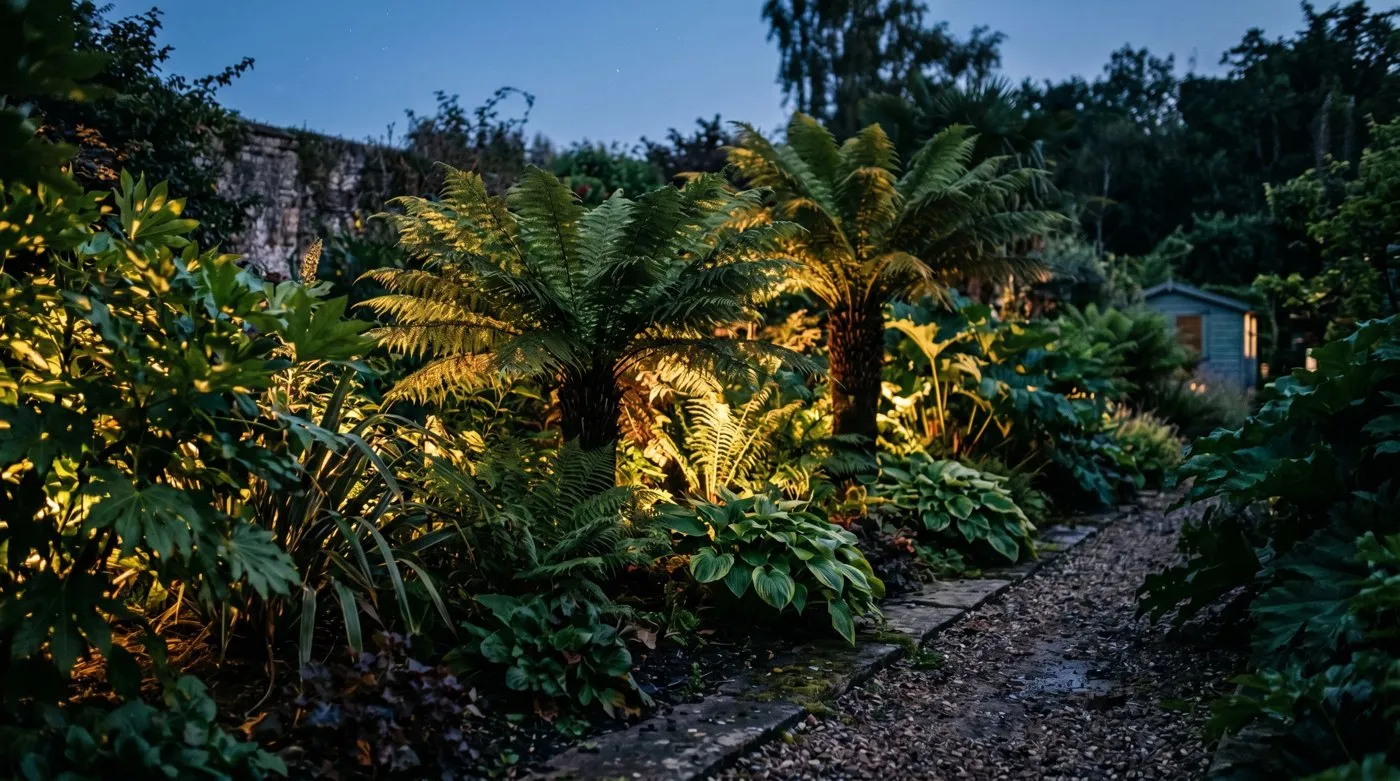 Low uplighting at dusk turns the foliage into silhouettes and doubles the jungle effect after dark.
Hardscape, paths and lighting for the jungle feel
Hardscape sets the mood as much as planting. A jungle path should wind, not run straight, so the garden unfolds in stages. Keep paths to a 1.2m minimum width where you want to walk comfortably between overhanging leaves, narrowing to 0.6m for a deliberately closed-in, brushing-past feel.
Use natural, soft materials. Bark chip, stepping stones set in gravel, or reclaimed brick all suit the look better than crisp porcelain paving. A path that disappears around a clump of banana invites exploration and hides the boundary, making the plot feel deeper than it is.
Lighting transforms a jungle garden after dark. Uplight the trunks of palms and tree ferns so the canopy glows from below and the leaves cast shadows across the space. Warm white at 2700K suits foliage better than cold blue light. Keep fittings low and hidden among the planting. A few well-placed spots do more than a row of bollards.
Water is the final layer. The sound of moving water signals jungle to the brain before you see a single plant. A simple wall spout or a pebble pool adds humidity and atmosphere. For ideas that suit a tropical scheme, see garden lighting ideas for outdoor spaces.
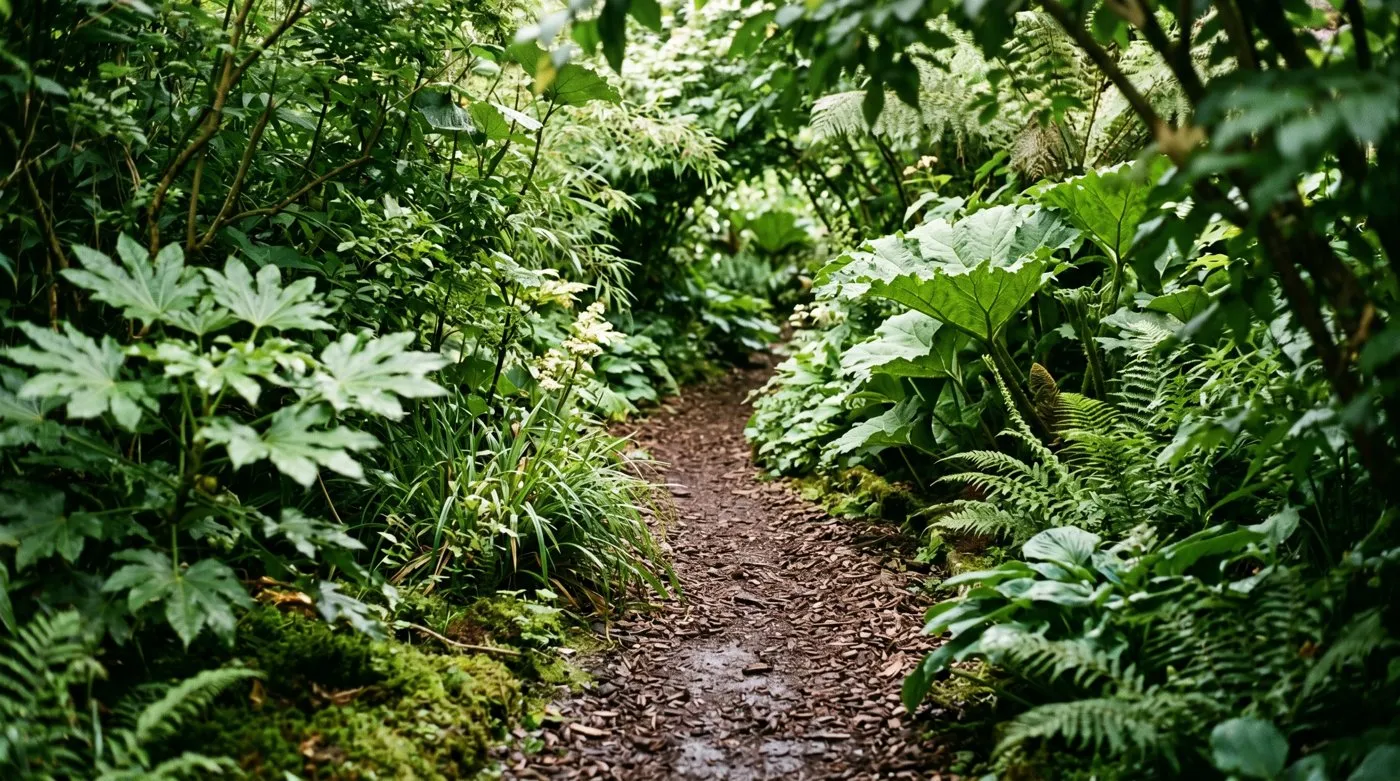 A winding bark path closes overhead and hides the boundary, making a small plot feel like a deep jungle.
Jungle gardens for small plots, courtyards and balconies
Small spaces make better jungle gardens than large ones, which surprises most people. A jungle relies on enclosure, and a courtyard, side return or balcony is already enclosed. The walls trap heat and shelter from wind, and dense planting reads as immersive rather than empty.
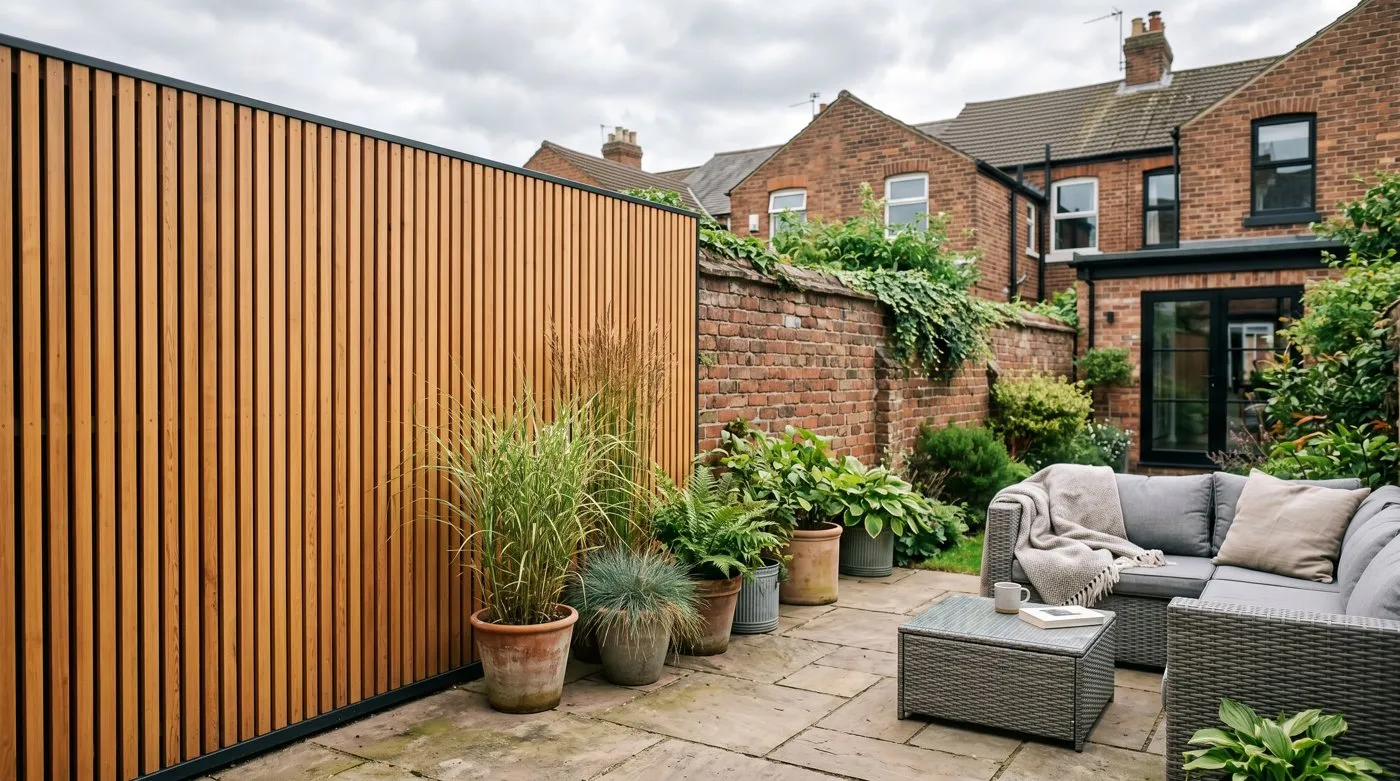
In a courtyard, plant against the walls in layers and leave the centre open or hold a single seat. Use the vertical surfaces: train climbers up trellis, mount staghorn ferns or stack pots to build height in a tight footprint. A 3 by 4m courtyard can hold a tree fern, a hardy banana, a Fatsia and a floor of ferns and still leave room to sit.
On a balcony, work entirely in containers. A tree fern, a Chusan palm and a cluster of cannas in large pots give the layered look. Group pots tightly so the foliage merges into one mass rather than reading as separate plants. Choose lightweight pots and check the balcony loading first.
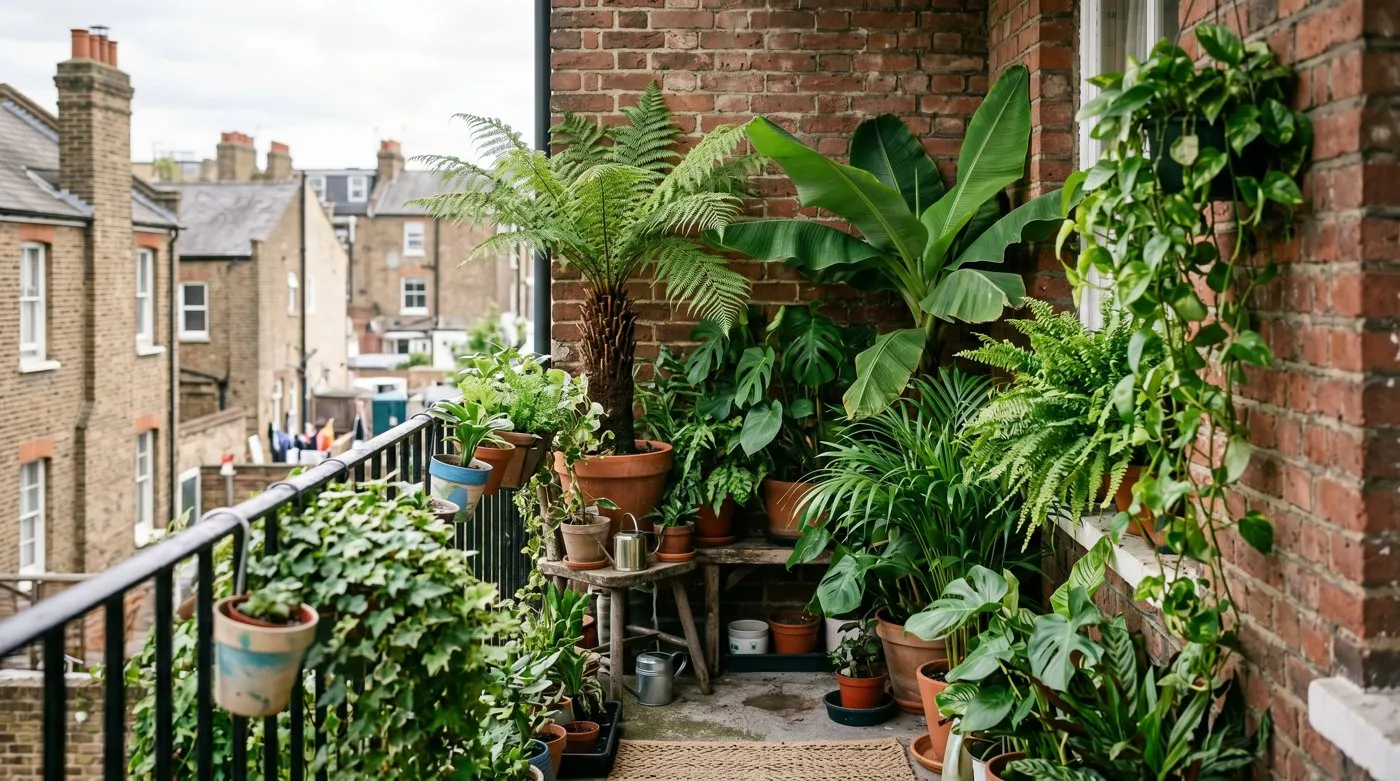 A city balcony works as a container jungle, with grouped pots merging tropical foliage into one green mass.
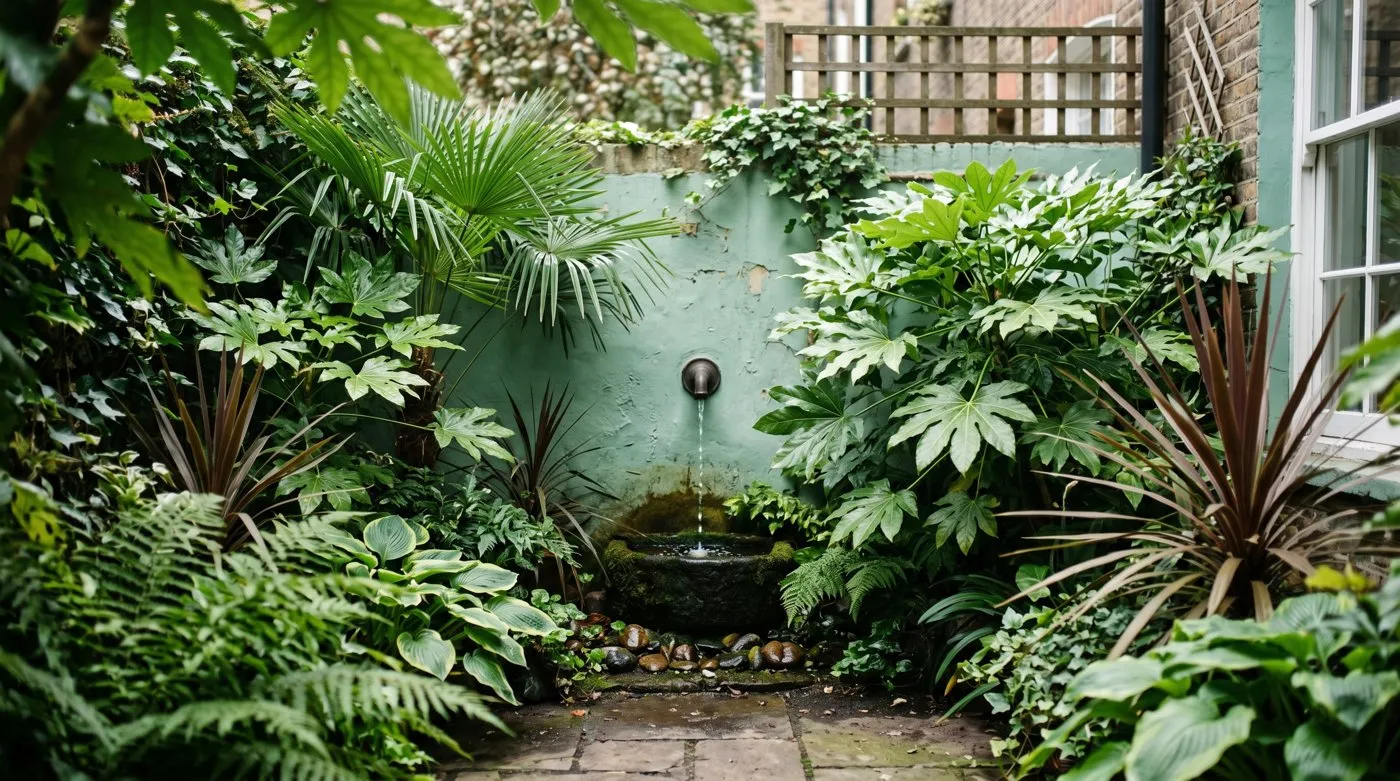 An enclosed courtyard makes an ideal jungle, with walls trapping heat and dense planting filling every level.
For more on working with a tight footprint, read our courtyard garden ideas for UK gardens and the related tropical tiki garden ideas for a bolder, more themed take on the same hardy palette. For the overhead canopy in a pot, see hardy palms for UK gardens.
Year-round jungle garden calendar for the UK
A jungle garden needs different jobs through the year. Most of the work falls in autumn and spring, with summer reserved for watering and enjoying the peak. This calendar assumes a typical central or southern UK climate. Northern and Scottish gardens should shift protection earlier by two to three weeks.
| Month | Task |
|---|---|
| January | Plan additions. Order bare-root bamboo and seed-grown exotics. Check winter wraps after storms. |
| February | Firm up any plants lifted by frost. Order canna and colocasia tubers for spring potting. |
| March | Start cannas and colocasia tubers indoors at 15 to 18C. Tidy dead fronds once frost risk eases. |
| April | Remove winter wraps after the last hard frost. Feed established exotics. Pot on tender plants. |
| May | Plant out hardy exotics once soil warms to 10C. Plant cannas and colocasia after late May. |
| June | Water new plants well. Mulch to lock in moisture. Stake tall bananas against summer wind. |
| July | Peak growth. Water deeply in dry spells. Feed bananas and cannas fortnightly for big leaves. |
| August | Fullest effect. Light shaping only. Enjoy the canopy. Note gaps to fill next season. |
| September | Take ginger and canna notes. Reduce feeding. Order fleece and straw for winter protection. |
| October | Lift colocasia and cannas after first frost. Store tubers frost-free at 5 to 10C. |
| November | Wrap banana stems and tree fern crowns by mid-month. Mulch all root zones 15cm deep. |
| December | Check wraps stay dry after rain. Clear fallen leaves off crowns to prevent rot. |
Common jungle garden mistakes to avoid
A few repeated errors stop a UK jungle garden from working. Each one is easy to fix once you know it.
Planting too uniformly. A border of plants at one height never reads as jungle. The effect needs three overlapping vertical layers. Mixing tall, medium and ground-level foliage is what creates the enclosed canopy feel. Uniform height is the most common reason a planting looks like a normal border with a few exotics in it.
Leaving no paths or hidden corners. A jungle should hide itself and reveal the space in stages. If you can see the whole plot in one glance, the illusion breaks. A winding path and one screened seat make even a small garden feel deep and immersive.
Ignoring winter wet. Most people protect against cold and forget drainage. Crowns rot in waterlogged soil long before frost kills them. Plant on a raised berm with added grit. This single change saved the majority of my exotics on clay.
Choosing true tropicals over hardy exotics. Banana species like Musa acuminata and most true gingers will not survive a UK winter outdoors. Stick to the hardy palette. The look is identical from a metre away, and the plants come back every year.
Spacing plants too far apart. Jungle is dense by definition. Standard border spacing leaves gaps that read as bare, not lush. Plant closer than you would in a conventional scheme and let the foliage knit together.
What a UK jungle garden costs to build
Costs vary widely with how mature you buy your plants. The single biggest variable is the tree fern, which can cost anywhere from 80 pounds for a small specimen to 250 pounds or more for a 1.5m trunk. Buying small and waiting two or three seasons cuts the budget sharply.
For a 30 square metre plot, expect to spend 600 to 1,500 pounds for a near-instant effect, or 300 to 600 pounds if you buy younger plants and let them establish. A hardy banana runs 25 to 45 pounds, a Chusan palm 30 to 60 pounds, and Fatsia, cannas and ground-floor plants 8 to 20 pounds each. Bark mulch, grit for drainage and fleece for winter add roughly 80 to 150 pounds a year in running costs.
The hidden costs are protection and water. Fleece, straw and mulch are an annual outlay. A simple solar or mains water feature adds 60 to 300 pounds once. Lighting a small jungle border with three or four low-voltage spots costs 80 to 200 pounds installed. None of this is essential, but each layer deepens the effect.
Frequently asked questions
Can you really grow a jungle garden in the UK climate?
Yes, using hardy exotics rather than true tropicals. Plants like Musa basjoo, Trachycarpus fortunei and Dicksonia antarctica survive UK winters down to minus 5C to minus 8C with shelter and good drainage. The look is tropical but the planting palette is cold-tolerant. Most of the effect comes from big leaf shape and dense layering, not from heat-loving species.
What are the best hardy plants for a jungle garden in the UK?
Musa basjoo, Trachycarpus fortunei and tree ferns are the core three. Add Fatsia japonica, Tetrapanax papyrifer, hardy bamboo, cannas and gingers for variety. These give layered height, bold foliage and a tropical feel while tolerating UK cold. Three or four well-chosen exotics deliver most of the effect in a small plot.
How much does it cost to create a jungle garden?
Budget 600 to 1,500 pounds for a 30 square metre plot. A mature tree fern costs 80 to 250 pounds and is usually the single biggest item. Hardy bananas and palms run 25 to 60 pounds each. Costs drop sharply if you buy smaller plants and let them establish over two or three seasons.
Will a jungle garden survive a UK winter?
Yes, if you protect tender crowns and improve drainage. Wrap banana stems and tree fern crowns with fleece and straw by mid-November. Mulch 15cm deep over root zones. The biggest killer is winter wet, not cold, so plant on a raised berm with added grit. Most hardy exotics regrow from the base even if top growth dies back.
How do I make a small garden feel like a jungle?
Plant densely in three height layers and add a winding path. Use big-leaved plants to block sightlines so you cannot see the whole garden at once. A single hidden seat and the sound of water complete the effect. Tight spaces actually read as more immersive than large ones when planting is dense.
How long does a jungle garden take to mature?
Most jungle gardens look established in two to three seasons. Hardy bananas and cannas grow fast, reaching full height in one summer. Tree ferns and palms are slower, adding 2.5 to 5cm of trunk a year. Buy one or two mature specimen plants for instant impact and let cheaper, faster growers fill in around them.
Which jungle plants grow fastest in the UK?
Hardy banana and cannas are the fastest, reaching 2 to 3m in a single season. Bamboo and Tetrapanax spread quickly once established. Tree ferns and palms are the slowest. Mixing fast fillers with slow specimens gives an immediate effect while the structural plants catch up over several years.
Do jungle gardens need a lot of maintenance?
Less than most people expect once established. The main jobs are autumn winter wrapping, a spring tidy of dead foliage and summer watering in dry spells. Dense planting suppresses weeds. The architectural plants need little pruning. Budget two or three focused weekends a year plus occasional watering.
Now you have the design framework, add a hit of bold mid-storey colour to the layers with our guide on how to grow cannas in the UK. The Royal Horticultural Society also keeps a useful overview of exotic garden styles.
Lawrie has been gardening in the West Midlands for over 30 years. He grows his own veg using no-dig methods, keeps a wildlife-friendly garden, and writes practical advice based on real UK growing conditions.