Key takeaways
- Caladium is tender, dies below 13C, and needs 18C or more in active growth
- Bottom heat of 21-25C cuts sprouting time from 3-6 weeks to around 2 weeks
- Humidity above 60 percent stops the paper-thin leaf edges going crispy and brown
- Bright indirect light only; direct summer sun scorches the thin leaves in hours
- Lift tubers in autumn and store dry in vermiculite at 13-18C over winter
- Tubers stored below 13C rot; dormant tubers left wet rot just as fast
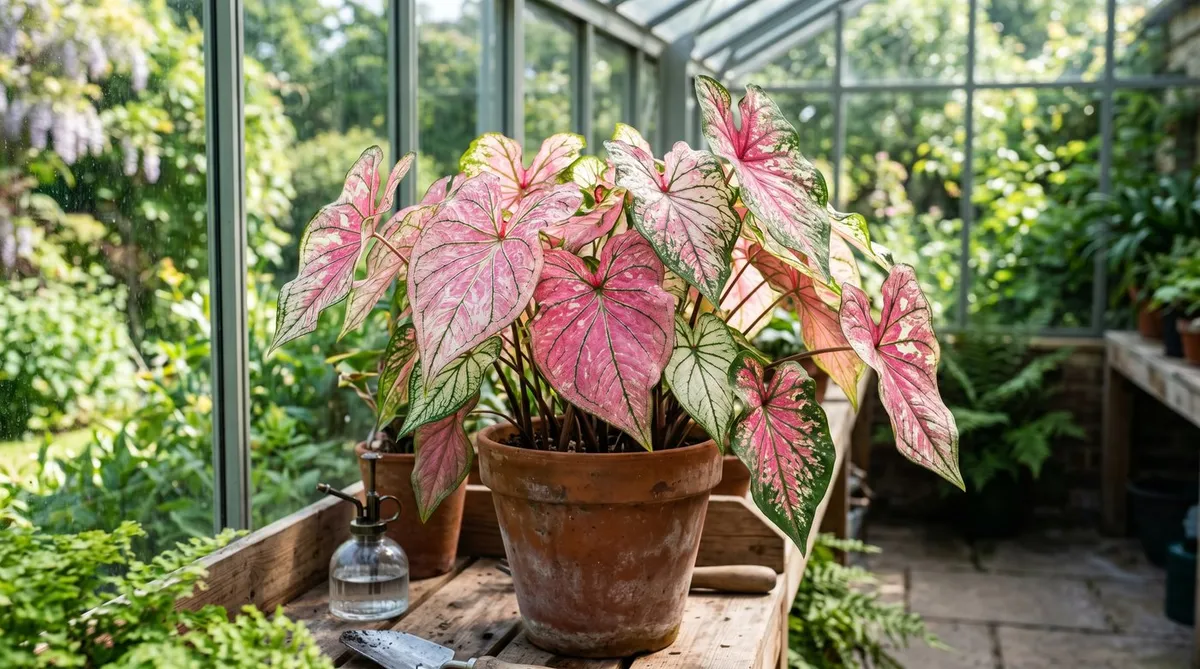
Caladium, known as angel wings or elephant ear, is a tender tuber grown for its paper-thin, heart-shaped leaves splashed with pink, white, red, and green. Few foliage plants give this much colour without a single flower. The challenge in the UK is that caladium comes from the humid tropics of South America. It is not hardy here, and two things decide whether it thrives: warmth with humidity in summer, and a dry, frost-free rest over winter.
What kind of plant a caladium actually is
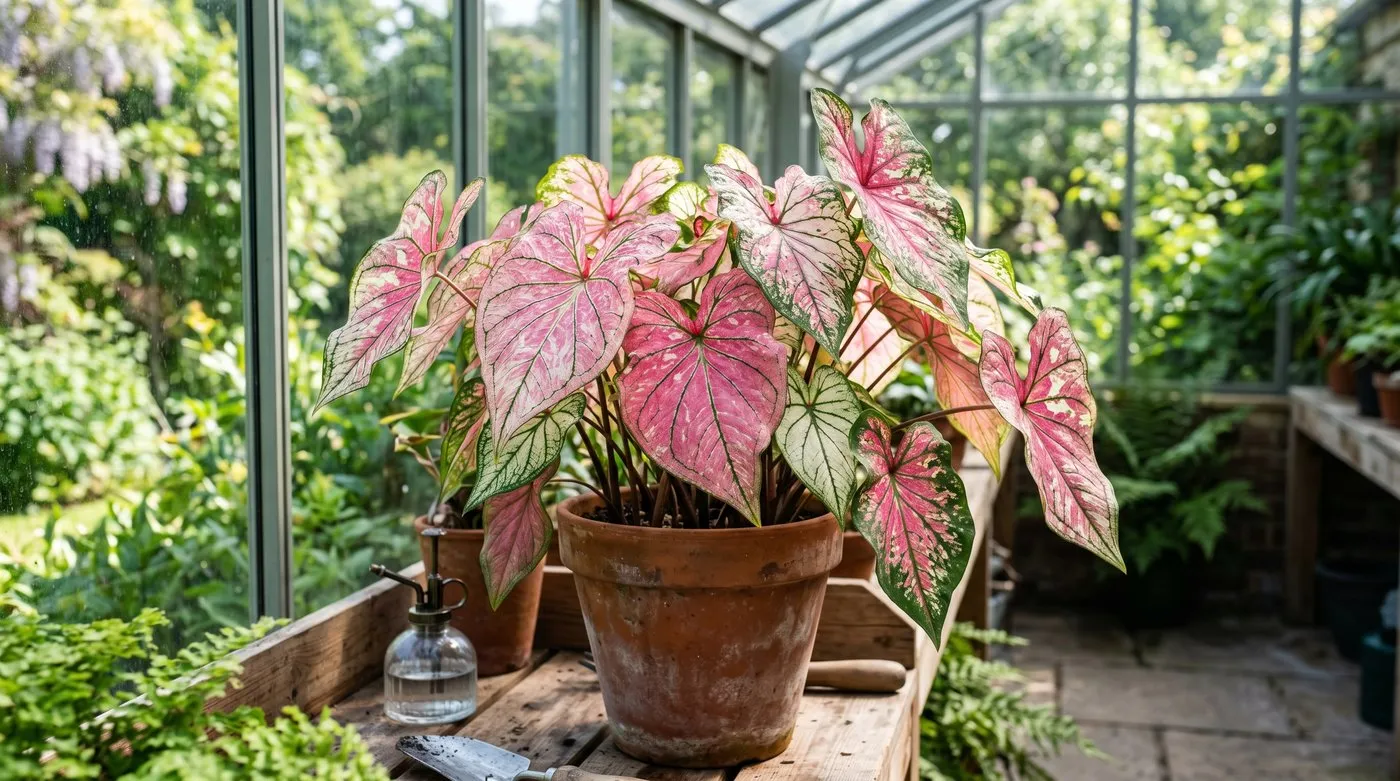
Caladium is a tender, deciduous tuber from the Araceae family, the same plant family as the arum lily and monstera. The species behind most garden plants is Caladium bicolor. The common names angel wings and elephant ear both describe the leaf shape: large, heart-shaped, and held on slender stalks.
Unlike a houseplant that keeps its leaves year-round, caladium is built to grow hard in a warm wet season, then die back completely and wait out the dry season as a bare tuber. That dormancy is not a fault. It is how the plant survives, and working with it is the key to keeping tubers for years. In the UK we mimic its homeland indoors, because our summers are too cool and short and our winters far too cold for it outside. It is one of the more striking foliage choices among the best indoor plants for UK homes, though it is more demanding than an evergreen houseplant because the whole plant dies back to a tuber each year. If that regime sounds like hard work, coleus gives a similar splash of patterned leaf colour from a simple spring sowing.
Fancy-leaf and strap-leaf caladium types
Caladiums split into two leaf types: fancy-leaf, with broad heart-shaped leaves, and strap-leaf, with narrow lance-shaped leaves. The difference matters when you choose a variety, because it changes the plant’s size, leaf count, and tolerance of light.
Fancy-leaf types carry large leaves up to 35cm long on plants reaching 45-60cm tall. They give the boldest colour but fewer leaves per tuber. Strap-leaf, sometimes called lance-leaf, types stay shorter at 25-35cm, throw far more leaves, and cope with a little more light. For a windowsill or a small pot, strap-leaf varieties such as ‘Florida Sweetheart’ and ‘Miss Muffet’ look fuller and sit more comfortably. For a dramatic single specimen in a conservatory, a fancy-leaf such as ‘Carolyn Whorton’ earns its space. Both grow well alongside other conservatory houseplants that enjoy the same warm, humid air.
Choosing the right caladium variety
Match the variety to your light levels and the look you want, because colour intensity and leaf size vary widely. Pink and white varieties brighten a shaded spot; deep red varieties need more light to hold their colour.
The table below covers reliable varieties widely sold in the UK. Heights assume good growing conditions in a warm room.
| Variety | Leaf type | Main colour | Height | Best for |
|---|---|---|---|---|
| ’Florida Sweetheart’ | Strap-leaf | Rose-pink with green edge | 25-35cm | Pots, fuller plants, lower light |
| ’White Christmas’ | Fancy-leaf | White with green veins | 40-50cm | Bright shade, cool colour schemes |
| ’Red Flash’ | Fancy-leaf | Deep red centre, pink spots | 45-60cm | Statement plant, needs more light |
| ’Carolyn Whorton’ | Fancy-leaf | Pink with red veins | 45-60cm | Large specimen, conservatory |
| ’Miss Muffet’ | Strap-leaf | Lime-green with red flecks | 20-30cm | Small pots, windowsills |
If you grow only one, ‘Florida Sweetheart’ is the most forgiving. It tolerates slightly lower light and humidity than the big fancy-leaf types and recovers faster from a check.
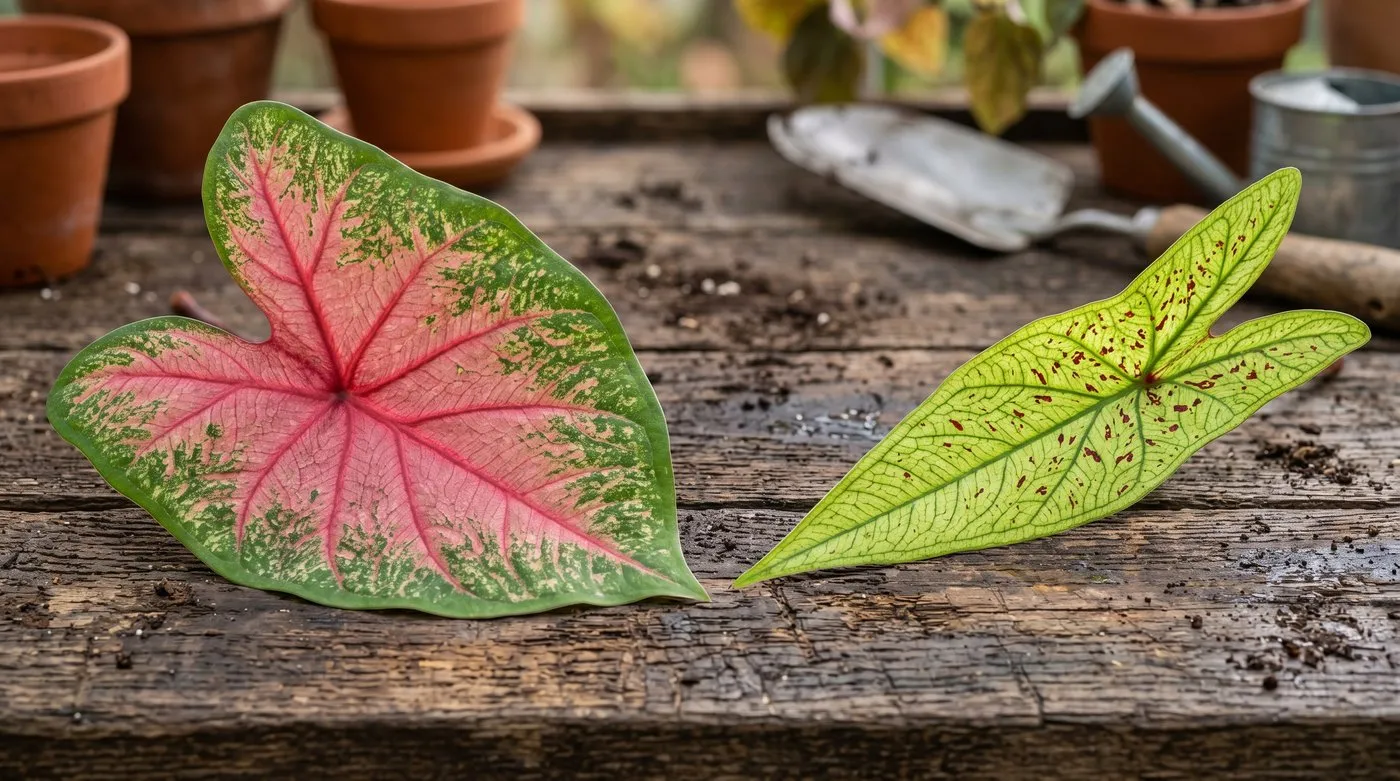 Fancy-leaf varieties (left) carry broad heart-shaped leaves; strap-leaf types (right) throw more, narrower leaves.
How to start caladium tubers indoors
Start caladium tubers indoors from February to April in warmth, planting them knobbly side up. The tuber has a smooth, rounded base and a bumpy top covered in growth buds, called eyes. Plant it wrong way up and it will still grow, but it wastes weeks.
Fill a 13cm pot with damp peat-free compost mixed with a third perlite for drainage. Sit the tuber knobbly side up and cover it with 4cm of compost. Water lightly so the mix is just moist, never soggy, then place the pot somewhere at 21-25C. Bottom heat is the single biggest factor in fast, even sprouting. A heat mat or a heated propagator holds the right temperature far better than a windowsill. Treat the young plant with the same care you would give other houseplants moved outdoors for summer once the weather warms.
Gardener’s tip: Start a tuber the size of a satsuma rather than a walnut. Bigger tubers carry more eyes and throw far more leaves in their first year. A No 1 or jumbo grade tuber from a specialist bulb supplier is worth the extra pound.
Keep the compost barely moist until shoots break the surface, which takes about two weeks with bottom heat. Once leaves unfurl, move the plant into bright indirect light and step up watering and humidity.
Breaking dormancy: ranked methods for sprouting tubers
The reliable way to wake a caladium tuber is steady bottom heat, because the tuber will not break dormancy below about 18C. A cold start is the most common reason tubers sit and rot. The methods below are ranked by how fast and how reliably they sprout a tuber in a typical UK spring.
| Method | Soil temp | Weeks to sprout | Reliability | Role |
|---|---|---|---|---|
| Heat mat or heated propagator | 21-25C | About 2 weeks | 95%+ | Primary, gold standard |
| Airing cupboard or warm boiler room | 20-24C | 2-3 weeks | 85% | Good alternative if dark; move to light at once when sprouting |
| Bright warm windowsill above radiator | 16-20C | 4-5 weeks | 60% | Workable but slow and uneven |
| Cool windowsill, no extra heat | 13-16C | 5-7 weeks | 40% | Unreliable; many tubers rot first |
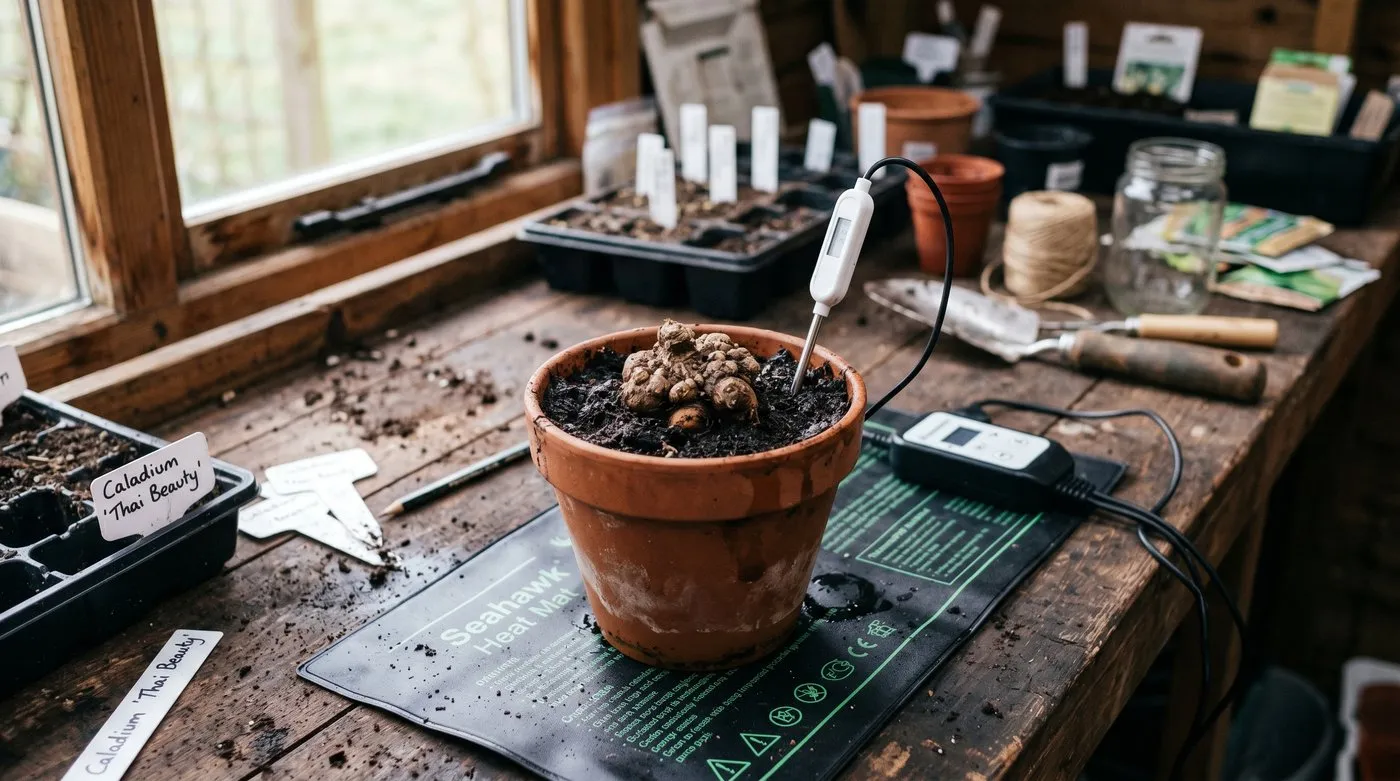 A heat mat set to 23C holds the soil in the sprouting band day and night, which a windowsill cannot.
Why humidity makes or breaks a caladium
Humidity is the factor that separates a full, healthy caladium from a crisp, browning one. The leaves are among the thinnest of any common houseplant, so they lose moisture fast. Below about 50 percent humidity the edges dry, curl, and turn papery brown.
Caladium wants 60 percent humidity or more, close to its tropical home. Most UK homes sit at 30-45 percent in summer and far lower with the heating on. The cheapest fix is a pebble tray: a saucer of gravel kept topped up with water under the pot, so evaporation raises the air moisture around the leaves. Grouping plants together lifts local humidity further. A small humidifier near the plant is the most reliable option for a prized specimen.
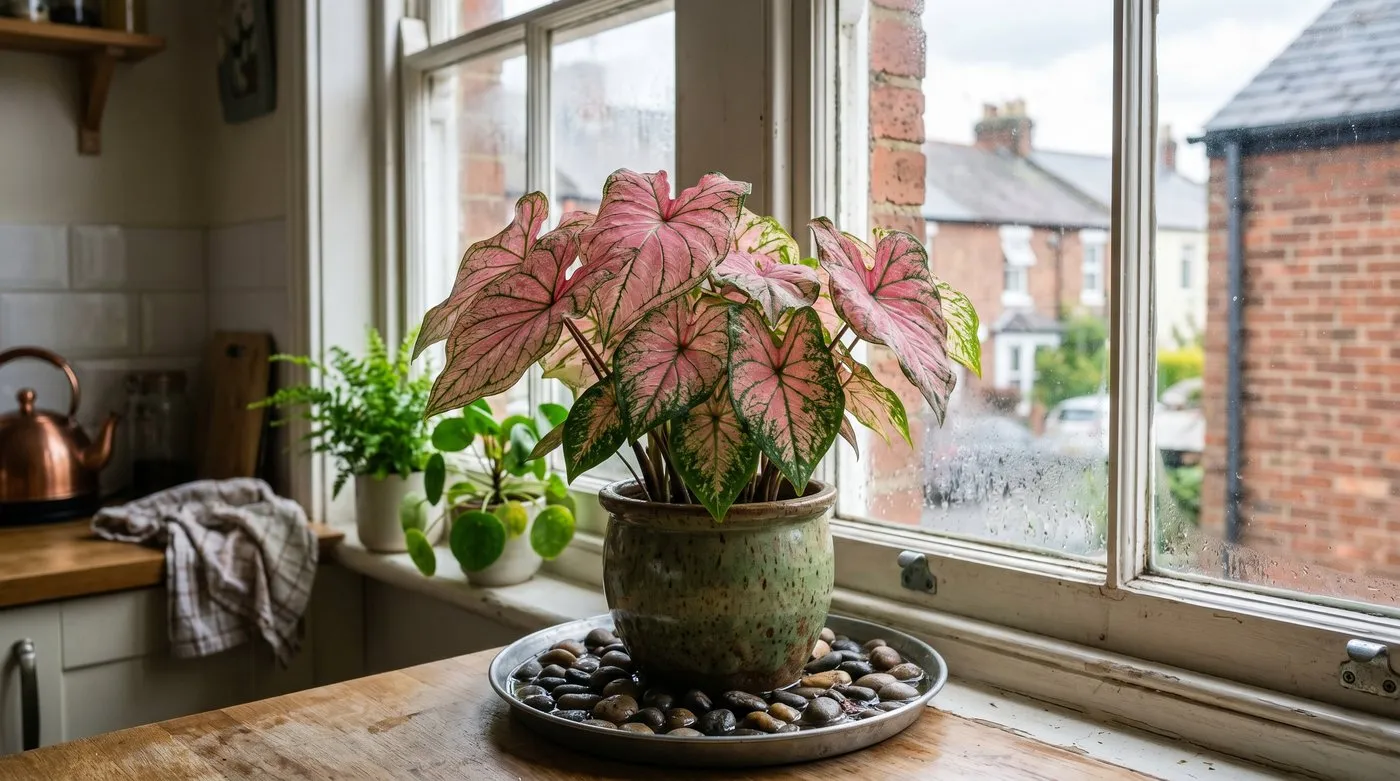 A simple wet pebble tray raises humidity around the leaves and stops the thin edges going crispy.
Light, watering, and feeding through summer
Give caladium bright indirect light, keep the compost evenly moist in growth, and feed fortnightly. Direct summer sun through glass scorches the thin leaves within hours, while deep shade fades the pink and red markings to dull green.
An east or north window is ideal, or a position a metre back from a bright south window behind a sheer curtain. In active growth from May to September, water when the top 2cm of compost feels dry, keeping the mix evenly moist but never waterlogged. Tap water is fine for most areas. Feed every two weeks with a balanced liquid houseplant feed at half strength, the same approach set out in our guide to feeding houseplants through the growing months.
Warning: Never let a caladium sit in a saucer of standing water. The tuber rots quickly in cold, wet compost, and root rot is the fastest way to lose a healthy plant. Empty the saucer 20 minutes after watering.
Leaves last from spring through to autumn, each one living six to ten weeks before it yellows and is replaced. A healthy tuber keeps a steady succession of fresh leaves coming through the season.
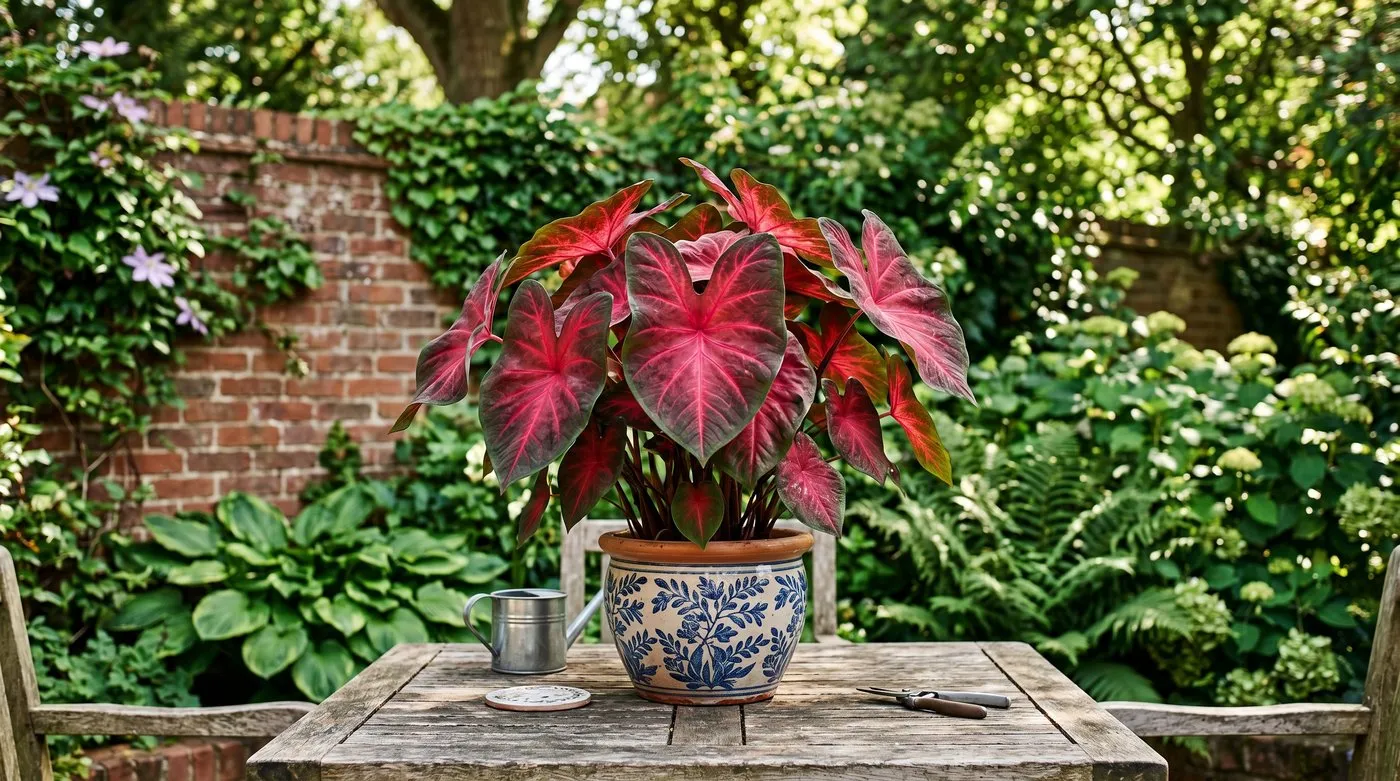 A potted ‘Red Flash’ enjoys a shaded summer spell on a sheltered UK patio, out of direct midday sun.
Autumn dormancy: lifting and storing tubers
As light and temperature drop in autumn, caladium leaves yellow naturally and the plant enters dormancy, which is your cue to lift and store the tuber. This is not the plant dying. It is the most important stage of the year for keeping tubers alive into next season.
From late September, reduce watering as the leaves begin to yellow. Let the plant dry out gradually over three to four weeks until the leaves collapse and the compost is dry. Then tip the pot out, brush the soil off the tuber, and cut off the dead foliage. Dry the tuber on newspaper in a warm room for a week so the skin cures.
Store the cured tubers in a paper bag or a tub of dry vermiculite, somewhere frost-free at 13-18C. A heated cupboard or warm spare room works. Below 13C the tubers rot or suffer cold damage that stops them sprouting. Check them monthly and discard any that go soft. Restart them in February or March with warmth, and the cycle begins again. The same lift-and-store discipline keeps tender tuberose going year to year in our climate.
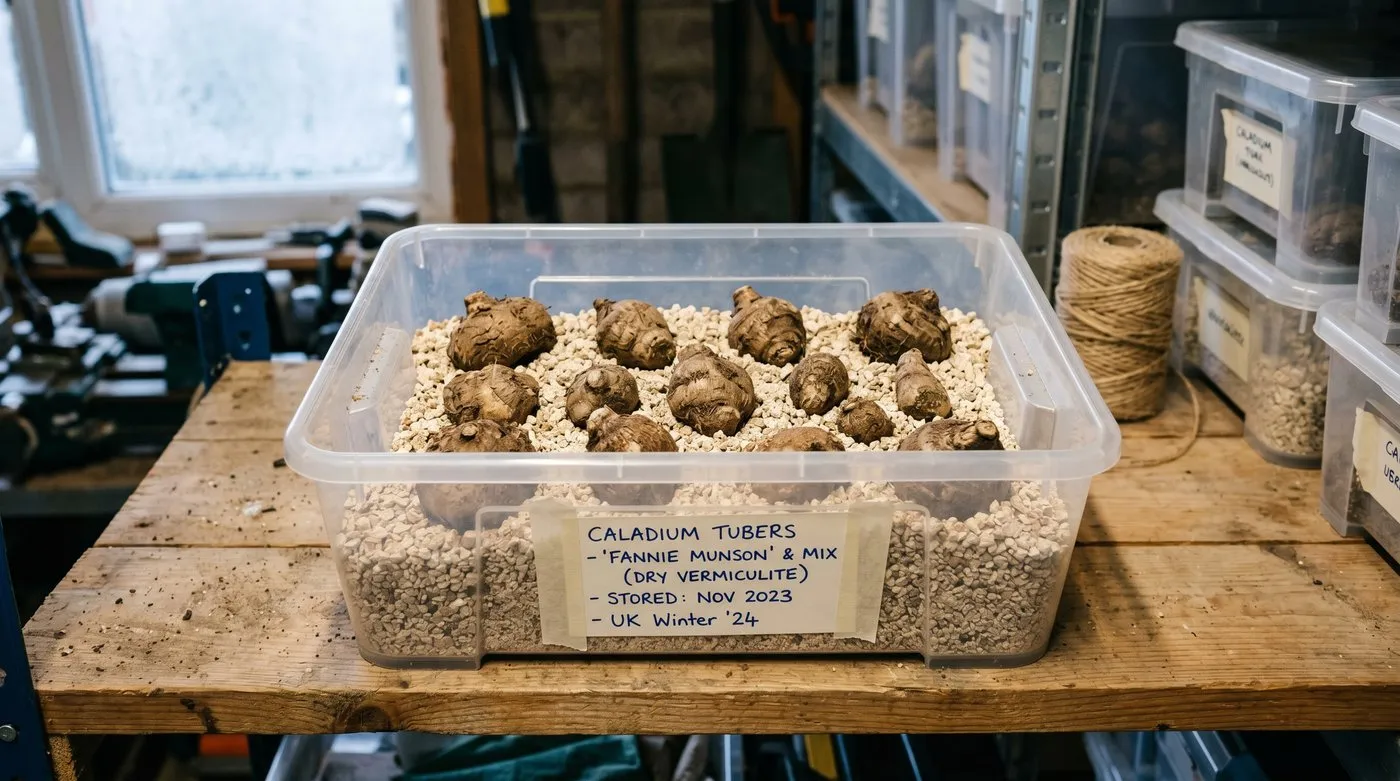 Cured, cleaned tubers stored dry in vermiculite at 13-18C survive the winter and restart in spring.
Caladium month by month in the UK
Caladium follows a strict annual rhythm, so matching each task to the right month keeps the tuber healthy. The plant grows hard from spring to autumn, then rests bare through winter, which is normal and expected.
| Month | Task |
|---|---|
| February-March | Start tubers indoors on bottom heat at 21-25C, knobbly side up |
| April | Pot on sprouted tubers. Begin bright indirect light and high humidity |
| May | Step up watering as leaves unfurl. Start fortnightly half-strength feed |
| June | Move to summer growing position. Watch humidity as the heating goes off |
| July-August | Peak growth. Keep humidity above 60 percent. Feed fortnightly |
| September | Reduce watering as the first leaves yellow. Stop feeding |
| October | Let the plant dry off. Lift and cure tubers once foliage collapses |
| November-January | Store tubers dry in vermiculite at 13-18C. Check monthly for rot |
The root cause of failing caladiums
Almost every failed caladium traces back to one of three causes: cold, dry air, or a wet dormant tuber, and all three are about temperature and water, not the plant’s health. Treating the symptom, a brown leaf or a soft tuber, never fixes it. Fixing the conditions does.
Crispy leaf edges are not a disease. They are the plant losing water faster than the roots replace it, caused by low humidity and dry warm air. Raise humidity to 60 percent and the new leaves come clean. A tuber that sits and never sprouts is not dead. It is too cold to break dormancy, so give it 21-25C bottom heat. A tuber that goes soft in winter has not been attacked by pest or fungus. It has been stored too cold or too wet, so keep storage dry and at 13-18C.
The permanent prevention is to match the conditions to the plant’s tropical lifecycle: warm and humid in growth, dry and frost-free at rest. Get the temperature and water right at each stage and caladium is genuinely easy. Most people who lose plants are fighting the lifecycle, not working with it. If a tuber outgrows its pot and the roots circle the base, our guide to root-bound houseplants shows when to move up a size.
Common mistakes when growing caladium
Planting the tuber upside down
The tuber has a smooth base and a knobbly top covered in eyes. Plant it knobbly side up. Upside down, it still grows but wastes two to three weeks pushing shoots around the tuber. If you cannot tell which way is up, plant it on its side and the shoots find their way.
Starting too cold
A caladium tuber will not break dormancy below about 18C. Started on a cool windowsill in a UK February it sits in damp compost for weeks and often rots. Use bottom heat at 21-25C. This is the single most common reason a new grower’s tuber never appears.
Letting the air go too dry
The thin leaves crisp at the edges below 50 percent humidity, which is normal indoor air with the heating on. Without a pebble tray, grouped plants, or a humidifier, even a healthy tuber grows ragged, browning leaves all season. Sort humidity before you blame the plant.
Overwatering, especially when dormant
Caladium rots fast in cold, wet compost. In growth, water only when the top 2cm is dry, and never leave the pot standing in water. In autumn and winter the dormant tuber needs to be kept dry, not watered. A watered dormant tuber is a rotten one by spring.
Too much direct sun
The paper-thin leaves scorch in direct summer sun through glass, showing bleached patches and brown holes within a day. Caladium evolved under a forest canopy. Give it bright indirect light, not a hot south windowsill.
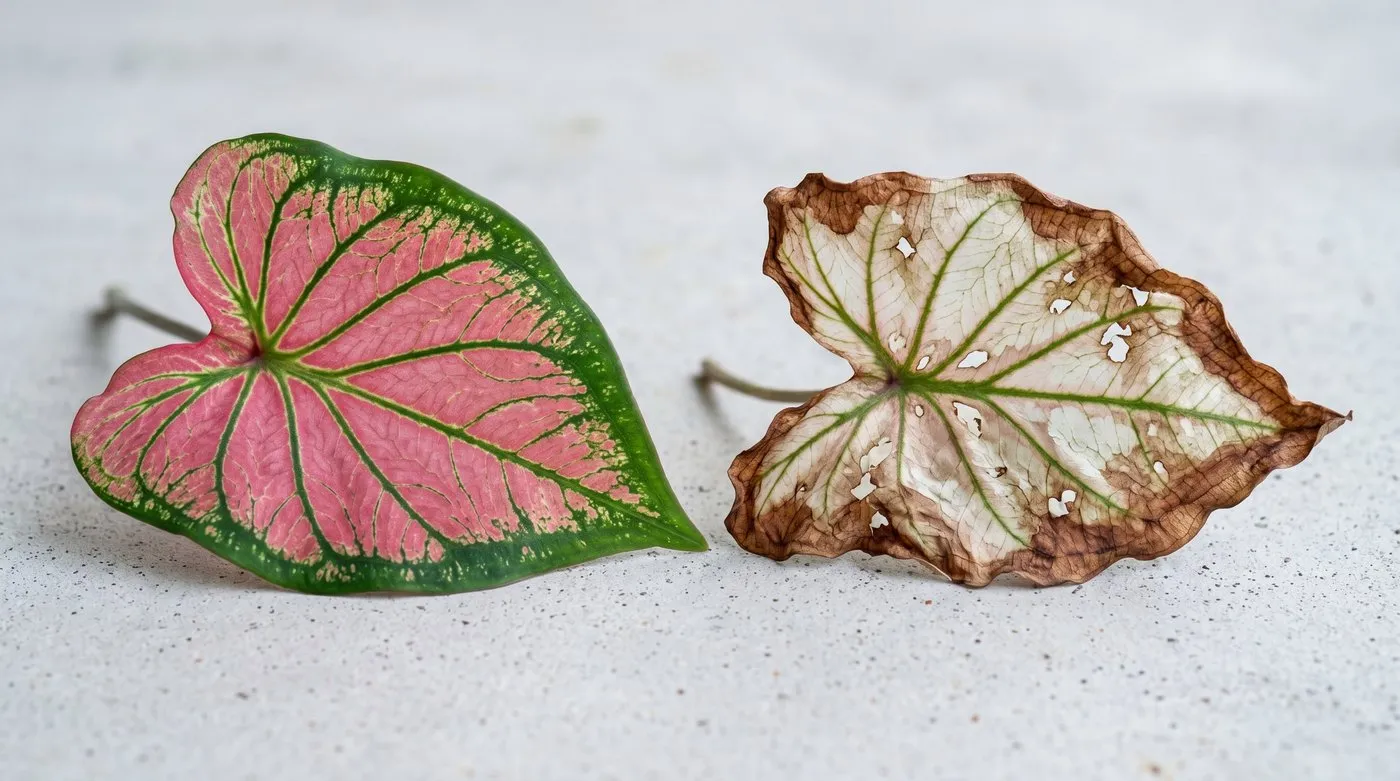 A healthy leaf (left) against a sun-scorched one (right): direct summer sun through glass bleaches and burns the thin leaves.
Frequently asked questions
Why are my caladium leaves turning brown and crispy at the edges?
Crispy caladium leaf edges almost always mean the air is too dry. The leaves are paper-thin and lose moisture fast below 50 percent humidity. Stand the pot on a wet pebble tray, group plants together, or run a small humidifier. Aim for 60 percent or more. Keep the plant away from radiators and hot windowsills, which dry the air further.
Can you grow caladium outside in the UK?
Only in summer, and never in the ground over winter. Caladium is tender and dies below 13C. You can move pots to a sheltered, shaded patio from late June once nights stay above 15C. Bring them back indoors by mid-September. They are best treated as houseplants or summer container plants, not hardy garden plants.
How do you start caladium tubers indoors?
Plant tubers knobbly side up, 4cm deep, in damp peat-free compost. Set the pot on a heat mat at 21-25C. Bottom heat cuts sprouting from 3-6 weeks to about 2 weeks. Keep the compost barely moist, not wet, until shoots appear. Give bright indirect light and high humidity once leaves unfurl.
Do caladium tubers come back every year?
Yes, if you lift and store them dry over winter. The plant dies back to a dormant tuber each autumn. Reduce watering as leaves yellow, lift the tuber, dry it, and store it in vermiculite at 13-18C. Restart it in spring with warmth. Tubers left in cold or wet compost over winter rot.
Why is my caladium not sprouting?
Most caladium tubers fail to sprout because the soil is too cold. They need 21-25C at the root to break dormancy. On a cool windowsill they can sit for six weeks or rot. Use a heat mat or heated propagator. Also check you planted the knobbly, bumpy side facing up, not down.
How much light does a caladium need?
Bright indirect light, never direct summer sun. The thin leaves scorch in a few hours of midday sun through glass. An east or north window suits them, or a spot a metre back from a bright south window. Too little light fades the pink and red markings and the plant grows leggy and weak.
Are caladiums poisonous to pets?
Yes, caladiums are toxic to cats, dogs, and people if eaten. All parts contain insoluble calcium oxalate crystals. Chewing the leaves causes intense mouth burning, drooling, and swelling. Keep plants out of reach of pets and children. Wear gloves when handling tubers, as the sap can irritate skin.
Caladium teaches the rhythm that runs through most tender tubers: warm to wake, humid to grow, dry to rest. Now you understand its dormancy cycle, read our guide on how to grow begonias for the next tender tuber to master, or compare it with the bolder canna lily for summer drama. For hardiness ratings and the botanical detail, the RHS Caladium entry is a useful reference alongside this guide.
Our team produces practical UK gardening guidance from source research, contributor records and established horticultural practice. Editorial standards are overseen by Matt W.